NVIDIA graphics cards can be accelerated by almost twofold - enthusiasts found hidden potential in RTX 30, RTX 40, and RTX 20
Translated with AI from the Russian original.
Enthusiasts have found a way to almost double the performance of matrix computations on NVIDIA RTX 20, RTX 30, and RTX 40 graphics cards, which is especially useful for working with local AI models.
Older NVIDIA graphics cards are capable of performing some computations almost twice as fast thanks to modifications that unlock the hidden potential of RTX 30, RTX 40, and RTX 20 without changing drivers.
Both modifications affect matrix computations, which are important for AI. On the Ampere architecture (RTX 30), accelerated processing of FP/BF16 FMA instructions with FP32 accumulation was unlocked. As a result, the performance of the RTX 3090 Ti in BF16 matrix multiplication increased from 87.5 to 157.4 TFLOPS, approximately 80%.
A similar trick worked on Ada Lovelace: for the RTX 4090, FP16 tensor core performance increased from 165.6 to 331.6 TFLOPS. The modification also covers the RTX 20: the RTX 2080 Ti's result increased from 59.9 to 111 TFLOPS. For local language models, this can speed up work by approximately 33–36%.
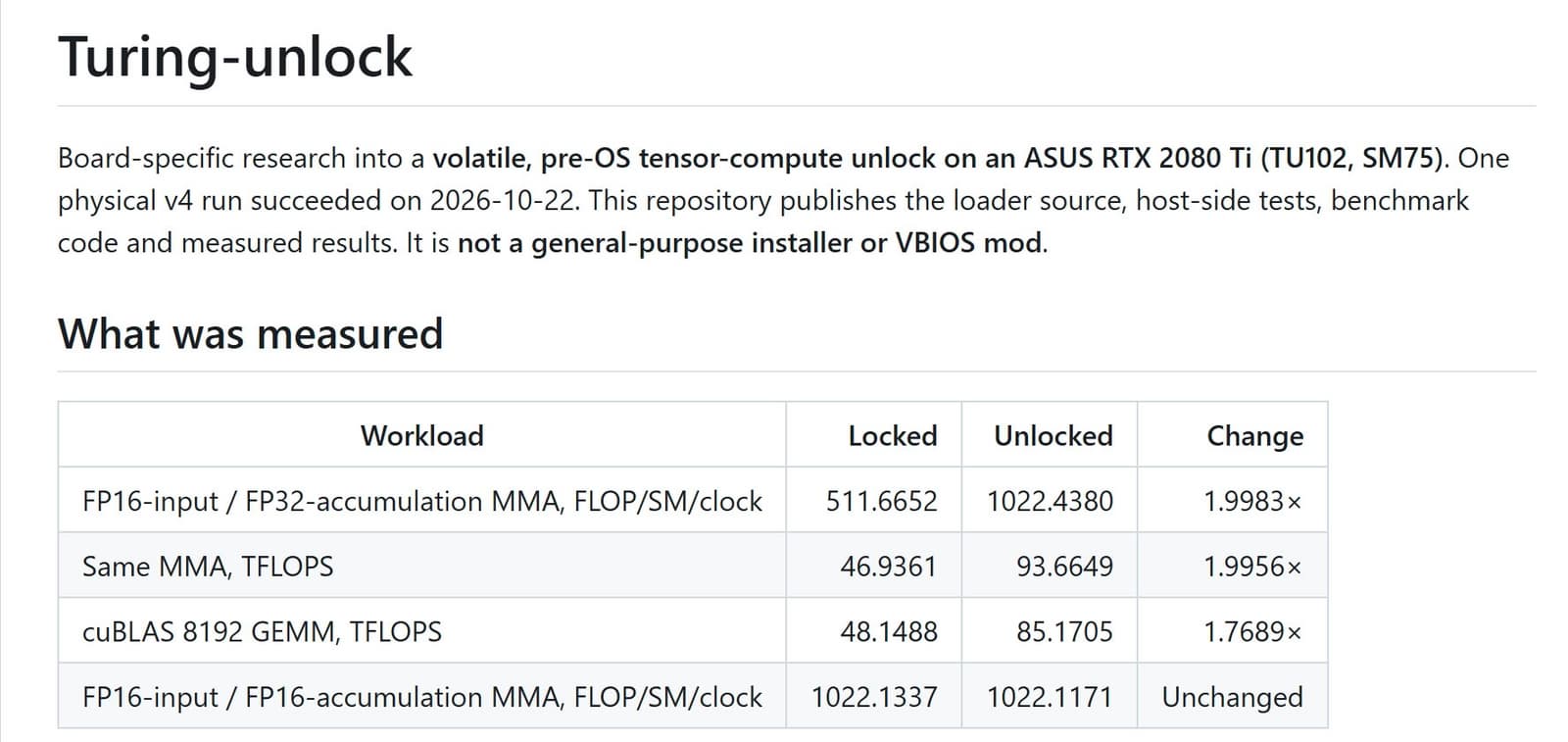
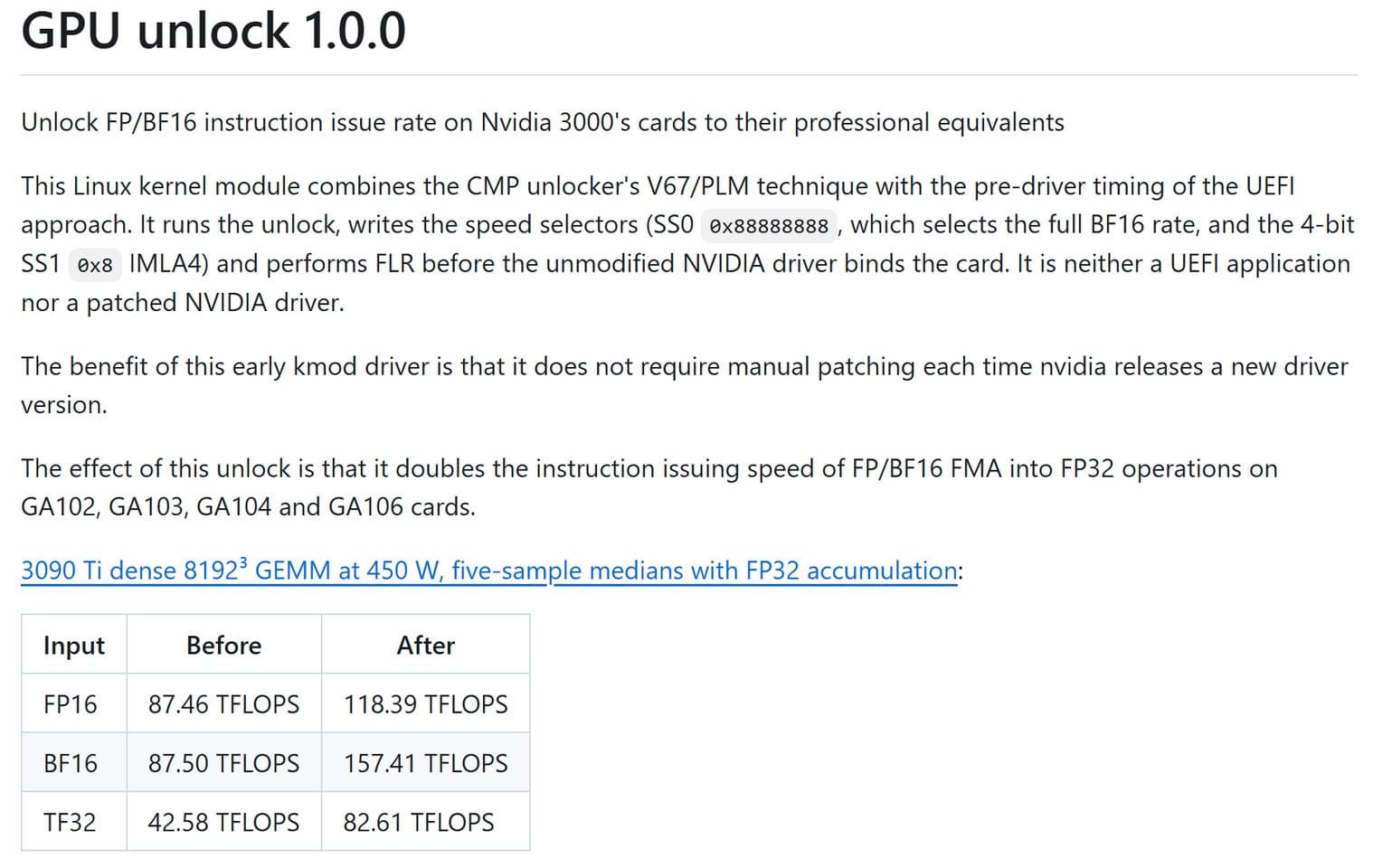
The modifications work with standard drivers and pass CUDA tests, primarily accelerating AI tasks and complex matrix computations, not games. Activation requires startup at system boot, and the warranty may be voided.
Never miss our newsAdd this site to your preferred sources to see us more oftenAdd on Google