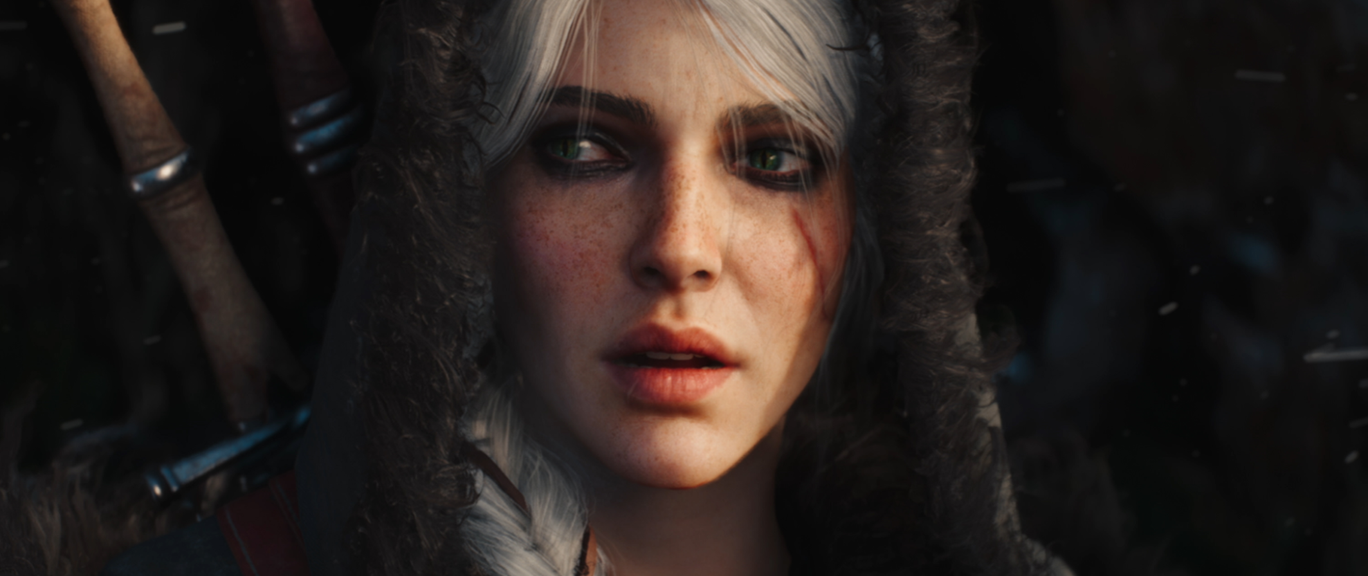
In The Witcher 4, the main role belongs to Ciri rather than Geralt. CD Projekt RED recently shared how changing the protagonist will affect the approach to storytelling.
CD Projekt RED Vice President of Narrative Marcin Blacha explained that Geralt was calm and collected, while Ciri is “much more hot-tempered” and “prone to making decisions under the influence of emotions.” And this difference, Blacha explains, changes a great deal:
When playing as Geralt, the player acts more like an arbiter assessing how to resolve a given situation. Playing as Ciri, you immerse yourself much deeper into the story through her personal perspective on what is happening. It is no longer just about which choice is morally right: your emotional engagement with the character will also influence decisions. Because Ciri is a different person, the quests in The Witcher 4 will take on a different tone compared to The Witcher 3.
Narrative Director Philipp Weber shared that in The Witcher 4 they want to build on the knowledge gained and take a qualitative leap forward. When working on quests, they employ a similar approach that proved successful in The Witcher 3:
We want to take a leap forward in The Witcher 4: we plan to apply everything we learned on previous projects to the new game. At the same time, the core principles of creating a good quest differ little from those that guided us in The Witcher 3. We have no rigid rules, but there is a foundation: every quest, big or small, must provide the player with a meaningful gameplay experience.
The developers “do not design quests that simply waste players’ time.”
CD Projekt RED, in collaboration with Fool’s Theory, is also currently working on a story expansion for The Witcher 3: Wild Hunt — Songs of the Past (or Ballada proshlogo in the Russian localization) — aiming to release it in 2027, while the release of The Witcher 4 is expected in 2028.