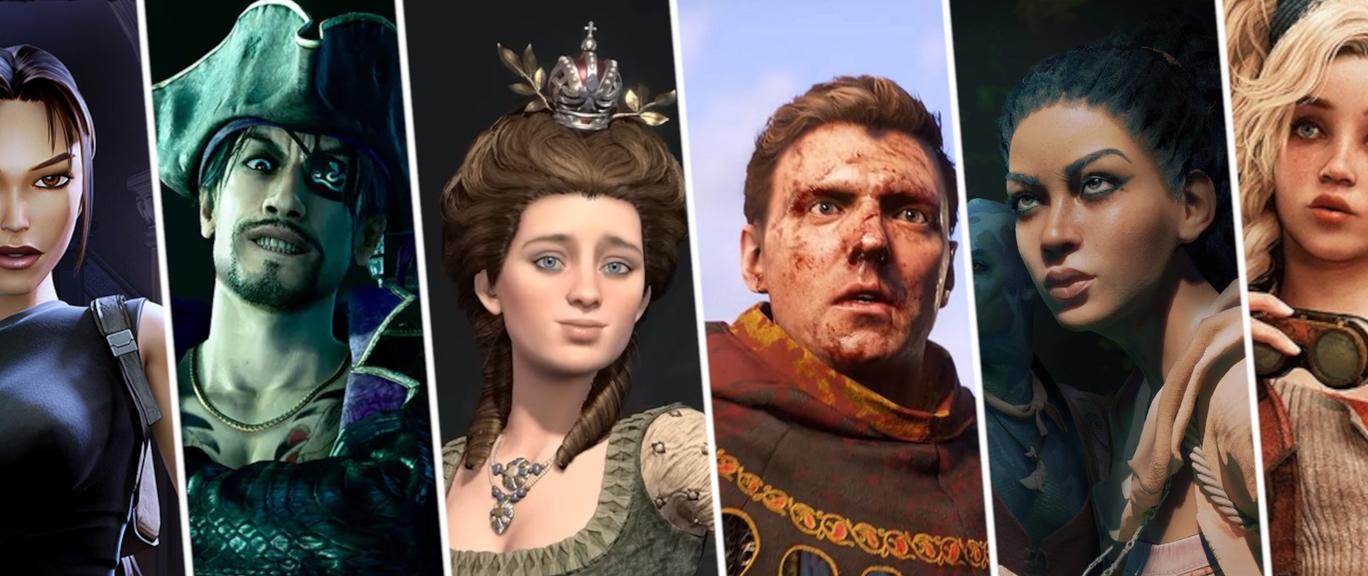
Major February releases
Kingdom Come: Deliverance II (PC, PlayStation 5, Xbox Series X|S) — February 4
Kingdom Come: Deliverance II is set to be a massive sequel to the original game, which captivated players with its unique take on recreating medieval Bohemia. Unlike classic RPGs set in fantasy worlds, this series immerses players in the realistic atmosphere of the 15th century, packed with political intrigue and everyday historical details. Henry (Jindřich of Skalitz) returns as the main protagonist, with his story continuing right after the events of the first installment.
The new chapter promises to be truly massive. The developers claim that the game’s script spans 2.2 million words — surpassing the previous record holder, Baldur’s Gate 3 (2 million words). For comparison, Leo Tolstoy’s novel “War and Peace” contains “only” ~188 thousand words.
The game world of Kingdom Come: Deliverance II expands significantly, offering players two large locations to explore instead of one. The first is the picturesque region of Bohemian Paradise, known for its natural beauty and cultural landmarks. The second is Kutná Hora (Kuttenberg) and its surrounding areas, which served as a crucial economic hub in the late Middle Ages thanks to silver mining and minting.
The developers are not only promising a vast open world, but also upgraded visuals, optimization, and substantial mechanic improvements: an expanded combat system featuring crossbows and early firearms. Special emphasis has been placed on the reputation system, where every decision made by the player will carry more severe consequences for the surrounding world.
Sid Meier's Civilization VII (PC, PlayStation 5, PlayStation 4, Xbox Series X|S, Xbox One, Switch) — February 11
Sid Meier’s Civilization is a legendary strategy game franchise dating back to 1991. Since then, the core gameplay mechanics have remained virtually unchanged for many years, but that hasn't diminished their appeal at all. On the contrary, they have become genre classics. Fans across the globe take immense delight in building and advancing civilizations, steering them to victory through military might, diplomacy, or cultural supremacy.
Civilization has largely stayed a conservative franchise. Innovations were introduced very cautiously, sometimes even rolled back in subsequent entries. However, the changes in the new installment promise to be more radical than usual.
One of the key changes is the streamlined city development system. Players will now only need to manage construction in major cities, while minor settlements will simply generate revenue for the treasury. Worker units have been completely removed from the game — tile improvements such as mines are now built automatically when settlement borders expand. Eras and the leader system have also undergone overhauls. Civilization leaders are no longer bound to a specific nation and can represent any of them, paving the way for truly exotic combinations.
We hope that the developers at Firaxis Games deliver, making this new entry just as captivating and thrilling as its predecessors without breaking the familiar gameplay loop. If successful, however, many fans risk losing sleep as they keep playing “just one more turn” until morning.
Avowed (PC, Xbox Series X|S) — February 18
Avowed is the first major title from Obsidian Entertainment developed entirely after its acquisition by Microsoft. Obsidian is renowned for its high-caliber role-playing games — the studio's portfolio includes Fallout: New Vegas, South Park: The Stick of Truth, and The Outer Worlds. However, moving under Microsoft’s wing has left a fair share of players feeling somewhat skeptical.
Avowed is an action RPG featuring both first-person and third-person perspectives (chosen by the player), blending magic, melee, and ranged weaponry in an all-new fantasy world. The game offers a diverse arsenal for dispatching enemies: pistols, wands, swords, and axes are only part of the list. In addition, Avowed features multiple skill trees that unlock powerful abilities as you progress through the adventure.
The developers decided against a fully open world, opting instead for large open zones to explore and non-player characters to interact with. Some of these NPCs can even join the player’s party.
This is a pivotal launch for both Xbox and Obsidian, and we wish them every success. That said, we wouldn’t outright recommend buying it right away — it’s worth waiting for early reviews. Alternatively, you can check the game out via Xbox Game Pass. Even if you subscribe specifically for Avowed and it doesn't live up to your hopes, you certainly won’t be left without games to play.
Like a Dragon: Pirate Yakuza in Hawaii (PC, PlayStation 5, PlayStation 4, Xbox Series X|S, Xbox One) — February 21
The Like a Dragon series (formerly known as Yakuza) is somewhat of a unique phenomenon in the gaming industry. Entries in the franchise blend dramatic storytelling, dynamic combat, and the distinct atmosphere of Japan and its streets. Despite its quirky nature — balancing seriousness with utter absurdity, an abundance of mini-games, and eccentric characters — this franchise has won the hearts of millions of gamers. It appeals equally to crime drama enthusiasts and fans of unorthodox humor and fine detail. Every entry is a standalone journey that seamlessly pairs drama with action, all while remaining true to its established style.
Compared to traditional entries, Pirate Yakuza in Hawaii promises to be something truly special. The adventure takes place across the Pacific Ocean, where the protagonist, Goro Majima, loses his memory and embarks on a quest for legendary treasure alongside a young boy named Noah. The beat-'em-up combat system centers around two distinct styles.
Players will be able to assemble a pirate crew, upgrade their ship, and, true to the series' roots, dive into a plethora of side activities, including island exploration and mini-games. This unexpected fusion of seafaring escapades and classic Yakuza drama may catch even veteran fans of the franchise by surprise.
Monster Hunter Wilds (PC, PlayStation 5, Xbox Series X|S) — February 28
Monster Hunter Wilds is an anticipated blockbuster and the next chapter in the iconic franchise. For Capcom, the Monster Hunter action-RPG series ranks among its most commercially successful and universally beloved properties. As a result, the developers have gone all out to introduce numerous innovations aimed at elevating both solo and cooperative play.
Plot-wise, players will journey into the Forbidden Lands — uncharted territories they are drawn to following the trail of a missing expedition. Monster hunters will find themselves in a seamless world featuring varied biomes, where terrain and dynamic weather patterns directly influence monster behavior and hunting strategy.
The foundational gameplay of Monster Hunter Wilds remains true to its predecessors: exploration, monster battles, and deep customization. Yet, the details harbor plenty of fresh ideas. Players will need to master new mechanics such as Focus Mode, which enables precision targeting of monsters' weak spots, and make use of mounts that look like a cross between a raptor and a Final Fantasy chocobo. These creatures not only facilitate swift travel across sprawling regions, but can also glide from heights, gather crafting resources, and even restore health mid-combat.
The combat system has been designed to be more nuanced and fast-paced: you must now account for environmental factors, predict opponent actions, and carefully choose your armament, each possessing its own distinct playstyle. And, true to Monster Hunter tradition, your hard-won spoils can be forged into new gear customized to fit your playstyle.
Monster Hunter Wilds shapes up to be a headline launch that will satisfy both franchise veterans and newcomers looking to dive into the world of beast hunting. What's more, Capcom has rarely disappointed players in recent years. Nonetheless, as with any massive new release, waiting for early reviews is wise before making a purchase decision.
Worth keeping an eye on
ERA ONE (PC) — February 20
According to the creators, Era One is an innovative space game blending elements of real-time strategy, base building, space survival, and tactical skirmishes.
Whether the gameplay is genuinely groundbreaking remains open to debate. The description feels remarkably reminiscent of 1995's Total Control for DOS, simply transplanted into deep space. Seasoned gamers reading through the feature list might experience sudden flashes of nostalgia, even if there are plenty of modern distinctions. That said, any doubts vanish the moment you take a look at Era One’s screenshots and trailers. It looks contemporary and sleek. Younger audiences might draw parallels to Homeworld, though Era One operates on a different wavelength.
Players can design and configure their stations from scratch, construct diverse installations and warships, control fleets, and engage in grand space battles. According to the development team, the core gameplay centers around deep customization: from modular ship assembly to building sprawling cities in the vacuum of space. By marrying RTS systems with comprehensive resource management, Era One aims to offer an engaging experience where every tactical choice impacts the fate of your colony and fleet.
The narrative unfolds in a future where Earth’s drained resources drove humanity toward the Great Colonization of other worlds. The rise of mining corporations sparked wars, while the emergence of space pirates only worsened the crisis. The discovery of an immense energy source paved the way for Navi Mondo — colossal, self-sufficient orbital habitats that formed the backbone of the Federation of Free Worlds.
Going by its description, Era One is clearly not a game tailored for everyone. But if you have ever dreamed of stepping into a golden-age sci-fi space opera, Era One is definitely worth a look: a fantastic story, the vastness of space, and intricate mechanics await you.
Remakes and remasters
Tomb Raider IV-VI Remastered (PC, PlayStation 4, PlayStation 5, Xbox One, Xbox Series X|S, Switch) — February 14
Lara Croft, the iconic heroine of classic video games, remains cherished by legions of fans to this day. Even though the franchise reboot proved successful, for a segment of the audience, the original incarnation of Lara Croft remains unmatched. Despite countless evolutions, many players still yearn for the classic Tomb Raider and long to see her back in action rather than her modern counterpart.
Now they have that chance on contemporary platforms, even if the adventures themselves remain the same. Tomb Raider IV: The Last Revelation, Tomb Raider: Chronicles, and Tomb Raider: The Angel of Darkness, originally released in 1999, 2000, and 2003 respectively, are now available as remasters.
These games were received quite differently back in the day: the fourth installment achieved acclaim as one of the finest entries thanks to its return to core mechanics and an absorbing storyline steeped in Egyptian mythology. Chronicles garnered mixed reactions — while it treated players to varied environments and glimpses into Lara's backstory, some felt it lacked true innovation. On the other hand, The Angel of Darkness went down as the franchise's most divisive endeavor: despite bold concepts, it launched riddled with technical flaws, heavily damaging its reception.
The remasters feature upgraded graphics. Naturally, they don’t match modern AAA standards, but Lara's polygon count has been raised and environmental textures look sharper, making the visual experience noticeably crisper. Furthermore, the remasters include two control schemes: modern and classic. A few other quality-of-life improvements have also been integrated. While Lara Croft herself hasn't aged a day in decades, the same can hardly be said for retro games. Whether these remasters can breathe new life into 20-year-old titles is something we’ll find out very soon.