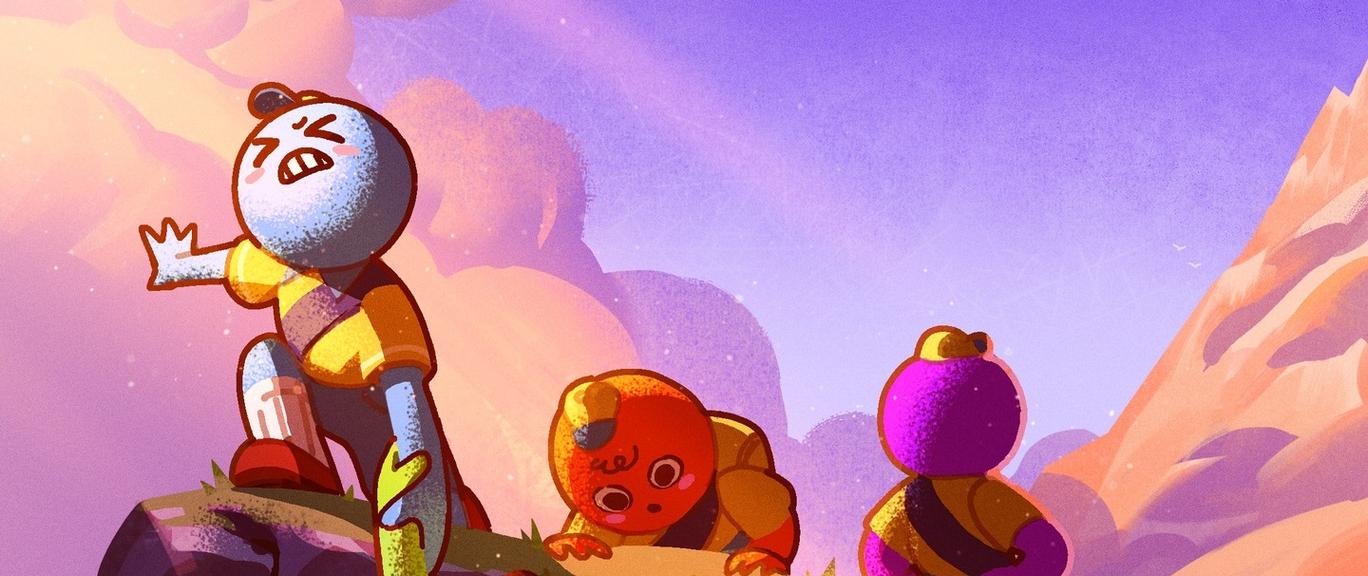
In the modern gaming community, a new format has been gaining traction for several years, dubbed “Friendslop” — games featuring highly niche mechanics capable of alienating the core audience of hardcore gamers, yet capable of being in demand and hilarious when played with company. Such indie projects have no marketing budget and rely exclusively on word of mouth and media influencers who play them with friends and followers.
PEAK is a co-op climbing simulator created by the American studio Aggro Crab in partnership with the Swedish team Landfall — the creators of Content Warning, a previous Friendslop title released and popularized in April 2024. PEAK was conceived during a Korean game jam where both teams worked on the game in a shared Seoul office for a month. Initially planned as an open-world survival game, Landfall’s initiative steered the project toward a narrower focus on climbing mechanics and player interaction.
The joint team, playfully dubbed “Landcrab” (Landfall + Aggro Crab), developed PEAK as a way to “recover from burnout” after years of working on large-scale projects (such as Another Crab’s Treasure, which took three years) and reignite motivation through a compact yet dense collaborative project.
Mountain survival
In PEAK, players take on the role of climbing scouts who survived a plane crash on a mysterious island. Their goal is to scale the mountain peak in the hope of being rescued. But this ascent is no walk in the park. Countless obstacles line the way, one of which is yourself. Your primary resource and fuel for physical exertion is stamina, which also doubles as your health bar. It depletes from every action: running, jumping, and clambering up rocks.
At the same time, your maximum health/stamina pool can drop due to various factors: hunger, injuries, poison, fatigue, heat, cold, and even carrying excess weight. Maxing out the life bar with these negative effects causes you to pass out, followed by death unless your friends revive you.
Your inventory is limited to just three slots. This capacity can be expanded with a backpack, which grants four additional slots. However, moving around with a larger inventory means you will be overloaded more often and won’t be able to climb solo for long. A climber’s pack is filled with a variety of items salvaged from luggage scattered across the island:
- Climbing gear, such as safety hooks, ropes, or harpoons;
- Medicine, which includes not only bandages and first aid kits, but also heat packs and antidotes;
- Packaged food and water spilled from the plane, though you will far more frequently forage on the gifts of nature: coconuts, mushrooms, fruits, and berries, though not all of Mother Earth’s produce is safe. Luggage can also yield lollipops and energy drink cans — useful for boosting stamina, but with side effects.
Conquering the mountain requires navigating four lethal biomes in sequence, each posing a distinct challenge.
You begin on the Coast, with its deceptively calm yet rickety cliffs and bridges. Next comes the Tropics — a maze of wet, slippery ledges, toxic plants that explode if approached carelessly, and dense thickets where it is easy to get lost. Climbing higher takes you to the Alps, a realm of ice and wind where the chief enemy is a creeping fog. It doesn’t just obscure the path; it brings lethal cold that drains stamina and health, forcing you to seek shelter or consume frostbite remedies. The final battle unfolds in the volcanic Caldera, where you must leap across scorching rocks, dodge lava surges, and scale sheer cliffs under blistering heat.
The layout of each biome rearranges every 24 hours in real time — today’s reliable route may turn into a deathtrap tomorrow, and resources crop up in the most unexpected spots.
Ultimately, PEAK impresses with thoughtful game design. It turns every climb into a struggle for survival where nature, physical limitations, and loot RNG blend into a tense, exhilarating expedition. It is not merely rock climbing — it is a test of stamina, calculation, and improvisation amidst an ever-shifting environment and tight supplies. And this is where teamwork shines — without support from your companions, surviving the ordeal is near impossible.
If a friend turns out to be...
The game is fully tailored around cooperation. Attempting to summit solo is a recipe for frustration and near-certain doom. Played with companions, the game shines through multifaceted mutual interaction: catching a buddy dangling over an abyss; giving someone a boost up a ledge; sharing supplies in the nick of time; and helping stragglers so no one gets left behind.
When a player dies, they aren’t booted from the run; they turn into a ghost. In this form, they can hover around teammates, dispensing tips, scouting routes, and warning of hazards. Reviving in flesh is only allowed once per area at a special shrine situated near the camp — a rest and regrouping haven. Mind you, these campfires are not checkpoints! If the entire squad wipes, the run resets back to square one. In single-player, the stakes are even harsher — beyond the lack of assistance, you may be hunted by a terrifying fog creature that punishes you for venturing alone.
To foster the finest co-op atmosphere, proximity voice chat is included with a stunningly immersive touch: teammates’ voices echo authentically across rock faces, fading and distorting when they stray too far or teeter on the verge of death, creating a tangible sense of distance and urgency.
Progressing through levels and pulling off team feats offers not just immense satisfaction, but also unlocks new difficulty tiers and cosmetics. You can customize outfits and facial features, which have no gameplay impact but allow you to flaunt achievements, as certain items are tied to specific milestones.
Ultimately, PEAK’s gameplay is a distinct blend of tactical planning, physical coordination, contending with an unpredictable environment, and sheer, chaotic hilarity born from communal plunges, poisoned mushrooms, and panicked shrieks.
Fun, but not perfect
Despite all its cooperative allure and well-honed design, PEAK suffers from a number of notable issues. They can noticeably sour the experience, especially for demanding or solo players.
The most pressing and widely discussed issue remains technical hiccups related to netcode and server stability. Voice chat — the lifeblood of the game responsible for its unique immersion — periodically experiences lag spikes, drops, or outright cuts out.
These problems become far more severe when a teammate disconnects. Following a dropped connection, the player can rejoin the active lobby. However, upon reconnecting, players spawn back at the starting zone. Consequently, a sudden disconnect by a party member invariably forces the entire team to restart the run.
Issues also plague the core gameplay design. The most frustrating example is supply cases spawning inside patches of toxic flora, occasionally resulting in bizarre or agonizing scenarios. Players stumble upon poisonous plants clipped inside rock faces that still deal damage through solid obstacles. Dead-end routes occur that remain impassable even with equipment. Furthermore, gear spawns randomly in loot cases that themselves appear in the most awkward spots.
The single-player mode, for that matter, feels like a neglected afterthought. It is not merely difficult — solo play is thoughtlessly punishing and poorly balanced. The lack of single-player scaling, the stalking monster that instills frustration rather than dread, and the demand to execute entire levels flawlessly without second chances turn solo runs into a Sisyphean chore stripped of fun and momentum.
Consequently, despite not being in Early Access, the game suffers from disappointing roughness. Technical shortcomings erode confidence in basic functionality. Rough gameplay edges, from connection issues to generation glitches, can turn a fair challenge into an unfair ordeal. Meanwhile, solo mode comes across as an entirely vestigial feature.
Diagnosis
PEAK is not only a prime example of the emerging friendslop genre, but also a well-crafted climbing platformer made with a heart and bold flair rarely seen on the indie scene today. Despite technical blemishes and an evidently half-baked solo mode, the game shines brilliantly in co-op, offering a unique blend of tense survival and hilarious, chaotic fun with friends.
It is a project where every mistake can spell disaster, yet every saved buddy is a reason for heartfelt celebration. PEAK tests not just your reflexes, but your teamwork, communication, and capacity to improvise through absurd situations. This title delivers a unique cooperative experience packed with drama, humor, and shenanigans.
It is not a game for everyone — it shows no mercy to solo adventurers, impatient players, or those seeking absolute polish. But surrounded by friends, it transforms into an endless source of memorable stories, spectacular tumbles, and even louder victories. If you are willing to look past the bugs for the sake of genuine adventure, PEAK will easily become the pinnacle of your game night.
***
All image rights in this material belong to Aggro Crab, Landfall