“Insect” vs. AI in the Best Possible Form? System Shock 2: Anniversary Remaster Review
Translated with AI from the Russian original.
For the 25th anniversary of System Shock 2, Nightdive Studios treated fans to an updated version of the cult classic game. The studio had already released a stunning remake of the original System Shock, but the sequel underwent far fewer changes. Was it worth overhauling the sequel significantly, or did the decision to “not fix what isn't broken” prove right? We'll tell you in this review!
Clash of deities
System Shock 2 is a direct sequel to the original game. Having survived the monstrous events aboard Citadel Station, the player must once again navigate corridors fraught with danger. The starship Von Braun becomes the center of the battle, where old acquaintances and new players alike weave their schemes.
By the time the protagonist awakens, a cancerous growth known as “The Many” has already spread across the Von Braun — they genuinely believe that individual beings suffer, while a hive mind brings salvation. Considering this an act of mercy, The Many forcibly infect and reshape living organisms as they see fit.
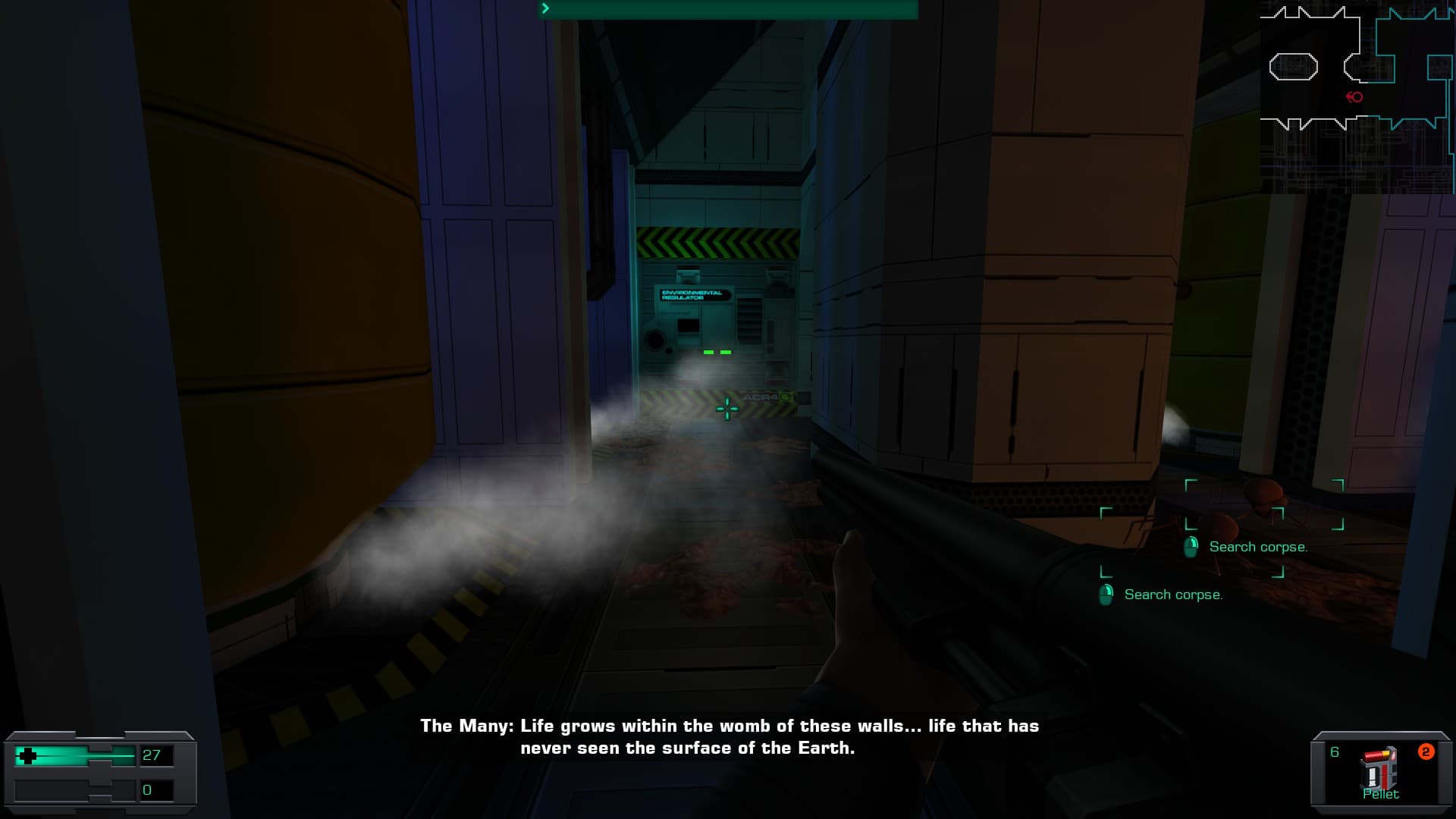
XERXES – the artificial intelligence of the Von Braun – falls under the control of The Many. Unlike the antagonist of System Shock, the magnificent and terrifying SHODAN, this AI is weak and sluggish. In fighting the protagonist, he shows no feats of ingenuity or even much aggression. Instead, he passively fights back and preaches about the triumph of organic life over technology, which is rather ironic.
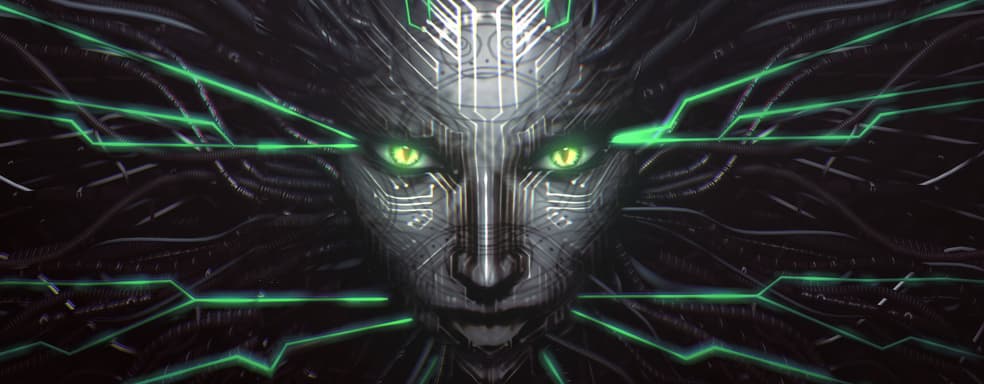
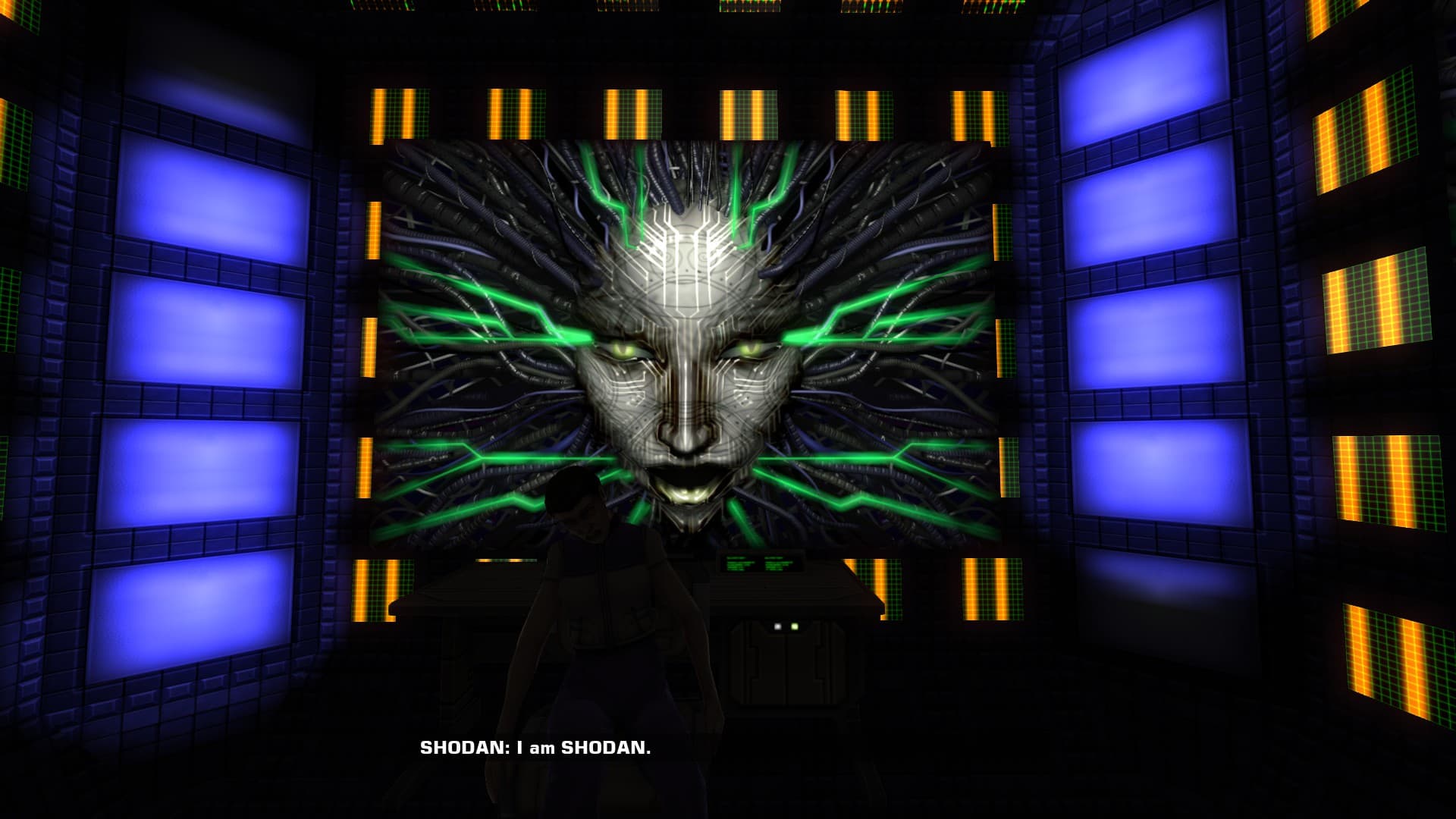
SHODAN herself, the antagonist of the first installment, is also involved in the struggle for the Von Braun. In her weakened state, she is forced to cooperate with the protagonist, which does nothing to dampen her god complex. Throughout the game, she never stops preaching about her own greatness and calls the protagonist an “insect” — which has become the game's trademark over time.
The protagonist differs significantly from the other participants in the conflict. He shows no interest in the greater good or any desire to elevate himself above others. He is an ordinary soldier who, even in such a hopeless situation, continues to eliminate threats to humanity.
“Running sweating through the corridors”
The player once again has to find their way through a behemoth drifting among the stars. During the journey, one can personally verify that the starship Von Braun was perfectly suited for long-term habitation. As with the first installment, the interior of various compartments convincingly conveys the illusion that numerous crew members once lived and rested here. The remaster's updated visuals have faithfully carried over all this beauty, even if they literally smoothed out the rough edges characteristic of a 1999 game.
The game's unique horror element has also been preserved. Most “horror games” scare players using cheap tricks – relying on darkness and jump scares. System Shock 2 manages to keep an armed-to-the-teeth player in tension even in brightly lit rooms.
To progress through the starship, one must constantly listen to scattered audio logs. In them, you can learn about the crew's futile attempts to avoid assimilation by The Many. Amid messages from traitors and loyalists, you find passcodes required for combination locks. These codes are saved in “notes,” which is convenient — something sorely missed in the remake of the first game.
To advance the plot, you also need to:
- Charge energy cells;
- Chase down red cyber-ninjas;
- Clear the environment of malicious growths;
- Search for keycards.
Both System Shock games rank among the pioneers and best examples of the immersive sim genre. In them, you can interact with the environment in various ways: turn on lights or open sink faucets; activate surgical stations and watch them work; disable a force field by shooting a power generator instead of hunting for an elusive button; toss a life preserver into water where it will realistically float on the surface — there are dozens, if not hundreds, of ways and possibilities.
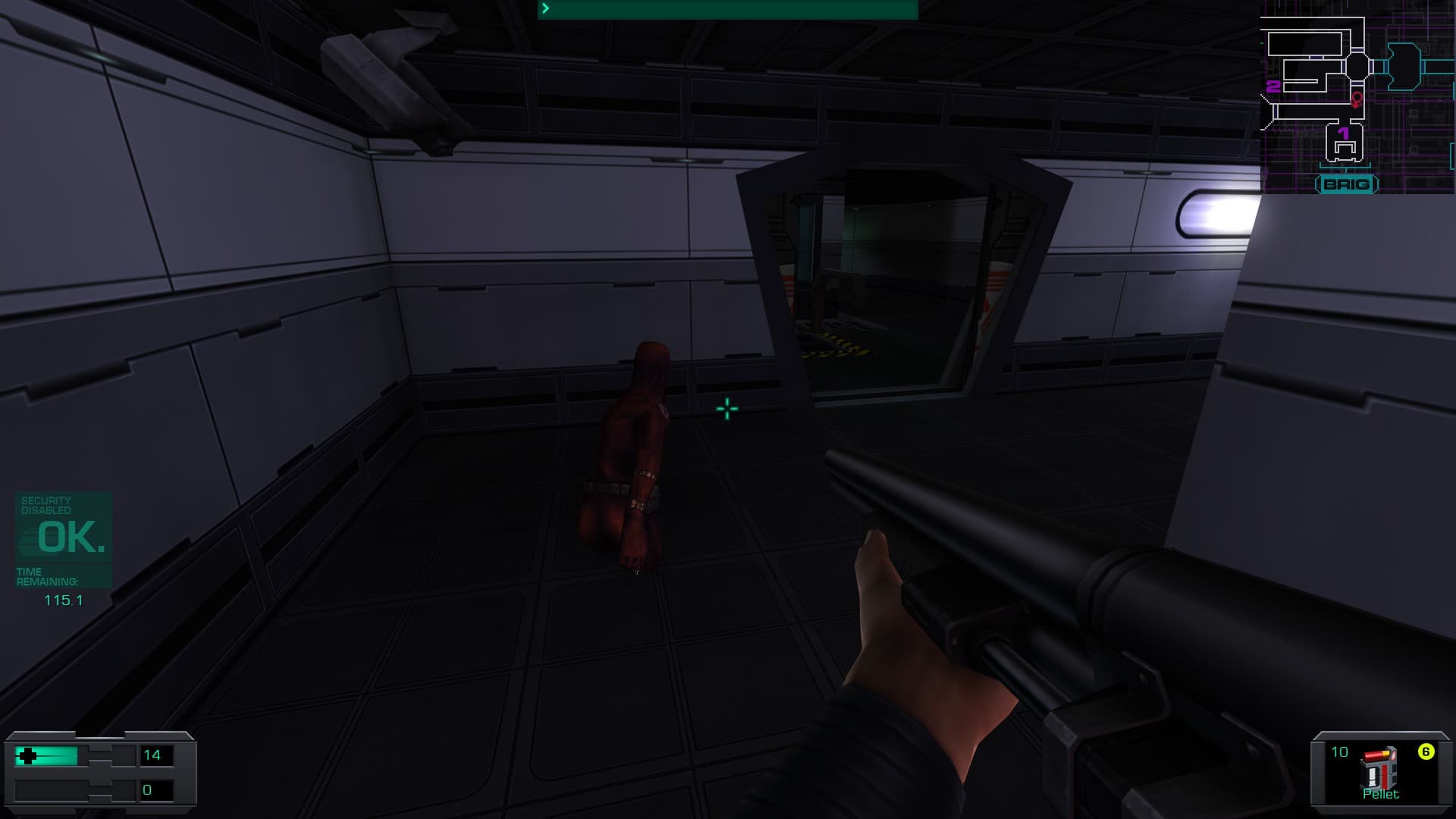
One of the unique features of System Shock 1 was the ability to literally dive into cyberspace, which was impressive for a 1994 game. That makes it all the more disappointing that in the sequel's remaster you cannot experience being a collection of ones and zeroes — keeping in mind that the protagonist is a soldier, not a hacker like in the first installment.
Through pain to greatness
The game devotes substantial attention to role-playing mechanics. Cybernetic modules allow you to purchase stat upgrades such as strength, agility, and endurance. They increase inventory size, melee damage, fall damage tolerance, and survivability, respectively.
Weapon skills are divided into several categories: standard, energy, heavy, and exotic. The higher the proficiency level, the higher the damage dealt by weapons in that category, and the more powerful guns can be wielded.
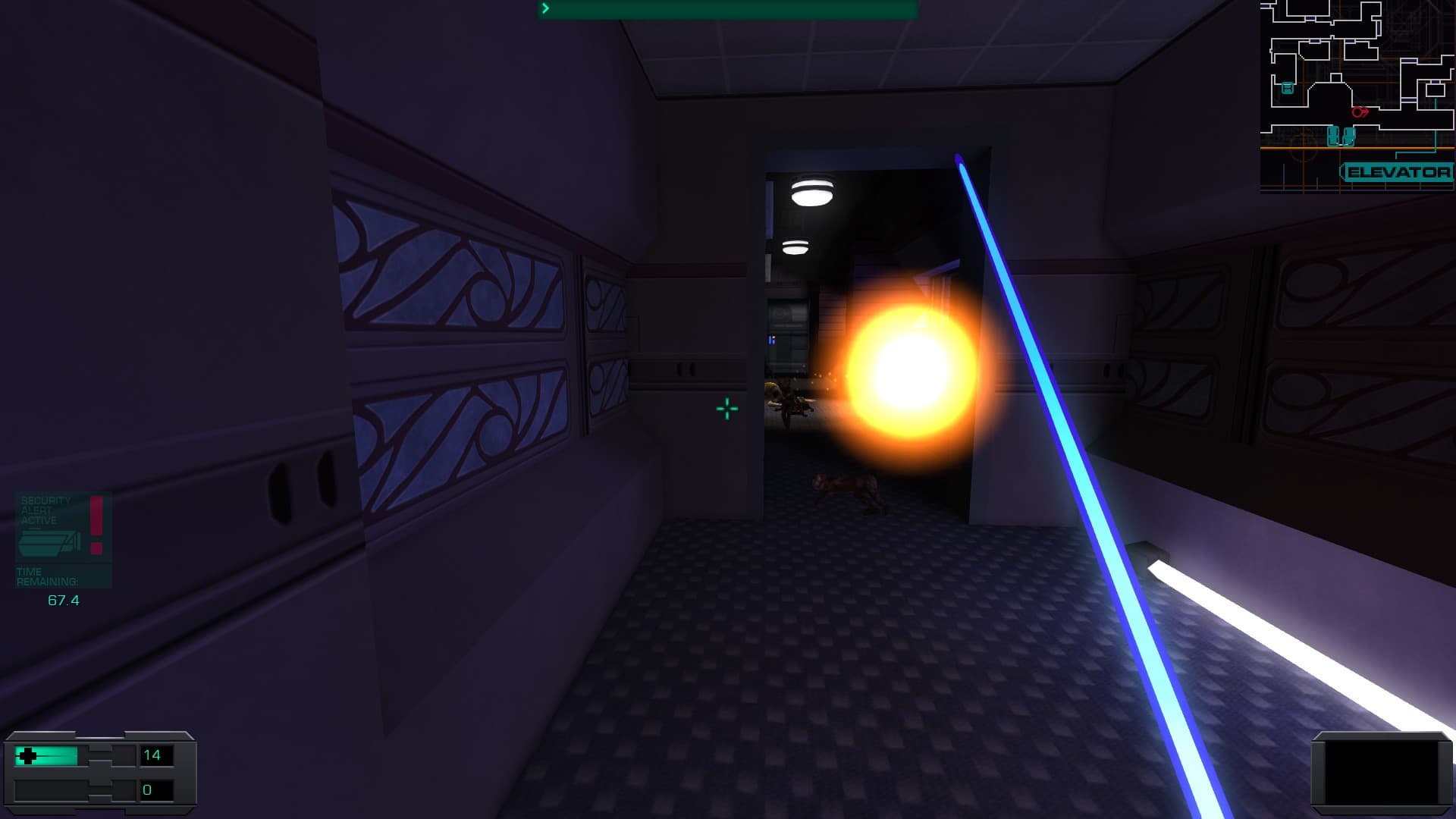
There is a mechanic tied to weapons that I consider redundant – guns degrade quickly. They need maintenance and repairs, requiring the development of dedicated skills. Guns you particularly like can be upgraded.
Standing apart from everything else is the psionic amplifier. In essence, this is the game's magic system, allowing you to pull objects, attack enemies, and buff yourself. This system was and remains an acquired taste — I still prefer investing scarce resources into conventional firearms. More bang for your buck and far less hassle.
The player can level up “hacking,” which allows disabling security systems and reprogramming turrets. It's just a shame that turrets provide so little utility that destroying them is simply easier. However, the ability to open certain locks and snag discounts at vending machines never goes amiss!
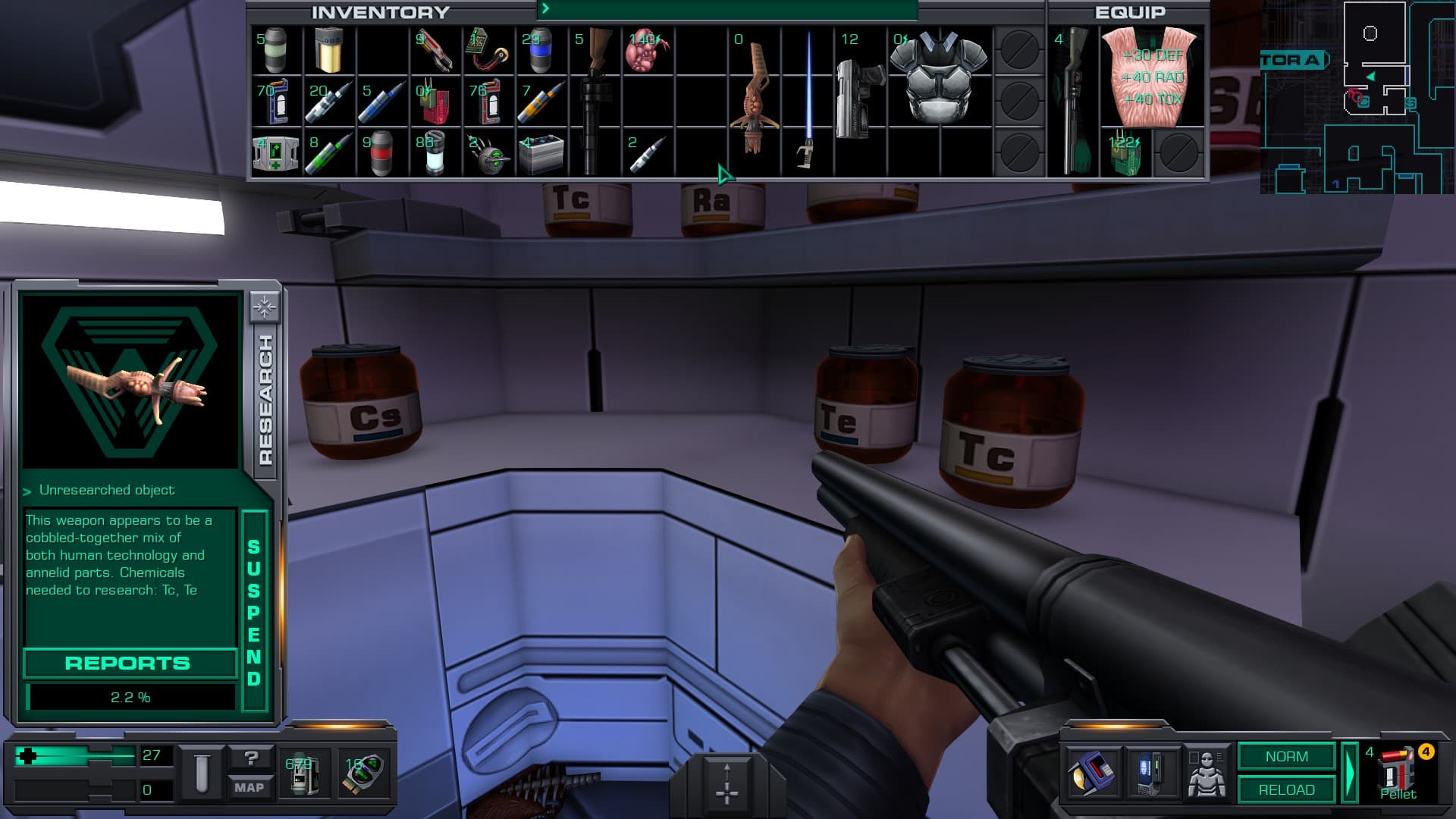
“Research” enables uncovering the properties of items. In most cases, this boosts damage against a specific enemy type or grants proficiency in using The Many's technology. That said, doing away with the need to hunt for research chemicals across laboratories, had that been added to the remaster, would have been vastly more convenient!
I played the game on the second-highest difficulty setting, which resulted in finding fewer resources. Early on, navigating the starship is especially punishing, but toward the end, a sense of omnipotence sets in as you sprint at top speed toward an enemy to slice them down with a laser rapier, or mow down everything in sight with an impressive arsenal without sparing a thought for remaining ammo or incoming damage.
Putting enemies out of their misery
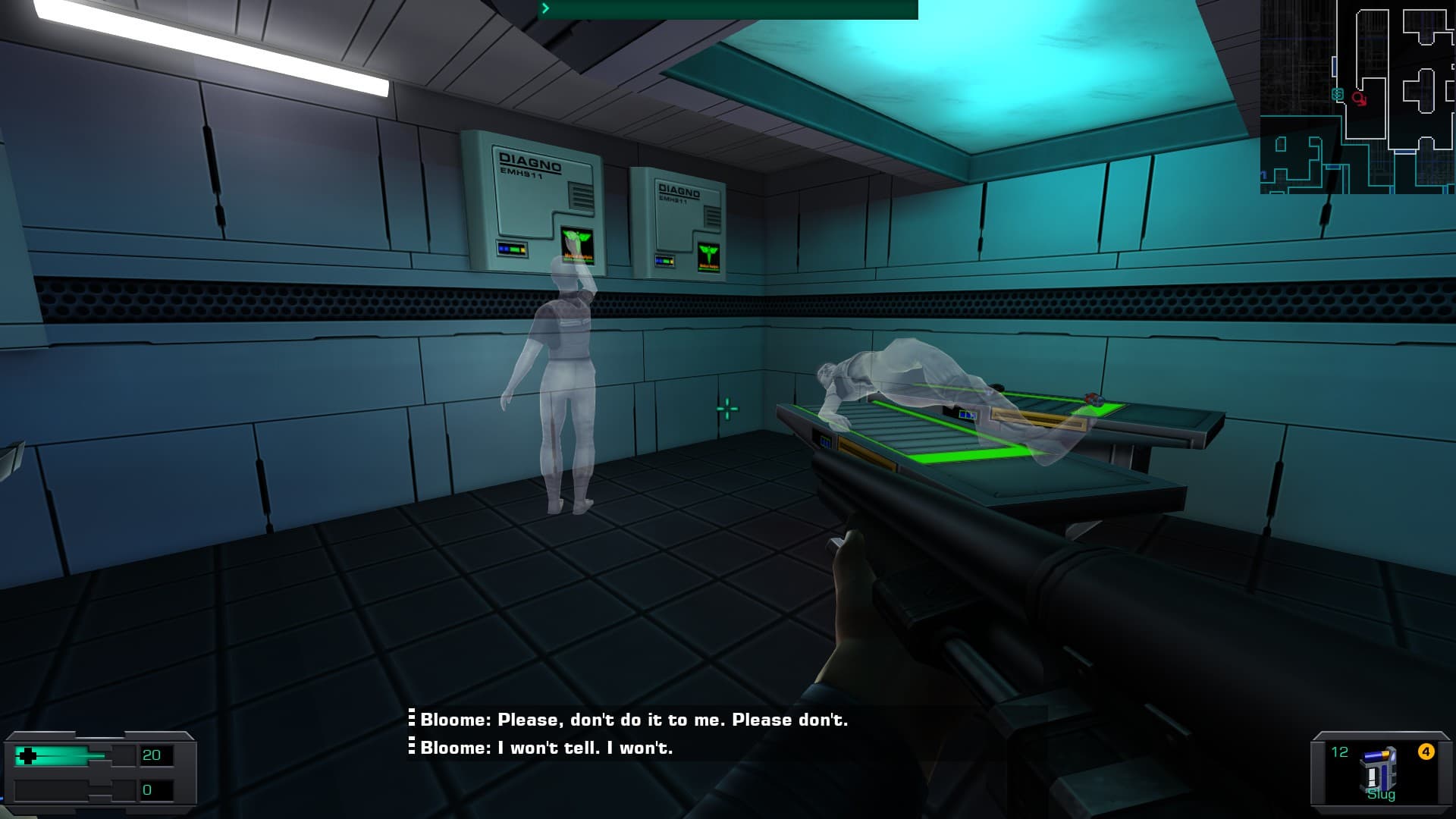
For the most part, enemy forces consist of mutated crew members. These former humans patrol the starship and pounce on the player upon detection. Yet enough humanity remains within them that they apologize while attacking and plead to be put out of their misery — another touch that chills and immerses you in the game's atmosphere.
If you choose a stealthy approach, beware — enemies react sharply to the sound of footsteps and move to investigate the disturbance. Curiously, loud gunshots or explosions seem to interest them far less.
A humorous detail is that the game is built on the engine of the Thief series — hence the hybrid models mirror the guards from early Thief titles: for instance, shotgun-wielding enemies move as if holding a sword.
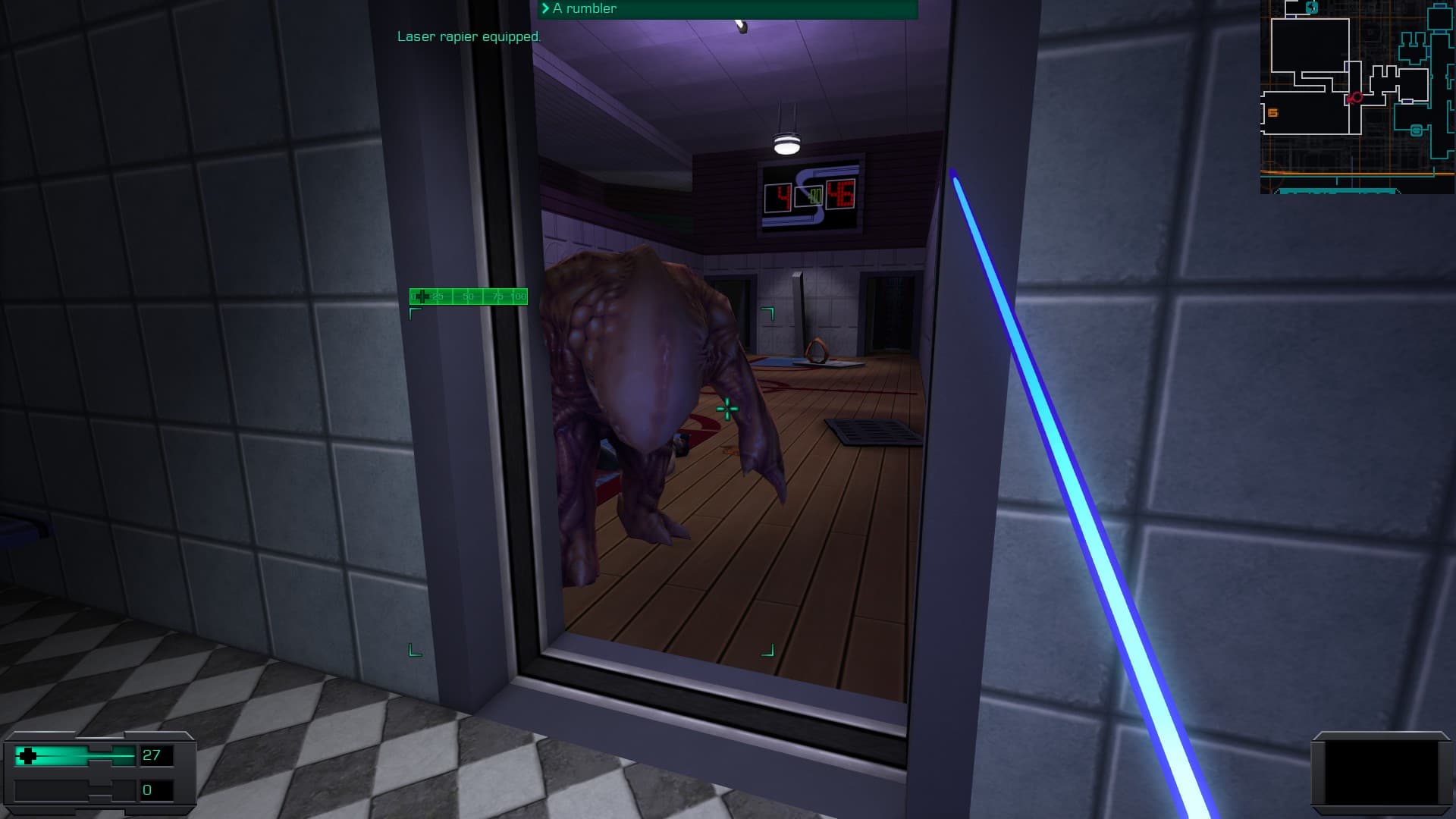
You'll have to deal with monkeys wielding psionic magic; worms and spiders; giant robots; gruesome, disfigured nurses. Different enemies possess vulnerabilities to specific ammo types, forcing you to swap them frequently. Some like to leave nasty surprises upon death, making you think twice before engaging in melee combat. What kind? I won't deprive you of the pleasure of finding out for yourself.
Each level features a restoration chamber where you respawn upon death. Dying without activating a chamber simply kicks you back to the main menu. In the first installment, a short cutscene played showing the protagonist being turned into a cyborg. It would have been atmospheric had the remaster of the sequel included something similar.
Diagnosis
Even after so many years, System Shock 2 remains engrossing to play. Much of this is credited to the masterfully developed conflict between The Many, two AIs, and the humans struggling to survive, the atmosphere aboard the starship, and the constant tension. Not to mention the freedom afforded to the player.
At first, navigating the starship Von Braun is tricky — especially amid numerous progression systems and environmental interactions. But over time, you begin to feel confident amid the chaos, while eerie sounds and magnificent ambient audio pull you deeper into the experience.
Yet the question arises: “Was a full remake of System Shock 2 warranted?” On one hand, it could have modernized outdated mechanics and made playthroughs more accessible for newcomers. On the other hand, the flaws of the original System Shock 2 are not severe enough to spoil the experience even in a remaster.
The remaster mostly improves visuals, making returning to an old game much easier — and as it turns out, nothing more was needed. Introducing more drastic changes could have disrupted the fragile balance and stripped away what has kept the title unique for two and a half decades.
***
Image rights belong to Nightdive Studios and Looking Glass Studios. The preview image is taken from SteamDB
Never miss our newsAdd this site to your preferred sources to see us more oftenAdd on Google