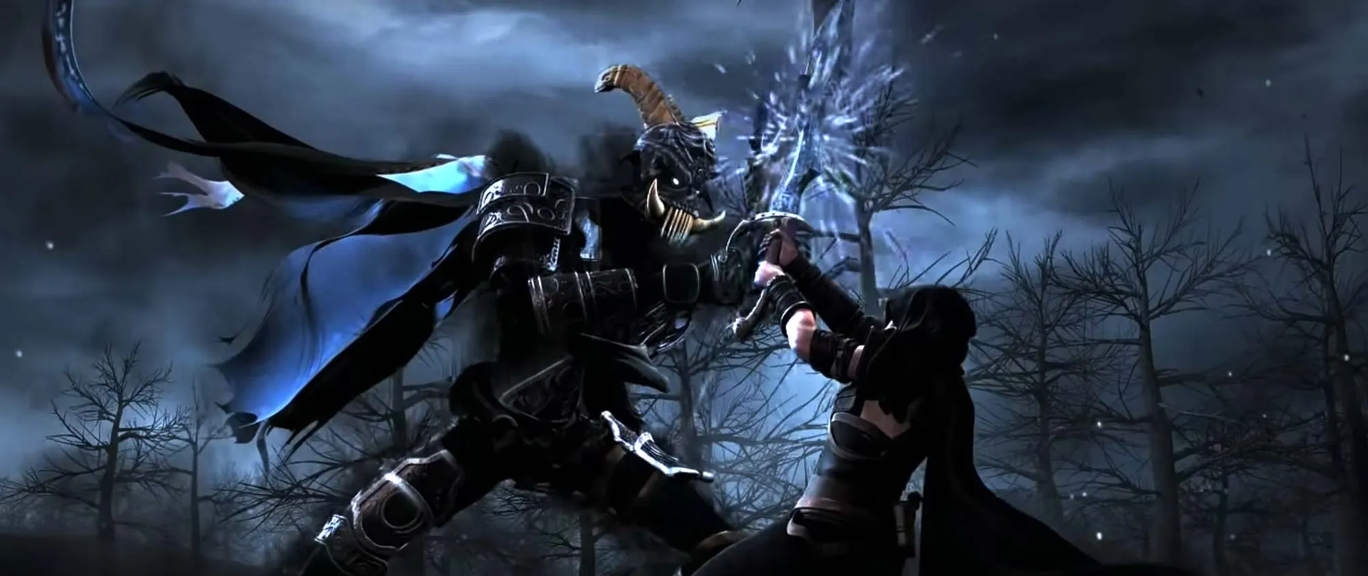
In 2006, Neverwinter Nights 2 was released — a role-playing game based on Dungeons & Dragons rules and continuing the traditions of the cult first installment by BioWare. Obsidian Entertainment created one of the most ambitious classic RPGs of its time: featuring a deep storyline, numerous side quests, a varied class system, and the ability to create custom adventures. Despite technical rough edges, the project won popularity among fans of D&D and classic computer role-playing games.
Today, almost two decades later, Neverwinter Nights 2 may be unfamiliar to a younger generation of players who grew up on modern RPGs like Baldur’s Gate 3, Warhammer 40,000: Rogue Trader, or Disco Elysium. For them, as well as for veterans wishing to return to the world of Faerûn, the Enhanced Edition was created — a remaster designed not only to revive the classic, but also to make it convenient to play on modern systems. In this review, we will examine what makes the original version notable, what improvements the remaster brought, and whether this cult RPG is worth checking out today.
A few words about the authors of the original
Obsidian Entertainment was responsible for developing Neverwinter Nights 2, a studio now known for its own AA projects The Outer Worlds and Avowed. Prior to that, they had a reputation as masters of creating sequels to great RPGs, albeit with technical issues. The studio was founded by former employees of Black Isle Studios — the team behind cult computer role-playing games like Planescape: Torment, Icewind Dale, and the original Fallout dilogy.
Obsidian’s first major work, Star Wars: Knights of the Old Republic II – The Sith Lords (2004), showcased the developers’ strengths: a dark and deep plot, well-developed characters, and respect for the original. However, it also became a symbol of the studio’s problems — the game was released in a rush, with cut storylines and plenty of bugs. But that wasn’t their fault, but rather the publisher’s, who was rushing for the Christmas holidays.
In the same vein, Obsidian undertook the development of Neverwinter Nights 2 (abbreviated as NWN2). For the studio, this was a chance to continue BioWare’s ideas and restore the scale of a single-player campaign with full party-based gameplay to the project. But even then, the developers’ reputation was twofold: deep stories and thoughtful mechanics were almost always accompanied by technical problems. This contrast became the studio’s calling card — fans valued their games for atmosphere and depth, but were willing to tolerate bugs, knowing they would have to wait for patches and rely on community mods.
“Classic” gameplay experience
The game is built on the Dungeons & Dragons 3.5 rule edition – one of the most respected and elaborate versions. For comparison: Baldur’s Gate 3 is based on the 5th edition, which is known for many simplifications, as it is designed to engage a new audience. Therefore, it should be mentioned that learning the rules and getting into NWN2 will be much harder than in the creation of Swen Vincke and Larian.
Every playthrough begins with character creation. The player needs to choose one of 15 classes and 10 races, most of which have their own sub-classes and sub-races. After that, you need to distribute attributes, skills, and feats. Later, the game allows unlocking prestige classes with unique abilities. Alignment, deity, appearance, and voice are also set. Although the appearance editor cannot boast a wealth of settings, you will in any case spend anywhere from a few dozen minutes to a couple of hours choosing the right combination of class, race, and moral alignment.
The plot begins in the provincial village of West Harbor and gradually leads the player to the city of Neverwinter itself, where intrigues unfold, political factions clash, and the fate of a magical artifact hangs in the balance. The campaign is packed with dialogue, moral choices, and side stories. Companions are not just background extras: each has their own personality, alignment, and personal quests, and their attitude toward the hero changes depending on player decisions.
The combat system in NWN2 is fully based on D&D rules and conveys the feel of an authentic tabletop session. Every action in the game is a virtual dice roll. When your warrior strikes, the system checks whether you beat the enemy’s armor class; when a wizard attempts to cast a spell, the target’s resistance chance is calculated; even stealth attempts, lockpicking, finding traps, or persuading NPCs in dialogues — all of this is backed by a dice “roll” and displays results in the chat log.
Battles take place in real-time with active pause, but the feel is closer to classic RTS: the player clicks on a target, selects spells or abilities, and the character performs attacks or spells until receiving a new order. At any moment, you can pause the game to issue detailed commands to the entire party and turn every chaotic brawl into a tactical turn-based scenario.
In addition to the story campaign, Neverwinter Nights 2 offered cooperative play and a campaign editor that allowed players to create their own adventures and share them online, ensuring a long life for the project thanks to the community.
Nevertheless, even at launch, the game had its drawbacks. It demanded a powerful PC by the standards of the time, yet didn’t deliver spectacular visuals: character models looked outdated, environments were rather sparse, and spells were the only visually striking element. The map was divided into small areas, each of which could be fully cleared in an hour. The inventory system felt clunky and inconvenient, while periodic bugs and odd camera angles in cutscenes broke immersion.
Despite all the shortcomings, the game quickly earned the status of one of the deepest CRPGs of its time — thanks to its atmosphere, scale, elaborate combat system, and endless customization options.
Why is the Enhanced Edition needed?
Several editions have already been made for Neverwinter Nights 2. The last one was the Complete Edition, released in 2013 and containing all DLCs. But that version included no technical innovations and only worked on ancient computers running Windows XP and older macOS. The game does not always launch stably on modern OSs, does not support QHD and 4K, and multiplayer officially ceased working back in 2012 — a year before the release of the Complete Edition.
According to the developers, the Enhanced Edition solves these problems — the game becomes available on modern devices and gets crossplay in multiplayer mode. This is not a radical reimagining of the game, but rather a “lifeline” for those who want to get acquainted with the cult RPG or return to it without fussing over patches and fan mods. However, the actual gaming experience contrasts sharply with the creators’ claims...
Do we need such a remaster?
The main virtue of the Enhanced Edition is that Neverwinter Nights 2 now runs without issues on Windows 10 and 11, supports modern resolutions, and runs on new platforms, including Steam Deck and consoles. The game received gamepad support, making it more accessible. The visuals were slightly refreshed: textures and models became crisper, effects brighter, and the UI was reworked to make it more legible at high resolutions. Official multiplayer with crossplay also returned, and the modding toolset was preserved, allowing the community to continue creating new campaigns. For those unfamiliar with the series who don’t want to fiddle with patches and settings, it really is a convenient way to experience a classic.
However, the remaster itself feels more like an attempt to cash in on fans’ nostalgia than a full-fledged update. Graphic changes mainly boil down to higher resolution textures for characters and environments, which makes the difference barely noticeable for most objects. With this approach, the game looks almost the same as in 2006, and the contrast between slightly touched-up models and the angular environment elements they are slapped onto looks truly disheartening.
The interface rework came down to a basic enlargement of all icons for high-resolution monitors and the integration of gamepad controls. But along with this addition, many other features regularly used by PC players were removed. Many old parameters in ini files, such as forcing maximum hit points or disabling intro cinematics, no longer work, and flexible UI scaling has been reduced to a couple of extreme settings, making the interface either far too small or overly large.
The custom toolset in the Enhanced Edition has also lost some functionality: the ability to manually load custom textures and manage additional content files has vanished, as all resource content is now packed inside a single file. Additionally, the system does not remember the recently opened modules the player was working on. Another annoyance is that custom UI settings reset every time you enter the options menu — after which you have to manually rearrange panels and configure hotkeys all over again. Furthermore, some small but useful features have disappeared from the game, including the ability to place custom map pins on the minimap.
There are also a number of serious complaints regarding the gameplay. Old bugs fixed by fan mods a decade ago have returned in full force, and alongside them, new ones have appeared: from broken voice selection during character creation and lack of lip-sync on NPCs to missing hit sounds and the user agreement popup appearing regularly.
The Enhanced Edition offers far too few improvements to justify the purchase for those who already own the original version with all DLCs and their own set of modifications. Compared to the original, which runs stably with fan patches, the remaster feels like a lazy port with minimal changes. The main value of the new edition lies in the ability to play on current-gen consoles. For everyone else — especially those already familiar with the original — that original remains a more stable and worthwhile alternative.
Diagnosis
Neverwinter Nights 2: Enhanced Edition tries to sell us the exact same game from 2006 with a couple of upscaled textures and a clunky interface that seems specifically designed to annoy the established PC player base. Aspyr promised to bring the classic back into action, but instead of a full-fledged remaster, we received a cheap re-release that doesn’t always run stably and resurrects long-eliminated bugs.
For veterans who witnessed the game’s crisis and greatness back at launch, the Enhanced Edition looks like an insult to Obsidian Entertainment’s past achievements. If you were hoping for improved graphics, stability, and decent optimization — forget it. It is still the same old Neverwinter Nights 2, only with a $30 price tag (the game is no longer available in Russia). If you play on PC without a gamepad, you are better off installing the Complete Edition with fan mod builds.
The Enhanced Edition, on the other hand, is suitable for those playing on consoles or wanting proper gamepad controls — it is implemented very conveniently and softens the negative impressions of an underwhelming re-release.