Analysis of "Star Wars: Visions. The Ninth Jedi" - cool idea, dull execution
Translated with AI from the Russian original.
In early August, the animated series "Star Wars: Visions. The Ninth Jedi" was released on Disney+. This is a continuation of two episodes from the "Visions" anthology - a collection from various anime studios offering a new perspective on the universe. "The Ninth Jedi" was the first to receive a separate series. Today we will talk about it.
Many centuries after the Skywalker saga, the far, far away galaxy has changed. Jedi and Sith have by this time become a myth, but Force-sensitive people have not disappeared. Some of them are trying to restore the once great order, but for this, they need lightsabers.
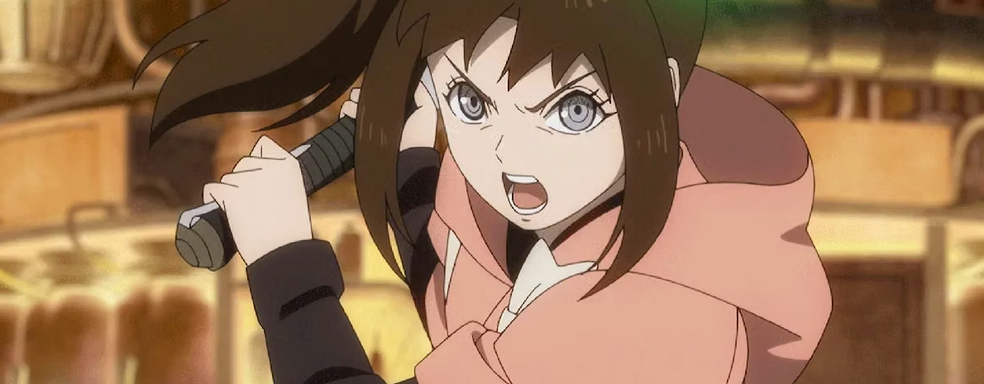
Few remain who can create this elegant weapon of a civilized age. And the last known master, La Zhima, was kidnapped. But he managed to make a batch of sabers and give them to his daughter, the Force-sensitive Kara, who, along with other "Jedi," went in search of her father.
What makes the project stand out
"The Ninth Jedi" has several things that set it apart from the vast number of "Star Wars" projects.
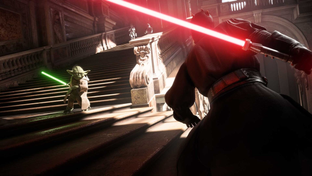
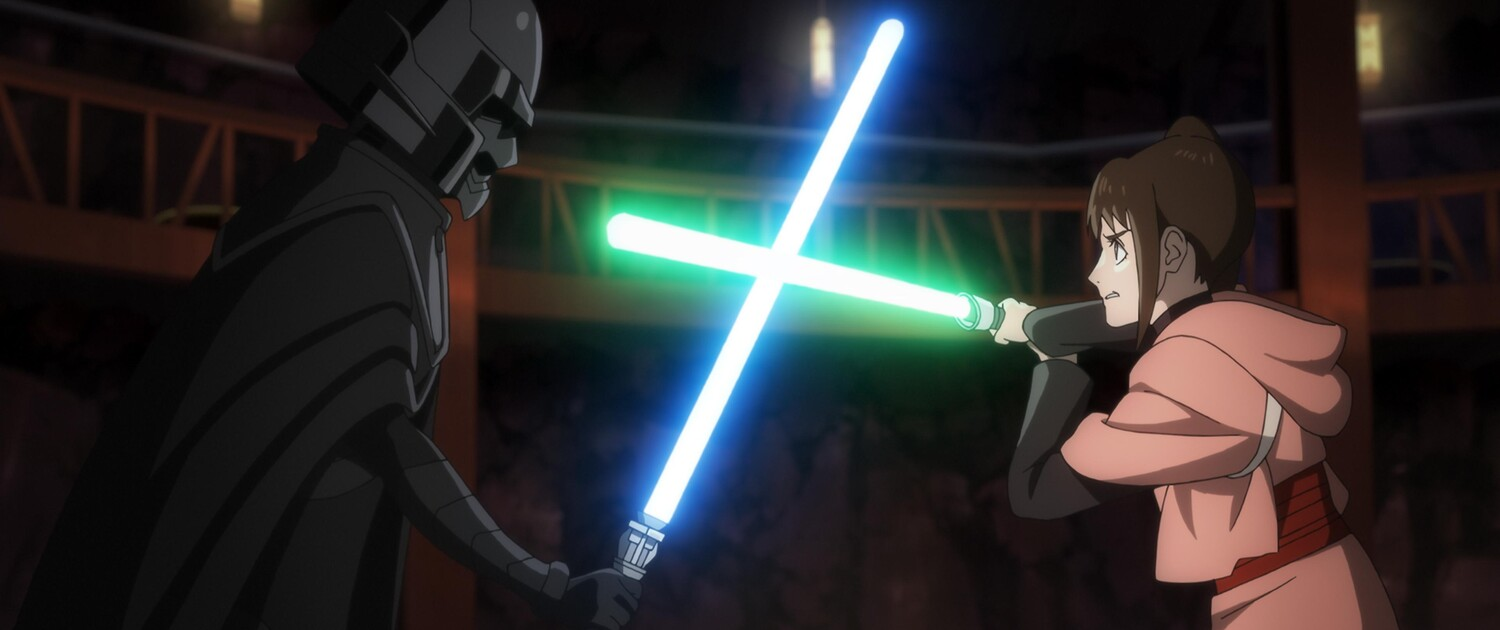
First, the series offers a unique take on lightsabers. La Zhima created not just laser blades from multi-colored kyber crystals, but incorporated an interesting feature: the color of the saber is not static, but depends on the user's emotions and motives.
Thanks to this, the main characters use sabers as a way to test each other and other characters: if someone takes a blade and its color turns red, it means they are an enemy.
The main characters and their views are revealed through the sabers. "The Ninth Jedi" takes a different look at emotions and their influence on Force-sensitive characters. For example, in one scene, Kara's blade turned red when she succumbed to anger. But she realized that this did not make her evil, and so the saber's color turned green again. After all, everyone has negative emotions, even Jedi, and the main thing is not to succumb to them.
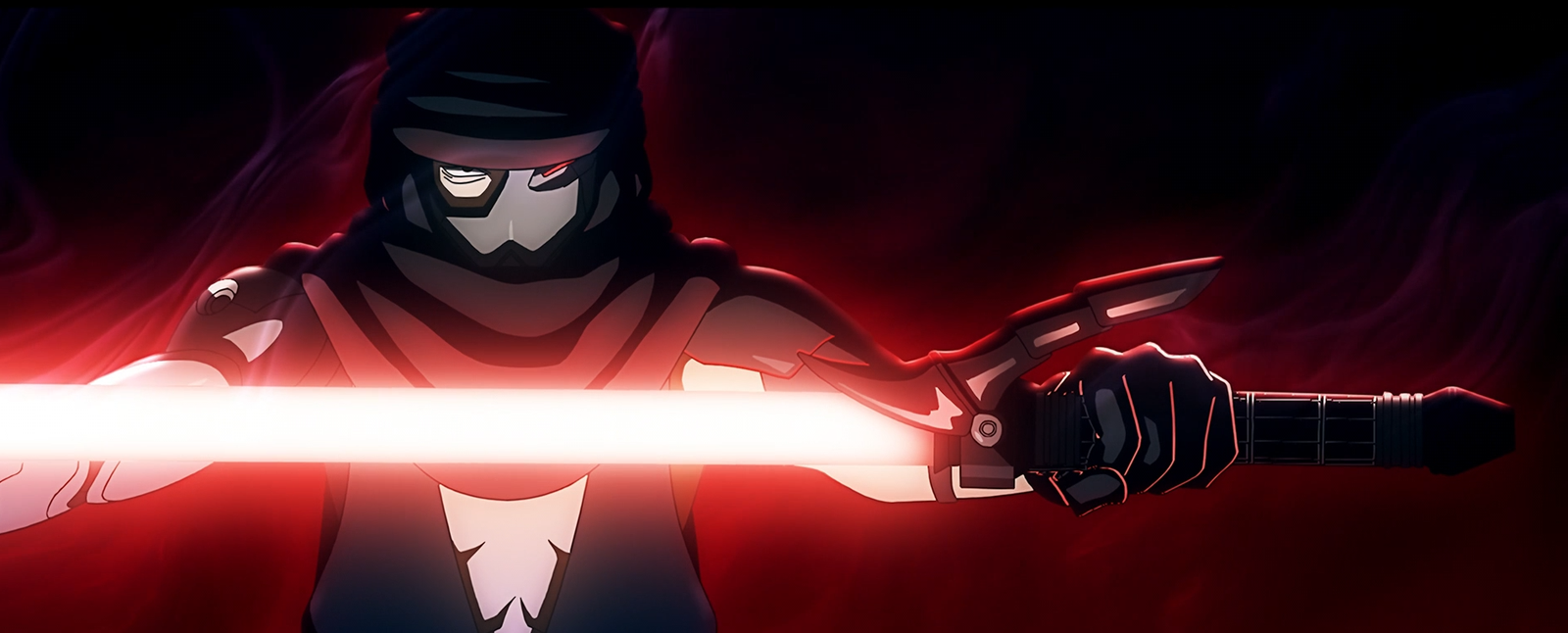
The antagonist here is not a typical Sith, but a person who views feelings and their influence differently. This view stems from psychological trauma that will be revealed in one of the flashbacks. This means that the subtext of what is happening is more human and "gray," rather than fairy-tale-like, "black and white."
The series is not tied to the main projects of the franchise. You don't even need to watch the original trilogy to more or less understand what's happening — only two episodes of "Visions." And given that the action takes place in the distant future, the universe is also a little different.
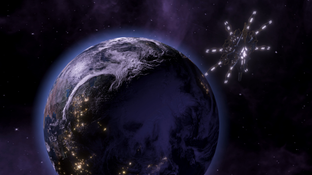
All this makes "The Ninth Jedi" not the "Star Wars" we are used to, although the project retains a huge number of familiar elements: an analogue of the Death Star, the question of tyranny and freedom, hyperspace jumps, droids, and so on.
The series is excellently drawn — this is a project by the Japanese studio Production I.G, known for anime such as "Haikyuu!!", "Psycho-Pass", "Kuroko's Basketball", and "Ghost in the Shell".
The creators did an excellent job on the character design: the drawing style is "anime-like," but not exaggerated. And the animations are deep and spectacular — especially good are the battles after the main characters realized how they can "manipulate" feelings to become stronger.
Not everything is so good
But this is not enough to ignore the problems that greatly spoil the impression during viewing.
Despite the lack of pronounced exaggeration, "The Ninth Jedi" is an anime, which means the project is not without clichés. For example, the plot cannot take bold steps where it is needed, which is why some protagonists survive when they shouldn't have.
From time to time, the power level of the characters fluctuates. Including Kara, who is sometimes weak, and sometimes very strong — without any training. This is not the classic "power of friendship" or Mary Sue-ism, but it is very similar: when a hero overcomes himself through moral and volitional efforts and becomes stronger.
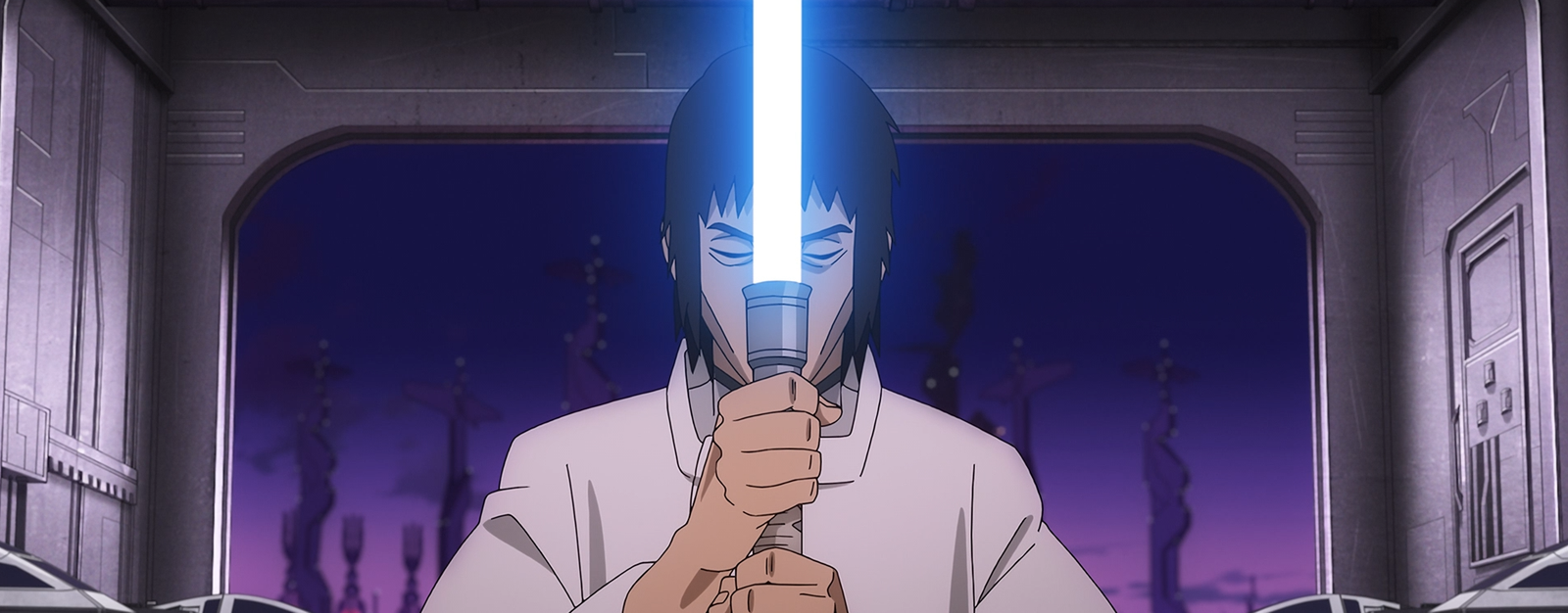
Given what is happening, Kara's views and those of some other heroes who refuse to kill enemies seem foolish and too naive: this is a harsh world of space where pacifism is inappropriate. Even the Jedi never hesitated to "chop up" enemies left and right.
The logic of the antagonist's image also falters. He promotes an unusual approach to emotional control for the universe, which is more characteristic of the Jedi, but his actions and views on the world are very similar to those of the Sith.
Yes, in the finale this is played out and makes the character closer to ordinary villains. But given that the sabers react to the characters' emotions in real time, it looks strange: contradictions in words and actions are striking.
Many characters remain background: they have neither personalities nor backstories. Most of these "Jedi" only flash in the background, creating a crowd and inserting various phrases to fill the pause. If they were removed, nothing would change.
Although the project offers a new perspective on the franchise, the plot is too simple: there are no sudden twists, unusual plotlines, or great sacrifices — with one exception.
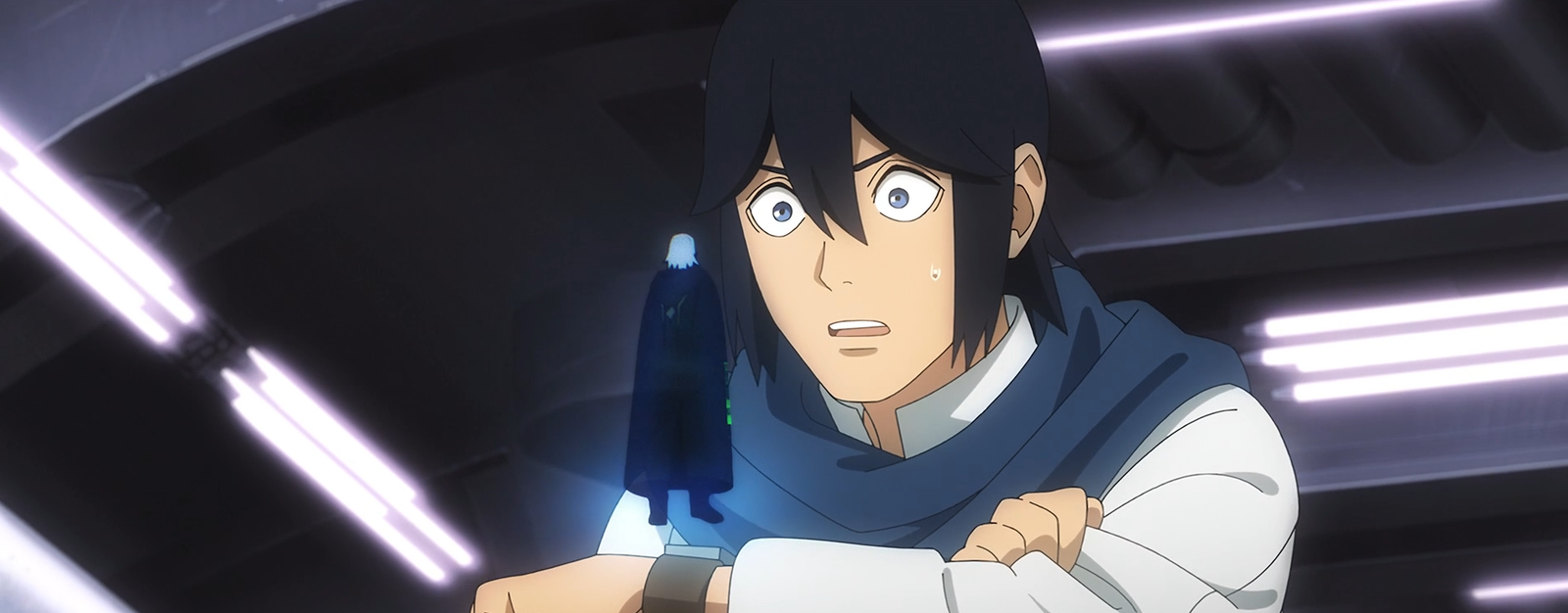
The series severely lacks scale: the villain creates a device capable of destroying worlds with a snap, but the direction and plot devices do not convey the threat. There is no majestic music, no build-up, no spectacular shots. It seems like an ordinary episode from life, not an epic space saga in another galaxy!
Verdict
"Star Wars: Visions. The Ninth Jedi" is an interesting experiment. The project offers a new perspective on lightsabers, emotions and their connection to the Force, as well as the familiar conflict of light and darkness, shown in "silver" tones.
But the series severely lacks dynamics: for eight episodes, there are very few events that would make it not just an interesting concept, but a good and memorable story. There wasn't enough impression — emotions, intensity, and drama. The project is simply boring and rarely engages the viewer.
In addition, it is full of foolishness and contradictions, and many characters, with the exception of the main character, her father, and the antagonist, are present only for show. Although there are a couple of interesting characters.
Therefore, I cannot say that "The Ninth Jedi" should not be missed under any circumstances. It is worth watching only for those who want new food for thought about the far, far away galaxy in the style of "What if?". But without claiming fidelity to the original source, because "Visions" has never been canon. And what potential it had...
Never miss our newsAdd this site to your preferred sources to see us more oftenAdd on Google