Back in 2002, when the phrase "spy thriller" was firmly associated with Metal Gear Solid for most people, and "silent infiltrations" brought to mind images of Garrett the thief and Hitman's bald head, three bright green lights appeared from the utter darkness. The owner of this original accessory was a top-secret "Third Echelon" agent named Sam Fisher. The perfectly polished mechanics of silent warfare made the game a trendsetter in the genre. Sequels and spin-offs were not long in coming. The franchise evolved, new features appeared, multiplayer components, daytime missions. However, after being in the shoes of a double agent, the hero disappeared from view for a long time. The fifth installment underwent a concept change, was postponed many times, but the return still happened. Unfortunately. Sometimes it's better to leave gracefully and not return.
New Season – Aging Hero, Different Rules
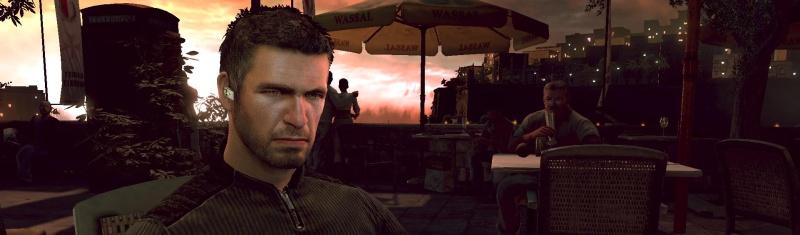
After another rescue of democracy and the planet, Sam Fisher finally decided to rest and properly relax in a cafe. But it's not so easy to get rid of the "Third Echelon". The waiter brings the hero a phone, from which a painfully familiar female voice of a contact is heard. The lady informs Sam that an assassination attempt is being prepared against him by a group of mercenaries, so "Grab a pistol and shoot back!" After a lively skirmish with the assassins, he is given a familiar offer. And where to kill the villains and how - he can choose himself. Whether in bathrooms or toilets. The latter, by the way, he now does best.
The storyline has been significantly reworked, and this has benefited it. Here you have conspiracies of varying degrees of inconceivability, and "black arrows", and "white boxes", and high-ranking officials. Particularly explosive warheads are included. All this is intertwined into a single knot and skillfully unraveled until the very end. The screenwriters, without hiding it, borrowed ideas from the series "24" and the Jason Bourne trilogy, but overdid it. So much so that Sam Fisher lost his own face.The main advantage of the updated story lies in the characters. Instead of puppet dictators with "their own truth", unscrupulous scoundrels appear on stage, ready to drown everyone in rivers of blood to achieve their goals. And the main character's employers are no better. Sam, from "just another freedom fighter", has turned into a chess piece, only shown where to go and whom to hit. The narrative is not so much about revenge as it is about how a person who sincerely believed in the ideals of the organization was turned into a bargaining chip.The material is presented very professionally. Excellent acting (special thanks to Michael Ironside) is combined here with masterful direction of videos, made as if with a handheld camera, in the style of a documentary chronicle. Sometimes during dialogues, a projection of the speaker's black-and-white memories appears on the walls. Very effective.
The improvements end with the plot, and then frankly ambiguous innovations in gameplay begin. Before us is a completely different Splinter Cell, radically different from its predecessors!The developers decided to simplify a number of aspects related to silent combat. Now Sam is either in the dark (the picture becomes monochrome) or in the light. There are no more gradations of visibility and halftones. Several "speeds" of movement have also vanished. The hero can run, walk, and crouch. Picking locks with lockpicks? A powerful kick - that's our method! What's more, the enraged agent doesn't even want to drag corpses.But Sam has noticeably gained agility. The dashing warrior easily jumps over boxes, climbs pipes and ledges like a Persian prince. The cover-based combat system has also been significantly improved. Now Fisher not only presses against boxes and columns, but has also learned to make quick dashes from one safe place to another. It is enough to indicate the destination, and the once clumsy spy will slither to the specified point.Actually, reflections on why Sam was turned into a typical modern universal soldier end immediately after the tutorial. The game has turned into a simple action game. Leaving the idea of an open world for Assassin's Creed, the authors returned to the good old linear concept. There is a level, there is a task - act! Stop racking your brains, studying routes, saving time, calculating steps. Shotgun in hand, and go.
In most cases, the hero has no special choice, and open armed conflict is inevitable. Either clear a room of unfriendly elements, or it is necessary to defend a position from rushing enemies. Detours rarely go beyond a few doors in one long room and a couple of windows. Or they put the hero in a long, narrow corridor and ask him to trudge a good kilometer, leaving behind mountains of lifeless bodies.However, Ubisoft Montreal did not dare to completely discard the "quiet" segments from the game. Sometimes the hero is forbidden to go head-on, and he is forced to remember his former skills. Here he has to hide from the watchful eyes of cameras, and turn off the light if possible. Of course, such inserts are no match for previous installments. It has come to the point that detours and objects that can be dropped on someone's head are themselves highlighted in the dark.The bias towards shooting could be understood and forgiven, if not for one "but" - the behavior of enemies. For example, Sam took out a sentry, and the lifeless body was discovered by a comrade. He will run up to the corpse with wild screams and immediately receive his portion of lead. Soon the same fate will befall the third. And the fourth. And however many more remain. In general, enemies, when they don't see Fisher, operate on the principle of "more talk, less action". They aimlessly wander around one by one and incessantly shout curses.If the agent is spotted, his silhouette appears on the screen, the so-called "last known position". In this case, the dummies either start shooting in that direction or rush towards the outline. This function can be used as many times as desired to freely flank, get behind enemy lines, and deal with helpless extras.However, enemies overwhelm by numbers. And here you realize that the infinite ammunition for the pistol is not a miscalculation by the developers at all, but a harsh necessity, because by the end of the game, it feels like you've annihilated half of the US Army's personnel.
In the most difficult circumstances, it makes sense to use another new trump card - the ability to kill several opponents in an instant. This system is called "mark and execute". After marking several targets, we simply watch as the hero kills everyone who received a "black mark" in one fell swoop. To earn the right to use such a superpower, you will have to kill some unlucky person in hand-to-hand combat. Or throw them off a balcony. Or jump on them from above. There are plenty of options. But these deaths look very unconvincing. Sometimes the camera shakes wildly, sometimes a creepy animation flashes, sometimes the villain flies away from a barely noticeable poke to the back of the head.In addition to standard pistols, assault rifles, and various grenades, the hero's arsenal also includes fun gadgets. Remote-controlled mines, stunning electromagnetic devices, and explosive surveillance cameras. The old "three-eyed" night vision device has given way to a new one capable of detecting enemies through walls. All weapons can be upgraded: accuracy, stopping power, attaching silencers and optical sights, increasing the number of "marks".Sam is repeatedly forced to extract information from particularly important persons using torture. Smashing a villain's head into a urinal, playing his skull on a piano, frying his face on a stove, or breaking some other piece of furniture is an excellent opportunity.There are good ideas, but Conviction's weakest point is the shooting component, yet it receives the most attention. "Sam, reinforcements are approaching you," "Sam, you must hold on!" How much more can one take? The entire complexity of confrontations lies in Fisher's weak health and the gradual thickening of enemy armor. And a short journey (about seven hours on the maximum difficulty level) simply turns into another tedious, monotonous shooter with very rare entertaining episodes. Sometimes sneak quietly, sometimes extract information, sometimes... "Sam, kill them all!" Again?!
The graphics in Splinter Cell: Conviction bring back memories of a time when shaders and GeForce 3 didn't exist. Ubisoft was only able to squeeze a detailed Sam model and a lighting system out of the heavily modified Unreal Engine 2.5. The other participants in the show resemble flat and angular mannequins. The environment is poor, and the textures are of terrible quality. And all this "beauty" on the Xbox 360 barely maintains an acceptable frame rate and runs at a ridiculous 576p resolution. In the PC version, at least you can crank up the resolution and anti-aliasing, but to get rid of slowdowns, you'll have to buy a top-tier computer. Optimization is nowhere to be found.
Birds and Archers
For those who don't want to fight alone, a cooperative campaign is provided. A "Third Echelon" operative (Archer) and a Russian special services agent (Sokol) must prevent the sale of EMP warheads on the black market. This story is a prequel to the main events. Get ready to meet familiar faces.It seems that here the game should reveal itself, but it was not to be. Again, they force you to methodically clear room after room of idiotic enemies. Situations requiring actual team interaction, if they arise at all, only occur when the use of firearms is prohibited. Sometimes the action degenerates into a banal arcade. One player fends off an endless stream of enemies, while the second pulls switches. And a four-hour addition is unlikely to make you want to return to it again.
Moreover, the frame rate constantly drops to an unplayable level. And this is on both platforms and regardless of settings. There can be no talk of any pleasure when the picture barely moves, and aiming turns into underwater hunting.
You and I, and We Together
Finally, the third component of Conviction - multiplayer - causes the fewest complaints. In "Hunter" mode, two players must kill all opponents in a designated area of the level. If you are detected, reinforcements will arrive. In "Infiltration", the rules are even stricter. An alarm raised means defeat. This is where you are forced to use spy skills and maneuver, trying to remain undetected."Face to Face" is the only competitive mode. Two warring agents find themselves in one location populated by hostile mercenaries. The idea of "last known position" takes on new meaning. If you fall into the sight of the dummies, your silhouette is displayed on the opponent's screen. Victory in such skirmishes is not easy and guarantees a sea of positive emotions.It was not without the currently fashionable variation of "Horde". Players defend a generator from increasing attacks from ill-wishers. Given that such entertainment gets boring even during the playthrough, this "fun" is not worth attention.
It's a pity, but the network code only supports two players in all modes. There is no progression system. There is enough money for upgrades for your favorite guns. Simple maps are quickly memorized, and all this gets boring after a few evenings.In the duel of two versions, the Xbox 360 emerges victorious. Firstly, the PC has neither voice nor text chat. Because of this, some sections are completed on the principle of "maybe it will work on the tenth try". Secondly, agonizingly long waits for matches, crashes due to connection loss. Finally, Ubisoft DRM protection is far from perfect. It's not very pleasant to receive a message on the screen during an intense battle "Connection to server lost. Please wait".
Diagnosis
All honor and praise to Michael Ironside and his colleagues. If not for their amazing acting, the project would have resembled a low-budget "Bourne-esque" knockoff from some unknown studio from beginning to end. The masters from Ubisoft Montreal decided to make a shooter out of a spy thriller, but did not succeed. The enemies are stupid, and game situations with hordes of rushing enemies sometimes turn Sam Fisher into an unconvincing parody of his "serious" namesake. Co-op is there, but the potential of the game concept is barely revealed even here. Multiplayer is available, but there is only one competitive mode and it's for two people.The problem is not even that Conviction is completely unlike the previous installments of the series (Splinter Cell fans definitely have nothing to catch here), but that the game is frankly boring and underdeveloped with outdated graphics and clumsy animation. One thing is encouraging - Ubisoft knows how to learn from mistakes, and the second part of Conviction may well become an excellent action game. This one didn't.
Pro:
- Intriguing storyline
- Excellent acting
- Well-implemented cover-based combat mechanics
- Brutal methods of "extracting" information from characters
- Single-player campaign, co-op, and multiplayer component in one box
Contra:
- Many blatant borrowings from the series "24" and the Bourne trilogy
- Single-player and co-op campaigns are overloaded with monotonous, drawn-out combat situations
- The idea with interrogations is tacked on "just because"
- Fantastically stupid adversaries
- "Silent" kills look unconvincing
- Mediocre graphics and terrible optimization (especially for the co-op campaign)
- Multiplayer is designed for only two players and quickly runs out of steam
- Lack of any way to communicate with a partner (PC version)
- Long waits for matches, crashes, DRM issues (PC version)