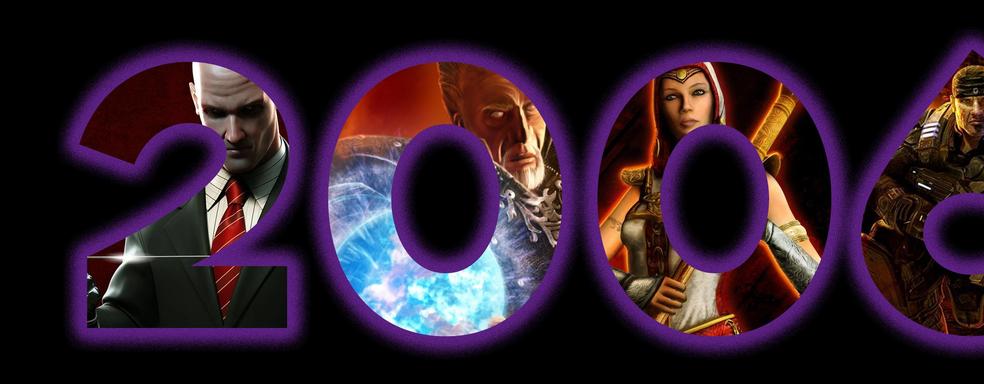
Top 10 Games Released in 2006 [Gaming Archive]
Translated with AI from the Russian original.
Are games that are 20 years old already ancient? Come on. Just compare the top ten titles of 2006 with modern releases. And you know what? It's not at all certain that these "old-timers" won't outshine today's newcomers. And we're not even talking about "timeless" classics like The Elder Scrolls IV: Oblivion - few can compare to that. But even without it, 2006 was truly a landmark year.
The Elder Scrolls IV: Oblivion. Release – March 20, 2006
The cult surrounding The Elder Scrolls series had formed even before Oblivion's release. But it was with Oblivion that this cult turned into a phenomenon. How did this happen? Development began immediately after the release of TES III: Morrowind in 2002. By this time, the Bethesda team, led by Todd Howard, had become so proficient in creating role-playing games that the entire production cycle took just under four years. Yet, the game turned out to be not just massive, but, more importantly, captivating. The graphics, excellent by 2002 standards, the well-developed lore, and the characters of Morrowind laid a strong foundation, but it was Oblivion that elevated the series' formula to a completely new level.
Oblivion became more accessible to a mass audience, trading Morrowind's harsh aesthetic for an almost colorful high fantasy world. Much effort was put into bringing the open world to life, despite the hardware limitations of the time: the Havok physics engine allowed interaction with every object (the famous bucket on a merchant's head came from here), and the Radiant AI system gave NPCs schedules and personalities, making cities feel like bustling anthills. Added to this were Jeremy Soule's epic soundtrack and, arguably, the best faction quests in the genre's history – from the Dark Brotherhood to the Thieves Guild. It was (and remains) one of the best sandboxes in the gaming industry.
Why is it worth revisiting today? Yes, modern RPGs often offer denser and richer open worlds; they are more technologically advanced and larger in scale. But they often fall short of Oblivion in the density of manual design, and most importantly, in the manually crafted story. No AI-generated filler. As for the edition, you can still find "5th Anniversary Edition" discs for PlayStation 3 on the secondary market, which include the excellent Shivering Isles and Knights of the Nine expansions. But that's retro gaming. Therefore, the ideal gentleman's path is to buy the official edition and spend an evening installing patches and proven mods. Only then will Cyrodiil reveal itself in all its glory, still relevant exactly two decades later.
If you're looking for an easier path, the recent remaster, The Elder Scrolls IV: Oblivion Remastered on Unreal Engine 5, has preserved the project's soul (along with its old bugs). As our author Eduard Epstein rightly noted: "If you've never tried the fourth 'Elder Scrolls,' then the re-release is the best way to get into it."
Tomb Raider: Legend. Release – April 7, 2006
Lara Croft, however we call her – a style icon, a fearless archaeologist, or simply an iconic heroine – is still a woman, so a certain inconsistency is quite forgivable. The Tomb Raider series has already undergone several global reboots, and a fourth, it seems, is not far off. But for players, this is more of a plus: the first installment of any new era of the franchise traditionally becomes a real hit. And Tomb Raider: Legend (2006), which kicked off the famous trilogy that also included Anniversary (2007) and Underworld (2008), was no exception. Crystal Dynamics was responsible for the development, and they managed to find a completely fresh take on the classic adventure formula.
After the angular and sometimes "clunky" gameplay of Core Design's games, Legend offered smooth, acrobatic, and incredibly responsive movement mechanics. Lara finally learned to cling to ledges, use her famous grappling hook to swing over chasms, and solve puzzles that required not just random jumps, but a real analysis of the environment. The plot was not just about searching for ancient artifacts, but also revealed Lara's inner world. It was a perfect reboot: it respected the legacy of the 1996 original, but at the same time looked and played like a modern blockbuster.
In fact, it still plays well today. Moreover, Tomb Raider from the 2000s differs from both modern Tomb Raider games and those from the 1990s. On the one hand, Legend is "old school," but the packaging is already quite modern, while lacking the excessive grimness and "survival" mechanics that later overloaded the series. Here, there's an ideal balance between tomb exploration, platforming, and dynamic shooting. Oh, and in the 2000s, they still tried to make Lara Croft visually appealing.
Heroes of Might and Magic V. Release – May 16, 2006
It is generally accepted that the best part of the Heroes of Might and Magic series is the third one. A truly cult game that has not lost its magic even decades later. But if you ask which part holds an honorable second place in the fans' ranking, most would confidently name Heroes of Might and Magic V. These were the last "full-fledged" "Heroes," a worthy continuation of which the community waited for twenty long years (and, it seems, finally got with the release of Olden Era, which is currently in early access – see review by Maxim Ivanov).
The secret to Heroes V's success is simple. Firstly, development was entrusted to people who truly understood the franchise: the Russian studio Nival employed avid fans (and who in Russia in the "noughties" wasn't a fan of "Heroes"?). Secondly, the innovations didn't break the familiar gameplay but only added depth to it. The ATB (Active Time Battle) system appeared, transforming turn-based battles into dynamic chess where the speed and initiative of creatures played a key role. Each of the six factions gained unique racial mechanics: be it the runes of the dwarves, the classic raising of the dead by necromancers, or the infernal gates of demons. At the same time, the game transitioned to full 3D graphics for the first time in the series, carefully preserving the recognizable fantasy aesthetic, and Rob King's orchestral soundtrack is still considered one of the best in the series.
Is it worth playing the fifth "Heroes" now? My answer as a devoted fan of "Heroes III" is unequivocal: yes, at least for playing through the magnificent campaigns, if you are not yet familiar with this installment. Complete newcomers might consider the upcoming Olden Era with its modern graphics and carefully preserved universe. However, if you mature to serious PvP, then today the undisputed king of the tournament scene remains the fan-made version of Heroes III: Horn of the Abyss (HotA). Yes, competitions are also held for HoMM IV and HoMM V (with the latter being manually balanced using the Tournament Edition mod), but the "three" is still preferable in this regard, and Olden Era still has to grow to the level of esports disciplines.
As for purchasing, in Russia, the optimal choice remains the edition from "Buka" company. The main thing is to make sure that both large add-ons are included: "Hammers of Fate" and "Tribes of the East," which add new campaigns, heroes, and factions. However, the Steam version will also suffice.
Hitman: Blood Money. Release – May 26, 2006
The Hitman series, despite 20 years having passed since Blood Money's release, has held up surprisingly well. The latest installments of the franchise have been commercially successful and very warmly received by stealth-action enthusiasts (see review by Maxim Dragan). Moreover, the same developers from IO Interactive recently breathed new life into the James Bond franchise with 007: First Light (review). Against this backdrop, recommending a return to a twenty-year-old game sounds strange. Graphically and gameplay-wise, it no longer looks modern, but...
But the old Hitman, though different, is a nearly perfect stealth game with unprecedented freedom of choice for its time. Blood Money perfected the series' formula: it introduced the ability to pick up weapons from defeated enemies, a well-thought-out system for covering tracks, and, of course, polished level design. Just like today, each mission in Blood Money is a complex puzzle that can be solved in dozens of ways: from silent elimination with poison to orchestrating a large-scale "accident" involving environmental objects or an unsuspecting passerby. After all, no one cancels a frontal assault (though it's doubtful that would work).
So why play it today? Because modern stealth games are often overly linear or overloaded with markers, whereas Blood Money fully trusts the player's intelligence, encouraging experimentation and a creative approach to eliminating targets. Because since the release of Hitman III, nothing similar has come out. And simply because it's a classic. Plus, starting your acquaintance with the series with Blood Money is simply cheaper.
FlatOut 2. Release – June 30, 2006
The early 2000s saw the undisputed heyday of the Need for Speed series: Underground (2003), Underground 2 (2004), and Most Wanted (2005). Glamour, neon, carbon, beautiful girls, fancy cars, and stylish vinyl decals. In contrast to this sterile polish, another racing series gained popularity – FlatOut. Clumps of dirt, unfair tricks, delightfully silly challenges, and most importantly – you could (and should!) smash your car to smithereens. And it was the second installment, released in 2006, that embodied this rebellion against EA's sterile street racing.
Here, there are no "plastic" nobodies behind the wheel, smeared with ketchup (how annoying was the catch-up mechanic in NFS, where a hard-earned lead at the end of the race is nullified by the AI, because it's "more interesting" that way). Here, every driver has a name and a biography. And there's also real fun from the racing process itself. The Havok physics engine worked wonders: body deformation depended on the angle and force of impact. So if you hit an opponent, you had to know where to hit to stay on track yourself and knock the opponent out. But the main treasure of FlatOut 2 is the "Derby" modes, where the goal was not to come first, but to inflict maximum damage. Throw the driver through the windshield into bowling pins? "Pilot jumps" for height? Easy. FlatOut 2 is truly combat racing. Nothing better than the second part has probably come out since then.
FlatOut 2 offers a pure, concentrated dose of adrenaline and chaos that no modern simulator can replicate. And it's a very fun racing game. It still works great on modern operating systems (install the latest patches with 4K and widescreen monitor support).
Gothic 3. Release – October 13, 2006
Want to feel like a real troll? Ask in the Gothic fan community if the third installment is the best in the series. After that, you can safely stock up on popcorn and watch the debate unfold. Yes, it's not entirely fair, but who's to blame that Gothic 3 causes such fierce arguments? And why, exactly, did it polarize fans so much? Well, if you exclude the technical issues... No, that's not right. The numerous bugs and performance problems at launch, which became the subject of countless memes, are just the tip of the iceberg. The main reason lies in a radical change of formula: the developers at Piranha Bytes removed the familiar dialogue trees, simplified the skill system, and threw the player into a huge, but initially frighteningly empty open world without a clear direction for development.
And yet, if you set aside prejudice and arm yourself with patience (or immediately install a fan patch), Gothic 3 reveals itself as one of the most ambitious and captivating RPGs of its time. It's a true life simulator in a harsh fantasy world where every action carries weight. The vast continent of Midland, divided into zones of influence by orcs, rebels, and mercenaries, reacts to your actions. You can become a legendary warrior, a cunning mage, or a skilled hunter. The game won't hold your hand. And the world won't revolve around you – NPCs have their own daily routines and don't wait for you to grace them with your presence. However, you also have the opportunity to influence the world. Its fate depends on your decisions. Piranha Bytes tried to create an "honest" open world, which modern AAA projects often lack. Here, you are on your own. And you can find both trouble and make amazing discoveries.
As for the edition, the gentleman's path these days is one: buy the base version of the game and immediately apply a bunch of community patches so that Gothic 3 can be played with relative comfort. This is what removes the lion's share of bugs, restores cut content, and balances the game. But it's best to stay away from the Forsaken Gods expansion. Even many Gothic 3 fans consider Forsaken Gods an example of how not to make an add-on.
Bully. Release – October 17, 2006
Usually, when Rockstar games are mentioned, everyone immediately thinks of Grand Theft Auto, less often Red Dead Redemption, and the new generation of players seems to know nothing about Bully. And that's unfair. After all, Bully was released after GTA: San Andreas, meaning the studio relied on colossal experience in open-world development, but before the RDR era. However, it's likely that in our "sterile" and "soy" times, we won't get either a sequel or a quality remake. Imagining a loud and expensive release about a school bully in an era of widespread and often hypocritical anti-bullying campaigns is simply impossible today.
In reality, Bully's protagonist, Jimmy Hopkins, is indeed a bully. But let's be honest: he's more of an anti-hero forced to bring order to the dirty world of Bullworth Academy. Jimmy is a product of indifferent rich and irresponsible parents, and his "bullying" boils down to defending the weak, dismantling the toxic school hierarchy, and uniting warring factions (from nerds to bikers). And as for the accusations of the game condoning bullying at launch? They were as absurd as the famous accusations against GTA for teaching car theft. Real car theft statistics did not increase after San Andreas's release, just as Bully did not provoke a surge in school violence. On the contrary, the game, with surprising warmth and humor for Rockstar, shows that behind the label of "bad guy" can hide the fairest person in the class. Ultimately, it all depends on the person on the other side of the screen.
Despite being an open-world game, it's an intimate and incredibly atmospheric project that Rockstar never replicated again. Bullworth Academy lives its own life: class schedules, romantic storylines, school intrigues, and signature black humor. The creators endowed each boarding school resident with their own traits, not just external ones. So play Bully: Scholarship Edition if you haven't already. This Scholarship Edition is not only optimized for modern PCs but also contains exclusive content: new missions, items, and school subjects that weren't in the original.
Dark Messiah of Might and Magic. Release – October 24, 2006
"Ubisoft has a very strange idea of the Might and Magic universe. It seems the publisher seriously believes that it only includes raw, unfinished games of uncertain genre orientation with a small budget."
This scathing quote from Vitaly Kazunov's 2007 review perfectly describes the initial reception of Dark Messiah of Might and Magic. At release, many criticized the game, accusing it of excessive linearity and betraying the canons of classic turn-based RPGs. But time put everything in its place (with the exception, perhaps, of the publisher's attitude towards the franchise), and today Dark Messiah rightfully holds a deserved place in the list of the best games of 2006. Why?
The secret to its success lies in a peculiar hybrid of genres and the power of the Source engine. Formally, it's not quite a classic role-playing game, but it features a deep skill progression system, branching dialogues, and multiple ways to solve problems. However, the main draw is the atmosphere and physics. Arkane Studio squeezed everything out of the engine: interactive environments, realistic deformation, and, of course, the legendary ability to kick an enemy into a chasm or onto wall spikes. And in the protagonist Sareth's head lives the demoness Xana – a sarcastic, manipulative, and incredibly charismatic companion. Yes, just like Johnny Silverhand in Cyberpunk 2077, but with a fantasy setting and two decades earlier! It's this symbiosis of brutal action, immersive-sim mechanics, and dark lore that makes the gameplay so engaging.
The game is often called a benchmark immersive sim. However, few are ready to articulate clearly what a true "immersive sim" is. So let's put it simply. It's a magnificent and atmospheric action game set in a fantasy world – a genre that is currently going through tough times. No modern game offers the same primal satisfaction from using the environment and the signature "kick" that became the project's calling card. Thanks to the Source engine, the game runs perfectly on modern systems (sometimes requiring only minimal tweaks for correct display on widescreen monitors). But it's best to stay away from console ports. Only on PC does Dark Messiah reveal itself in all its bloody glory.
Gears of War. Release – November 7, 2006
Xbox 360 – Microsoft's most successful console. It was released in 2005 and quickly gained popularity, even surpassing PlayStation 3 in several countries. But an affordable price and good hardware were not the only secrets to its success. Games – that's what a good console needs. Microsoft in that era spared no expense in developing quality projects, and the company's leadership at the time had enough taste to choose a direction that would surely captivate players. It was the games of that generation that became the Xbox's calling card, and Gears of War is one of the main ones among them.
If you love shooters but haven't played Gears of War yet, you can only be envied: all of this is still ahead of you. The emotions from the first playthrough of this part are unforgettable, and here's why. The game didn't just add a cover-based shooting mechanic – it made it the foundation of all tactical gameplay, forcing players to think about positioning and team interaction, rather than just mindlessly rushing forward. The grim post-apocalyptic world of Sera, cinematic presentation, the iconic chainsaw on the Lancer assault rifle, and, of course, the legendary cooperative mode created a benchmark that all subsequent console action games emulated for an entire decade.
Yes, Gears of War is linear and, by modern standards, not as technologically advanced, but today it's rare to find such a well-crafted, cinematic, bloody, and dark action game. As for the edition, the optimal choice is Gears of War: Reloaded Edition. This remaster not only updated the graphics to modern standards but also included all DLC, as well as an additional chapter "Dawn of War," previously available only on PC. "They don't make such masculine action games today!" – such is the verdict of our editor-in-chief Maxim Dragan.
The Legend of Zelda: Twilight Princess. Release – November 19, 2006
Historically, Nintendo GameCube and Wii consoles were not very widespread in Russia (especially compared to the iconic NES and SNES). Consequently, not many players know about the games released on these platforms. Although the name The Legend of Zelda series is familiar to many, today it is primarily associated with the revolutionary Breath of the Wild. Meanwhile, Twilight Princess, released in 2006, is deservedly considered one of the franchise's peaks and a true bridge between the classic and modern eras of the series.
And, seemingly, this game is a typical "Zelda." An open fairy-tale world that needs to be saved from the machinations of dark forces, Princess Zelda, and the main character – an "ordinary guy" Link, who is destined to perform a feat. However, there are a few nuances. Firstly, the world, by series standards, is quite dark: we are met by a gloomy Hyrule engulfed by the Twilight Realm, and Link himself periodically transforms into a wolf, which adds unexpected shades (and gameplay mechanics) to the story. And secondly, Nintendo managed to assemble an impeccable, meticulously polished gameplay experience from familiar genre elements. Each dungeon is a refined level design, where new mechanics (stealth in wolf form) are gradually revealed, and epic boss battles show what boss fights should be like.
Twilight Princess remains the peak of the "classic" 3D Zelda formula before the series radically shifted its course towards a sandbox. There are no markers on the map and endless crafting here, but there is a sense of being a true pioneer and an impeccably balanced pace of progression. As for the edition, the ideal choice for a modern player is The Legend of Zelda: Twilight Princess HD for Wii U. This remaster not only slightly improved the visuals but, more importantly, transferred the controls from the uncomfortable Wii gyroscopes to the stick. If you are a purist, the original GameCube version will please with a slightly more dynamic pace and the absence of a "blurry" picture, but finding it in working condition is a task for true retro hunters. Having trouble finding a console? Uh... Yes, software starting with "e" will help you. Or a fan port of the game.
Addendum
In disputes surrounding the list of cult games of 2006, many spears can be broken. And some games did not make it onto this list not because they are unworthy. But because the volume of material is limited. In general, the 2000s were a time rich in excellent games. Don't be lazy, google games from 2006 on the internet. The fact that they are 20 years old and don't have the most advanced graphics doesn't mean they won't be interesting to you. Most likely, the opposite is true. Many discoveries await you. Nevertheless, it was impossible not to include two more games in this list. Few people in the world know and remember them, but in Russia, these releases left a significant cultural mark.
Lada Racing Club. Release – March 15, 2006
In Russia in 2006, the most anticipated game was Lada Racing Club. All specialized publications wrote about it, and stands at exhibitions caused unprecedented excitement. And no wonder: the developers positioned the project as an ambitious Russian answer to Need for Speed: Underground. Real Moscow streets, licensed LADA models, realistic car behavior depending on weather, tuning, and damage, as well as full-fledged multiplayer. A true dream game and that very "our answer" to Western game development that everyone was waiting for.
The Russian gaming industry had never seen a more resounding failure, neither before nor after. The final product differed dramatically from the generously demonstrated demo version and all the loud promises. One could, of course, refer to objective reasons for the game's state at release: in fact, after an emergency engine change a few months before release (!), it was completely redone simply because the project could no longer be held back. Massive advertising hype was continuous, and the result was a spectacular failure, accompanied by public outrage. In addition, there was outright deception with the packaging: the game came on two discs and, accordingly, cost more. Only, the second disc featured a huge junk file that was not used by the game itself.
Today, Lada Racing Club remains a unique legend, a must-see for anyone interested in the history of Russian game development. It is a unique digital artifact of the era – so bad that it's even beautiful in its madness. But if you actually want to play it? Then you need the fan-made global modification "Na Polnykh Oborotakh" (Full Throttle). Enthusiasts not only fixed critical bugs but also added new cars, tracks, and even improved the physics, turning an unplayable release into a quite tolerable and sometimes engaging arcade racer. If you are interested in the historical curiosity in its pristine form, look for the original two-disc edition. The girls on the LRC cover are certainly prettier than in NFS.
Sanitary Podzemeliy (Planet Alcatraz). Release – November 3, 2006
"Sanitary Podzemeliy" wasn't anticipated with the same hype as Lada Racing Club, but it was this game that became the best domestic RPG of 2006. Reaching the Western market under the name Planet Alcatraz, it didn't become a hit there, but it did gather its niche audience.
"Sanitary Podzemeliy" is often compared to the first Fallout or the second Jagged Alliance, and these comparisons are flattering in themselves. Although Dmitry "Goblin" Puchkov, when he wrote his book "Sanitary Podzemeliy: Deathmatch Quake" in 1999, hardly expected that its game adaptation would receive awards for "Best Domestic Game" and "Best Domestic Role-Playing Game." It was this parody story about army life and obsession with the cult shooter that formed the basis of the plot, and Puchkov himself acted as a screenwriter and consultant, which provided the project with an authentic, unique flavor. A number of heroes migrated to the game, but the plot itself was original.
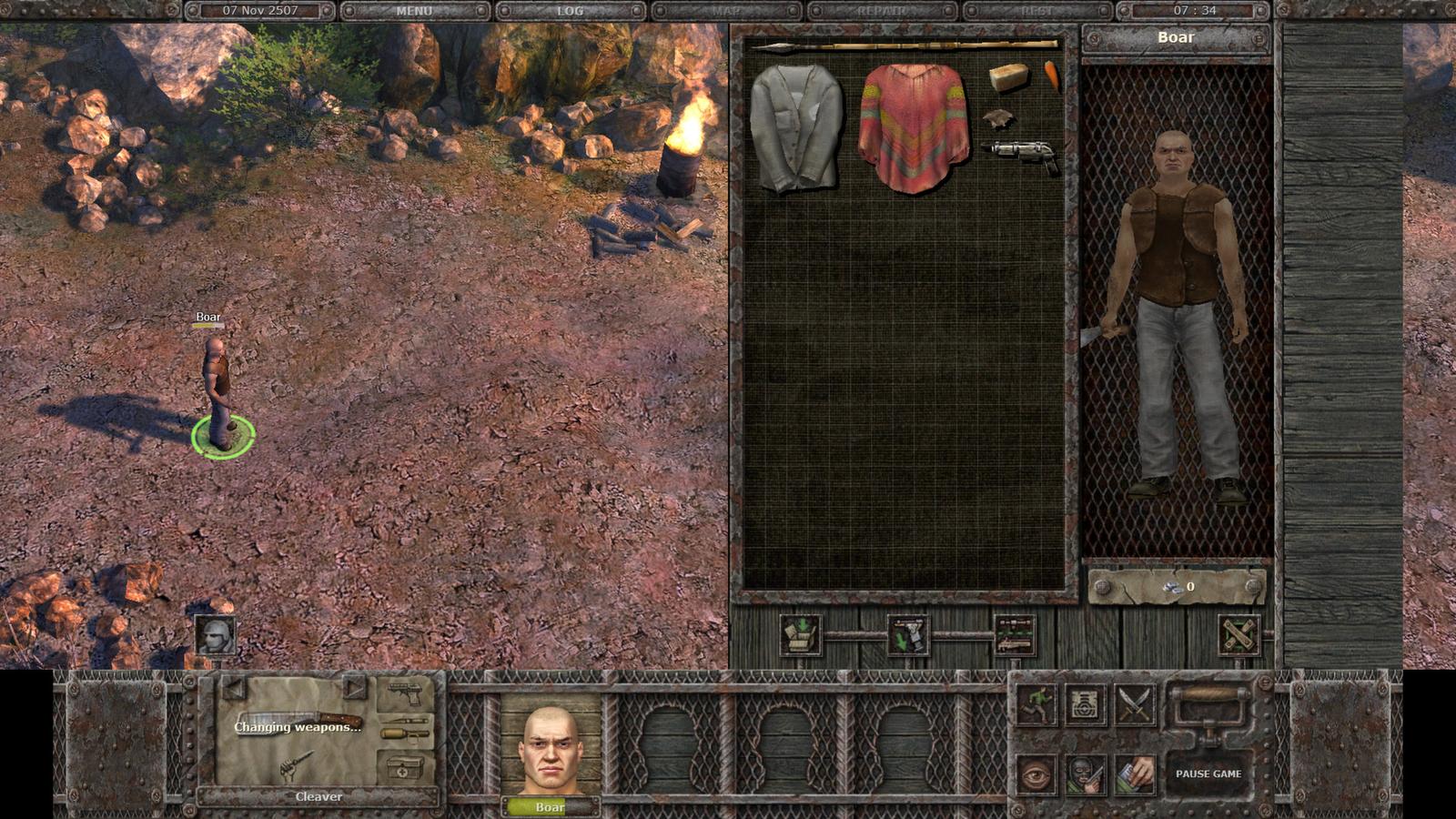
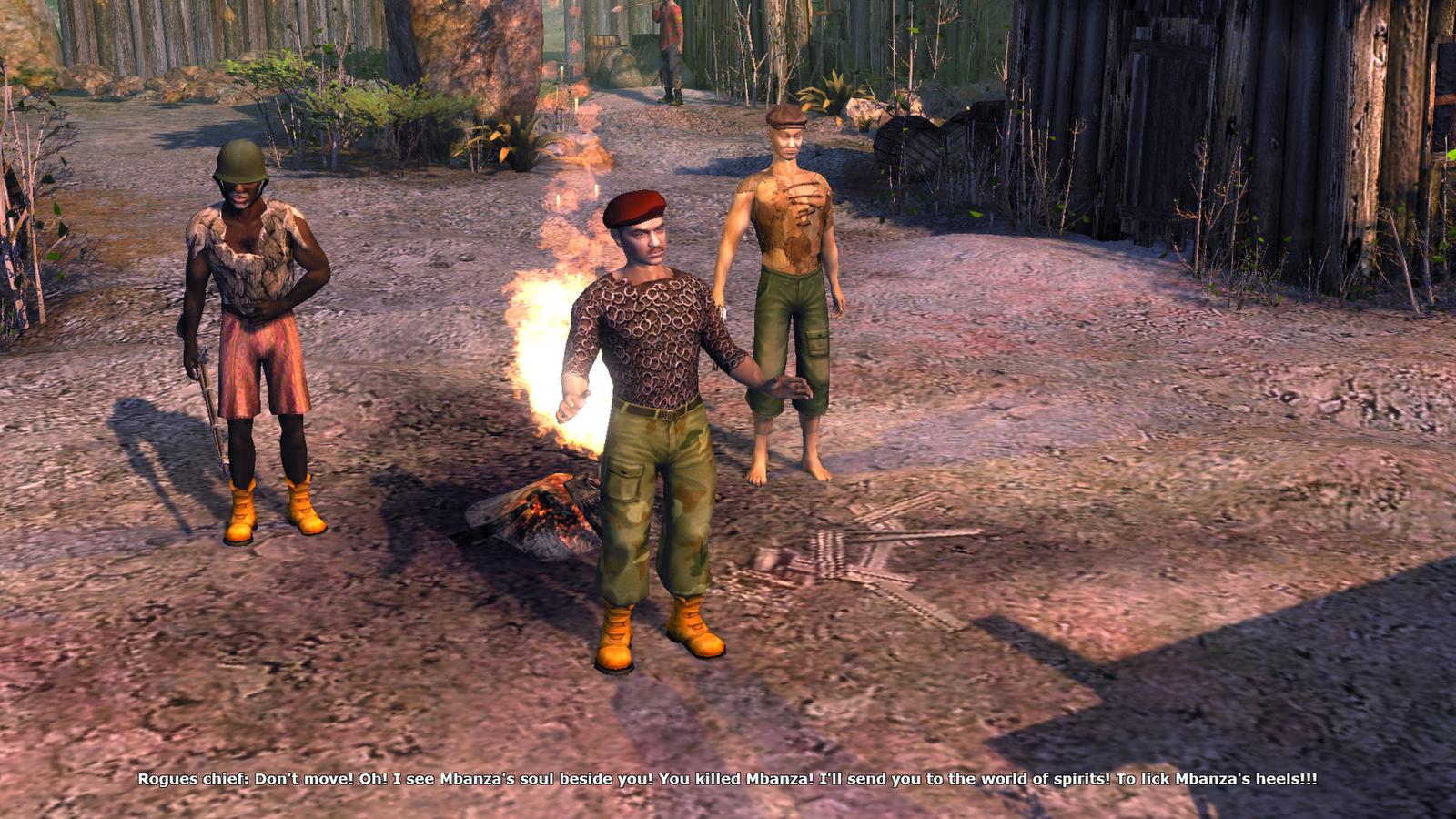
In "Sanitary Podzemeliy," you play as a squad of mercenaries led by operative Kaban, clearing the grim locations of a prison planet from various evil creatures and marginals. The gameplay combines turn-based tactics in the spirit of Jagged Alliance with world exploration: skill leveling, trading, random encounters, and dozens of ways to complete (or fail) a task. The atmosphere here is unique – a mix of army underground, a parody of high fantasy clichés, and Puchkov's signature humor, which either causes fits of laughter or repels from the threshold.
Dmitry Yurievich has matured in the 20 years since the game's release and is now one of the iconic figures of the Russian blogosphere. Not everyone likes him, but his talent cannot be denied. So "Sanitary Podzemeliy" is worth a look, if only out of curiosity. But not just for that. It's a truly worthy game. And it's also a nostalgic attraction: dialogues, references, and jokes. By the way, Planet Alcatraz is on Steam and is quite inexpensive.
Never miss our newsAdd this site to your preferred sources to see us more oftenAdd on Google