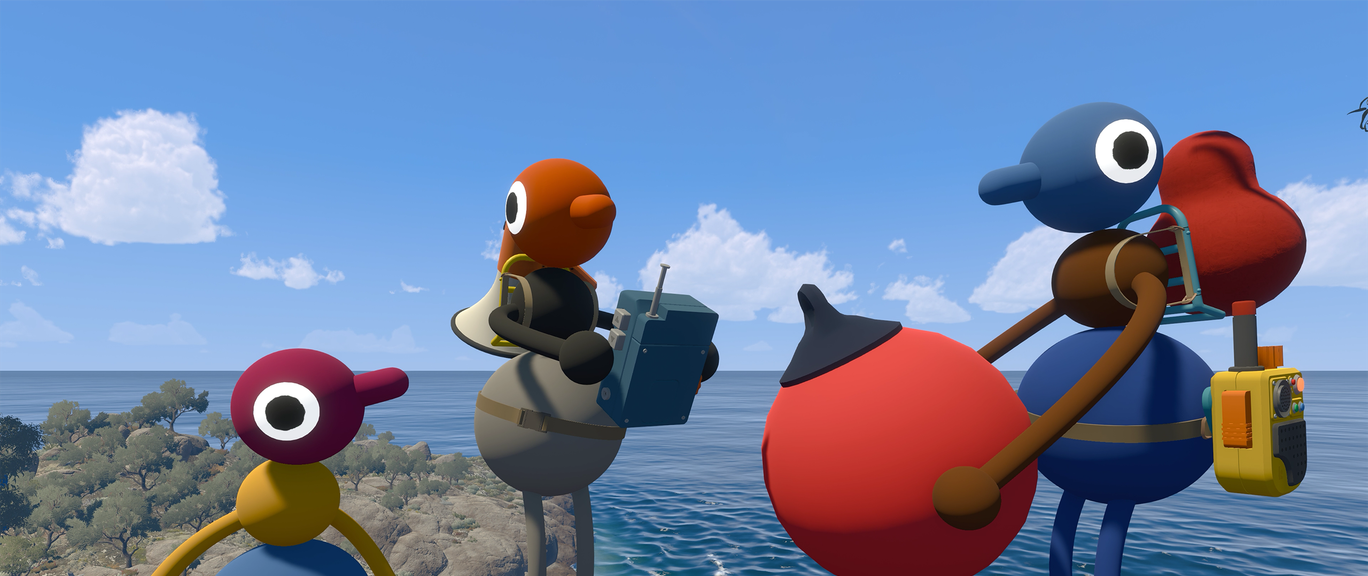
House House studio has confirmed using generative artificial intelligence in the final stage of developing Big Walk. According to the creators, large language models helped solve complex technical problems and identify the causes of bugs. Meanwhile, code related to the use of AI accounted for significantly less than 0.1% of the game’s total codebase.
As the developers explained, AI tools were used exclusively in the final months of the game’s production. The studio primarily turned to chatbots to deal with difficult technical problems associated with third-party software. Sometimes, code snippets suggested by the neural network served as a starting point for further work, but House House programmers substantially modified them before implementation.
As an example, the studio cited a performance issue related to shadow processing in the Universal Render Pipeline (URP).
The developers wanted to limit the number of shadow-casting objects based on their distance from the camera. However, URP only allowed such a limit relative to the camera’s view direction. Because of this, objects behind the player character continued to cast shadows regardless of distance.
The issue was particularly noticeable during sunrise and sunset: Big Walk’s performance dropped by about 50% for 20 seconds. The team examined URP’s source code and tried to find a solution on their own, as well as consulting directly with a Unity engineer. Ultimately, the company’s specialists concluded that implementing what the developers intended was impossible using that method.
House House then turned to an LLM-based chatbot. After several unsuccessful attempts, the AI suggested a possible workaround. The developers refined the recommendation and managed to resolve the issue. As a result, the fix took about 10 lines of code within URP.
The studio emphasized that generative AI was not used to create other elements of Big Walk. Its use was strictly limited to the described technical tasks.