It is funny how just a few years ago, gamers were angry that developers were marking time, churning out only sequels, prequels, spin-offs, and side stories. Now we don’t even have that—only remasters, rare remakes, and the annual Call of Duty.
The Last of Us Part 2 Remastered is a reminder of how talented the team working on the original game was. The much-lauded visionary Neil Druckmann, touring the globe for various ceremonies where no one wants him and somehow ending up as president of Naughty Dog, turned out to be nobody without Bruce Straley, who directed the development of The Last of Us.
How does the game feel after 4 years?
Directing, exposition, character development with their personalities and motivations—there is not a trace of all that left in the second part. Now, all they do is show tantrums, irrational decisions, and frankly stupid actions by characters. Mostly, these elicit nothing but alienation and annoyance. The mere fact that players like the episodic character “Fat Geralt” more than Abby—whom The Last of Us 2 forces you to play as for at least 6–8 hours, depending on the difficulty level—already tells us that the writers did something very wrong somewhere.
The script does not hesitate to venture into genuinely dark territory, depicting brutality, violence, and the depths of malice explored by people who have lost themselves and their faith in the future, but it often does so far too crudely.
The events of the original game unfolded organically, forcing the characters to adapt to the world and what was happening in it, to seek solutions to problems, avoid dangers, and ponder their next steps. In the second part, it is the world itself that bends to the characters and their whims. There will always be a conveniently unlocked door, an enemy facing the other way, a companion arriving in the nick of time. After just 8 hours of playing, you start thinking, “When are the credits going to roll?” because everything unfolding on screen becomes dull and predictable. But why focus only on the negative?
PS5 features
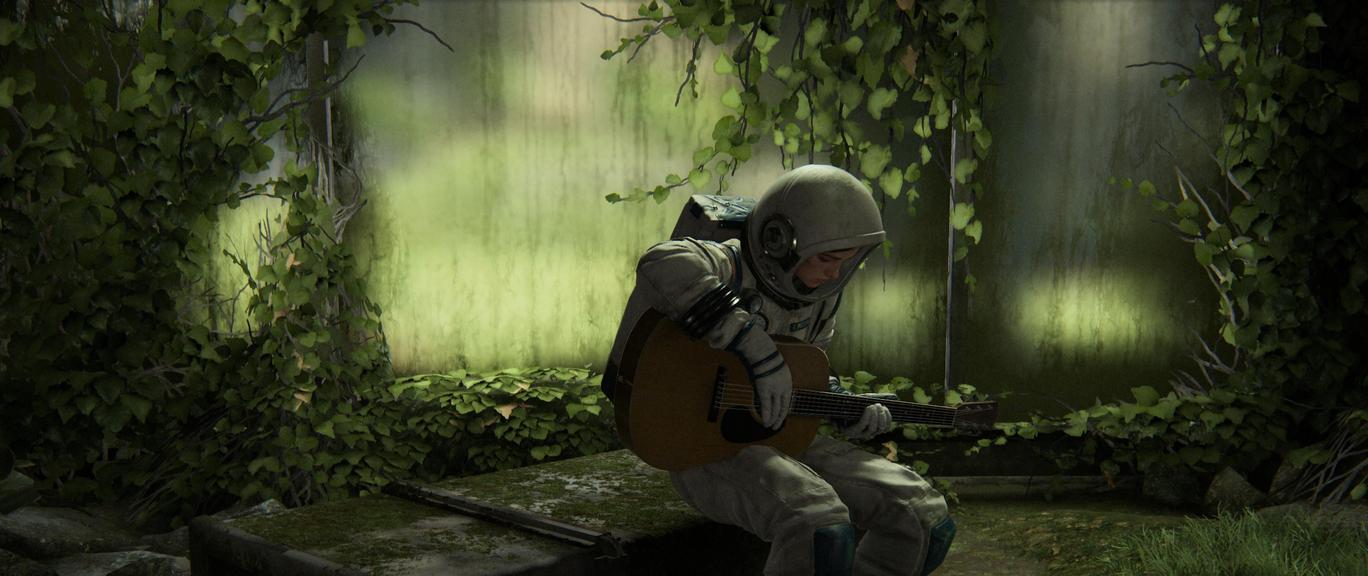
The remaster once again demonstrates how technically stunning The Last of Us Part 2 was. Even the PlayStation 4 version released in 2020 looked better than many of the games that most hack developers put out on PlayStation 5 today. The Last of Us: Part 2 Remastered looks simply gorgeous.
The PS5 showcases hardware capabilities wonderfully with a stable frame rate, detailed environments and character models, as well as impressive lighting work. Perhaps the most noticeable improvement is draw distance—grass, rocks, trees, and other scenery no longer pop in out of thin air right before your eyes, maintaining their detail even at great distances. Most players won’t even notice many of the polished little details, but they all help create a truly convincing picture of a world trying to recover from an apocalypse.
Amusingly, everything mentioned above was already present to some extent in the PS5 version of The Last of Us Part 2 after the patch the game received back in May 2021. What wasn’t there was DualSense controller support, which has now arrived in the remaster. The gamepad now vibrates gently when the characters get caught in the rain, and adaptive triggers help convey the tension of a bowstring and the recoil when firing firearms. However, contrary to the claims of Sony itself, which promised new levels of immersion with the DualSense, even with all controller options enabled, the experience of the game does not change at all, and after just 20–30 minutes of playing, you head into the settings to turn it all off.
Why pay twice?
One of the key additions Sony uses to justify the $10 price tag even for owners of the original The Last of Us Part 2 is the “No Return” mode. In essence, it is a roguelike mode where players choose Ellie, Abby, or another character to complete a series of fairly tough challenges across various maps: from trying to survive an onslaught of infected or heavily armed enemies, to hunting those same infected or humans.
Characters possess unique traits meant to make each run more interesting. Ellie can throw Molotov cocktails right away and receives more useful bonuses after each round; Dina can craft stun bombs and trap mines; Joel can craft shivs, wields a custom revolver, and can take a punch; while Tommy starts the game with a sniper rifle. Amusingly, the developers seem to have embraced player jokes about Abby’s masculine build by making her a close-quarters combat specialist who restores health with melee kills. Initially, players only have access to Ellie and Abby, while the rest of the characters must be unlocked.
The mode could be called interesting if the original The Last of Us hadn’t featured a full-fledged and rather compelling multiplayer pitting two opposing factions against each other. Trying to set a new speedrun record is mediocre entertainment at best.
Another notable addition to the remaster is three levels cut from The Last of Us Part 2: “Jackson Party”, “Seattle Sewers”, and “The Hunt”. As Neil Druckmann explained, one of the main reasons these levels didn’t make it into the final version of the game was the developers’ desire to avoid making The Last of Us 2 excessively drawn-out.
It is difficult to agree with the president of Naughty Dog, considering that Abby’s section, as mentioned above, stretches the game by a good 6–8 hours that players could have easily done without. That same “Jackson Party” portrayed remarkably well the daily lives of regular people living fulfilling lives while bloodthirsty mushrooms lurk outside their town walls—precisely what the game lacked.
Diagnosis
This is still the exact same game that first released in 2020, with slightly improved visuals and a handful of new features. If you already own The Last of Us Part 2, even a $10 upgrade is too expensive for the content this remaster offers.
We recommend that everyone else simply watch a playthrough of The Last of Us: Part 2 on YouTube rather than financially rewarding Sony’s lazy attempt to resell the same game a second time within such a short window.
Pro
- Superb visuals (ever since the PS4 days)
- Stunning atmosphere (which was also present in the original)
- Gorgeous sound (which players already had 4 years ago)
- Genuinely interesting cut levels
Contra
- Boring new “No Return” mode
- Tacked-on DualSense support just to check a box