A Masterpiece of Science Popularization: Why the Anime "Dr. Stone" Isn't Ruined Even by Its Flaws
Translated with AI from the Russian original.
The final season of the anime "Dr. Stone" concluded at the end of June. This work was highly praised by viewers: on KinoPoisk, it has a rating of 8.2 out of 10. However, the anime has many problems that did not prevent it from becoming popular. We will discuss why this is in a spoiler-filled analysis.
Plot Absurdities
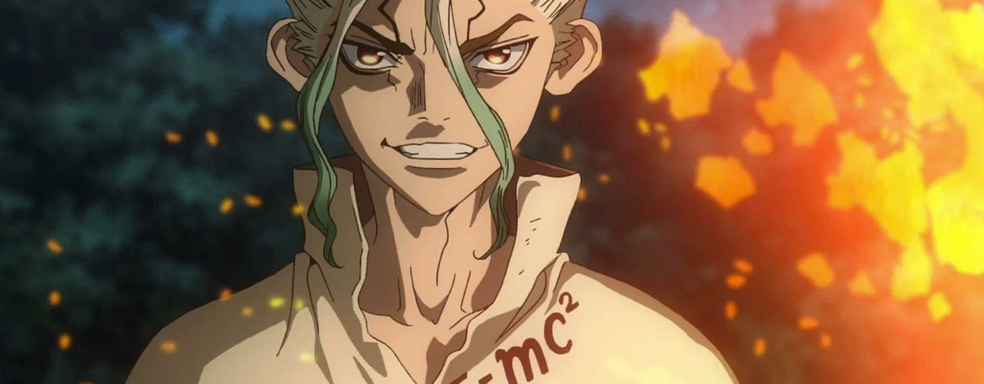
One day, a green ray swept across the Earth, turning all humans to stone for almost four thousand years. During this time, nature destroyed all traces of civilization, and when the main character – Senku Ishigami – broke free, he found himself in a primitive world: forests everywhere, wild animals, and nothing to remind him of past human greatness. Being a scientific genius, he decides to restore what was lost, rebuilding everything from scratch.
The story in the anime is very light and simple. It has a lot of humor and no heavy moral dilemmas, romance, or drama. Moreover, there are many absurdities and assumptions: plot points that look unnatural often catch the eye. At the same time, the characters don't do what's easy to guess.
For example, it's unclear why no one thought of freeing a doctor from stone, even though it's necessary in the conditions of a "stone" world. Although the main character understands pharmacology, an experienced and professional medic is something else entirely. And Senku clearly won't be enough for everyone, especially when the number of characters has multiplied.
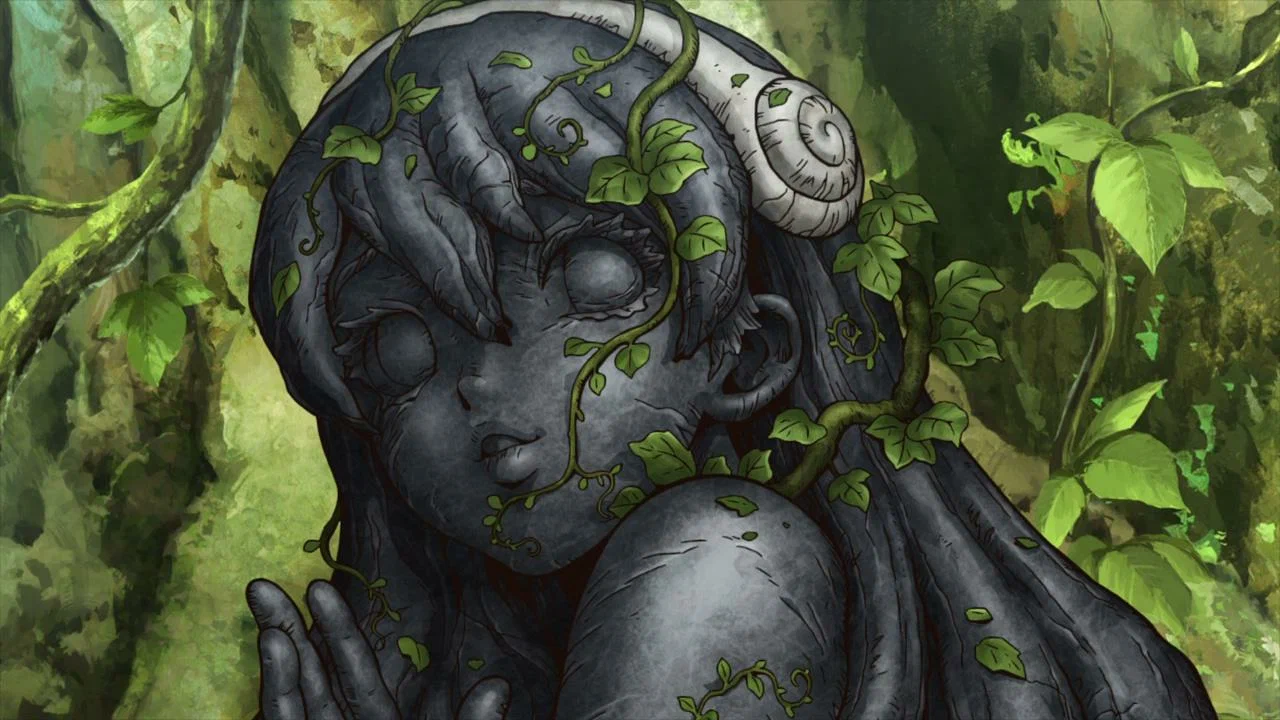
Or another example: why weren't the guardians of Ishigami Village – Kinro, Ginro – and the rest of its inhabitants at all confused when they first met Senku? They were the only ones who survived petrification and had not seen other people for many generations, which they stated directly, but here – zero reaction.
Because of such moments, the plot seems straightforward. It is far from realism, even though it is based on scientific details, which creates a dissonance in perception.
Characters – The Anime's Ornament
Many characters are too naive, including the main character. He easily forgives former enemies and unites with them. This is explained by the benefit of future alliances, but the plot never punishes him for his simplicity.
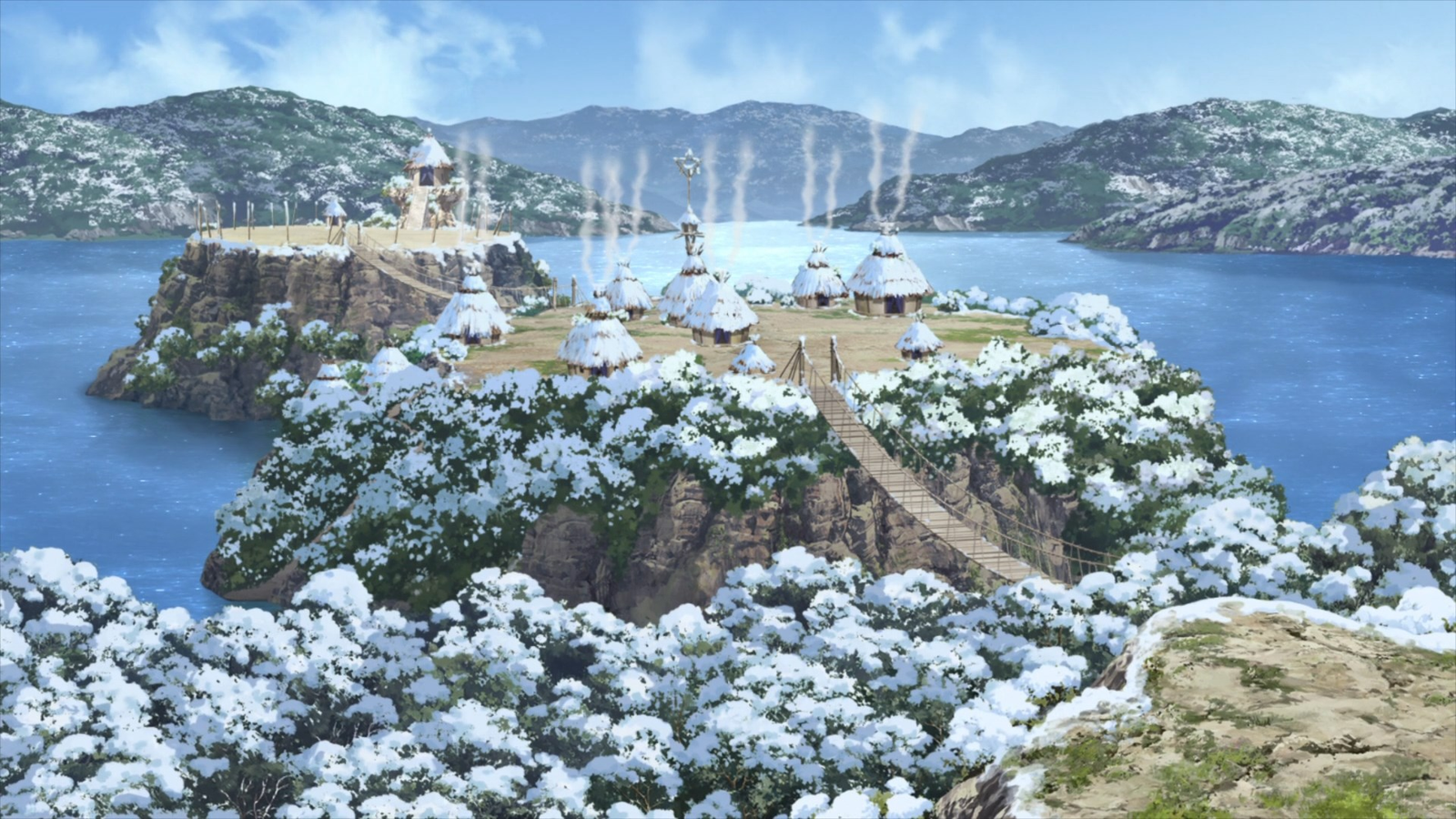
Senku often seems omnipotent – there was never a situation where one might think he wouldn't find a way out. It seems that the hero knows absolutely everything that humanity knew before petrification – in any field.
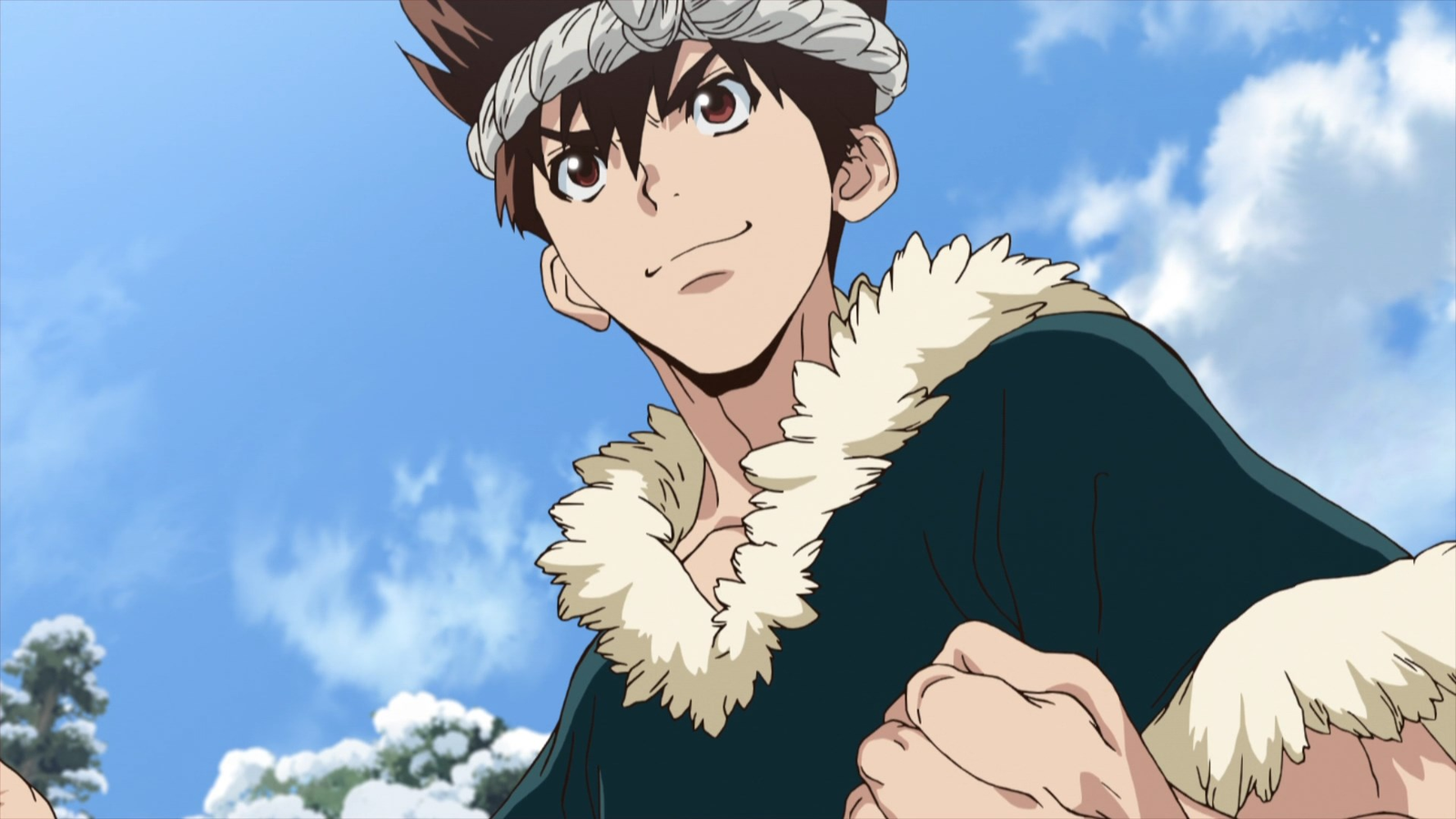
There's also Chrome, but he's just a mini-version of Senku. He sometimes comes up with something, but it always turns into a comical scene, because the main character could easily have created the same thing.
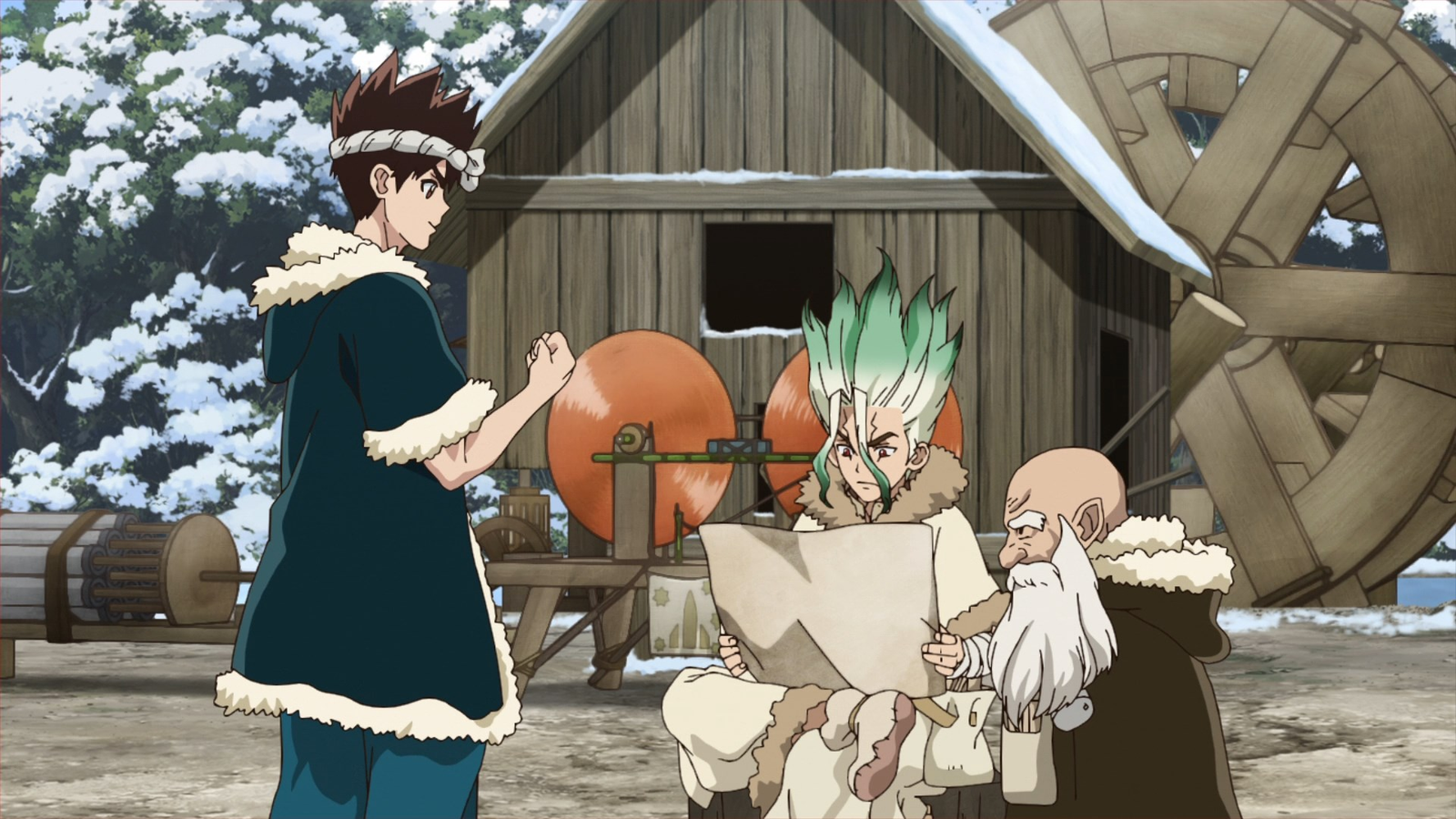
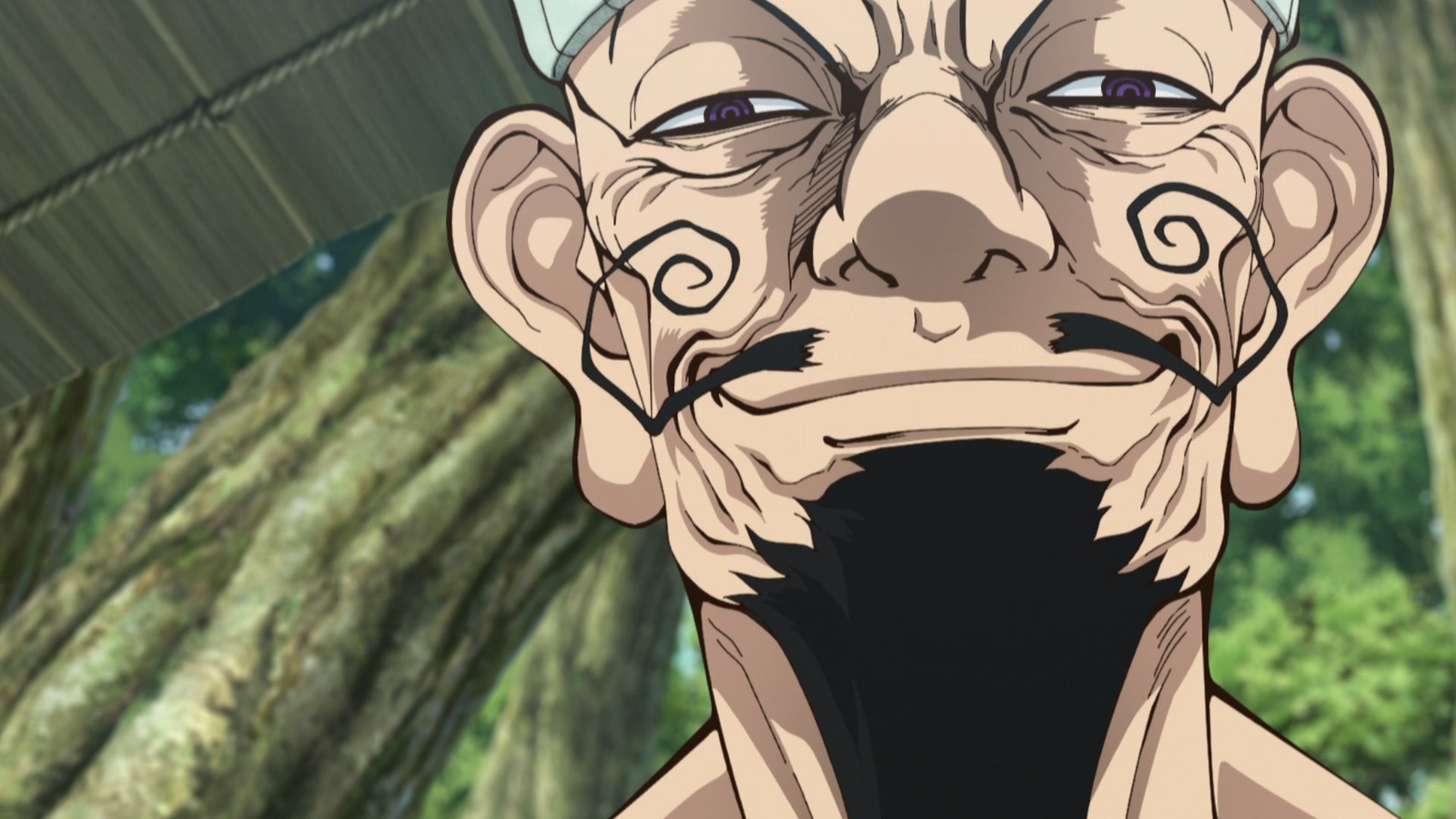
Old Man Kaseki is cool and quickly grasps everything. But there are enough logical problems in his behavior. For example: why does someone who has never seen modern technology before master it so easily? When he started blowing glass, one might think he had been doing it all his life, although it was his first experience.
Ryusui stands out: he has a vast knowledge of economics, business, navigation. He is an experienced pilot and so on, but he is just a good image, not a deep character.
Gen turned out funny. Many jokes are tied to him, but it's also interesting to observe his psychological tricks: the character often shows how human psychology works, using tricks to manipulate opponents and more.
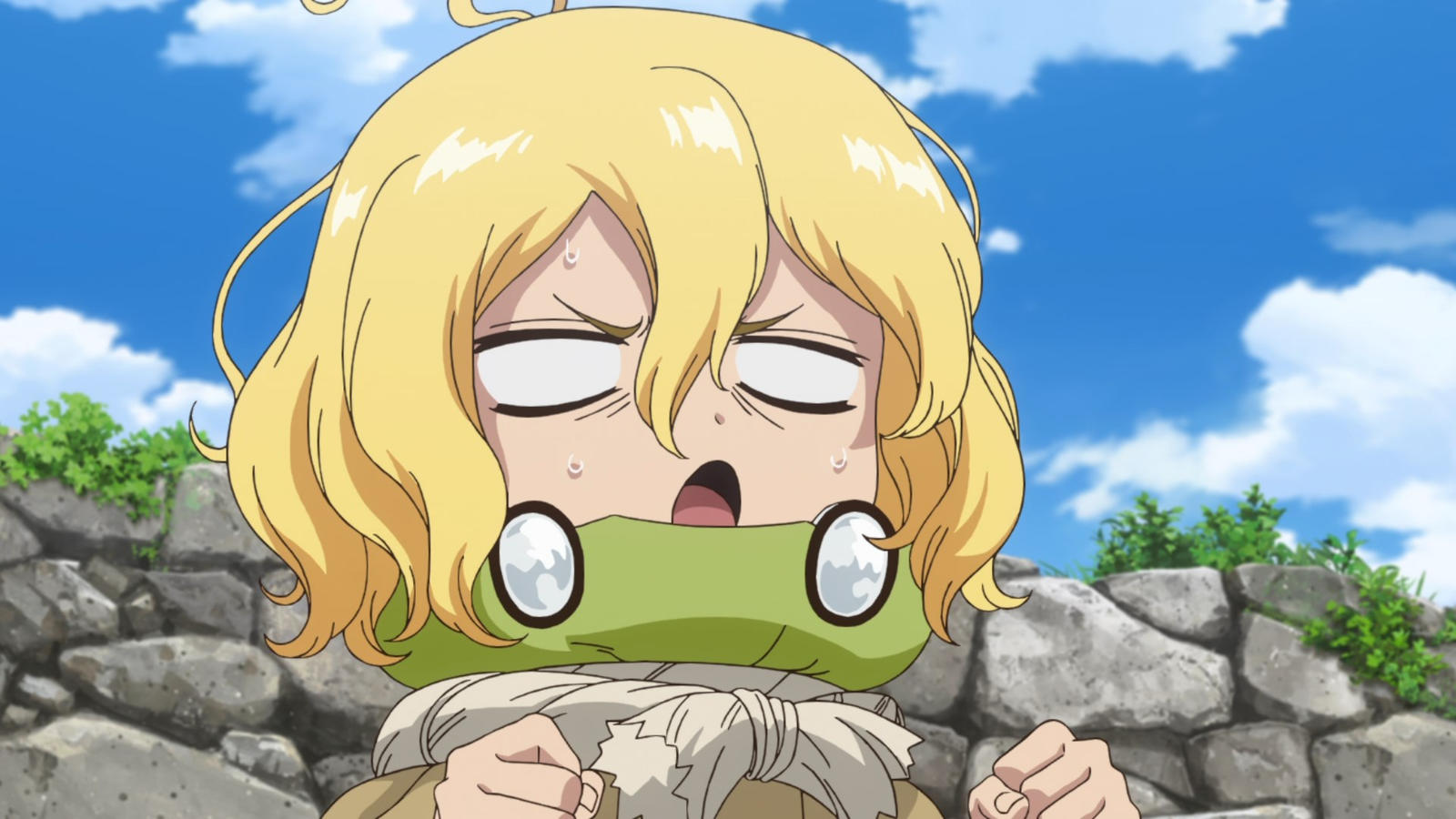
Suika turned out great. The girl at first simply helped Senku and the others, but closer to the end, her role grew significantly, and the heroine transformed – but more on that below.
Other characters rarely bring significant benefit to the story. They often fool around, behaving "anime-like," often reducing everything to not always appropriate jokes and absurd situations. However, as they say: "rarely, but accurately." And there is still more successful humor.
But the antagonists are not bad. They all have their deep motives and goals, which are easy to empathize with.
Tsukasa turned out excellent. The character is both the strongest and not stupid: although he doesn't understand science, he easily reads other people – it's not easy to deceive him. The story of his sister's illness is touching, although it has inconsistencies – some of which the protagonist himself points out, which means it was laid out in the script.
It is with him that the lack of a doctor becomes apparent: Tsukasa was seriously wounded by his former associate, but there was no one to save him. Yes, operating on him would still be pointless, since there is no necessary equipment and medicines, but it's strange that no one thought that people need doctors.
Dr. Xeno is Senku's antithesis. A similarly brilliant scientist who wants not only to save but also to conquer the world. I liked that he separates his ambitions and science: when a difficult task needs to be solved or calculations made, he helps the main character without a twinge of conscience. And in the end, he discards his despotic manners and joins the others.
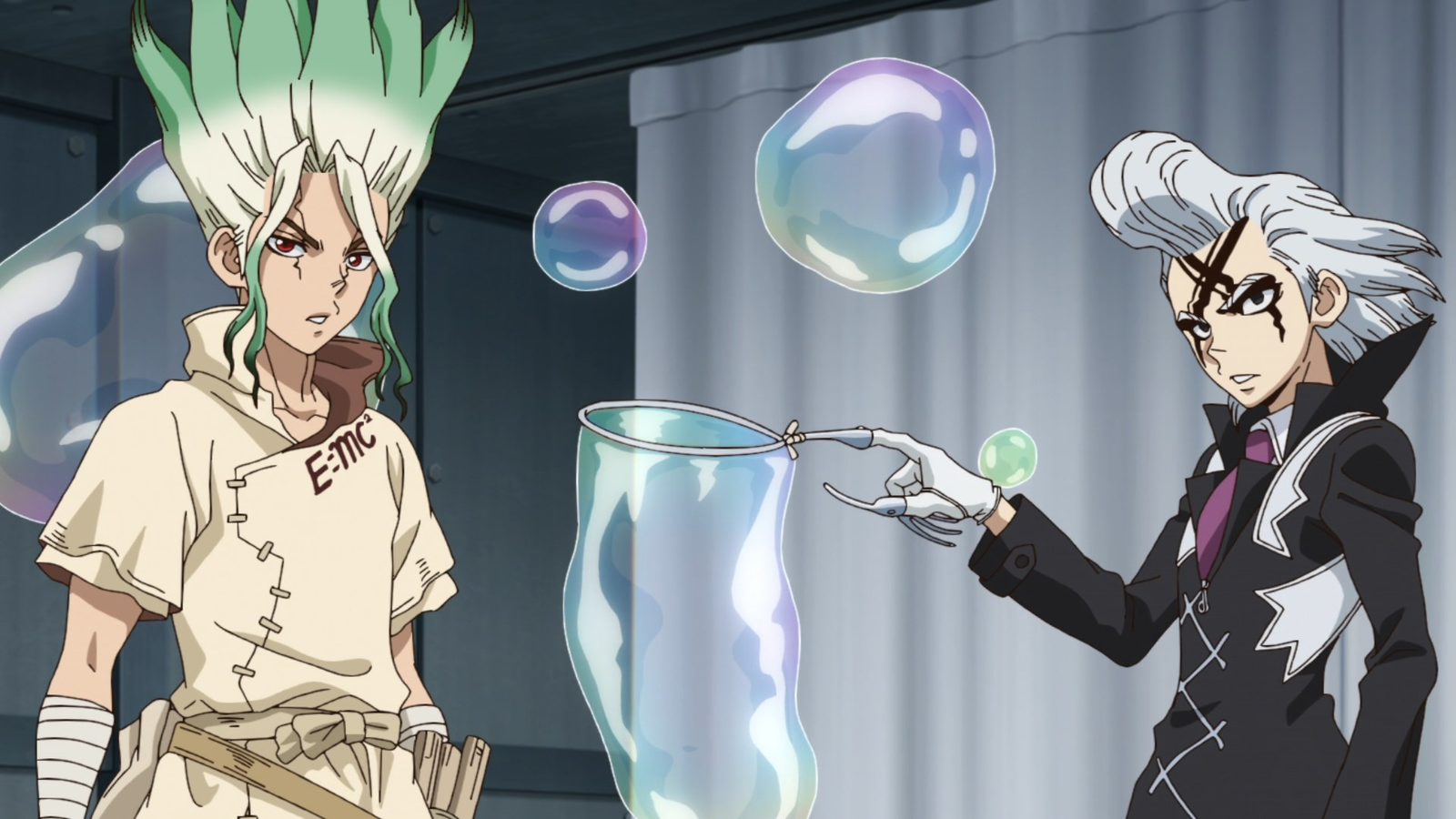
His associate – the military Stanley Snyder – although one-sided, is an interesting character. The character wants to save his friend from captivity, so he goes in pursuit, which looks foolish: why didn't they even try to negotiate properly? But when the confrontation with Xeno ends, Snyder easily joins Senku on the last mission. It looks chaotic.
The only exception was Ibara – the antagonist of the "Treasure Island" arc. He is a villain, not just an opponent – this distinguishes him from others, but does not make the character good: he is flat and monotonous. It's good that the character was forgotten immediately after he was defeated.
An Ending That Could Have Been Better
A separate discussion is the final act, which frankly failed. We were told that the source of the signal that turned everyone to stone was on the Moon. And the main characters set a goal to go there and figure it out, which took several seasons.
But the anime dedicates only two episodes to solving the "moon" problem. What Senku and the others found there is hard to even call an ordinary enemy – let alone a villain. There is no conflict or tension here: the heroes are not threatened by anything, the imaginary "villain" simply turns around and leaves, and instead of a confrontation, we are offered to be content with a couple of philosophical sayings.
After this, it becomes a shame that a beloved work ends so dully. Although it would be easy to spend 15-20 minutes and come up with a more interesting ending. I think it would have been great if the antagonist had been an AI that took the idea of "saving humanity" too literally, turning everyone to stone. After all, in this form, people can live forever, not get sick, and not suffer.
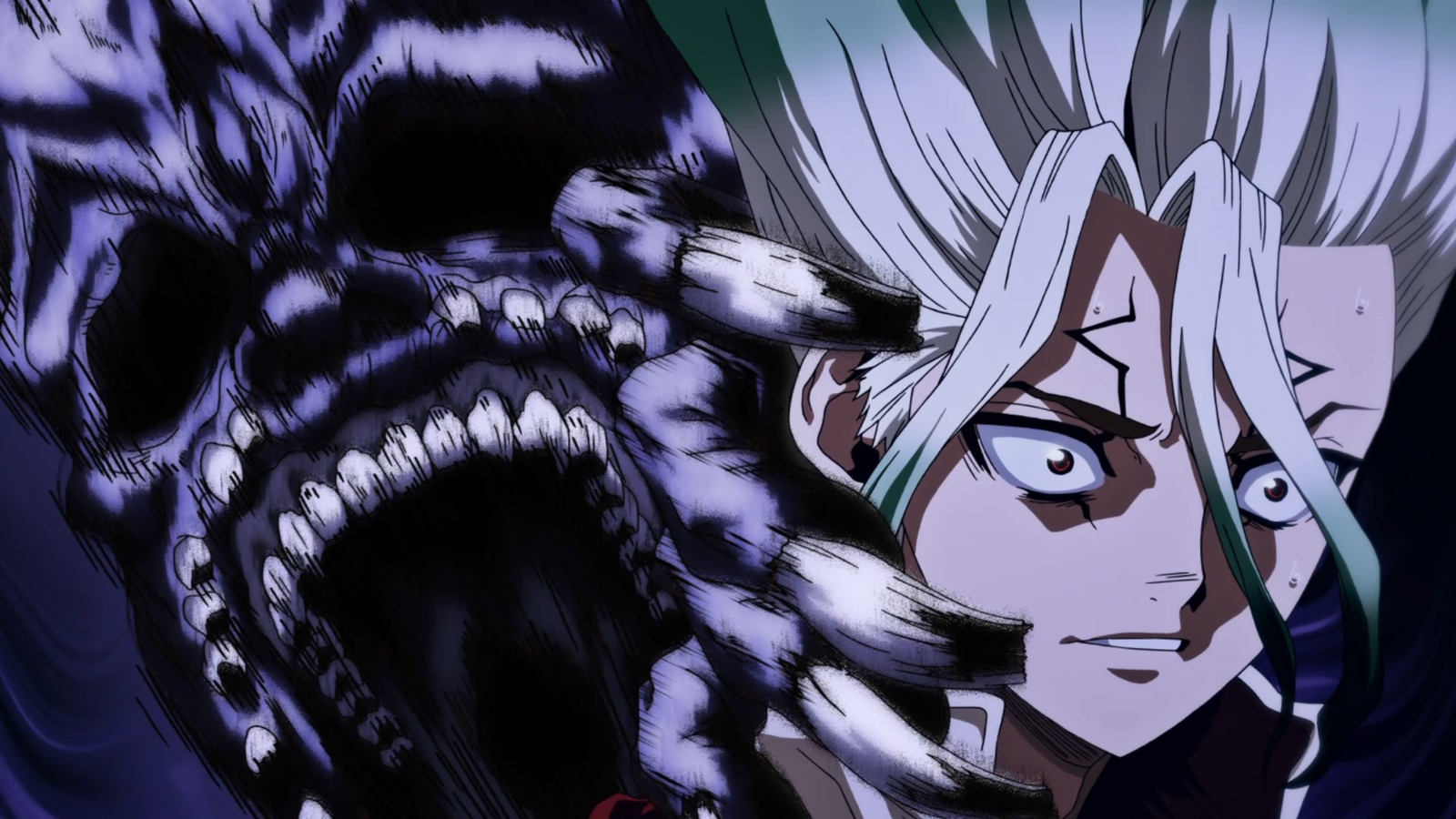
Here, Senku could have shown wonders of ingenuity and talked the computer into a logical paradox. There's no need to even destroy the AI – it could be taken to Earth and made an ally, using its power and skills to restore civilization. Trite, but in the spirit of the character and the work.
Rare Depth
Another problem is the lack of deep moments. Over all six seasons and the movie, they can be counted on one hand. But they stand out against everything else.
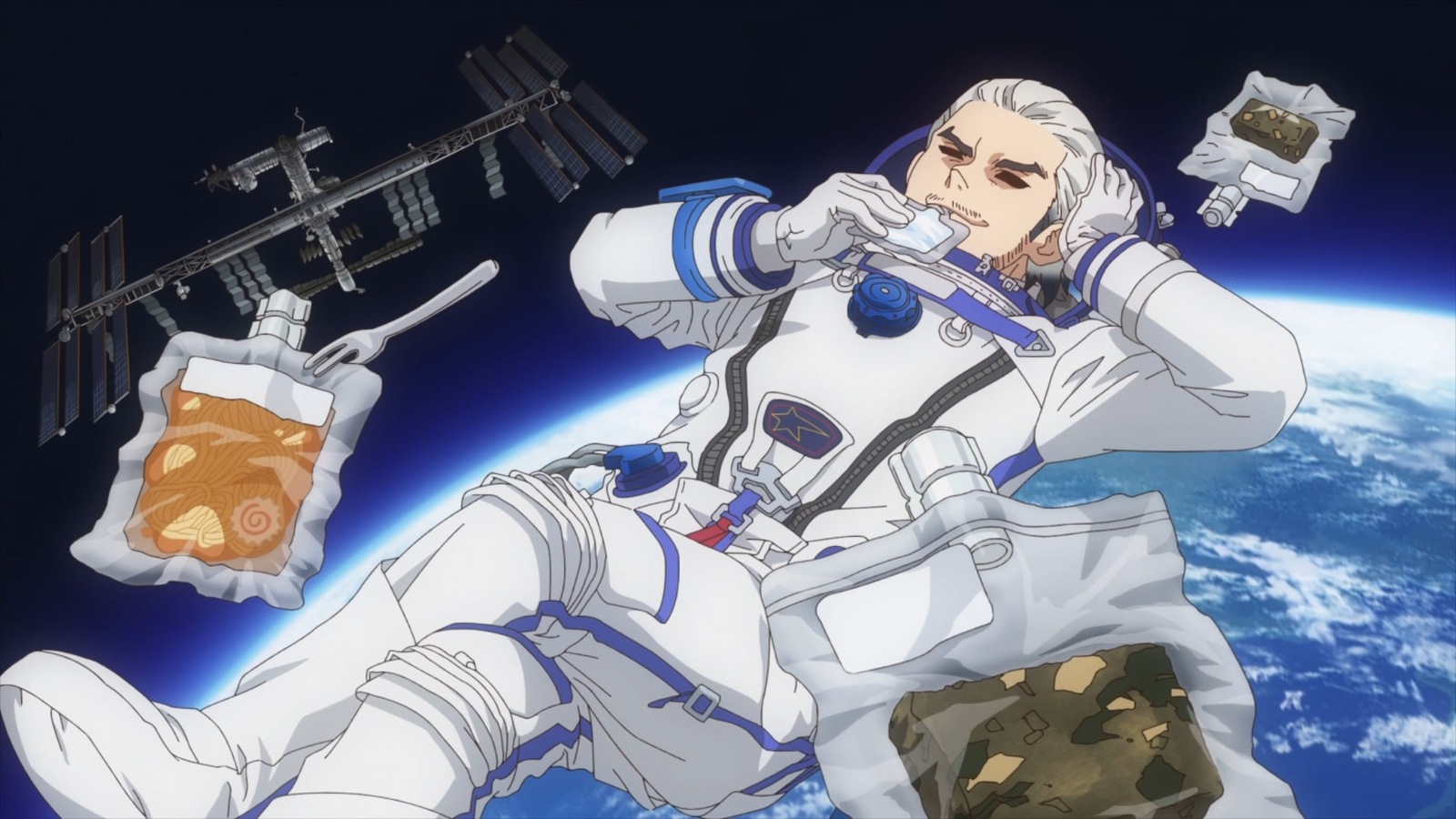
One can recall the moment when we are told about Senku's adoptive father – Byakuya – and other astronauts who survived the petrification wave while in orbit. They returned and created a small settlement that survived for millennia. And Byakuya blindly believed that one day his son would be able to bring science back to the world. He even prepared for this, leaving him messages.
Or the episode about how Suika spent five years alone, trying to create a cure for petrification. I can't even imagine how a little girl survived alone when literally no other people were left on the planet. And she succeeded, once again proving that "patience and hard work overcome all!"
Such scenes are valuable, but they strongly contrast with the overall tone of the work. It seems that at these moments, the anime snaps its fingers and opens a completely different script for a couple of episodes, completely changing the atmosphere of the narrative. But the absurdities and omissions remain, which is confusing.
Perhaps the authors should have either added more depth and better revealed all the main characters, or, conversely, abandoned this element of the story altogether, focusing on adventure and... Science!
Science Redeems Everything
The described shortcomings do not spoil the project at all. This is because "Dr. Stone" places a strong emphasis on educational content. Senku quickly finds a way to de-petrify other people and gradually recreates the most basic necessities for life: clothes, tools, houses, and so on.
As the plot develops, scientific endeavors also become more complex. The main character finds miraculously surviving people accustomed to life in a stone world and gains their trust: he reproduces culinary delights, makes antibiotics, and even generates electricity.
At the same time, despite his incredible level of knowledge, the protagonist is not omnipotent. The scientist is strong in his mind, but can do nothing when it comes to hard labor or battles.
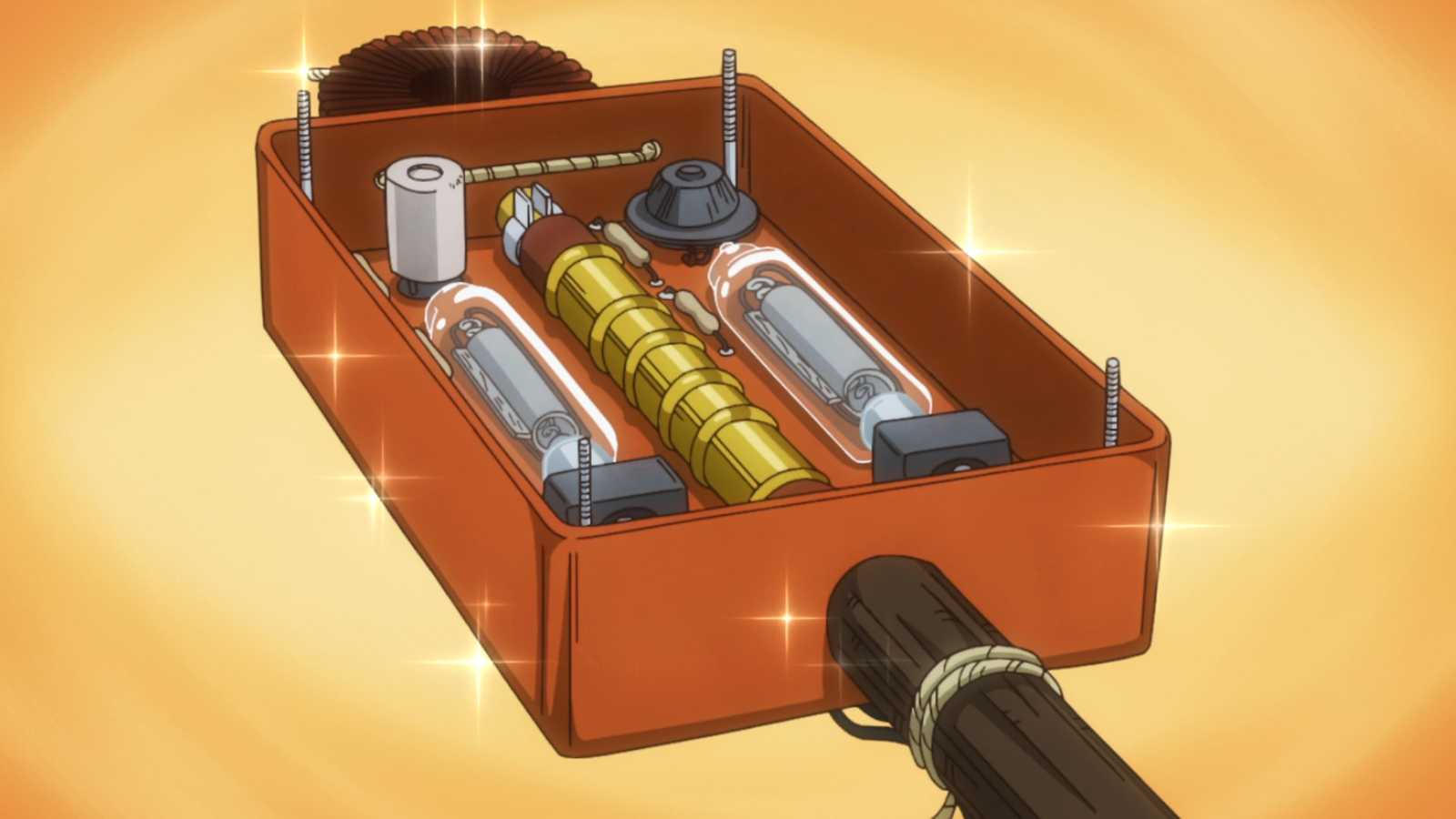
He has to act by trial and error, uniting with others. After all, skilled people like old man Kaseki are indispensable helpers. However, this weakness only emphasizes the character's philosophy: in a "scientific kingdom," everyone is needed, because something can only be achieved by combining everyone's strengths.
All this creates a unique depth – not emotional, but intellectual. The anime "Dr. Stone" can easily be compared to some popular science show like "Galileo," and that's wonderful. Even though Senku's work rather resembles a school laboratory experiment, when students create an analogue of some technology from improvised means. Simple, but it works – just like in the creations of the main characters.
By the way, all the scientific processes shown are largely real: the author of the manga – Riichiro Inagaki – regularly consulted with specialists for accuracy. He embellished everything for the sake of the work's dynamism, because in reality, the difficulties of production would be many times greater, but the idea itself is correct. For example, you can find many videos where authors successfully replicate what Senku did in the anime. I even wanted to try to recreate the cola that the scientist made for Gen.
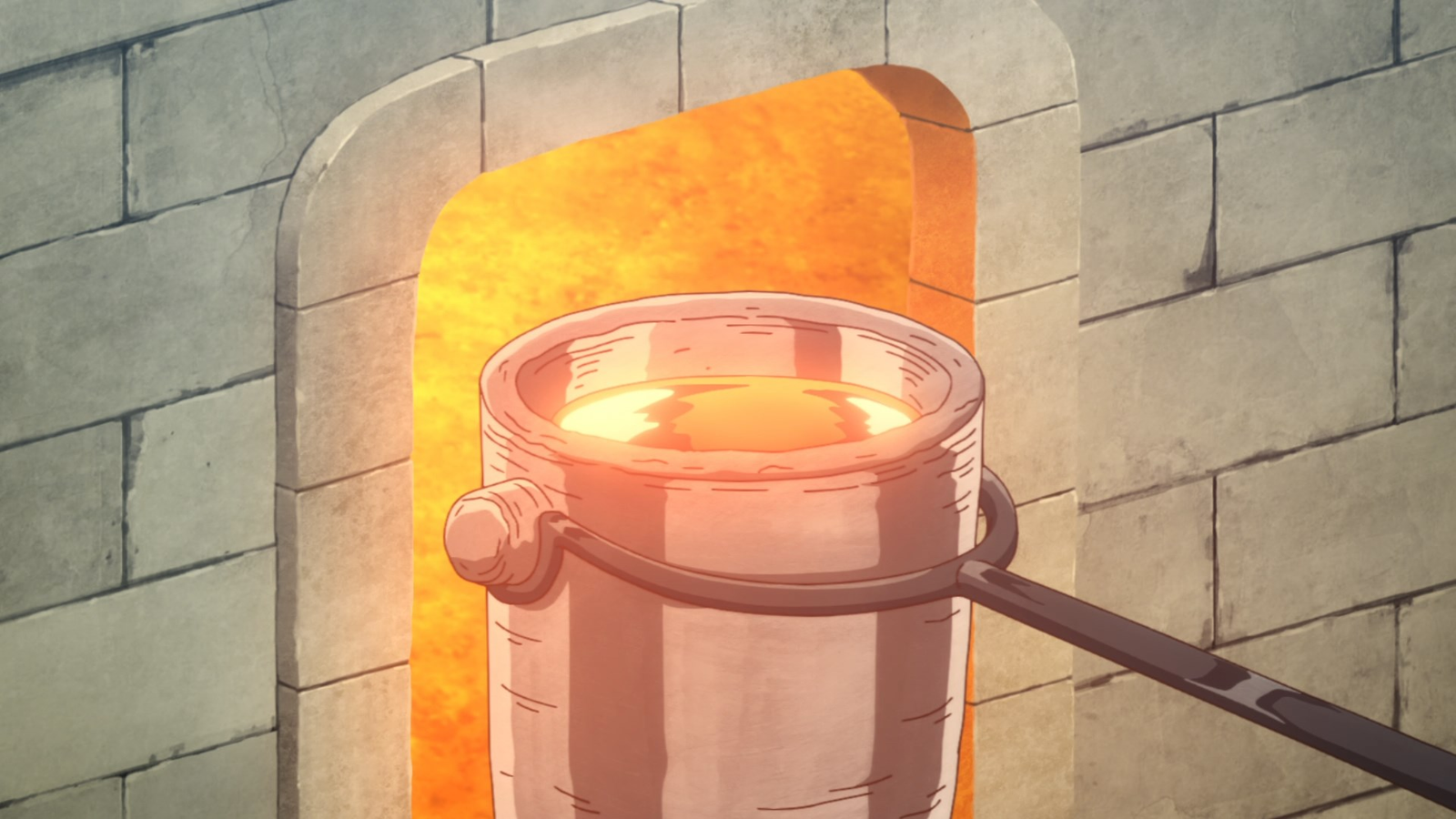
Thanks to this, the viewer develops a genuine interest in science. It fascinates and amazes. Especially when I watched how the heroes extracted resources from various minerals, necessary for creating technologies without which we cannot imagine life today. I then thought: "how amazing our world is and how incredible are the people who thought of all this!" Here I want to quote one of the characters: "But these are just stones!"
It turns out that in "Dr. Stone," the plot is not so important. It serves as a backdrop for demonstrating science in all its glory. I wouldn't be surprised if I found out that the absurdities and omissions of the story are nothing more than a conscious allowance by the author, made so as not to shift the focus from science.
Verdict
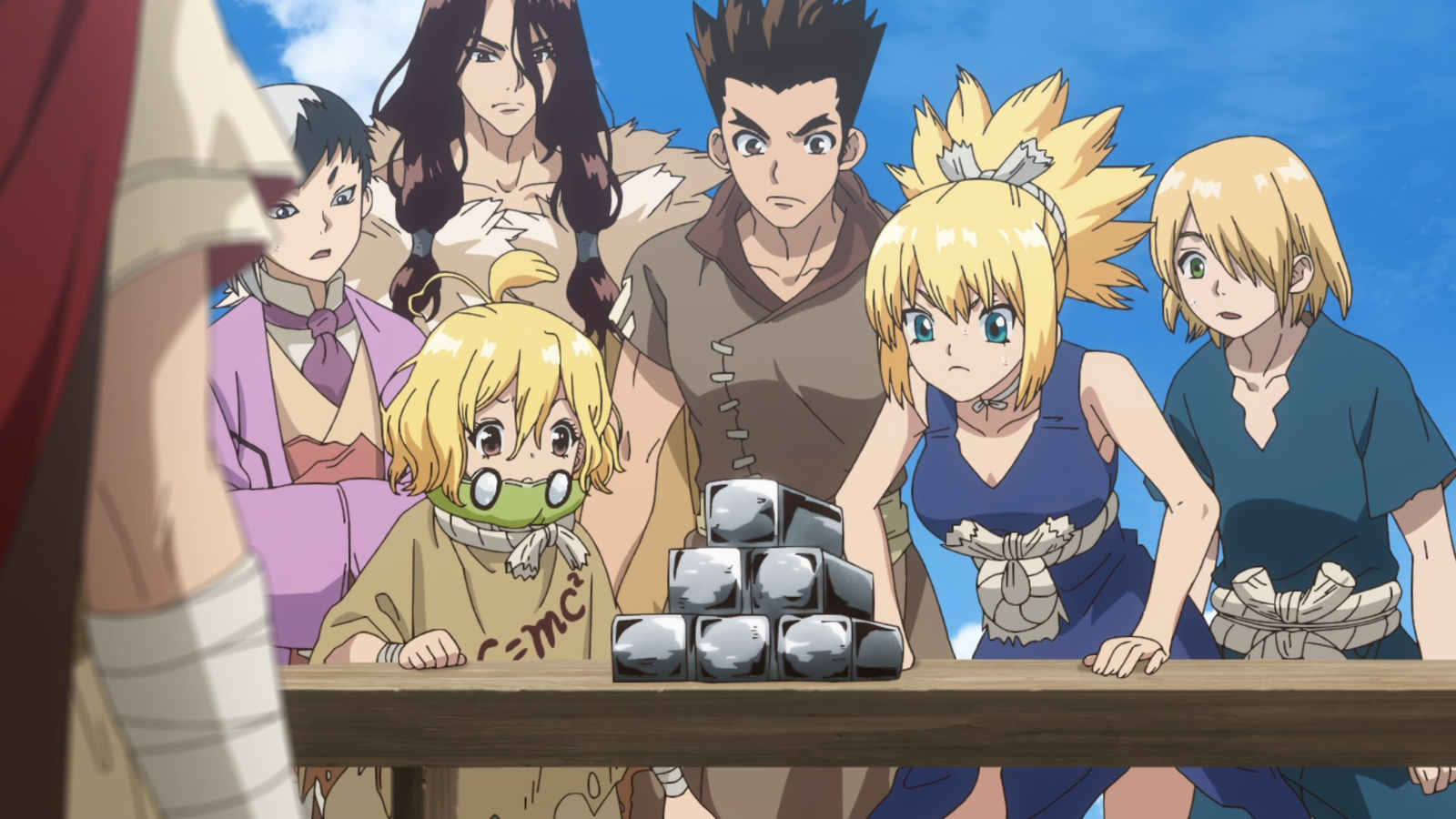
The anime "Dr. Stone" can be described by rephrasing a famous quote from the Bushido code: "A scientist has no goal, only a path, and that path is the pursuit of knowledge."
This work has a host of problems: logical inconsistencies, controversial (though attractive) characters, naive and foolish plot twists, lack of depth.
But all this pales in comparison to how science is shown here. The experiments and practical application of scientific knowledge in "Dr. Stone" are so captivating that one doesn't want to think about the shortcomings at all. And considering that a significant part of what is shown is quite consistent with reality, the project also educates the viewer, which is always good.
This anime does not send you to a fantasy world, does not show incredible achievements of the future, does not demonstrate other planets or aliens. It shows how amazing our world is, for which I want to say a huge thank you to the creators of "Dr. Stone."
Never miss our newsAdd this site to your preferred sources to see us more oftenAdd on Google