How to save an empire and not go insane: The Life and Suffering of Prince Jerian review
Translated with AI from the Russian original.
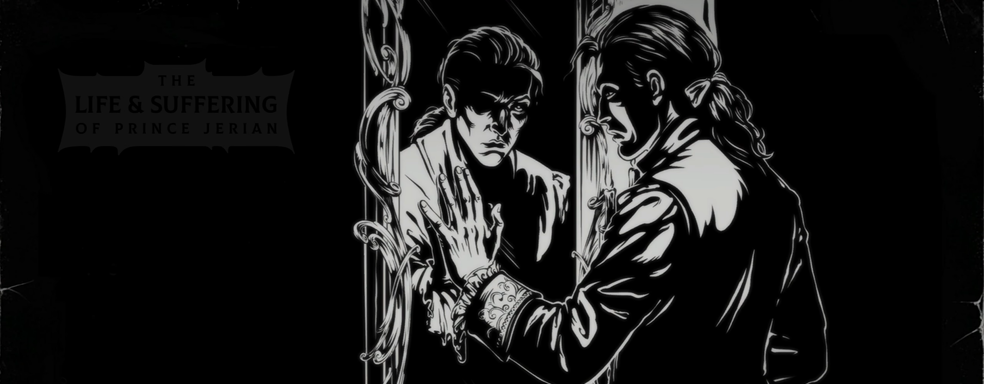
Are you sure you would govern a country better than politicians? The Life and Suffering of Prince Jerian offers you the chance to test that certainty in practice: take control of an empire's heir and guide him through a struggle for power, family conflicts, and reforms to save the country and not go insane in the process.
Two Sides of One Empire
If The Life and Suffering of Sir Brante by Schisma Games told the story of a man from the very bottom of the social pyramid, then the new chapter in the history of the Blessed Arknyan Empire becomes a kind of mirror image of that story. The events of "Prince Jerian" begin in 1120 — two years after the birth of "Brante"'s main character — and unfold almost in parallel.
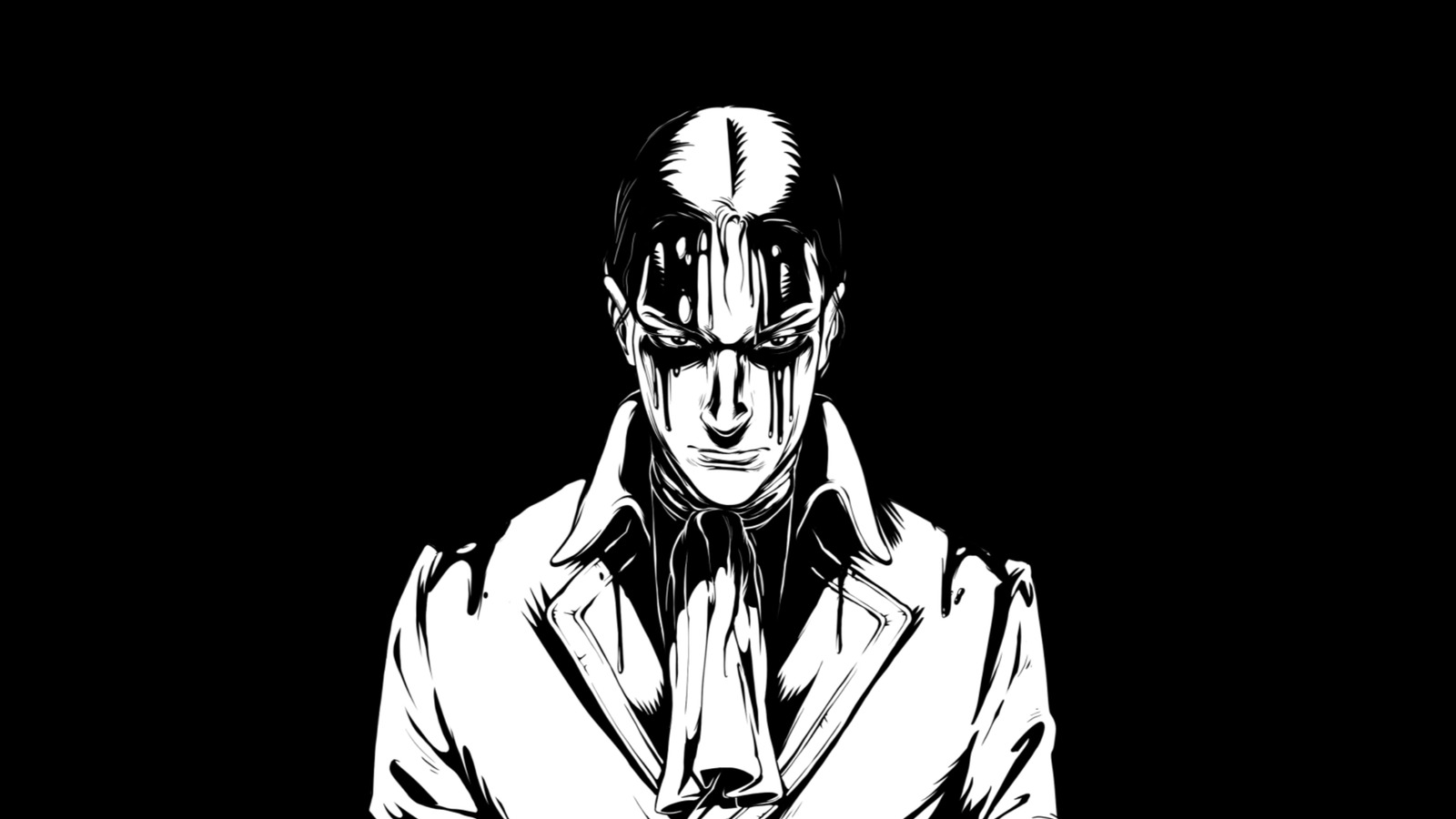
Our new hero is Jerian Tempest, the natural son of Emperor Utter II. According to the family's plan, the boy was raised in strict secrecy, purposefully shaping his worldview so that he would equally understand both the highest aristocracy — the long-lived Arknyans with blue (literally) blood — and the aspirations of the common people.
The point is that Jerian is not just destined to inherit the throne, but to take on the role of the chief architect of future transformations. His decisions will determine whether the state will follow the path of progress, equality of estates, and the supremacy of secular law, or preserve the old order, strengthening the privileges of the Arknyans and the power of the church. The heir can rely on the great houses, the clergy, human nobility, or commoners, try to unite all subjects, or even renounce power and sail into the sunset, leaving the empire to its fate on the eve of the Great War. And to manage all these processes at the state level, the developers had to radically rework the game's mechanical core.
"Calculator" with room for maneuver
The foundation remains the same: we have a text-based role-playing game, designed as a book, where every choice carries significant weight. We immerse ourselves in an interactive novel, enjoy the plot and atmosphere of this local "Game of Thrones," analyze the situation, and make decisions that metastasize throughout the story tree. Each action affects the hero's characteristics, changes the balance of power, opens or permanently closes plot branches, shifts the indicators of estates, and shapes the attitudes of others — from passionate love to mortal hatred.
The prince's basic characteristics are combined into dual pairs, reflecting the ruler's internal conflict. By choosing between Reason and Passion, the hero balances between rational analysis and impulsive urges caused by a sensual perception of the world and emotionality. The conflict of Will and Blood contrasts the desire for personal freedom and loyalty to one's own desires with obedience to ancestors and traditions of the past. Finally, the pair of Love and Law forces one to seek balance between divine compassion and empathy — and loyalty to divine law, which preserves the existing order.
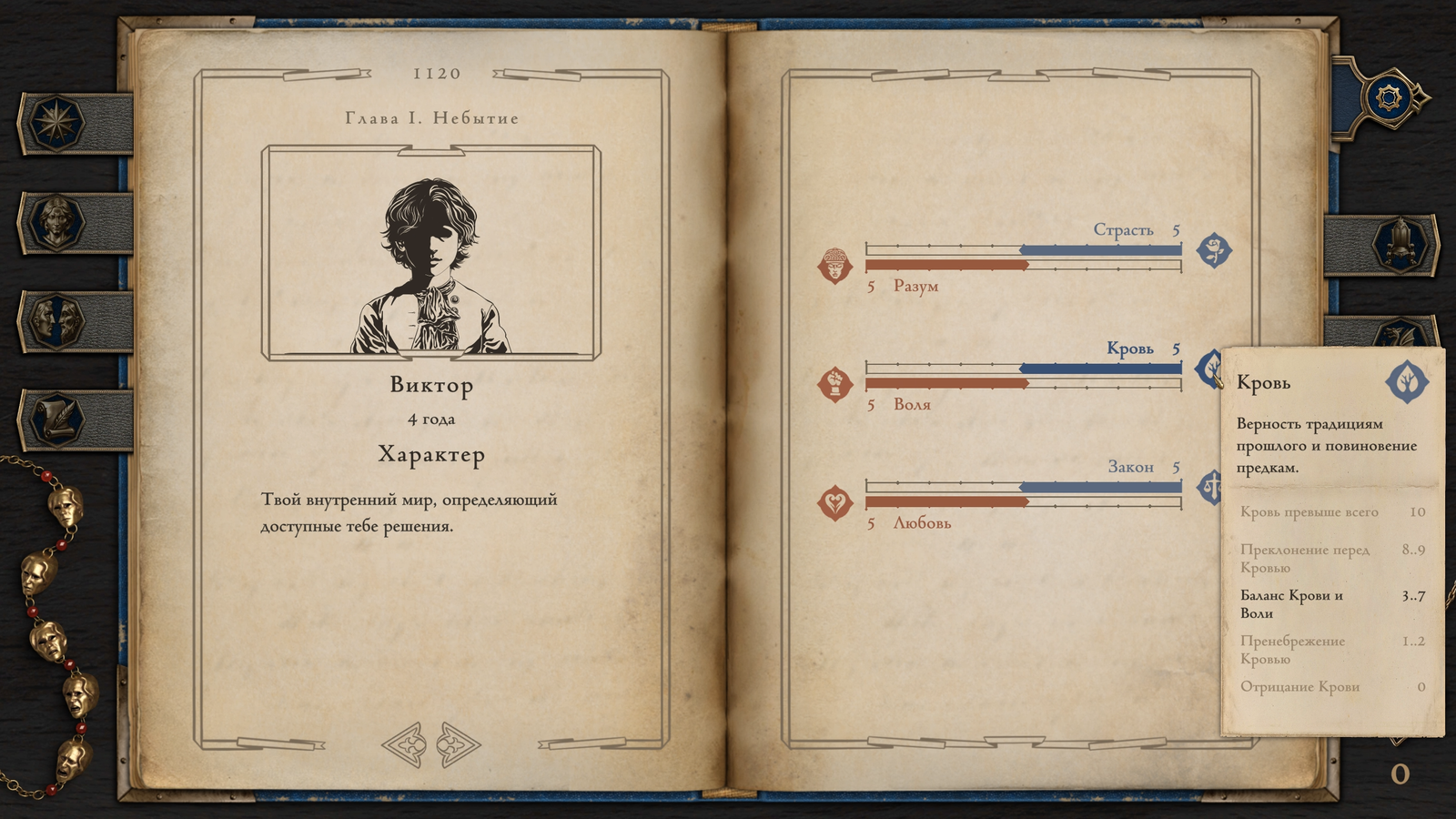
To these psychological poles are added classic skills. Management is responsible for the ability to solve complex economic and administrative tasks, Diplomacy determines mastery in negotiations and subtle political maneuvering, and Sciences reflect the ability to find answers to intricate theological and scientific questions.
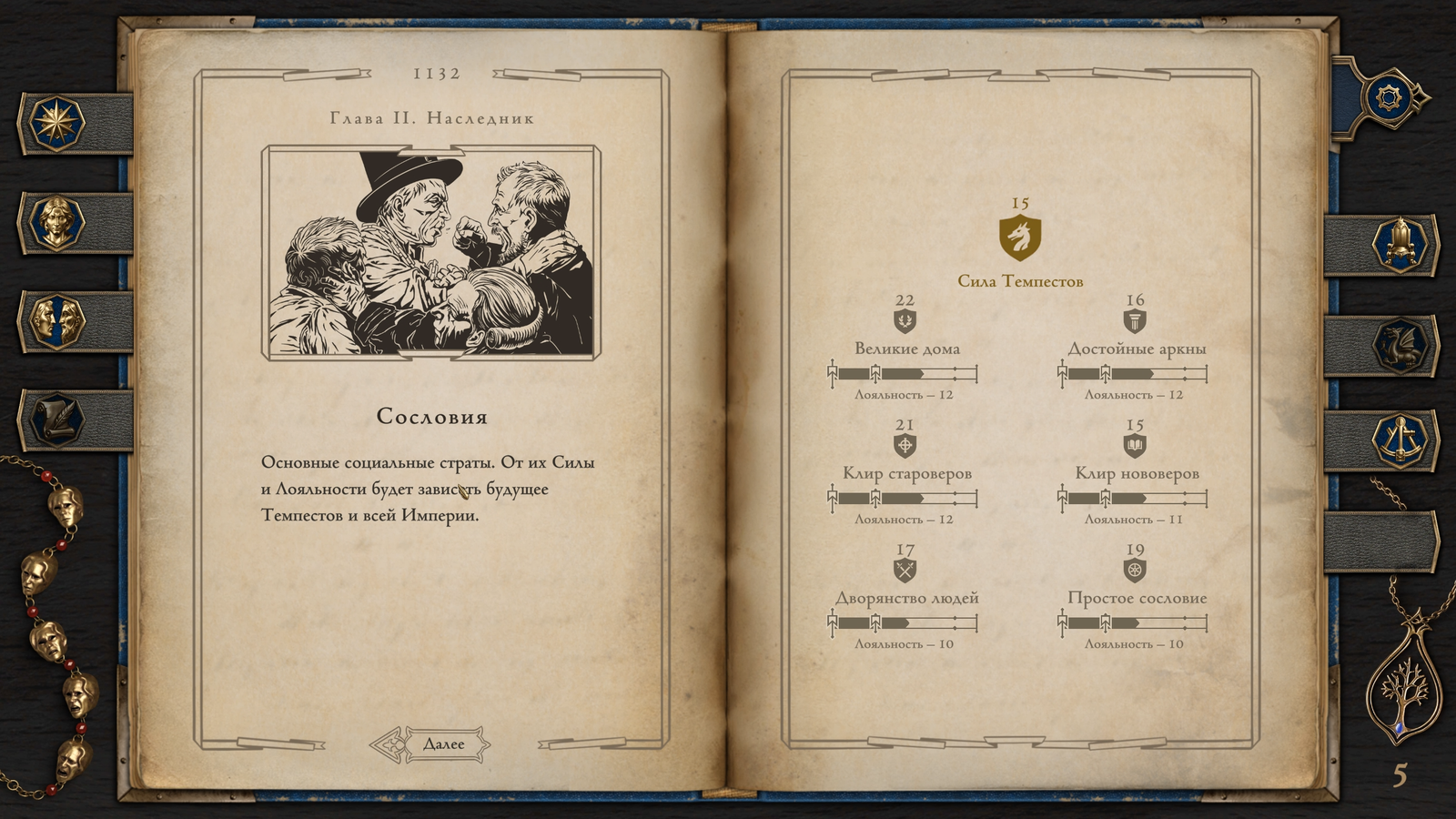
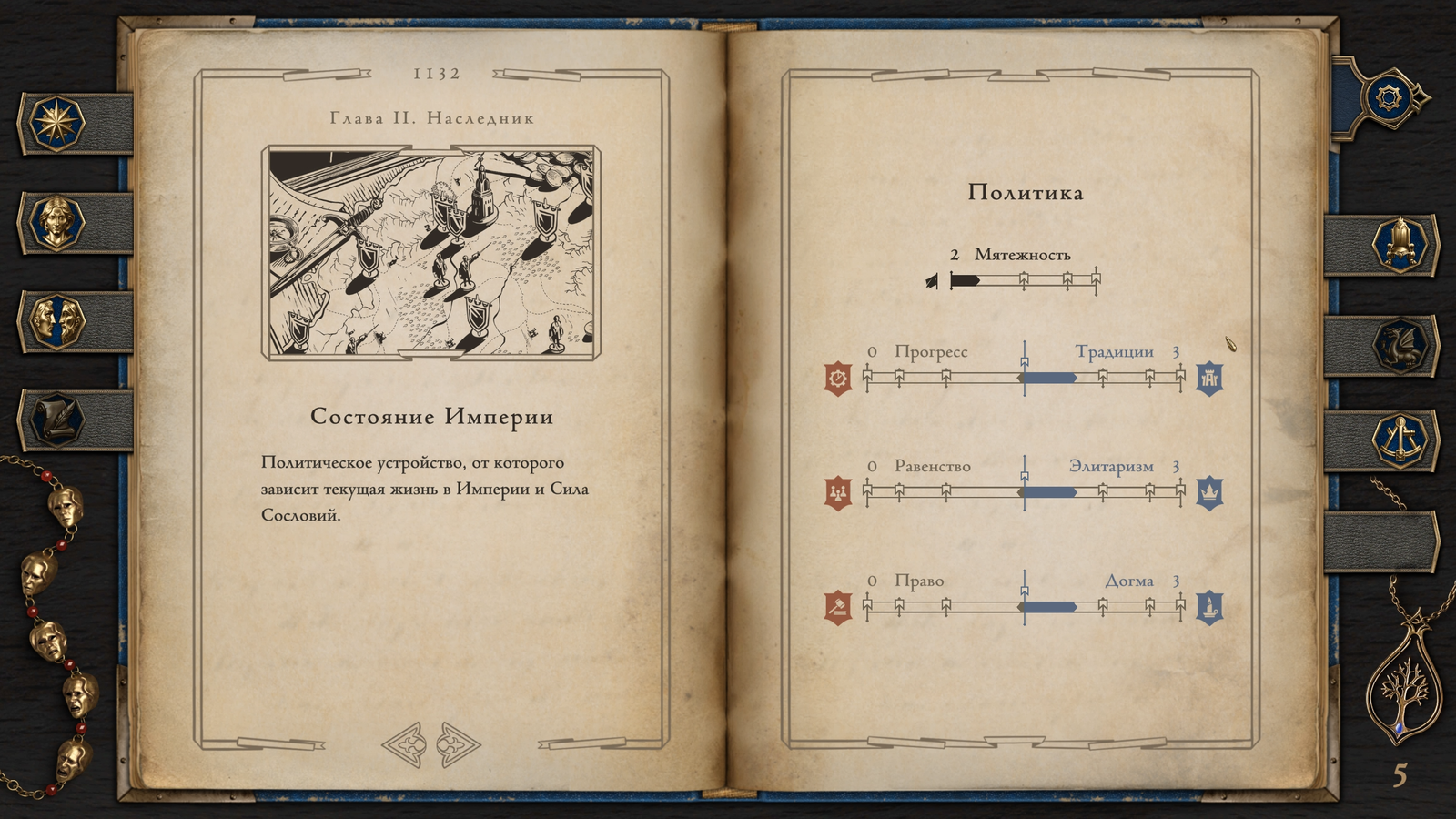
A real feast for number lovers begins in the second chapter, when Jerian becomes the Grand Censor of the Imperial Council. Before the player unfolds a map of the entire Empire's state with three pairs of global vectors: Progress and Tradition, Equality and Elitism, Law and Dogma. We find the empire on the verge of a technical and social revolution: weaving looms replace live workers, scientists discover penicillin, and society is torn between six key estates — from the Great Houses to Old Believers and New Believers. To guide the country through these changes, one must constantly maneuver between their interests, because above all this hangs a separate indicator of Rebelliousness, reflecting the readiness of subjects to revolt against the Tempests.
Imperial projects, which open in the third chapter, become the key mechanism for transformations. These are large-scale programs for the development of state institutions and changes in social order, allowing for accelerated movement in one direction or another. Each such initiative goes through three stages of development: the bolder and more radical the next step of the reform, the stronger its positive effect, but the higher the discontent of conservative or disadvantaged estates.
I confess honestly: at this stage, skeptics and critics once again started singing that the developers had locked the player in a "calculator." And when you first see this gigantic pile of scales and numbers, the game really seems like a complex mathematical problem. A radical reformer cannot simultaneously strengthen traditions, and a supporter of secular law cannot strengthen church dogma without consequences. From the point of view of absolute permissiveness, this looks like a limitation. But from the point of view of the world's logic, it looks like a natural consequence of the chosen course: the state simply cannot move in all directions at once.
Especially since "Jerian" only intimidates with its scale. Once you dive into the process, it becomes clear: the mathematical model has become much more flexible, and the game provides real control tools.
Jerian is inscribed in the History of the Empire, so his first death will be a True one: no Minor deaths and resurrections in the temple. The "extra lives" mechanic has been replaced by the Sanity parameter, which, along with the Tempest Legacy, literally allows you to "hack" closed choices. If you lack the characteristics for a desired action, you don't have to go back to the beginning of the chapter — Jerian can push through the desired decision with an act of will, paying for it with his own sanity.
Nerve cells don't regenerate (you only get five units of Sanity for the entire game), so you'll much more often spend Tempest Legacy. This is an improved analogue of the stamina reserve from "Brante," but here the events that restore this resource no longer feel empty or filler — they often affect the hero's position in society, his characteristics, and his relationships with others.
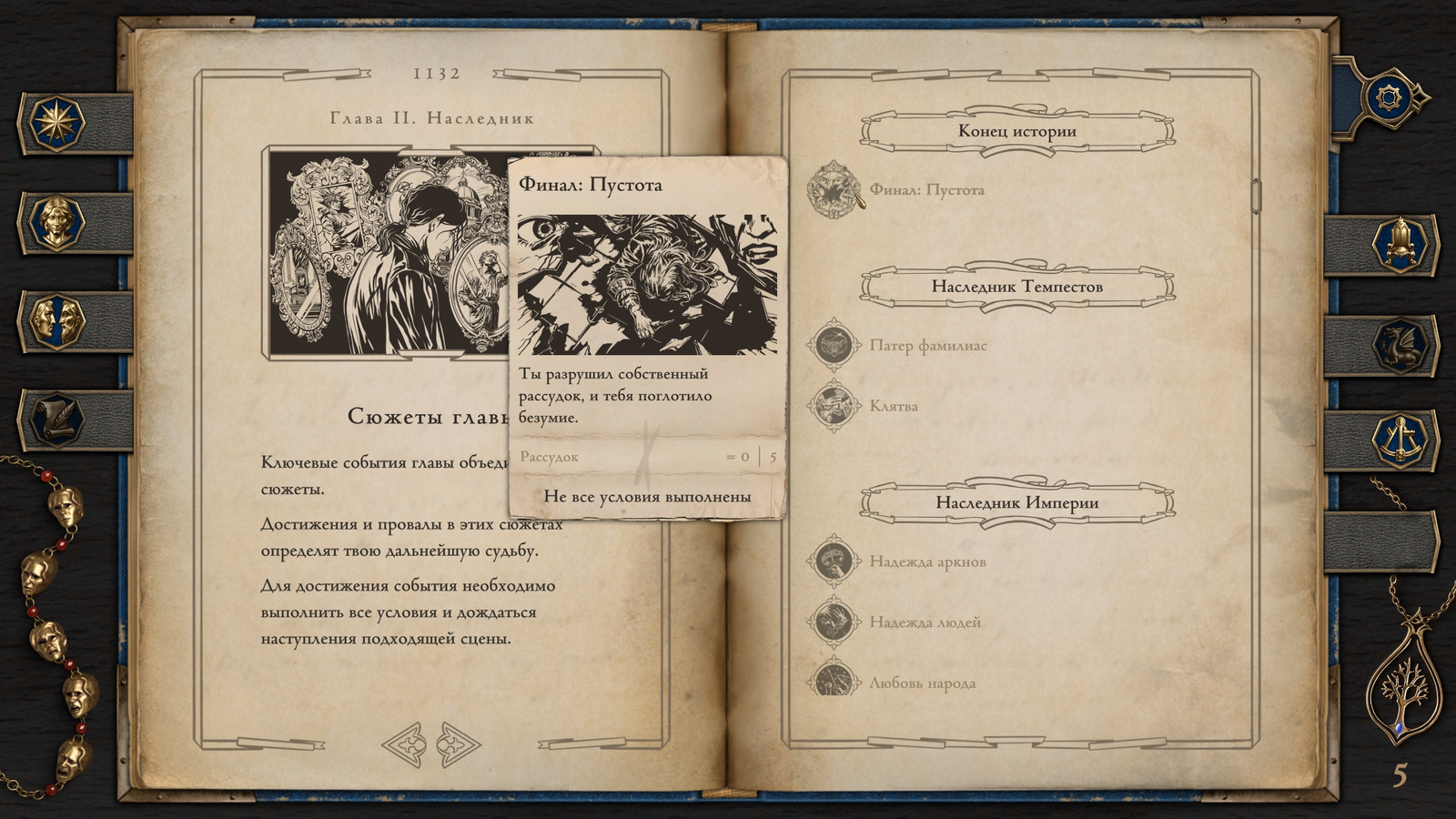
Preparing for the review, I specifically replayed "Brante" to compare it with "Jerian" with a fresh mind. My verdict is unequivocal: the new game is much simpler, freer, and more enjoyable in terms of decision-making. I reached the best ending without guides or digging around online, simply by following my chosen role-play as a rational reformer. Throughout the entire playthrough, I only had to replay two decisions — at the end of the second chapter and at the beginning of the fifth — spending no more than twenty minutes on it thanks to the fast-forward function for already completed chapters.
Yes, to succeed, I had to make compromises — and some of the audience, for some reason, saw this as a drawback. But in life, we also don't get everything at once and are forced to negotiate with the world and ourselves. Where "Brante" rigidly locked the player in a narrow corridor and forced them to replay everything from the beginning for the sake of a single "correct" decision, "Jerian" gives real room for maneuver — just like in life, where you can change your mind on the fly if the situation demands it.
But while there are practically no complaints about the gameplay mechanics, the attempt to fit the state scale into artistic prose revealed a number of controversial points.
From Family Drama to Political Routine
The difference in narrative approach is felt from the very first minutes. If in "Brante" the first chapter captivated with its intimacy and emotional introduction to the world through family from the hero's earliest days, in "Jerian" we are immediately transported to his four-year-old age. This stage is primarily devoted to solitary learning and studying the state structure. Because of this, the game loses some of its former cozy charm of the first steps, retaining it only in the possibility of making a first friendship with commoners.
However, such a decision is narratively justified: Jerian does not yet know that he is Jerian. He is truly "born" only in the second chapter, when the young prince enters the River of Blood of his family, is reborn, and learns that he is the emperor's eldest son, in whose veins flows the blue blood of the Arknyans.
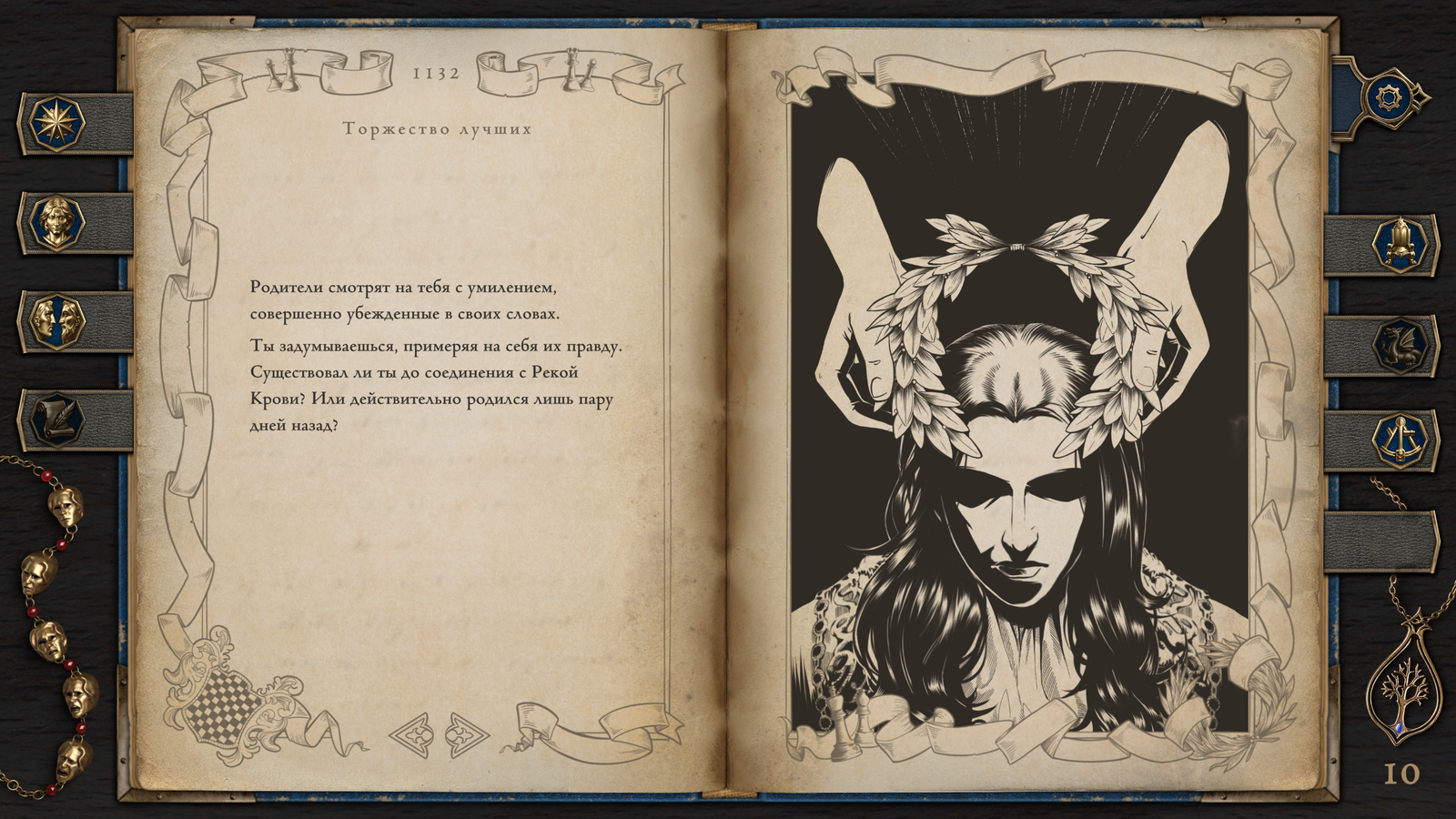
Thanks to the hero's new status, we delve into the world's structure much deeper than before. The heir to the throne naturally has access to the secrets of theology, the nature of the Arknyans, and the inner workings of palace power — all that an ordinary person like Brante could not even know.
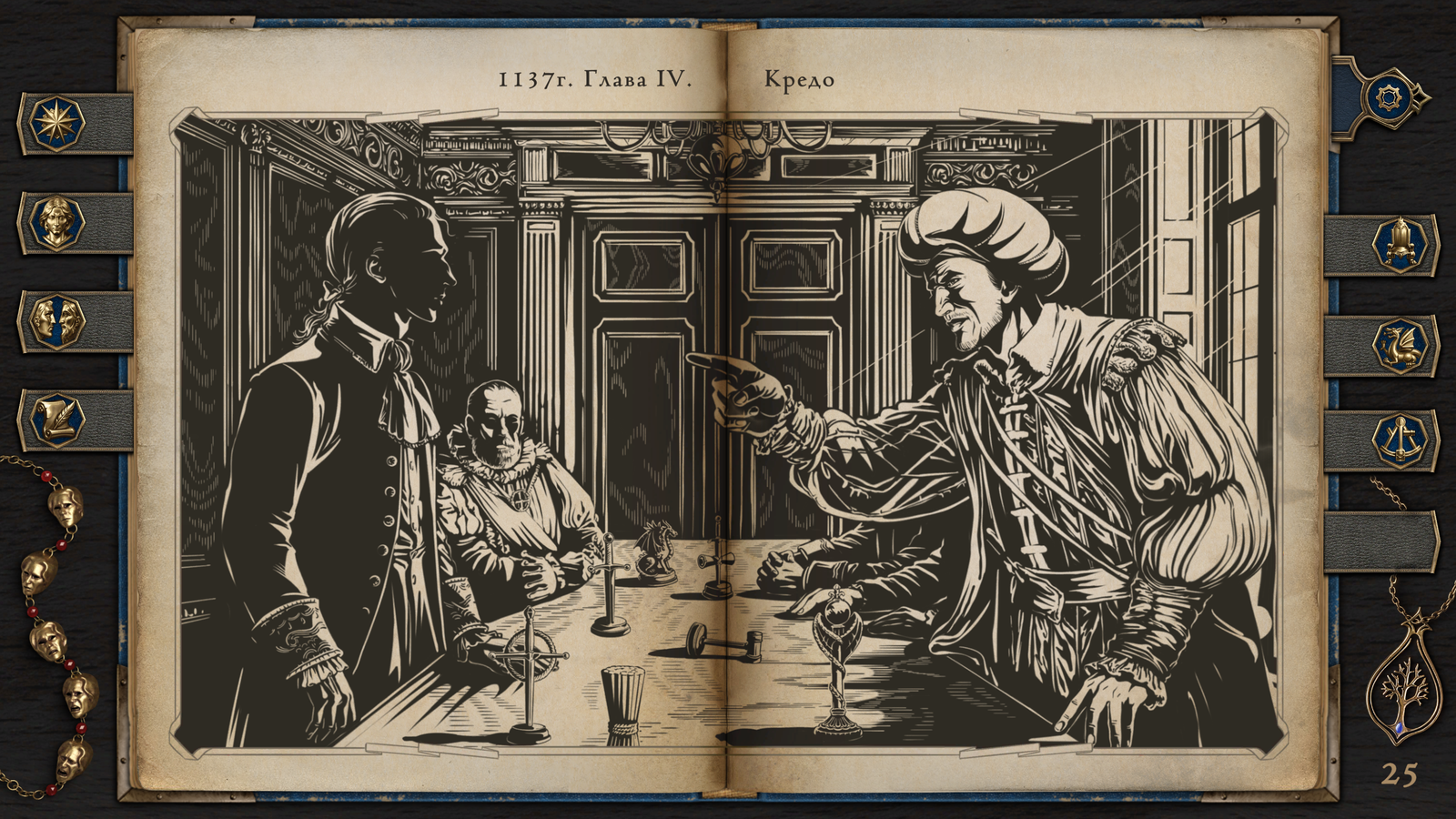
True, this large-scale world is visually supported with difficulty: unique illustrations are frankly few. The same images are constantly used for completely different locations, people, and situations, and the increased scope of the sequel has only made this long-standing problem more noticeable, although it was already evident in "Brante." Against this background, heated debates even flared up in the community about the possible use of neural networks: some images indeed look suspicious, although it is impossible to establish their exact origin solely by their appearance.
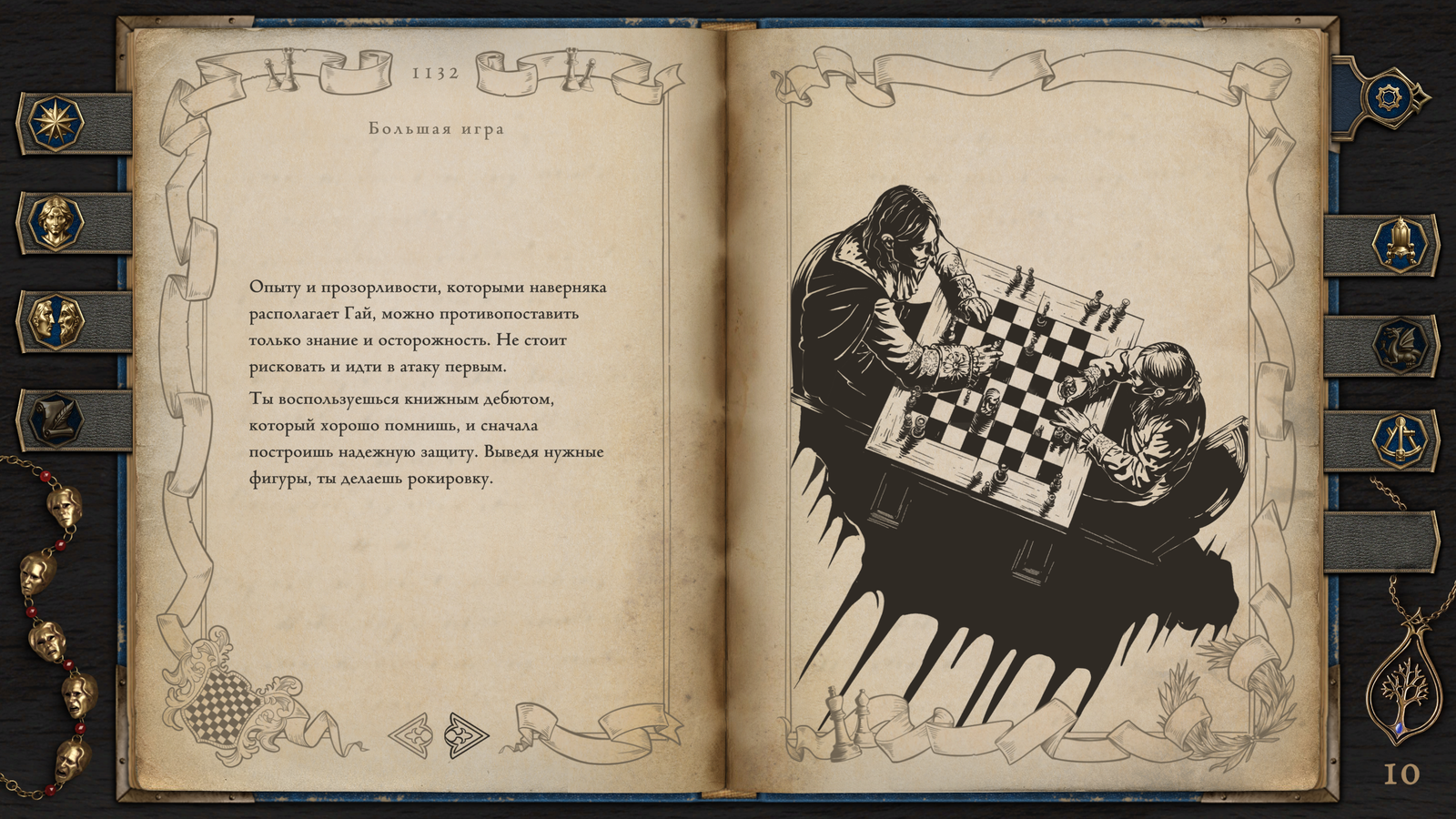
However, the text itself is written at a decent level, and there are no complaints about the script from the perspective of AI use. The prose retains the signature style of the first part, connects decisions over a long distance, uses rich language and precise figurative metaphors that enhance the sense of presence.
Another matter is that occasionally, in this complex drama, strange logical glitches arise. For example, even in childhood, Jerian can experience his first love with his friend Martha: she confesses first, the hero reciprocates, and then in the third chapter, Martha unexpectedly says: "How foolish I was not to dare to tell you about it." At first glance, this looks like a scriptwriter's blunder, but most likely, the issue is not with the text, but with technical inaccuracies in transferring decisions between chapters or when replaying. It's no coincidence that in the first update, the developers specifically emphasized that they made changes to the save system to improve its stability and eliminate rare errors when rolling back chapters.
However, where scripts don't fail, the narrative works perfectly. Several times I experienced a dissonance between what I felt myself, associating with the hero, and how the text described the prince's inner state. But this also holds a great advantage: the story is so captivating that any discrepancies between my personal emotions and Jerian's reaction are felt especially acutely — precisely because by this point, you genuinely bond with the character.
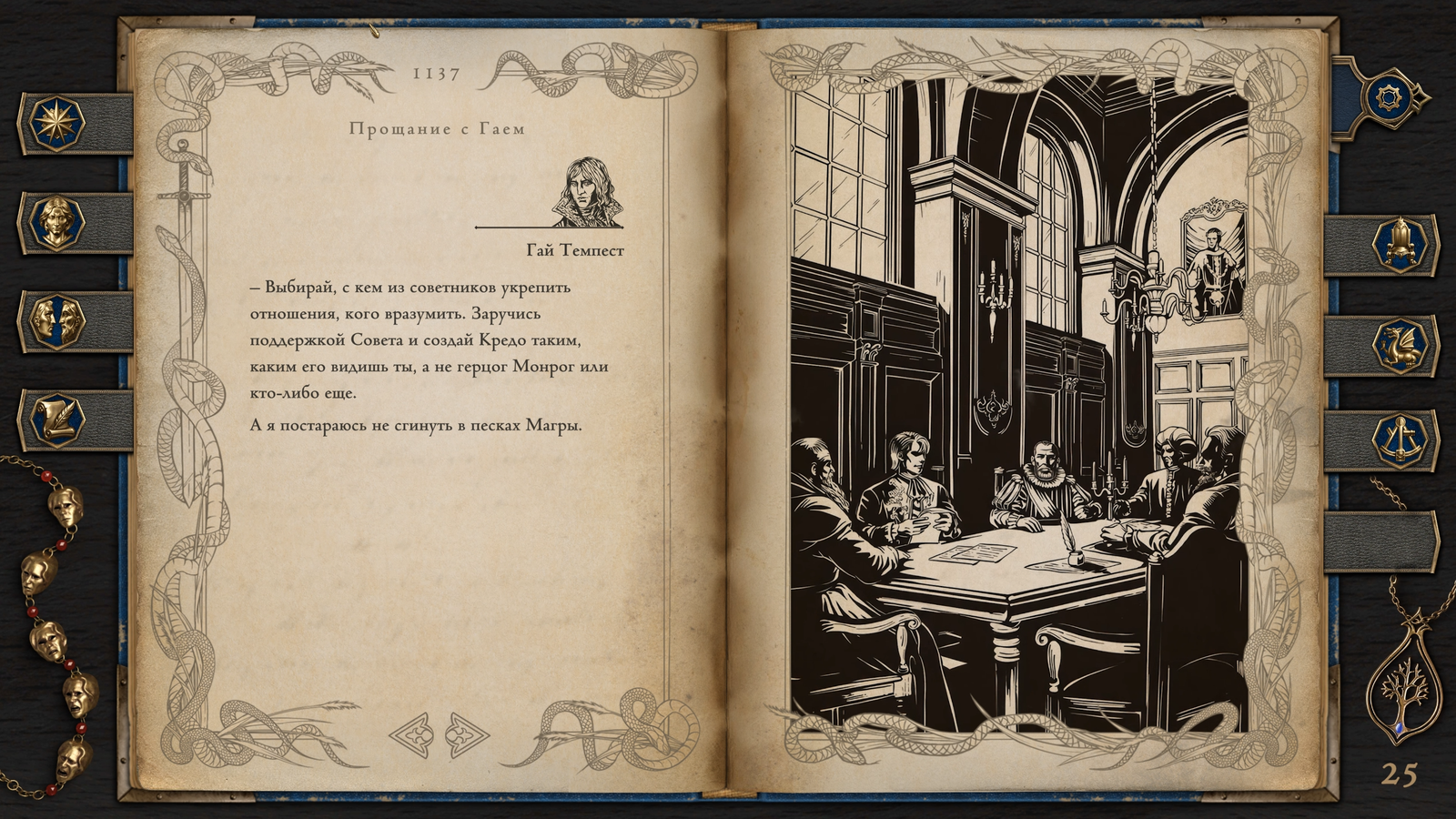
More serious problems begin in the second half of the game, where the authors frankly get bogged down in the scale of the Empire. The narrative begins to endlessly tread water: interactions with companions and Imperial Council meetings essentially boil down to constant arbitration of minor, contrived disputes and tugging at scales. Secondary characters often lack depth of character: they act more as functions, and the arguments of the parties repeat so obviously in a loop that the text frankly becomes tiresome.
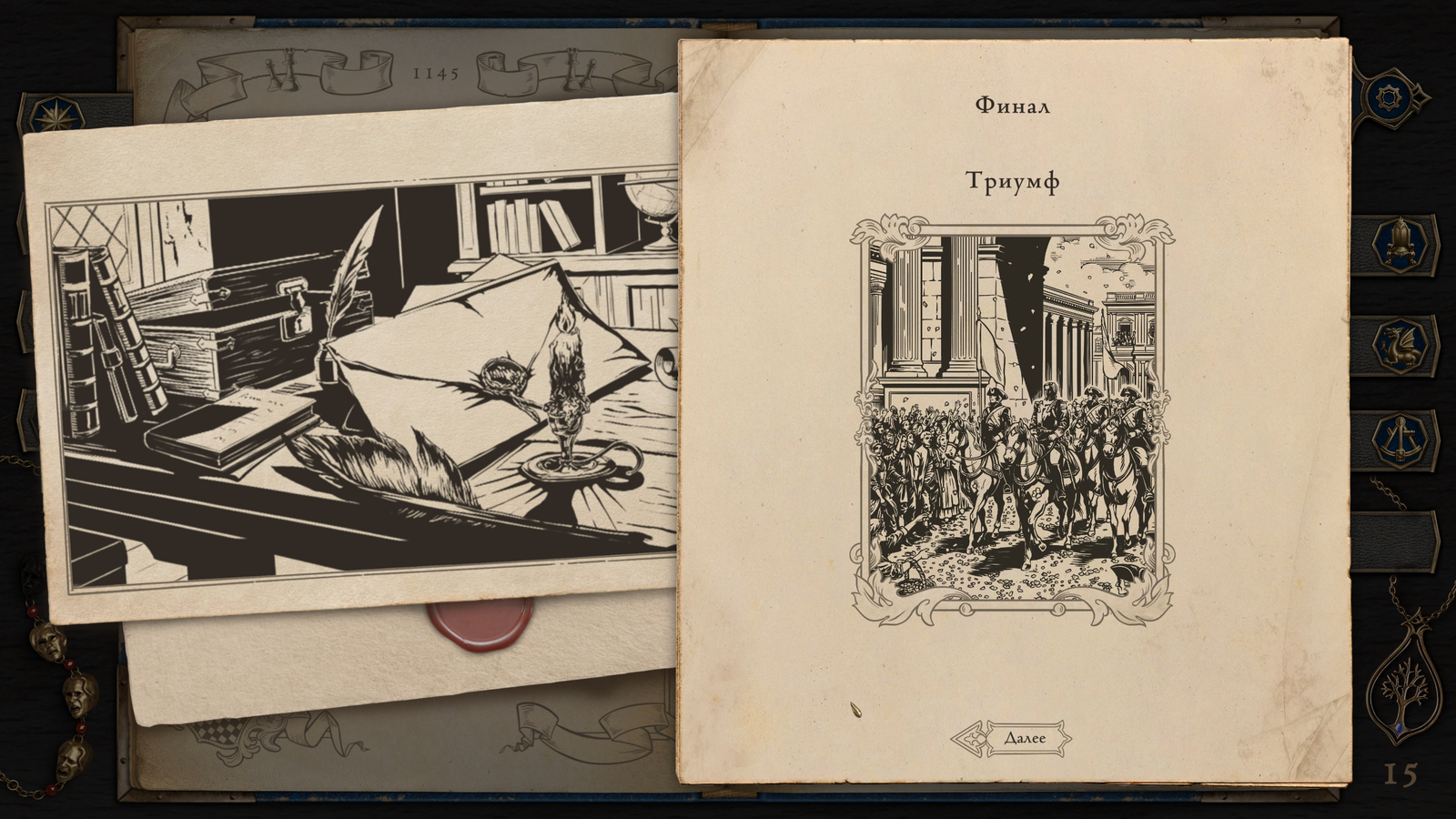
And, as is tradition, the ending turned out to be rushed and crumpled. The main event, which we were purposefully prepared for throughout the entire playthrough, is again not shown directly, but presented as an accomplished fact. The game has five full chapters in which we make decisions, and the sixth — not even separately highlighted — only retells what our actions led to, how the Great War went, and what happened to the key characters. After tens of hours of painstaking maneuvering, such a dry statement causes a feeling of slight annoyance.
Verdict
The Life and Suffering of Prince Jerian is a game that demands a willingness to make difficult decisions, make sacrifices, betray what once seemed unshakable, and live with the consequences of one's choices. At its best, it forces you to calculate the consequences of reforms, forge unpleasant alliances, find compromises between your own beliefs and the interests of the country, while simultaneously dealing with family and heart matters — and keenly experience every decision made.
Despite the abundance of political routine in the second half, "Prince Jerian" feels like a confident step forward in the development of the original formula. The sequel shed the suffocating perfectionism of "Brante," gave the player more freedom, and transformed the management of dozens of scales into a large-scale socio-political drama.
It remains only to understand if this format suits you. Reading and making decisions constitute the entire gameplay, so if large amounts of text and political intrigue cause you complete rejection, it is wiser to pass by. But the opposite is also true: if you are not used to reading much but would like to change that, interactivity and direct responsibility for the plot's development can well become a kind of bridge to more regular reading.
You can start with either "Brante" or "Jerian" — both games work perfectly independently of each other. Choose what is closer to you: the life path of a commoner who fights for the right to control his own destiny, or the burden of an heir forced to determine the destinies of millions.
Never miss our newsAdd this site to your preferred sources to see us more oftenAdd on Google