(18+) Heartfelt Romance for Tired Adults: Why the Anime "A Story About Smoking Break at the Supermarket" Captivates Viewers
On July 9, the anime "A Story About Smoking Break at the Supermarket" premiered. Currently, only 6 episodes are available, but we liked the project so much that we decided to tell you about it without waiting for the season to end.
This material is for informational purposes only and is not intended to promote or stimulate the consumption of tobacco and nicotine-containing products. Smoking is harmful to health. This material is intended for persons over 18 years of age.
When You Just Want to Take a Smoke Break
Everyone knows the feeling when after a hard day's work, you have no energy left, and your mood is at rock bottom: your boss scolded you, you were given extra tasks, everything is falling apart. After such a day, you just want to exhale and distract yourself from problems, because tomorrow it will all start again.
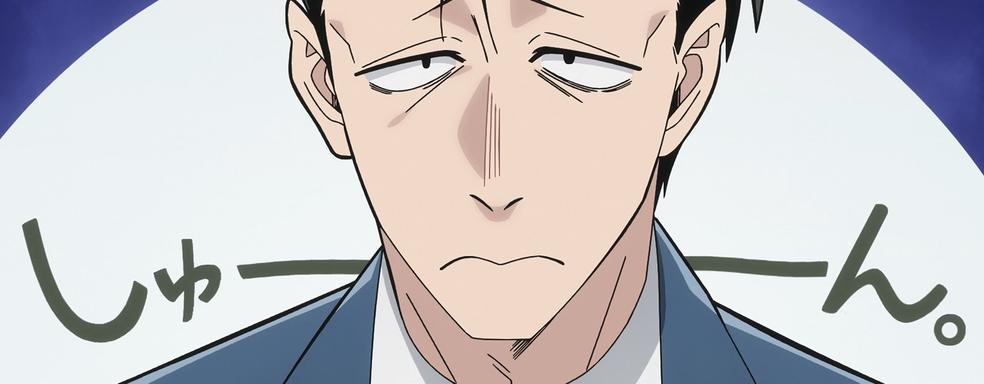
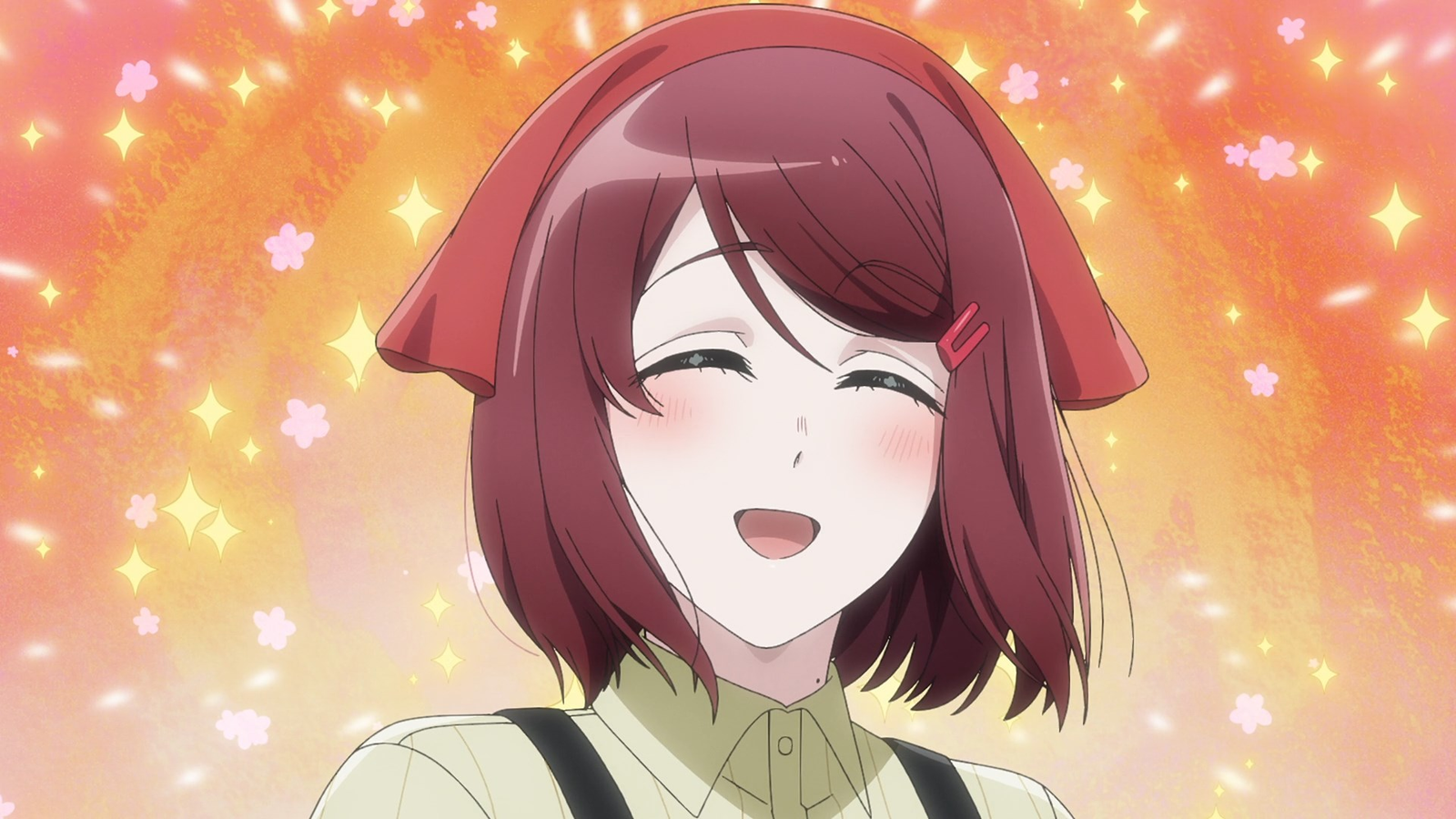
And so, Sasaki, a middle-aged working man, goes to the same supermarket every time on his way home. Because there, at the checkout, works a girl named Yamada, whose one smile can bring joy back to the poor fellow's life.
And so it would have continued, but one day the main character had a really bad day: his boss seemed to have gone off the rails, Yamada was not at the checkout, and there was no smoking area nearby. The latter was especially annoying, because this bad habit is an important part of Sasaki's life.
But suddenly, a certain Tayama called out to him and offered to take a smoke break together in the store's special staff area. There, she began to ask Sasaki why he so often came to see Yamada.
It turned out that Yamada and Tayama are the same person, but Sasaki never realized it. This is because their images are very different: the daring rebel at work puts on the "mask" of a sweet and friendly girl.
From that moment on, Sasaki and Tayama often meet in the evenings in the smoking area to take a smoke break and talk.
The Cry of a Japanese Working Man's Soul
I liked the idea of the anime: to show the simple life of an adult and the everyday difficulties he faces. Not large-scale problems, but the routine that makes up our lives.
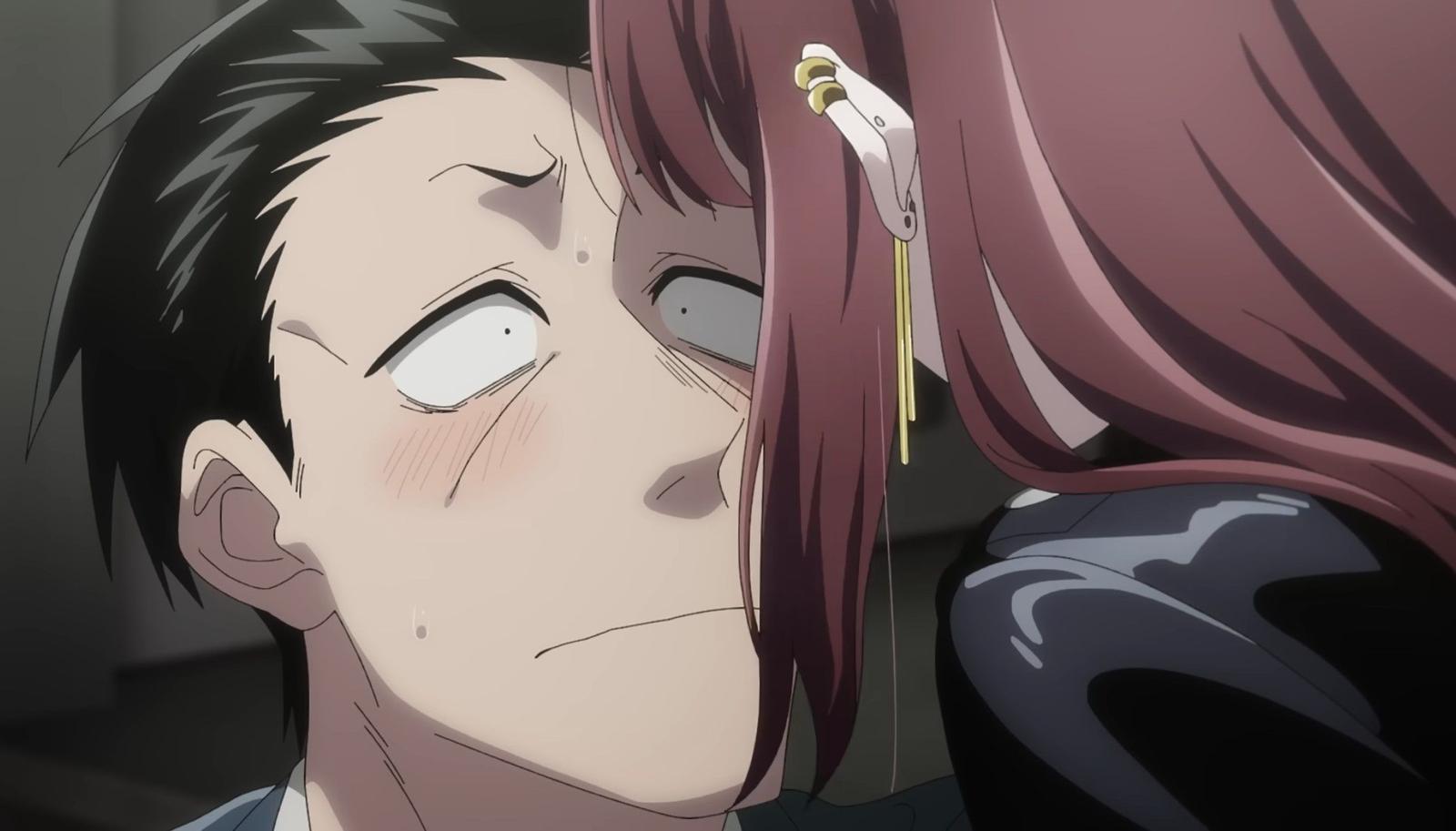
I remember Sasaki going to work in just one sweater: he thought that since it was spring, everything would be fine. However, it got cold in the evening, and Sasaki froze. Yamada didn't lose her head and gave him her leather jacket so he wouldn't catch a cold.
Such situations are close to the viewer: they are easy to understand and relate to. This means that it is also easy to immerse oneself in the work.
Such situations are especially relevant for Japanese people. After all, if you have even a little interest in the modern culture of the Land of the Rising Sun, you know that there is a real cult of work there.
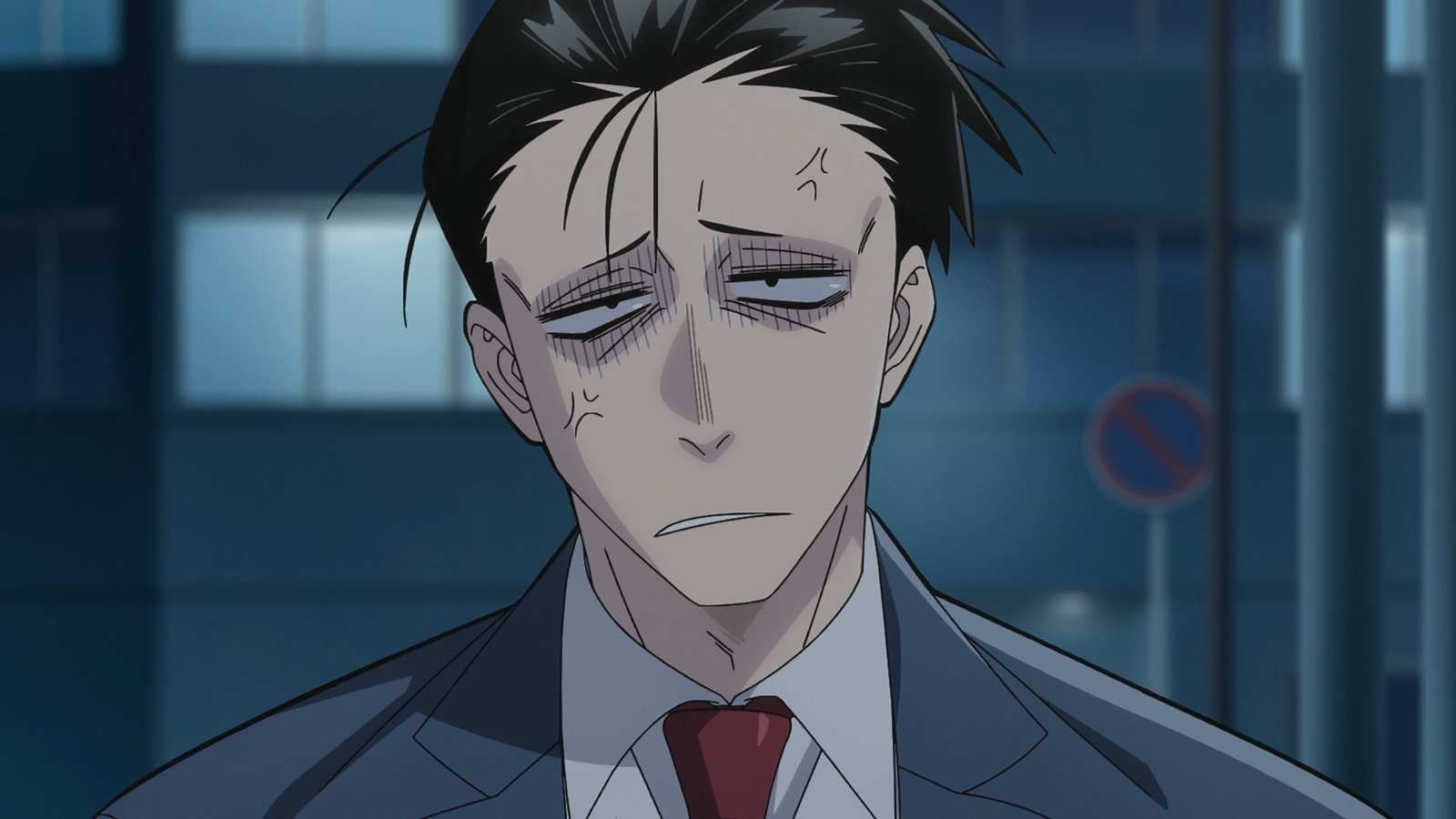
Many Japanese people face a lack of free time, literally live at work, and dream of escaping this hell. This theme is constantly played out in the plot: there is even an episode where Sasaki suddenly didn't show up, which greatly surprised Yamada. It turned out that he had a day off — supposedly the only one in the year, which Sasaki spoke about with sad irony. And Yamada compared him to a slave toiling in hard labor.
From this perspective, the project is perceived as the author's cry from the heart, as a fantasy about a better life. How wonderful it would be on one of those difficult days to meet a beautiful girl with whom you can have a heart-to-heart talk.
For us, such a project can be a window, allowing us to look at how life is arranged in the homeland of anime: everything there is far from as wonderful as many imagine.
Funny and Cute
The humor in the work is based on Sasaki completely failing to recognize Yamada as Tayama, although everyone else, including the store manager, immediately figured it out. Yamada even came up with a corresponding nickname for the character. And this says a lot about Sasaki: he is either foolish or overly naive. Although, perhaps, it's just hard for him to think after work.
This reminded me of One Piece, where Usopp put on the mask of Sniper King, and Luffy and Chopper couldn't even imagine that their old friend was in front of them. These two are also extremely naive and not particularly quick-witted.
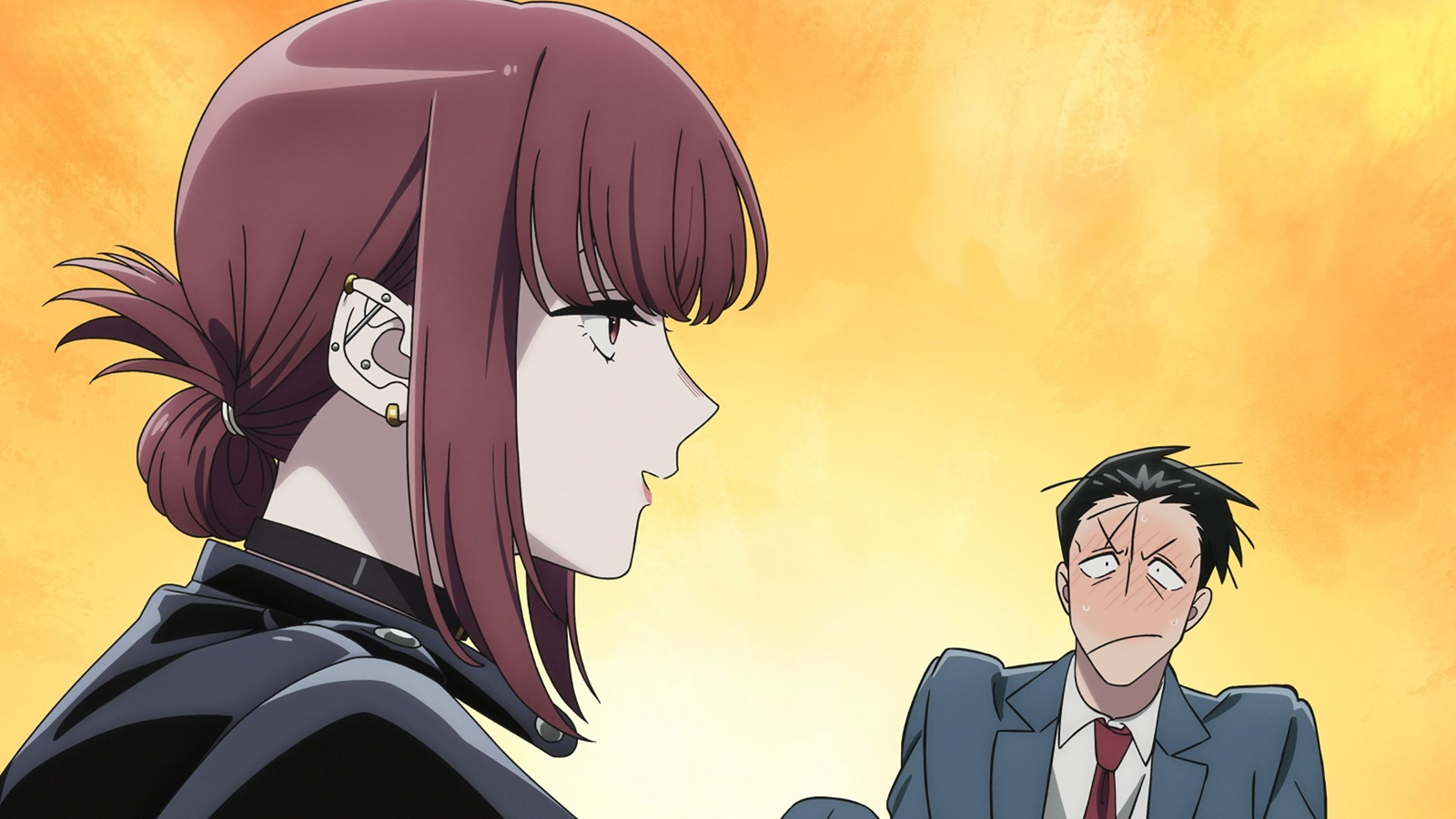
The romantic part is built on Yamada gradually falling in love with Sasaki, although she herself cannot understand why. When she has the opportunity to tell him the truth, she hesitates, and when he says that he "understood everything," we hear her heart beat faster.
All of this is shown very simply and sometimes even unnaturally. Although the characters are adults (after all, it's a seinen), they behave like teenagers: too shy and insecure. However, this can be easily explained by the difference in the protagonists' personalities.
Sasaki is too kind and afraid to say too much so as not to offend anyone — and this is also played out in one of the episodes. Yamada, on the other hand, often teases him, provoking awkward situations. This difference in personalities creates chemistry between the characters. Within the framework of artistic convention, all of this looks very cute and funny.
Each such scene makes you want to swoon, watching how the protagonists' relationship develops. They captivate with their sensuality, and the interaction between the characters makes your heart feel warm and pleasant.
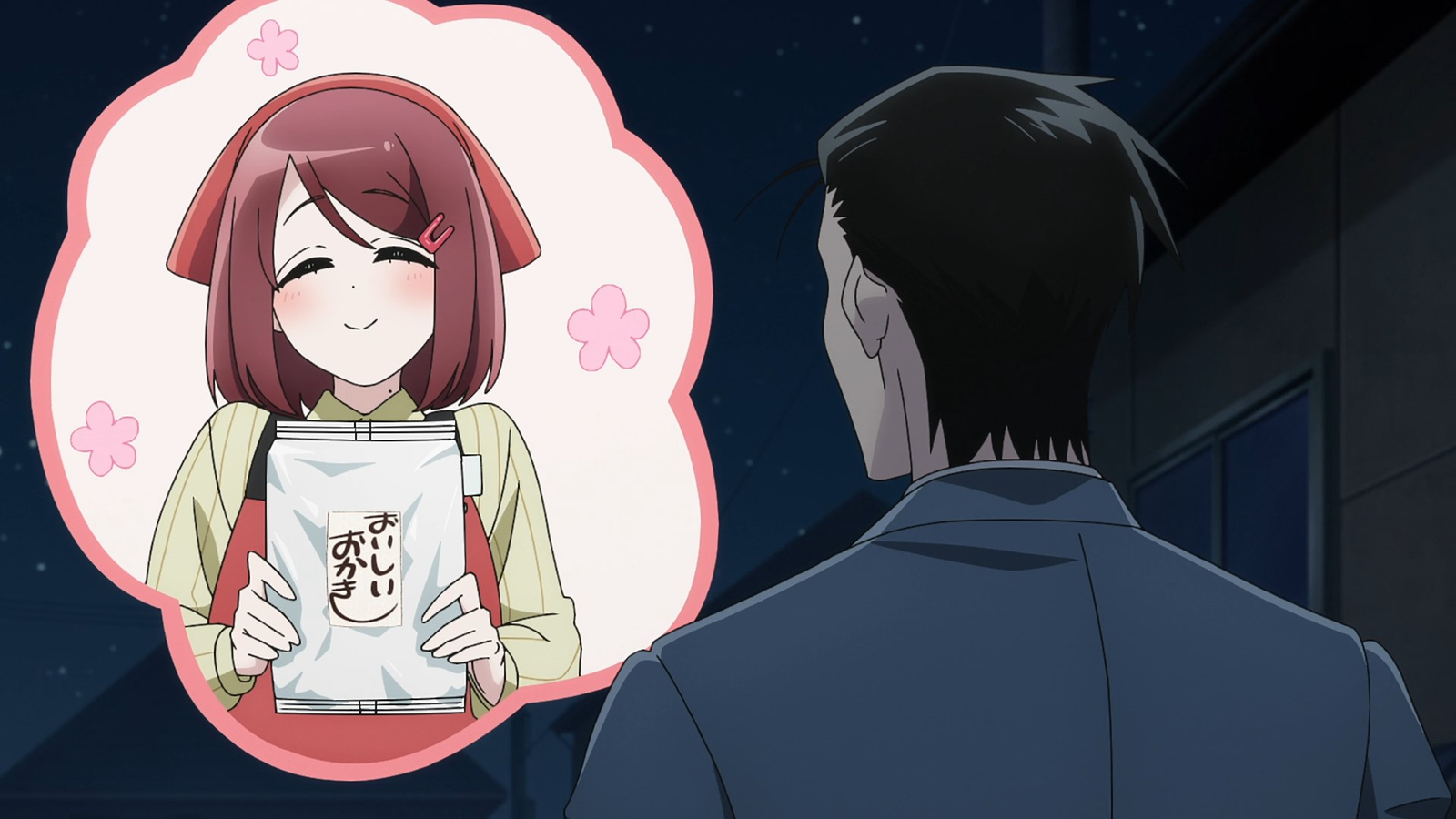
I would especially highlight the artwork and character design: Yamada is very beautiful, and her expressive emotions perfectly complement the heroine's image. Sasaki, although he looks quite ordinary, combines perfectly with her. He doesn't draw attention to himself, but he also doesn't get lost in her background, as both characters are interesting in their own way.
By the way, the authors don't overdo it with emotions: they look natural, almost without the "anime-like" hyperbole, which would be inappropriate here. This brings the work even closer to the viewer and makes what is happening more grounded.
Is Depth Not Needed?
But the authors didn't quite push the depth. There's an episode in the anime where Sasaki goes for a routine medical check-up — an ideal opportunity to raise the topic of bad habits and their impact on health.
I immediately imagined how Sasaki's condition could sharply worsen: for example, he would end up in the hospital, and Yamada would visit him there, while contemplating whether she should quit smoking. This could have resulted in a didactic story arc, capable of making the viewer think about the consequences of such habits.
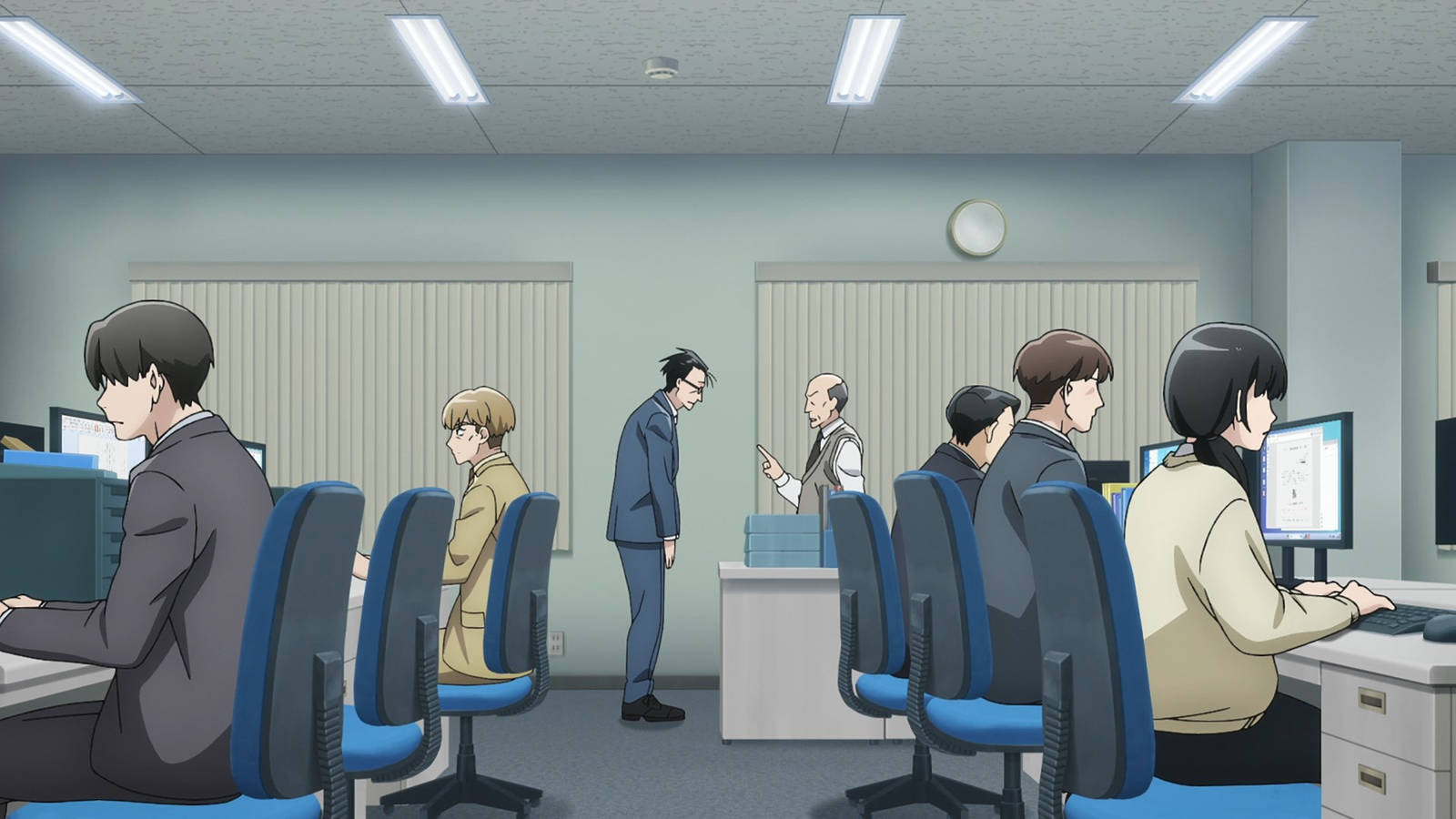
But the story easily jumps off this topic, offering too simple an explanation and quickly returning to the status quo, which disappointed me a little: I wanted to see how simple get-togethers would grow into something serious. However, if the project was created primarily as an escapist fantasy of the author, then such a development is really unnecessary here: hardly anyone would dream of going to the doctor and having health problems.
So far, however, only half of the season has been released, and it is quite possible that the authors have prepared something similar for us closer to the end. It is not excluded that the first episodes are just a teaser before a future plot twist. We'll see.
Format Confusion
An important technical point. When watching anime, confusion may arise — all because Crunchyroll, together with the Japanese streaming platform ABEMA, released half of the season in advance, dividing standard episodes into two parts.
Therefore, you can find 12 episodes of 12 minutes each online, although in reality, this is only half of the season. Regular full-length episodes of 23-24 minutes will be released on TV once a week. This was done so that viewers could start watching earlier, and at the same time, to pique their interest in the anime.
Because of this, it's easy to get confused: I watched these 12 shortened episodes and decided that I had familiarized myself with the work entirely. And when I went to check, I didn't immediately understand what was what — I had to dig deeper to figure everything out.
Verdict
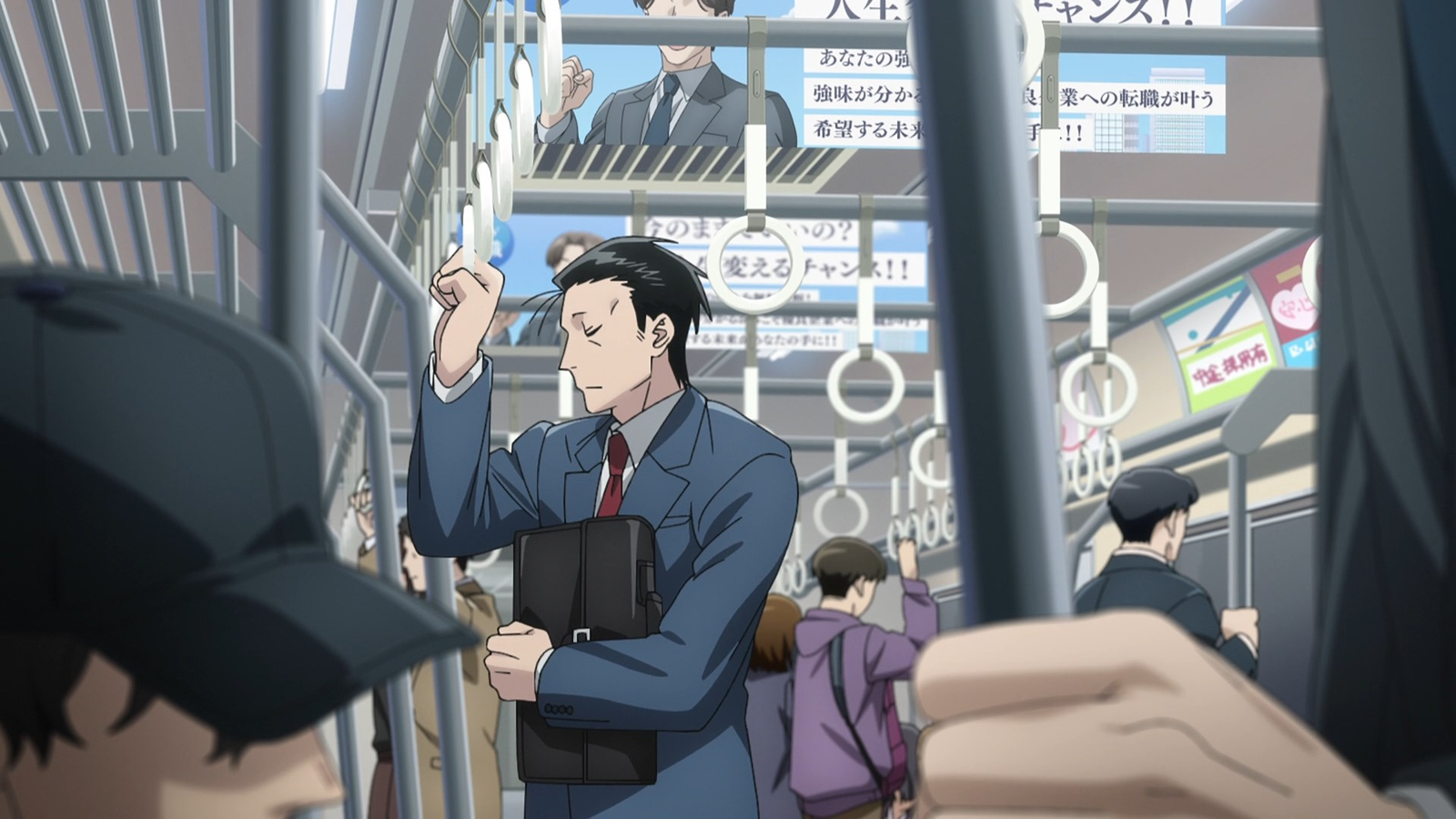
"A Story About Smoking Break at the Supermarket" is a very relatable work. What happens on screen doesn't "burden" the viewer with serious problems, but only hints at them. At the same time, the anime maintains a grounded tone and is built on relatable and understandable themes.
Because of this, the anime seems both simple and complex at the same time. It allows you to dream, but doesn't lead you into deep thickets, focusing instead on everyday routine. At the same time, the work allows you to look at modern life in Japan and see that it is far from always as attractive as it may seem from the outside.
The plot balances well between reflection, humor, and romance: each element complements the others. The chemistry between the characters can be felt from the very first scenes, even despite the fact that the romantic episodes sometimes look awkward and unnatural.
By the middle of the season, an important plot twist appeared in the anime, and I'm curious if the authors will use it further. And if so, will they be able to pull it off correctly without losing the project's main "feature" — its groundedness and simplicity.
Never miss our newsAdd this site to your preferred sources to see us more oftenAdd on Google