
Horror for the most patient: how Welcome to the Game 3 drives players crazy
A Little Context
Welcome to the Game 3 is an indie horror game from Reflect Studios, a team that can hardly be called a typical indie studio experimenting with different genres. The developers' first notable work was the demo version of Rides with Strangers, released in 2016, but it was Welcome to the Game that ultimately defined the studio's direction.
Reflect Studios' horror games are a kind of walking simulator. But not through corridors, but through virtual spaces: the darknet, police databases, and surveillance camera screens. However, the gameplay here can hardly be called static. While the player sifts through documents, links, and images, equipment breaks down in the room, a new urgent task appears, or a killer lurks nearby. The enemies here are not so much for direct pursuit as they are for regularly distracting the player from the main task and forcing them to divide their attention between several tasks.
Reflect Studios' projects themselves can be completed in a couple of hours. However, to do this, you need to study them inside and out. If you are not careful, killers will come for you, and the game will end. After that, you will have to start all over again. This is the studio's recognizable approach. Reflect Studios games are rogue-like horrors where developers rarely reveal all the rules at once and make each run unique. A significant part of the mechanics is learned through mistakes, and death becomes another survival lesson.

But this approach to game design is one of the most controversial elements of the series. Behind its strict rules lie problems with balance and a strong dependence on randomness. Some deaths occur so unexpectedly that they seem absolutely random, and in the community, they are explained by hidden mechanics, the disclosure of which could lead to a serious scandal. Therefore, Reflect Studios has gained a controversial reputation.
The New York studio is closely associated with its scandalous founder, Adam Flatau. He has a devoted audience who appreciates his games for their unusual structure, high difficulty, and horror atmosphere. At the same time, he serves as an example of arrogance and imperviousness to criticism in the indie segment.
The Welcome to the Game series has been criticized for years for bugs, excessive randomness, and constant changes to the game's rules. Flatau regularly argued with players about this. In addition, he was accused of remote interference during streamers' playthroughs. Dataminers found strange algorithms in his projects that read players' IP addresses and sent them to a remote server. After the scandal, the team released three more games that could not repeat the success of the Welcome to the Game series. Therefore, eight years later, the developers returned to the series and presented a new installment.
Gambler Pays Off Debt
Although it's a threequel, the plot of each Welcome to the Game installment is original and does not intersect with other games from the studio. Therefore, playing previous parts is not necessary.
In Welcome to the Game 3, we play as Simon, a motel administrator and gambler. Due to his addiction, he lost a large sum of money and got into debt. But he borrowed money from very shady creditors. By the beginning of the game, they find us and force us to participate in a deadly game.

The essence of the game is as follows: you need to find a cipher. It is divided into eight parts, hidden throughout the darknet. In one night, you will have to find hidden sequences of symbols among dozens of creepy sites and put them together. However, it's not that simple. Many darknet inhabitants participate in this tournament, so you can't delay. Victory will allow you to pay off your debt, and defeat will cost Simon his life.
However, the organizers are not satisfied with a simple competition. To increase the winnings, they make the challenge even more dangerous: maniacs begin to hunt Simon, and rivals can hinder his progress and even order a hitman. Therefore, the hero has to simultaneously search for information, earn money, protect his computer, and ensure that no one secretly enters the motel territory.
New Rules of the Game
The basic formula of the series has been preserved: we explore the darknet, look for hidden code fragments, repel hacker attacks, and defend against killers in the real world. However, the third part reinterprets working with the darknet in a new way and significantly changes the familiar gameplay loop.
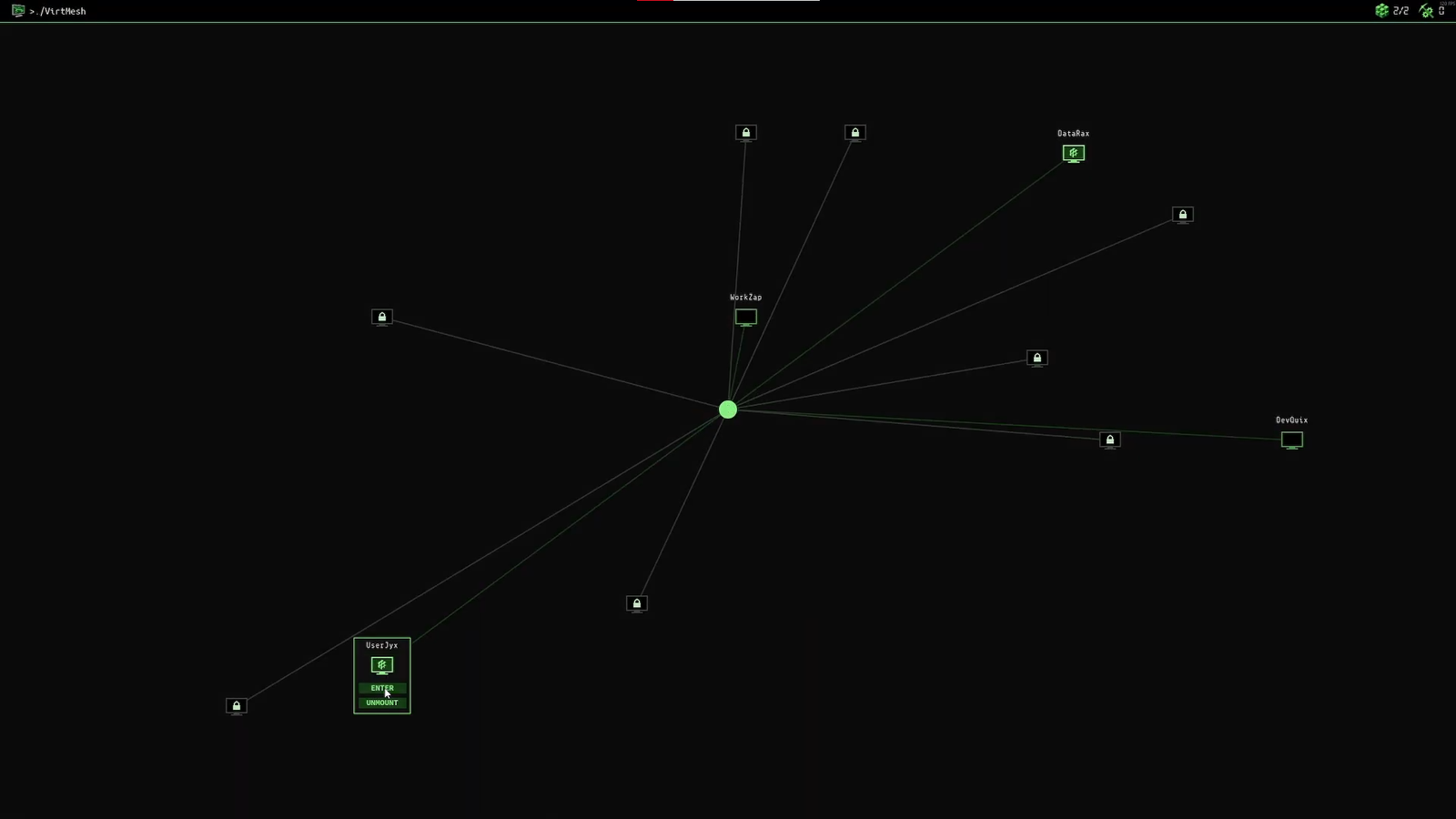
The key change is related to the method of accessing the dark web. In previous parts, the player accessed the darknet from their computer, which could attract police attention. To avoid such situations, it was necessary to regularly hack into other people's Wi-Fi routers, hiding one's presence. In the third part, this idea was abandoned in favor of hacking and seizing other people's computers. Now, only from someone else's hardware can you access the darknet. On the one hand, these two mechanics are not much different from each other. On the other hand, access to other people's PCs here is much easier to obtain than hacking routers in the previous part.
Another important change is related to the setting. Simon must participate in the game while at his workplace — the motel. This location is much more spacious than an apartment building or a gloomy basement. But the open territory does not make it safer. In the third part, eight killers will hunt you. This is the largest number of enemies among all the studio's games.
But the most important innovation is related to accessibility for players. For the first time, the developers added difficulty levels and checkpoints. Now, at the basic difficulty level, the game does not reset all progress and leaves hidden ciphers and links in their places. And for hardcore fans, the developers have prepared a special "1337" mode without checkpoints, with increased difficulty and a separate ending.
Darknet Safety Rules
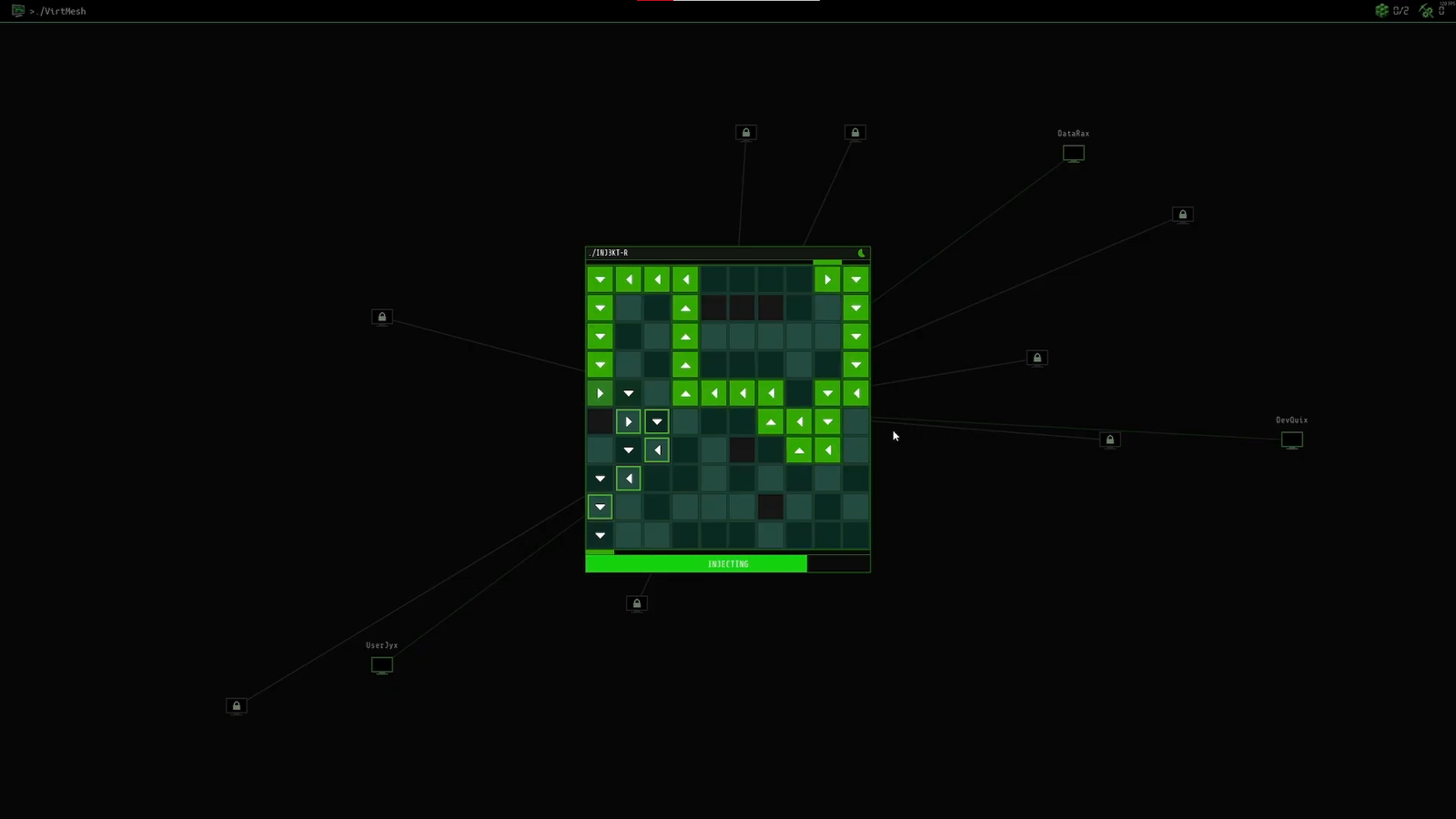
Now let's figure out how the new mechanics work. Computers differ in characteristics, installed programs, and connection quality. You can only gain access to the system after completing a mini-game where you need to lay a path from point A to point B through highlighted squares. But some sectors may have hidden traps. If you lay a route through them, the hack will fail.
After a successful hack, a foreign desktop opens before the player. Through it, you can launch a browser and start exploring the network. The remote computer becomes a temporary intermediary between you and the darknet. Thanks to this, the hero does not reveal his own connection, but is completely dependent on the capabilities of the captured system. For example, if you capture a weak PC, it will load pages longer.
But you won't be able to use one captured computer for long. Staying in the system for too long is fraught with forced connection termination and access blocking. Therefore, every 10-15 minutes you need to break the connection and hack other hardware.
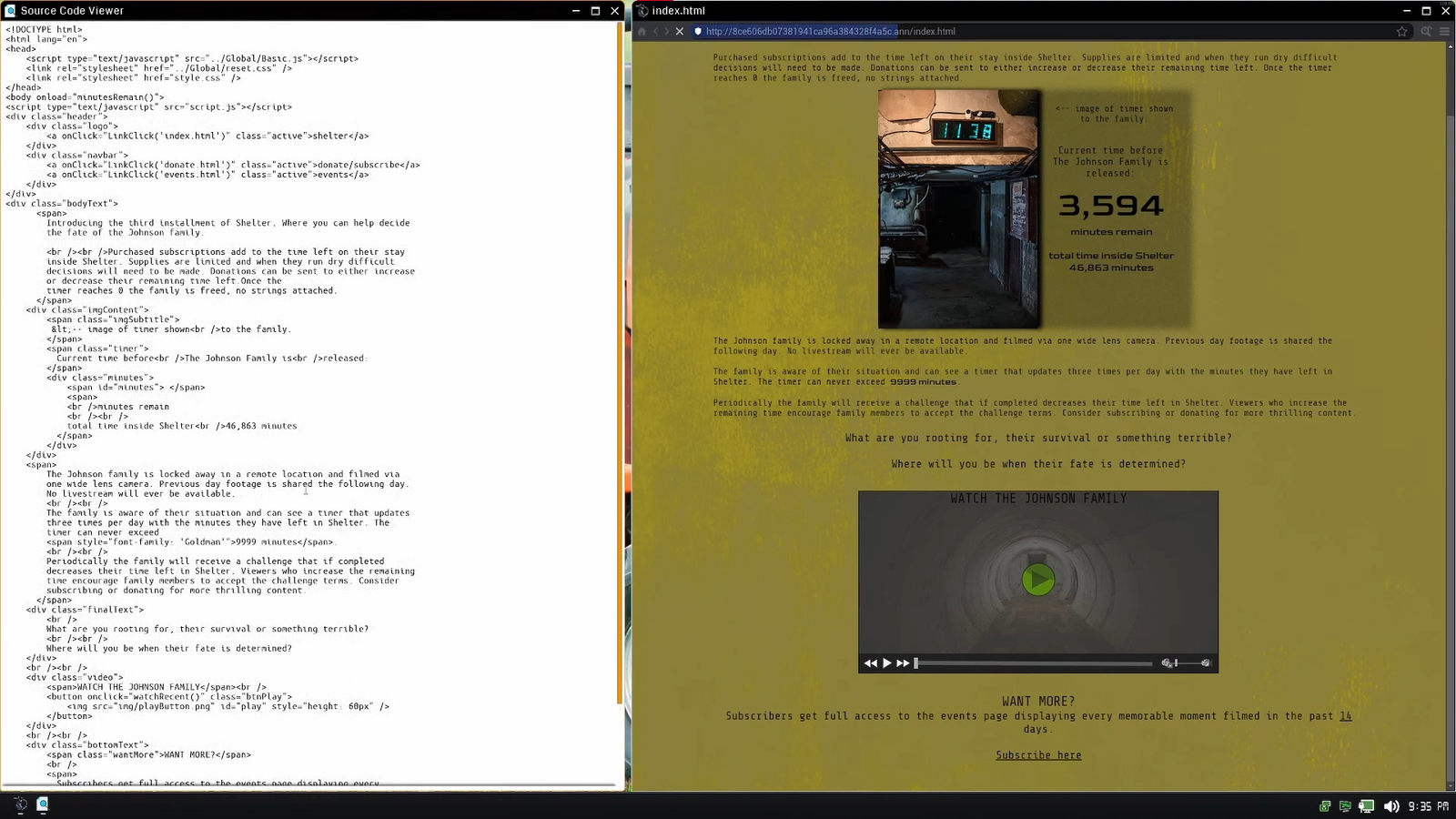
The darknet exploration itself has also retained its structure. The player receives a link from the game organizer with a list of addresses, navigates between sites, and gradually receives new lists of available resources. New links have to be searched for in texts, images, comments, and the source code of pages. Some sites are only available at certain times, require a password, or use encryption. Therefore, simply viewing pages sequentially is not enough: the information found must be recorded and correlated with each other.
The main goal remains unchanged. You need to find eight ciphers hidden throughout the darknet: in text, in the original HTML code of the page, or even in a hidden hyperlink. In total, the game features 52 sites, 44 of which do not contain the necessary information. Some resources provide new addresses, others allow you to earn money, and still others exist solely for atmosphere. Among them are marketplaces, forums, pages of criminal organizations, and collections of prohibited materials.
But the found fragments are not yet ready answers. They are encrypted, and simply collecting them is not enough — the player will have to decrypt the received data. To do this, you need to make acquaintances in the darknet and ask other users for help. However, such services are not provided free of charge, so you will have to pay for each decryption attempt.
Earning on Schemes
The main payment method in Welcome to the Game 3 is the cryptocurrency DOS Coin. It is necessary for purchasing programs, improving protection, obtaining information, and interacting with other participants in the game. Unlike the second part, money here does not accumulate for one large purchase closer to the finale. Expenses begin almost immediately, and the currency supply must be maintained throughout the night.
The main source of income is the VirtMesh application. After hacking a foreign computer, the player must choose how to use it. The system can be connected as a remote workstation or turned into a cryptocurrency miner. It is not possible to use one computer for both tasks simultaneously.
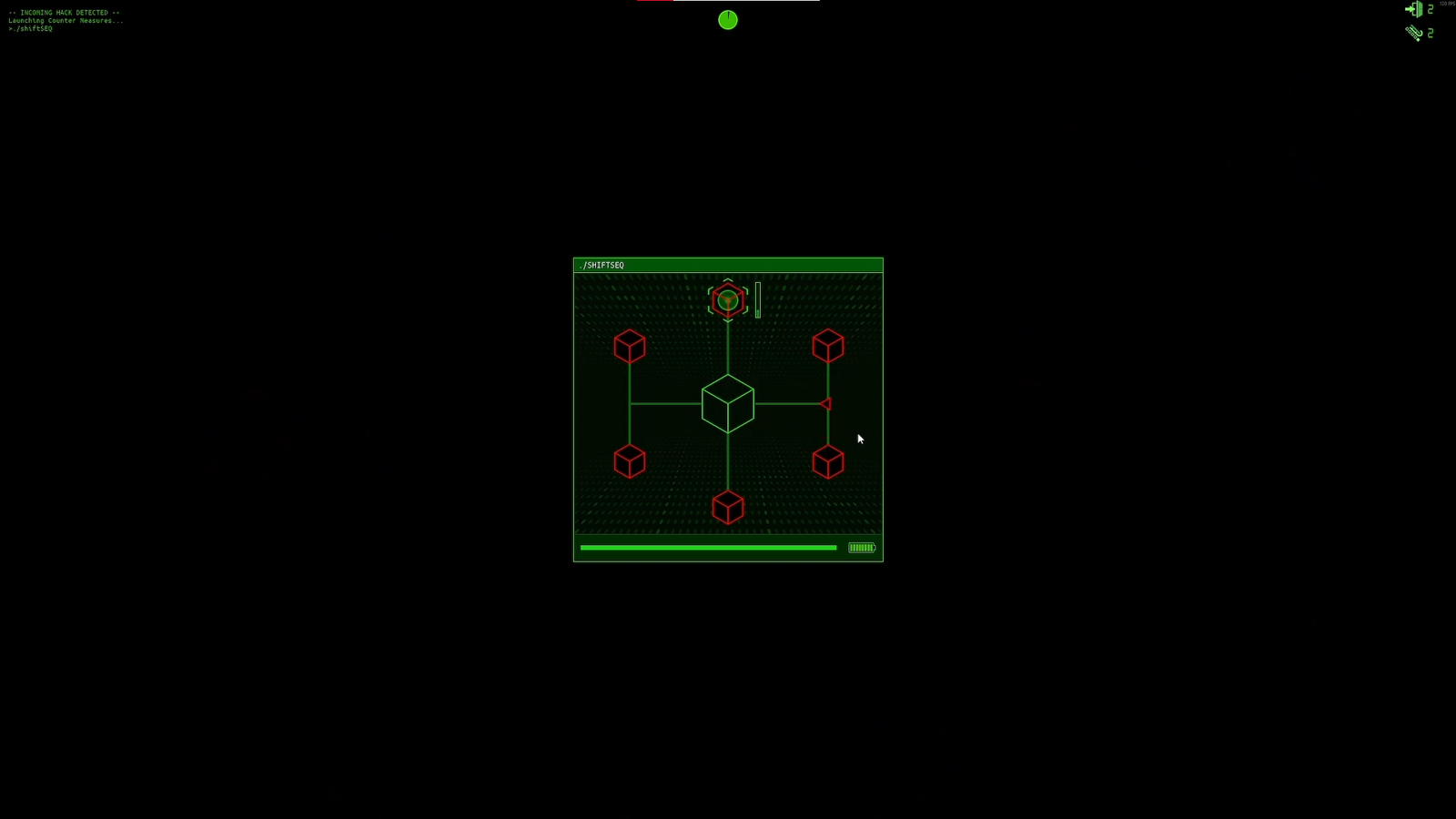
Incoming hacker attacks bring additional profit. Rivals regularly try to interfere with searches and steal found ciphers. An attack can be repelled manually by playing one of several mini-games for reaction, typing speed, or logic. If backdoors are purchased, a successful defense will bring currency. If the mini-game seems impassable, you can use a NOP slide. The attack will fail, but you will not receive a reward.
You can also earn money by interacting with darknet users. Requests for links, videos, and other information that needs to be found and decrypted appear in anonymous messengers. Completed orders not only bring money but also open access to new offers.
The most ambiguous type of earnings is related to online casinos. If you have no skills in finding the necessary information, you can start spinning slots. However, this is an extremely unstable and unprofitable way to earn money. The slot machine requires another cryptocurrency — YoloCoin. This currency is only needed for the casino and is converted into DOS Coin at an unfavorable rate.
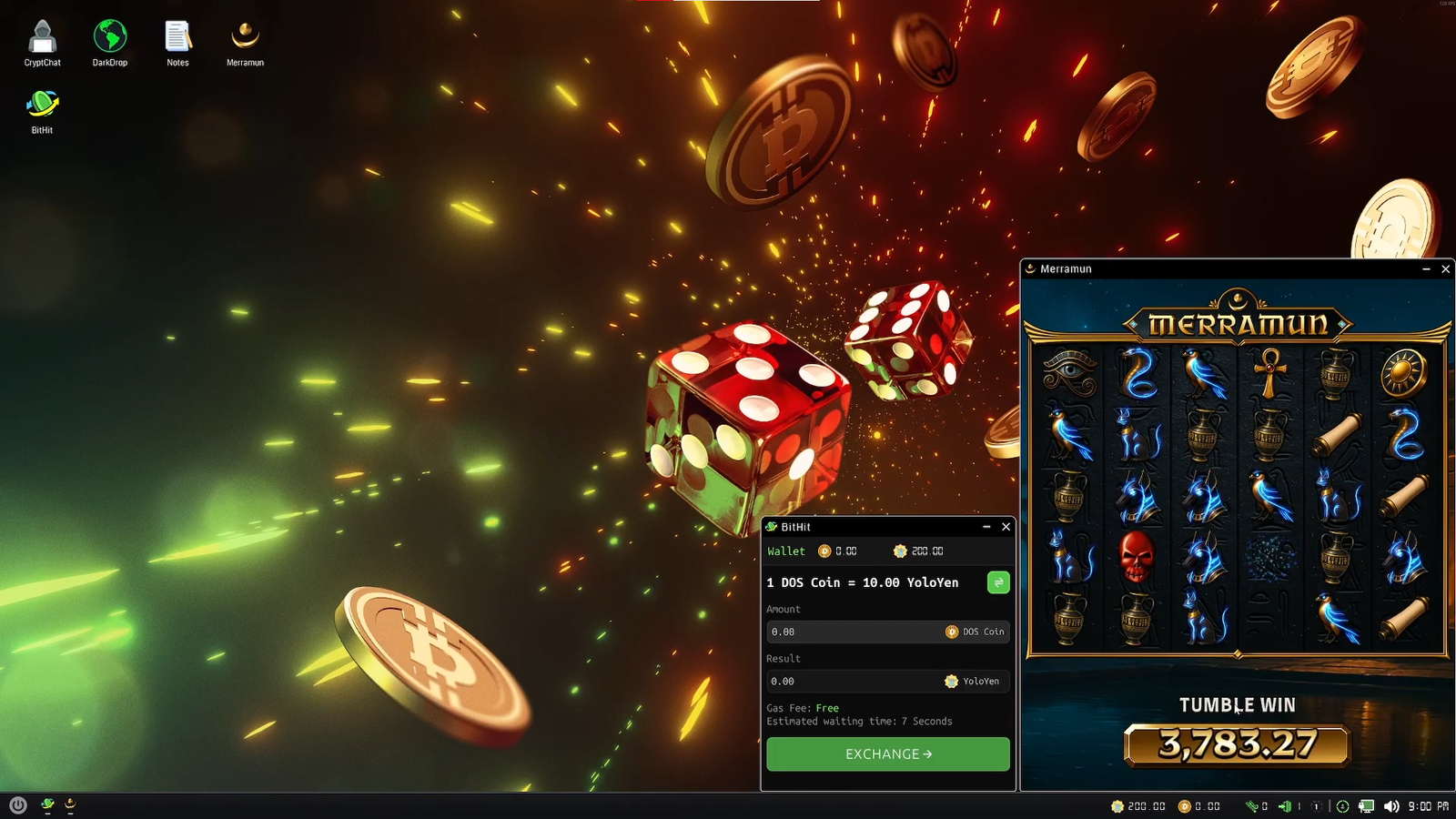
Money is needed for two purposes: to solve a puzzle and not to die at the hands of a maniac. For quick transitions between sites, you can buy a modified modem. Protocol modifiers allow you to keep more hacked computers online. And the most expensive gadget signals the presence of code on a specific site. Also, in the messenger, you can buy hints, slow down the progress of competitors, or order an attempt to eliminate one of them.
Another category of expenses is related to physical threats and rivals. To protect the motel, you can purchase motion sensors and surveillance equipment. By placing them on approaches and near doors, you will know about an approaching threat in advance. By purchasing active headphones, you will hear the quiet rustles of maniacs better. And the acquisition of prohibited substances, unfortunately, is necessary to buy off one of the ill-wishers.
Virtual Threat Becomes Real
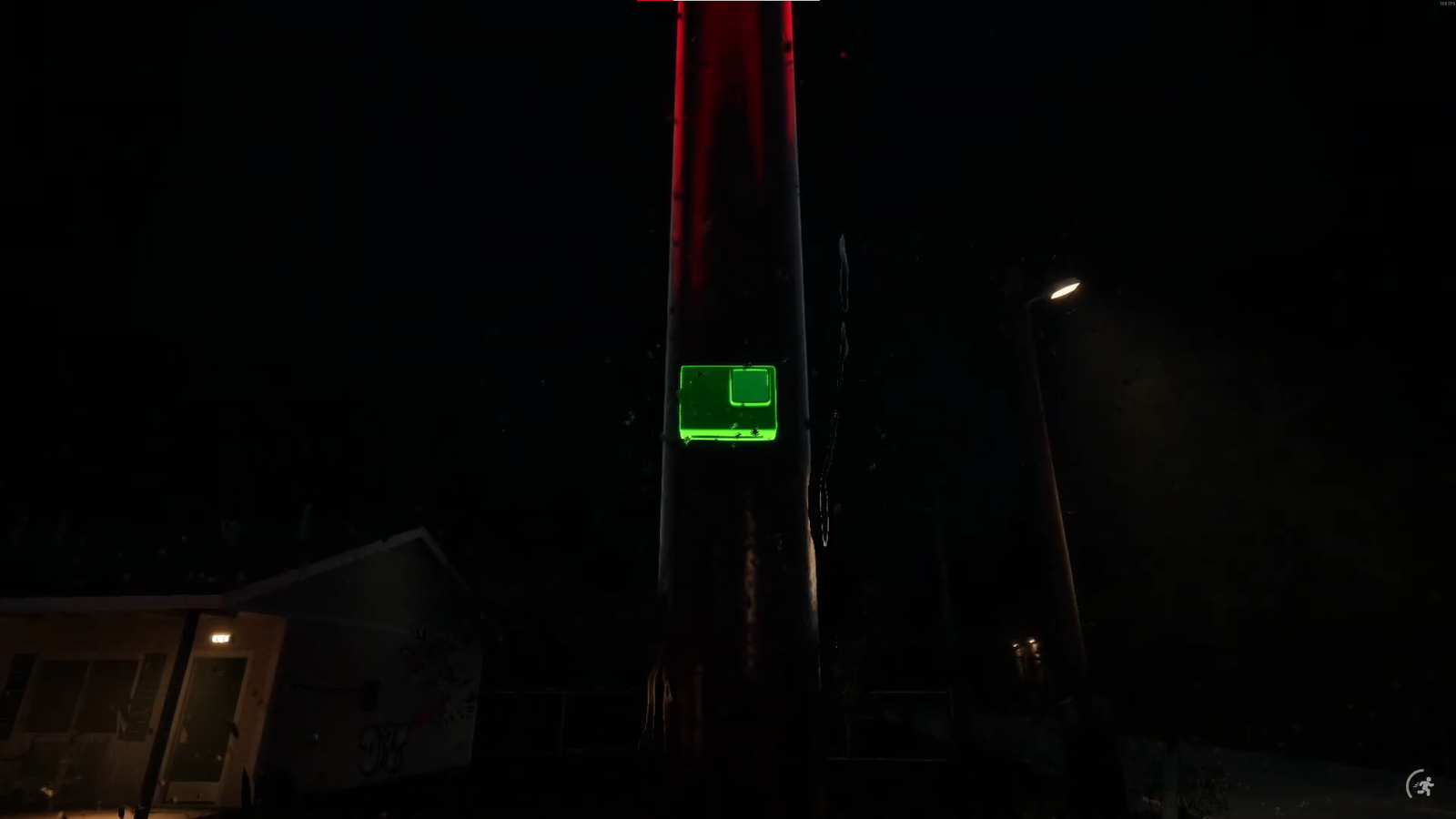
Working at the computer is regularly interrupted by problems arising on the motel grounds. Electricity and internet can be cut off in the middle of exploring a site, downloading a file, or hacking. In such a state, work cannot continue: Simon has to get up from the table, leave the room, and independently restore power or connection. Before leaving, it is necessary to check cameras, lock doors, and hope that there is no suspicious transport in the parking lot.
It is important to understand that these failures do not arise on their own — most often they are provoked by maniacs. Therefore, you must always be ready for an attack and know how to act when encountering each of them.
Repairing communications makes the hero vulnerable to Tucker. The maniac attacks near electrical panels and internet boxes while the player is busy restoring equipment. His approach is warned by the rustling of leaves: upon hearing the first sound, you need to stop moving and wait for a second signal. Tucker also has a separate musical event. When an old composition starts playing on the motel grounds, Simon needs to find the room marked with an ace card and run inside.
Power outages are also associated with the Noir cultists. The main way to escape is to slowly turn away from them. The probability of their appearance increases when the lights are off in the room, so a long wait in a powerless motel increases the risk of an encounter.
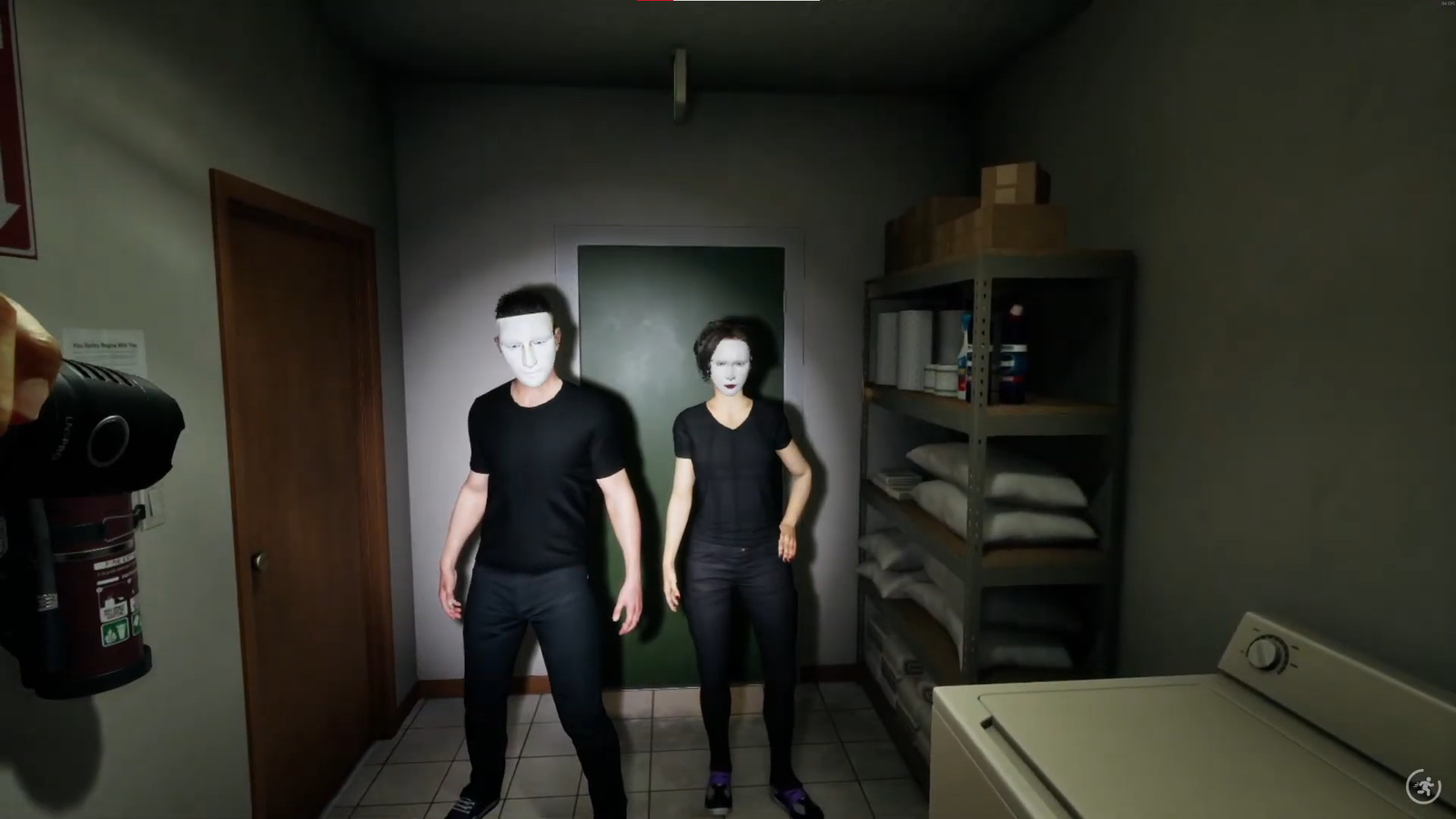
However, it is not always possible to go outside: the Abductor's white van periodically appears in the parking lot. If Simon leaves the building while the car is nearby, he will be immediately seized.
The hired killer Lucas also tries to break into the main building. He uses the back doors, so they must be locked. His presence is betrayed by the sound of a lock being picked, after which there are a few seconds to turn off the computer and hide in a locker or laundry basket. In hiding, a mini-game begins where you need to keep the indicator in the designated area until the enemy leaves. If you leave the computer on, Lucas will steal your cryptocurrency.
Dr. Tanner is the most unusual of the maniacs. He can attack both through the main entrance and while exploring the motel rooms. Near the workplace, an alarm button protects against him, temporarily blocking automatic doors. For timely detection, you need to buy cameras and motion sensors. Inside the living quarters, you have to lock the door behind you and inspect the yard through the peephole before leaving.

There is no defensive tactic against Cletus. However, after each encounter, he will confiscate all your prohibited substances. Therefore, it is better not to carry more than one packet with you.
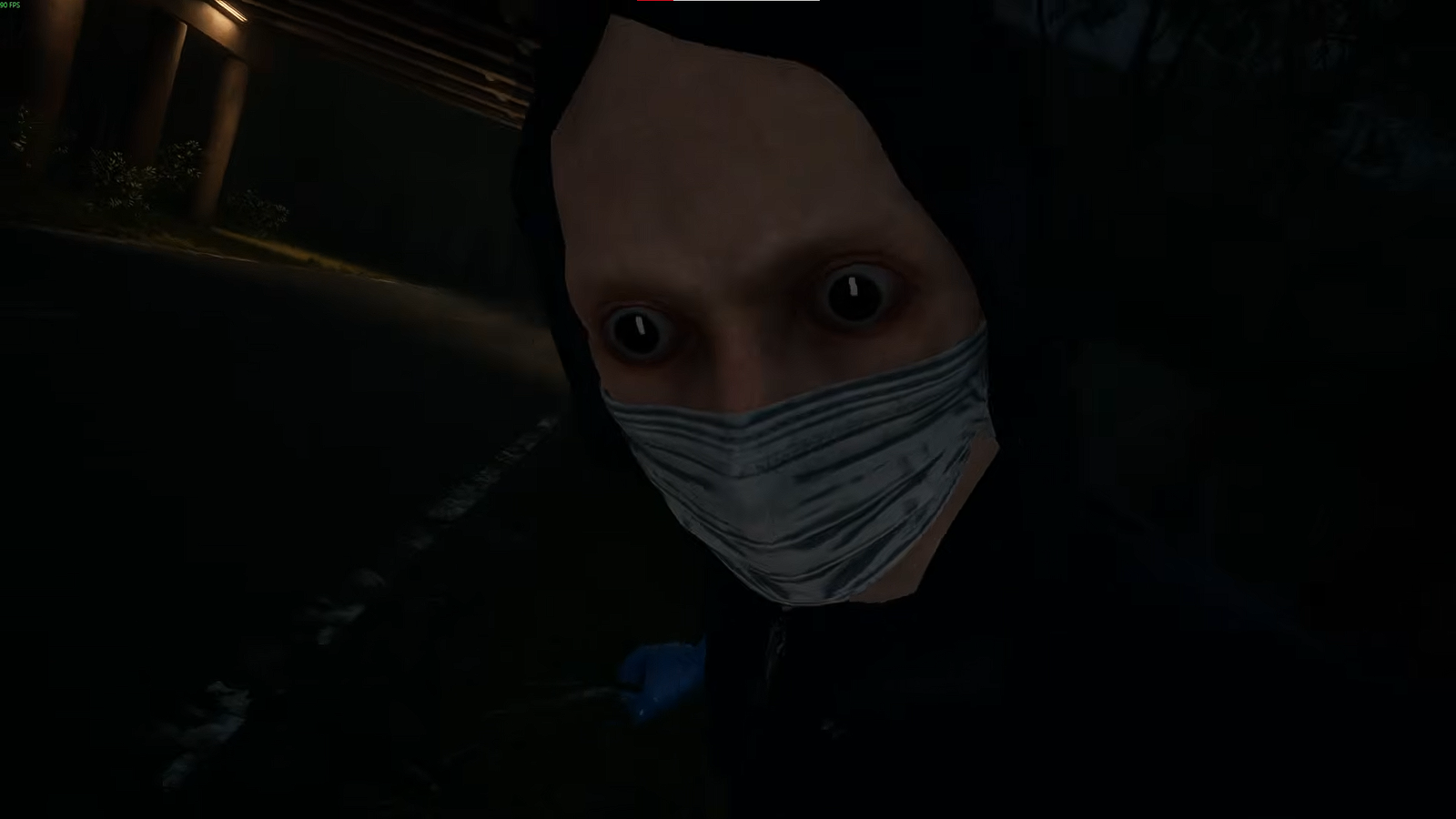
Ordered goods, programs, and protective equipment are delivered not to the room, but to a stash under the illuminated bridge. At this moment, the Breather appears — a maniac with a knife, from whom you need to immediately run to the parking lot.
It is also important to remember that the game is time-limited. Even if the player manages to carefully avoid all threats and survive attacks, this is not enough to win. It is necessary to collect information and solve the main puzzle within the allotted time. Otherwise, you will also face death.
Bug Fixing
After two playthroughs on different difficulty levels, a positive conclusion can be drawn. On normal difficulty, Welcome to the Game 3 has become slightly more accessible than previous parts. The game saves progress after each completed hour, so death no longer sends the player back to the very beginning of a multi-hour attempt. The player returns to the checkpoint, retaining the knowledge gained about upcoming events. You can prepare the necessary items in advance, check doors, and collect previously found data from the darknet. Maniacs still require knowledge of their behavior, hacker attacks are distracting, and power and internet outages are nerve-wracking.
In "Normal+" and "1337" modes, the game returns to the familiar nature of the series. Threats appear more often, hacker attacks become more aggressive, and there is little time left for calmly exploring sites. Sometimes the player has not yet finished confronting one maniac, and the game already launches the next event. Unprepared players can be stopped by increased modes in the first few hours.
The technical state also hinders the perception of an already complex game. In-game applications often freeze, motion sensors do not work properly, and the courier drone sometimes gets stuck in the air. More serious problems also arose: a captured computer could lock up and stop the playthrough, and the hack testing menu led to crashes.
There were also bugs that directly affected the balance. Tanner for some time had a hundred percent chance of appearing on normal difficulty, could turn around after a successfully blocked attack and still kill the hero. Tucker's event sometimes started after someone else's power outage, not leaving enough time to escape. In addition, ciphers sometimes appeared on non-working pages.
At the same time, the third part got rid of the main problem associated with the second part. The game no longer gives the impression that at some point it decided to spoil a winning run. Even the most unpleasant combinations of threats obey established rules and usually leave at least a microscopic chance to escape. There are no "special" attacks here, arbitrarily activated for a specific player, as during the well-known conflict around the second part.
Verdict
Welcome to the Game 3 retained the working formula of the series and in terms of gameplay did not go far from the previous parts. The player still explores the darknet, collects scattered clues, solves puzzles, and is constantly distracted by hacker attacks and maniacs. At the same time, the familiar formula is still captivating. Especially vivid emotions arise at moments when, after long searches, you manage to find another clue or solve a puzzle, while simultaneously monitoring cameras, locking doors, and fending off ill-wishers.
But the game has one serious obstacle. For a successful playthrough, you need to know English — it is the only language in the game. Therefore, if you do not know the language well, you will have to wait until enthusiasts undertake the translation. The Welcome to the Game series remains niche, and to date, only the first part has been translated into Russian. But for fans of unusual horrors and the series itself, this is a worthy continuation.
For getting acquainted with Reflect Studios games, the third part is the best. It is convenient to learn from mistakes in it. At the same time, the game certainly cannot be called entertainment for one evening. This is a test not only of attentiveness but also of patience. If you want to win, you will have to understand its rules, learn to come to terms with failures, and not give up.
Never miss our newsAdd this site to your preferred sources to see us more oftenAdd on Google