Iron Nest Artillery Simulator Review: It's Not a War Crime If You Had Fun
Translated with AI from the Russian original.
One of the military truths states: it's not the weapon or equipment that matters, but the person operating them. The outcome of a battle, the results of a war, and whether they return alive depend on their actions. Iron Nest: Heavy Turret Simulator offers a chance to test this in practice - by taking control of a giant walking artillery installation and assuming the role of an operator on whom the entire battery's operation depends.
Iron Nest offers an unusual take on a military simulator. Here, you don't need to run across the battlefield, shoot an assault rifle, or storm positions. All gameplay unfolds in a gloomy room where the player must shell enemy positions from a safe distance.
Unlike arcade shooters, where playing as artillery boils down to a large-scale top-down view and simply choosing a target point, this approach simply doesn't work here. Each salvo at a chosen target is accompanied by lengthy calculations, which turns preparation for a shot into a ritual, important in itself, and not just for the final result.
In Iron Nest, we almost never see the enemy live. Our battlefield is abstract and represents a map on which allies, enemies, and civilians are located. All data collection is performed by scouts. We are left to analyze the information received and calculate target coordinates from it.
The first missions teach the basic workflow. You need to get coordinates, transfer the information to a log, determine the direction and elevation angle, set up the gun, prepare the ammunition, and only then open fire. The shot is just the culmination of a chain of actions. After it, you have to wait for a reconnaissance report to find out exactly where the shell landed. If the coordinates or calculations were wrong, you'll have to find the error yourself.
Orders Are Not Discussed
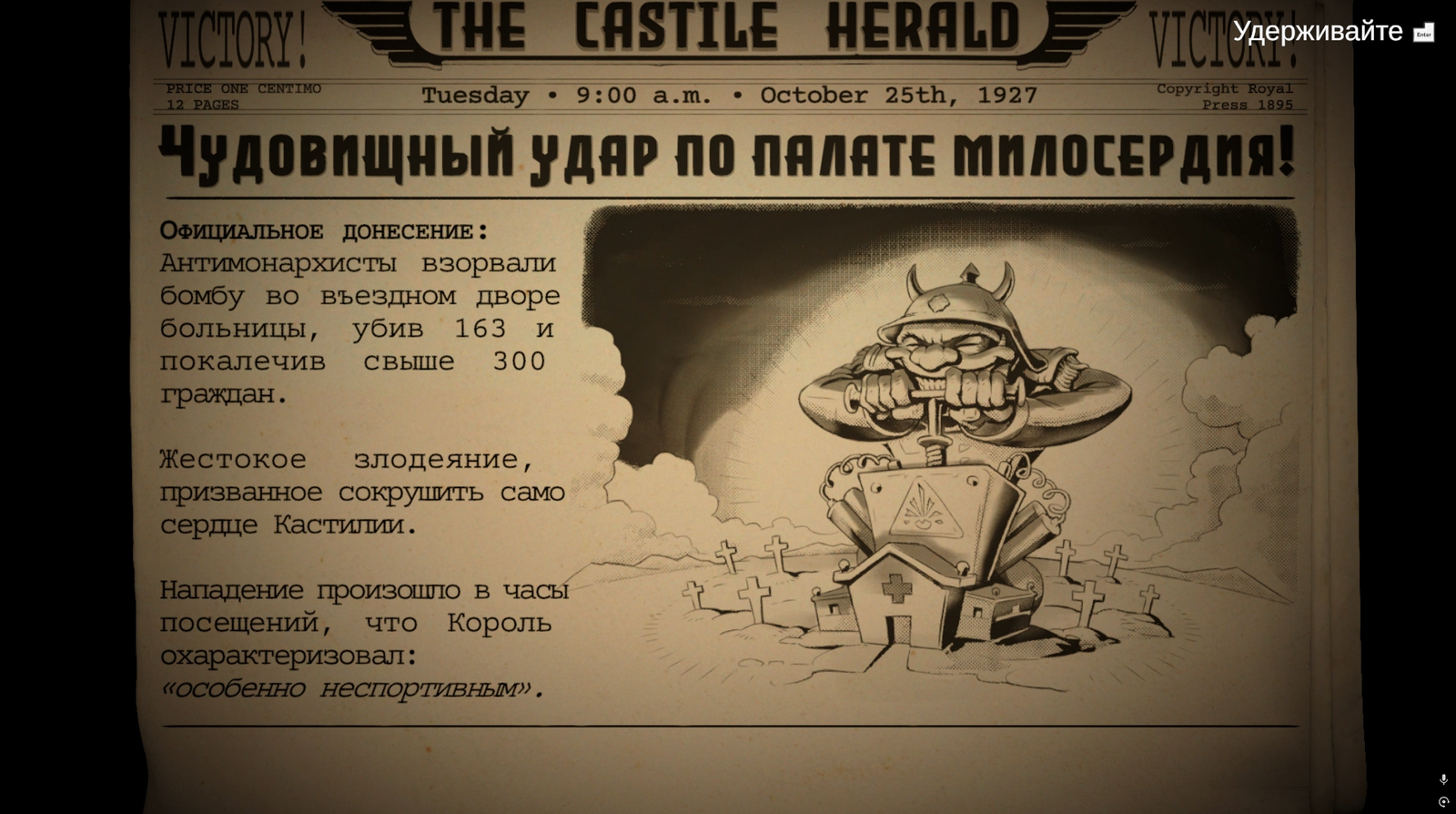
The plot revolves around the Kingdom of Castilla's war with "anti-monarchists." The operator of the "Iron Nest" installation receives direct orders from command and gradually encounters signs that the official version of events diverges from reality. The very first operation raises questions: what the player observes during the mission later receives a contradictory interpretation in the press. Over time, more such details emerge.
At the same time, the operator himself hardly reacts to what is happening. The game tells almost nothing about his past, motivation, or attitude towards the conflict. Even when there's an opportunity to learn a little more about the protagonist, the narrative focus shifts back to the machine itself. This successfully emphasizes the simulator's concept: for the headquarters, the artilleryman is just an nameless executor whose task is to accept coordinates and carry out orders.
For most of the campaign, you cannot influence the course of events. Even realizing the ambiguity of the war, the operator continues to act strictly according to instructions. Only closer to the finale does the game offer a choice that can change the outcome.
The story, however, deliberately remains in the background. There are no abundant dialogues, directed scenes, or deeply developed characters. The main body of information must be extracted from documents, memos, and letters. Thomas's messages play a special role: they remind us that behind the dry marks on the map are living people who are afraid, leave their homes, and do not always understand the true reasons for what is happening.
Just Aim and Shoot
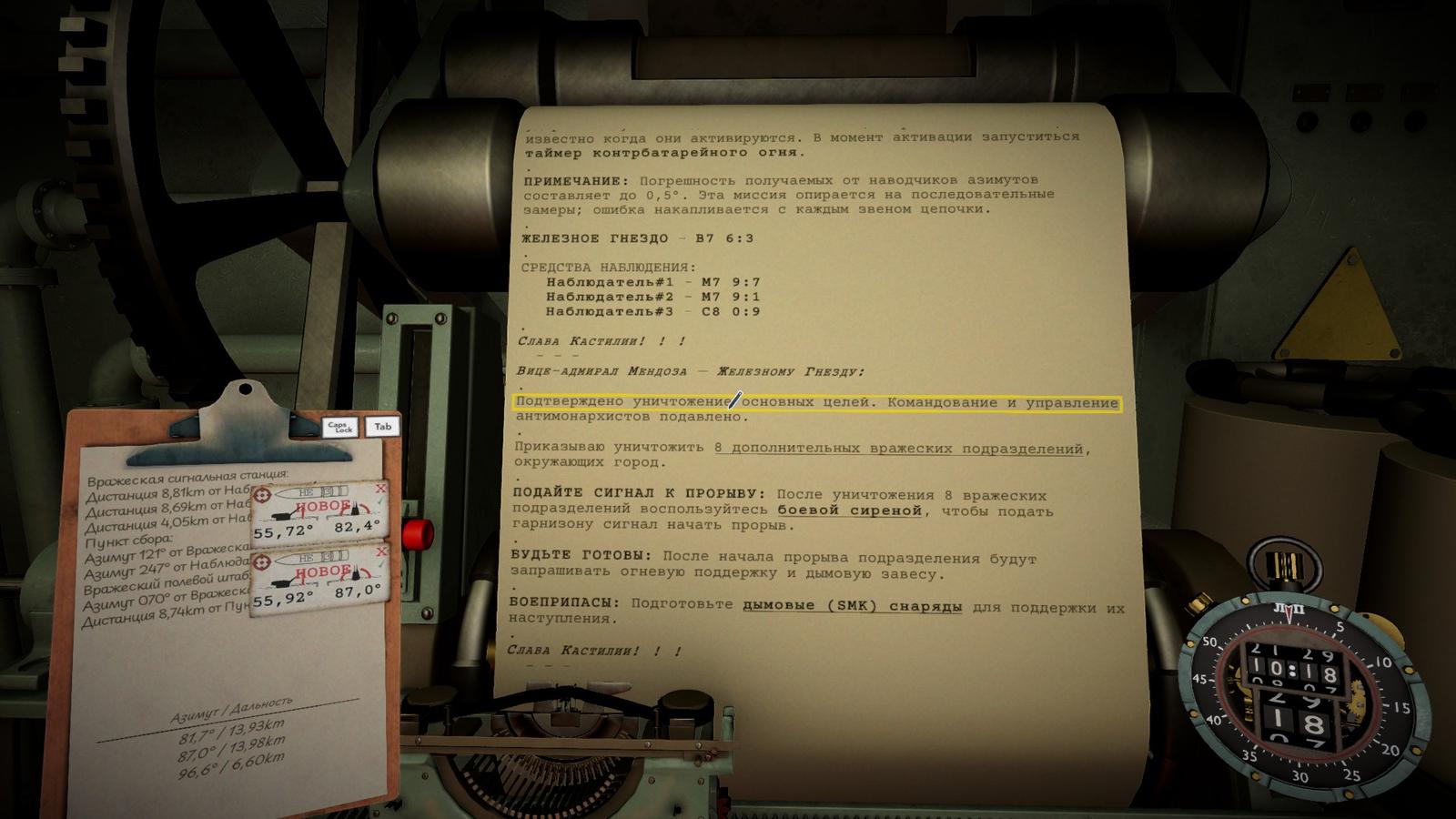
The artilleryman's service in Iron Nest is shown as a complex routine with a precisely calibrated cycle of actions. At the beginning of each mission, dispatches arrive from headquarters and reconnaissance: the former contain the combat objective, the latter provide initial data for its solution. The player must correlate this information and apply it correctly in practice.
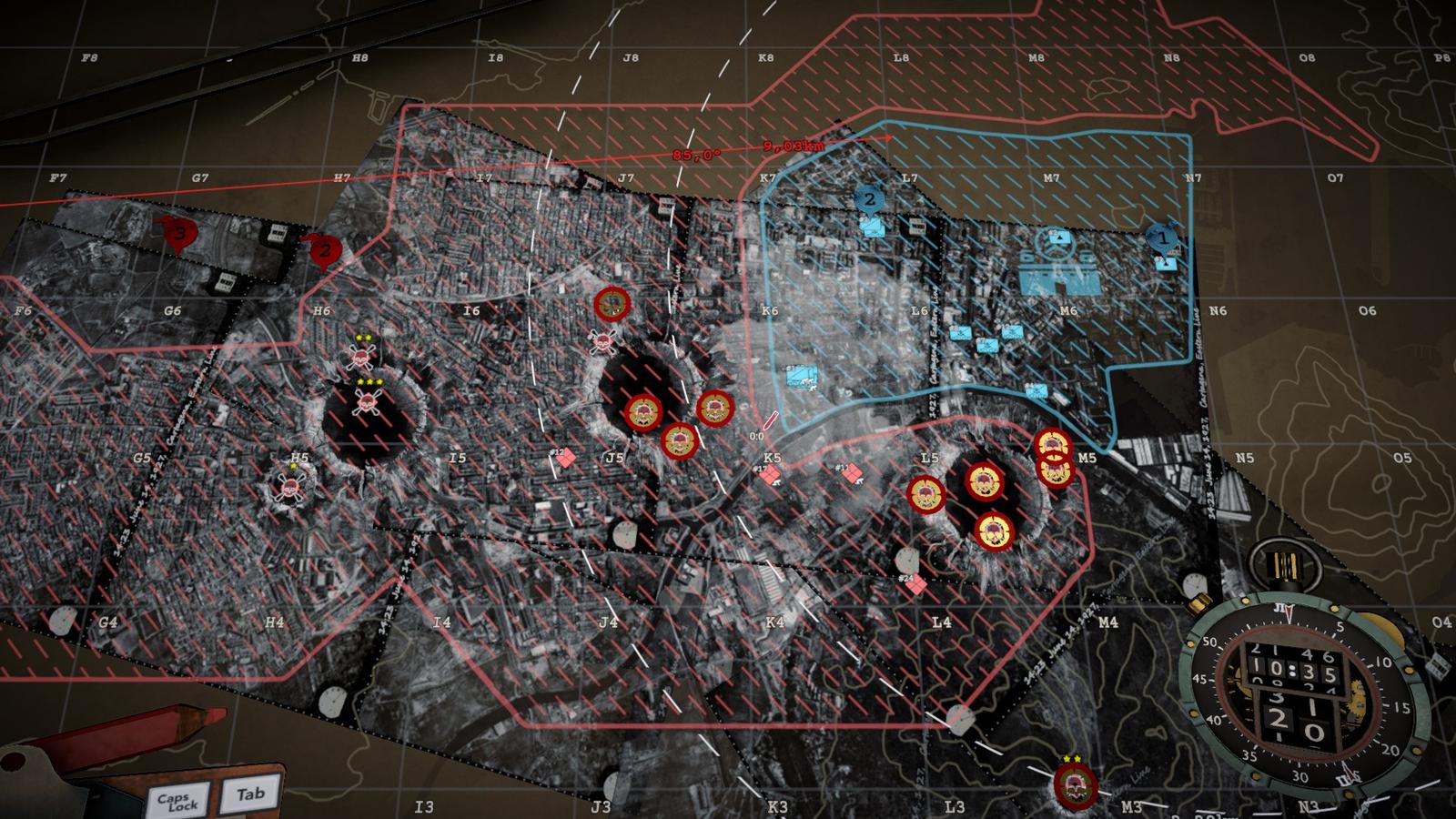
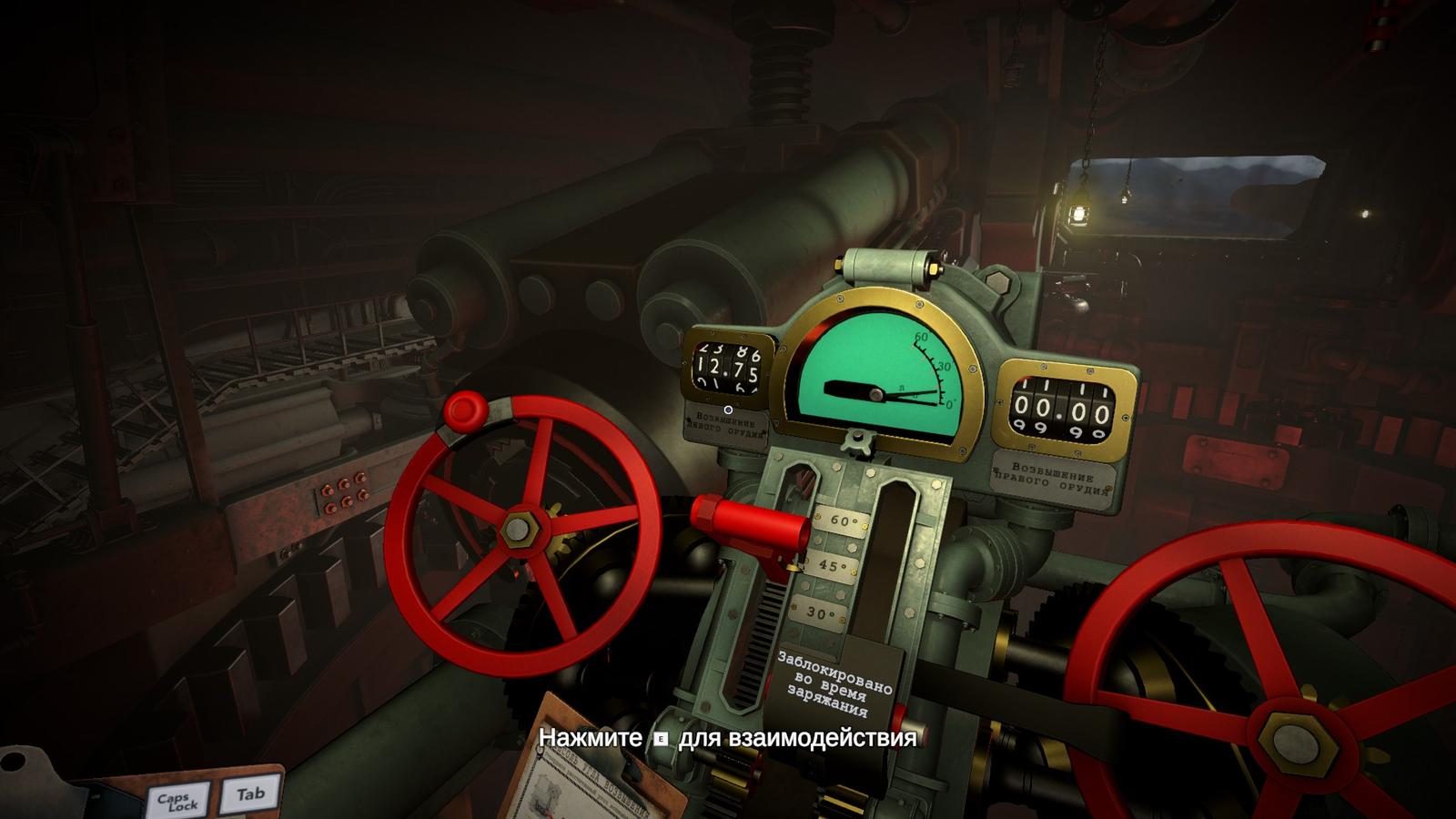
The main tools are the terrain map and a tablet. On the map, the operator marks targets, clarifies squares, records reconnaissance data, and tracks enemy maneuvers. Through it, abstract numbers from telegrams are linked to the local situation and converted into coordinates for the guns.
Working with the map is done manually: there are markers for object types, control marks, and a compass for measuring distances. The only concession in geometry is the automatic display of azimuth and the length of the drawn segment, eliminating unnecessary trigonometry.
The tablet serves as an operational log, where key excerpts from reports and firing corrections are entered. It is indispensable when working on several targets simultaneously with different initial data. While one gun completes a salvo, the second can already be aimed using saved data.
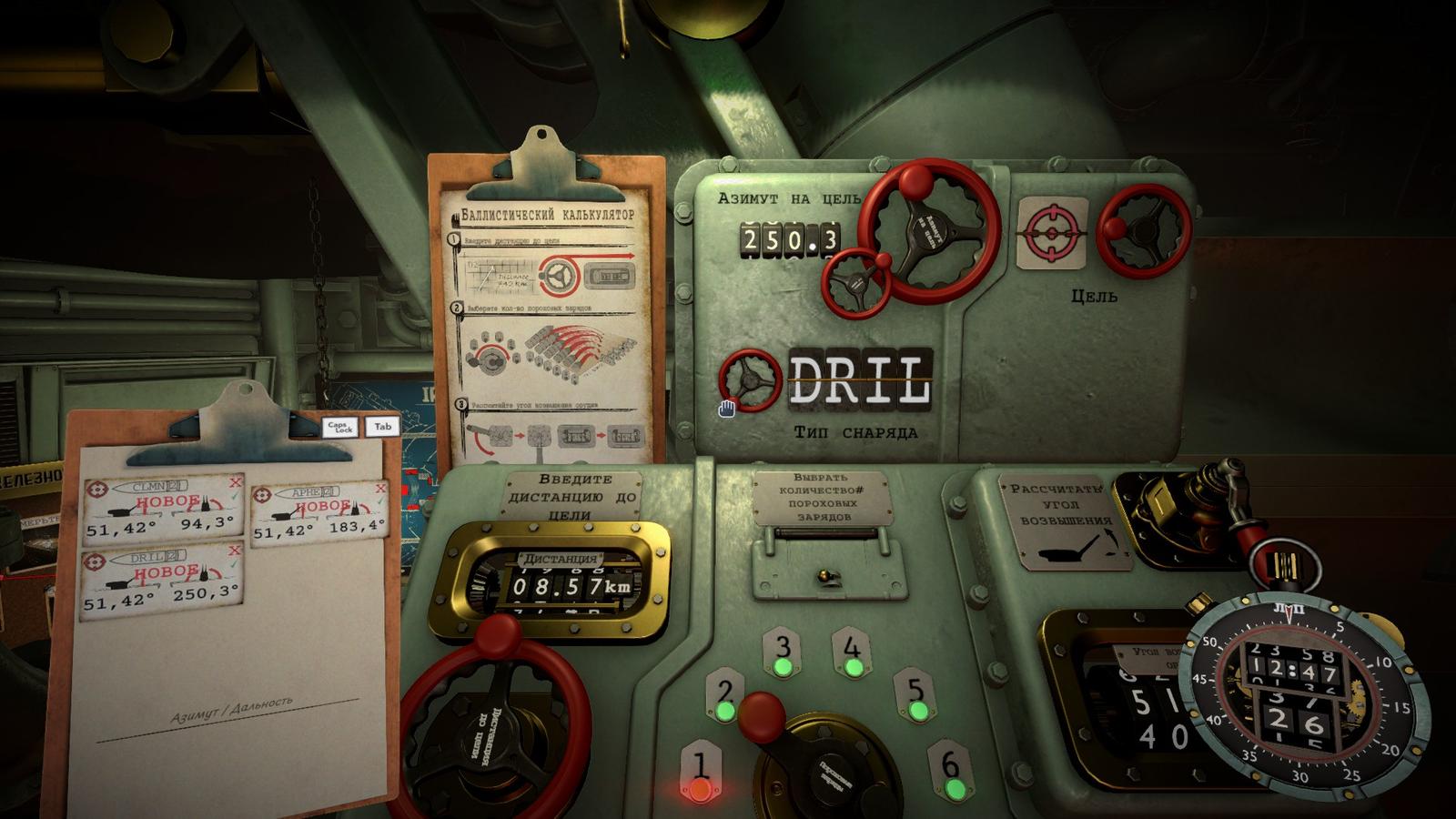
Calculating coordinates is only half the task; the second part involves maintaining the "Nest" systems. Inside is a ballistic calculator that calculates the barrel's elevation angle based on the entered parameters. Nearby is a supply panel that allows ordering additional ammunition, requesting aerial reconnaissance, or redeploying the battery to a new firing position.
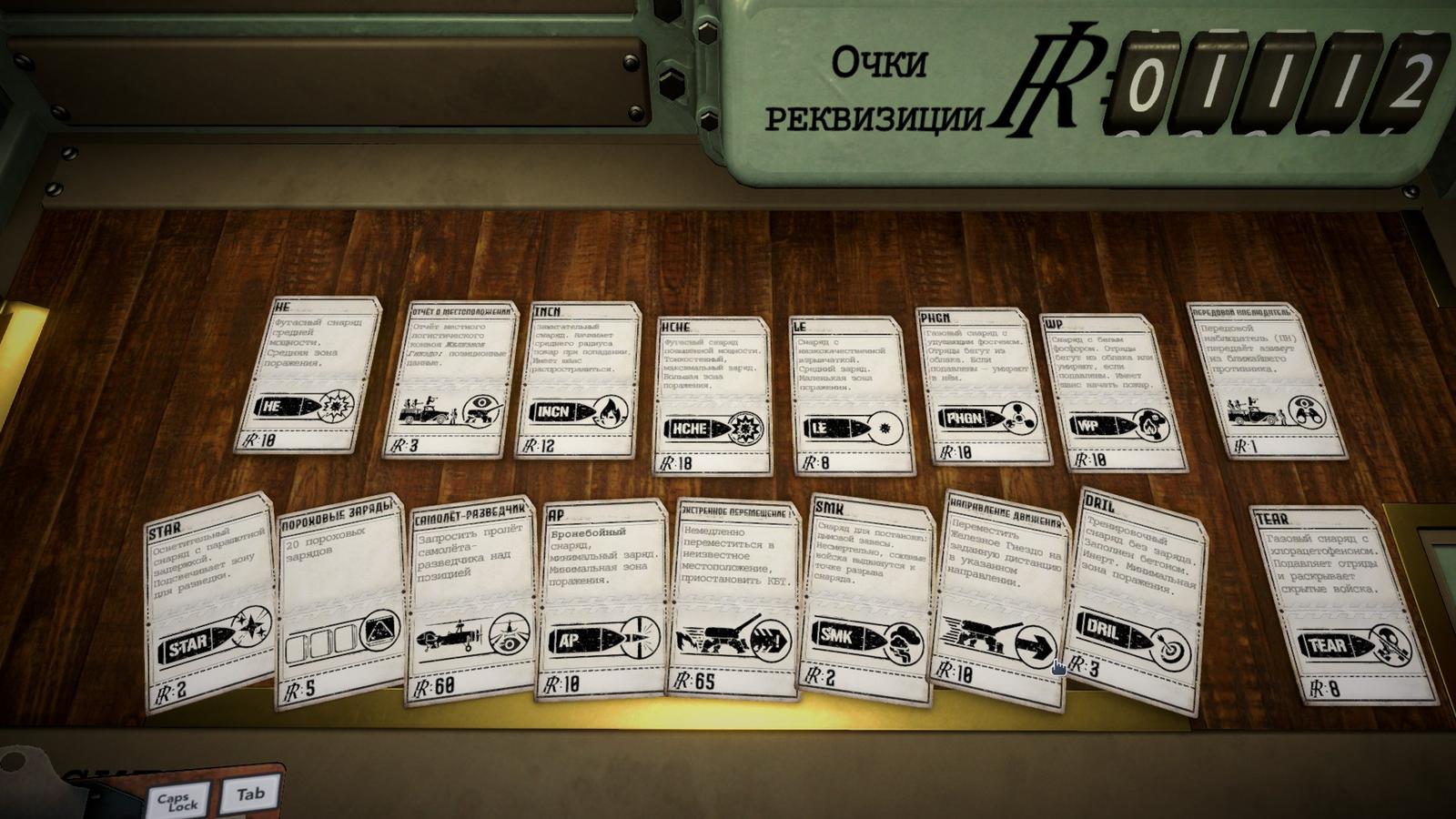
Loading the guns consists of several steps: selecting the ammunition type, manually sending it into the breech, and inserting powder capsules that determine the speed and range of flight. Aiming by azimuth and elevation angle is regulated by massive handwheels. Their mechanisms have inertia, and when attempting a sudden lock, excess pressure must be vented through emergency valves.
The firing cycle concludes with an assessment of the results. The flight trajectory is displayed on the map, and a little later, reconnaissance sends a photo report with the exact deviation of the hit from the designated point.
Same Gameplay, Different Tasks
Although the basic chain of actions remains unchanged until the finale, the developers maintain interest by varying the mission conditions.
In the first chapters, the player is taught how to work with equipment and analyze reconnaissance data on static targets. Later, conditions become more complex: in one operation, the ballistic calculator is disabled, forcing the player to zero in with training shots, and in another, the target starts moving, requiring a lead calculation based on outdated reports.
Counter-battery duels create a separate tension. In such missions, the "Nest" itself is hunted. After the first salvo, a countdown begins, after which the player's positions are covered by return fire, so enemy batteries must be suppressed as quickly as possible.
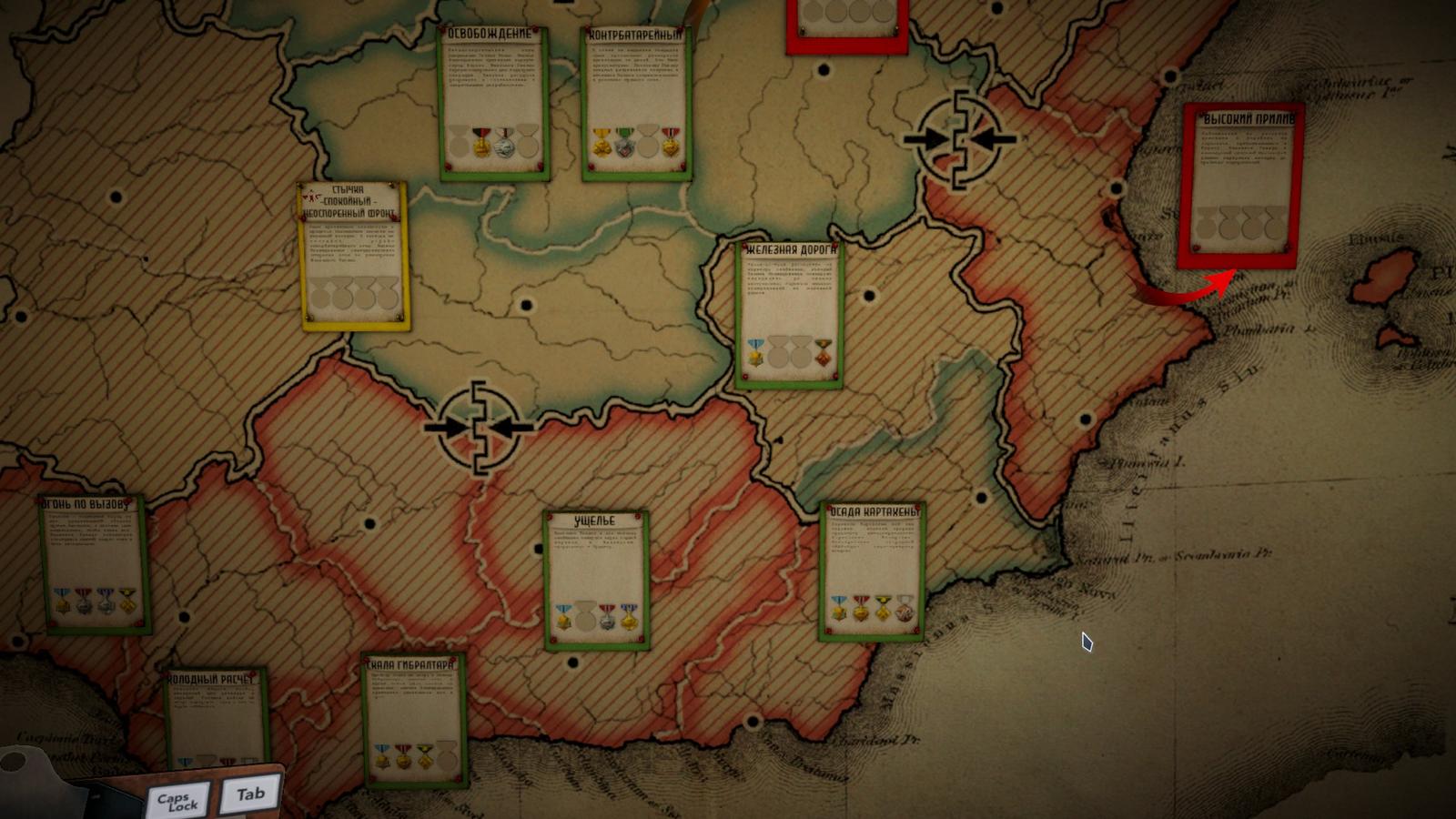
Throughout the campaign, the arsenal expands: in addition to basic shells, armor-piercing, high-explosive fragmentation, smoke, and rare chemical and nuclear charges for large-scale destruction are added.
Target coordinates are regenerated with each launch to prevent mechanical memorization of positions from previous attempts. The aiming logic, however, remains the same: reconnaissance operates with the same azimuth and distance combinations, only the numerical values change.
Cozy Nest
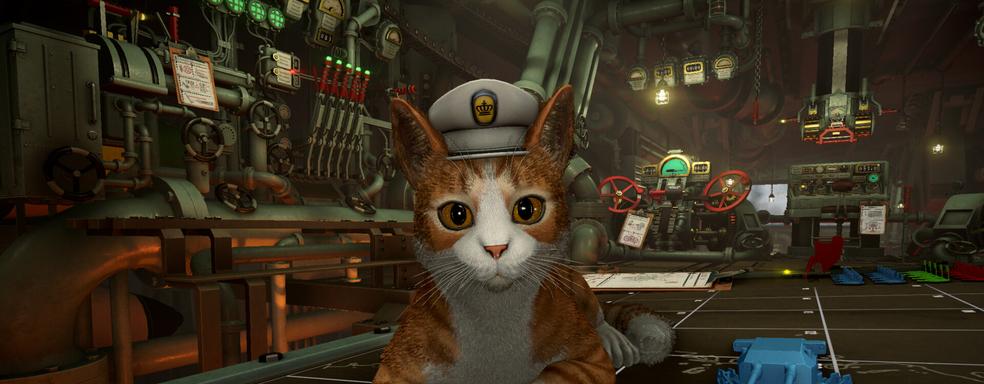
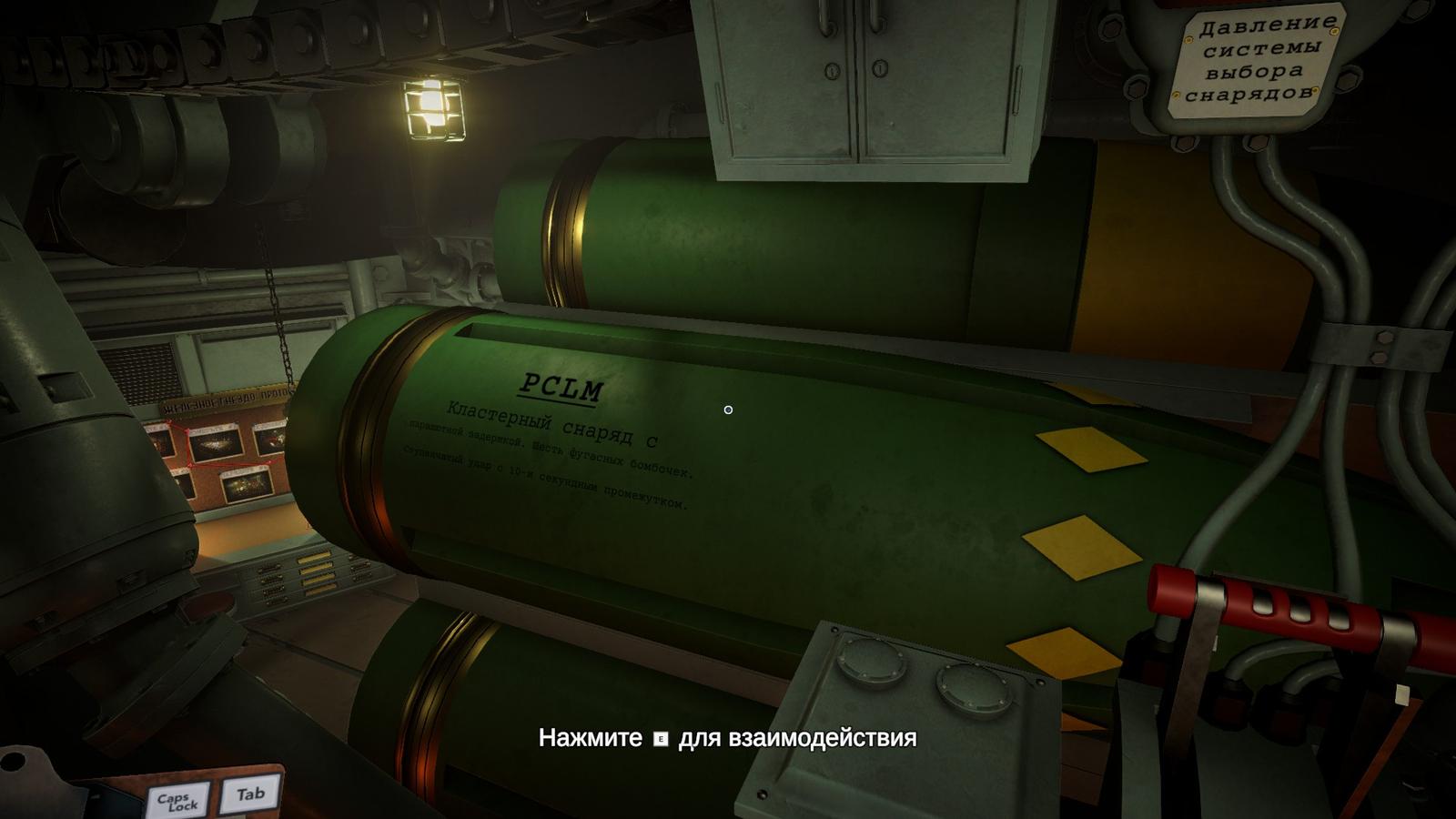
The interior of the "Iron Nest" serves as the only permanent scenery for the entire game. The gloomy industrial environment with pipes and hydraulics paradoxically does not induce claustrophobia, but is perceived as a cozy refuge against the backdrop of the catastrophe unfolding outside.
The installation has a lower living level with a bed, coffee maker, and a small table. It has no practical use for combat but gives the location a lived-in feel. The same function is performed by incoming letters from fellow soldiers, civilians, and children, as well as vinyl records with cheerful marches that are allowed to be played on the record player right during duty.
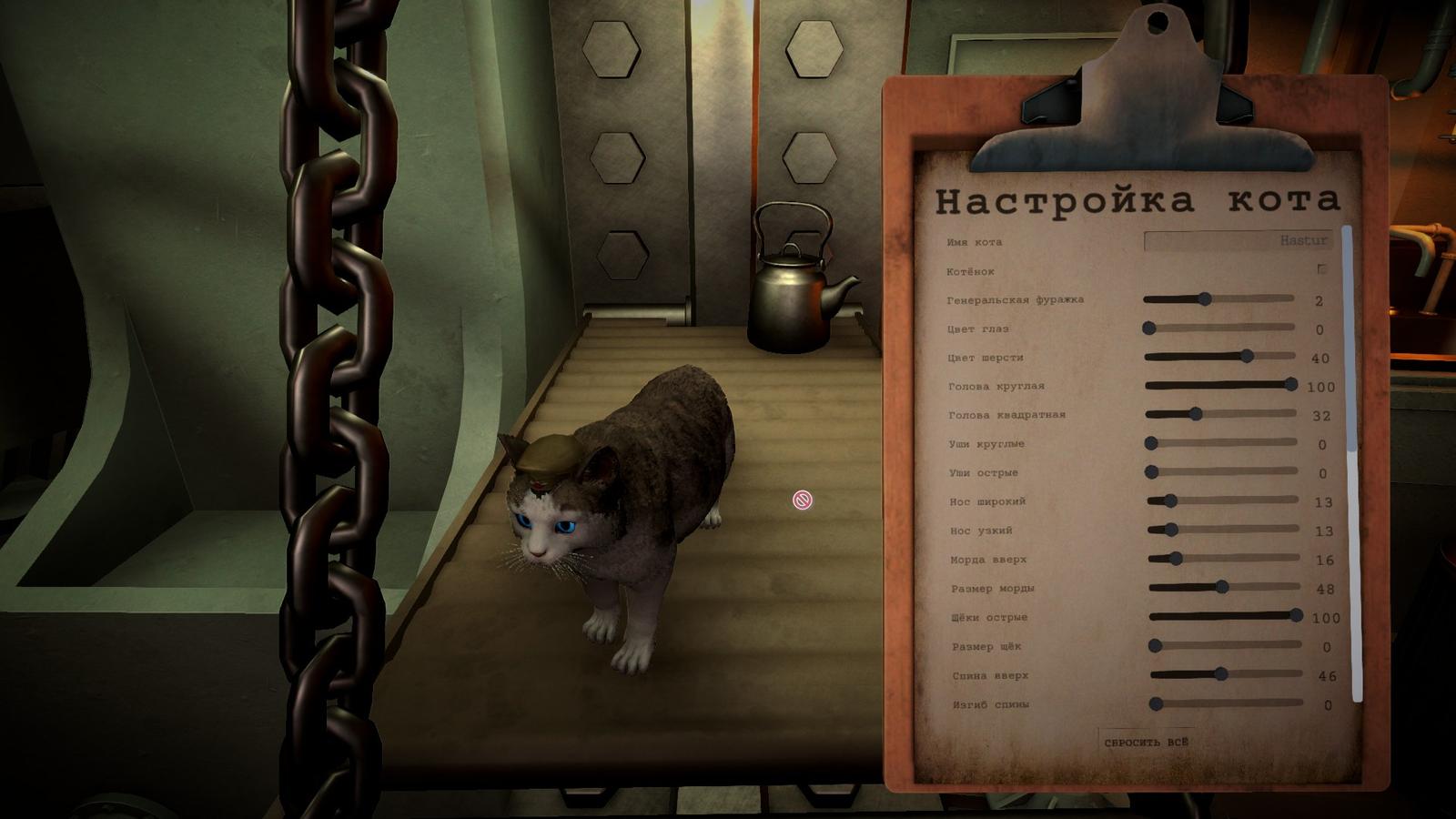
A cat acts as a lively accent within the steel mechanism. The animal freely roams the levels, can settle near the operator, or walk across the spread-out maps, diversifying the monotonous military routine.
Simulation for Simulation's Sake
Despite the overall attention to the artillery preparation process, Iron Nest contains decorative elements. Some of the instruments, which are presented in detail in the introduction, do not affect ballistics and serve solely for role-playing immersion.
For example, the gun elevation calculator has range, caliber, and azimuth valves. However, when changing the caliber or direction, the device gives the same angle for a fixed distance, ignoring the mass of different shell types and terrain.
A similar situation arose with the command panel of five readiness confirmation buttons. A shot is easily fired without pressing the keys: it is enough to fix the aimed gun and pull the starter. The game imposes no penalties for skipping regulatory stages.
These decorative mechanisms unexpectedly reveal themselves in a user modification for co-op up to four players. In co-op mode, the crew can fully distribute duties among the commander, gunner, loader, and map operator. In the single-player campaign, the player manages to perform all these actions independently.
Verdict
Iron Nest turned out to be a successful intimate artillery battery simulator. The authors deliberately omitted complex meteorological corrections and wind physics, focusing on the engaging process of triangulation, deciphering reconnaissance data, and manual gun aiming. The gradual search for coordinates and methodical gun preparation turn the game into a meditative, yet challenging, activity.
The gameplay loop itself hardly changes until the end of the campaign, but it's hard to call the game monotonous because of it. The developers constantly change mission conditions, forcing players out of their comfort zone.
Never miss our newsAdd this site to your preferred sources to see us more oftenAdd on Google