Stardew Valley "maxed out": Fields of Mistria review
Top publishers rarely spoil us with original projects, so indies usually "hit big." Minecraft is now under Microsoft's wing, and Terraria and Stardew Valley are known to most gamers, at least by name. But even among indies, truly original projects are rare: every month, games "inspired by" and outright clones are released.
On the other hand, Minecraft was largely inspired by Infiniminer, Terraria, in turn, by Minecraft (only in 2D), and Stardew Valley was initially largely a banal clone of Harvest Moon. But over time, all these projects found their own identity, acquiring unique mechanics. So, the balance between originality and borrowing is important.
And the fact that Fields of Mistria takes a lot from Stardew Valley says nothing bad about it — just as it says nothing good. And what came out in the end — we will figure it out.
Graphical Mod
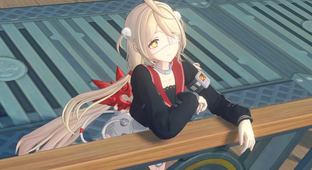
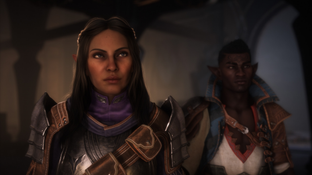
The first thing you notice when getting acquainted with Fields of Mistria is the visuals. Anime-style with 1990s vibes in general and Sailor Moon in particular. In fact, Sailor Moon herself looks at us from the game's cover. More precisely, her local alter ego.
And although the picture itself is pleasant, modern indie pixels combined with 1990s anime aesthetics are an acquired taste. In jRPGs on PC in the mid-1990s, developers preferred a sharper image: many chose VGA 640x480 with 16 colors versus 320x200 with 256 colors. And if the color palette in Fields of Mistria is from that era (the number of shades is not very large, though certainly not 16 colors), the pixel size can scare off an unprepared player. Yes, such pixel art is, to some extent, a modern trend among independent developers. Such art usually comes with nice animations and a relatively lively world: it should not be static. And here, to some extent, it is. Waves splash, bugs crawl, birds fly. And in general, Mistria is pleasant to look at regardless of the season.
As they say, there's no accounting for taste, but subjectively, Fields of Mistria looks prettier than Stardew Valley. However, it's a matter of habit. After all, nothing prevents you from installing graphical mods in the same anime style on Stardew Valley. But comparing the two games "head-on" is also difficult because the animation is perceived differently in them. Subjectively, the animation in Fields of Mistria is smoother, and there are more animated elements.
But you'll have to live with the pixel size. On the other hand, such a graphical solution certainly won't require a powerful computer. Fields of Mistria runs on hardware with 4 GB of RAM and a thirteen-year-old processor (the game was tested, among other things, on an AMD A6-6400K with 4 GB). The minimum system requirements are even more modest: Intel Core 2 Duo E6400 or AMD Phenom X2 Dual-Core and 6 GB of RAM. Perhaps on Windows, the requirements are slightly higher (the test PC had Linux installed). At the same time, Stardew Valley's system requirements are even lower.
Narrative Mod
In cozy farm games, the plot component is very secondary. We probably won't be wrong if we say that in nine out of ten cases, they have the same premise: a former city dweller arrives in the provinces at an abandoned farm to put it in order and begins to settle in, communicating with local residents, making new acquaintances and relationships along the way. But even if there is an ending, it's usually not that important. In cozy adventures, the process itself is important, not the achievement of goals.
Fields of Mistria follows a traditional path. A catastrophic earthquake occurred in the magical kingdom, and now you, a new farmer, are invited to Mistria, who, in exchange for a job, promises to feed everyone and participate in the restoration of the town.
In parallel, a storyline with our protagonist's magical abilities develops. As he progresses through the story and explores the world, new abilities awaken in him. And now he is able to heal himself or summon rain.
But otherwise, everything follows the beaten path. This, of course, is not as global a mod as Nuclear Valley for Stardew Valley, but it's almost post-apocalyptic. However, apart from a few destructions that blocked paths to some locations, nothing indicates a recent tragedy.
And Fields of Mistria is not a tragedy. It has an ending. Just like in a good comedy: everything ends with a wedding. And this is, perhaps, the most controversial point in the game. Naturally, you can continue playing after the wedding — just like in Stardew Valley, the game doesn't end. But the wedding is positioned as the story's finale. And this raises questions.
Many Stardew Valley players start relationships much earlier. And it's not just about having your significant other weed your beds for you. Although such a mercenary approach cannot be denied. A farm, in a certain sense, is a life simulator. But what kind of life ends with a wedding? For some, life only begins after that.
In addition, Stardew Valley has multiplayer, where real couples jointly tend pixel beds and settle into pixel housing. Fortunately, a mortgage is not yet required for this.
And, perhaps, this is the main drawback of Fields of Mistria. It's not even about the lack of multiplayer. It can, after all, be added over time. But then what about the ending?
Gameplay Mods
In terms of gameplay, Fields of Mistria is doing well. Of course: it's still Stardew Valley at its core — we furnish the house, plant seeds, harvest crops, communicate with NPCs. In general, we have a good time. However, Stardew Valley's gameplay is not perfect, there are enough minor rough edges. And Fields of Mistria applies several "patches" to it at once, which do not transform the core but add depth, interest, and convenience.
The most important one is that the NPC location is displayed on the map (one of the most popular mods for Stardew Valley, especially among beginners). Now you don't have to run around town looking for a character to turn in a quest at a convenient time.
Simplified fishing saves nerves. It's a truly relaxing process: cast the rod, wait for a bite, pull out the fish. No reaction mini-games. Also one of the most sought-after mods for Stardew Valley.
One of the main features of Fields of Mistria is magic. In addition to the already mentioned spells for summoning rain (to water the entire field in an instant) and full health restoration, there are others. Spells consume mana, which regenerates over time. By the way, similar mods exist for Stardew Valley.
Another feature is advanced collecting. The number of collections in the local museum is enormous: you need to collect all crops, all types of fish, artifacts, and even bugs. Stardew Valley doesn't have anything similar, unless you count collecting all achievements.
As players progress through the story and complete quests, they increase the town's rating, gain the ability to keep bees, and build terrariums. There are plenty of minor improvements. The initial impression of Fields of Mistria as a blatant clone of Stardew Valley gradually gives way to the understanding that the difference in small details is quite significant. And all changes are primarily aimed at convenience and eliminating annoyances.
The game doesn't reinvent Stardew Valley, but it polishes its mechanics to such an extent that you no longer want to return to the original without mods.
Social Mod
More elaborate characters can be added to the gameplay "mods" collection.
Yes, some NPC archetypes are similar to Stardew Valley, but not all. And some of the characters (though not all) seem more deeply written. This is not about daily small talk that builds relationships, but about mini-quests and story events that unlock as you reach a certain friendship level. The characters are consistently portrayed, and observing the twists and turns in the relationships between the characters is truly amusing.
Don't look for narrative depth in these stories — after all, the game is about something else. But they do their job well: they create the feeling of a lively town where each resident has their own story, and not just a set of lines to increase hearts.
Another pleasant observation is the visual elaboration of the characters. They are drawn attractively and with attention to detail. Female characters have seasonal wardrobes: summer beach outfits, warm autumn clothes. Male characters are also not deprived — each has their own recognizable style, which changes depending on the season.
As a result, the social component of Fields of Mistria feels not like a copy of Stardew Valley, but like its more accurate and, if I may say so, fan-service interpretation. The characters here do not claim complex drama, but they are memorable and charming in their own way, even if they are uncharming according to the plot.
Technical State
The game spent some time in early access, and by the time of the 1.0 release, technical rough edges were generally eliminated — if there were any. Among the annoying little things: a slight performance drop during rain and rare instances of the hero getting stuck on the banks of reservoirs among plants (fixed by jumping, but not always). Otherwise, there are practically no complaints.
Perhaps the musical accompaniment is worth mentioning separately. It's not annoying and fits the atmosphere well, but it could probably be more memorable. The tracks are pleasant, but after a dozen hours, they start to blend into a single background.
Oh, and with the release of version 1.0, the game received a Russian translation (currently in beta). Some lines (very few) remained untranslated, but overall the text is readable and grammatically correct.
Diagnosis
Fields of Mistria is, perhaps, one of the best Stardew Valley clones. But the word "clone" here is more of a compliment than a reproach. The game takes a proven formula and polishes it where the original has long called for improvements: convenient NPC search, relaxing fishing, magic as a full-fledged mechanic, lively characters with their own stories. At the same time, it does not lose the main thing — the feeling of comfort and freedom for which we love this genre.
Yes, the wedding as a story finale raises questions, and the lack of multiplayer currently prevents sharing this comfort with anyone else. The music could be brighter, and the localization could be completed. But these are quibbles about a game that otherwise runs like clockwork and provides dozens of hours of pure enjoyment.
To be fair, it must be admitted: over the years of its existence, Stardew Valley has acquired so much content and mods that it is almost impossible to compete with it in scale. In addition, the original without a discount on Steam costs less than Fields of Mistria. 520 rubles by modern standards do not hit the pocket, but the fact remains. There is food for thought.
And yet, my recommendation is simple: try it. A personal story describes this game better than any argumentation. My daughter — a Stardew Valley fan with three hundred hours of playtime — discovered Fields of Mistria in the family Steam library. At first, she was interested, but quickly delivered her verdict: "I'm bored, it's the same Stardew Valley." However, she didn't stop playing. And after a dozen hours, she admitted: "It's the same Stardew Valley... only with mods." And she continued to play. It all ended with her buying a separate copy for her personal account. It seems this says more about Fields of Mistria than any list of pros and cons.
Never miss our newsAdd this site to your preferred sources to see us more oftenAdd on Google