[Exclusive] We played the console version of Once Human before anyone else
Once Human was released on PC back in 2024, and in 2025, it made its way to smartphones. But it so happened that we got it for review only a few days before its release on PlayStation 5 and Xbox Series X|S — after the start of the fourth season. The game's publisher, NetEase, provided us with access to the beta version for Xbox Series X. In 15 hours spent in the game, it's impossible to write a full review, but it's quite possible to form a first impression.
Ironically, console players are probably even lucky. Two years have passed since the PC release, the developers have refined the mechanics, and Once Human approaches its console launch noticeably more polished. The audience's interest in the project, by the way, only grows over time.
But the story of the game should start with something else — with the genre and its implementation. Online, Once Human is usually called an MMO survival game. This is true, but in its structure, it is closer to a looter-shooter or even an extraction shooter in the spirit of Lost Light from the same NetEase. Judge for yourself: the lifespan of servers with game worlds is limited. You will not "survive" in one world constantly: their lifespan is limited, and after the end of the season, such a server will close.
This is very similar to a wipe in extraction shooters. Much of what you acquired with hard work can only be saved as a special resource — it can be transferred to a new server via Eternaland to start in more favorable conditions than from absolute zero. However, it should also be mentioned that for a number of scenarios, there are permanent servers where players can continue to play after the main phases of the scenario are completed.
Eternaland itself is a permanent world where you set up an "eternal" cozy nest. From there, the player goes to explore, including the starting scenario Manibus, which introduces the local lore and plot.
There's no point in delving deeply into the plot. It's more of a "default" here and is only needed to connect different game worlds. Each of them has its own mini-plots that push you to move forward, but, as in other MMOs, the narrative here is secondary. So we won't dwell on it.
The player repeatedly finds themselves in a new place, with a crossbow and a backpack, after which they begin to conquer a new world. In some scenarios, the entire world is open at once. In others, it opens as the scenario's plot progresses. However, even if the map is fully accessible and the character is not very high level, you won't get far. And it's pointless to rush forward without setting up a base, at least in its initial version — a foundation slab with a couple of workbenches on it for open-air crafting.
On the workbenches, we can create weapons, armor, various equipment, and household items. Separately, there are furnaces where we fire and smelt. There are research units. In general, there is a lot of different equipment. As it develops, the base gradually transforms from a secluded dwelling into more of a laboratory of some research institute.
However, for refined natures, there is an opportunity to expand so much that neighboring utilitarian buildings will look like pathetic shacks compared to your mansions, and their owners will cry with envy. Designers offer such a variety of furniture, lighting fixtures, textiles, and various decorations that it takes your breath away. There are many opportunities for creative construction. You don't have to limit your imagination to the slogan "quadratisch, praktisch, gut." Create! It is possible to implement very extravagant architectural solutions. And given that Once Human is a massive online game, you have every opportunity to show off to other players.
But to build anything, you will need resources. As usual in survival games, there is no shortage of them. We mine ore, catch fish (how could we do without it), and collect water. All of this is processed on workbenches and in purification systems. And given that Once Human has survival elements, you will have to regularly and preferably deliciously feed and water our character. And not poison them. In addition, monitor their mental state. Some special areas negatively affect it, so be careful in them.
But we are talking about basic needs. Over time, more and more resources will be needed. Automation will partially take over the extraction process — both simple (like a water collection system) and more advanced. However, it will not be possible to completely get rid of resource farming. And not all of them can be obtained in a simple way. And then you will have to go on a raid. In fact, raids are what looter-shooters and extraction-shooters exist for.
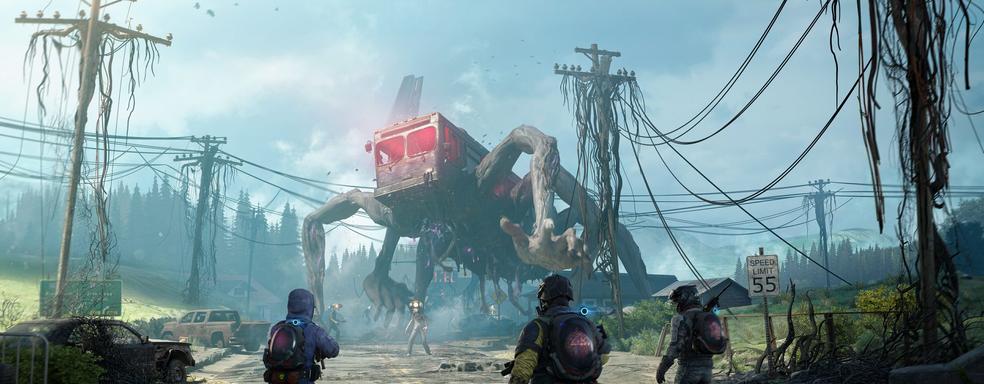
And in terms of shooter mechanics, Once Human has something to praise. With some caveats. There is no pretense of "realism" in this game, although all the guns are well known to you. There is the AKM, the MP5, the famous M870, and other equally well-known examples of the world's military-industrial complex. But most often they have a parrot-like coloring, shoot "copper" bullets at first (and then not copper), and have green/blue/purple/gold markings. Just a classic of looter MMOs with grinding. So don't expect realistic shooting or realistic stopping power from the game. The fact that you put a bullet accurately into the head of a monster with a large-caliber sniper rifle, popularly known as the "elephant gun," does not mean that this monster will roll its non-existent eyes and fall prostrate. Its level is higher than yours, so you might have to fly back to the respawn point.
But if you accept these rules of the game, then the shooter part will be a blast for you. Two guns of your choice — primary, secondary. Melee/ranged or medium combat. And cold weapons to go into knives. And given that the places we raid are full of various enemies, going into knives will happen regularly, as they will reach you. Or vice versa, you will reach them to colorfully and deliciously "execute" the enemy with the X button, plunging a cold blade into their body. It plays great and with drive.
With bosses, of course, it's not as fun. They are quite tanky and often need to be "whittled down" for a long and tedious time, fending off minions along the way, but this is also a classic of the genre, so no complaints here. And, of course, you need to level up your character. Level up your base. Level up your weapons.
It's also a good idea to acquire your own minions — deviants. Deviants are creatures that will become your allies and helpers. Some of them can be used in combat, while others can be used for farming (gathering resources, maintaining territory) or even as a vehicle.
Another feature of Once Human is character classes. There are several: Beast Lord, Chef, Gardener, and Free Man. Each class starts in a new world with its own set of starting items and has a separate development tree. From the names, it is generally clear what features each class has.
By the way, about the individual characteristics of characters. The choice of height and physique in the character editor affects not only the appearance. A larger character will be able to carry more weight in their backpack, but may be slightly slower. Conversely, a miniature character will be significantly faster than a brute. The character editor itself does not reach the level of well-known outstanding Korean counterparts (in which the character editor could probably be released as a separate application for creating police composite sketches), but it is very decent. And the characters and faces themselves are pretty.
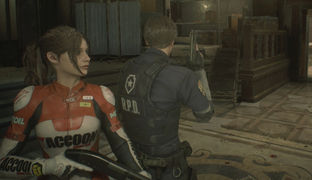
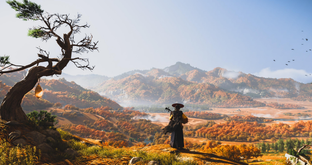
Overall, the design of Once Human and its graphics leave a very pleasant impression. Yes, compared to other modern games on consoles (and on PC), the animations here are a bit clunky, and the characters lack some fine detail. But overall, the graphics are good, and thanks to the design, even excellent. And atmospheric. Zombie farmers in the Endless Dream scenario instantly evoke associations with Resident Evil, and the atmosphere in the Dreamland amusement park feels tense. The beaches of Isles of Abyss are beautiful and desirable. And the female character's butt, immediately after entering the world (I remind you that we enter it in only underwear) while swimming across a third of the screen, is a feast for the eyes. But if you have a male character, you will be pleased by a male butt. Or not a butt, but the graphics of Once Human in general.
Among the obvious drawbacks is the clumsy translation. Its problem is not that it doesn't accurately match the phrases spoken in English. After all, the translation could have been done from Chinese, just like the translation into English. Its problem is that different parts of the text descriptions and item names are inconsistent with each other. According to the task, you need to make "basic harpoons," but on the workbench, you can make "main harpoons." It's clear that these are the same thing. But there are many such small details.
Another annoying minor detail is the interface's focus on PC/smartphone touchscreens. And this is specifically a problem for the console version of the game. Navigating the interface with a gamepad is not always convenient. Yes, you can always use the stick to point the cursor at the desired item, but a gamepad is not a mouse. In two-tier tabs, you can still manage with the RT/LT triggers and RB/LB buttons, but when it comes to the third tier, that's it, the gamepad gives up. In general, the interfaces of Chinese service games, which largely inherit the inherent flaws of mobile games, are a separate topic. And there are many actions provided for the player. And what is poorly done is that two circular menus (quick actions and building with emojis) are assigned to different buttons — LB and the D-pad down. It's somewhat illogical. It took a long time to get used to, constantly confusing them. Of course, you get used to everything over time. But it was annoying.
Overall, a significant drawback is the rather high entry barrier for an unprepared player. More precisely, the difficulty itself is not a drawback. But the lack of a smooth introduction to the gameplay is a drawback. Yes, in the Manibus scenario, we are introduced to the main game mechanics, and at the beginning of each world, game designers try to maintain a balance between teaching a beginner player and introducing an avid Once Human gamer to a new world. But for me, despite having experience in both extraction shooters (the aforementioned Lost Light, Arena Breakout) and survival games, mastering Once Human caused some difficulties. Neither the crooked translation nor the interface features helped. In the marine scenario Isles of Abyss, into which the Once Human client kindly threw me initially, I found myself like a Russian from an anecdote in an empty room with two balls — I broke one, lost the other.
I couldn't figure out how to get to shore on the raft you start on in the scenario. And the raft was also being blown away from the shore by the wind. So I swam. And when I was supposed to return to that raft according to the quest, I couldn't find it. Yes, eventually everything fell into place. Press the triggers to move the raft forward and backward, steer with the oar. But that was much later. And a simple on-screen hint — press RT to move forward (as with other vehicles) — would have saved me from futile attempts to catch the wind.
If you think I'm the only one, and that reviewers need a "game journalist" mode, then let me partially quote one of the Steam reviews:
...As a result, instead of playing, I spent almost 6 hours reading articles, forums, and trying to understand how the game works at all...
And I figured it out. Probably. Without a guide.
There were also technical rough edges, though only in one place, and we hope they will be fixed by release.
Graphics on consoles work in three modes — quality, balance, and performance (up to 120 frames per second claimed). As long as you have a suitable TV. Since we used the beta version of the game on Xbox for the preview, we cannot tell you how the game feels when playing online. Nor can we evaluate the PvP component. All tested scenarios are PvE. They provide the ability to play cooperatively, add friends, and create clans. And there are also general activities for everyone. But, unfortunately, we could not test this specific aspect.
In terms of sound design, don't expect revelations from the game: automatic rifles shoot, trees are chopped down — everything is done well and with quality. The in-game playlist is not bad, but nothing special stands out. Firstly, with default settings, music only plays at certain moments (for example, when driving a vehicle), and secondly, no particular track stuck in my mind.
Cross-play between consoles, PC, and smartphones is announced. Moreover, by linking an account, characters can be transferred from one platform to another. How PvP will work in this mode is an interesting question. There is aim assist on consoles. After all, aiming with a gamepad is not as comfortable as with a mouse. And given that the PvP mode in the game is quite harsh (it's easy to lose everything), this must be taken into account. We repeat, we could not test it ourselves.
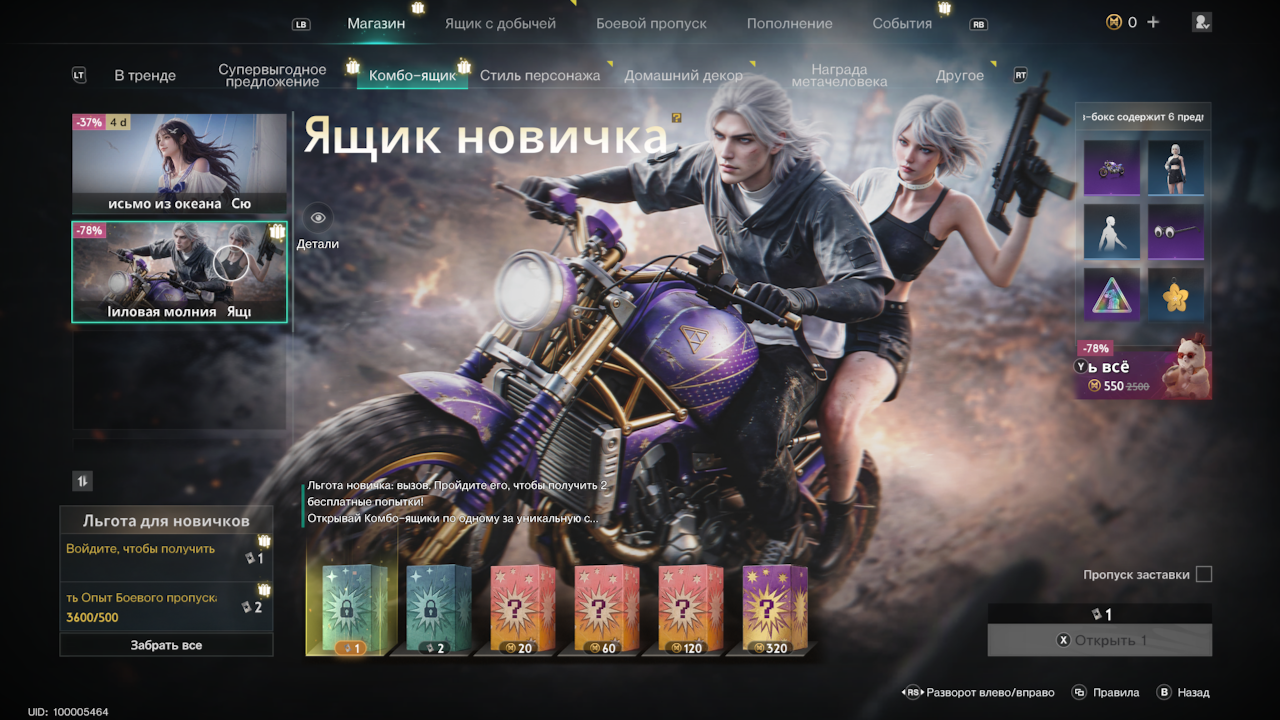
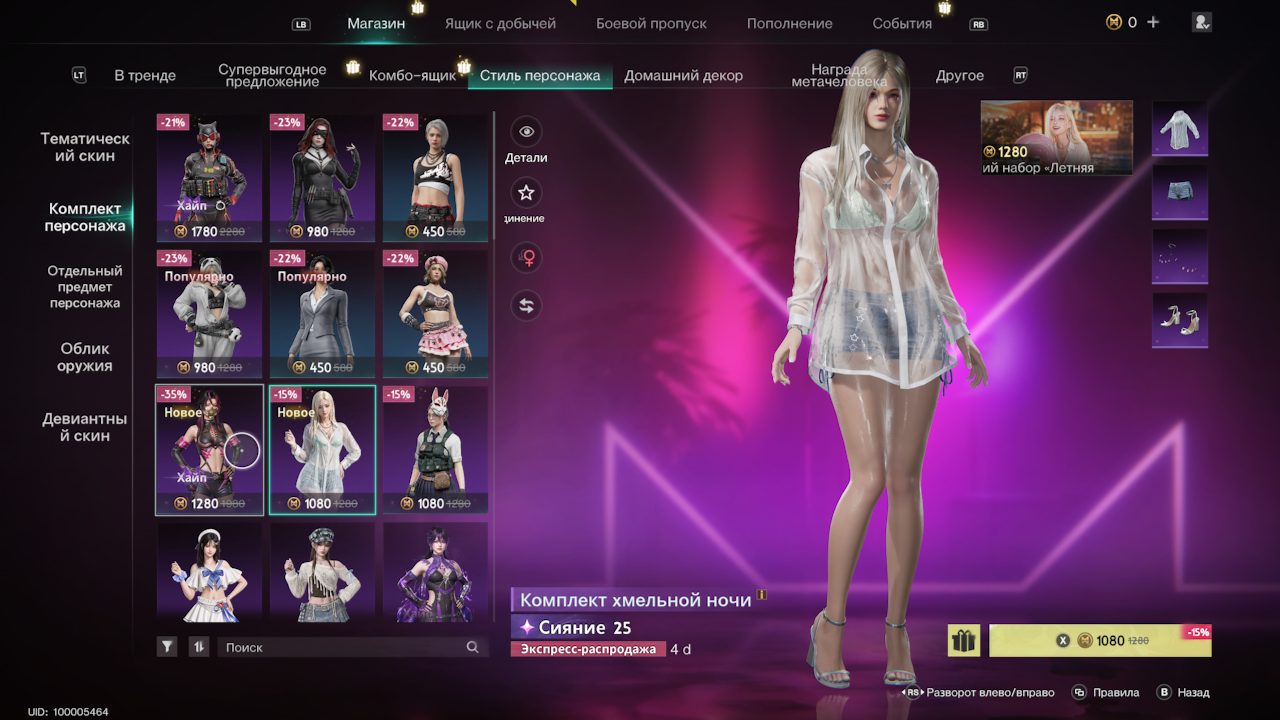
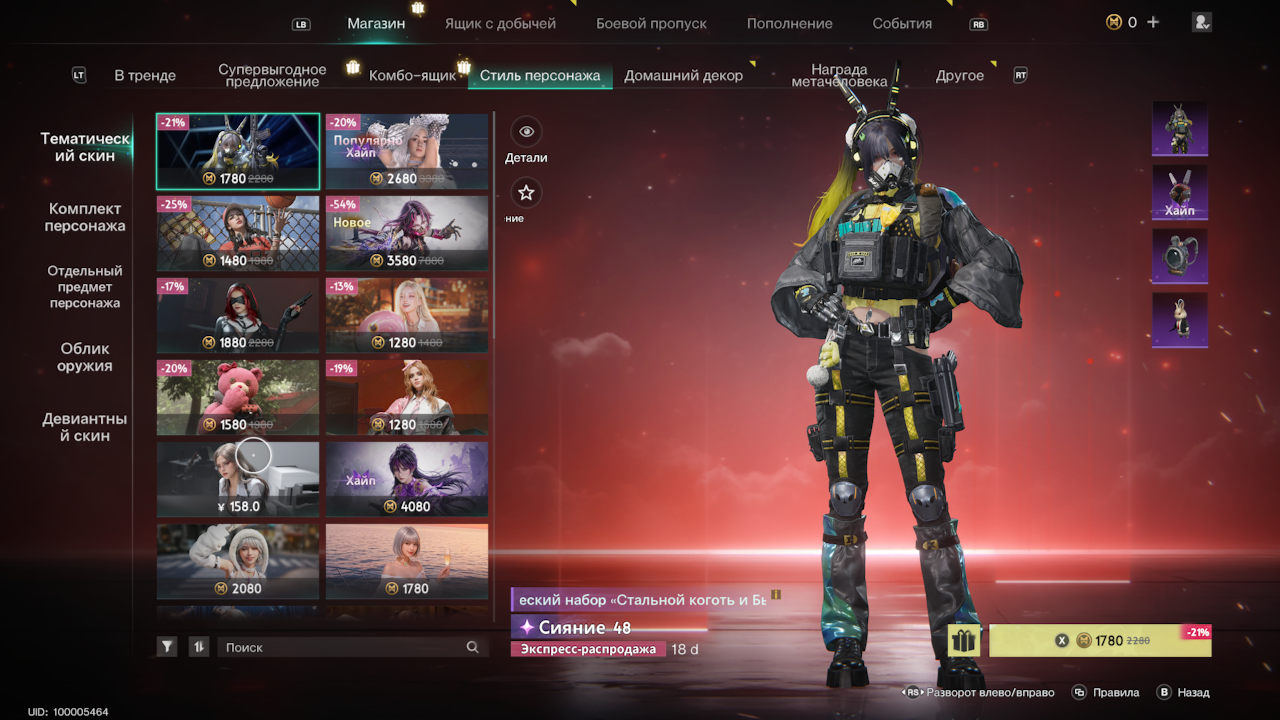
And finally, the cherry on top (or the fly in the ointment) — monetization. NetEase pleasantly surprises. The company's old mobile projects were heavily monetized, with a clear bias towards pay-to-win. But the already mentioned Lost Light (released in 2022) no longer had a clear bias towards P2W, although some bonuses were still received by donors. Here, judging by the store, there is none of that either (did I search poorly?). Many cosmetic items, a battle pass, and... that's it. Yes, all cosmetics are expensive. But they are also made expensively and richly. And for an MMO, the ability to stand out from the crowd is important for many. Loot boxes are also present. They drop some unique items and skins. But this should not affect the gameplay. In PvP mode, class features are additionally leveled out. So although the game is conditionally free-to-play, there is no obvious influence of paid items on the gameplay itself, let alone its PvP component.
Diagnosis
Perhaps no game in a long time, like Once Human, has put me in such a position in 15 hours. The first two or three hours I literally had to learn. First, to understand what scenarios are and how they are structured. Then to learn how to play. And it seemed like the game mechanics were familiar, and the controls were almost habitual, but the game wasn't flowing. Even after completing the tutorial, it wasn't flowing. And only then, forcing myself to figure things out and catching a few "Ah, so that's how it is!" moments, did I begin to immerse myself in these worlds and this gameplay.
For this season, if time permits, Once Human has probably drawn me in. I still want to finish the Isles of Abyss scenario. And in Endless Dream, I now know how to settle in. And the gameplay is very pleasant. You know, in reality, all survival games are cozy farms, just like Stardew Valley, only with breaks for raids. But there are raids in Stardew Valley too. And building a house, choosing architectural solutions, crafting items — that's pure joy. And it's just as pure joy to take out monsters in locations (the main thing is to have the right level).
But there are doubts about Once Human's ability to keep single players engaged in PvE for a long time. Although the world maps are huge, grinding will eventually become boring. But if you get involved in co-op or a clan in PvP, you can get stuck for a long time.
Overall, Once Human is a decent project. But to reach the point where the game truly unfolds, you'll have to put in some effort. If we're talking about the console version, then its own quirks have been added to the existing issues of the PC and smartphone versions. And that's a bit sad. If you're ready for a high entry barrier and love looter-shooters with survival elements — welcome. Just be prepared to read guides.
The game is available for free on PlayStation 5 and Xbox Series X|S, and in 2024 it was released on PC.
Never miss our newsAdd this site to your preferred sources to see us more oftenAdd on Google