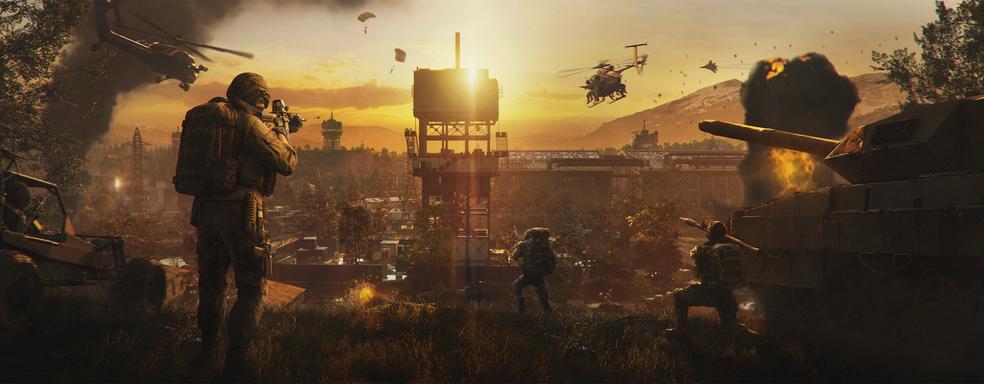
Developers were right: WARDOGS playtest impressions
The ARMA series has a strange tradition: within its huge military sandbox, modes are regularly born that eventually outgrow the original game. DayZ, PUBG, and an entire genre of battle royales once grew out of modifications and user scenarios. Later, classic mass warfare modes also migrated to their own projects. Now it's the turn of "King of the Hill" - one of the most popular ARMA 3 modes, whose formula has received its own development in the form of WARDOGS.
WARDOGS has not yet entered early access, but the developers have already explained why it should not be bought. BULKHEAD studio listed all the shortcomings and features of the project that could deter players. It warns of a small amount of content, a high price for an unfinished game, a possible drop in online players, simple graphics, and slow gameplay that will not suit everyone.
Such frankness looks unusual against the background of typical early access advertising. At the same time, some of these warnings concern not temporary problems of the early version, but the very structure of WARDOGS. And now that the open playtest is over, we can summarize the preliminary results. We will figure out how fair the developers' own warnings are, which of the listed problems really hinder gameplay, and which emphasize the uniqueness of the project.
How to play this?
WARDOGS is built around the King of the Hill mode from Arma 3. Three teams of mercenaries meet on one server, trying to take control of a certain zone. In parallel, there is another small area within the zone – the "hot zone". While a player is in it, their influence doubles. Every 30 seconds, the game awards a point to the side with the most influence within the zone. The side that first earns 100 points wins.
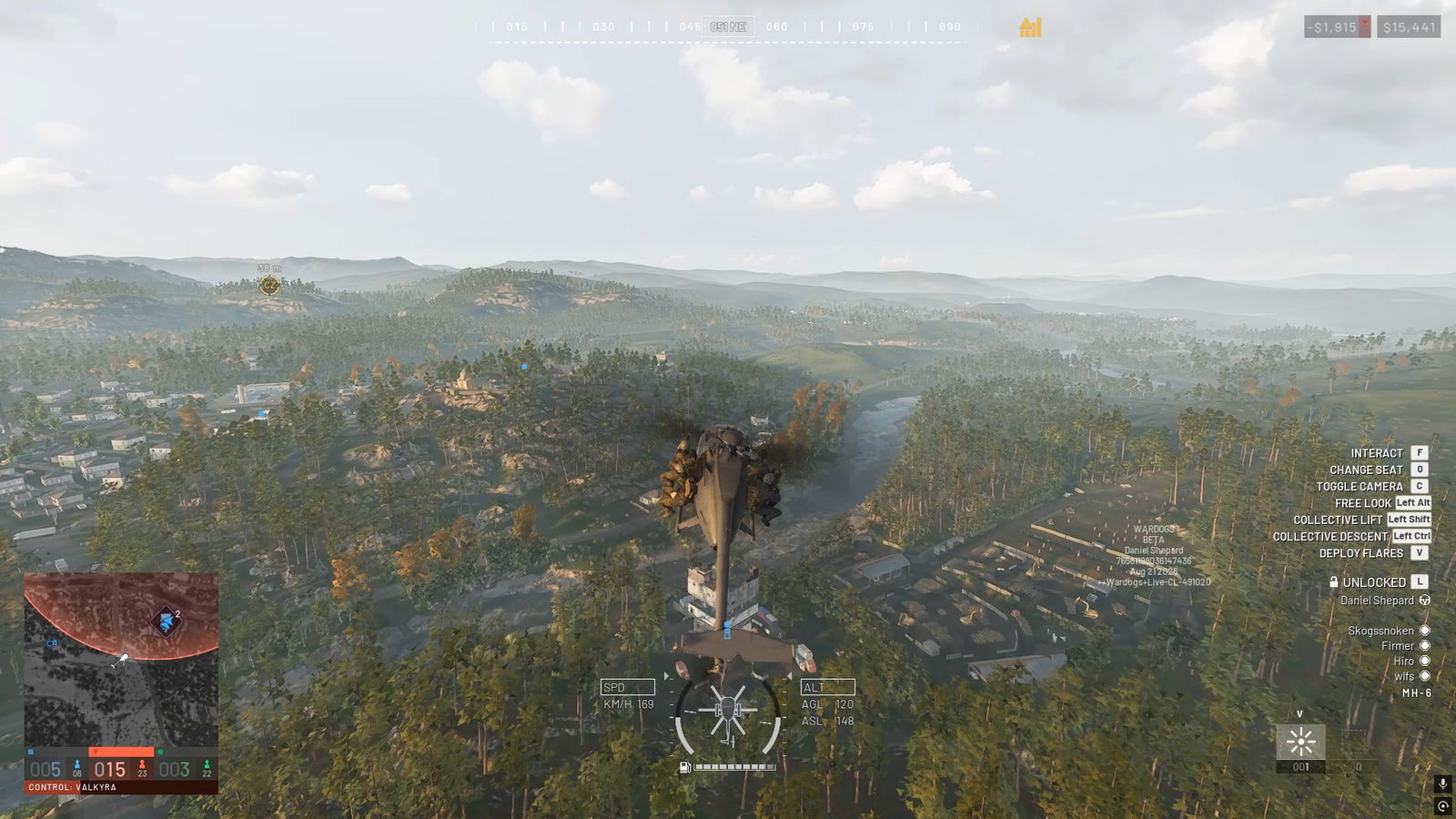
Each match starts at the main base of the chosen faction. Here, the player assembles a set of equipment, buys ammunition, and prepares transport before heading to the front line. The main camps are located far from the combat zone, so it's pointless to get there on foot. Because of this, some fighters need to prepare cars, trucks, and helicopters for battle: without transport, the road to the active zone can take a lot of time.
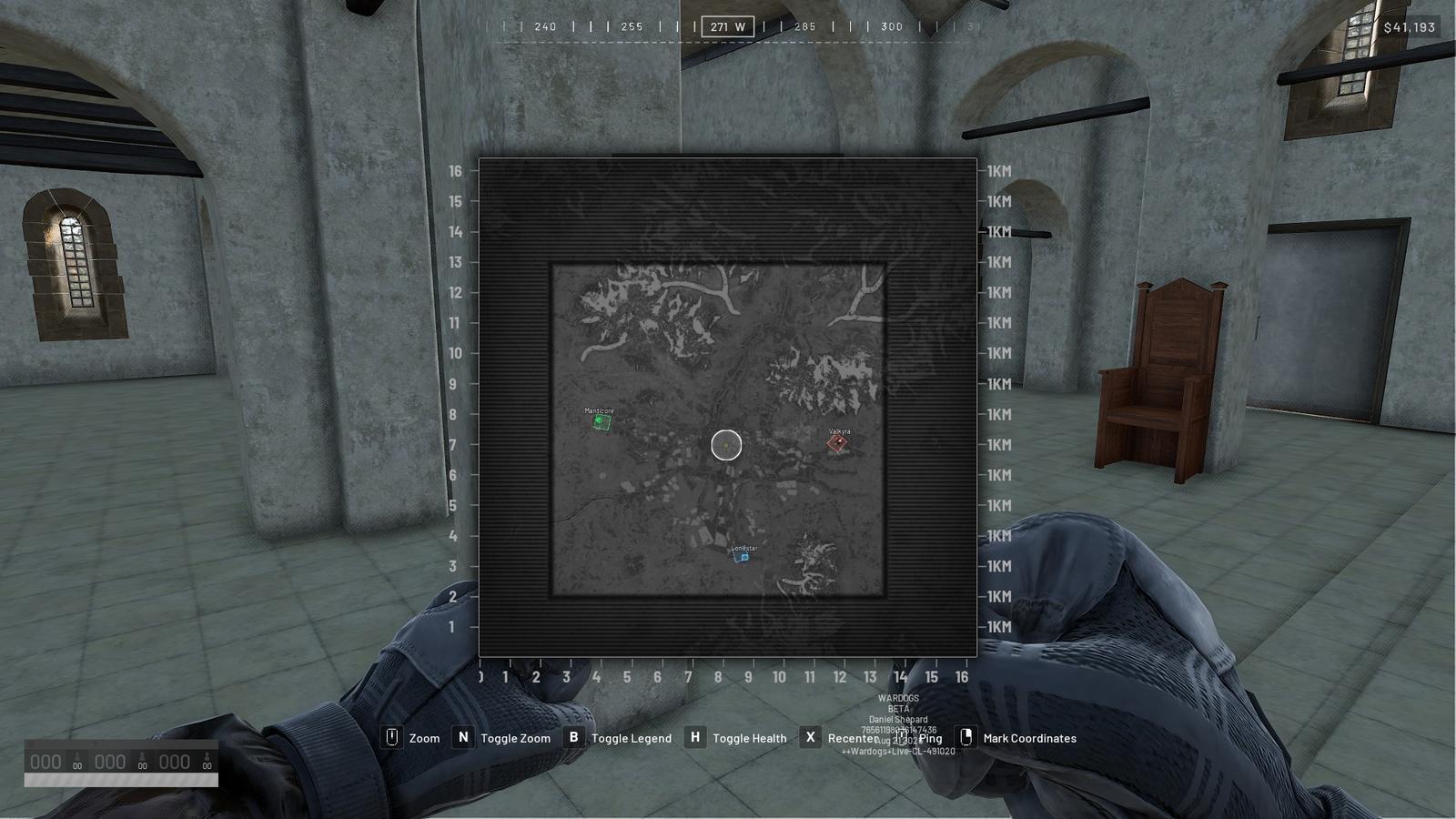
At a certain stage of the match, another important object appears – the command armored vehicle. After one side reaches 20 control points, this armored vehicle is given to each team. It must be delivered to the active area independently. After that, allies get an additional opportunity to redeploy to the front line. However, it is not possible to constantly respawn on it. After one use, you have to wait 10 minutes. Therefore, ordinary transport still remains the main means of delivering people to the front.
Fierce battles take place not only in the moving zone. Towers located on the map play an important role. Their number varies from two to five. Each serves as a convenient observation post and control center for the hot area. If you enter a password, you can influence its movement and shift it towards allied forces.
Usually, such towers are turned into a full-fledged forward strongpoint. For this, WARDOGS features a full-fledged construction mechanic. Players bring resources there and gradually surround the position with walls, gabions, and barbed wire. Later, mortars, air defense, and even drone launch points can be placed there.
Everything has a price
All equipment in WARDOGS is tied to personal economics. Before leaving the main base, the player buys weapons, ammunition, medical supplies, and other gear. Transport also has to be paid for. It does not respawn after destruction, like in Battlefield. Therefore, money is constantly needed here: even if you don't aim for expensive equipment, every new trip to the battlefield requires at least minimal expenses.
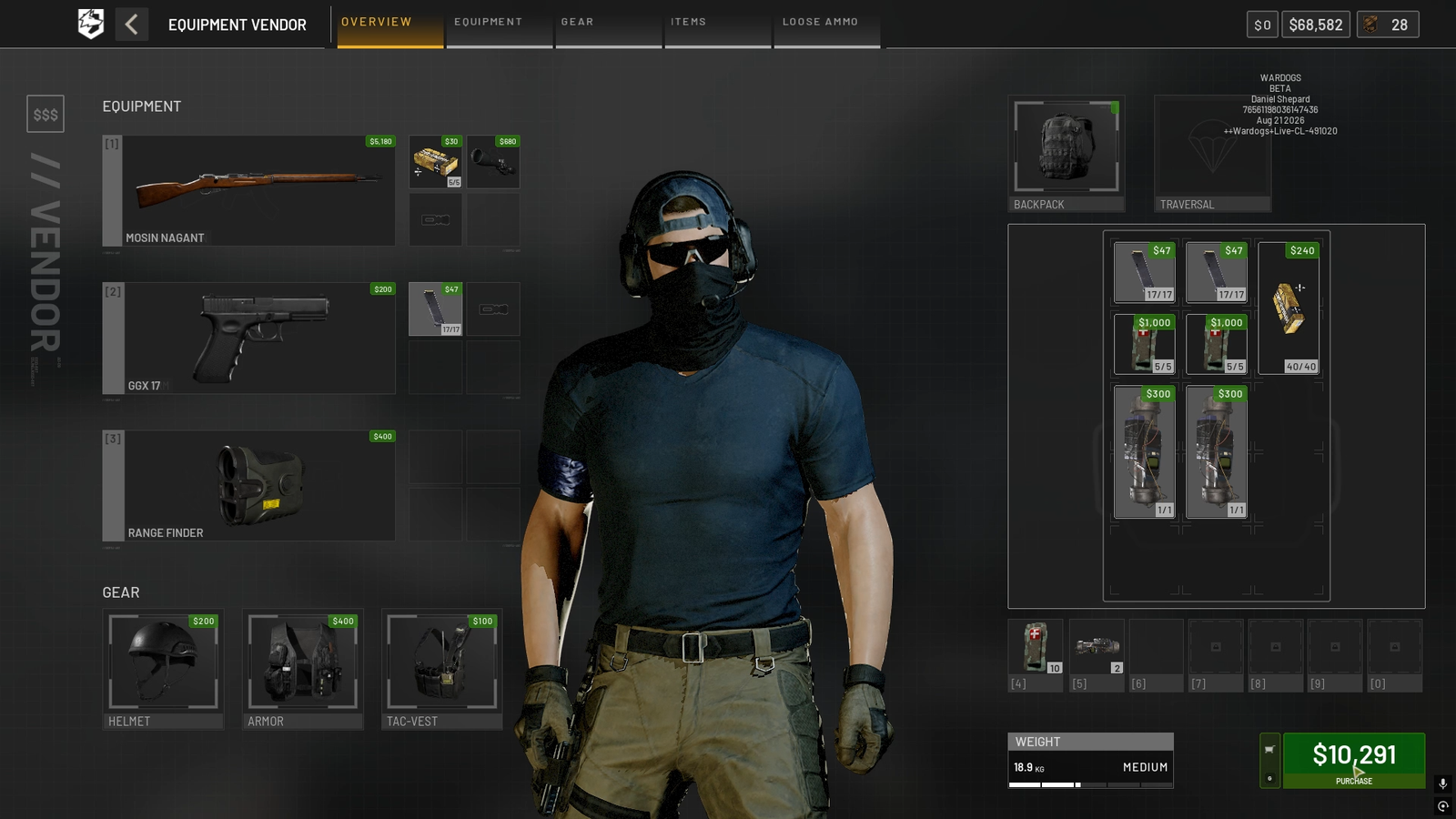
But you can earn not only by killing. You are paid for absolutely any work useful to the team: marking enemies, transporting allies and supplies, healing allies, and simply being present in the designated region. Therefore, it is difficult, but possible, to run out of money completely in this game. All accumulated funds remain with you on your account and are carried over to subsequent matches.
In addition to buying equipment, money is needed to unlock new types of weapons and vehicles. Moreover, access to them costs significantly more than the purchase itself. For example, a tank costs about $14,000. However, to unlock it, you will have to spend $250,000. This is already a serious investment that can easily be lost due to an unsuccessful sortie or a bad crew.
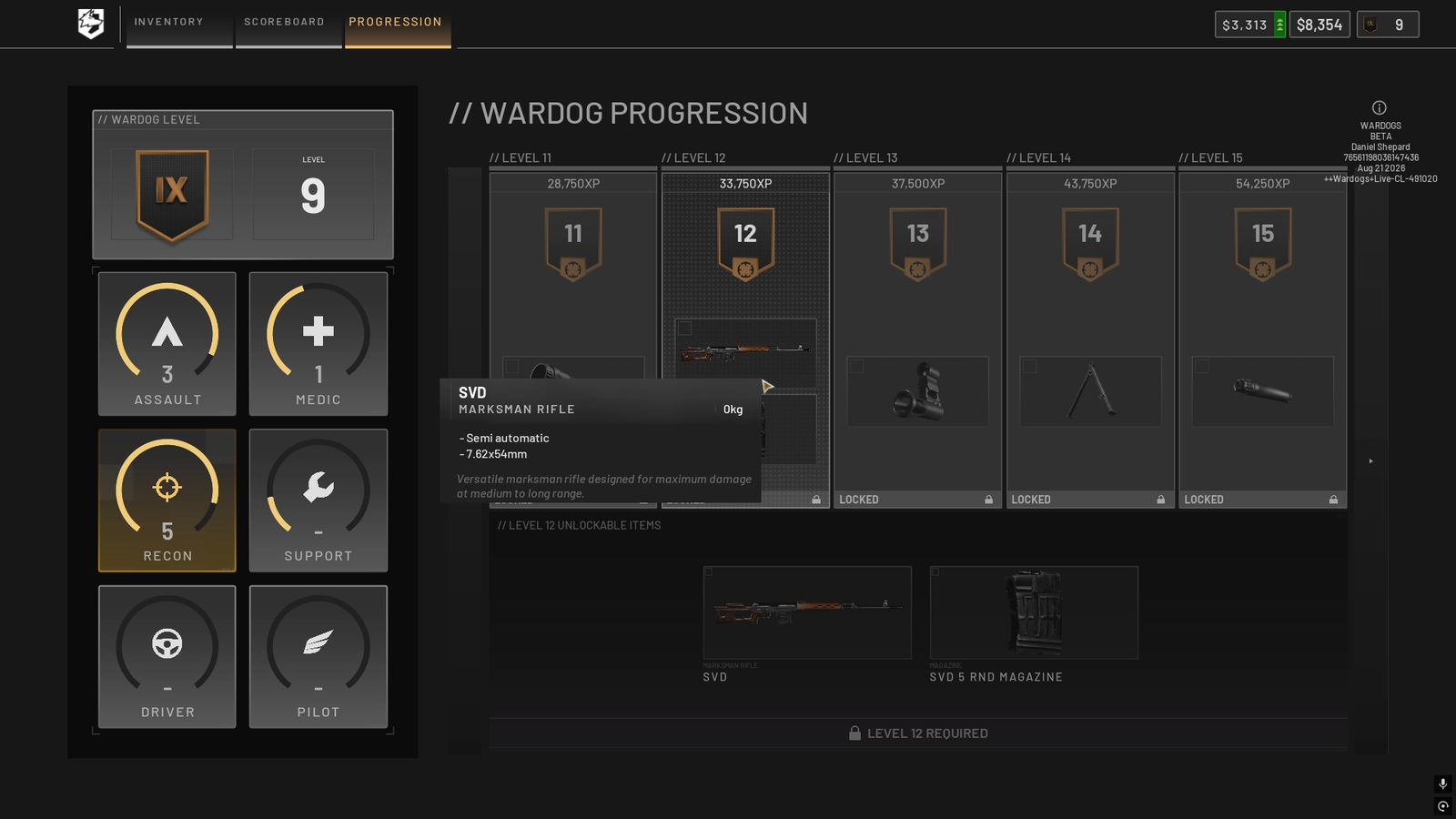
Progression is divided into six specializations: assault, medic, scout, support, driver, and pilot. Each of them develops through specialized actions. At the same time, the game does not force you to choose one class. The player is free to develop all six directions simultaneously. As levels increase, new types of weapons, vehicles, and other equipment are unlocked, which then have to be separately unlocked and purchased with earned money.
In war as in war
The main clashes in WARDOGS most often occur around points of interest – towers and the hot zone within the main sector. In terms of combat density, it sometimes resembles Battlefield: dozens of fighters converge in a small area, vehicles are operating nearby, helicopters fly overhead, and some buildings gradually turn into ruins. However, the approach to combat itself is noticeably slower and closer to Squad or Arma.
Characters move slowly, and there is no automatic health regeneration here. After being wounded, the player usually tries to disengage from combat and find cover to restore health. Therefore, even a single ordinary wound can force an enemy to temporarily leave their position. Death is also punished more severely than in arcade shooters. You cannot respawn next to your squad members. A critically wounded player can wait for allied help, but if they immediately respawn, they will end up in the main camp and will again be forced to make their way to the front line.
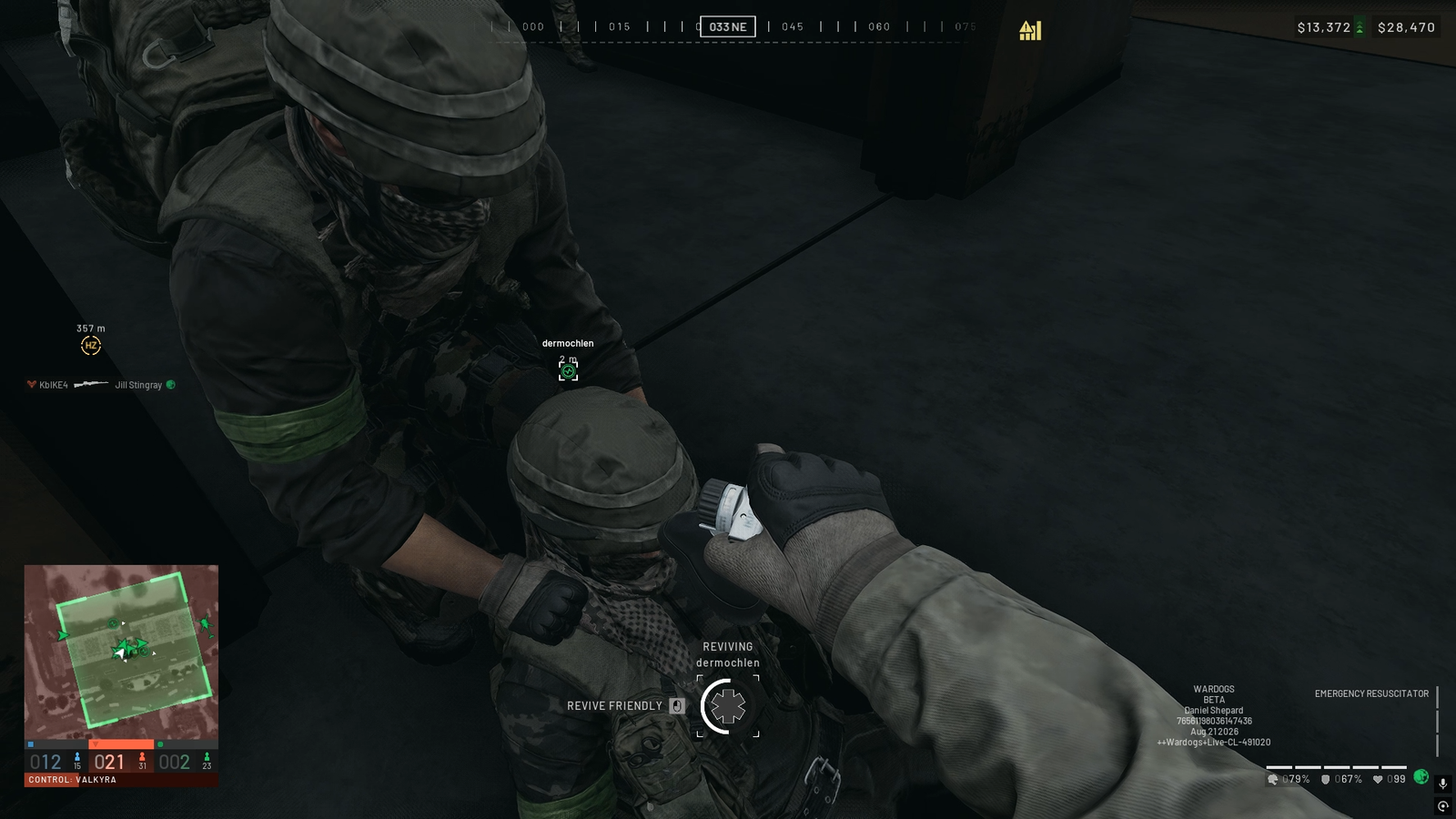
This system greatly affects the pace of infantry battles. Players are less likely to thoughtlessly run into fire, because losing a position can lead to a long journey back. The wounded are tried to be evacuated, squads more often linger behind cover, and control over a convenient building or high ground becomes more important than a few quick kills.
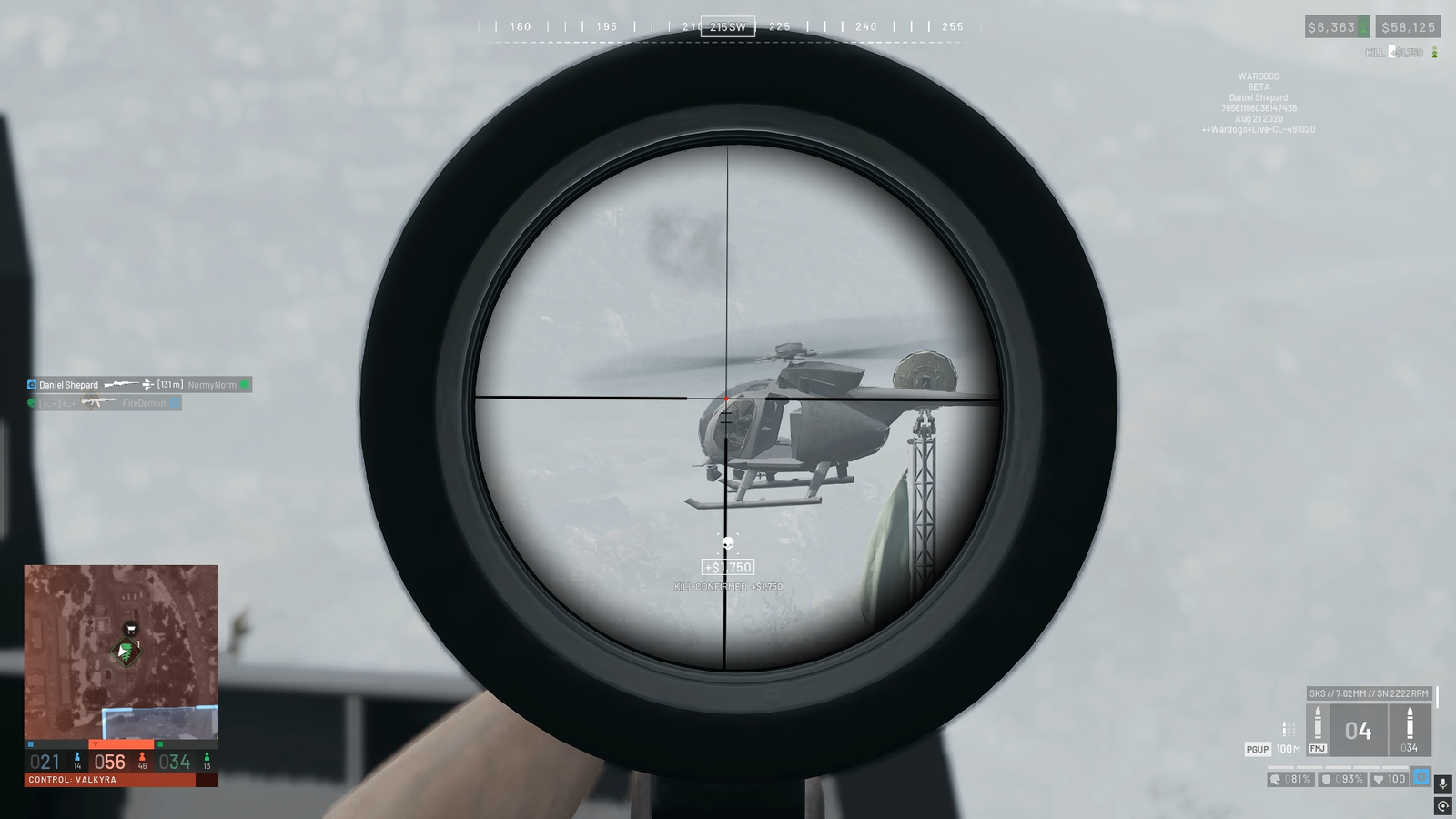
But infantry is only part of the overall action. Vehicles of different classes are simultaneously present on the battlefield: from cars with turrets to tanks and full-fledged combat helicopters. Their appearance can instantly change the situation at a point. Infantry scatters to cover, open positions become unsuitable for defense, and the attacking side gets the opportunity to push through a section of the front. But vehicles are also vulnerable. Grenadiers, air defense, artillery, attack drones, and other combat vehicles work against them. Therefore, a strong tank or helicopter simultaneously becomes a priority target.
If the defending side has the necessary weapons and players who can buy them, vehicles do not pose a great threat. Problems begin when the team does not have such tools. The progression and economy of WARDOGS do not allow a beginner to buy heavy weapons. If one side has already deployed tanks or attack helicopters, and the enemy has not even unlocked a suitable grenade launcher, there is simply no normal way to respond.
Verdict (not final)
Despite all the developers' warnings, after 15 hours of gameplay, WARDOGS left a pleasant impression. Matches last about an hour, but the game does not cause any fatigue. It does not try to overwhelm the player with unnecessary conventions: allies are properly highlighted, the scope is not hidden, and controls do not turn into an exam on knowing keybinds. The developers are not building an ultra-realistic military simulator, but are primarily focusing on tactics and teamwork.
But this does not mean that WARDOGS constantly forces you to crawl through bushes and engage in firefights from a kilometer away. At points of interest, a quite familiar meat grinder regularly begins, where several squads clash in a limited space. The game skillfully alternates slow movements and preparation with short but intense episodes.
The technical condition was particularly pleasantly surprising. Optimization performed excellently during playtests. No one experienced serious performance issues. There were also no questions about the server side: the connection remained stable, and the game itself worked normally in Russia without additional tricks.
And all this is especially well received given the price. For its two thousand rubles, WARDOGS has already paid off in terms of emotions after just one playtest. Moreover, you can play both alone, simply joining actions with random teammates, and as a full group with friends, where the gaming experience is revealed much better.
Never miss our newsAdd this site to your preferred sources to see us more oftenAdd on Google
![[Video] RIP RTX 5090 / GTA 6 Leak / Blizzard Broke WC3 / Cyberpunk 2077 Movie / Phantom Blade Zero Preview](https://media.ixbt.games/fit-in/312x/ixbt-data/1725650/17ffaa31-1709-4a05-91a5-0ee4b75897d7.jpg)