WARDOGS military tactical shooter review: spoiled impressions
A few weeks ago, we already shared our opinion after the playtests of WARDOGS - a large-scale military tactical shooter. We liked it, but we couldn't imagine how successful the game would become. And after a hundred hours of gameplay, after its early access release, we noticed many interesting things that were missed in the tests. This time, you can expect a more detailed and thorough analysis.
For those who missed our first playtest material, it's worth reminding what the game is about. WARDOGS is a session-based military tactical shooter for 100 players, based on the popular 'King of the Hill' mode in ARMA. Three teams fight for a control zone. Every 30 seconds, the side with more fighters in it, considering the hot zone bonus, gets one point. To win, you need to score 100 points.
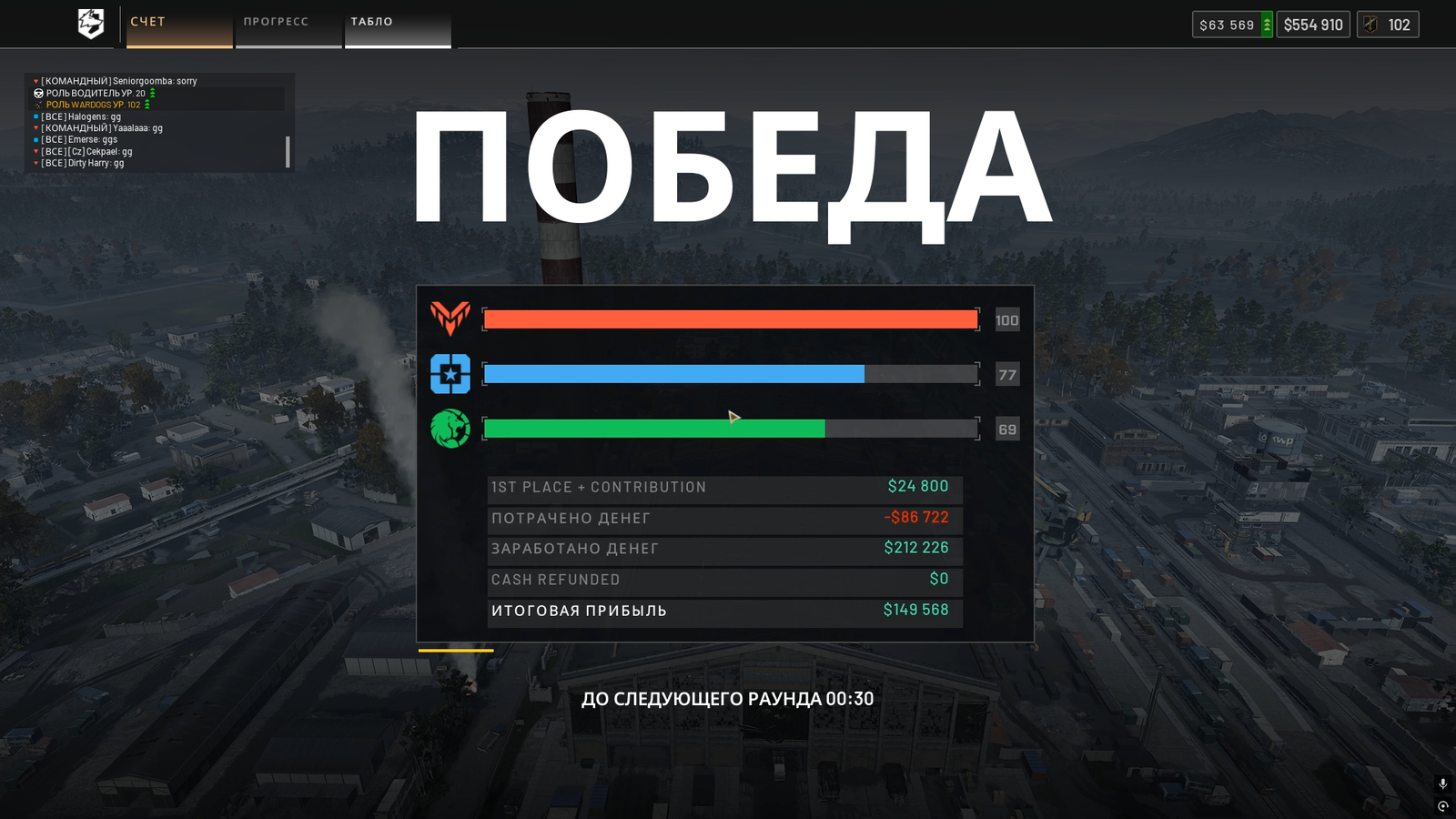
A hot zone moves within the control zone. A fighter in it counts as two when calculating numbers. This is where the main clashes unfold.
The game is based on a personal economy. Each deployment from the base requires balancing potential earnings with expenses. Weapons, equipment, and vehicles are bought with in-game money, and lost items must be re-purchased. You can earn money from everything: killing enemies, reviving allies, scouting, transporting people, supplying, and simply being present in the sector.
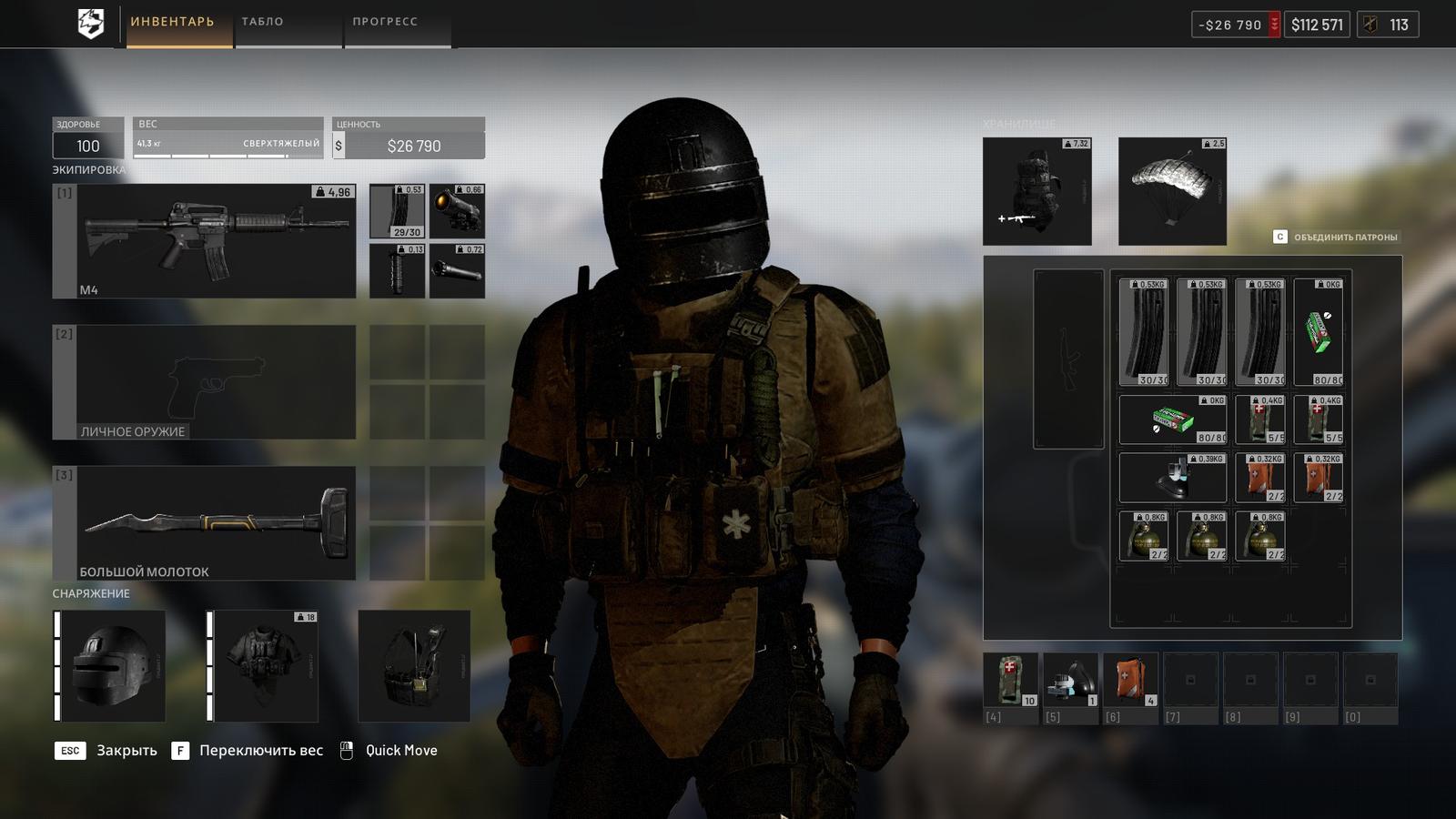
After a serious injury, you can wait for allied help or surrender. In the second case, the player respawns at the main base, several kilometers from the control zone. You cannot appear next to a squad member or directly at a strongpoint, as in Battlefield.
The choice of activities goes beyond the usual roles of assault, medic, or scout. Here you can transport people and supplies, pilot a helicopter, build fortifications, control artillery, and drones. After a series of unsuccessful assaults, calmer activities in the rear help replenish your account. For example, building a strongpoint or delivering a command and staff vehicle, to which allies can move from the main base.
Specializations develop in parallel and unlock access to new items. The sum of levels of individual branches determines the overall character level. Equipment and vehicles are also assigned to it.
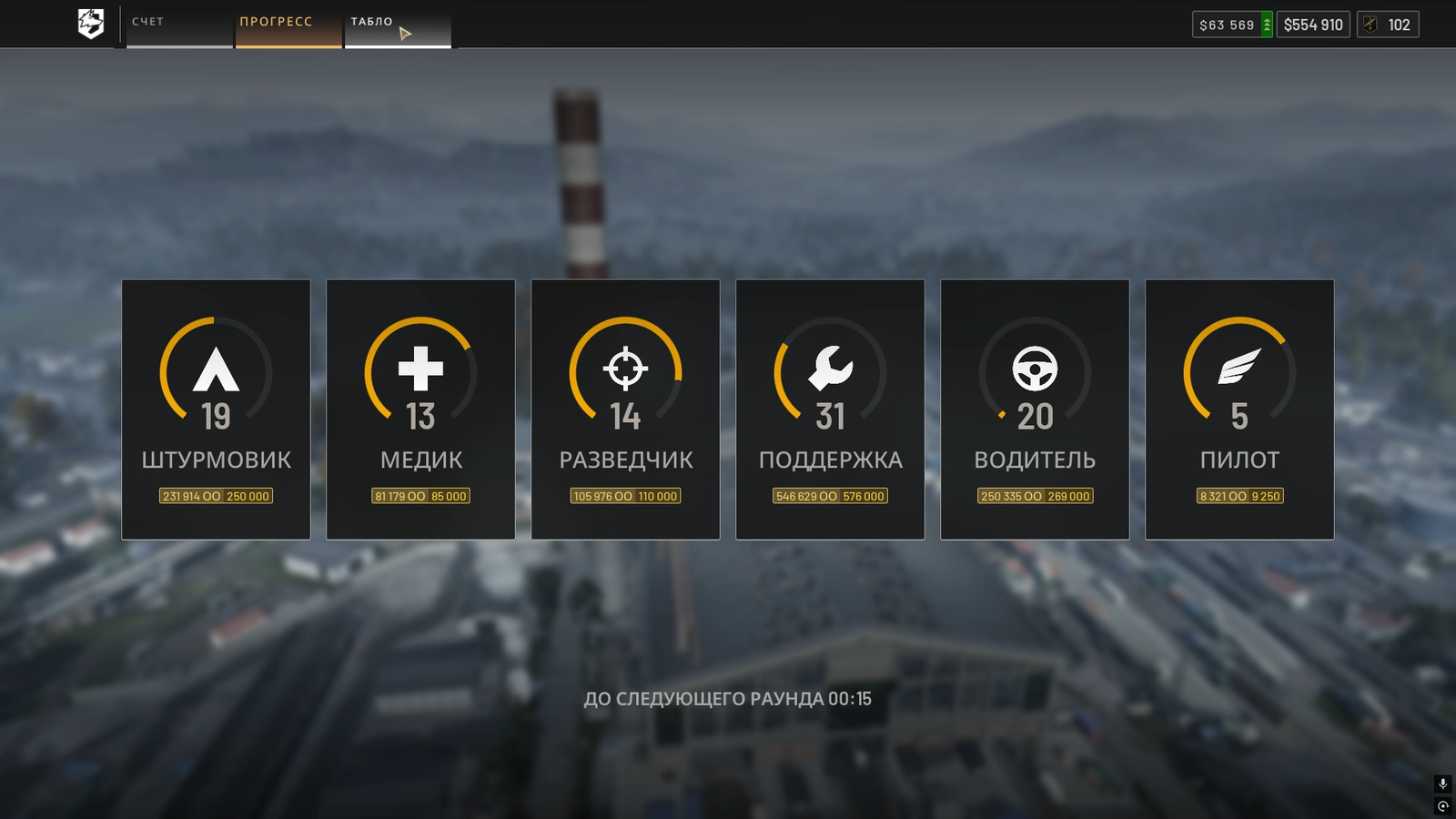
For most equipment, one level is not enough. First, you need to pay for unlocking, and then for the item itself. The main savings go towards accessing new purchases. For example, unlocking self-propelled artillery costs $500,000, and a top-tier set of body armor and helmet costs another $350,000 in total.
In tests, this system allowed trying different activities and quickly changing equipment. In early access, it became more noticeable how much time new opportunities require and how much they affect the balance of power in a match.
Echoes of ARMA
WARDOGS is closely tied to teamwork. It's important not only to report enemies but also to agree on a common strategy. A coordinated group of 30 people can, at the beginning of the match, land from three transport helicopters in the hot zone and move with it, holding back both enemy teams.
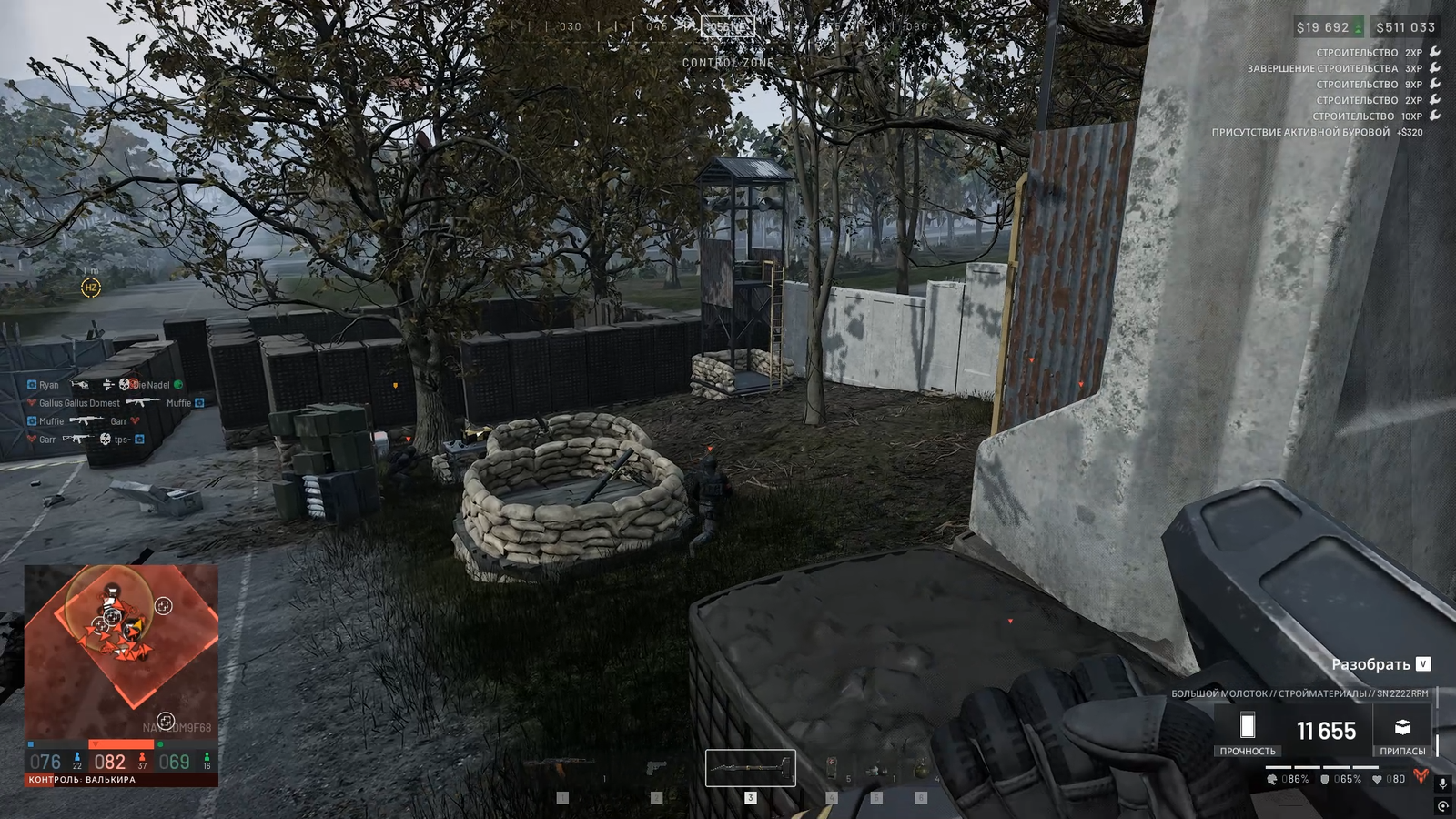
Another approach is to distribute tasks. Some build and guard a strongpoint, others conduct surveillance, a third group delivers supplies, and separate groups carry out sabotage. On servers with random players, such a division often forms on its own. However, the common goal is lost: everyone chooses a convenient activity and earns money, while only part of the team is engaged in holding the zone.
Compared to ARMA and Squad, it's easier to act independently here and test your own tactical ideas. But don't expect random allies to travel several hundred meters to save a single fighter.
Without coordination, assault troops advance alone or in small groups, without reconnaissance or vehicle support. Construction and supply continue, but a joint offensive does not materialize. In such matches, the side that can coordinate actions at least at the text chat level gains an advantage.
Got money, things changed
Money is needed both for the next battle and for unlocking equipment. There are many ways to earn, but they vary significantly in profitability and risk.
The income of an assault or medic depends on personal skills and squad survivability. If a fighter is quickly killed, and there is no ally nearby to revive him, buying equipment becomes a net loss. Several such deployments in a row deplete the account. Therefore, an entire match on the front line without financial losses can already be perceived as a great stroke of luck.
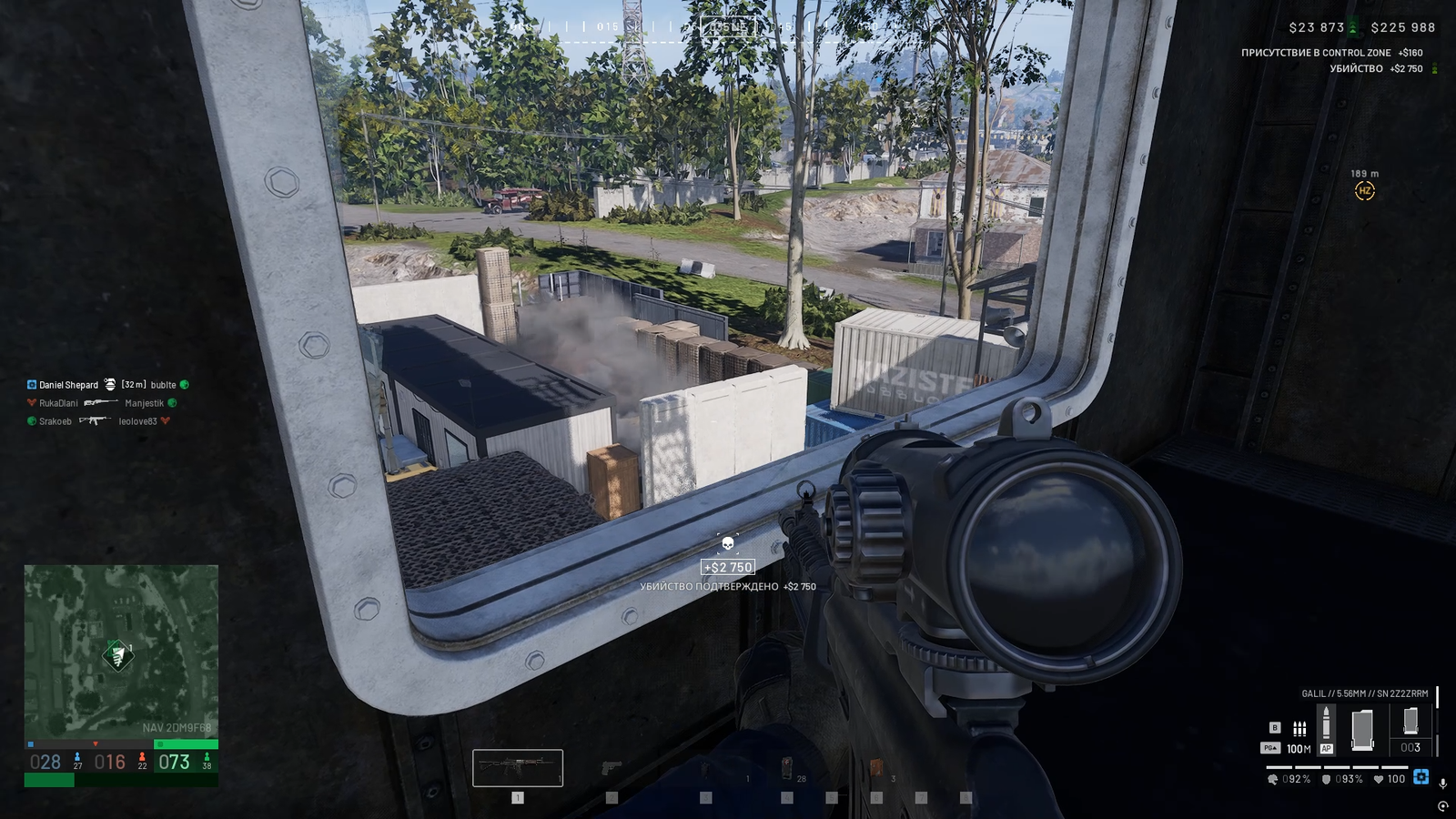
Meanwhile, the total cost of unlocking weapons, vehicles, and equipment amounts to millions of in-game dollars. To accumulate this money, it is more profitable to engage in safe work. It can bring as much as a series of two dozen kills, with much less risk of losing equipment.
The most stable way to earn money in practice turned out to be construction. Money is credited for erecting structures, and expensive equipment is not needed for this. A free assault rifle, a few bandages, and a construction tool are enough. For advanced structures, a sledgehammer is needed: with it, you can build mortar positions, drone launch pads, and air defense installations.
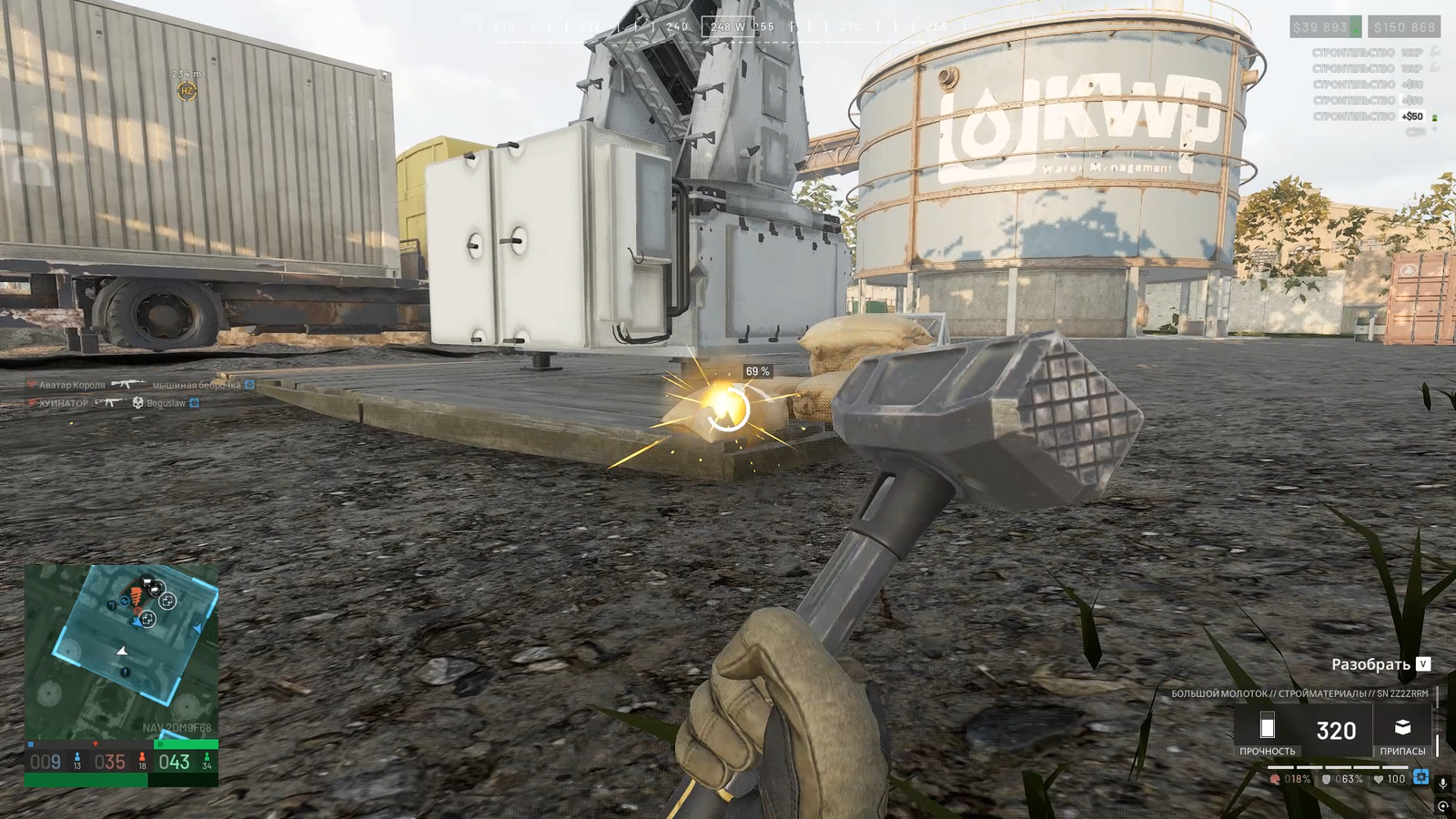
In 5–10 minutes of continuous work, it was possible to recoup the current kit and compensate for previous losses. Construction is useful for the team, but in terms of income-to-risk ratio, it is noticeably more attractive than participating in an assault.
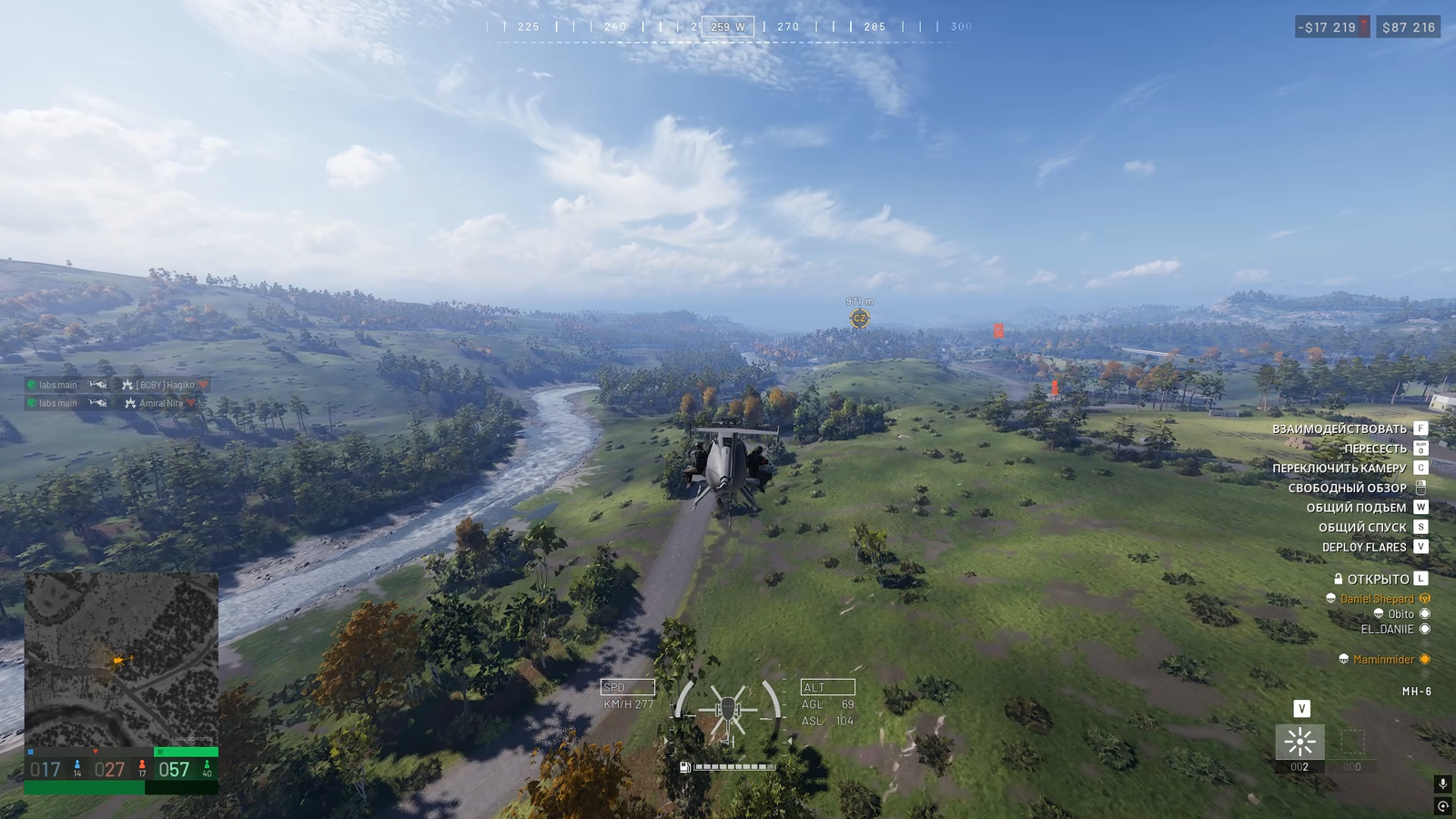
Another source of stable income is transportation. Drivers and pilots receive money and experience for delivering allies to the zone. Payments continue if the dropped-off passenger survives and kills enemies.
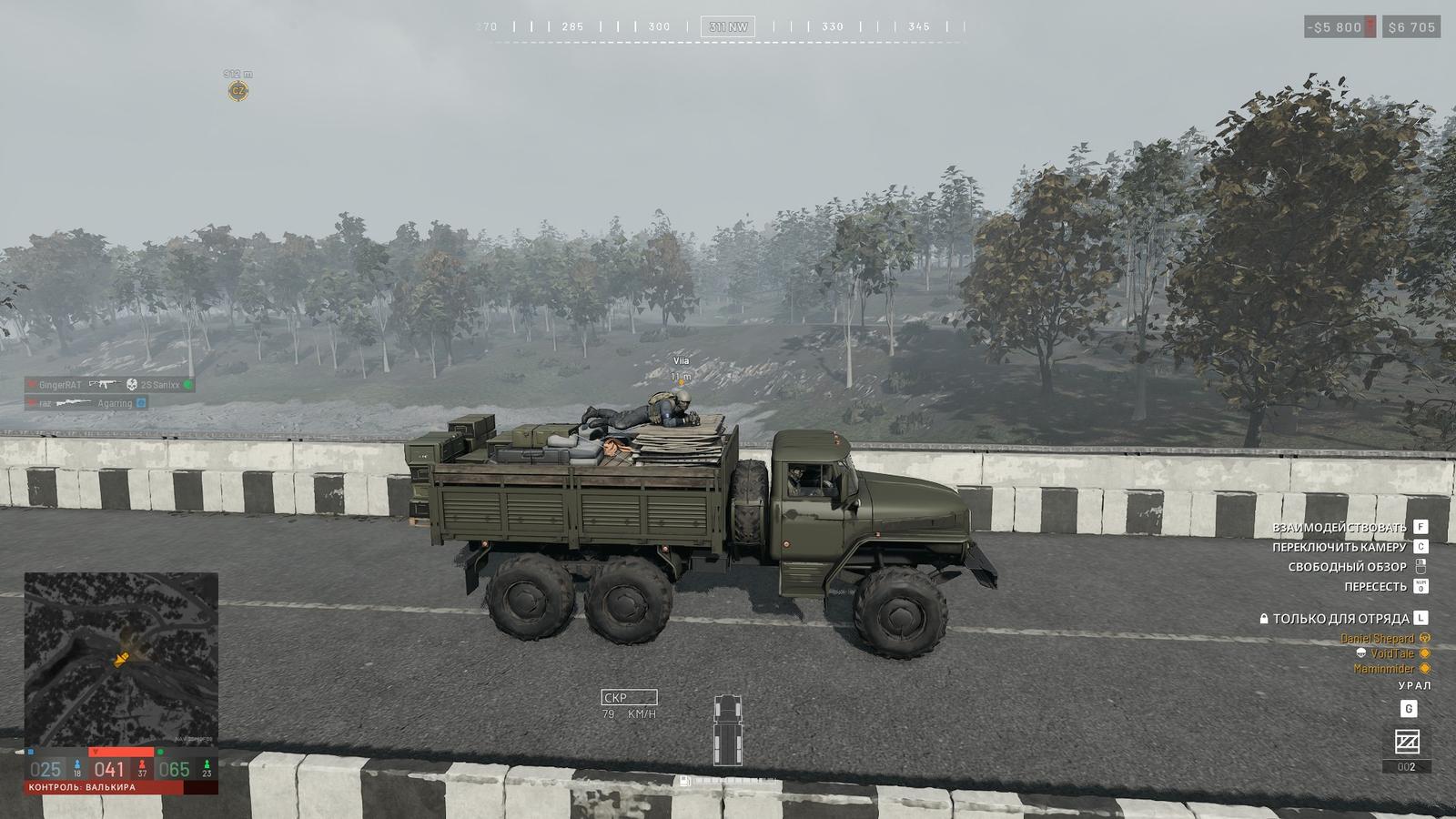
The same transport can be used to carry supplies to strongpoints. When there are no volunteers at the main base to go to the front, cargo helps avoid an empty trip. The work is tiring due to repetitive journeys, but it develops the necessary specialization. Leveling up a driver unlocks a tank, and a pilot unlocks a heavy combat helicopter.
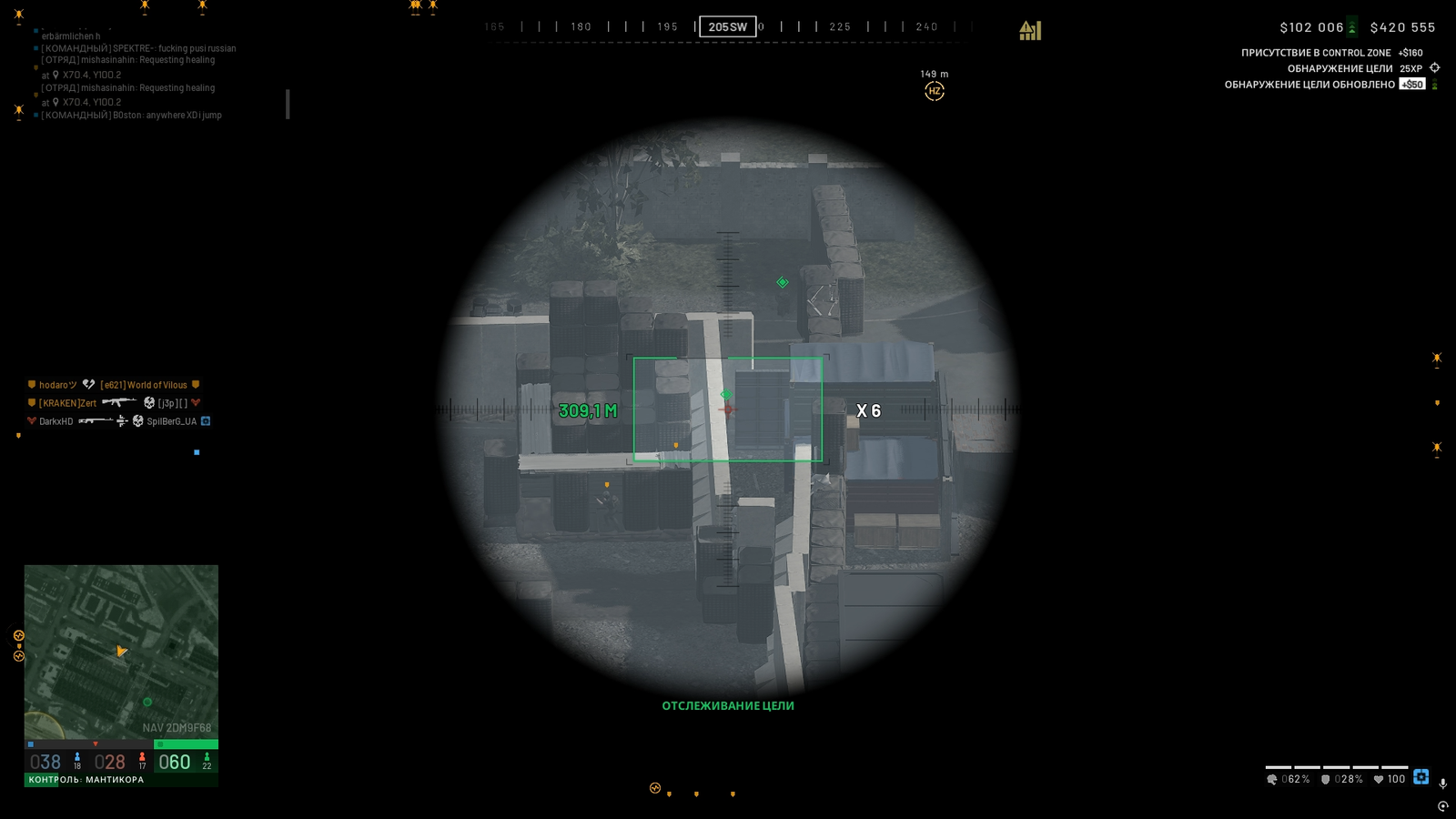
Reconnaissance also allows earning money without constant firefights. Special devices mark enemy infantry, vehicles, and structures on the map. Money and experience are awarded for detection, and an additional reward for subsequent destruction of the marked target.
Income here depends more on the position. On the test maps, it's not possible to find an ideal spot for long-term observation. However, on the new Zestafona location, there are tall industrial pipes in the center and at the edges of the zone. You can land on their tops from a helicopter and get a wide view. If you manage to hold on, you can earn $100,000 in one life and get a corresponding achievement. In another match, the observer will be detected and killed at the top in the first few minutes.
A pattern can be observed in these activities: calm, monotonous work brings more stable income than active combat. Builders, transporters, and observers accumulate money, while assault troops and medics risk another kit. But there is another side to the coin. There are saboteurs. This is one of the most exciting, but financially unstable ways to play.
Combat operations are not limited to the control zone. In the enemy's rear, you can set up ambushes, mine roads, use C4, and place small bases on abandoned towers or in the forest. Attacking is even allowed near the exit of the enemy's safe zone.
The problem is with payouts. Killing fighters outside the control zone pays little. A helicopter shot down there gives half as much money as a similar target inside it. Only ground vehicles are an exception: the reward for their destruction does not change depending on the location.
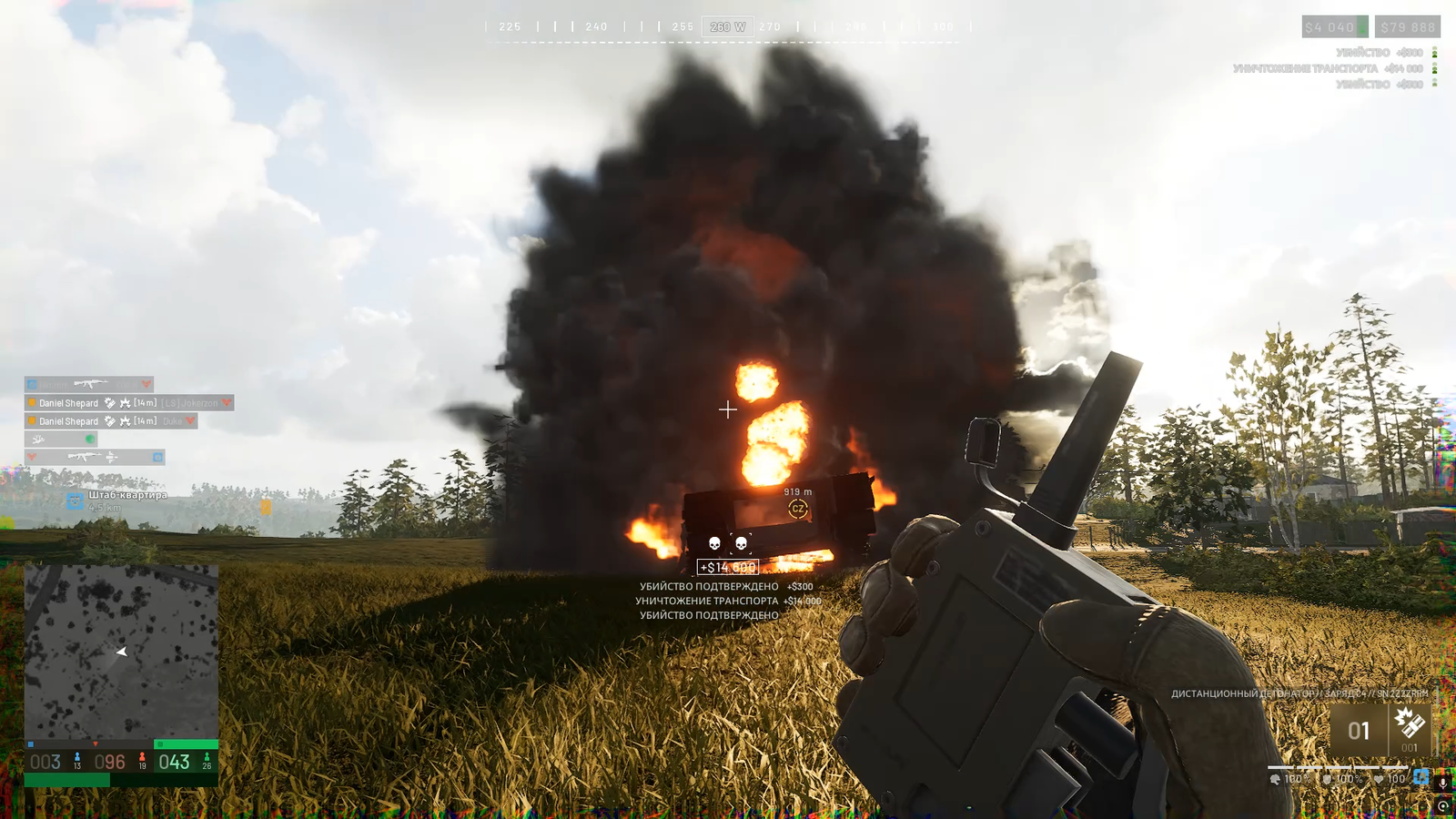
After several successful attacks, opponents begin to sweep the roads from the air and advance to the zone in convoys. Losses increase, and reduced payouts do not always cover them. Sabotage can disrupt enemy deliveries or delay reinforcements, but such a match is not always profitable. The pleasure of a successful ambush, however, is much greater than building another base.
Leveling up according to Tarkov's precepts
Development is tied to actions, not to the chosen class. Nothing prevents you from taking a sniper rifle, explosives, and a defibrillator in one kit. Their use develops reconnaissance, support, and medicine, respectively. The ability to combine activities is convenient, but the leveling itself has become noticeably slower after the tests.
Before early access release, the developers revised the experience requirements. The progression from level 10 to 20 was stretched the most, and after level 35, the curve became smoother. At the same time, many intermediate steps unlock nothing. In some branches, you have to pass five levels between rewards.
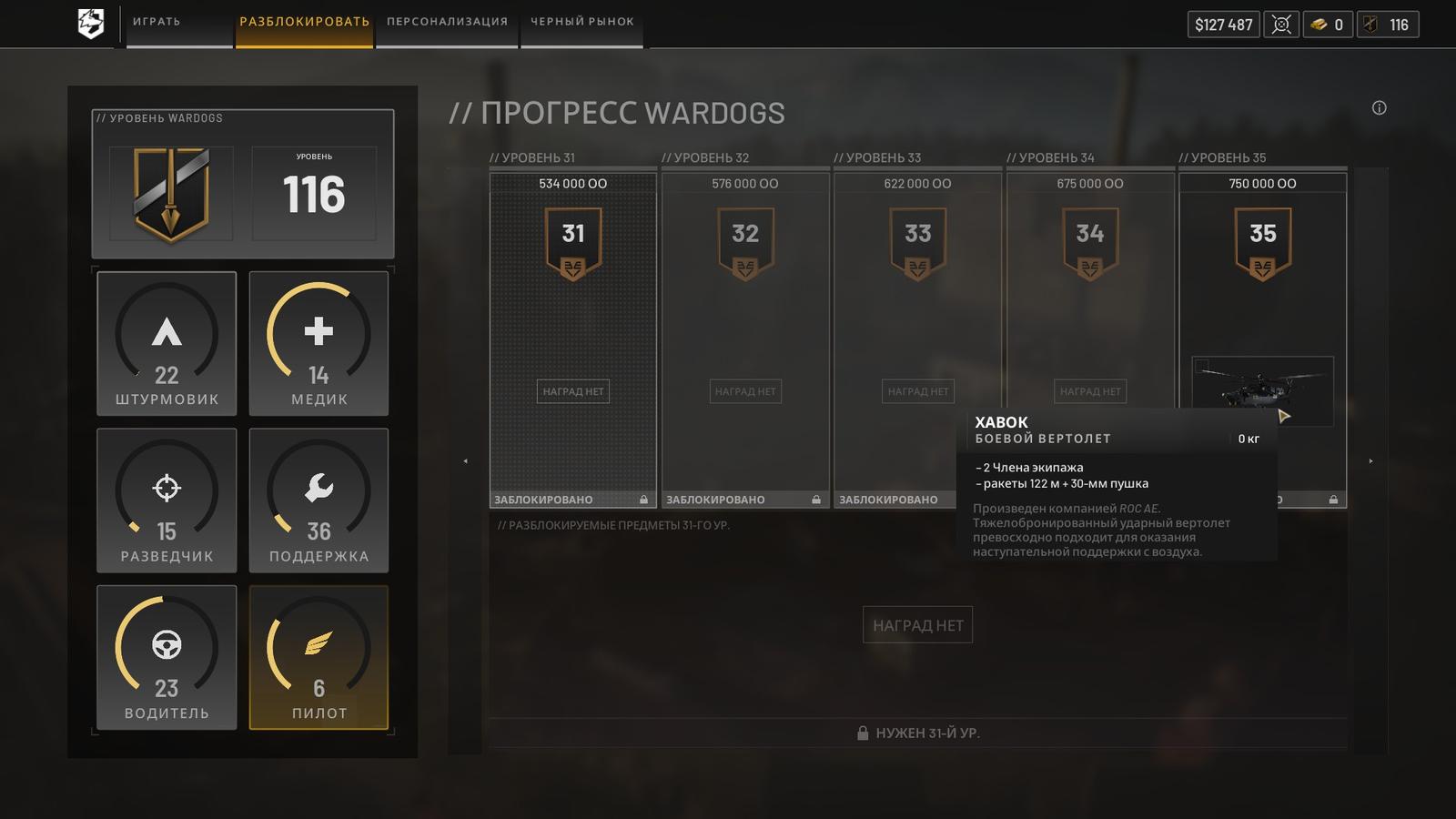
Perhaps these gaps will be filled by new items: the authors are already talking about content for the second season. For now, leveling up often doesn't offer the opportunity to try something new.
Leveling also changes the battles themselves. This was noticeable already in the first week of early access: as equipment was unlocked, infantry clashes increasingly gave way to artillery bombardments and combat vehicles.
On the first day, matches were dominated by fighters with starting weapons and no armor. Fortifications were limited to sandbags, and the wounded were revived without special medical devices. Civilian SUVs and passenger Little Birds served as the main transport.
On the second day, basic body armor and cargo 'Urals', convenient for delivering supplies, were more common. Assault troops got AK-74s and initial attachments. And builders unlocked sledgehammers and moved on to air defense and mortars.
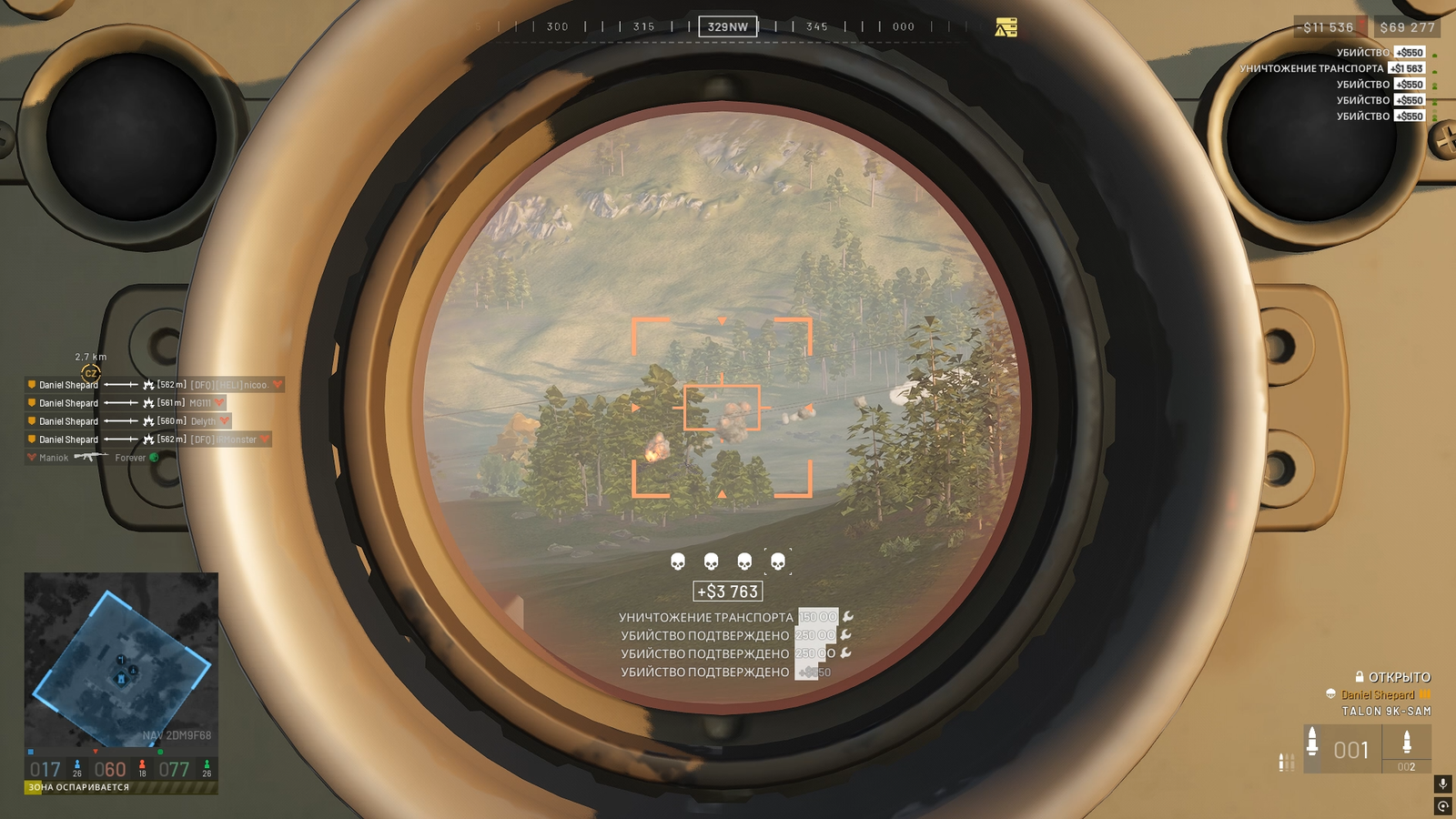
From the third day, mortar crews began to play a significant role. They shelled positions and tried to destroy enemy guns. Snipers were more active: at reconnaissance level 10, the Mosin rifle is unlocked, capable of killing an enemy with one headshot.
By the end of the week, armed Little Birds, self-propelled artillery, and Humvees with turrets appeared more frequently in battles. Reports and videos of heavy combat helicopters and tanks gameplay were also received. But these vehicles require pilot and driver levels 35 respectively.
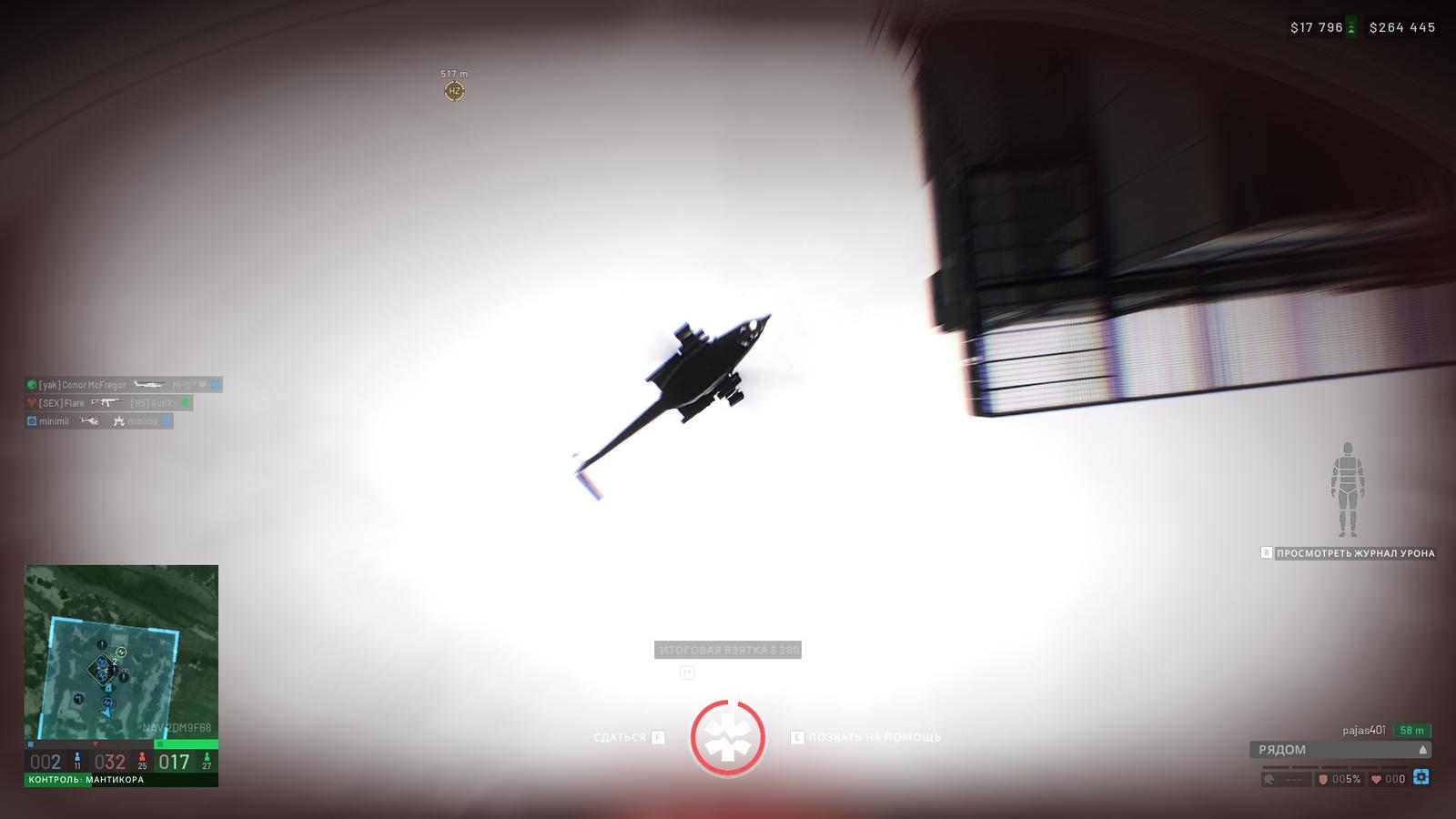
This pace of development creates a problem for those who join later. After just a week, a newcomer risks entering a match where opponents have artillery, armored vehicles, and attack aircraft, while their own choices are still limited to starting equipment. Infantry increasingly has to make their way to enemy bases and hunt vehicles. And without class three or four armor and armor-piercing rounds, direct confrontations with well-equipped opponents are too costly.
But the developers plan seasons with new content and a seasonal progress wipe. This approach to balance is familiar to Escape from Tarkov fans. For the first season, a period of about a month was mentioned. This stage should help evaluate the economy, identify imbalances in tactics, and check how teams are formed. After the reset, players will start again with basic equipment.
The color of the mood is blue
The difference in leveling is exacerbated by team composition. Instead of automatic matchmaking, WARDOGS offers lists of official and user-created servers. This allows choosing a place to play, although in practice, searching often comes down to trying to join a match that is just starting.
The server list itself does not prevent balancing the sides. The problem is that the game does not equalize them taking into account experience and available weaponry. The green team may have tank and artillery owners, the red team may have experienced pilots, and the blue team may consist mainly of builders and drivers. Even with the same numbers, the capabilities of such sides differ significantly.
In the matches played, the blue team fared the worst. The green and red teams started from the west and east sides, the blue team from the south. Its forward positions were regularly under attack from two directions. Raids happened right at the start, and instead of advancing to the hot zone, they had to defend their own strongpoint.
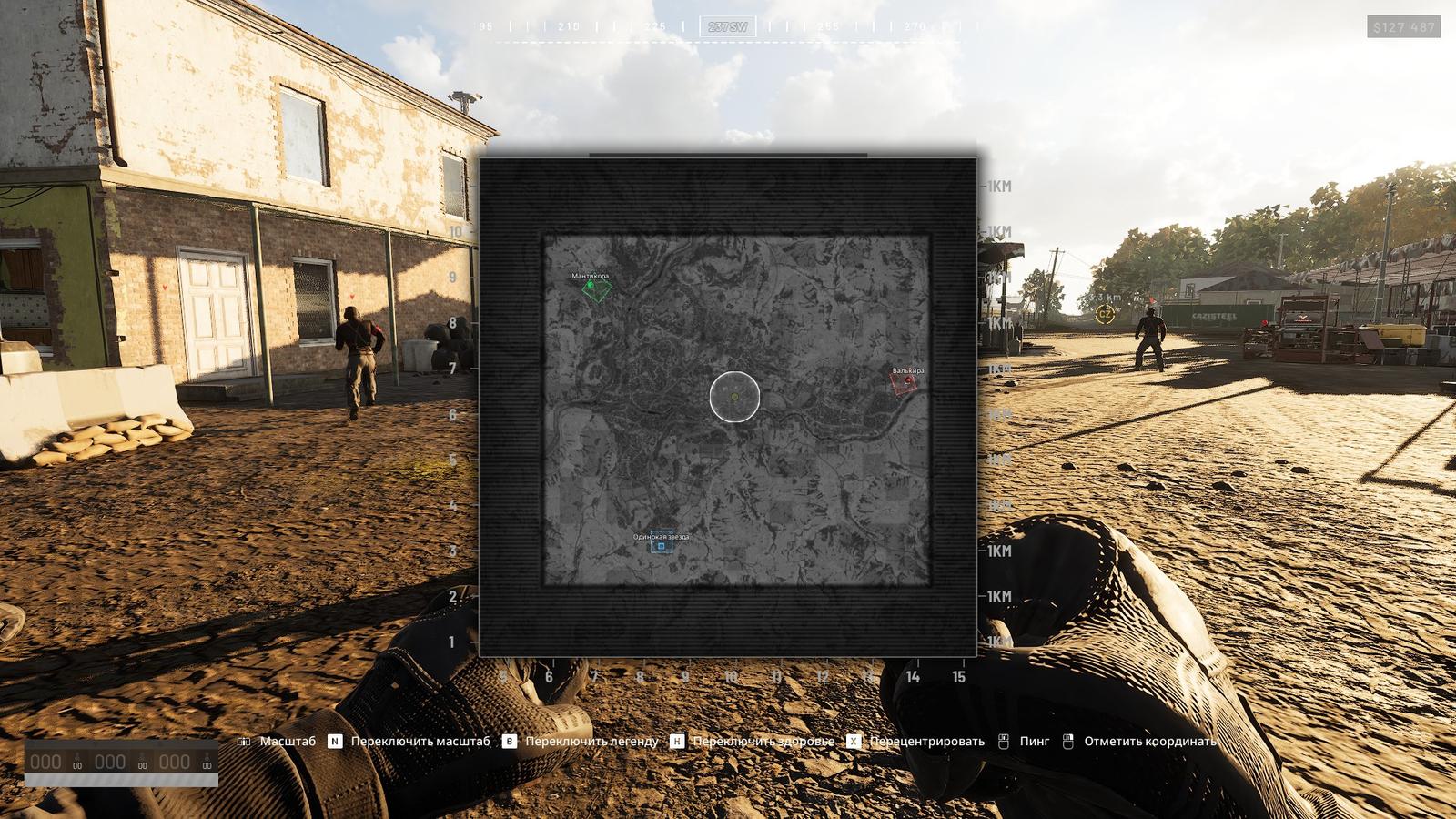
It becomes even harder when both enemy sides focus on one team. This is not necessarily an attempt to stop the leader. The side in second place, or the already lagging blue group, can also come under attack.
The economy encourages such a choice. In a losing match, it is more profitable to attack an accessible target and recover expenses than to lose equipment in a fight with a stronger opponent. For this, the two teams don't even have to agree — it's enough to independently choose the same vulnerable side.
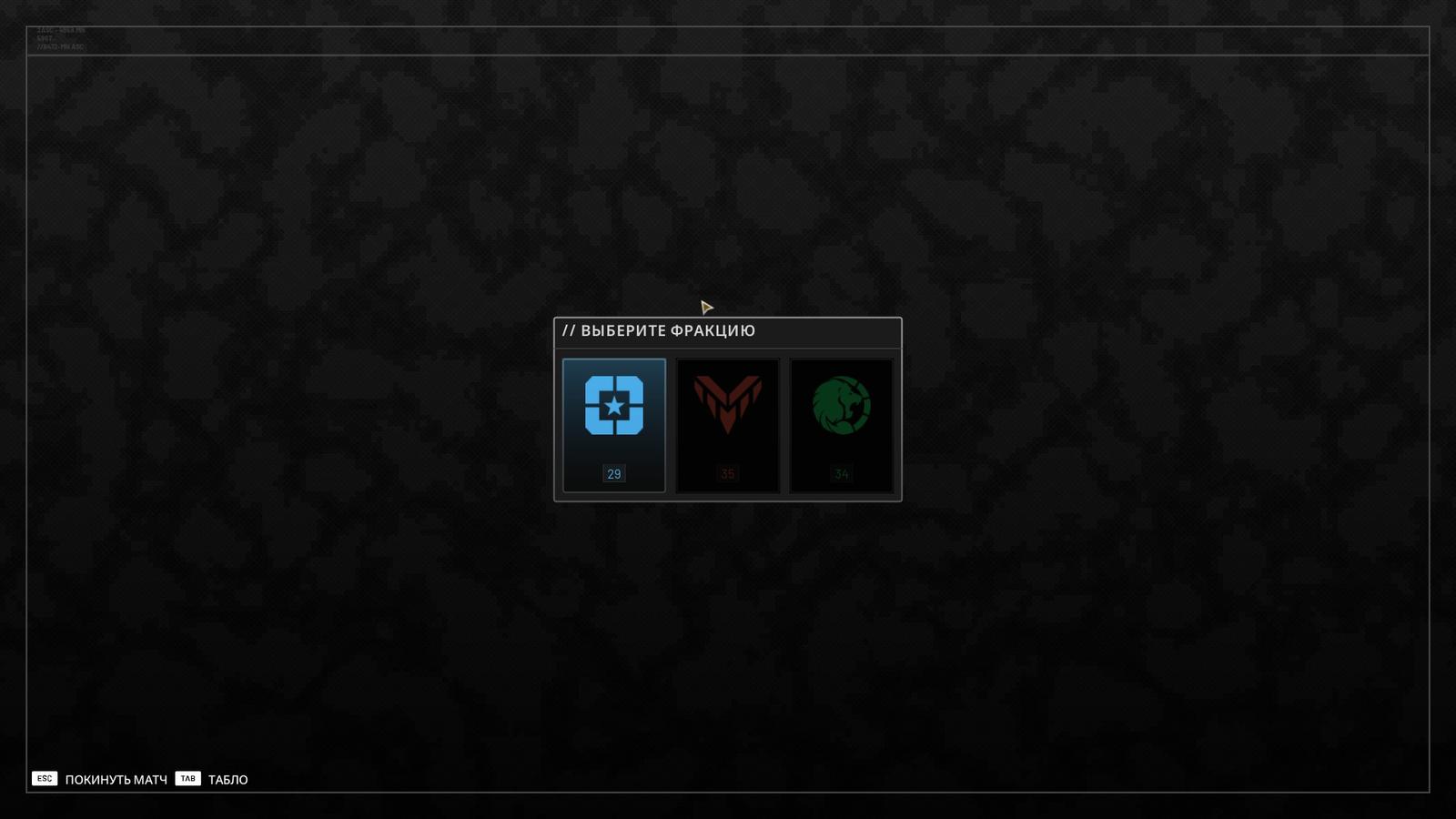
Fewer people are willing to choose blue under such conditions. Even when the server is filling up, slots for red and green are often unavailable, while the third side continues to wait for people. Trying to take an empty slot sometimes ends with returning to the team selection screen.
The permissible difference in numbers also raises questions. On a server of 100 people, there was a distribution where two sides had 35 fighters each. The third had no more than 30. For a mode where points depend on the number of people in the zone, this is a direct advantage. Automatic redistribution to correct such an imbalance during the match was not observed.
A coordinated group helps reduce dependence on random composition. A dozen clan members can simultaneously hold the hot zone, attack an enemy base, and supply themselves. It is much harder for two or three friends to accomplish all these tasks. If the goal is to regularly fight for victory, finding a permanent team becomes part of preparing for the game.
How to distort game design
Even good coordination does not always lead to dynamic battles for the hot zone. By design, its movement should force teams to change positions. In practice, the zone can be held near one's own strongpoint for a long time.
Stationary drilling rigs are provided on the map for sector control. Their consoles contain parts of a password, which are unlocked after hacking. If there are several rigs in the control zone, you will have to reach each one for the full code.
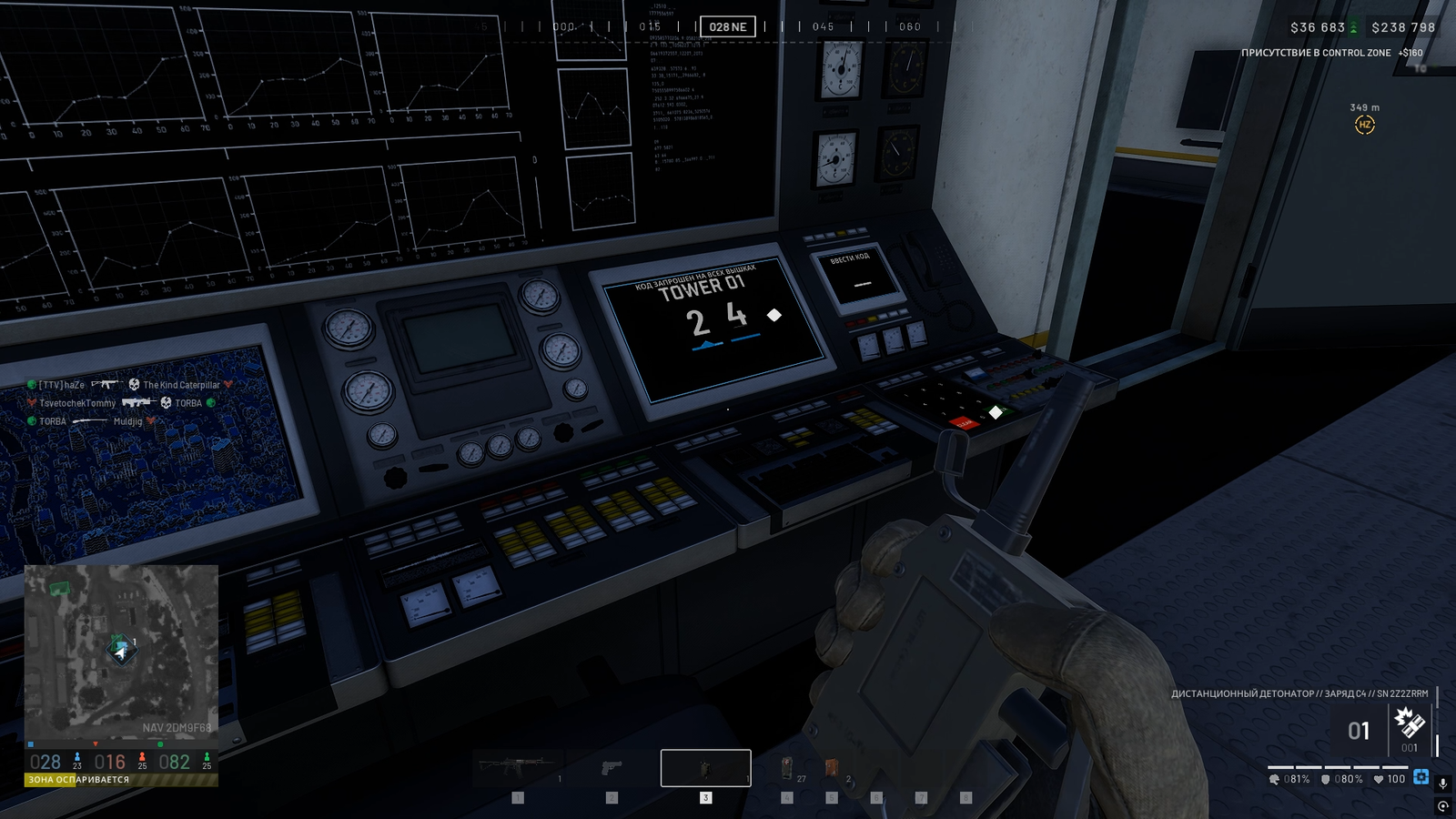
The entered code attracts the hot zone to the selected rig for several minutes. This allows directing it to your team's fortified position. However, matches where it was possible to collect the password and use this system were rare.
Much more often, teams use their own drilling rigs. They are erected directly at the strongpoint, and they don't need a password: only fuel is required for operation. Its supply determines how long the rig can hold the zone. Unlike stationary rigs, such a structure can be destroyed by artillery, aviation, or saboteurs.
The main advantage of the structure is freedom of placement. It allows attracting the hot zone to the edge of the control sector closest to the main base. Allies find it easier to reach such a position, and enemy mortars from distant strongpoints may not be able to reach it.
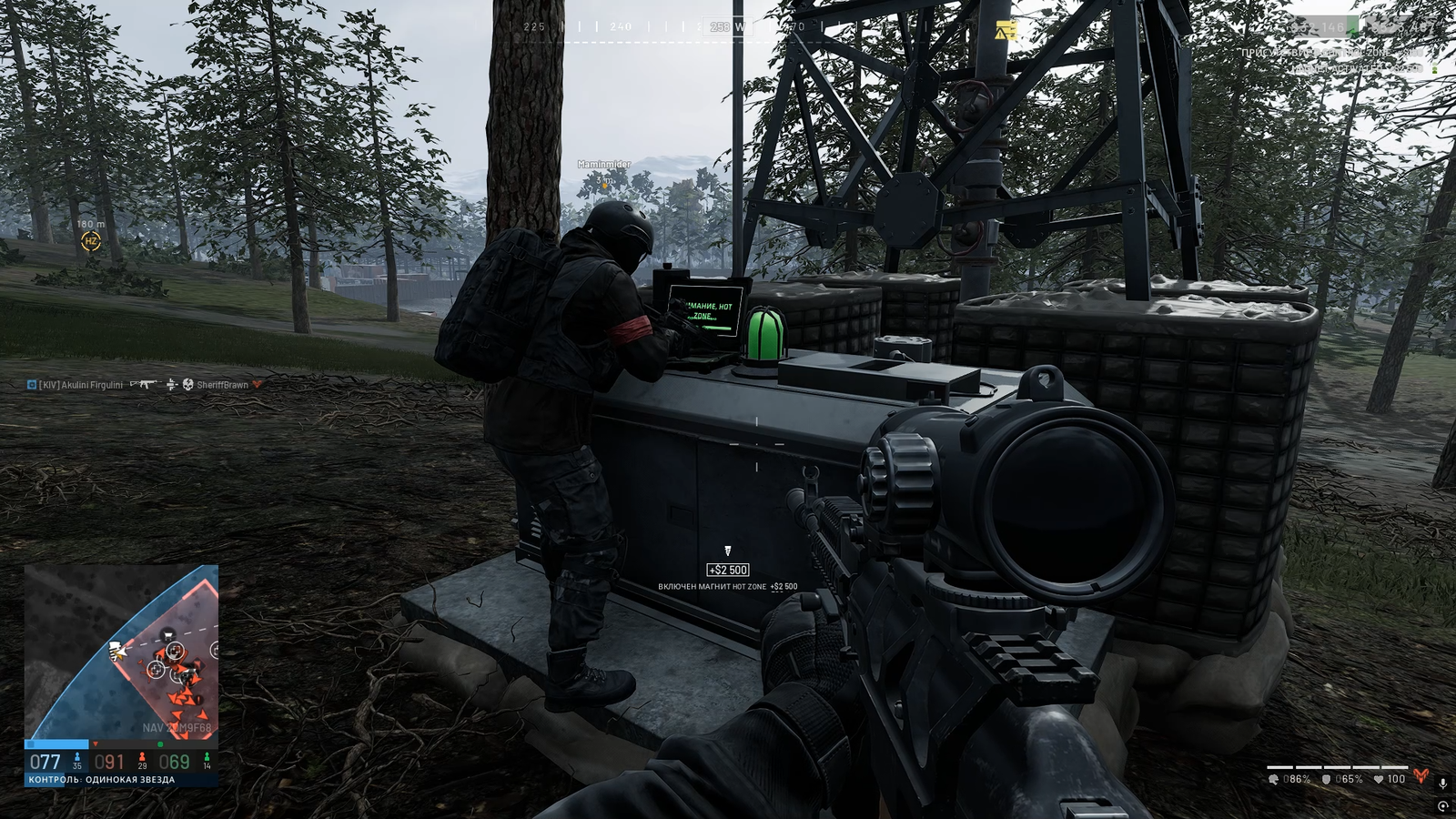
By placing several rigs at the base, the team activates them in turn and holds the hot zone in their part of the battlefield. Over time, this scheme became one of the main tactics for fighting for victory points. Fighters entrench themselves around their own base while the mechanisms ensure a convenient zone position.
Long-range artillery allows attacking such positions from a distance inaccessible to mortars. To stop the shelling, a separate group must be sent to the rear for self-propelled guns. Aviation and saboteurs can also destroy drilling rigs, but this requires overcoming the strongpoint's defenses.
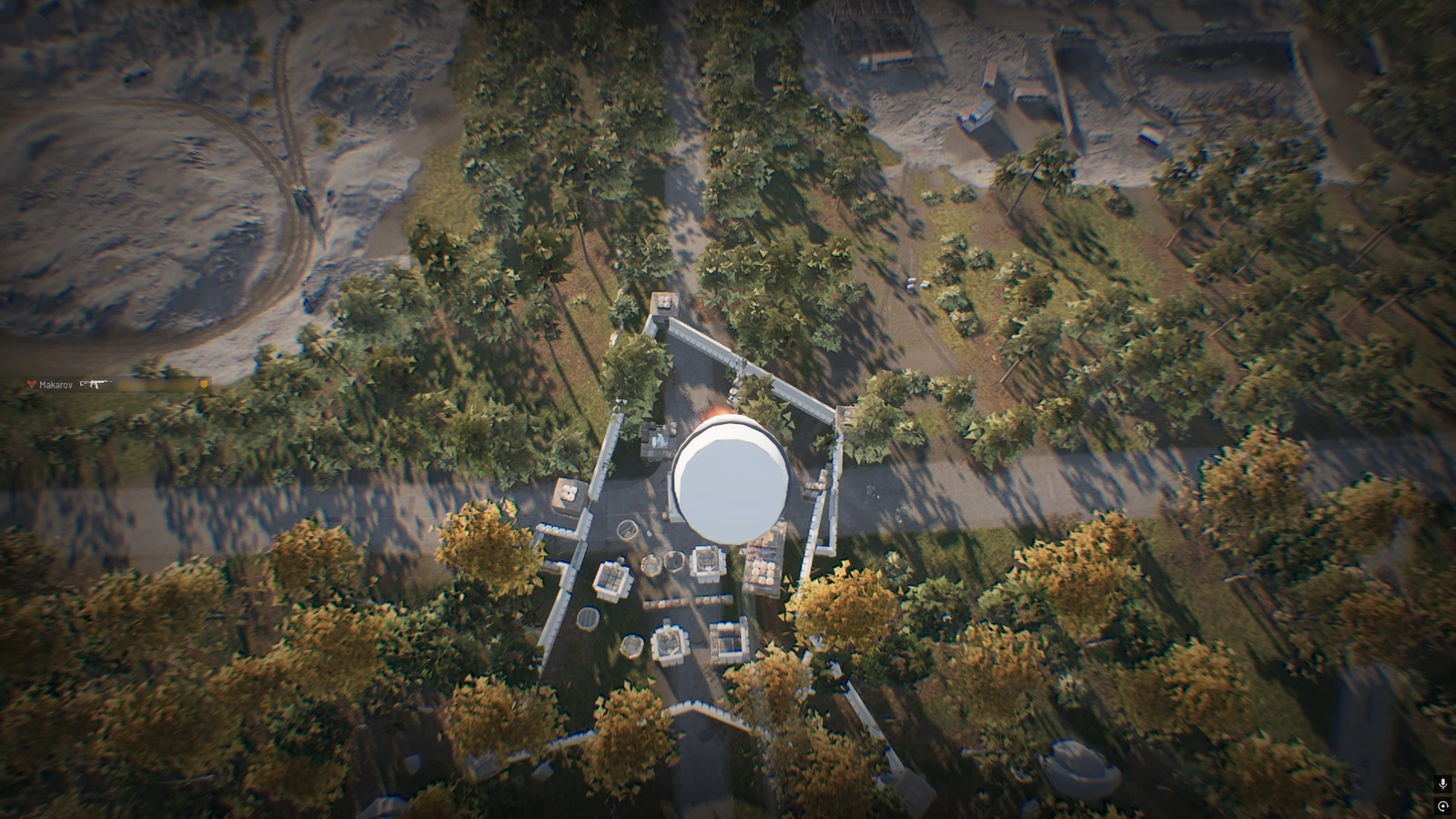
As a result, the struggle increasingly comes down to building, defending, and shelling bases. Dynamic infantry clashes, for which one wants to follow the hot zone, give way to holding pre-prepared positions.
Verdict
A hundred hours in early access significantly spoiled the first impression of WARDOGS. Leveling is prolonged, and profitable ways to earn money increasingly lead away from battles to monotonous work in the rear. Too much time has to be spent preparing for the clashes for which one wants to launch the game.
Mass infantry clashes in the hot zone are still engaging. Especially when squads act together and both sides have means to fight. However, if the enemy has advanced equipment, and allies are mainly engaged in construction and observation, it is difficult for a small group to influence the course of the match.
WARDOGS is more accessible than ARMA and Squad, but its dependence on an organized team is no less. Alone or with a couple of friends, you can find an interesting activity here. But for regular play to win, a permanent team capable of distributing combat and rear tasks is much better suited.
In early access, developers first need to revise team balance, the location of their bases, and the rules for holding the hot zone with drilling rigs. Until then, the problems associated with this prevent long-term play from being as enjoyable as the first matches were.
Never miss our newsAdd this site to your preferred sources to see us more oftenAdd on Google