About My Reincarnation as the Main Character of Resident Evil - A Review of Zach Cregger's "Resident Evil"
Zach Cregger's new "Resident Evil" operates on the principle of a slippery slide: the director gives the viewer exactly six minutes to get comfortable in their seat, and then sends them on a frantic descent through Raccoon City's most disgusting corners. The program includes repulsive mutants, a constant shortage of ammunition, choice profanity, and the protagonist's desperate attempts not to die on the job. For double pay, by the way.
Hazard Pay
Brian (Austin Abrams) works as a regular courier delivering medical supplies. After completing another order, he is about to go home and promises his girlfriend to be back in about twenty minutes. However, an opportunity for extra earnings arises: he needs to deliver a container outside the delivery zone — to the central hospital of snowy Raccoon City. For double pay, of course.
The offer is incredibly tempting, especially considering that an unpleasant conversation awaits Brian at home. His girlfriend is pregnant, and he is terrified of the prospect of becoming a father. The guy reacted so awkwardly to the news of the future child that he now prefers to avoid his beloved's sight. So, escaping for a couple of hours is an excellent plan. Even if a blizzard is raging outside, and his old Subaru has neither suitable tires nor all-wheel drive. In short, what could go wrong?
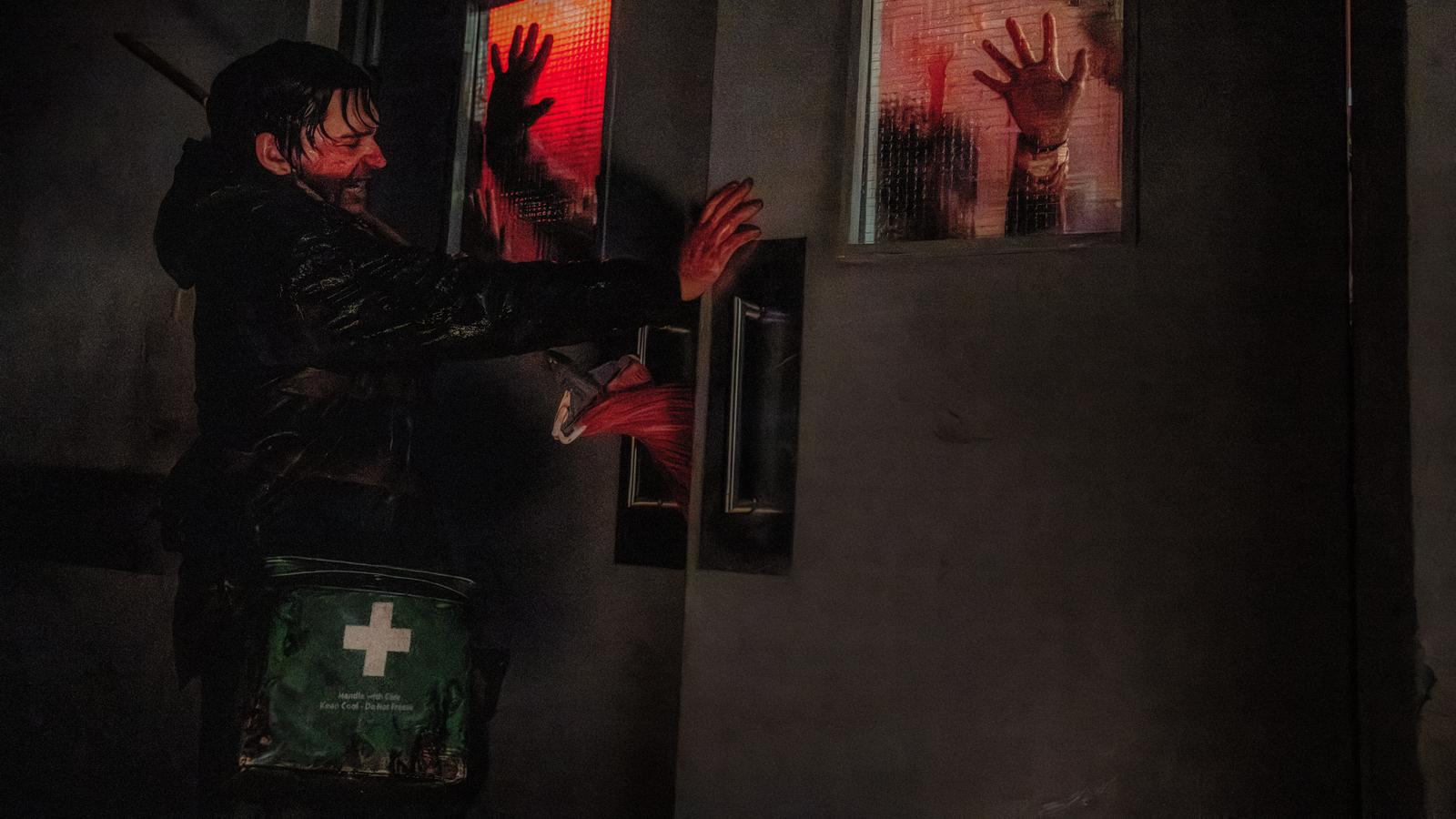
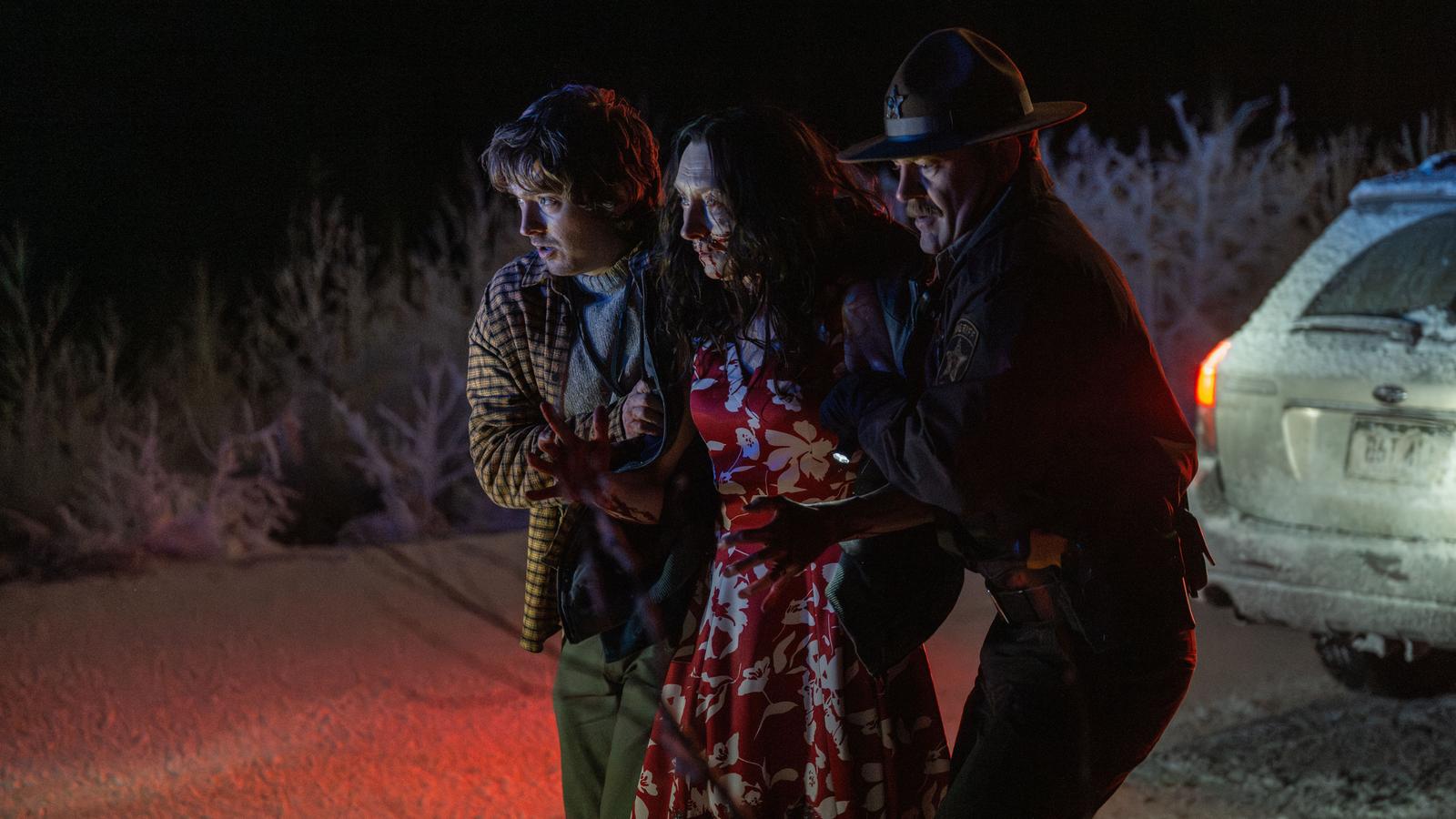
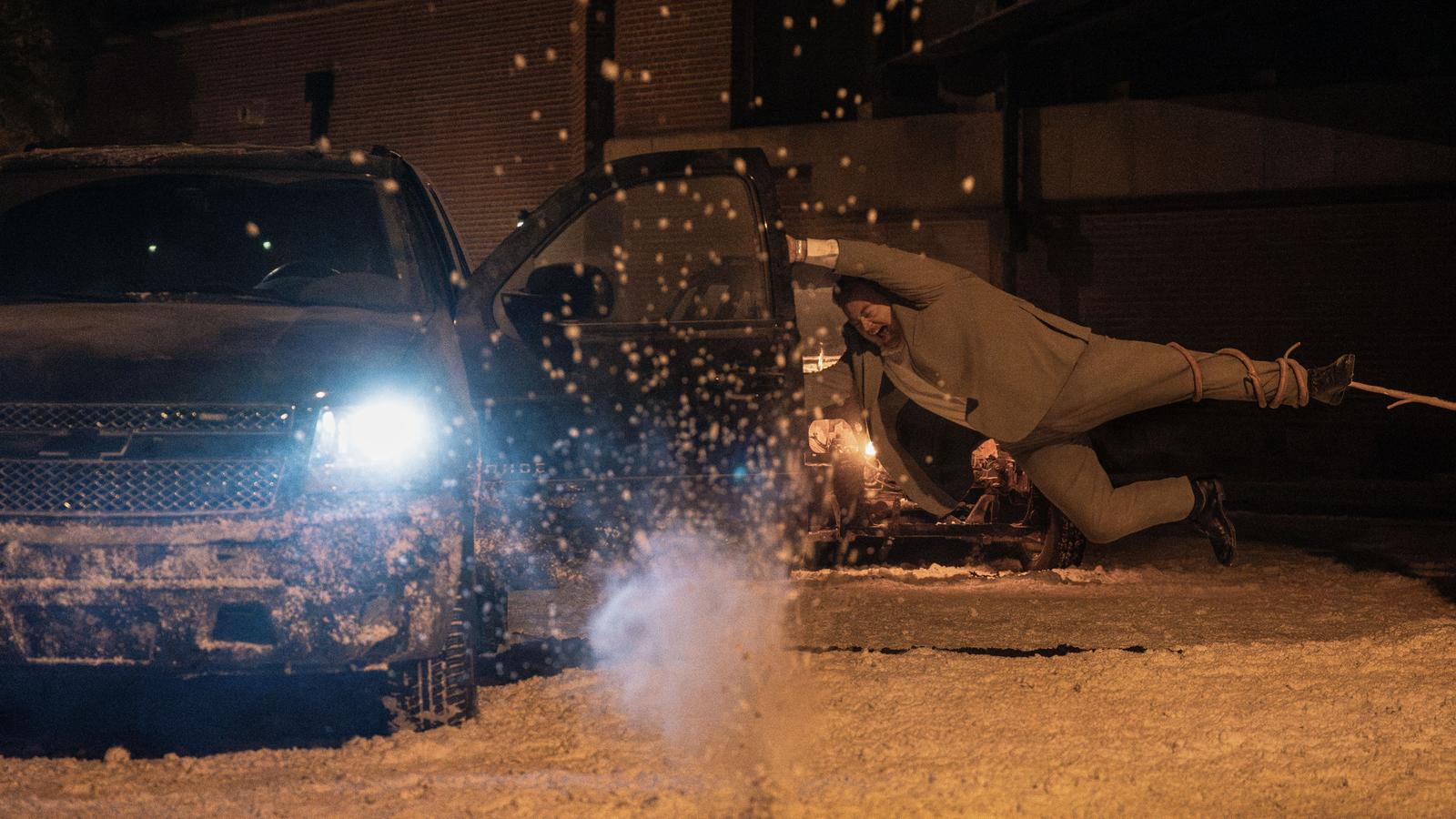
Naturally, absolutely everything. Cregger doesn't waste time on long introductions and lengthy explanations: Brian barely starts his new delivery when a full-blown nightmare begins. On the way to Raccoon City, he hits a woman who ran right into his path. An attempt to help the injured woman brings him into contact with a passing police officer, but the situation quickly spirals out of control. The hit woman turns out to be infected and kills the cop during transport. Brian is forced to circle the police car, escaping from the crazed woman and simultaneously trying to figure out how to take the pistol off safety to shoot a person for the first time in his life.
A stray shot disables the car. There's no communication, and Brian is left alone in the middle of a snowy forest where something very bad is clearly happening. What exactly — he has no idea, and the viewer will have to figure out what's going on with him. For now, the only reasonable solution is to try to reach the city, find help, and deliver the cargo entrusted to him. Fortunately, all three goals are essentially in one place. But Brian has no idea yet how terrible the road to the hospital will be.
Isekai without Saves
As part of my job, I try to keep up with all the news in the gaming industry, especially when it comes to adaptations. Therefore, long before the premiere, I perfectly understood that expecting a frame-by-frame retelling of any part of Resident Evil was pointless. Cregger initially built an independent story in an alternative timeline — thirty years after the original Raccoon City disaster and without any characters familiar to fans. I had no illusions and approached the film without inflated expectations, but with genuine professional interest: would the concept work, and could the director realize everything he promised in interviews? And you know what? He certainly didn't disappoint my expectations.
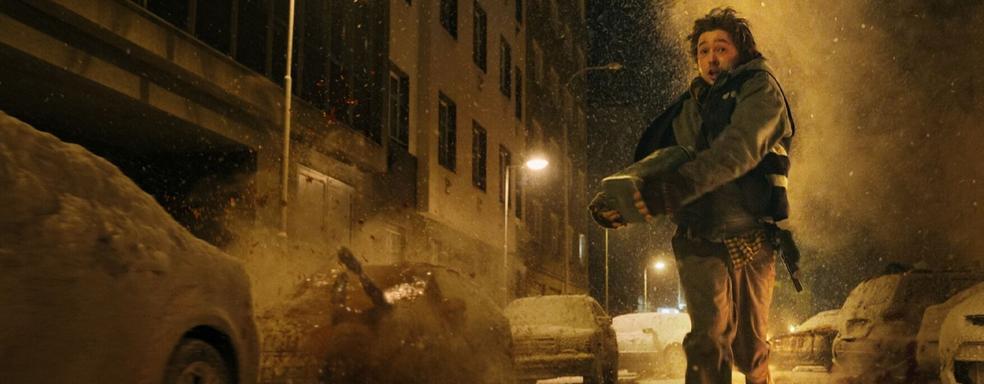
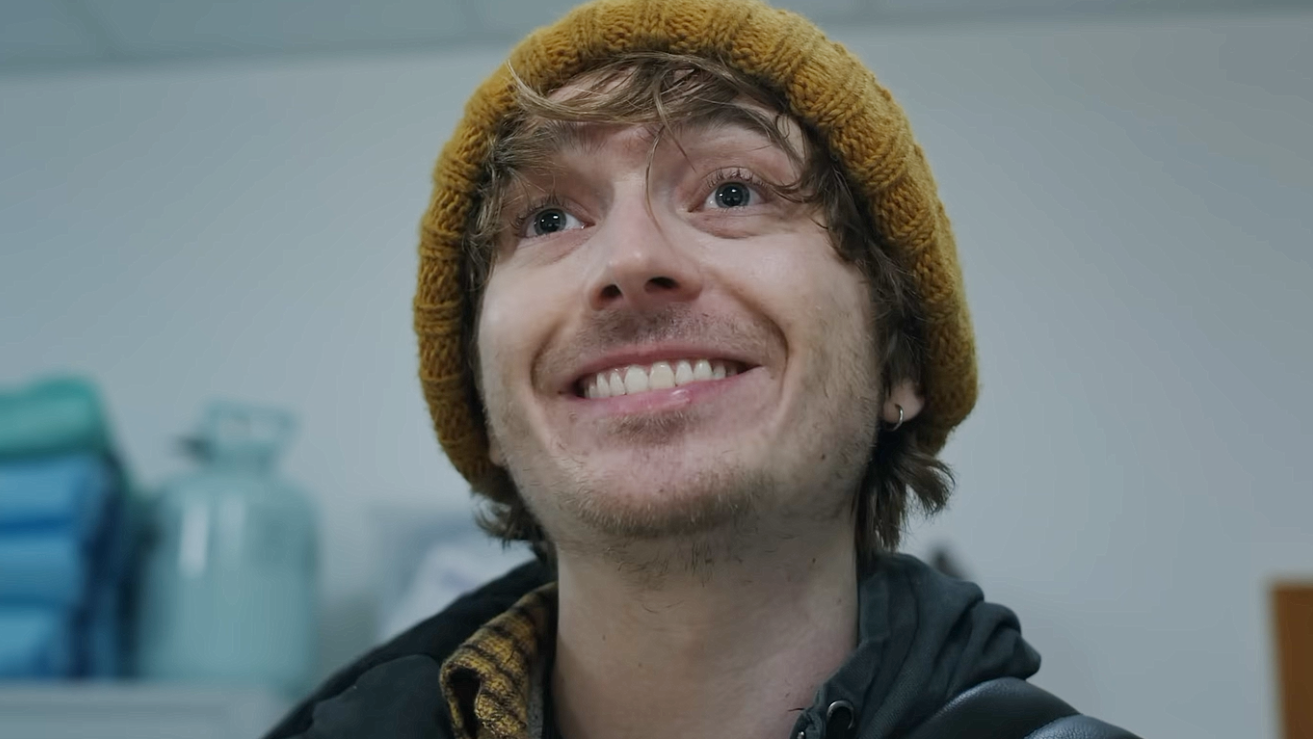
Let's start with the protagonist. Austin Abrams looks so organic in the role of Brian that it's hard to imagine anyone else in his place. His character is not a superhero or a seasoned special forces operative, but a charming, good-natured fool who behaves like an ordinary person who has played too many video games and suddenly finds himself in the middle of a zombie apocalypse. He shoots haphazardly, constantly makes mistakes, and only miraculously avoids death, while demonstrating amazing ingenuity in combining the two most famous English swear words. Watching him, I kept thinking: “This is me, if I were reincarnated as the main character of Resident Evil!”
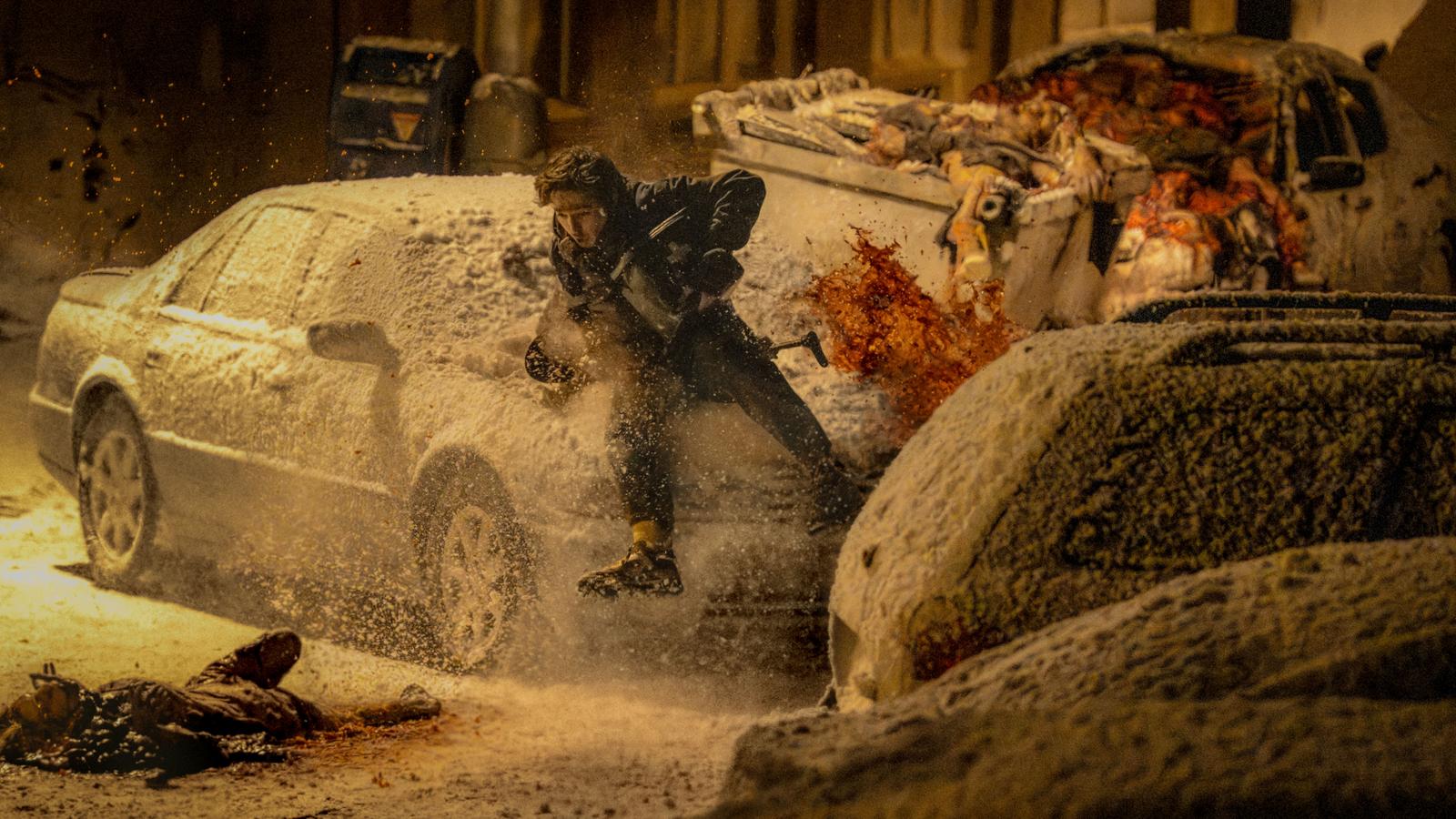
Cregger, who co-wrote the script with Shay Hatten, builds Brian's journey according to all the laws of game dynamics, compressing it into a tight ninety-minute spring. The narrative throws the hero from one familiar setting to another: a snowy forest, an abandoned barn, a dilapidated house, a stinking sewer, city streets, and finally, the hospital itself. Along the way, Brian finds new weapons, frantically counts every bullet, and encounters typical game obstacles like ubiquitous padlocks. Some can be dealt with, but the diamond-shaped lock doesn't even yield to gunshots — because it requires the appropriate key!
A couple of times during the film, Brian openly admits that all his survival experience comes solely from video games. This gamer logic reaches its peak in a scene where a horde of infected tries to break through to the hero from one side, and a huge multi-armed boss approaches from the other. With the help of an ordinary mop and the last remaining bullet, Brian brings the crowd down directly onto the monster, after which he loudly praises video games and is insanely happy that the gamer trick worked in reality.
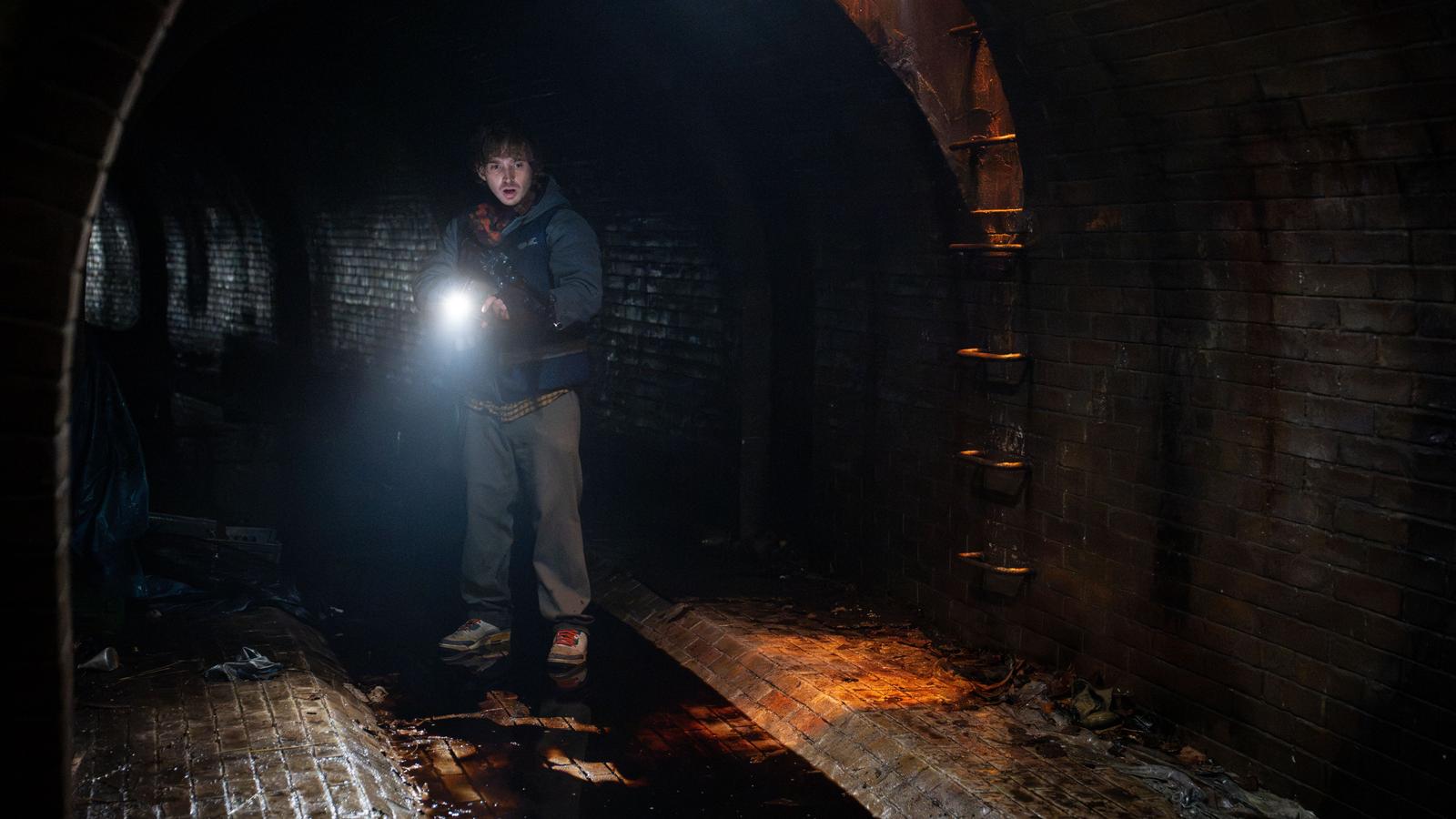
Cregger's love for Resident Evil is also evident in numerous small details and Easter eggs — from the aforementioned lock to typewriters and ammo boxes. But special mention should be made of the cinematography by Ridley Scott's long-time collaborator, Dariusz Wolski, who actively engages in playing with the audience's perception. He masterfully uses darkness, cramped corners, and confined spaces, squeezing the maximum out of every meter of the location.
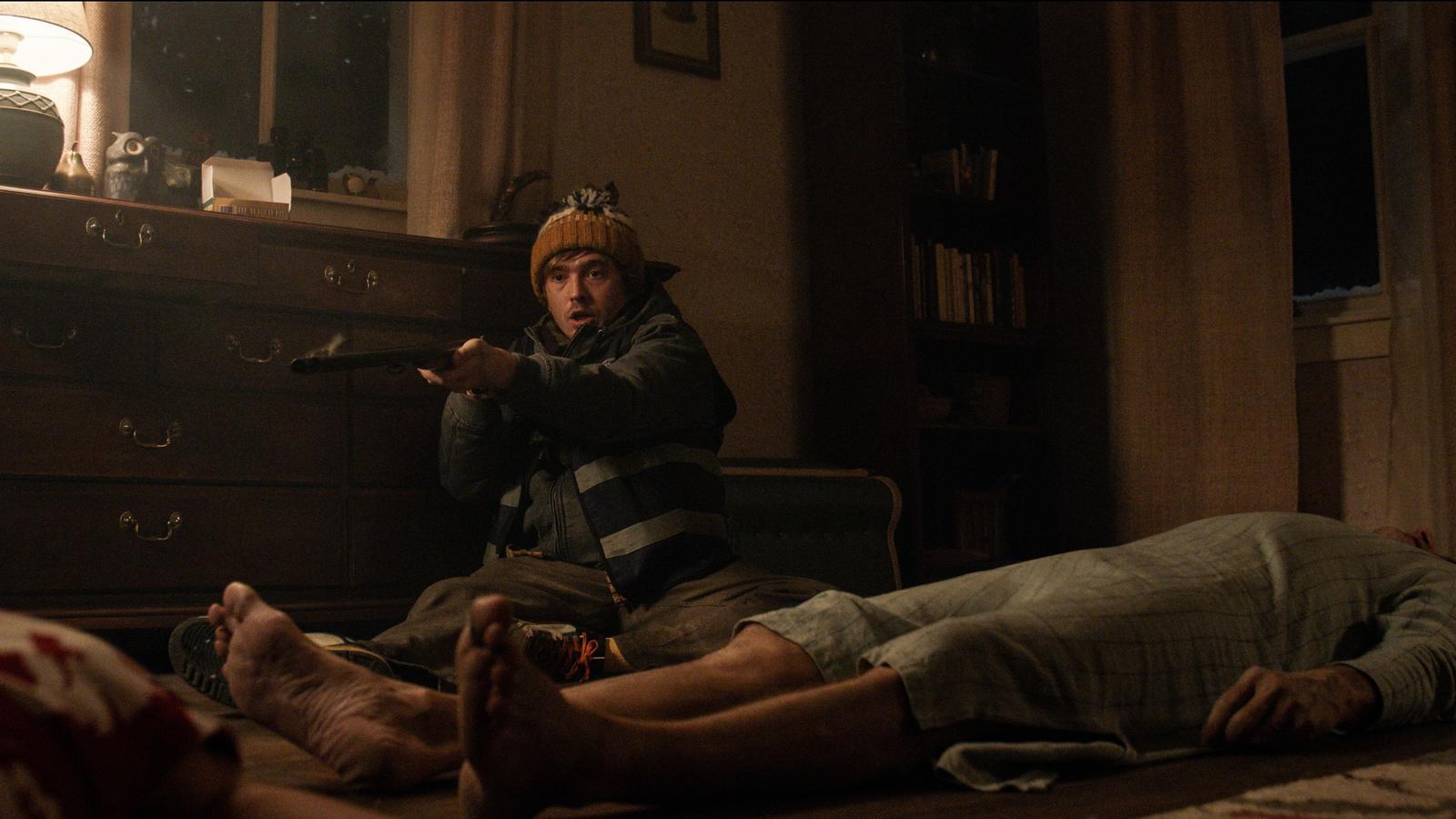
And in the most intense moments, the camera switches to a first-person view, adding dynamism to what's happening and drawing the viewer into the frame. One moment we are with Brian, pressed against the wall, making our way along a narrow cliff with all our might, the next we are face to face with a repulsive creature, into which the barrel of a double-barreled shotgun is already pointed.
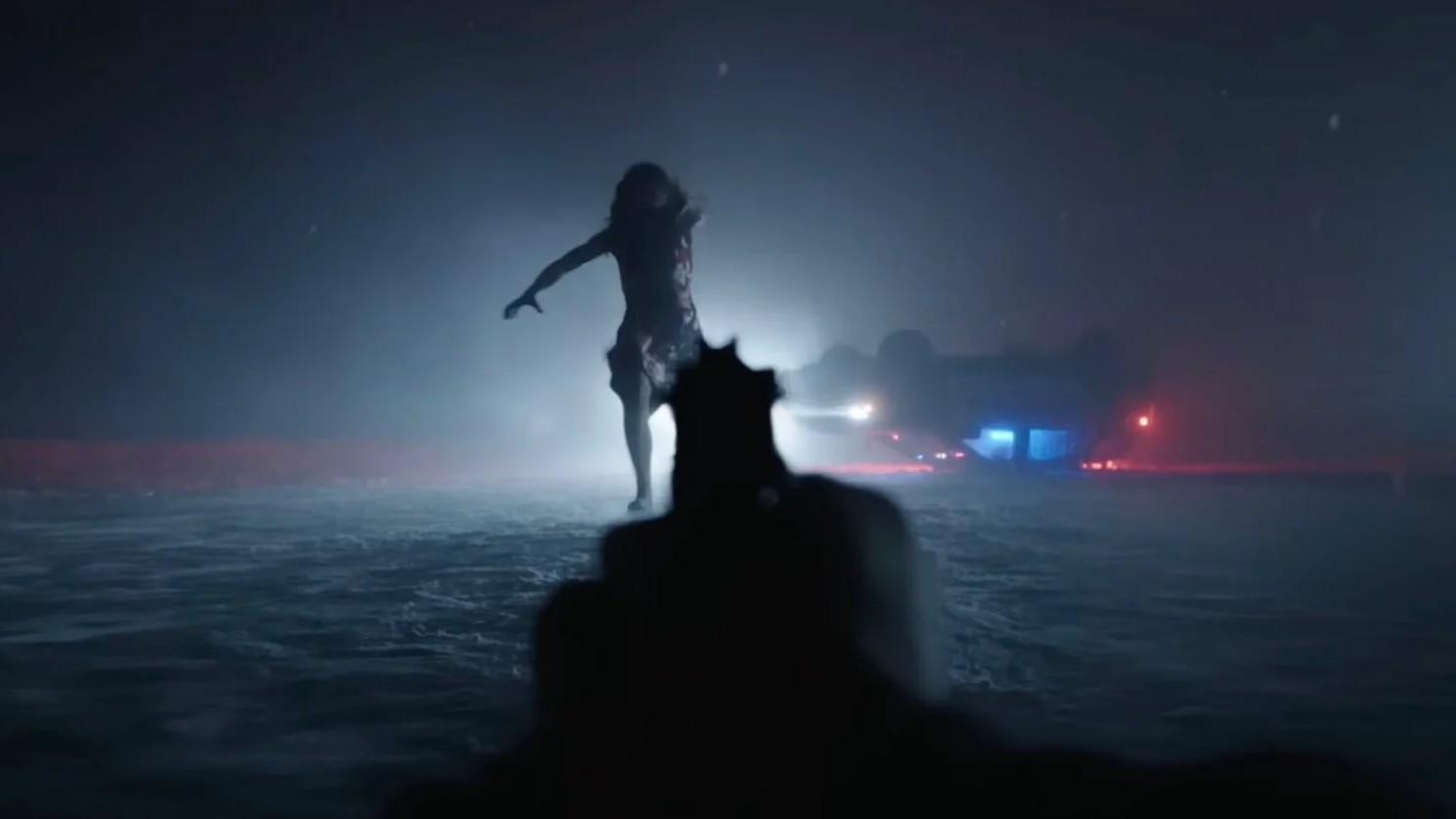
The creatures here are truly repulsive — no classic slow-moving walking corpses. Instead, Cregger offers sophisticated, grotesque body horror, even closer in spirit to John Carpenter's “The Thing” and David Cronenberg's “The Fly.” Monsters mutate right before your eyes: the first serious threat is a multi-armed creature, fused from two bodies after Brian blew off an infected girl's head with a shotgun.
In the sewers, the hero is ambushed by a fat giant à la Baron Harkonnen from “Dune,” from whose belly a swarm of rats bursts forth. And the multi-armed boss himself, with each subsequent encounter, attaches new bodies to himself, evolving exactly as bosses from the Resident Evil series should.
Deadly Funny
However, despite all the recognizable game structure, abundance of Easter eggs, and familiar place names, I didn't feel like I was watching another Resident Evil adaptation. First and foremost, the new “Resident Evil” is Zach Cregger's film, where he was given the keys to Raccoon City and allowed to do whatever he pleased. And since there are no ex-comedians, Cregger manages to find reasons for laughter even in the midst of the most disgusting nightmare.
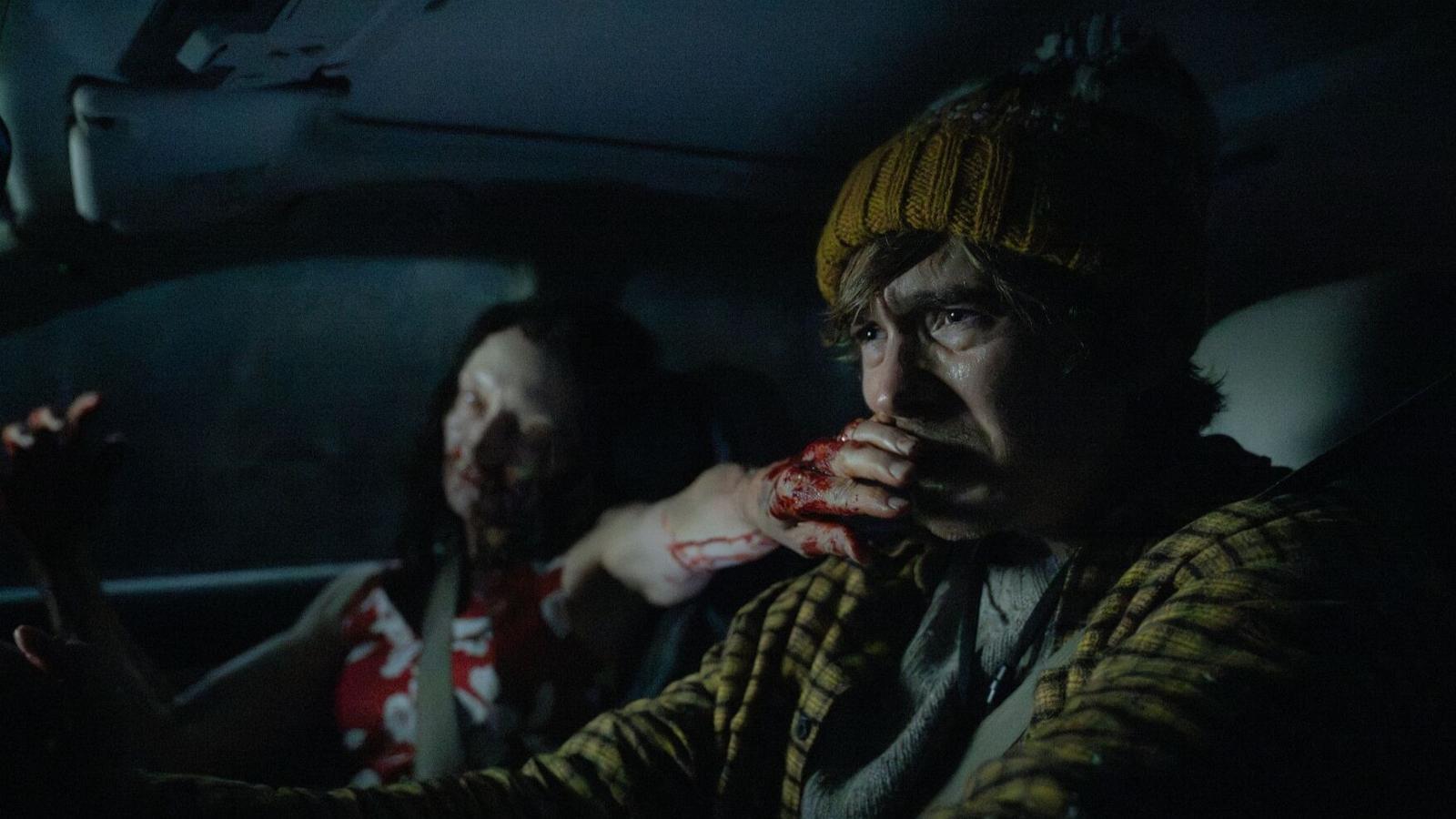
The narrative sometimes resembles a true comedy of errors. Cregger constantly puts Brian in circumstances that seem like a nightmare to the hero himself, but look at least amusing from the outside. Take, for example, the moment when the guy puts the hit woman in the car, and she suddenly places a bloody hand on his face.
At this moment, the viewer, familiar with the basic rules of zombie apocalypse survival, wants to scream: “No! Get that off him immediately! The blood will get right into his mouth, and he'll get infected!” However, Brian waves her off, as if an inebriated passenger is just bothering him. Or all his attempts to deal with locks. Or the episode where he frantically throws a ladder at an attacking dog, and a second later realizes he actually needed that ladder.
All of this relies primarily on Austin Abrams. In essence, “Resident Evil” is his solo benefit performance. On Brian's path, of course, there are also characters played by Kali Reis, Paul Walter Hauser, and Zach Cherry, but their appearances are so fleeting, and the chances of getting caught in the local meat grinder are so high, that discussing the other actors is simply pointless. So if you were planning to watch the film solely for one of this trio, it's best to temper your expectations immediately.
Abrams, however, brilliantly copes with a task that only seems simple at first glance: his Brian is funny, although he never tries to joke for a second. He is genuinely scared, confused, and desperately wants to survive, and the endless stream of profanity becomes a kind of defense mechanism for him. Therefore, even the hero's most absurd antics do not turn what is happening into an outright farce. Cregger allows the viewer to laugh at Brian's latest foolishness, only to make them shrink back into their seat a few seconds later.
This balance is maintained until the final credits. Even the climax is transformed by Cregger into a cruel and simultaneously hilarious chain of absurd coincidences, making the viewer alternately horrified by what is happening and laughing nervously.
At the same time, the film manages to answer almost all questions: we learn how the leak happened (a mocking joke about tired genre clichés) and how the virus works, transforming the organism into a super-developed version of itself (a kind of nod to “The Substance” with Margaret Qualley). Along the way, Brian also deals with his own fears — of responsibility, change, and impending fatherhood. It would seem that all that remains is to find out how his misadventures will end. But it is here that Cregger unexpectedly slams on the brakes.
Either the director suggests that the viewer imagine Brian's further fate, or he saved the denouement for a potential sequel. In any case, such an abrupt ending leaves a slight feeling of dissatisfaction. It's an ending without choice — as if in an expensive role-playing game like Mass Effect or The Witcher, the final credits were shown right on the screen for choosing a key decision, without ever allowing you to press the button.
Verdict
The new “Resident Evil” can hardly be called a masterpiece for all time. After the more layered “Barbarian,” belonging to the new wave of intellectual horror, the film is more like Cregger's creative outlet, where he allowed himself to truly relax and have fun in his native genre. It is undoubtedly the most visually spectacular and at the same time the most straightforward work of the director — even despite the open ending.
Did I feel like I watched an adaptation of Resident Evil specifically? No — if you don't count the game structure, place names, and a scattering of Easter eggs. However, as a standalone bloody horror attraction for an hour and a half, the film works one hundred percent. It holds you in a death grip thanks to its impeccable rhythm, Dariusz Wolski's stunning cinematography, Austin Abrams' organic performance, and a wild mix of horror and black humor. One can only hope for a sequel and eagerly await Cregger's new project — the sci-fi thriller “Flood” starring Jennifer Lawrence.
Never miss our newsAdd this site to your preferred sources to see us more oftenAdd on Google