Castlevania: Belmont's Curse Review - You Can't Teach an Old Vampire New Tricks
Translated with AI from the Russian original.
Castlevania heroes have been everywhere in the last decade or so - from Netflix animated series to Vampire Survivors, thoroughly imbued with the aesthetics and assets of classic games in the series. In 2023, the franchise even ventured into Dead Cells with the Return to Castlevania DLC from Evil Empire studio. Who would have thought then that three years later, these same developers would present a full-fledged installment of the legendary series? We played Belmont's Curse to its true ending and explain why Dracula is not yet ready to reclaim his throne.
Family Curse
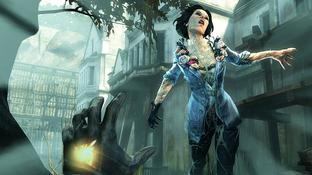
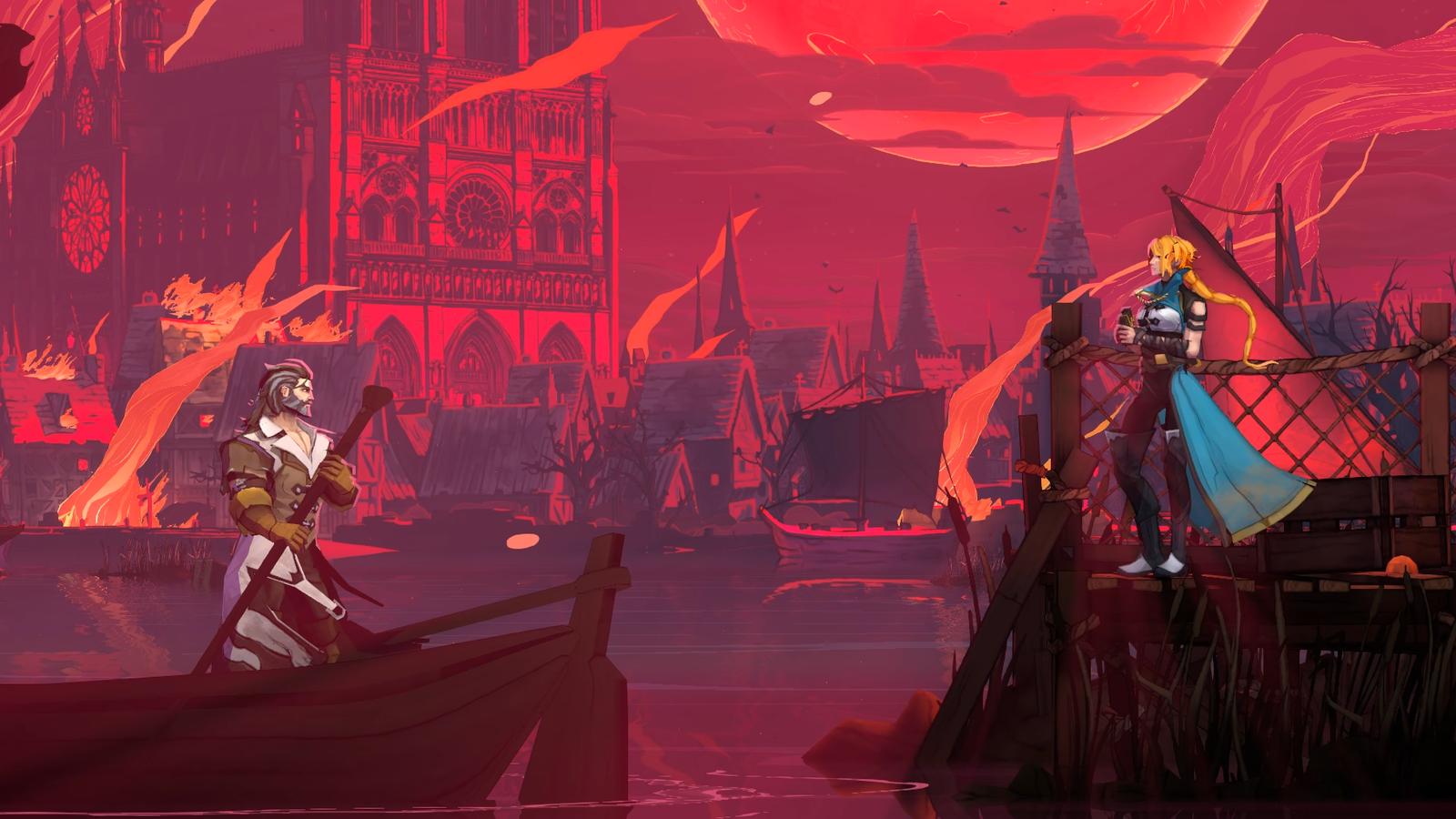
“In the name of the King of France, I ask you to come as soon as possible, for a great evil has engulfed Paris,” — with such a message, sounding especially ironic today, Castlevania: Belmont’s Curse begins. It is 1499. The moon has turned blood-red, the French capital has become hell, the city guard has vanished without a trace, and the few surviving residents desperately need help.
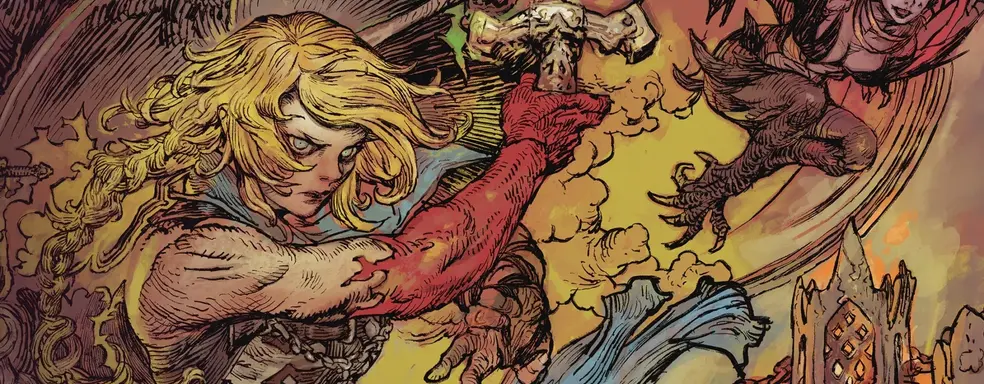
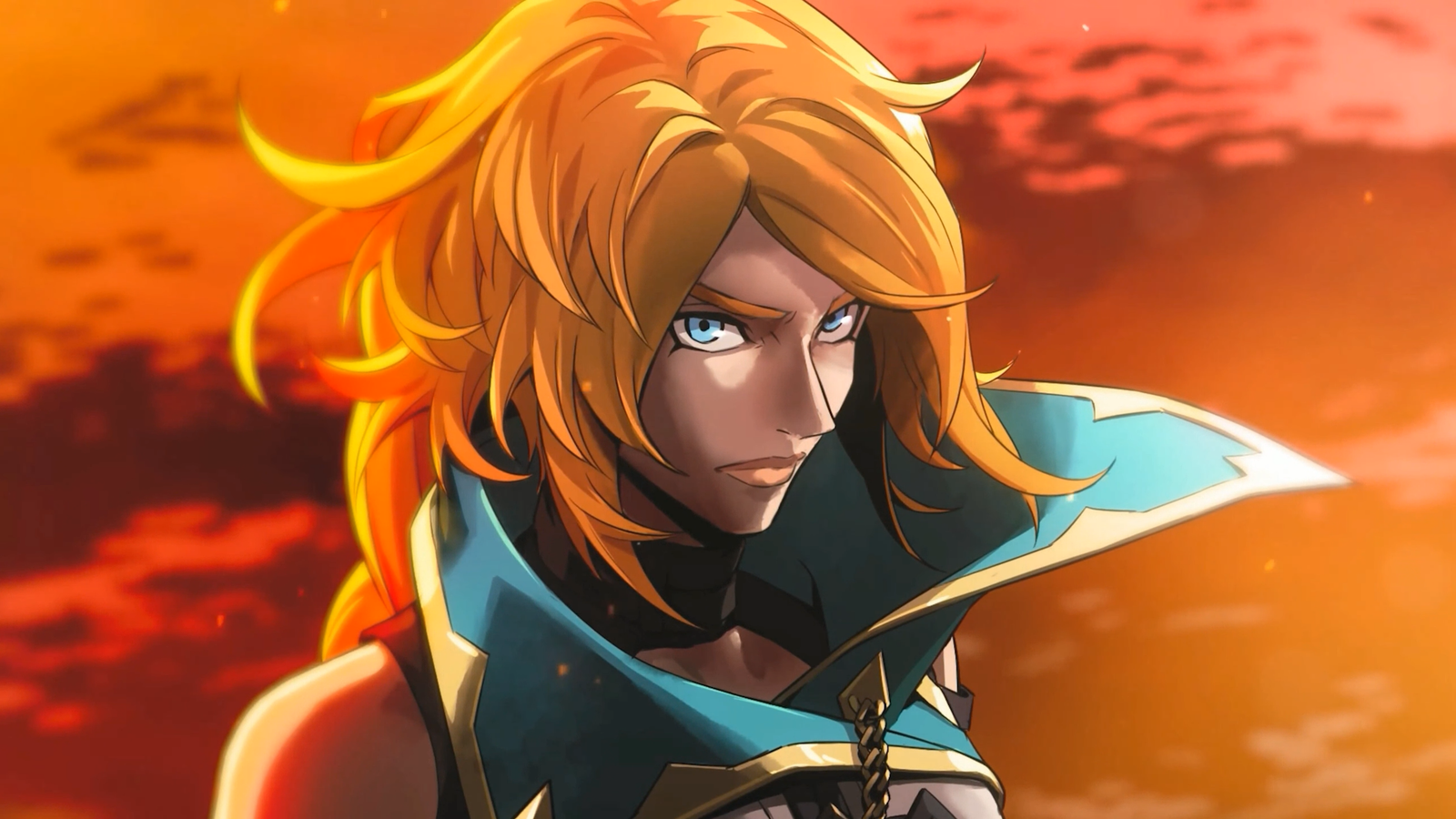
Trevor Belmont answers the call, familiar to fans of the series from Castlevania III: Dracula’s Curse, whose events unfolded 23 years earlier. However, he is no longer the last representative of the famous lineage: his daughter Rose arrives with him in Paris, on whose right hand appears the seal of the curse that once destroyed her mother, Sypha Belnades.
Thus, the developers picked up on the hint of Sypha’s pregnancy from the fourth season of the animated “Castlevania.” Rose even resembles her mother physically, though her craft, of course, is her father’s. Eager to prove to Trevor that she is already capable of hunting vampires independently, the girl volunteers to scout the city while he goes to the local bishop for explanations.
The plot has never been Castlevania’s main trump card, and Belmont’s Curse doesn’t deviate from tradition: evil is once again trying to resurrect the Wallachian fresh blood enthusiast, and we need to stop it. Plot twists are visible from a mile away, and villains with a “What are you going to do to me?” attitude lay out their plans upfront — before getting hit on that very forehead.
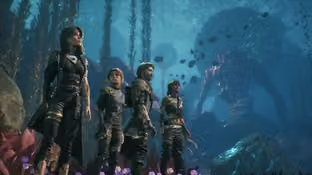
This time, the familiar storyline is complemented by Rose’s coming-of-age story and an unusual company of companions. Defeated and re-educated solely by the whip (without the carrot), bosses join the Tarot deck inherited by the girl from her mother, tell tales, give advice, and gradually shed light on what is happening, as well as on the Belmont family’s past. And nothing more seems to be required, because the most interesting things in Metroidvanias, as usual, are hidden not in the plot’s twists and turns.
Back to the Future of Metroidvanias
Evil Empire studio thoroughly studied the history of Castlevania and brought together ideas from different generations of the series. They took the formula of classic “Iga-vanias” as a basis — games created under the guidance of Koji Igarashi, in which the exploration of a labyrinthine world is combined with RPG elements: character development, weapon, and equipment searching. At the same time, the developers of Belmont’s Curse did not limit themselves to the legacy of Symphony of the Night and its successors, borrowing individual findings from other parts of the franchise as well.
The world structure will seem painfully familiar to anyone who has launched any notable Metroidvania in the last ten years. Here there is a huge interconnected map, full of secrets, passages that are not yet accessible, and ledges that cannot yet be reached. New abilities allow returning to already explored places, collecting previously inaccessible rewards, and opening new paths.
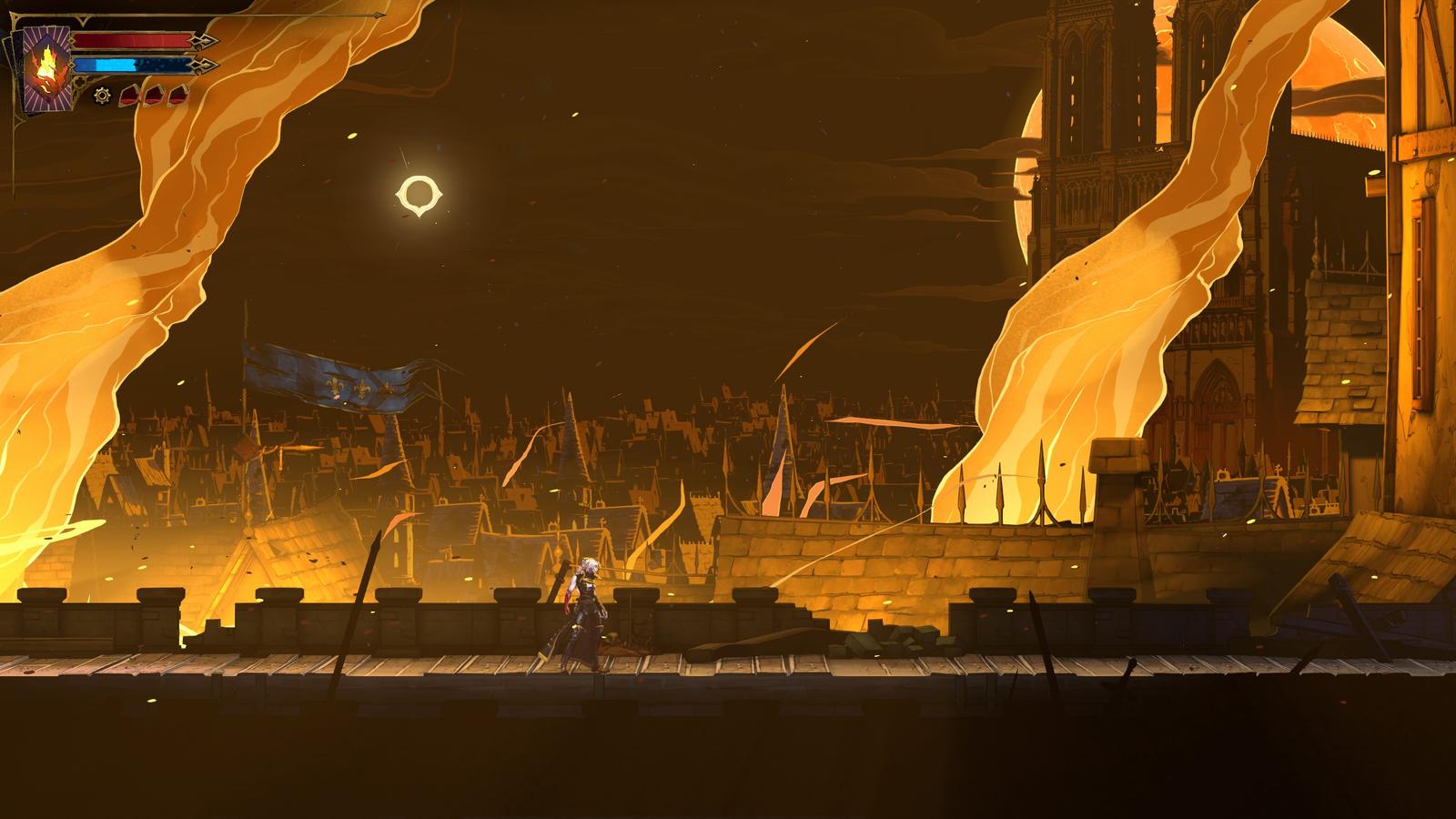
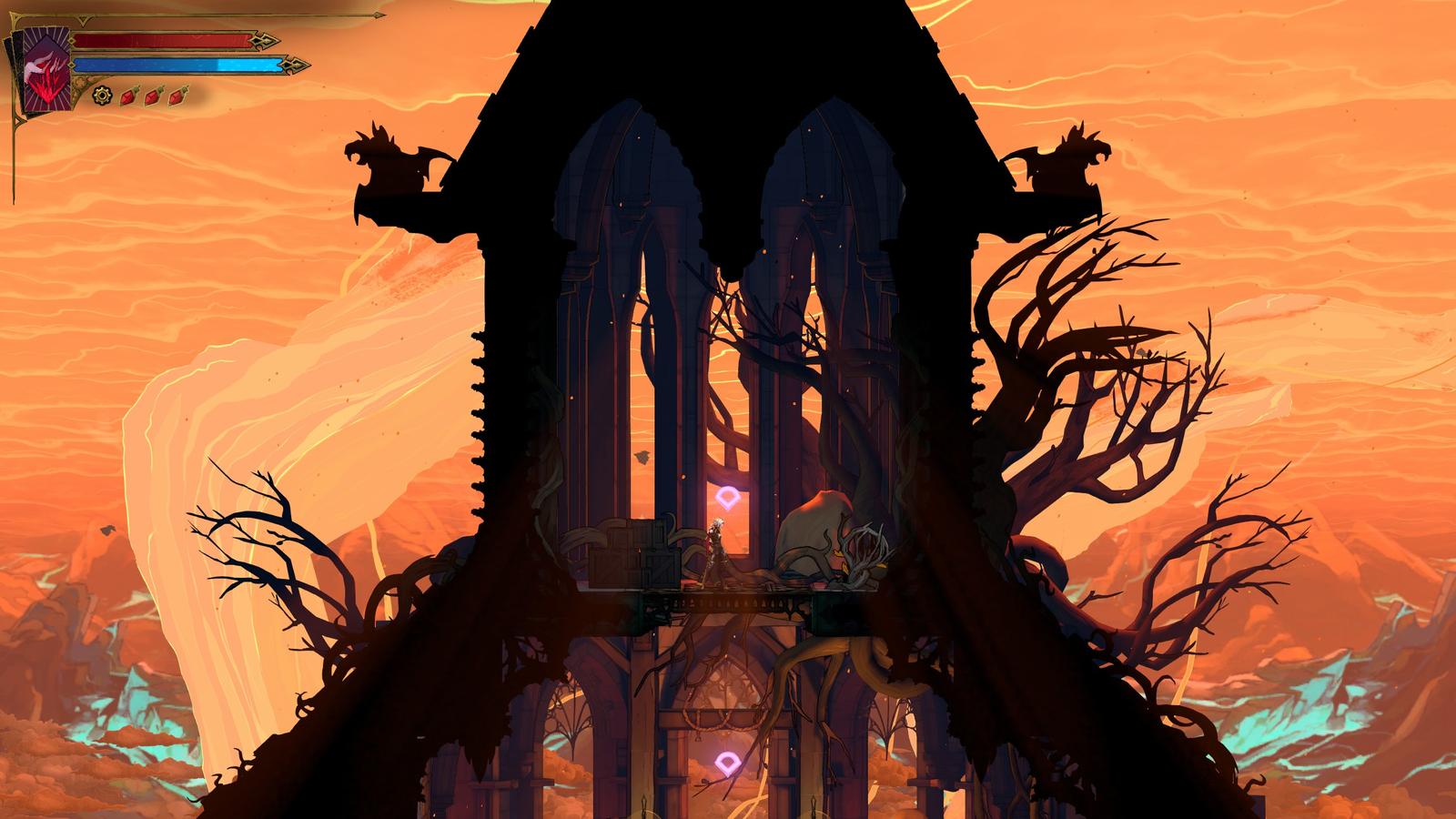
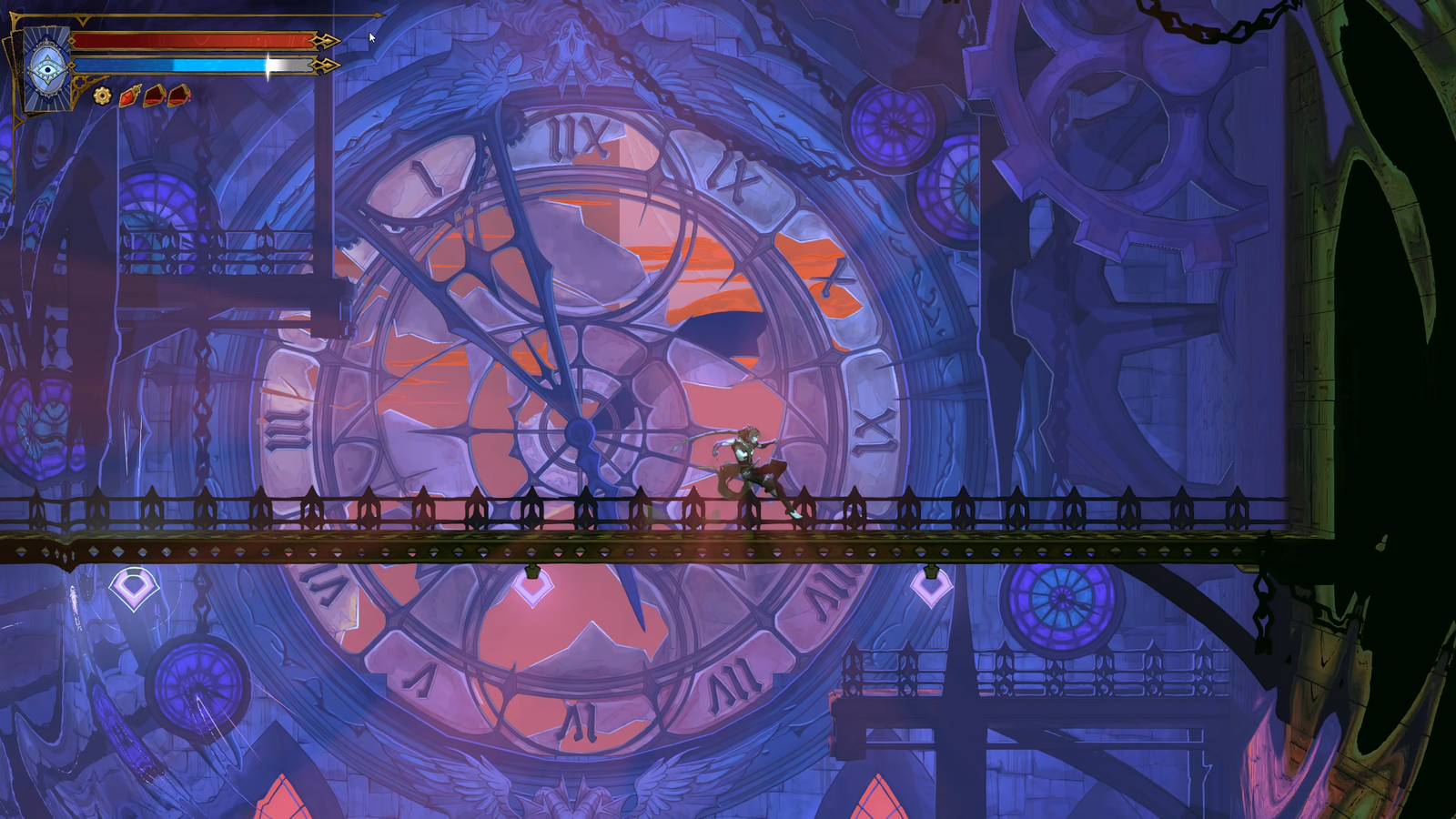
The locations look amazing. Belmont’s Curse uses stylized 3D graphics, which, thanks to artistic processing, resemble hand-drawn animation. Multi-layered backgrounds, expressive silhouettes, and rich colors create a special atmosphere in each area.
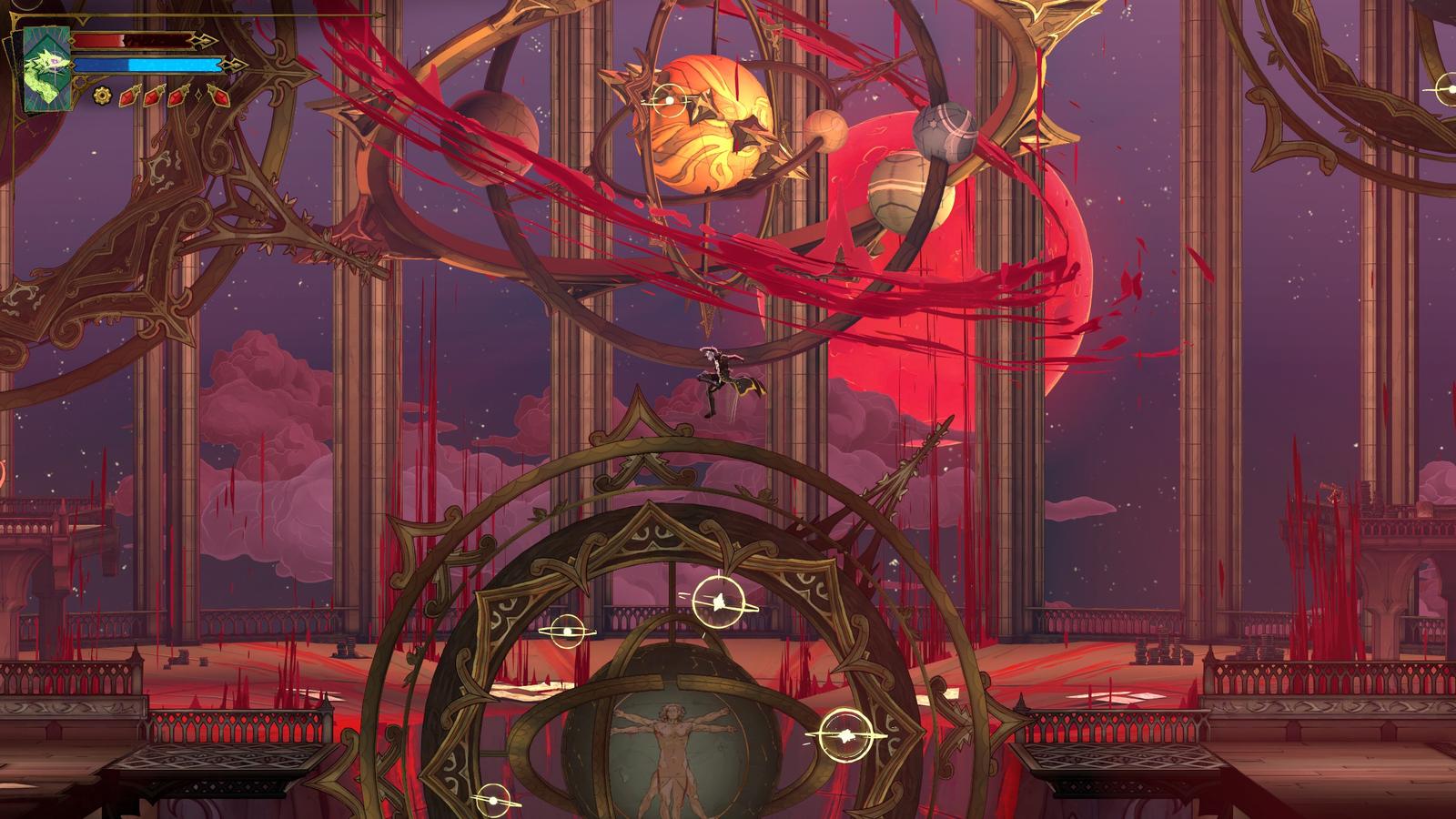
Burning Paris greets with a crimson-violet sky and panoramas of the ruined city, catacombs with walls of human bones and bloody pits, and the Cemetery of the Innocents combines Western European Gothic with ancient ruins and aqueducts. These are replaced by the luxurious interiors of Dracula’s castle, a library with astronomical mechanisms, a clock tower with giant gears, and the majestic Notre Dame, bathed in the light of colored stained glass windows.
The special mood of each area is also emphasized by the music. The soundtrack sometimes refers to familiar melodies of the series — for example, a new arrangement of the famous Bloody Tears plays in the main hall of Dracula’s castle. But mostly, Daniel Asadi (ASADI), who previously worked on The Rogue Prince of Persia, offers original compositions in which the gothic sound of the organ is combined with electronics and modern beats. Personally, I really like such experiments — especially since the melodies turned out to be memorable and continue to play in my head even after completing the game.
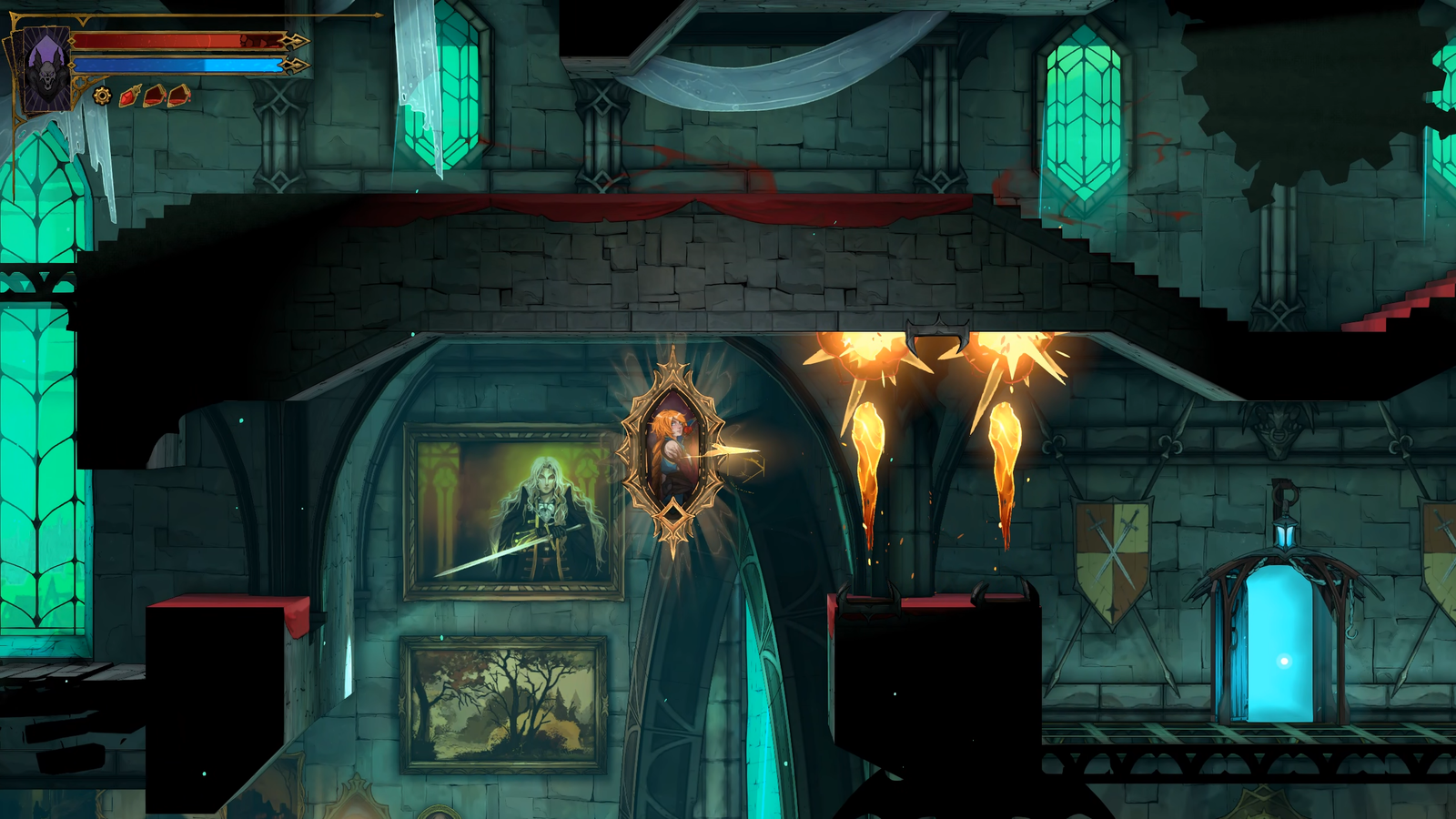
The map is available from the very beginning and automatically fills up as you progress. The exploration percentage is displayed directly in the interface, and there are as many as 50 slots for your own markers. There are also enough hints in the locations themselves: for example, Alucard’s sword, depicted in a painting, points towards a secret, so you just need to look carefully around.
The plot progresses as you defeat bosses, and searching for them partly resembles Simon’s Quest. Spirits are found in different corners of the game world, leaving clues: one clue leads to the next, that one to a new one, until the chain ends with an encounter with another enemy. All found information is collected in the Tarot menu, which also serves as a kind of quest log: you can always reread the hints and figure out where to go next.
Thanks to this, Belmont’s Curse became one of the most enjoyable Metroidvanias for me in terms of exploration: I never got stuck for long or wandered in search of the right path. The only exception was perhaps the Hall of Mirrors, where you have to navigate independently, looking for clues in reflections.
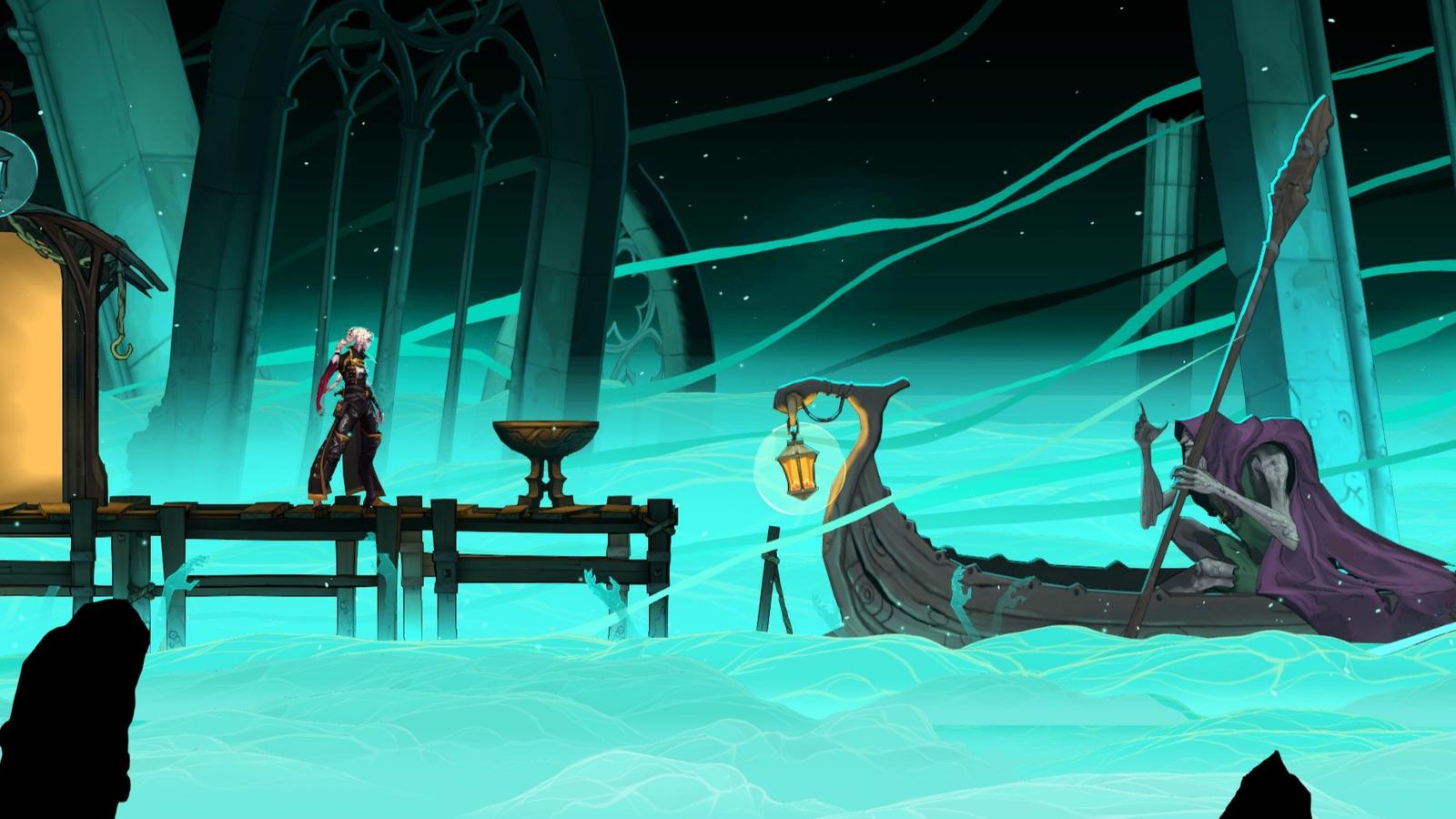
The only thing that is sometimes missing is a convenient fast travel system. Initially, a ferryman helps travel between areas, but you still need to reach him, and after crossing, you have to make your own way from the pier to the desired point. Full-fledged teleports between save mirrors open very late, when most of the adventure is already behind you. They simplify returning for missed secrets, but during the main playthrough, you have to run around quite a bit.
Sleight of Hand and No Cheating
This is aided by abilities that are initially quite generously bestowed. Rose gets the first two in an hour and a half, or even faster, one of which allows her to grapple to rings and enemies with her whip. However, the double jump and air dash are unlocked almost last, which initially disappointed me. I’m used to these abilities providing that flow state, where you fly through the level, effortlessly overcoming room after room.
Without them, Rose seems somewhat clumsy in the first few hours, but closer to the finale, I was ready to defend the developers. Judge for yourself: double jump and dash are intuitive mechanics that require no getting used to and easily fit into platforming challenges. Much more interesting is the “Blessed Fire,” which Rose receives after defeating the second boss, Joan of Arc. This ability allows her to parry enemy attacks and pass through chaos shards — special obstacles around which a significant part of the platforming challenges are built.
In such sections, you have to switch the state of the shards on the fly, calculate the timing, and release the ability button at the right moment. If you release the button before Rose gets out of the shard, the heroine will take damage or even die. The first attempts often end in failure, but gradually the necessary sequence of actions becomes automatic.
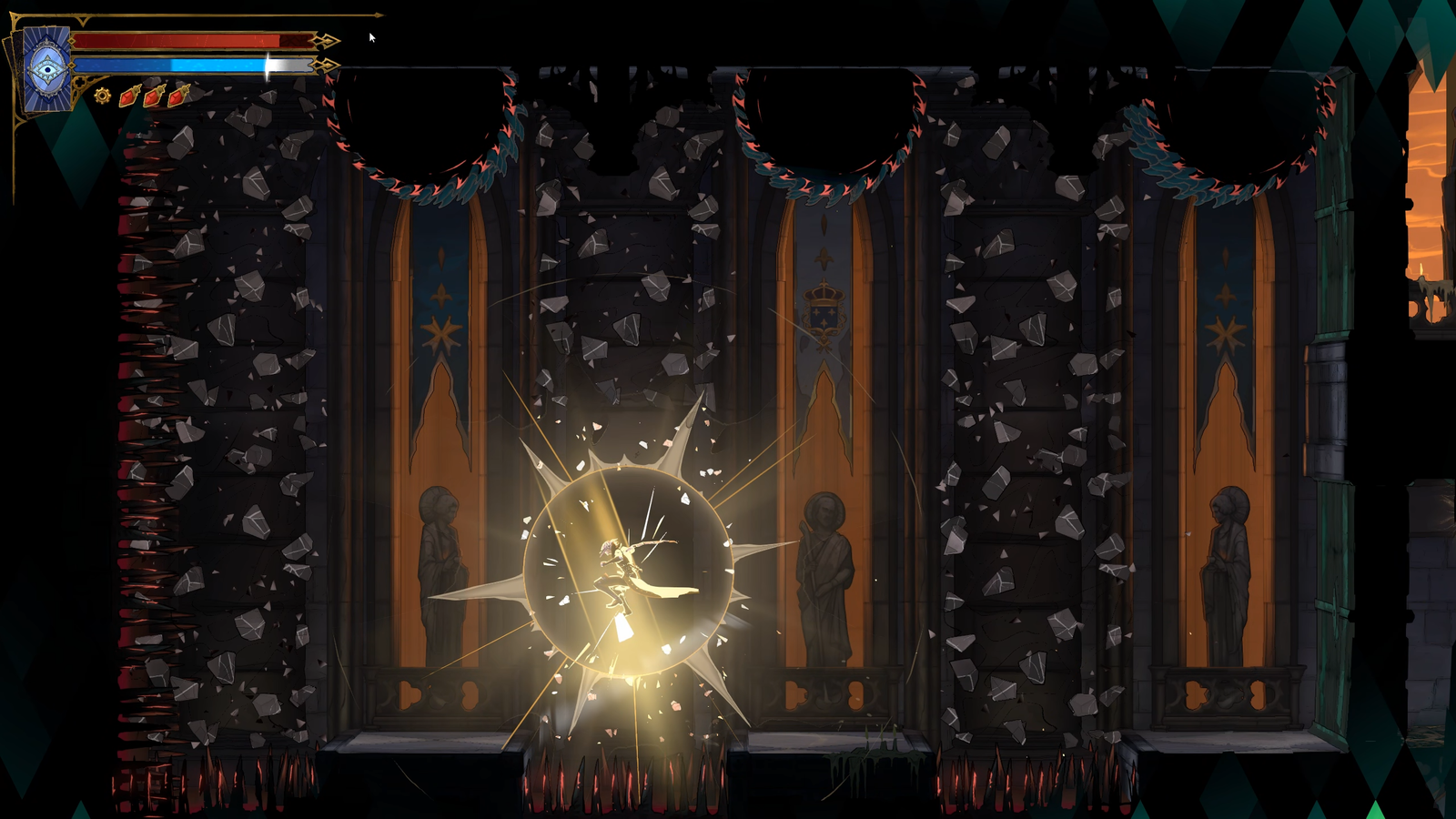
Later, these tricks are supplemented by the ability to enter magical paintings and shoot yourself out of them in the desired direction, and familiar mechanics begin to combine more and more inventively. At such moments, Belmont’s Curse evokes associations with Prince of Persia: The Lost Crown and other modern Metroidvanias, where dexterity is valued as much as the ability to navigate intricate locations.
At the same time, the platforming doesn't feel suffocating: even in the most difficult sections, it's usually immediately clear HOW to pass them. The only question is to execute the plan correctly, and if something doesn't work out, you always understand where you made a mistake and how to fix it. There are no sadistic “paths of pain” here at all: the most difficult challenges take at most a couple of tens of seconds, and the difficulty increases due to increasingly inventive combinations of familiar obstacles and time limits.
Everything New is Well-Beaten Old
However, the game will not only test your ability to press buttons on time with platforming. Belmont’s Curse resembles modern Metroidvanias like Blasphemous, which rely on dynamic battles and exploit the “2D Dark Souls” formula. Save mirrors work like local bonfires: they restore health and healing potion stock, and also bring back to life slain evil spirits. After death, Rose also ends up at the last mirror, from where she has to fight her way back to the place of her failure. Fortunately, there are no souls here, and accumulated experience is not taken away.
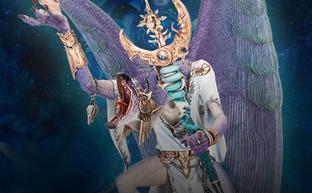
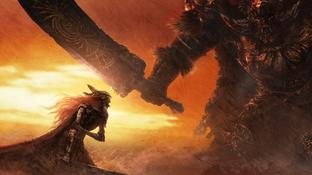
And you will die often, especially on bosses. Belmont’s Curse demands quick reactions and knowledge of the enemy: you need to memorize attack sequences, monitor enemy movements, choose appropriate moments to attack, and skillfully use your entire mastered arsenal. For example, in the battle with Joan of Arc, you have to use the whip for evasions, Medusa Gorgon forces you to turn away from her gaze in time, and the battle with the mechanical giant Talos makes you overcome sections with traps between stages. Other old acquaintances are also present, but I will leave these surprises for you. Just know that the fan service here is all in order, and among the enemies, as per tradition, are all sorts of monsters from myths, legends, and horror stories.
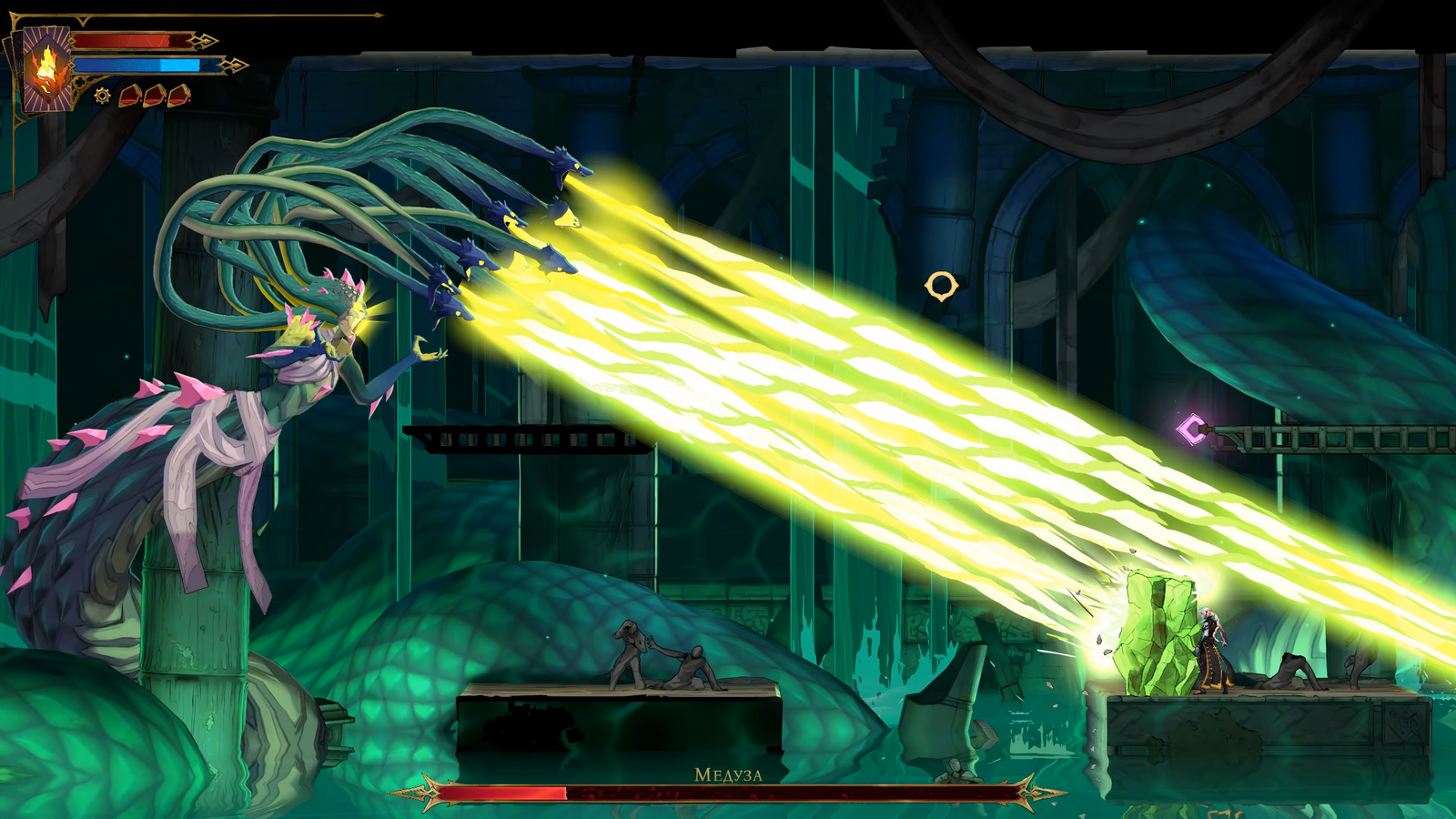
The only significant drawback of boss battles is the need to reach the arena again from the save point after each failed attempt. Initially, even in such runs, you find benefits: while returning to the boss and dealing with ordinary monsters, you can level up and make Rose a little stronger. You come to the next attempt with a better understanding of the enemy’s attacks and a small increase in stats. But enthusiasm quickly wanes when it takes more than a dozen attempts to win, and between them, you have to repeatedly overcome familiar platforming sections and cut down the same evil spirits.
Such limitations are pure archaism, so after the first four bosses, I calmly opened the accessibility menu and enabled respawning right before the arena. After that, I could practice tactics without unnecessary running around. If you are not a fan of hardcore battles at all, you can also increase the number of potions, reduce damage taken, increase damage dealt, or even enable invulnerability.
However, I would not advise completely devaluing the battles, because the combat system here is definitely the best in Castlevania history. Given how long the series has been in a vampiric torpor, this is not surprising, but the enjoyment of the fights is quite genuine. Smooth animations and juicy visual effects are pleasing to the eye, and screen shakes and hitstops add weight to blows, allowing you to feel every hit. And the developers had the conscience not to add damage from simple contact with monsters — otherwise, it would have been an immediate minus. I hate that in games.
Belmont of All Trades
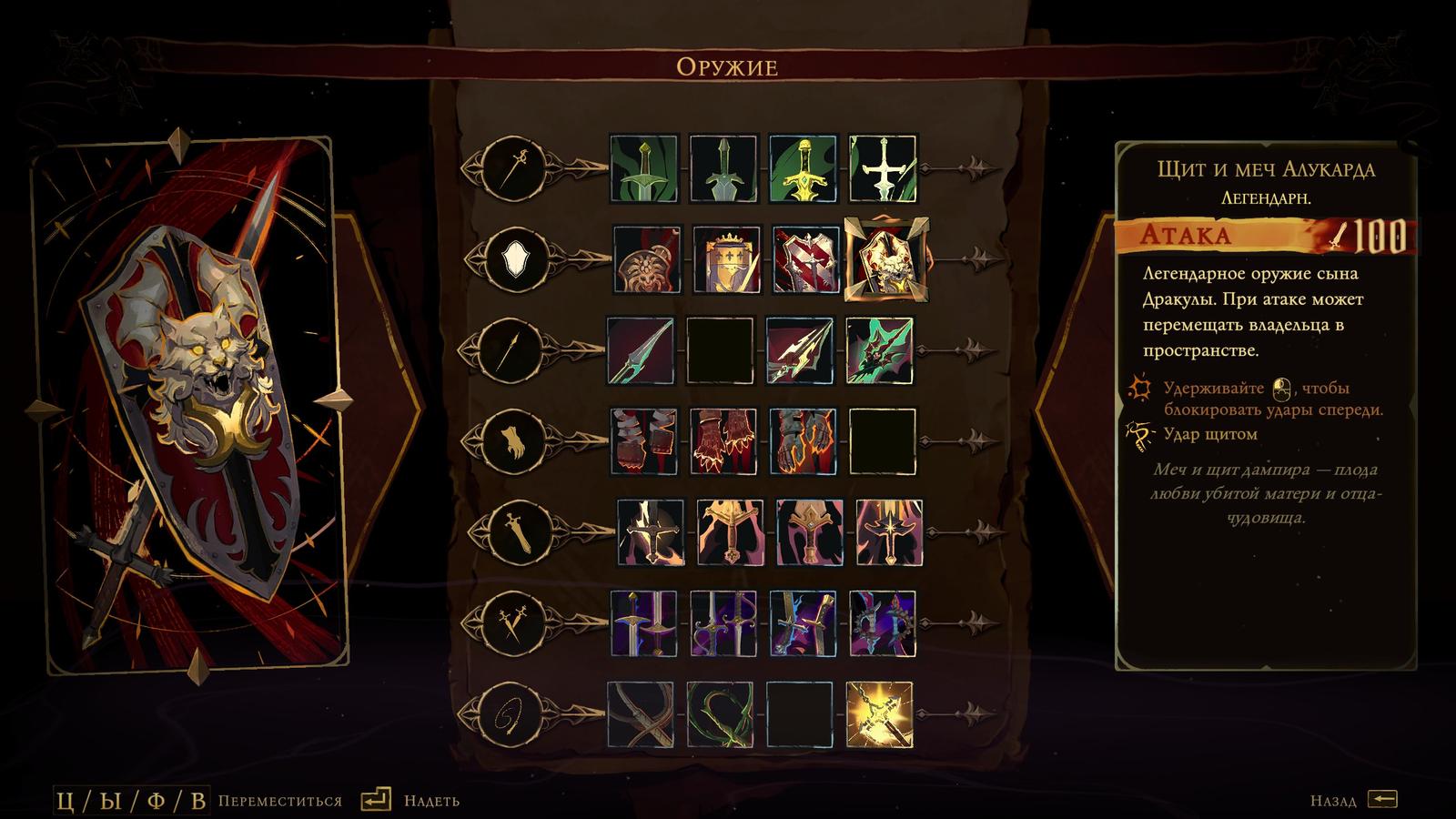
There are plenty of tools for dealing with monsters. Formally, there are 28 weapons here, but there are seven fundamentally different ways to fight, corresponding to the number of categories. Each category has four samples with the same set of moves: normal and charged attacks, as well as a special attack after grappling to an enemy with the whip. They differ primarily in characteristics, so within your favorite class, you usually just switch to the most powerful one you find.
There's plenty to choose from: regular swords allow for an enhanced attack after sliding, a sword and shield combo can block frontal attacks, and a spear can be used for close-range thrusts or thrown at enemies. Fist weapons increase damage with each hit, the two-handed sword features powerful charged attacks, twin blades are designed for long combos, and whip damage depends on the distance to the target.
In addition, each category is topped by a legendary weapon with an additional property. The “Vampire Killer” whip, for example, sets enemies on fire with its tip strikes, and they explode upon death. But my favorite was Alucard’s sword and shield set, which allows you to teleport to enemies right during attacks. A gorgeous item that further boosts the dynamics of battles and perfectly complements Rose’s late-game acrobatics.
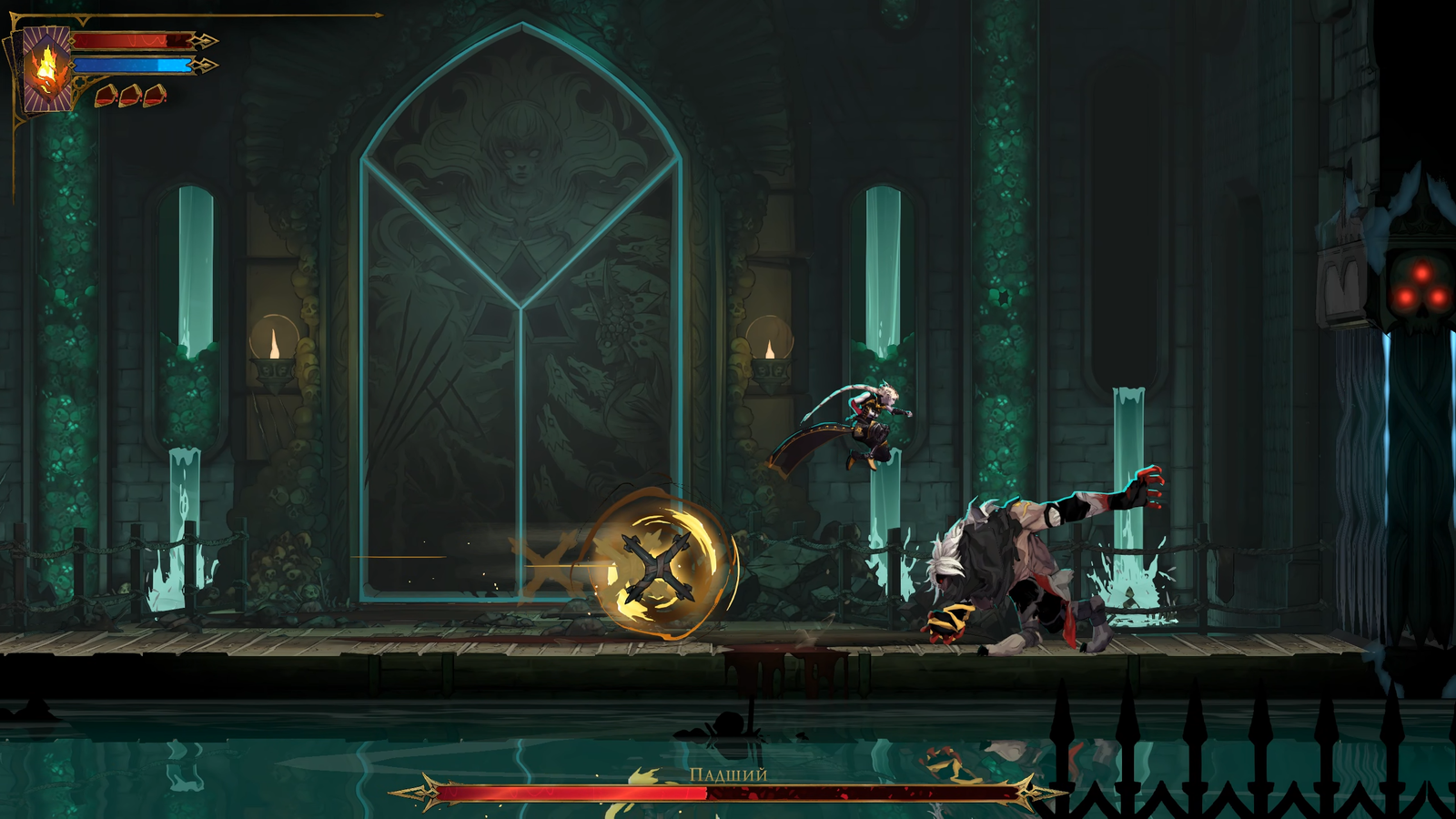
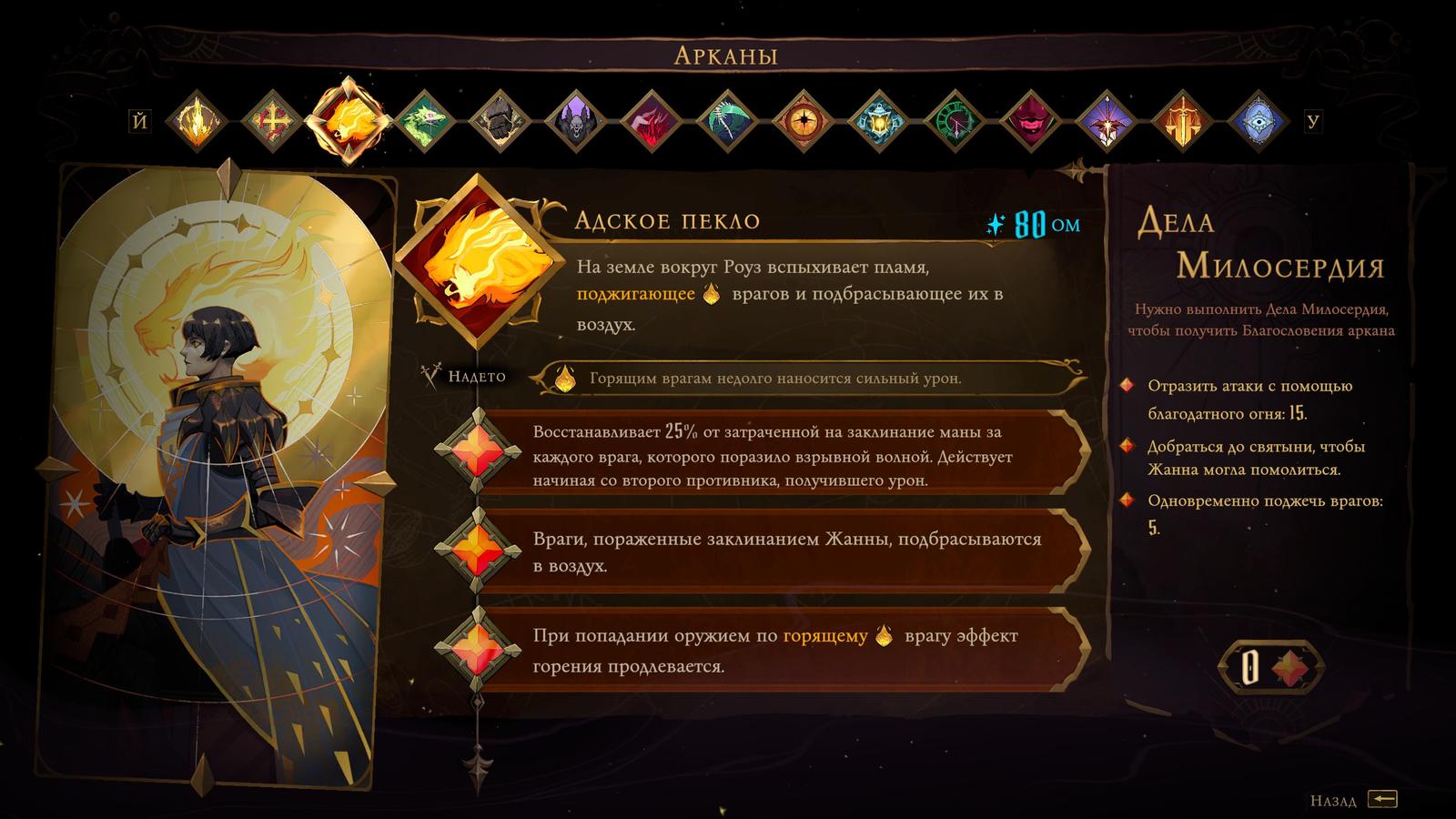
The weapon arsenal is complemented by arcane magic, in which the developers combined the card system from Circle of the Moon with the enemy ability acquisition mechanic from Aria of Sorrow. Defeated bosses take residence in Rose’s cards and share their powers with her. Thus, the Unholy grants the “Holy Cross” — a cross that flies through enemies and then returns to the heroine. Joan bestows “Infernal Blaze,” which sets the ground around Rose on fire, and Medusa Gorgon grants the ability to turn enemies to stone. There are fifteen arcana in total: some are for offense, others for defense, enemy control, or summoning creatures.
As you progress, spells gain new properties through “Acts of Mercy” — challenges reminiscent of Wind’s quests from Portrait of Ruin. Each card has its own tasks: kill five monsters with one cross, successfully parry attacks fifteen times, or find a specific location. Earned points go towards improving the corresponding arcana, so you can’t upgrade one using tasks from another. For example, the “Holy Cross” can release two crosses at once, deal more damage depending on the distance to the target, or restore some spent mana if you catch the cross on its way back.
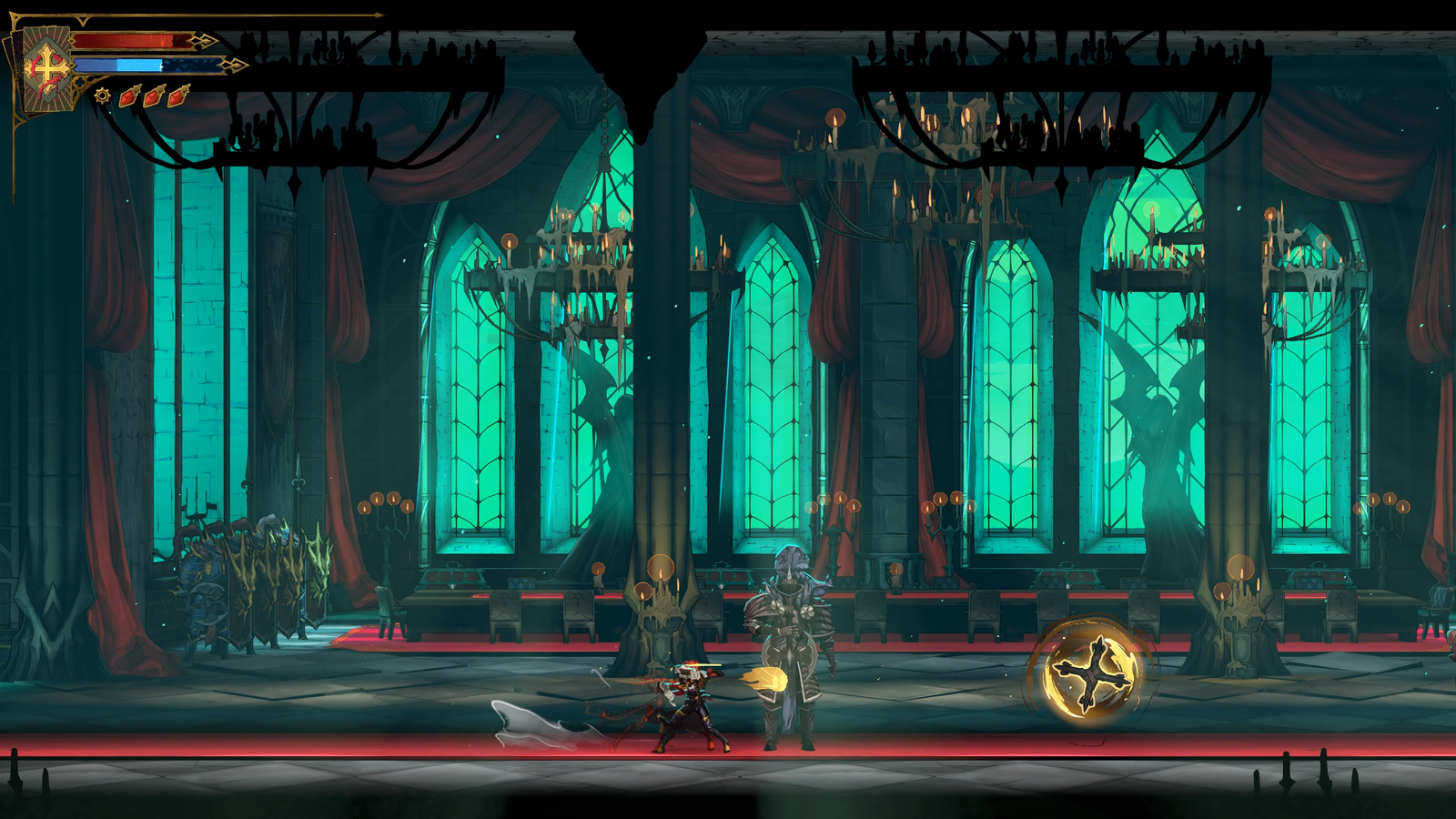
The game encourages active use of this entire arsenal, as mana is restored when hitting enemies. This creates a continuous cycle where spells alternate with normal attacks, allowing for a high tempo of battles. By the way, it’s also convenient to monitor mana consumption: the bar shows in a different color how much mana will remain after using the selected arcana.
What raises questions, however, is the lack of a quick switch between weapon and magic sets. Some are better suited for single-target battles, others for dealing with crowds, and you are allowed to change them even during combat. But to do this, you have to pause the game every time and go into the menu. Constantly interrupting such dynamic battles to change equipment — why? It’s inconvenient. But we have what we have.
Additional opportunities for fine-tuning your build are opened by relics, of which you can wear up to three simultaneously. Initially, you find something simple and pleasant — for example, a relic that restores health and mana when opening chests. Later, relics appear around which you can build an entire build: use magic more often, increase damage at the cost of your own health, or gain vampirism in exchange for giving up healing potions.
Moreover, the most interesting weapons and most valuable relics still need to be earned. Somewhere you will have to solve a riddle, somewhere — overcome a difficult platforming section, and somewhere — endure a multi-stage challenge and defeat an additional boss. And this is not counting more modest rewards for exploration: heart fragments and books that permanently increase Rose’s characteristics, as well as statues, for the destruction of which additional experience is given. In this regard, Belmont’s Curse perfectly understands why we love Metroidvanias: exploration is rewarded with useful finds every few minutes, and it turns out to be devilishly difficult to tear yourself away from the game. No joke, but on the second day after release, I spent sixteen hours in it — and even after such a marathon, I didn’t want to stop.
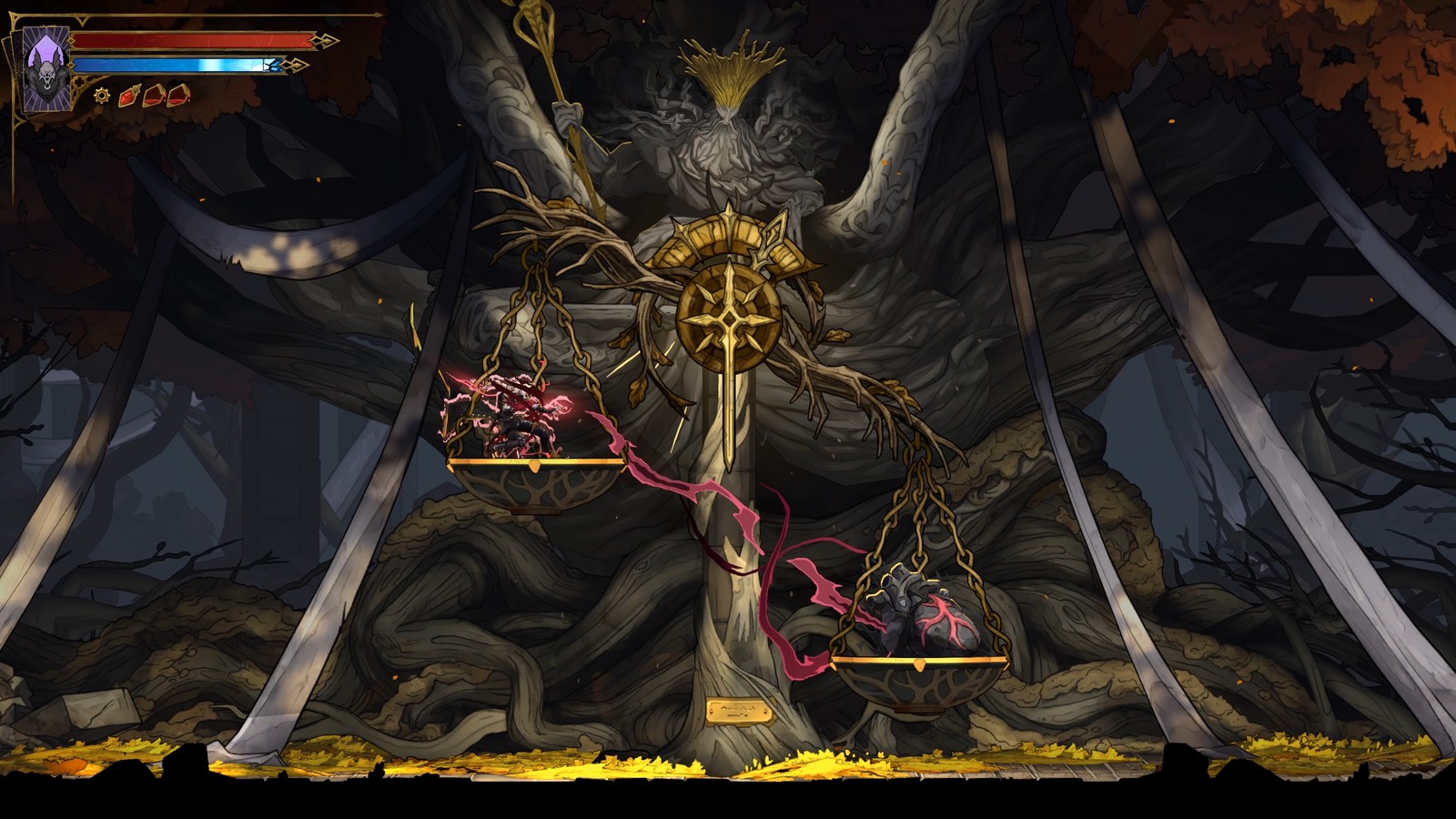
In total, the path to the true ending took me 25 hours. However, I saw the first, false ending much earlier — at about 56% exploration, when I accidentally went through the wrong door. I had to continue the journey, uncover the remaining secrets, and return to the final battle again. But even after the true ending, it turned out that I had explored only 91% of the world. It would seem that after so many hours I had already explored every nook and cranny, but the game still holds secrets for which you can return.
What is especially pleasing is that during all this time I did not encounter any serious technical problems. On release day, some players complained about crashes and a black screen when using high-frequency monitors, but by the time this review was written, patch 1.1.3 had already been released, fixing this problem, and personally, on my 120 Hz monitor, everything worked perfectly: not a single noticeable bug, not a single crash. Only short-term frame rate drops during transitions between locations reminded me that the game was released quite recently. Otherwise, the adventure went smoothly — so much so that the only reason to tear myself away from Belmont’s Curse was human weakness in the form of the need to at least sometimes sleep. Vampires were clearly luckier in this regard.
Verdict
Castlevania: Belmont’s Curse gives us almost everything we love about Metroidvanias: a huge world full of secrets and useful finds, exciting and fair platforming, gorgeous bosses, and an excellent combat system with a rich selection of weapons and magic. All these elements are so skillfully implemented and so successfully combined with each other that it is incredibly difficult to tear yourself away from the game. Even the few rough edges do not spoil the impression — after all, the most unpleasant ones can be eliminated directly in the accessibility settings menu.
The catch is that during Castlevania’s absence, Metroidvanias have proliferated to suit every taste and color, becoming one of the most saturated niches in the gaming industry. The ideas that the series once surprised players with have long become a genre norm. Competitors also did not stand still, and Belmont’s Curse readily adopts their findings, but adds nothing of its own. Therefore, despite all the game’s merits, to raise it above the realm of Metroidvanias, as Rafiki raised Simba, and proclaim a new king would be ridiculous. We have before us a talented heir who has perfectly learned the lessons of his ancestors and competitors, but has not yet found his own way to surprise the world.
Konami has already shown how differently Silent Hill can return. Now it’s curious what awaits Castlevania. If Belmont’s Curse was needed to get the series back on its feet, the start was excellent. But next time, I would like Dracula not just to wake up in 2026, but to at least look a little into the future.
Never miss our newsAdd this site to your preferred sources to see us more oftenAdd on Google