Review of ASPIS — an eerie and bizarre fairy tale with a Soviet aesthetic
Translated with AI from the Russian original.
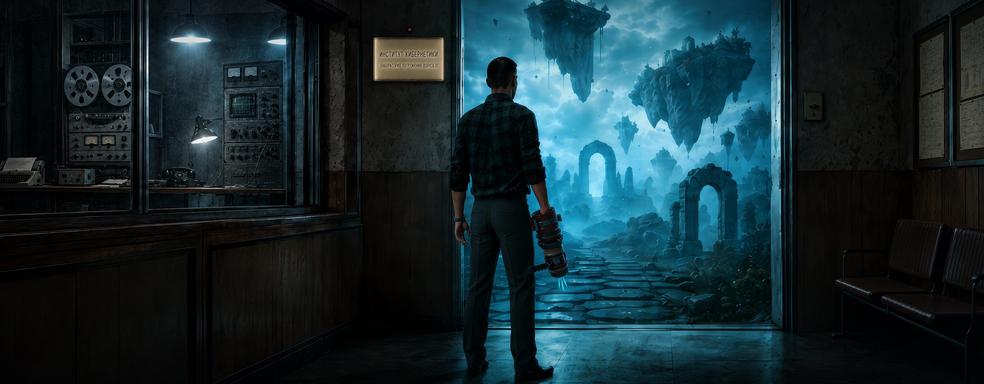
ASPIS is an ambitious game by a solo developer. In an alternate Soviet Union, they have learned how to plunge into parallel realities, and the player will have to solve puzzles there, fight off monsters, and try to save their family in the process.
Phrase of the day: “But that's not all”
The game is full of chaotic and strange events experienced through the eyes of Andrey, a Soviet engineer who lost his wife and daughter on the same day. The protagonist is ready to do anything to see his loved ones again, even if it involves the paranormal.
Andrey joined a group of volunteers to test ASPIS — the Autonomous System for Predicting Historical Events. With this system, the USSR would be able to outpace the capitalists in development. But the volunteers agreed to the experiment in order to speak with their loved ones in the afterlife.
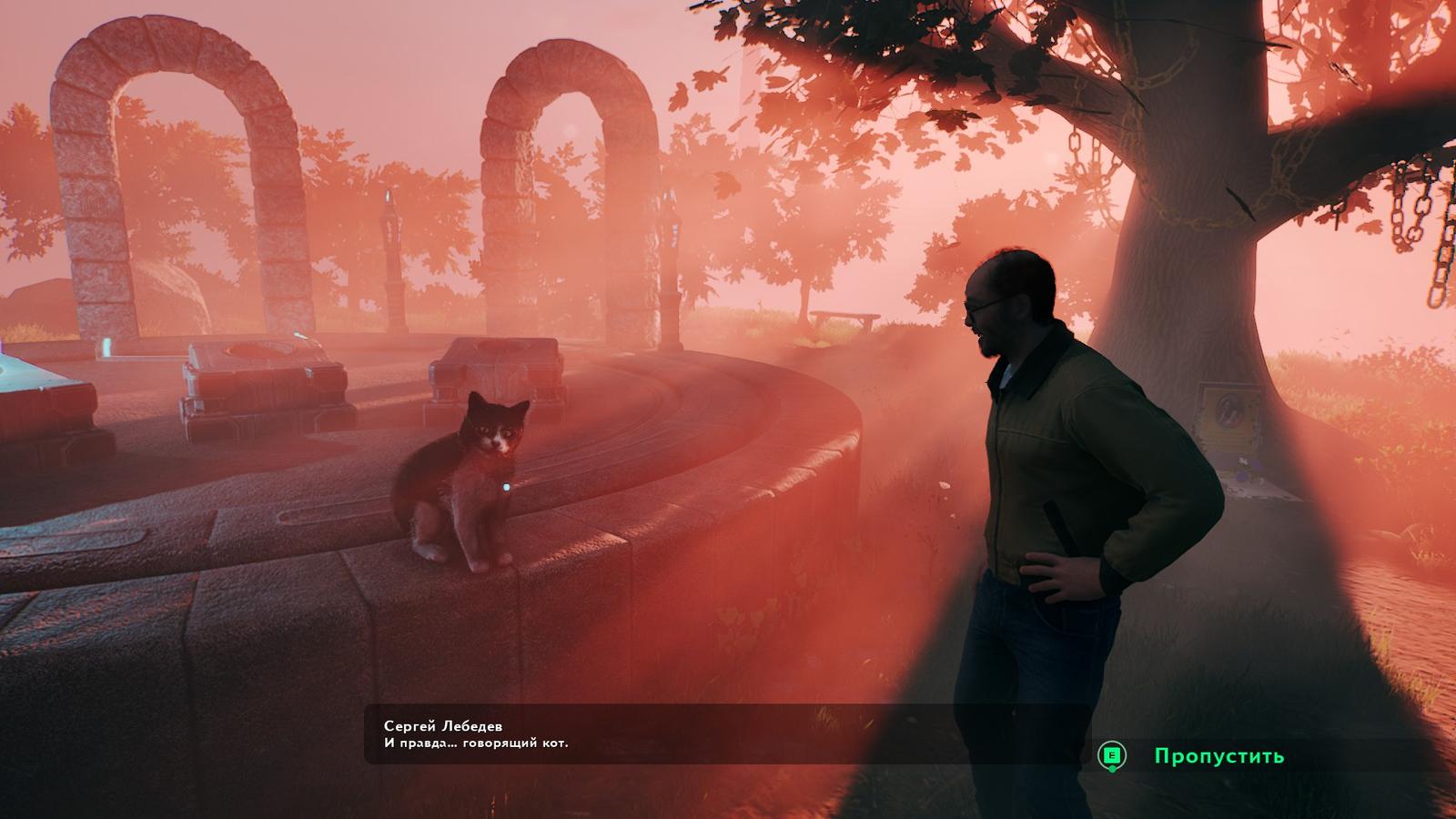
But that's not all. The system runs on a new form of energy discovered by Soviet scientists. Just like in DOOM, the energy helped open a portal to hell, where otherworldly beasts began torturing the volunteers. However, the portal was opened not to hell, but to a fairy-tale dimension inhabited by Baba Yaga, the Frog Princess, and a mermaid buried beneath an oak tree. Among the fairy-tale characters, only the Learned Cat remains active, helping humans however he can.
A bit later, it turns out there is an alien race that has no connection to humanity whatsoever. Yet they exiled their repeat offender, who became a problem for both humans and fairy-tale creatures alike. A sort of Krang from “Teenage Mutant Ninja Turtles”.
It is in this mashup of ideas that the protagonist will have to stew, hopping from dimension to dimension. In some places, the game claims that your choices affect the plot. But they don't affect anything — the ending depends entirely on the final choice.
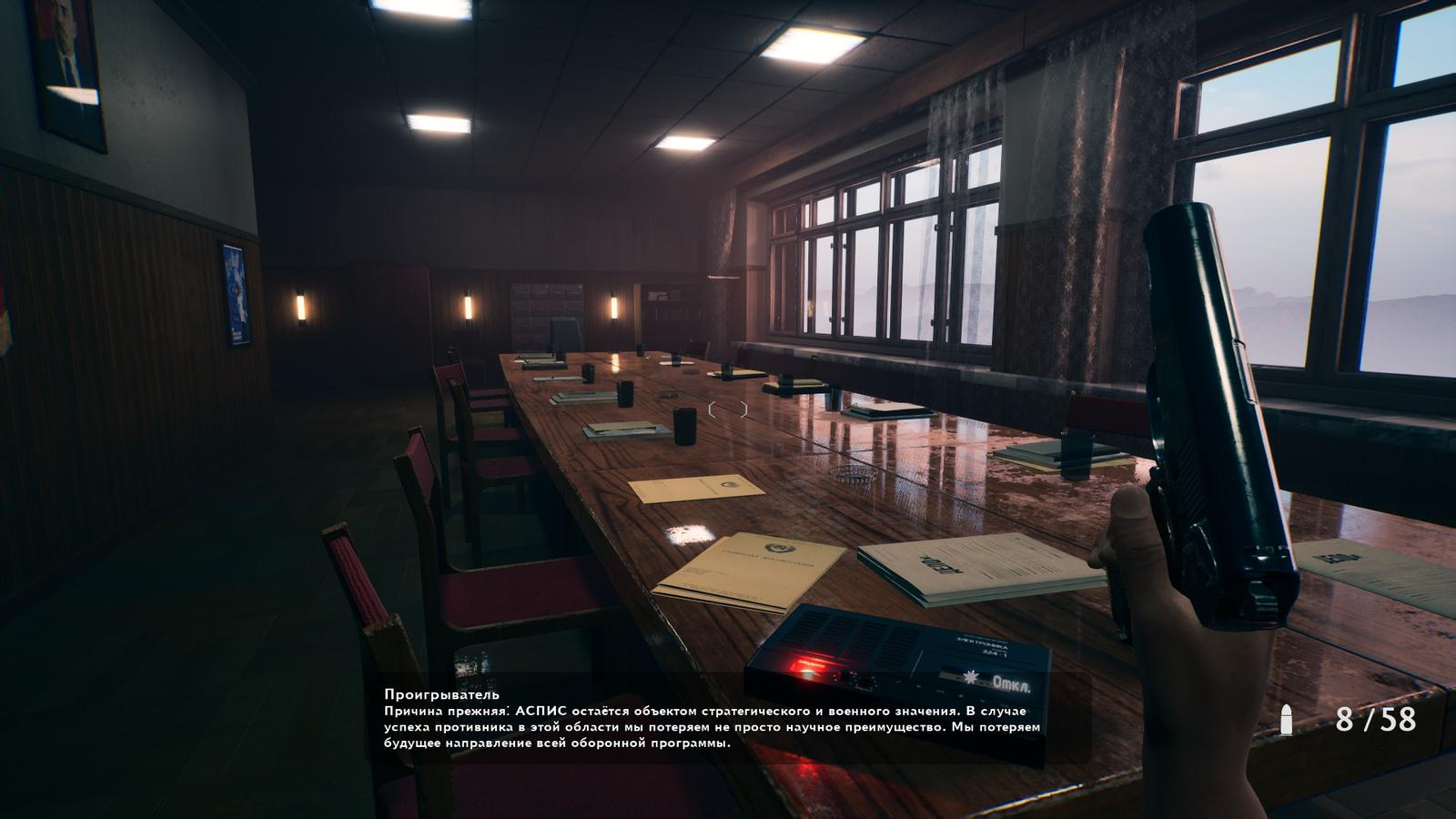
A puzzling mockery
The fact that the developer is a huge fan of the Half-Life universe is obvious from references in the notes and the crowbar you can pick up twice throughout the game. Most of all, he must have loved the moment in Half-Life 2 where you have to assist Dr. Kleiner with Alyx's teleportation. How else can you explain why almost the entire game consists of flipping switches and hooking up power?
You can't take a single step without running into switches, locks, or energy orbs moved around with the local gravity gun. The items needed to solve puzzles barely stand out from the background — they aren't even highlighted.
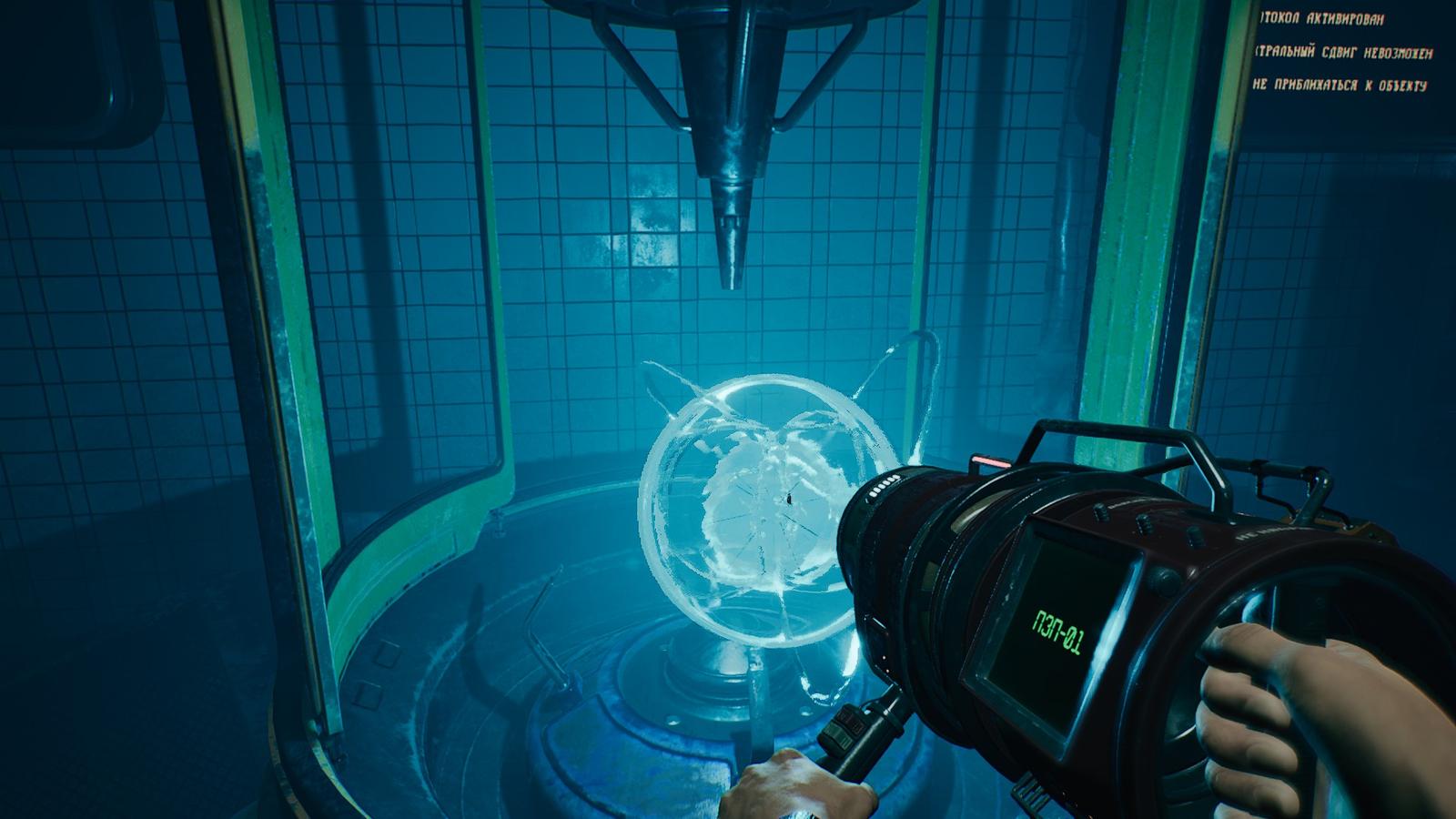
The puzzles don't become unbearable only because you don't have to walk far to solve them. Almost always, the required items are located in the very same room as whatever roadblock stopped you. Sometimes you have to move around more, but that's rather an exception to the rule.
Hiding is useless
At the beginning, the game tries to be a stealth horror. An unremarkable boogeyman, who plays hide-and-seek very well, starts hunting the protagonist. Shooting the creature only stops it temporarily. Fortunately, after a while you realize it is no faster than the protagonist, so you simply sprint through the entire level.
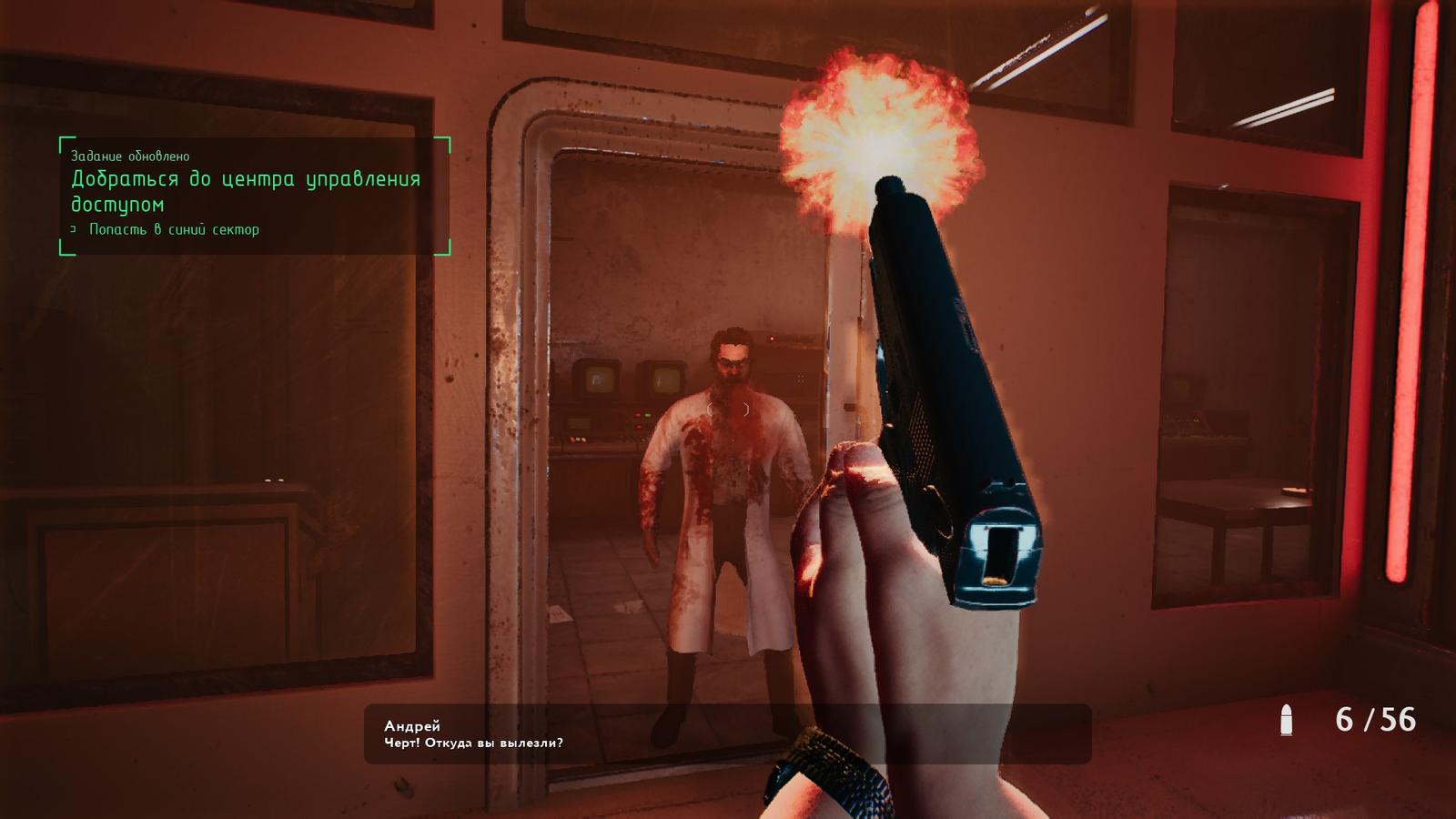
The boogeyman is replaced by zombies. They crawl out of the floor, run around predictably, and die quickly. To defeat more serious enemies, you have to solve puzzles before shooting them down.
The most annoying enemies are the spirits. They pour out of every crack, fly fast, and knock you off your feet. Occasionally, a spirit starts dragging the hero into hell — you have to shoot it before you're pulled into the portal.
Diagnosis
Considering that only one person worked on the game, ASPIS is a pleasant surprise — especially in terms of its technical state. The game was built on Unreal Engine, and out of all the issues commonly associated with the engine, I only encountered glitching textures and a door that refused to open until I reloaded. There were no crashes throughout my entire playthrough, though the optimization still leaves much to be desired.
The developer has a talent for crafting horror. Before the monsters appeared, I was genuinely terrified — wandering through empty rooms and tensely aiming my pistol. But then the combat started, and the fear evaporated.
The rest of the elements are overly cluttered: plot twists, puzzles, fights with cannon fodder, and an all-enlightened main villain. There is simply too much chaos happening on screen. Fortunately, even while exploring the surroundings, I managed to complete the game in 5 hours. Its greatest virtue is that it didn't manage to truly infuriate or bore me.
Never miss our newsAdd this site to your preferred sources to see us more oftenAdd on Google