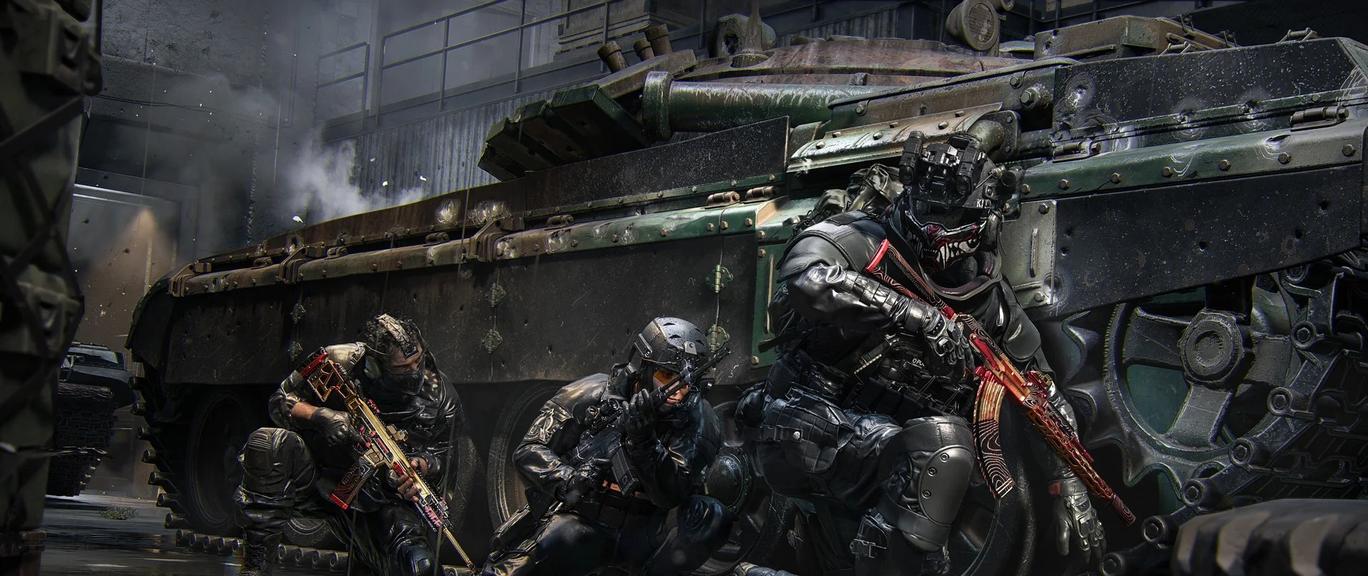
An extraction shooter with a solid foundation
The standout feature and most intriguing aspect of Modern Warfare 4 is the DMZ mode. Activision previously tried to break into the extraction shooter market in 2022 with Modern Warfare 2. Back then, the mode was in beta and part of the Warzone battle royale, allowing anyone to jump in for free and provide constructive feedback to the developers.
However, DMZ never actually left its beta phase. Infinity Ward regularly updated the mode with new content, tweaked the balance, and even wove the events on the Al Mazrah map into the overarching storyline of the franchise. But at a certain point, the developers simply abandoned it, letting the mode be overrun by toxic cheaters. Many believed that was the end of the road for DMZ, but they were wrong.
Welcome to Hajin
DMZ takes place in the Hajin Exclusion Zone, situated on the Korean Peninsula. It is a massive location that combines completely distinct environments and layouts from both North and South Korea. A glamorous hotel, a modern laboratory, and a flashy southern casino sit right next to a prison for political inmates, a military base featuring a lavish bunker for the leader of the Korean people, and a grimy, run-down village.
Remarkably, such a stark visual contrast directly impacts the gameplay itself.
The airbase with its underground bunker and the North Korean political prison are extremely hazardous zones with complex, convoluted architecture, numerous sightlines, and dead ends. Militarism is on full display.
The South Korean areas, which make up most of the map, feel completely different. Dense urban development opens up more opportunities for vertical gameplay, ambushes, and navigating between buildings.
If you thought Al Mazrah was huge, Hajin will definitely blow you away. Activision even claims it is the largest map in the entire history of the Call of Duty series. Yet, it does not feel artificially stretched just to boast impressive numbers in marketing materials: you genuinely want to explore every location, rather than simply sprint through, stuff your pockets with loot, and move on before other players arrive or bots swarm in.
What to do
The most significant new feature is a much clearer mission structure. Before a deployment, you can choose one of six story quests, dynamic operations, or free exploration. Story missions are not just about sending operators from point A to point B, swinging by point C, and wiping out all hostiles along the way. These are intricate, multi-stage assignments with impressive staging. For instance, in one mission you have to break a rookie out of a hospital directly on a gurney, while in another you dive for uranium rods from a nuclear reactor to prevent scoundrels from assembling a bomb.
Dynamic operations will drag your squad all over the map, tasking you with eliminating high-value targets, destroying enemy convoys, or hacking hostile communication networks.
Free exploration speaks for itself: the squad decides on their own objectives and figures out whether they are worth the time and effort.
Personal space, specialists, and equipment
Between deployments, players return to a forward operating base—a dedicated headquarters featuring a firing range, stash, barracks, and an armory workshop. Call of Duty: WWII had something similar, but in DMZ, the base does not feel like a clumsy attempt to mimic a social hub from the likes of Escape from Tarkov.
Most importantly, it houses a fantastic 3D printer that lets you craft gear and equipment: such as backpacks with hidden pockets that help you retain your hard-earned loot even upon death, or plate carriers lined with ballistic gel.
Another major addition is the operator perk system. In total, DMZ features three branches: Fighter, Recon, and Survivor. Each branch offers both unique abilities—such as accelerated health regeneration or the ability to craft grenades right in the field on the fly—and shared perks across multiple specializations. For instance, the ability to see the final exfil location is available to both Recon and Survivor.
Some perks are simply decent—like invisibility to thermal sensors and AI systems—while others feel straight-up unfair. How about the ability to cheat death thanks to Possum? Or an infinite UAV with an expanded coverage radius? The latter allows a team with a helicopter to effectively lock down an entire sector of the map: few would want to engage in a firefight after losing the element of surprise.
Gunplay and PvP: the greatest strength and biggest flaw
When it comes to firefights, DMZ leaves virtually nothing to be desired. The shooting feels responsive, and every assault rifle, shotgun, or sniper rifle comes across as a genuine piece of military engineering rather than a toy store replica. The Astaroth rifle, for example, looks and sounds as if every single shot could dislocate an inexperienced shooter’s shoulder. Speaking of sound.
Audio in DMZ plays what might be the most crucial role—as it does in practically any extraction shooter. Firing an unsuppressed weapon easily gives away your location from a considerable distance. And even with a suppressor, you can never feel completely safe. While the whiplash crack produced by a suppressed sniper rifle might fool bots, actual players will quickly pinpoint a careless marksman.
Player interaction remains the most divisive aspect of the mode. This is partly due to an extremely low TTK, which almost always tilts the outcome of a gunfight in favor of whoever pulls the trigger first. The other reason lies within human nature itself.
While one squad is busy tackling a story objective, another might decide it is far more entertaining to camp an exfil zone and ambush operators carrying bags full of valuable loot. Yes, the game introduced a new truce mechanic, but it does not grant invulnerability to anyone involved.
It works like this: if you know enemies are nearby, but your backpack holds several blueprints and valuable fiber for crafting drones back at base, you can hoist a white flag to signal peaceful intentions. Enemies can accept the truce by interacting with your flag, or they can ignore it and hunt down the pacifist to claim all their loot. There is also a third outcome: both sides agree to a truce, board the chopper, and then one player shoots the other in the back and loots their pockets as the bird gains altitude.
Activision, Infinity Ward
Considering how often players exploit the truce system or simply open fire without hesitation, it feels as though the most aggressive crowd from Marathon has migrated straight into DMZ.
Notably, Infinity Ward is well aware that not everyone wants to deal with hostile players, and part of the community has been asking for a dedicated PvE playlist. However, the developers are not only brushing these requests aside, but they are also preparing to launch a new map in Season 1 with a heavy emphasis on PvP.
What is more, DMZ even rewards aggressors by placing them on a special leaderboard based on the bounties on their heads. Speaking of which.
If you focus on eliminating other operators, the game will eventually brand you as a notorious rogue and place a hefty bounty on your head. A dog tag from a petty troublemaker can fetch 5,000, while the reward for some repeat offenders reaches several hundred thousand. Sadly, those who prefer shooting people in the back get no double reward.
The weight of loss
Back when DMZ was in beta, nobody really demanded a standalone PvE mode. Players were fine with hunting each other, and some did nothing else. So what changed? Did the easygoing ARC Raiders community suddenly decide to move over to Call of Duty? Hardly. The answer lies in the overhauled loot system, which turns every run into an intense, nail-biting experience—at least if you thrive on adrenaline and PvP.
In the original DMZ, losing your gear did not make you curse the family tree of the player who gunned you down. If an extraction failed and you lost your favorite rifle, you merely had to wait about an hour of real time for the game to return it to you. Furthermore, in the beta you could unlock almost any weapon simply by extracting with it from the map. That was how many players acquired guns they had not yet reached the level to unlock. In DMZ for Modern Warfare 4, things are far more punishing.
To begin with, the mode no longer hands weapons back after a cooldown—Infinity Ward scrapped that mechanic entirely. Now, if you want to run a Patriot rifle, you must first locate its blueprint and then manage to extract with it. Even with the blueprint in hand, you can only purchase the base configuration: a suppressor, an extended magazine, or an optical sight all cost extra cash. The more attachments mounted on a weapon, the higher its tier and, consequently, its price. Fully upgraded guns can easily cost over 100,000 in in-game currency, which equates to at least two or three successful extraction runs.
The same applies to base upgrades. An expanded stash, an upgraded armory, a more advanced 3D printer, and a wider inventory at the vendor all demand resources and cash that still need to be gathered. Earning money is relatively straightforward: contracts pay generously. But certain materials can only be earned through sweat, blood, and the mercy of RNG. The nano-alloy required to craft a three-plate carrier drops exclusively from tanks, and taking one down is practically an ordeal in itself.
Picture this scenario: you spend several hours (or even dozens) searching for a plate carrier blueprint, then another 20 minutes hunting down and destroying a tank—assuming you already possessed a rocket launcher or JOKR blueprint. You secure the nano-alloy, return to base, craft yourself a top-tier vest, and deploy back into Hajin thinking you are finally ready to strip gear off other players and take their tags. With armor like that! But things go sideways. You walk into an ambush near the shopping mall because you failed to spot an enemy posted on the roof. They riddle your fancy vest with a burst from a heavy machine gun and finish you off with a PPSh. Now that vest, along with everything in your backpack, belongs to them. It is bitterly frustrating. Yet if the tables were turned and you were the marksman on the roof, that outcome would feel immensely satisfying.
Every encounter with other players forces you to think on your feet and make split-second decisions. After all, defeat costs you not only your operator, gear, and cash, but also all the time invested into prepping for the raid.
The same goes for AI combatants. The AI in Modern Warfare 4 has become far sharper and more aggressive. Enemies converge rapidly on gunfire, actively deploy smoke and frag grenades, and frequently lay down suppressing fire—almost as if their goal is not just to eliminate you, but to kick up as much noise as possible to attract other players.
Funniest of all, Infinity Ward taught bots to drive vehicles just like players do. While in the beta you could immediately tell who was behind the wheel of an oncoming vehicle, now you either have to dive into the bushes or squint to make sure. And truth be told, bots will occasionally try to run you over.
The map is also dotted with so-called lieutenants and commanders—extra dangerous hostiles who drop high-value loot upon defeat. There are ten lieutenants in total, some of whom returned from previous installments of the Modern Warfare subseries. Fans will instantly recognize Bale, Roze, and Iskra. There are only three commanders in DMZ: Colossus, armed with a multi-barrel machine gun firing depleted uranium rounds; the aforementioned tank; and the boss helicopter.
Verdict
Fans of extraction shooters should definitely keep DMZ on their radar. With Marathon on its last legs, Escape from Tarkov stagnating, and ARC Raiders leaning too far into casual territory, the new Call of Duty feels like a true breath of fresh air.