Rockstar did the impossible once again: first impressions of GTA VI after 25 hours
Translated with AI from the Russian original.
Is it possible to create a game that can live up to thirteen years of waiting and virtually boundless hype? GTA VI was supposed to be bigger, more beautiful, deeper, and more realistic than all of Rockstar’s previous games, while preserving the freedom, chaos, and emergent events that made us fall in love with the series. We believed Rockstar could bear the weight of these expectations. Yet we couldn’t even imagine how magnificent the result would turn out to be.
One day, I headed to the store to grab a bottle of booze for an elderly neighbor. Upon arriving, I noticed an anxious cashier, heard suspicious noise from the back room, and decided to see what was going on. A few minutes later, I was trading bullets with smugglers dealing in exotic birds, searching for a cash stash using hints from a talking parrot, and then hightailing it from the police, who had rushed in at the sound of gunshots, clutching a bottle of whiskey in my hand.
None of this was mandatory. I could have calmly paid and gone about my business, never knowing what was happening behind the wall. What’s more, I could have ignored the neighbor’s request entirely and skipped a mission that isn’t even marked on the map. Then this entire story would have remained behind the scenes. Somewhere in Leonida, an illegal parrot trade would still be thriving, and I wouldn’t even suspect its existence.
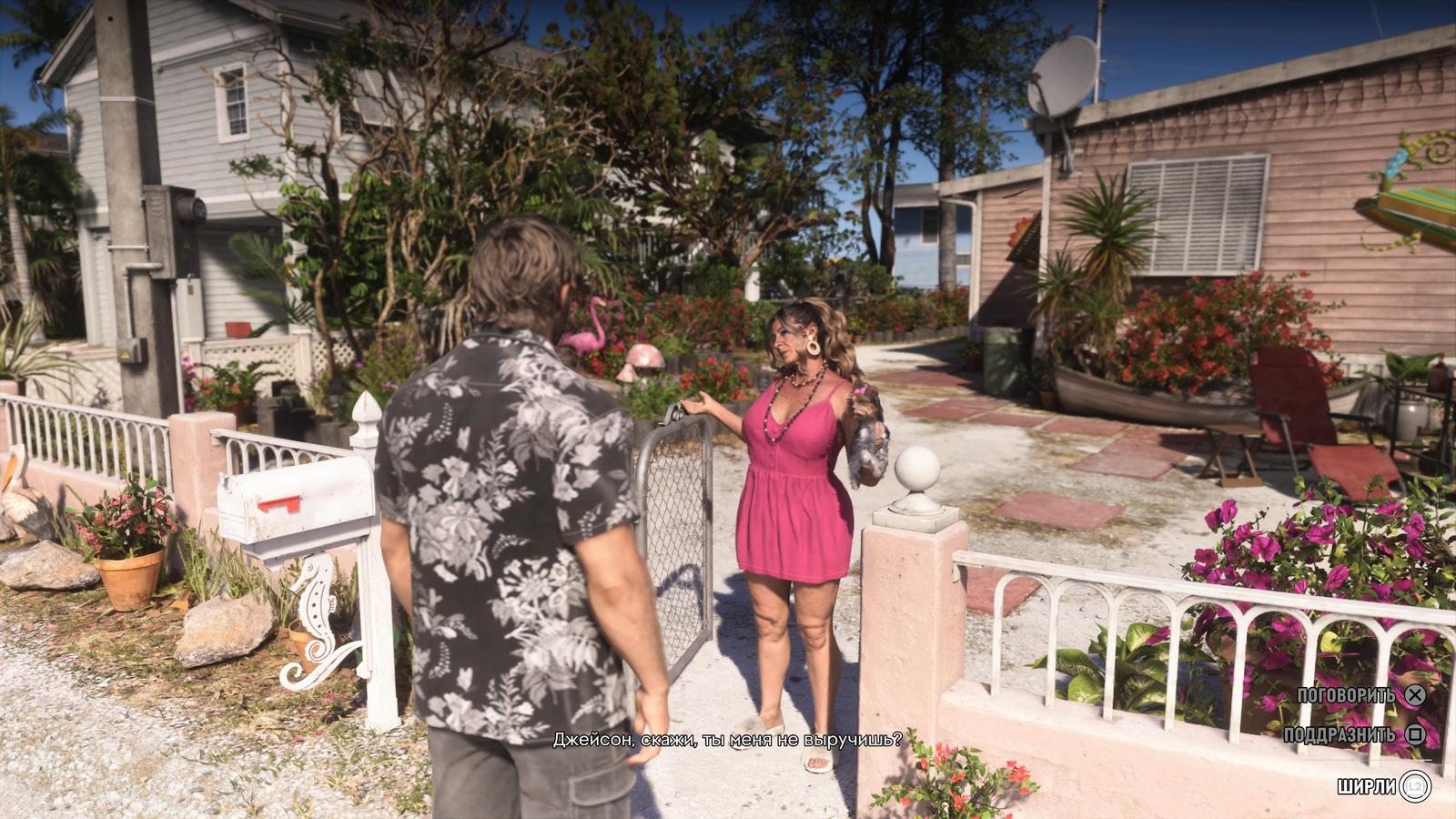
This story perfectly captures the essence of Rockstar Games’ latest work. The developers have woven a world so detailed and rich with events that every step off the beaten path can turn into an unexpected adventure. In 25 hours, I completed around 40% of the story campaign and managed to take part in dozens of similar stories.
Each of them is organically woven into everyday life in Leonida, creating a convincing illusion of a world that exists independently of the player. Believing in this illusion proves surprisingly easy thanks to how masterfully Rockstar structures the opening hours of the campaign, allowing you to settle into Leonida, get to know its inhabitants, and feel like an integral part of the world.
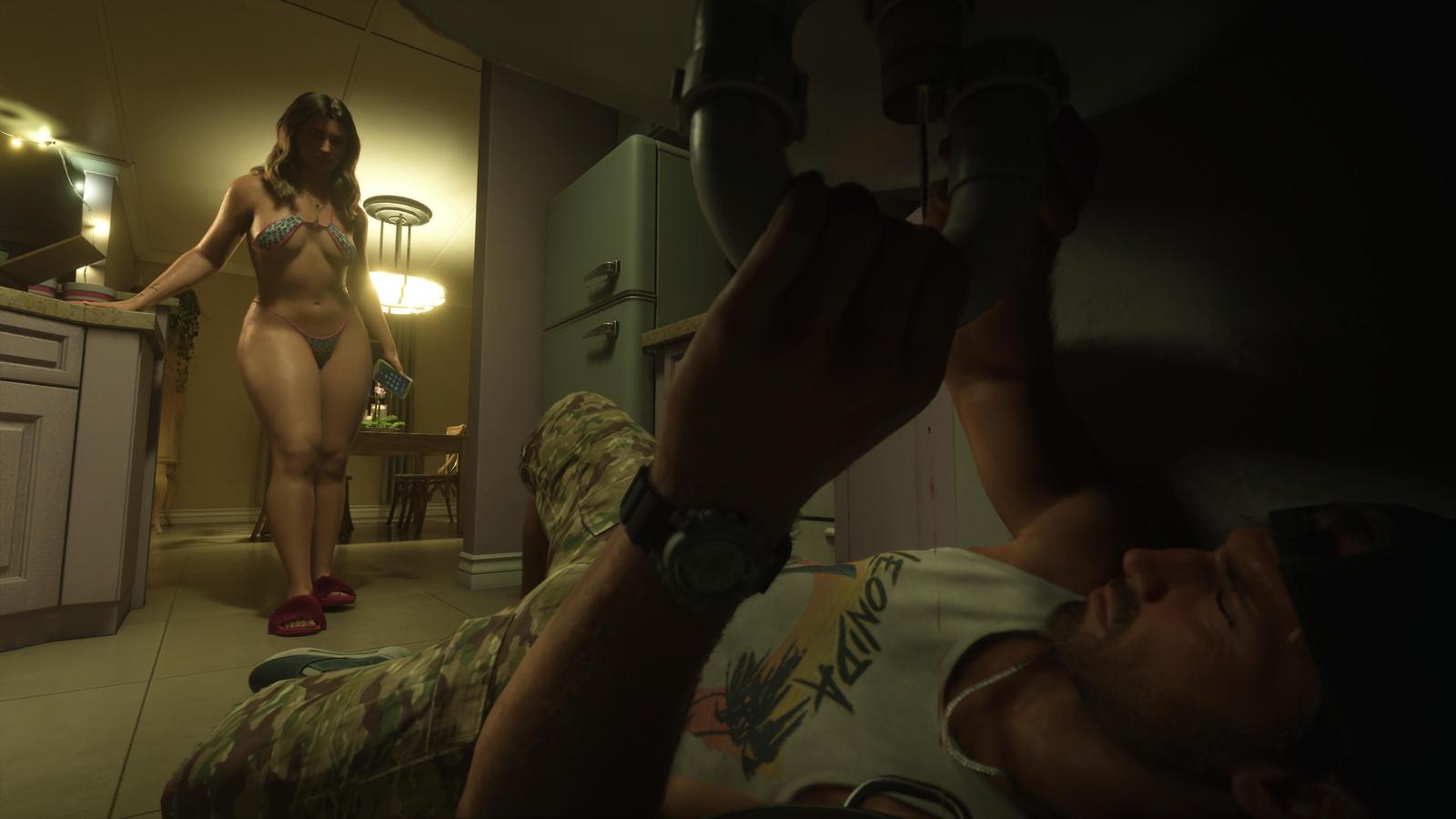
The American dream begins with home renovation
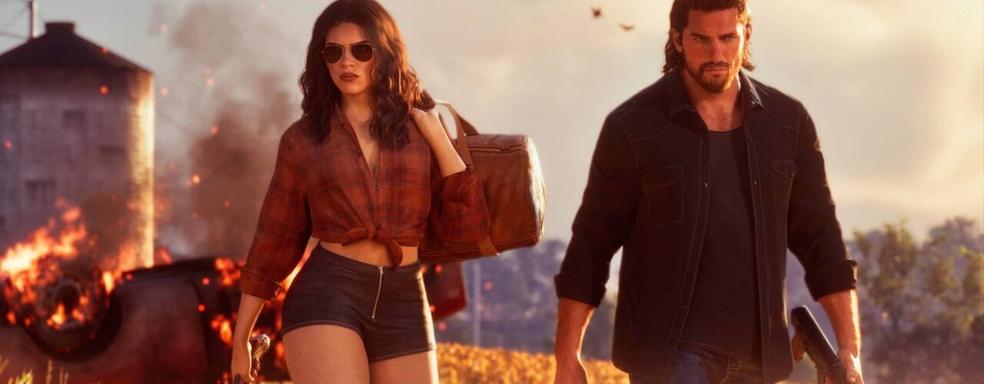
The story of Jason Duval and Lucia Caminos is a modern take on Bonnie and Clyde. They met two years ago in the best GTA traditions: Jason tried to steal a car from a girl who turned out to be a carjacker herself. A romance sparked between them, but the couple soon broke up. Later, Lucia gave birth to a son whose existence Jason didn’t learn about right away.
Trying to earn money to support the child, Lucia ended up behind bars, leaving the boy in the care of her aunt. Now, she is preparing for early release to start a clean slate with Jason and eventually win back custody of her son.
While Lucia is behind bars, we spend the first few hours exclusively in Jason’s company. He lives in a modest house in the small seaside town of Key Lento, drives a beat-up car, and makes a living doing dirty work for local crime boss Brian.
In between smuggling runs, shootouts, and gang rivalries, Jason has to immerse himself in mundane routines: patching the roof, rearranging furniture, and grocery shopping. Along the way, he also clears out pipes for a charming acquaintance and spends evenings with colorful buddies like Cal Hampton—a charismatic paranoid obsessed with conspiracy theories.
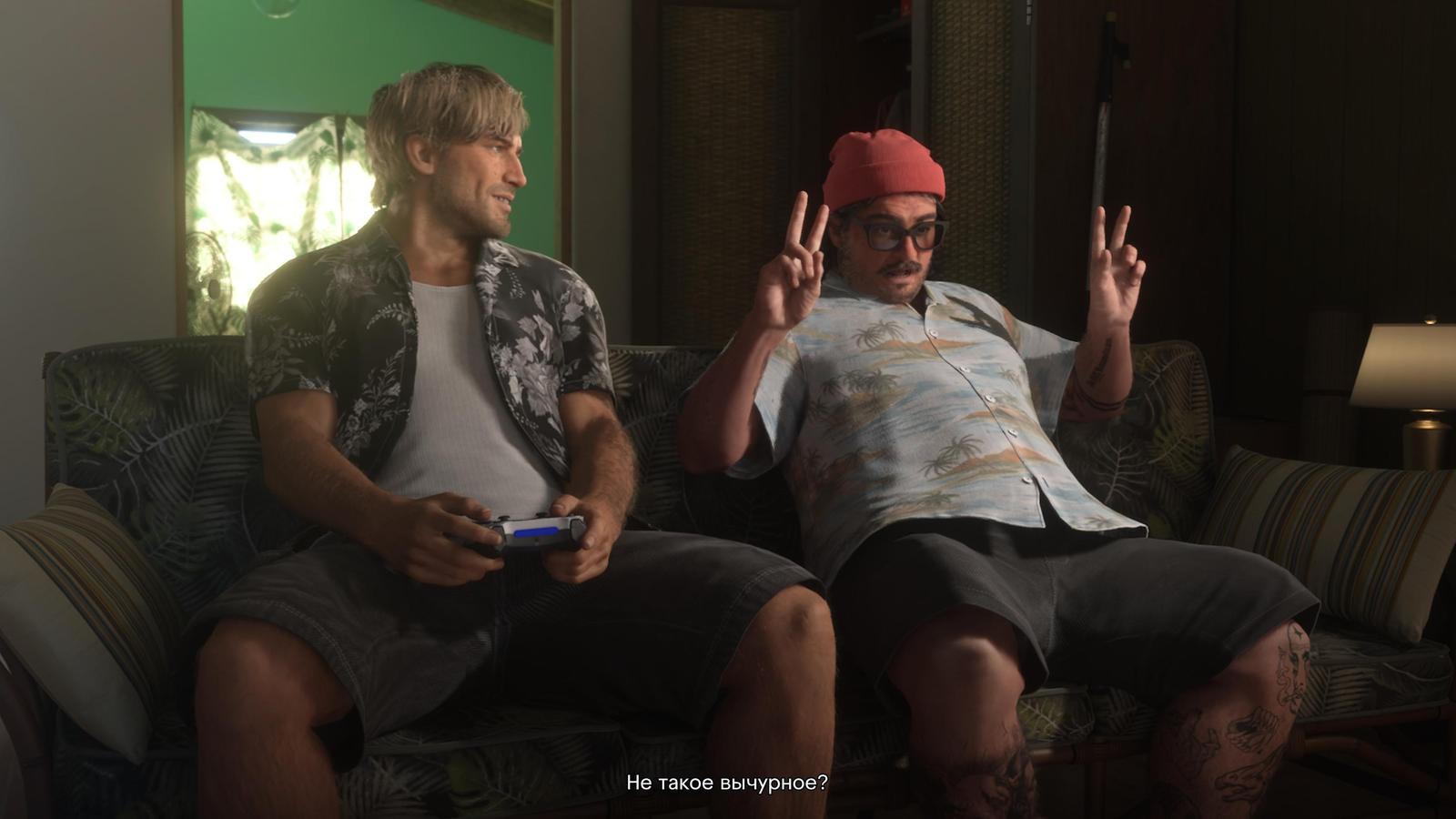
The narrative gains momentum leisurely, and for some, this kind of routine will certainly seem excessive. Yet behind this deliberate groundedness lies Rockstar’s subtle dramatic calculation. The developers let you settle in, connect with daily concerns, and grow attached to those around you, only to then strike a sore spot and turn your familiar world upside down.
At the same time, Rockstar hasn’t abandoned jaw-dropping, spectacular set-pieces and strictly scripted missions. Yet even within them, the player now has more freedom. You can infiltrate certain locations through multiple paths, you don’t necessarily have to kill enemies, and at times shootouts can be avoided altogether by smartly using the environment.
For instance, in one mission, the protagonists openly discuss escaping by boat, but nothing stops you from jumping into a car and getting away by land. There are plenty of such examples. Between play sessions, I glanced at a stream recording by my colleagues and kept catching myself thinking: “Oh, that went completely differently for me!”
I won’t delve any deeper into plot details to avoid spoilers. I will only note that the climax of the first chapter, in terms of tension and directorial mastery, could easily rival the climax of a Hollywood blockbuster. Here you truly realize for the first time how brilliant an idea it was to center the story around a couple in love.
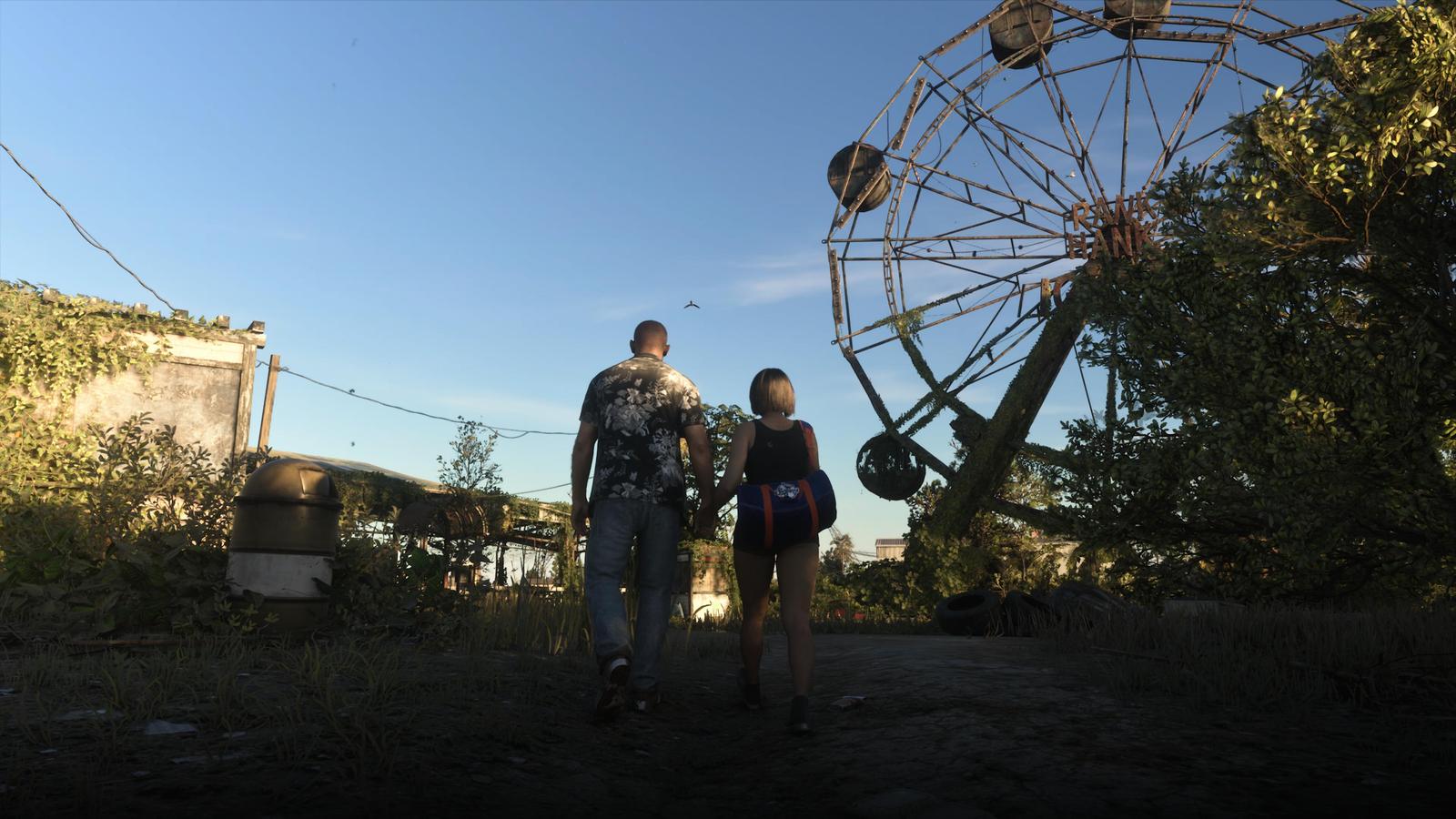
One shared destiny
In GTA V, Michael, Franklin, and Trevor regularly joined forces, but each had their own life, their own problems, and interests. Jason and Lucia are tied much more closely. They make decisions together, get into trouble together, and try to get out of it together. The fate of one directly depends on the actions of the other, and Rockstar skillfully leverages this connection both in the story and gameplay.
From a certain point on, the player can freely switch between the protagonists, with the exception of specific story missions. At the same time, in many tasks you can decide for yourself whether to take your partner along or go solo. For example, during a drive, you can entrust driving to one character, switch to the other, and enjoy the scenery from the passenger seat. You can also scroll through local social media or even step away for a bit while your partner reaches the destination.
Even after 25 hours, I continue to discover new ways for the characters to interact. For instance, right in the middle of a police shootout, you can send your partner a “Help” message, and they will rush to your aid. I suspect that some of these abilities depend not only on story progress, but also on the relationship level between Jason and Lucia, though I haven’t been able to confirm this guess yet.
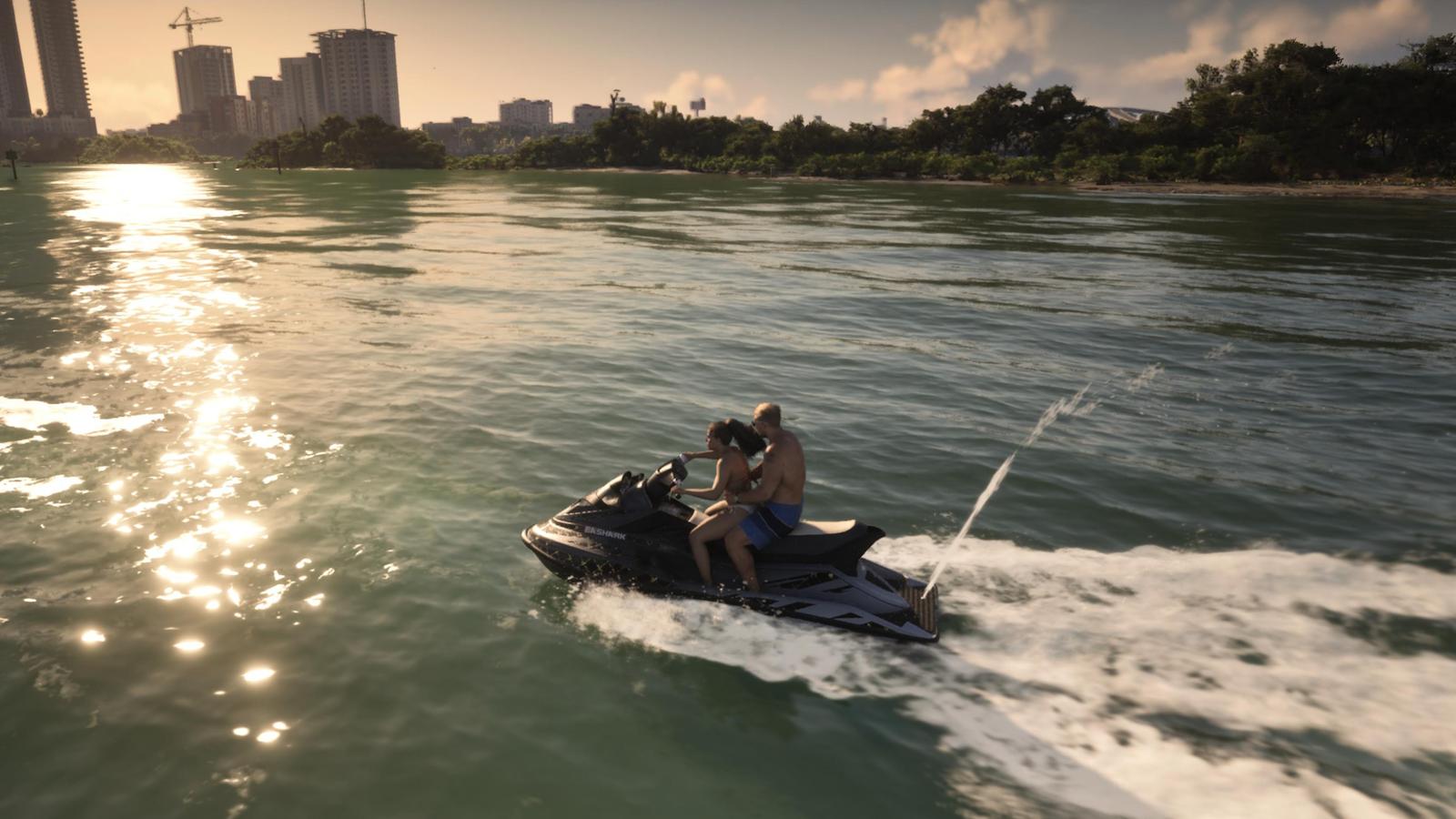
The affinity level rises through joint activities, dates, gifts, and small gestures of care. At the same time, Rockstar doesn’t turn romance into a mandatory daily chore. If you want, you can almost completely ignore this aspect of the game, but then GTA VI will lose a substantial part of its charm.
Especially since the relationship between Jason and Lucia feels alive and natural. The way they communicate, tease each other, and discuss what happened feels remarkably relatable to me. Thanks to shared activities and everyday details, you quickly grow attached to the characters and begin to perceive them as a unit. You genuinely want them to finally scrape together enough money, extricate themselves from criminal messes, and build the life they dream of.
For a series where we are used to stealing cars, staging bloody rampages, and gleefully sowing chaos in the streets, this is a rather unusual feeling. It’s what tells me that the new GTA (at least its story campaign—the online mode is still to come) has matured alongside the audience that grew up on it.
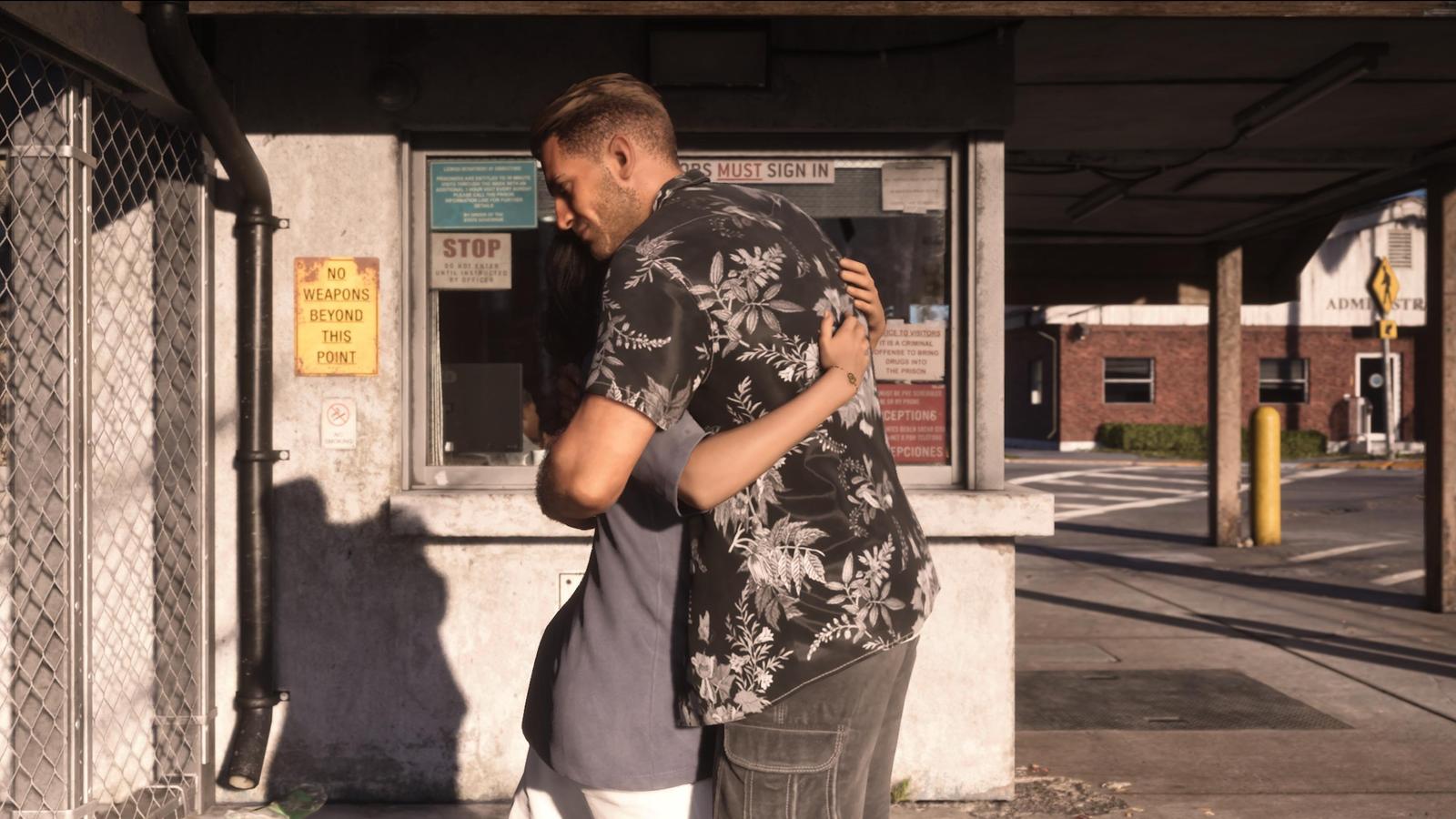
Realism can be comfortable
In its time, Red Dead Redemption 2 stunned me with its attention to detail, but at times grew tedious with its sluggishness. Every action was accompanied by drawn-out animations, characters moved at a snail’s pace, and the mundane looting of a handful of defeated enemies turned into torture after dozens of hours.
GTA VI inherited Rockstar’s manic love for realistic minutiae, but shed much of that cumbersome weight where it gets in the way of gameplay. Looting fallen foes now takes only a second. Vehicles now consume fuel, but in 25 hours I only had to refuel once—to nurse a stolen car all the way to a fence. Even grocery shopping avoids unnecessary hassle: just pick an item off the shelf, and the funds are automatically debited from your account.
Speaking of money. Cash and bank account balances are tracked separately here, and completing certain story milestones requires saving up a specific amount. Yet during the first two chapters, I never had to grind deliberately—by the required moment, I always had several times more money than needed. For example, I finished the second chapter with around $40,000, even though only $15,000 was required.
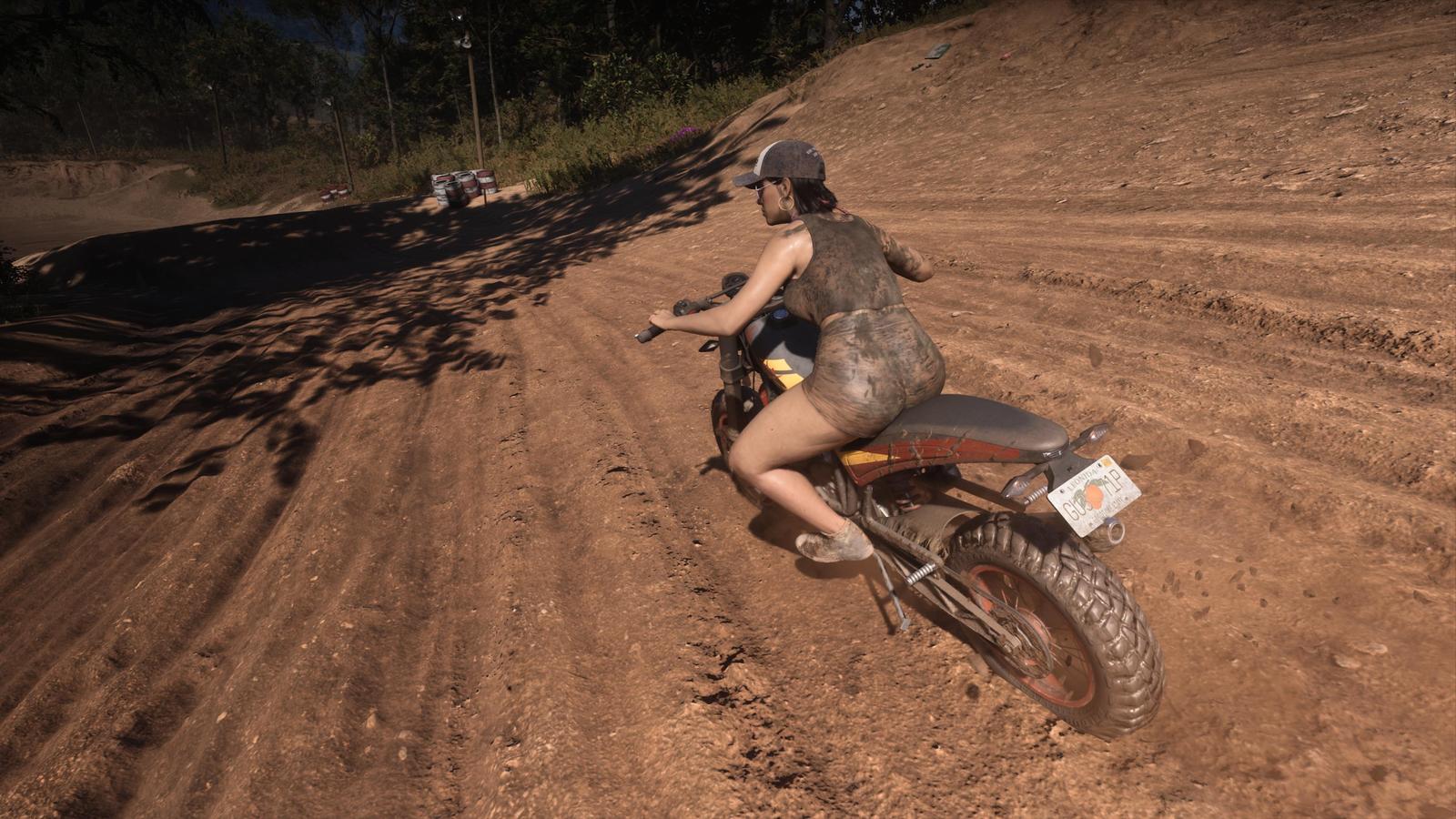
And I haven’t even properly explored the side content yet. Over 25 hours, I tried fishing, pool, motocross, diving for sunken treasure, and even played a bit on the in-game console—featuring some pretty solid games. But that is only a tiny fraction of the available activities, many of which Rockstar introduces right during story missions.
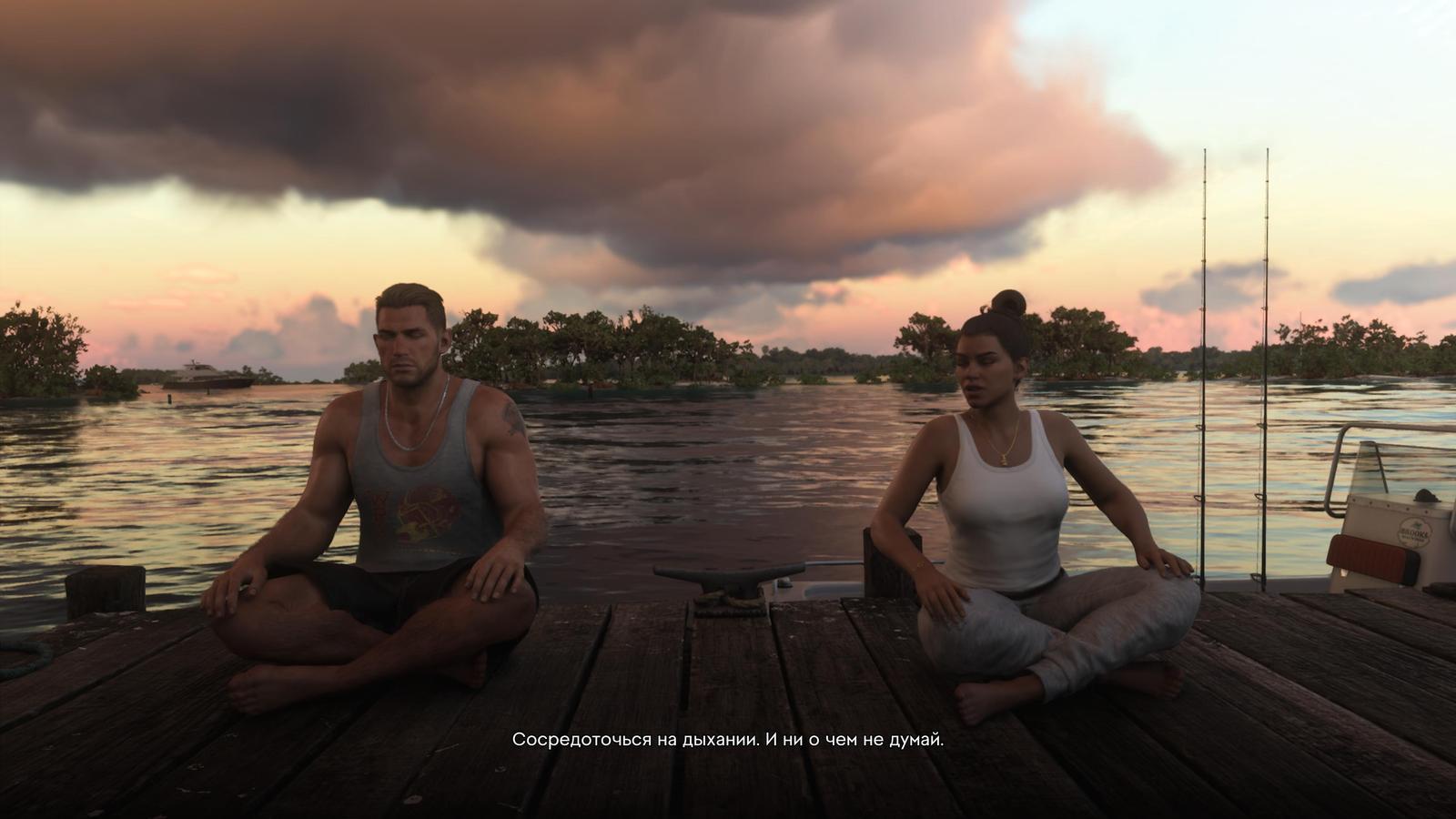
The character physical development system reminiscent of San Andreas has also returned. Heroes can lose weight, gain weight, and build muscle mass. Strength training increases maximum health, cardio boosts stamina, while meditation and certain other activities develop focus, allowing you to briefly slow down time when aiming.
At the same time, just as with relationships, most secondary mechanics do not demand round-the-clock supervision. You can spend hours at the gym, watch your diet, and practically live a second life through your characters. Or you can simply jump behind the wheel, head out to the next mission, and blissfully forget about all these subtleties without losing much of anything. That approach is precisely where I see Rockstar’s greatest achievement. GTA VI doesn’t seek to punish the player for reluctance to dive into all the nuances of its simulation, but it generously rewards those willing to invest time in them.
Crime and punishment
The core gameplay has also been upgraded for the better. To my mind, Rockstar has managed to strike the golden mean between the arcade handling of GTA V and the heavyweight physics of GTA IV. Cars now have tangible mass, and the road surface affects tire grip, so weaving through dense traffic at high speed is something you should now approach with caution. However, cruising around in luxury sports cars won’t be an option at first—in GTA VI, stealing an eye-catching car has become far harder.
Regular cars can still be stolen the old-fashioned way: smash the window and hotwire the ignition via a minigame, or simply drag the driver out into the middle of the road. Later on, a crowbar appears in your arsenal, allowing you to break into cars without damage. It’s a nice little touch: if you decide to keep the vehicle for yourself, you won’t have to shell out for repairs, and a fence will pay more when you sell it. Premium rides are more troublesome—they come equipped with GPS trackers, and I haven’t yet gotten my hands on the tools to bypass that kind of security.
At the same time, despite its name, the game doesn’t heavily incentivize constantly stealing new cars, since the trunk of your personal vehicle can now store bags of valuables, weapons, and a change of clothes. The latter is especially useful when dealing with the overhauled wanted system.
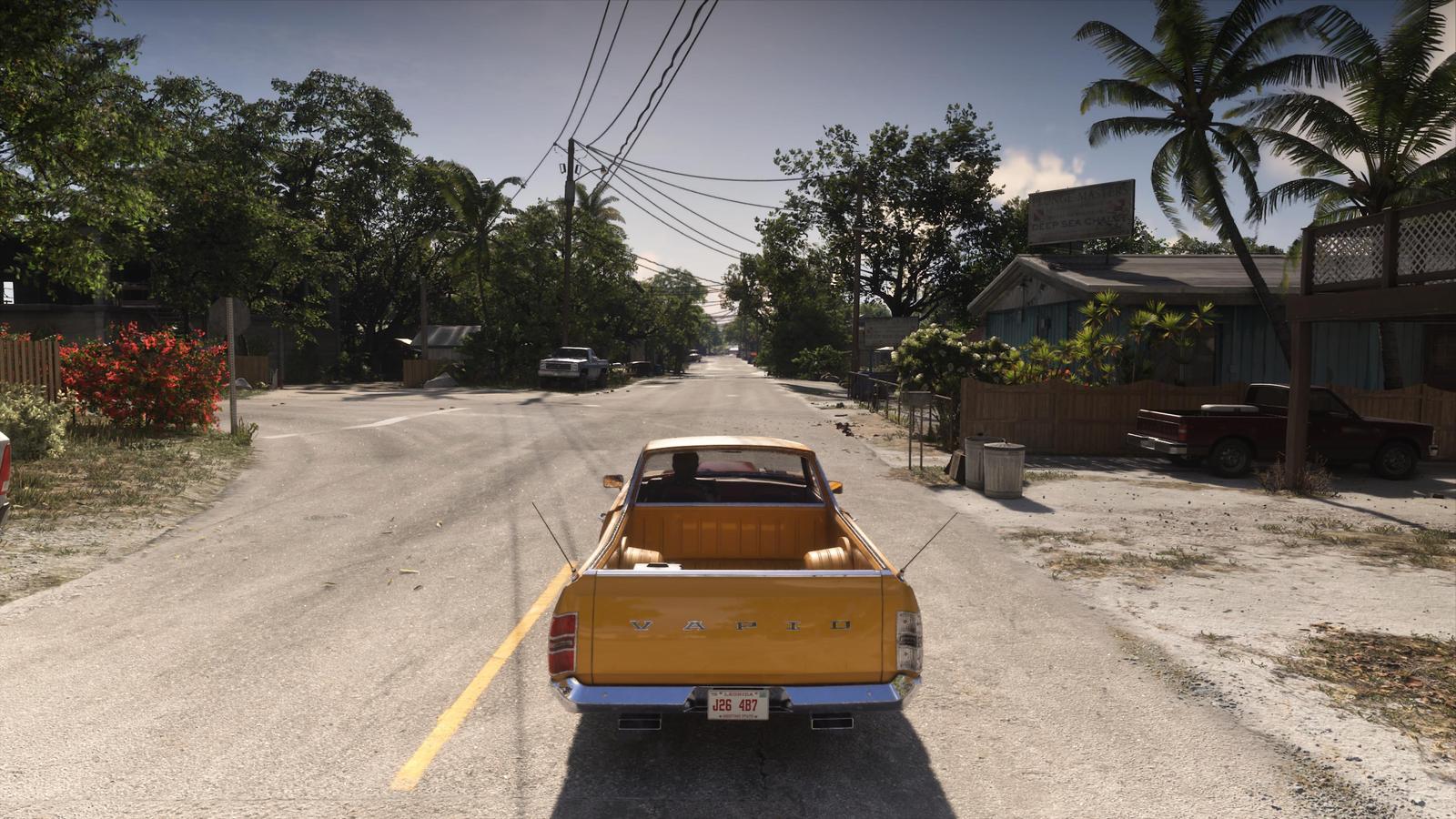
Now the police factor in descriptions of the perpetrator and the getaway vehicle. That’s why you should plan heists in advance: cover your face, map out escape routes, avoid witnesses whenever possible, and don’t forget to wipe surveillance footage where you can. If cops do manage to get your description, you’ll have to change clothes, switch cars, or head to a pay ’n’ spray for a paint job. During a pursuit, you can also split up or ask your partner to distract the police while you slip away from the crime scene.
Moreover, a successful getaway doesn’t mean they’ve forgotten about you: the area remains a search zone for some time, where cops continue scanning for suspects fitting the description. It goes so far that you can leave your car in a parking lot and watch from the sidelines as officers inspect it. Even so, shaking off a pursuit still isn’t particularly difficult. This once again confirms that leaning into realism doesn’t suffocate familiar GTA gameplay, but merely adds depth to it.
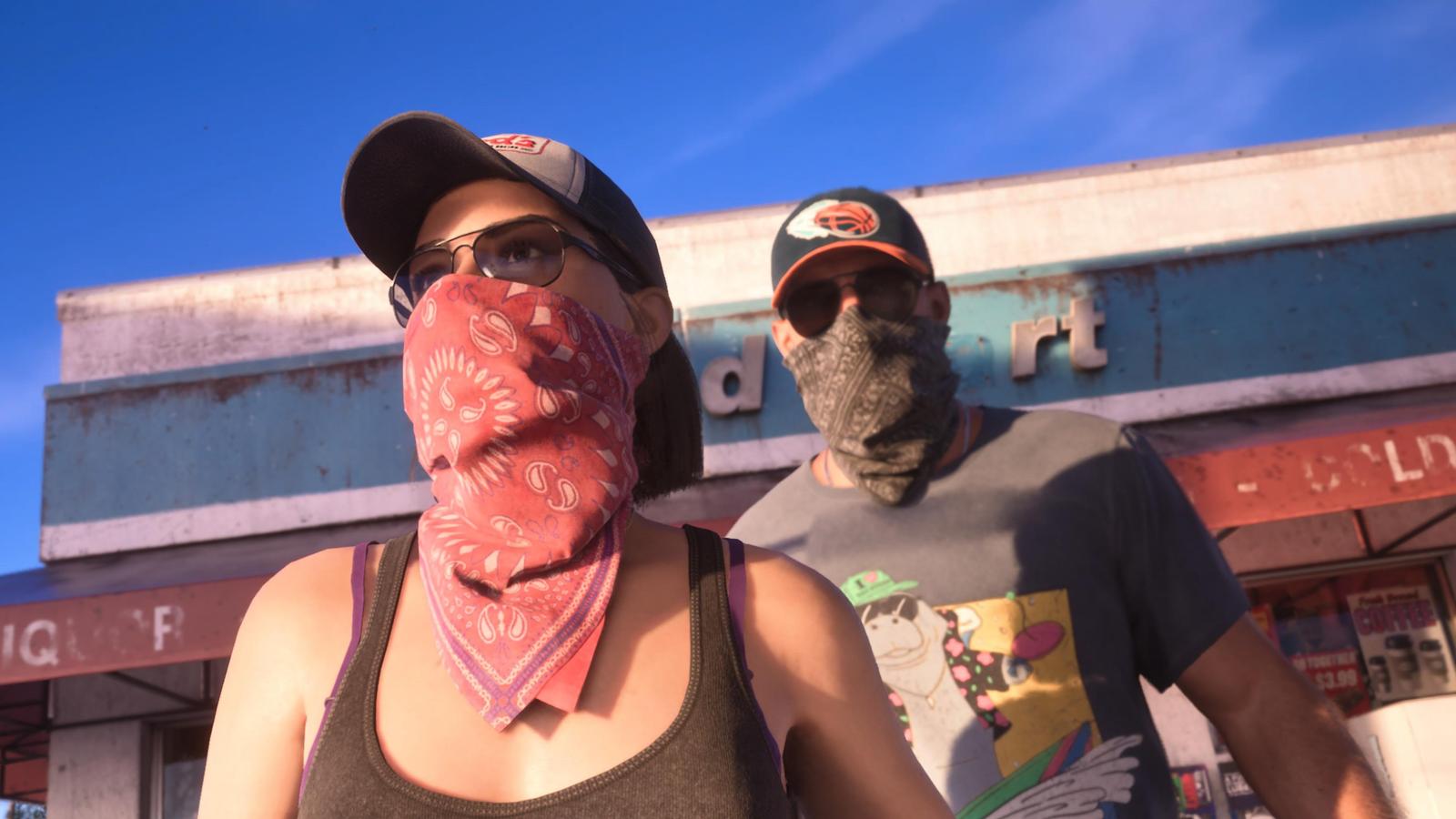
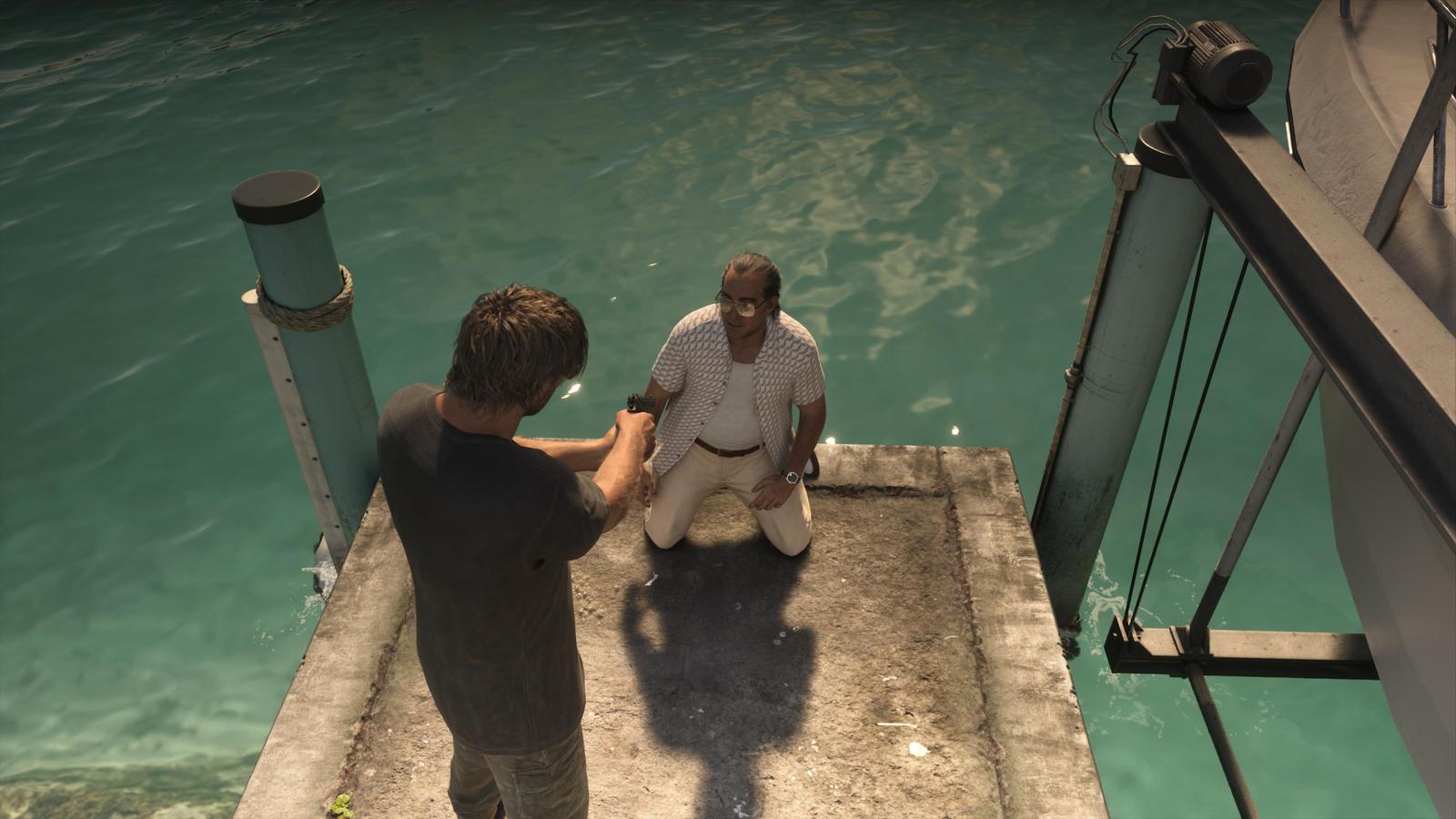
Yet no matter how sound the plan is, sooner or later everything goes south and you have to grab a gun. Gunplay in GTA VI feels great: firearms have gained punchy recoil, enemies react convincingly to hits, and firefights have grown more lively—at times, waves of opponents descend upon the player all at once. Even so, I didn’t notice any miracles in enemy AI behavior: fodder mostly still hunkers behind cover and fires relentlessly. Dealing with them is helped by bullet time, which also highlights enemy weak spots. What’s more, you can now choose where to shoot: some hits are lethal, while others allow you to incapacitate an enemy while sparing their life.
The latter is important because GTA VI builds a criminal profile for the protagonists based on the brutality they display. If you only resort to violence out of dire necessity, the profile stays positive. If you slaughter everyone indiscriminately, the character gradually spirals into madness.
During my playthrough, I tried to act level-headedly, but so far I haven’t noticed the criminal profile significantly affecting anything. For the sake of testing, I even loaded a separate save and staged a bloodbath, pushing the rating into madness. Yet the experiment yielded no immediate consequences. It’s possible the differences will make themselves felt later, so I won’t rush to any final conclusions.
Next-gen is in the details
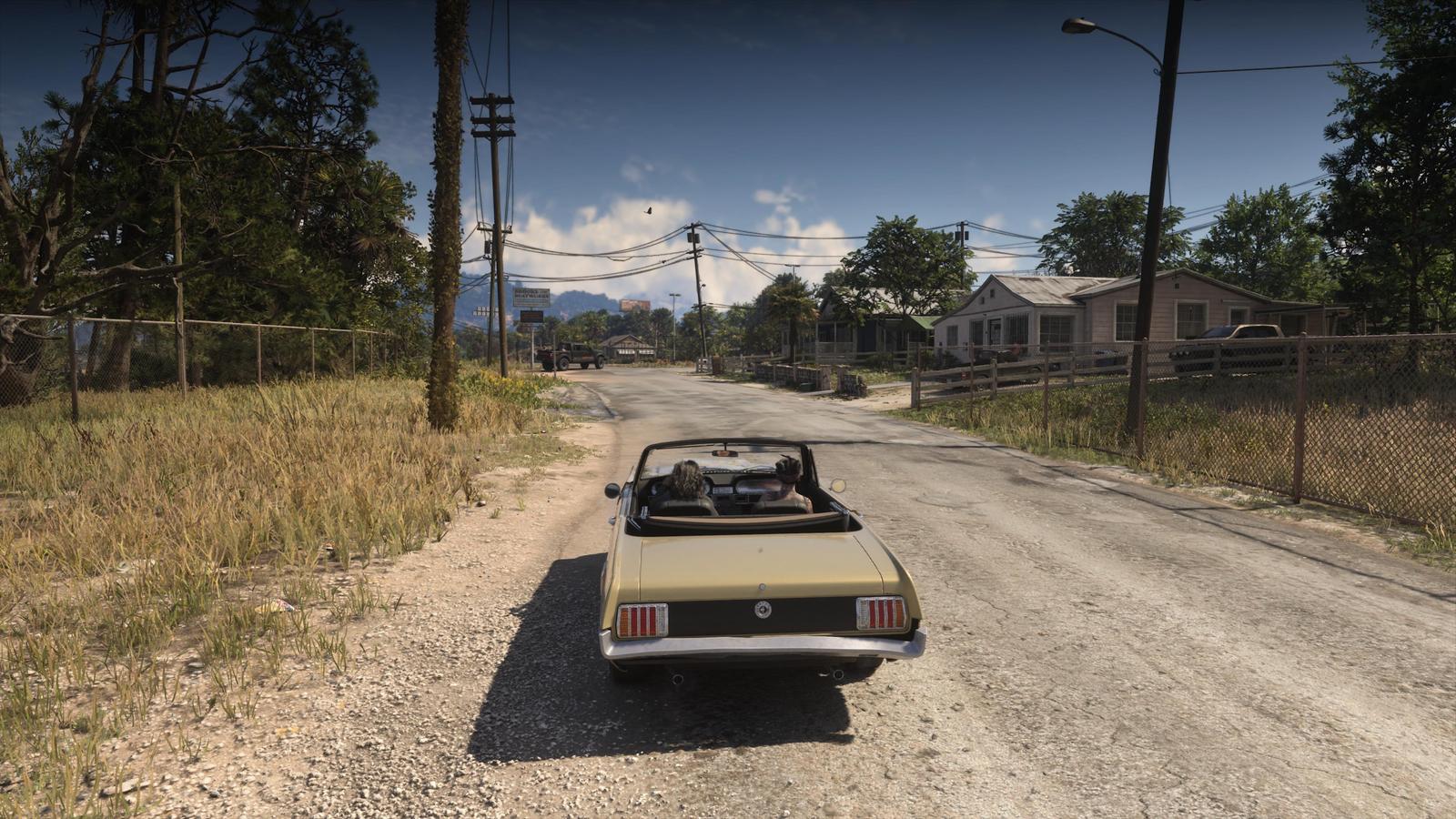
Of course, all these mechanics would be worth little if Rockstar hadn’t created a convincing world in which they operate seamlessly. I’ve only managed to explore part of Leonida, but I already appreciate how strikingly its different corners vary. Coastal towns, rural backwoods, swampy wetlands, opulent estates, and rough neighborhoods differ not only in architecture and scenery.
Each district has its own soundscape, local fashion, and everyday pace of life. Even the number of luxury cars on the streets and the local fauna change. For instance, in Key Lento, iguanas nonchalantly scurry across the roads, while around Port Gellhorn, a bear suddenly ambushed me as I was trying to evade the police through the woods. I certainly didn’t expect the local cops to have such exotic backup!
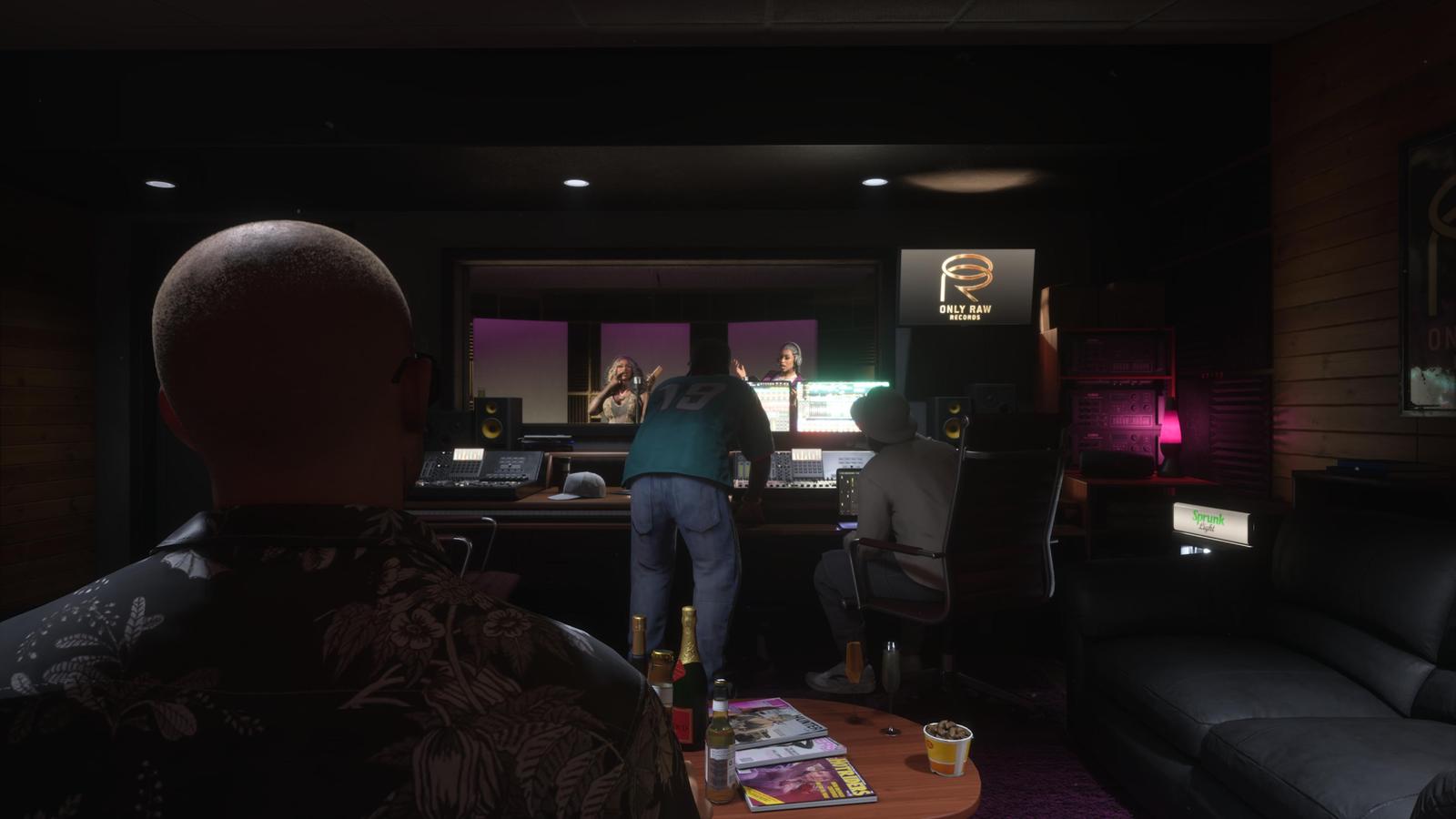
It is out of such unexpected moments that each player’s unique story in Leonida is forged. And you don’t even have to go looking for trouble yourself—sometimes it’s enough just to be nearby. Once, I witnessed officers pulling over an intoxicated driver. He started sassing the lawmen, then abruptly hopped into their patrol SUV and sped off. Another time, driving past a convenience store, I spotted a robbery in progress and decided to rob the robbers themselves, pocketing the loot while technically keeping my hands “clean.”
It’s not out of the question that such “random” encounters are actually scripted by the developers in advance and will eventually start repeating. But for now, Leonida keeps throwing surprises my way, regularly turning routine drives into genuine adventures.
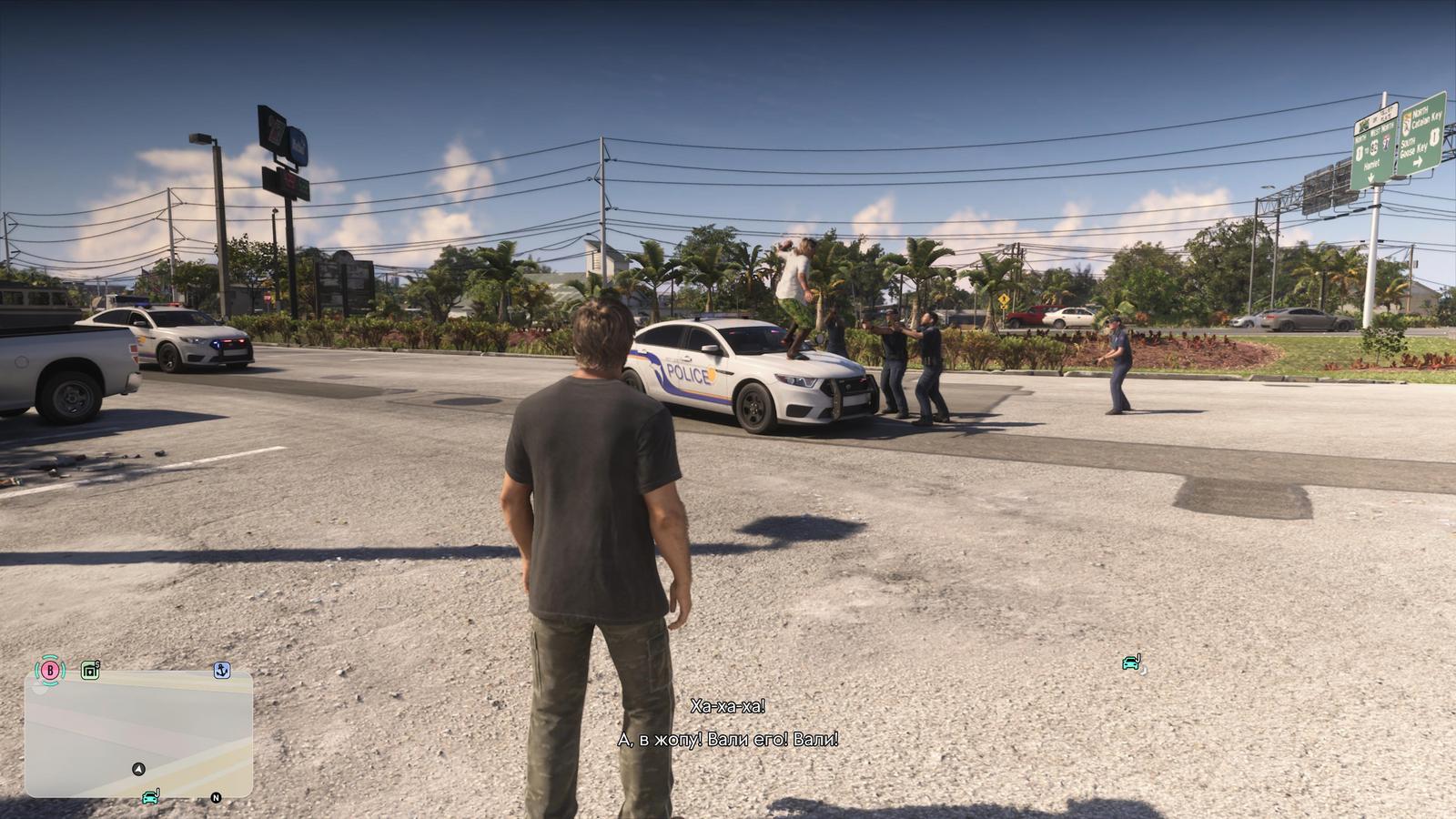
Moreover, the authenticity of this world and its inhabitants shines not only in unpredictable occurrences, but also in hundreds of contextual animations accompanying even the most trivial actions. For instance, when a character has both hands free, they leisurely pull chips from a bag one by one. But as soon as one hand is holding a soda bottle, the protagonist tears open the bag with their teeth and dumps the contents straight into their mouth.
There are plenty of less obvious features that the game prefers to keep quiet about. During a vehicular shootout, you can duck to dodge bullets or smack an opponent with the car door. This level of attention to detail at times recalls Naughty Dog titles, where every gesture and contact with the environment lends credibility to what’s happening. Only here, that same standard of craftsmanship is realized within a colossal open world where no one forces the player along a pre-scripted path.
Visually, the leap compared to GTA V and RDR2 is equally striking. Environmental detail, character models, animations, lighting, pedestrian and vehicular density, draw distance—practically everything has reached a qualitatively new level. Sunrises, sunsets, and nighttime streets are especially mesmerizing, when the intricate lighting system reveals itself in all its splendor.
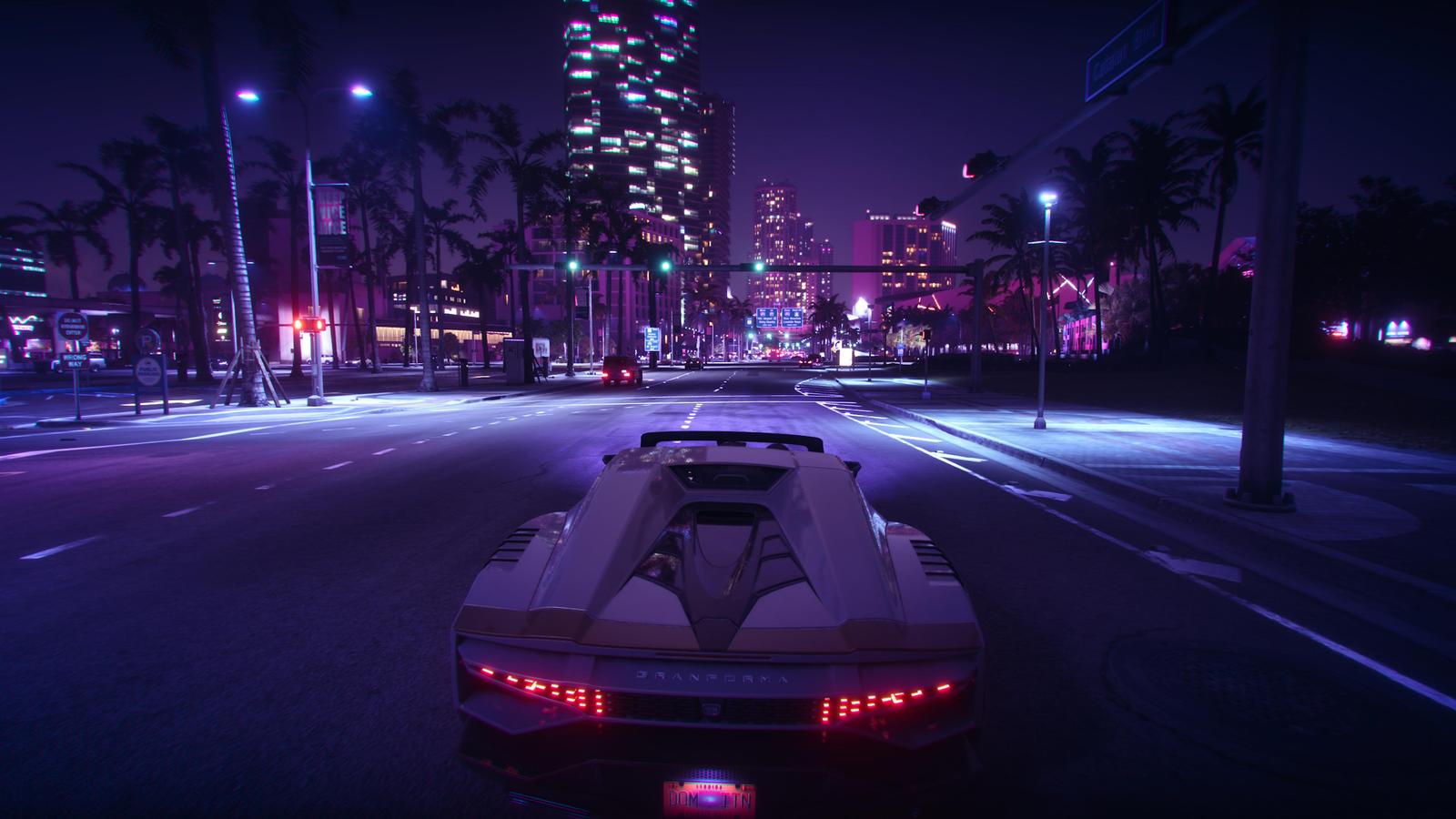
Yet all these ambitions come at the cost of image quality and frame rate. I’m playing GTA VI on a base PS5, where you have to settle for a “target” 30 FPS with occasional drops during chaotic skirmishes and a rather blurry image in spots. The loss of clarity in motion is especially noticeable when foliage, water, and fine details turn into a thick soup. I didn’t run into any other serious issues: over 25 hours, I encountered neither bugs nor crashes. Though judging by online videos, minor glitches do exist in the game.
Nevertheless, even on a regular PS5, the scale of Rockstar’s achievement boggles the mind. True next-gen here isn’t so much about pixel counts and frames per second as it is about the unbelievable complexity and craftsmanship of the virtual world itself. You can only truly feel this firsthand. No video—and certainly not this text—can convey even a tenth of what GTA VI truly is.
Verdict
GTA VI can easily be called Red Dead Redemption 3 in a modern setting. Rockstar retained the depth and realism of its previous title, but shed the past clumsiness: it injected dynamism into chases and shootouts, expanded freedom in tackling missions, packed the world with diverse activities, and told a poignant story of two people you quickly grow fond of and whose fates you genuinely care about. Of course, I haven’t reached the ending yet, haven’t explored most of Leonida, and surely haven’t uncovered even half of what the developers packed into the game. Yet even now, not a shadow of a doubt remains in me that GTA VI was worth every single year of the thirteen-year wait.
Even before release, I wrote that GTA VI could be the last cultural monolith of such scale—the final chord of an era of gargantuan handcrafted sandboxes. After 25 hours in Leonida, I am only firmer in that belief. Rockstar Games has once again accomplished the impossible. Creating a world like this takes more than a massive budget, thousands of specialists, and long years of development. It also requires the willingness to pour all those resources into details most players might never even notice. In an industry increasingly leaning on neural networks, such luxury risks becoming a relic of the past. It’s entirely possible we won’t see anything comparable ever again, even from Rockstar itself. That makes the chance to explore this world in the opening days following release all the more precious. If you have the opportunity, don’t hesitate—head to Leonida. It’s an adventure worth experiencing for yourself.
Never miss our newsAdd this site to your preferred sources to see us more oftenAdd on Google