Most disappointing games of 2021. Part one [Deathloop, Battlefield 2042, Biomutant, etc.]
Translated with AI from the Russian original.
While there were few good projects in 2021, we were far luckier when it came to bad ones! In 2021, almost all the big companies made terrible mistakes.
Deathloop
Vitaly Kazunov

Arkane’s game received a lot of flattering reviews in 2021. Firstly, it is a PlayStation 5 console exclusive (hence the close attention to it) and, secondly, it is a game from the creators of Dishonored! What’s more, it features a unique concept: our hero named Colt finds himself trapped in a time loop and is forced to relive the same day over and over again, trying to figure out what is happening on the mysterious island. To break the loop, he must find and eliminate eight targets in a single day. On top of that, he will fight not just dim-witted, generic minions — Julianna, controlled by another human player, is hunting him. So there is your “thirdly” — unusual PvP showdowns.
All of this sounds great, but in reality, the game turns out to be linear. After uncovering all the “clues” (whose locations are explicitly pointed out to him by the plot), the hero discovers the whereabouts of the eight targets and heads out on the hunt. In essence, the whole game ultimately boils down to a not-so-thrilling run through a single half-hour final stretch where you are, once again, held by the hand. Again and again you repeat it… realizing that completing any level in the Dishonored dilogy was crafted with far more imagination.
As for the clashes with Julianna, everything stumbles over the technical implementation. Matchmaking often takes dozens of minutes, and when you finally start the hunt, your main enemy is not a clever human opponent, but disconnects and lag. The game had a poor launch on Steam, and very few people play it now, so the multiplayer — good on paper — can be crossed off the list of the project’s strengths.
Biomutant
Mikhail Shkredov

Biomutant was appealing due to its unusual approach to implementing several elements. Players were supposed to explore a strange world as an equally strange critter created in an advanced character editor. The trailers hinted at elements of The Legend of Zelda: Breath of the Wild. We were shown flashy combat combining melee and ranged weapons. All this was spiced up with colorful scenery and the mysterious fate of the protagonist. Alas, the promising trailers were mere smoke and mirrors.
In Biomutant’s mechanics, every element is implemented half-heartedly. In combat, there is no feeling that the hero is hitting enemies with a giant sword. Ranged weapons, despite their flashy appearance, feel like pathetic pea-shooters. Enemies are dumb and repetitive, and fights with them are predictably boring. The world is cluttered with identical dungeons and equally repetitive outposts, the clearing of which repeatedly devolves into slaughtering mindless enemies and identical bosses. There is no challenge, no difficulty, no satisfaction from victory. There is no joy in getting new weapons. The wretched plot with an annoying narrator only worsens the miserable situation.
Biomutant is a prime example of a thoughtless dump of ideas. The game has plenty of elements, ranging from crafting gear, weapon upgrades, and character leveling to moral dilemmas, massive boss fights, and piloting a combat mech. Yet, not a single aspect works properly. Behind a vibrant picture, the world clumsily hides tons of repetitive activities that become exhausting right at the start of the adventure. A wretched, reeking heap of content.
MIR4
Dmitry Krivov

The idea of making money just by playing is incredibly enticing. And if the gameplay is quite “palatable,” why not give the developers a little cash for an edge? The free-to-play Korean MMORPG MIR4 burst into the lives of hundreds of thousands of players with the promise of replacing their jobs or becoming a second source of income.
Pleasant graphics, attractive characters, a story campaign, a rich progression system, cross-platform support on PC and mobile devices, shared progression, support for 12 languages, and the opportunity to earn by trading an in-game resource (darksteel) for cryptocurrency and real money.
South Korean studio WeMade has extensive experience in creating popular MMORPGs, and MIR4 was meant to be the pinnacle of the developers’ work.
Right after launch, the DRACO cryptocurrency soared to $28, allowing players to earn hundreds of dollars a day, but it quickly plummeted to $0.70. Then came another surge and another crash. Soon, issues arose with item duping, legions of bots, and cheaters. Dominant clans pour in thousands of dollars and thousands of online hours, making it increasingly harder for an ordinary player to earn money with each passing day.
For convenience and seamless progression, the game features auto-combat, auto-mining, and auto-questing. This places certain obligations on a dedicated user that are hard to reconcile with real life. The character’s tribulations require constant supervision, as the “auto” prefix cannot replace a human brain. An endless number of objectives and hardcore Korean-style gameplay are captivating at first, but turn into a grind that quickly wears you out.
Moreover, MIR4 is unlikely to offer memorable impressions, as an experienced player has seen it all before. Yes, you could once try to make some quick cash here, but beforehand it was advisable to invest real money, which rather resembles elements of a financial pyramid scheme.
Developers are still coming up with new goals for players: NFT items and character tokens that can be traded for currency, adding new content, and fighting bots, but faith in the product’s future is fading day by day. Especially since WeMade has already announced a new blockchain game with similar mechanics.
The Lord of the Rings: Rise to War
Mikhail Kazachkin

Chinese IT giant NetEase has long streamlined the production of mobile games. The craftsmen from the Middle Kingdom have mastered all genres. Round-the-clock work is underway on games based on their own intellectual property as well as franchises well known to Western audiences.
At first glance, such cooperation seems very profitable for rights holders. NetEase handles all the challenges of development, publishing, and support, while trademark owners just need to count the royalties arriving in their bank accounts. One only has to turn a blind eye to how fans will receive the finished product and what methods will be used to fleece them.
“The Lord of the Rings” is a legendary franchise. The significance of Tolkien’s work was immense even before Peter Jackson’s film trilogy, and after its resounding success, it grew even further. The Lord of the Rings: Rise to War, created under license from Warner Bros., is based specifically on the films set in the fantasy universe. And the initial impression makes it seem as though the creators treated the world crafted by Tolkien and adapted by Jackson with respect.
High-quality graphics, presentation, music, the overall atmosphere, and familiar visuals promise a fantastic adventure, epic battles, and a magical world cherished by many. But the story campaign and gameplay put everything in its place. This game has nothing to do with the world of “The Lord of the Rings.” Having done a decent job with the presentation, NetEase didn’t reinvent the wheel; instead, they repackaged a generic mobile strategy game with the traditional pay-to-win model, grinding, resource gathering, and slow, tedious castle building.
To be fair, there are a few grains of novel mechanics uncommon for the genre, but fundamentally this changes nothing. At its core, it still relies on the same automated battles won by the “commander” with the deepest pockets.
The Lord of the Rings: Rise to War is a parasite draining money from fans of Tolkien’s fantasy world. This knock-off has nothing to do with either his writings or Jackson’s film trilogy. The poorly stitched-together plot and dialogues look like a mockery of fanfiction. Behind the sleek, expansive facade hides a generic pay-to-win cash grab that can only nominally be called a game.
Axiom Verge 2
Nikita Demidov

I like metroidvanias. I wouldn’t call myself a connoisseur of the genre, but many of its titles have left a mark on me. Before the release of Axiom Verge 2, I even decided to specifically check out the first game. There was nothing fundamentally new or intriguing about it, but the visual style caught my attention. Plus, the very concept of a metroidvania seems hard to ruin.
However, if you set your mind to it, you can ruin anything. Otherwise, it is impossible to explain a massive area that is completely unnecessary for progression, attempts to give the game world the illusion of depth through dozens of notes lacking coherent information, as well as crutches where a new, twentieth mechanic starts conflicting with one of the previous ones. Nor can one explain the disjointed plot, which nevertheless promises a sequel.
Axiom Verge 2 is a gold standard of clunkiness. It’s as if the creator sat down to play cards, was dealt a great hand, and deliberately did everything possible to lose.
Battlefield 2042
Maxim Dragan

The best game according to the highbrow internet, where bugs are considered fun and criticizing the developers is forbidden because they might get offended and stop supporting the project. In the real world, however, Battlefield 2042 turned out to be one of the biggest flops not only of 2021, but in the entire history of Electronic Arts and DICE.
Several factors came together at once: the atrocious technical state of the game and servers, controversial decisions by game designers, poorly designed new maps, the abandonment of the Levolution system, and the absence of many weather effects due to rushed development time. Updates do not fix old problems, but only create new ones.
Instead of classes, individual specialists were introduced, just like in Rainbow Six: Siege. And there are only a couple of genuinely useful and effective characters, while the rest are almost useless in most gameplay situations. As an example: the versatile Falck, who is her own medic and ammo supplier, while the unrestricted choice of weapons allows turning her into either a sniper or a close-quarters fighter. Is there any need for teamwork and player interaction under such conditions? From my own experience, I can say no.
Modes are also a major issue. The only interesting one is Portal, developed by a studio led by renowned game designer Vince Zampella. They made high-quality remasters of Battlefield 1942, Battlefield Bad Company 2, and Battlefield 3. The core Battlefield 2042 by the Swedish branch of DICE, however, doesn’t withstand any criticism: two poorly balanced “large-scale” modes, Rush and Conquest, and a parody of a battle royale—that’s all the new “Battlefield” has to offer players right now. Huge maps that are exhausting to run across only add gloom to already dull matches.
The game’s trailers promised fun, using memes from the community, but all of it was a lie. At launch, the game’s technical state was worse than rock bottom—Battlefield 2042 sometimes didn’t work at all due to server issues. Poor hit registration, immortal players, bugs with vehicles driving up vertical walls—none of this has been fixed to this day.
The player exodus has already happened, and the title lost nearly 80% of its player base on Steam alone. Even a “free weekend” a month after release couldn’t attract new users. Battlefield 2042 is nearly dead, but I don’t feel sorry for DICE at all—such dismissive disregard for players must not go unpunished.
Nintendo Switch Online + Expansion Pack
George Petrovich

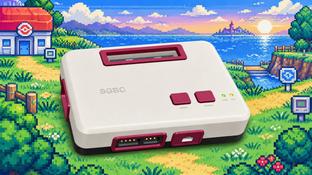
It has become customary to criticize and even scold Nintendo for the Nintendo Switch Online subscription with its paid multiplayer. The bonus is access to a limited number of games from the ancient SNES and NES consoles. Year after year, the game library grew, while players waited for the “Big N” to add hits from the Nintendo 64 and GameCube consoles. And that day finally came.
For the first time in a long while, Nintendo—known for its meticulous attention to its own projects and their polish—didn’t just fall flat on its face, but plunged headfirst into a vat of a well-known substance. In late autumn, the Expansion Pack was released, allowing access to hits from the Sega Mega Drive (Genesis) and, most importantly, Nintendo 64 consoles for an additional fee! But it was an absolute disaster.
Unacceptable input lag, appalling graphical artifacts, slowdowns. This is just a basic list of issues encountered by Expansion Pack subscribers. Some launch titles turned out completely unplayable. It felt as though the user hadn’t purchased a subscription costing twice the base price, but rather installed a homemade emulator on their console.
One should not forget that by purchasing the “Expansion Pack”, players get access to a substantial add-on for the most popular game on the platform—Animal Crossing: New Horizons. The only problem is that not everyone needs it, and statistics show that the “pack” was mostly purchased for the Nintendo 64 games. However, the troubled emulation of N64 games won’t be fixed as quickly as one might hope. The architectural peculiarities of the Nintendo 64 and Nintendo Switch take their toll.
One can only hope that Nintendo won’t want to lose face and will fix its emulator. But as experience shows, Nintendo doesn’t worry too much about its reputation and, most likely, will do nothing.
Elite Dangerous: Odyssey
Viktor Gradulenko

The game, which is an unspoken competitor to Star Citizen, managed to deliver a lot—and even more than what Chris Roberts’ team promises. And while these two projects didn’t overlap much before, the first warning bell rang with the Horizons expansion, when landing on planets with a rover became possible. Then the Elite Dangerous developers decided to take the bull by the horns and provided the opportunity to step out of the ship and walk around planet surfaces on foot to your heart’s content, inevitably inviting comparisons between the two games.
The Odyssey expansion, which was supposed to be a breath of fresh air for the game, exacerbated many old problems and created quite a few new ones. The game became teeming with bugs and ran poorly even on top-tier PCs. Scripts failed to trigger, NPCs vanished, and ships and buildings disappeared. The game engine was literally going crazy. What infuriated many was the presence of softlocks in the tutorial, where a mission simply couldn’t be completed because the required evacuation ship failed to load.
The developers began patching their creation, and over time, many critical issues were addressed. However, the bitter aftertaste and disappointment from the eagerly awaited expansion did not go unnoticed, leaving the developers’ reputation severely tarnished. Currently, Odyssey is much more playable than at launch, but unfortunately, many players no longer have any real desire to return to the game.
On the other hand, Elite Dangerous still retains that atmosphere of human isolation amidst a vast universe, and if you enjoy hours-long spaceflights and exploring uncharted planets, there is really no alternative. EVE Online is great, but it’s a completely different kind of game.
Disciples: Liberation
Maxim Ivanov

Disciples: Liberation can be considered a prime example of the modern gaming industry’s problems. The game is infected with “the agenda”, the story was written by people who distort the events of previous installments, and the gameplay is full of elements from pay-to-win mobile titles.
Scar-covered veteran warriors were replaced by fresh-out-of-the-barbershop hipsters. The lead role was given to a strong and independent woman—she can do everything, effortlessly defeats any foe, and has no flaws. Races and characters from previous installments were stripped of their personality, turned into a mere cheer squad for the protagonist. The obligatory struggle against oppressors was added, replacing a deep and well-crafted storyline.
Amateurs worked on the script, as everything happening in the game can be described in a single word—chaos. Events of previous installments were twisted to fit the new canon, the protagonist’s actions carry no weight, and unnecessary new dimensions and gods were introduced. As a result of these changes, Disciples: Liberation turned into a third-rate fanfic rather than a full-fledged story.
Pay-to-win mobile trash mechanics artificially drag the project out. Resources at the base replenish in real time! Upgrades are expensive, so you just have to wait around to level up a building or a sword.
All of this makes you hate Disciples: Liberation throughout the entire playthrough. The gameplay is dull and boring. Lore and canon are trampled upon. The graphics are indistinguishable from dark fantasy mobile games. It gives the impression that the game was originally intended for mobile platforms, but then the creators changed their minds.
Call of Duty: Vanguard
run.code

Call of Duty: Vanguard is one of the worst games of the passing year. The single-player campaign, thoroughly drenched in an agenda, is a genuine clown show and a parade of absurdity. You refuse to believe that people with working brains worked on this script. It feels more like a military movie parody on the level of “Hot Shots!” and a sign of disrespect to one of the bloodiest and most prominent conflicts in human history. Usually, you don’t expect revelations from the Call of Duty series, but with Vanguard, one can’t help saying: “I had no expectations whatsoever, yet the game still managed to disappoint me.”
The narrative structure is terrible. It feels as if the people working on Vanguard’s script didn’t even speak to each other, which is why the plot jumps back and forth in time, telling dull backstories of characters whom the audience finds completely uninteresting and at times even repulsive.
Remember Soap, Price, Woods, or Ghost? The emotional attachment you felt toward them? How you worried when their lives were in jeopardy? Well, Vanguard has none of that. The quartet of main characters is a collection of tropes reflecting the creative bankruptcy of the writers at Sledgehammer Games.
Polina is strong simply because she’s a woman. Kingsley is in charge just because he is Black. There is no intrigue. Right from the start, you know that the heroes will be fine, because they are such rebels, such fighters, so unyielding!
There is no point in even discussing the completely non-existent balance in multiplayer, the absurd weaponry, or the developers’ utterly foolish decision to exclude Axis soldiers from the multiplayer of a World War II game. Identical allied clones hacking each other to pieces.
Never miss our newsAdd this site to your preferred sources to see us more oftenAdd on Google