Heroes never die! Songs of Conquest review (early access)
Translated with AI from the Russian original.
While Ubisoft poses as an exemplary AAA company and buries the Might & Magic brand, indie developers are creating their own Heroes of Might & Magic. “Songs of Conquest” draws inspiration from many turn-based strategies, trying to take the best from them — here you have “Heroes”, Disciples, and King’s Bounty. Even though the project has just entered early access, it can already be called complete. In every sense.
Songs of Conquest borrows the most from the Heroes of Might and Magic III series. Thus, only heroes, who take the form of wielders, can move across the map in the game. It is they who collect treasures, capture mines, and wage war. As in Heroes, a player’s success depends on the prosperity of their town. Gathered resources are needed to construct buildings that improve the economy and trade. And you certainly cannot do without creature dwellings. In them, the wielder recruits regular and upgraded troops.
Songs of conquest
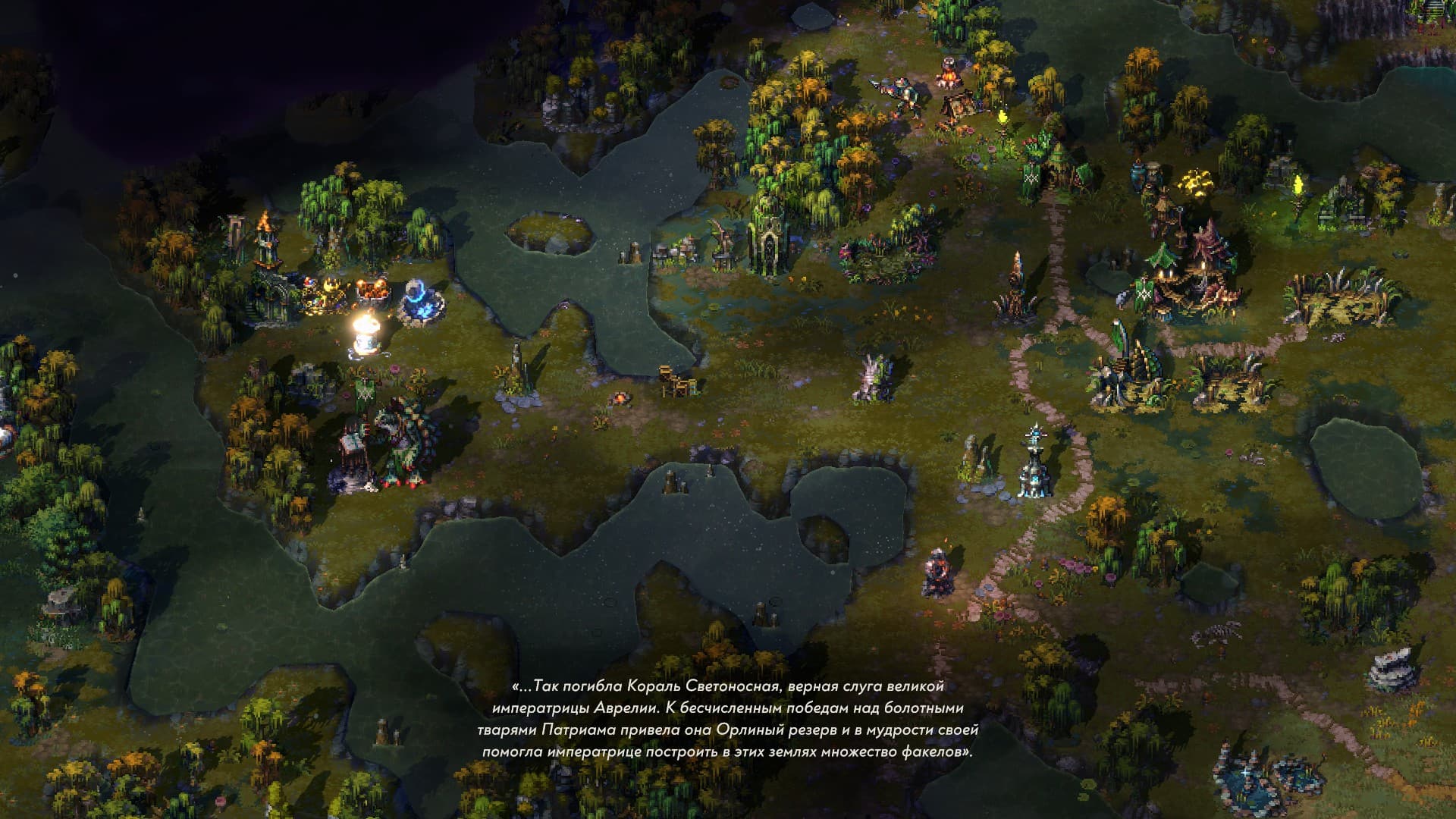
The early access version features two campaigns: one for Baroness Cecilia Stoutheart and one for the freed captive wielder Rana. In the campaigns, you can explore a well-developed world and interesting characters. And after each mission, a short cutscene is shown where bards sing of your deeds.
In Cecilia’s campaign, the young baroness takes the reins of power after her father’s death. Risen dead roam her lands. Enraged forest dwellers and mercenaries ravage them. She will have to ruthlessly destroy her enemies to restore order.
The Rana campaign tells the story of an oppressed swamp-dwelling people. It begins with the frog-people being freed by the mercenary Silkspool. The most charismatic of them, Ran, discovers within himself the power of a wielder. Now he must organize his people and lead them against their oppressors. Both campaigns are well worth playing.
But be prepared for anything! During alpha testing, players were so good that they asked the developers from Lavapotion to raise the difficulty — this led to powerful wielders attacking your settlements right at the start of missions. And after dying, they returned with... a fully restored army! The fourth mission for Cecilia became an unplayable nightmare altogether. The developers have already lowered the difficulty in the latest update and promised to keep balancing the game.
Wielders, not heroes
Currently, there are four factions in the game:
- Arleon – a fragmented empire. Its warriors honor tradition and fight side by side with the forest dwellers (Faey).
- Barony of Loth – ruined and terrified. They decided to reclaim the days of past glory by resorting to necromancy. What could go wrong?
- Barya – an independent merchant nation with an Eastern flair. Progress allows them to use muskets and cannons in battle. They justify any misdeeds with honor.
- Rana – marsh dwellers. Hated by everyone, including the Faey. This faction features fantasy units, including dragons.
Each wielder can equip artifacts that vary in quality. Gray are standard, purple are excellent. All of them grant bonuses to various stats. Weapons stand out in particular — they can be one-handed (swords, maces, axes) and two-handed (bows, bastard swords) and can provide bonuses to both melee and ranged fighters.
Only artifacts that provide bonuses to movement or view range are genuinely useful. Or those that generate resources each turn. The rest are practically pointless. Only the blue and purple ones offer a noticeable advantage in battle. The others quickly pile up, cluttering the inventory. So when choosing between gold and an artifact – pick gold. It is much better to buy more units with it.
As a wielder levels up, their magic improves as well. For instance, the second level of the “Create Obstacle” spell allows you to summon two trees in the enemy’s path. In this way, you can cut off the enemy army from your own.
Global processes
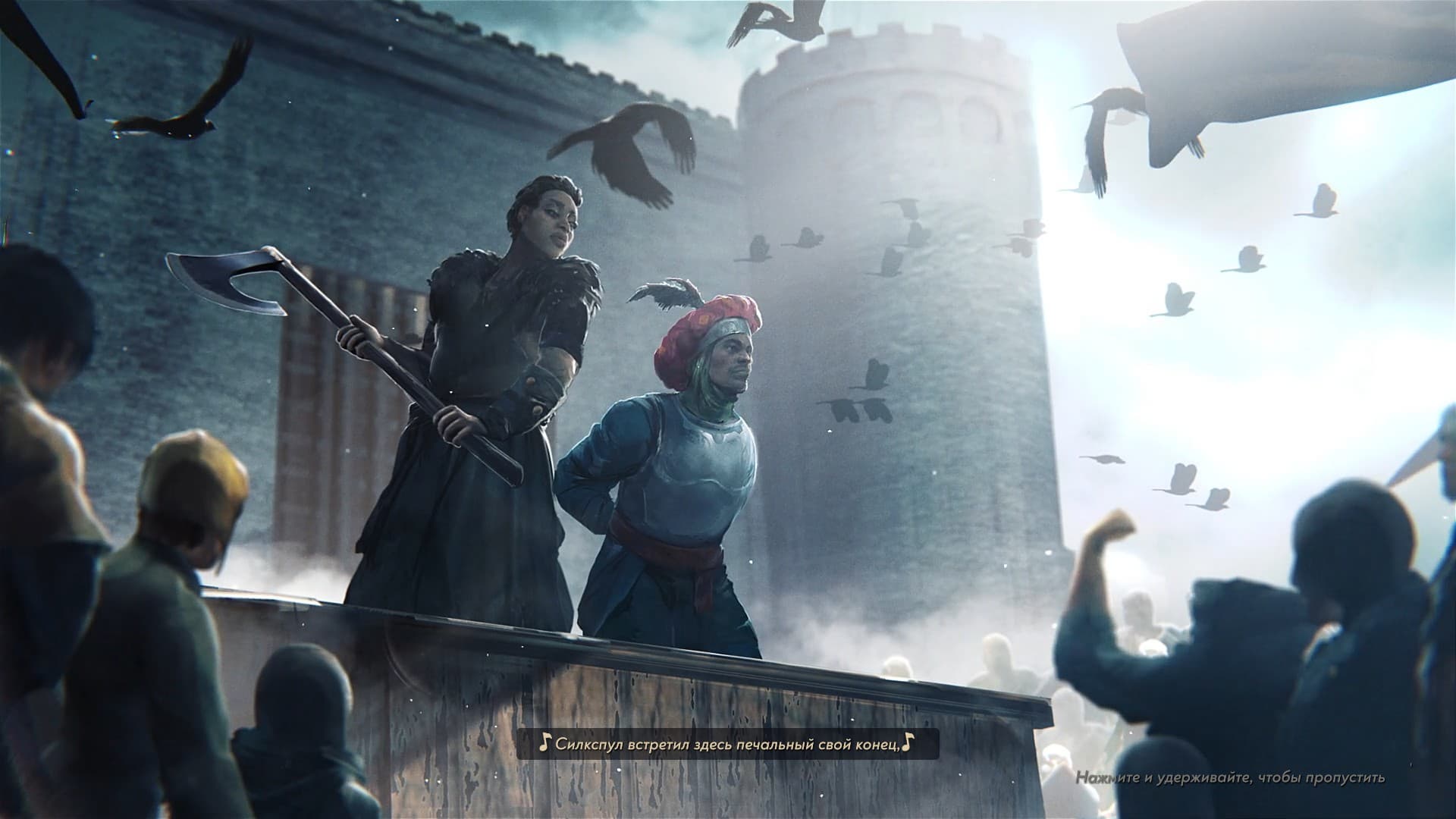
To play successfully, you need to possess a settlement. The size of the town determines the number of building slots. Building slots vary in size: from small to large.
- Small slots can be used to set up wood and stone harvesting or build dwellings for the weakest units. Towers provide the settlement with a garrison and ballistas, while the rally point allows you to recruit all available fighters.
- Medium buildings allow you to recruit sturdier units, and you can also build a market there. The more markets you have – the more favorable the resource exchange rates are.
- Large buildings allow you to hire the best units. And that is where research is conducted. Furthermore, research consumes the most rare resources: Glimmerweave, Ancient Amber, and Celestial Ore.
Unlike Heroes, construction in Songs of Conquest takes place outside the town, right on the global map around it. This allows you to burn down the enemy’s important structures, which also yields resources.
After capturing a settlement, a wielder settles in. As in Age of Wonders, they can raze it, receiving resources for each destroyed building, or convert it to their side. Then the buildings will become counterparts of the conquering faction. In a pinch, you can occupy it — the takeover is instant, after which the settlement simply generates income.
Turn-based battles
Battles in the game are dynamic. Melee fighters possess various abilities — such as attacking from one tile away or intimidating the enemy. Some upgraded soldiers have unique skills such as “Wait” to delay their turn until the end of the round, or “Defend” in case an enemy approaches them.
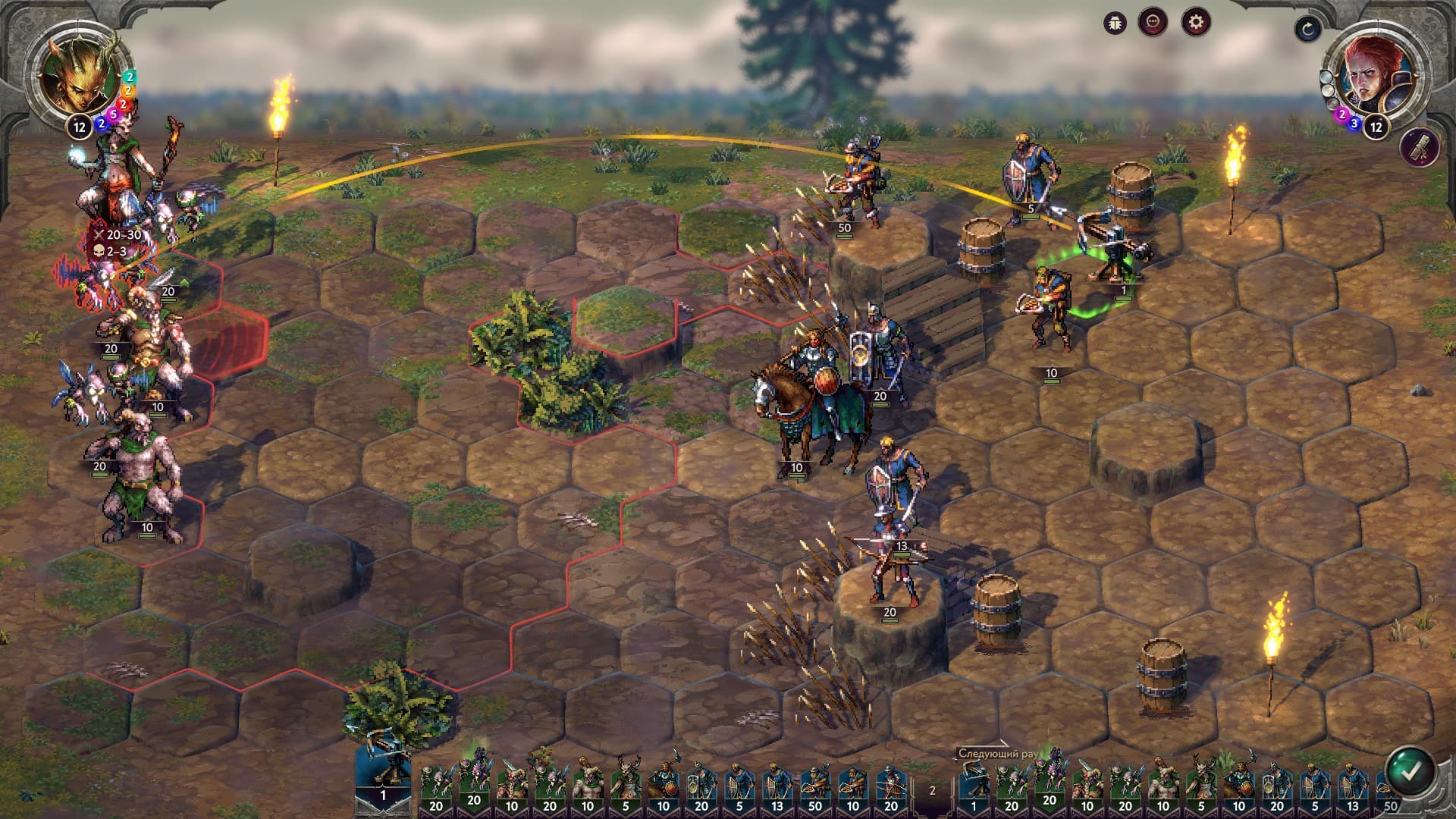
Ranged fighters have their own nuances as well: crossbowmen and musketeers hit hard, but they need a turn to reload; shamans and toxicologists poison the target, but deal less overall damage. There are dragon-blooded who wait for the perfect moment to shoot with their “Ambush”. Songs of Conquest features elevated terrain that grants a damage bonus to units — this benefits ranged troops, though it affects infantry as well.
As in Age of Wonders, units have a one-tile threat zone around them, automatically attacking any enemy passing by. This helps delay the opponent and prevents them from reaching more valuable units.
Each troop provides a fixed amount of Essence per turn — it is required to cast spells. Moreover, different creatures generate different types of Essence, meaning they unlock different spells. It is worth diversifying your army to have more spellcasting options. The magic itself is mainly used to support troops and weaken enemy units. There are not many offensive direct-damage spells, and they are not particularly strong.
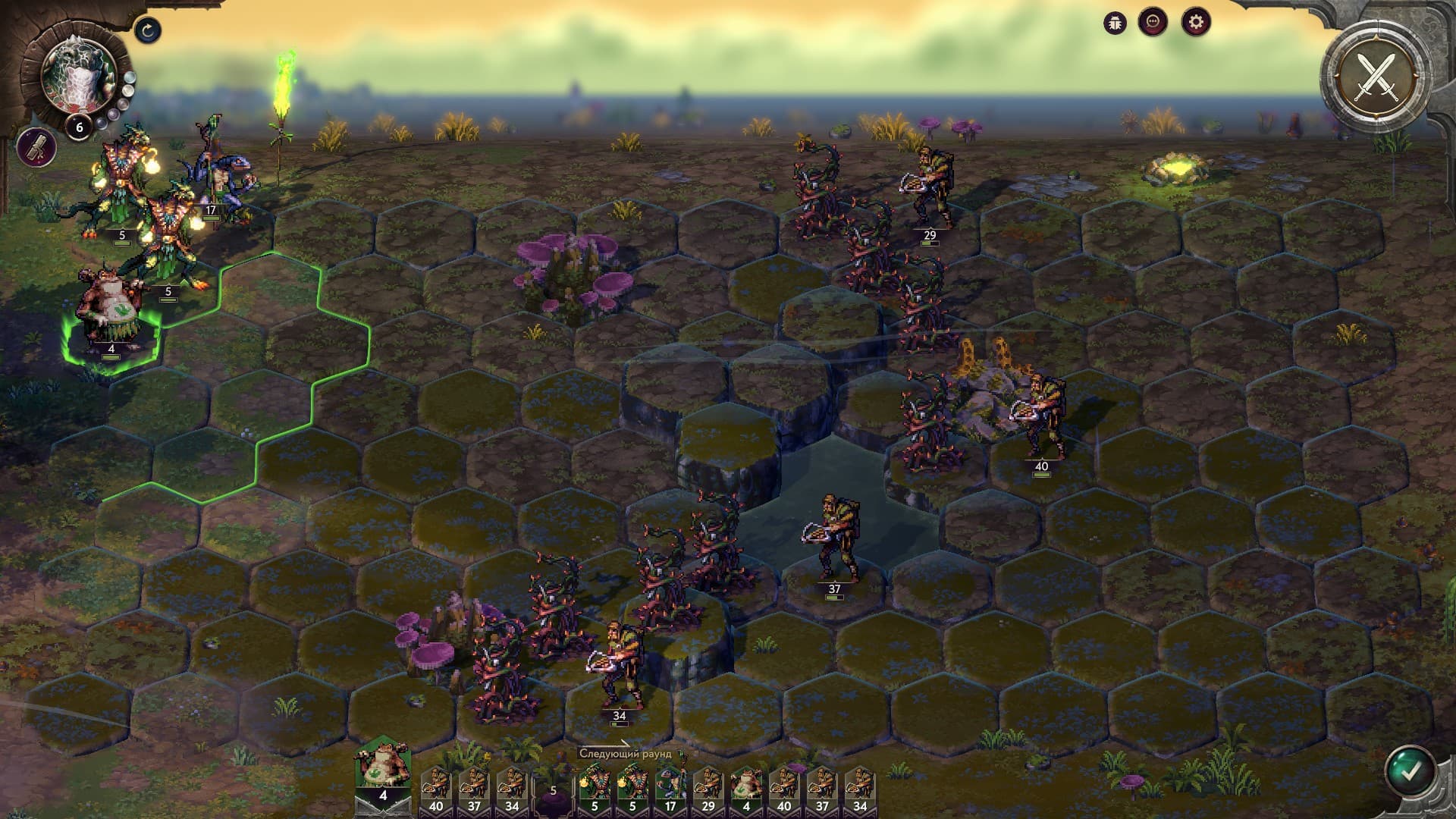
Unlike in Heroes, Songs of Conquest has no morale system. You also cannot recruit units from other factions. A proud son of Arleon would sooner marry a doe than befriend a Baryan mercenary, and the frogs from the Marshes certainly won’t associate with necromancers.
Atmosphere
All elements in Songs of Conquest are animated, whether trees, buildings, or signs. The movement of the world is smooth and beautiful, but the price for this is texture pop-in during sudden camera movements. This is especially annoying when your wielders are scattered across the entire map.
Units in the game are detailed, and each of their movements is beautifully animated. Yet many of them lack a distinctive spark or defining feature. And pixel art cannot be blamed here. In something like Tooth and Tail, all the units are executed magnificently.
The most important thing
While the game currently lacks a random map generator, a map editor is already available along with a section where enthusiasts share their creations. You can download and immediately rate them, signaling to other users whether it is worth bothering with or not.
Since Songs of Conquest is a “Heroes for the people” project (the game is made by enthusiasts and supported by enthusiasts), there is no need to worry about content. There will be plenty of content in the game, including custom campaigns. But that is a matter for the future.
Diagnosis
In Songs of Conquest, you can see numerous references to classic turn-based strategies, but the developers did not resort to mindless copying. This is a standalone game with dynamic and engaging battles, and its world is well-crafted. An enormous amount of effort and soul went into the visual presentation. It is worth playing not just for nostalgia’s sake, but also to experience something new, especially if you enjoy turn-based strategies.
Pro:
- Well-developed world
- Interesting characters
- Dynamic battles
- Original magic system
- Beautiful pixel art
- Smooth animation
- Full Russian localization
Contra:
- Useless artifacts
- Texture loading issues in a game with such graphics
Never miss our newsAdd this site to your preferred sources to see us more oftenAdd on Google