“Tarkov”, but playable and user-friendly. Review of the free-to-play extraction shooter Arena Breakout: Infinite
Translated with AI from the Russian original.
There is a high chance that many people reading this article have already heard about Arena Breakout: Infinite from various content creators and gaming communities that promoted it. I am sure that users could get tired of it quite quickly, which is why they might dub “Arena” just another “pay-to-win cash grab” promoted by famous personalities. But even before that, back in the spring when Escape from Tarkov was bogged down in controversy, the game marketed itself as a full-fledged competitor, setting expectations accordingly.
Arena Breakout: Infinite – an extraction shooter from Chinese developers at Morefun Studios, funded by Tencent corporation. In general terms, this project is not much different from Tarkov and its “killers”. It is the same kind of session-based shooter where the player embarks on raids followed by resource scavenging and skirmishes with other players. Between raids, one can manage available resources, trade, and prepare loadouts for the next raid, which can easily be lost after another death.
Four months have passed since that moment. During this time, all the announced Tarkov “killers” have already launched into release or beta. However, almost nothing is heard about most of these contenders today. Grey Zone Warfare vanished from the media spotlight very quickly. Project L33T turned out to be an outright scam project from the creator of another scam knock-off called The War Z. Hunt Showdown 1896 got bogged down in controversy over a main menu overhaul and a close partnership with Nvidia, which caused AMD graphics card owners to experience severe shadow issues.
And now the time has come to evaluate “that very competitor” who built its entire PR campaign around this. Let's see how Arena Breakout: Infinite differs from Escape from Tarkov, what it has brought to the extraction shooter formula, and what complaints exist about this project.
Don't you get a sense of déjà vu?
Arena Breakout: Infinite has been in closed beta since June, and right now anyone interested can take part in its testing. Speaking of impressions from the closed beta — the extraction shooter seemed the most appealing and promising compared to its original inspiration. Its system requirements are lower than those of the “domestic counterpart”, while the gameplay and style are in no way inferior in pacing and appeal. Although the latter is often explained by claims that Arena's code was “stolen” from Tarkov.
From an ethical point of view, such an act should have sparked incredible condemnation and calls to “cancel” the Chinese developers. Yet this case produced completely the opposite effect. The reason for this was the reputation of the Escape from Tarkov developers, which was utterly ruined (so to speak, punished for their arrogance).
Tarkov's current codebase does not command much respect among gamers and programmers. Synchronization issues, bugs, crashes, lack of optimization in several locations, and a leaky anti-cheat system have existed in Tarkov for 8 years, and simple copying would not have yielded such a positive effect. Beyond an overhaul, the developers of Arena Breakout had to port everything from Unity to Unreal Engine (from the C# programming language to C++). Otherwise, this project could also have quickly died from the same problems that Battlestate Games is still working on.
And during this open beta, it becomes clear that Morefun Studios understands what people love Tarkov for and what infuriates the target audience. That is why Arena Breakout has turned out so clear, optimized, polished, and… for now, stripped down.
Added what was needed and removed the unnecessary
Saying that the Chinese developers understand the extraction shooter genre better than the British, one should start with the fact that Eastern developers clearly understand how live-service games should engage players. The first thing that greets a newcomer is the tutorial. It is designed as a short single-player mission in which we get acquainted with mechanics, tactics, and the local region. Moreover, this tutorial concludes just like an unsuccessful raid – with the death of the operator. A rather interesting way to show that you will die often in this game.

Besides the tutorial, this extraction shooter includes all those mechanics that Tarkov's developers considered “unrealistic”: a full map with waypoints and squad member identification. The former was completely unthinkable in Tarkov since real-life maps cannot carry such dynamic information. The lack of squadmate identification harms the project's “hardcore” nature.
Arena Breakout's developers do not share such views and made sure that the player does not spend time aimlessly wandering around the location trying to figure out where things are and how to complete a particular quest.
The teammate display system has had a positive effect on matchmaking with random allies. While in Tarkov finding an ally in-game often ended with a bullet to the back of the head right at the start, in Arena teammates can ping where they need to go, coordinate, and head off together to complete quests.

Speaking of teammates, it is worth noting a number of innovations that enhance the value of teamwork and are absent in Tarkov. The first of these is reviving fallen comrades. In Arena, this mechanic is borrowed from battle royales, but with one restriction: headshots are still lethal. But even so, squad survivability is times higher than in Tarkov. Another feature is the spectator mode. If a player is definitively killed, they can stay in spectator mode and guide the survivors.
To increase the importance of teamwork, the developers completely redesigned how insurance works. In Escape from Tarkov, you can pay certain traders so that after some time they can return an insured item lost in a raid. In Arena Breakout, no trader will search for your lost gear. However, your teammates can do that. Everything they loot from your body is instantly returned to you via in-game mail. A rather interesting insurance method that creates the main dilemma in this extraction shooter: what holds greater value – loot or a teammate's gear that you cannot keep for yourself?
Combat with other players has also undergone significant refinement. Chinese developers have been renowned for years for their ability to build online games. Therefore, fixing Tarkov's netcode was not a major challenge for Morefun Studios, which is evident in the proper hit registration system and player rendering during raids. In addition to solid infrastructure, the developers added an incredibly useful feature called Killcam – a recording of the killer's perspective, making it clear how they managed to outplay you. A rather useful tool for spotting dishonest players.

The game provides post-match information very generously. The Killcam is not the only source that allows players to analyze their mistakes. During each raid, the game logs all your actions. At the end of another sortie, all this data is presented to the player as a map with your path, marking the main events. Thanks to this information, one can plan future actions much more thoroughly.
Speaking of “stripping down”, it is worth noting that the developers decided to completely cut operator skills. In Tarkov, they allowed players to perform certain tasks better depending on the skill itself: from sprinting duration and maximum carry weight to the ability to instantly search containers and protection against fatal damage. Along with this, Arena Breakout has no hideout requiring constant resource and financial investments to upgrade. The entire game is fully and completely centered directly on raids. At the same time, scavenged loot is still needed for bartering with traders, selling to other players at auction, and for quests. Therefore, its importance is no lower than that of salvaged gear.
Yet far more significant in terms of optimization is the trimming down of the arsenal. Arena Breakout: Infinite did not position itself as “gun porn” with hundreds of weapons and thousands of attachments. Hence, it features only 47 types of firearms and around a hundred various attachments. And in its defense, most attachments have their own unique stats. In Tarkov, diversity is justified by the fact that some attachments come in different colors, others differ only in length, and some were added simply “for laughs”…

Speaking of gameplay simplification, it is worth mentioning that the developers did not share BSG's views regarding armor and weapon durability. While firearms do not have such a stat at all, on armor it is presented in Tarkov's “outdated” format. In other words, there are no fancy armor plate mechanics and no specific unprotected zones. All protective gear in Arena has a single durability stat, and you do not need to check it via inventory. The durability of your armor and helmet is displayed below the health bar.
Arena Breakout as a “reinvented wheel”
As has been stated many times, Arena Breakout: Infinite directly targets the “Tarkov” audience. That is why there are so many parallels with the original. The identical inventory practically screams it. The game UI was also replicated, featuring arm and leg stamina meters, as well as limb status indicators and various buffs/debuffs. But that is where direct similarities end. The developers decided to rework all other mechanics in favor of maximum convenience.

A prime example of interface optimization is assigning all medical items to a single button. A simple tap executes the priority action that the game deems most critical for the character at the moment. Meanwhile, holding the button gives the player a wheel showing the entire available medical kit to select whichever item they choose. Furthermore, the developers rethought how limb health restoration works. Whereas in Tarkov a player could heal only one limb at a time with medkits, in Arena a single press can continue restoring health until the medkit's resource runs out.
Similar convenience was introduced to the magazine packing mechanic. In Tarkov, this is considered something of a ritual performed in the most secluded corners of the map. The reason is that it can only be done with an open inventory that blocks the view of what is happening and prevents the player from moving. In Arena, everything is much simpler and more enjoyable: the player does not become helpless during such moments and can freely move in a safe direction.

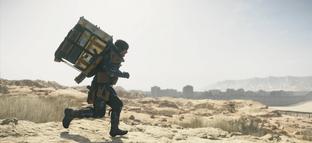
Speaking of resource management during a raid, it is worth mentioning that the developers devised a practical mechanic for looting valuable equipment. Tarkov veterans have long known that many tactical rigs and backpacks with contents can be nested inside one another. That way, players can extract far more valuables. You can do the same in Arena, but not every found rig or backpack is valuable enough to be used for such manipulations. Therefore, the developers implemented a compact rolling feature for fabric items so they do not take up much space.

Currently, Arena Breakout can only be played on two maps: Farm and Valley. At first glance, it might seem that such a small number of maps would quickly turn off potential Arena veterans. However, the developers took action and split raids not only by location, but also added difficulty levels: Normal raids, “Lockdown Zone” raids, and “Forbidden Zone” raids. Difficulty fully affects bot gear and loot on the map. And to get in, you must meet two strict conditions: bring gear worth a certain amount and pay an entry fee. It should also be noted that others must bring equivalent gear as well. Therefore, PvP in these zones will be much harsher and riskier in terms of lost loot.

And finally, I would like to say a few words about the game's anti-cheat. Anti-Cheat Expert works much better than the free version of BattlEye. Even so, Arena Breakout has already developed its own layer of cheaters. My acquaintances and I encountered them a couple of times and experienced their “magic” firsthand. On the other hand, our reports against them quite often received a positive response from support. Thus, it becomes evident that the developers are not pulling the wool over their audience's eyes when stating in press materials that they are aware of similar problems in Tarkov and are building their protection to detect even cheaters who use specialized hardware.
The dilemma of a “free-to-play” shooter
Now that I have covered all the innovations and positive aspects of Arena, it is time to move on to the most controversial feature that made Arena Breakout: Infinite “yet another disgrace” – its monetization. Yes, this game literally features a Pay-2-Win system allowing you to purchase in-game currency that can immediately be spent on top-tier gear and ammo.

Yet in reality, few will mention that all these purchases can quickly be wiped out if the person behind the monitor is not particularly skilled. Thus, even the poorest player can suddenly become filthy rich if they manage to hit a paying player in the head or repeatedly in the legs with cheap weapons. Furthermore, the cost of all this armor and weaponry can pay for itself quickly also because earning this currency in raids is extremely viable and straightforward. If you know good spots and avoid crowded areas, practically any raid can become profitable.

In addition to currency, microtransactions allow players to rent secure containers to store various valuables, as well as purchase the local equivalent of a premium subscription. Such additions raise questions in the community much more sharply regarding the value of such a system. The thing is that those secure containers have sizes of 4 and 6 slots. At the same time, they cost around 500 and 1,000 rubles, respectively. Such prices are already considered expensive and give Tarkov defenders a reason to stick to the original rather than a free-to-play Chinese clone.
However, demanding money for gear is one thing. Demanding payment for the ability to use in-game voice/chat is another. That can truly be considered wild, on par with paid reloads in Battlefield. You can communicate for free in 10 matches, after which this privilege is completely cut off. Fortunately, this nonsense can easily be circumvented using standard third-party voice apps, but this once again negates the value of the in-game matchmaking feature.

The monetization issue in this game will continue to be exploited by competitors. But this monetization does not rely on random chance, and “Pay-2-Win” is easily countered by skilled play.
Diagnosis
Currently, Arena Breakout: Infinite is experiencing a lull directly related to an update in Escape from Tarkov. But this by no means implies that the game turned out bad. On the contrary, it managed to fix everything the original's developers failed to accomplish over these 8 years: wrote proper netcode, implemented a solid anti-cheat, and introduced mechanics that encourage active gameplay and teamwork. Furthermore, in a month, when the audience cools off from Tarkov once again, player counts will stabilize. And considering the work they have done and their plans to launch on Steam, the project has bright prospects. The main thing is that all these upsides are not completely overshadowed by microtransactions.
In any case, Nikita Buyanov truly has a formidable competitor that can offer all the same core mechanics, but in a much more polished and refined form. Yes, fans of “tacticool” and realism are unlikely to enjoy this game because it lacks the quirks that Battlestate Games labored over. There is also no domestic aesthetic here like in Tarkov. There is no sense of permanent threat here. But to all of this, one would like to ask just one rhetorical question: are all these “realistic” quirks really needed for a good extraction shooter?
***
All rights to images used in the material belong to Tencent
Never miss our newsAdd this site to your preferred sources to see us more oftenAdd on Google