Tea with a hint of philosophy. Wanderstop tea shop simulator review
Translated with AI from the Russian original.
In the rhythm of city life, it's easy to forget what it's like to simply do nothing. Boredom has turned into an inaccessible luxury: the cult of productivity, tasks, deadlines, streams of news, and notifications scream that in order to stay in place, you have to run with all your might, and to get anywhere, you must run at least twice as fast. Wanderstop offers a dive into a quiet haven where you can catch your breath and enjoy boredom without feeling guilty. Brew some tea, and in the meantime, we will tell you how the new project from the creator of The Stanley Parable: Ultra Deluxe, Davey Wreden, turned out.
A magical forest
The allusion to Lewis Carroll's work here is no coincidence — Wanderstop immerses the player in a world where time, much like at the tea party in “Alice in Wonderland,” has almost ground to a halt.
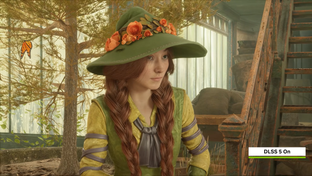
The main protagonist is Alta, a warrior accustomed to living from battle to battle, knowing neither fear, nor fatigue, nor defeat. She strove to be the best, perfect, but in her pursuit of “success” she pushed herself to the limit — and one day stumbled. She lost. And that broke her.
In an attempt to get back into fighting shape, Alta set off into the forest in search of a Master to become even stronger, even better. But exhaustion took its toll — depleted, she couldn't even lift her sword and lost consciousness.
Waking up, Alta found herself in a whimsical forest clearing, greeted by a burly, smiling, bald, good-natured man named Boro — the owner of a local tea shop. Boro took the young woman into his dwelling and offered her a role as his assistant. Alta didn't have much of a choice: burnout seemed to chain her to this place — every time she attempted to leave, she passed out again.
Now she has to brew tea for random travelers, tidy up the clearing, or simply sit in silence and reminisce, watching steam slowly rise above the mug, taking away anxieties and fatigue.

Secrets of tea alchemy
At the center of the tea shop stands a whimsical tea-making apparatus — a bulky contraption of tubes, flasks, and a kettle mounted directly onto a tree. To brew tea, you need to heat water, maintaining the temperature with bellows, then add leaves, fruits... or perhaps flower pots or books — if a customer asks for it. The finishing touch is to carefully pour the tea masterpiece into a mug. If it accidentally overflows — no worries! A flower will blossom on the tree, making it look even prettier. Even a mistake here can hide a pleasant surprise.
After tea time, dirty mugs must be brought to a dishwasher caterpillar-train, which will carry them through a waterfall — straight toward a clean future. That's just how things are done here.
Gathering ingredients poses no challenge: tea bushes are scattered across the clearing — just grab a basket, pick an armful or two, and send the leaves off to dry.

Fruits, however, are a different story. To get them, you have to plant colorful seeds in the correct order according to the diagram in the “garden book.” It's nothing complicated, but some combinations must be discovered on your own, relying only on a hint about which seed should go in the center. And if you want to grow special specimens — mushrooms can be planted alongside fruit trees.
However, over time, by fulfilling customer orders, you will learn about all plant types and even figure out how to brew coffee — which initially seems like an impossible task for our tea shop.
Besides brewing tea, you can tidy up: sweep leaves, cut weeds, arrange decorative items, or take photos and hang them in frames. Doing this is optional — there are no penalties for clutter on the grounds. Yet those who decide to clean up will receive a nice bonus: plushies and new mugs awarded randomly. Still, you can do without a dishware collection — if you wish, all guests can easily be served tea from a single cup.

Not a simulator at all
Up to this point, the text covered the mechanics of a typical tea shop simulator. But Ivy Road, founded by Davey Wreden — creator of the conceptual walking simulator The Stanley Parable: Ultra Deluxe — wouldn't be itself without adding extra layers and features to the game that venture into deconstructing the genre.
As mentioned before, the game doesn't force you to do anything you don't want to. Even customers with very specific orders don't rush you — there are no timers here, and while brewing mistakes can happen, they might unexpectedly open up new dialogue options. And dialogue is the most crucial part here!

Wanderstop is a therapy game where interacting with eccentric visitors — from a detached father fancying himself a medieval knight and unable to connect with his son, to a cosmic entity so profound in its enlightenment... and so forth — all these encounters serve a single purpose: to remind both the player and the protagonist of simple yet essential life truths easily forgotten amid the daily hustle.
That it's impossible to meet everyone's expectations; that excessive perfectionism is harmful and acknowledging fears and weaknesses is vital — these are just a few thoughts that come to mind as you play.

Through plants that can bear fruit only in limited amounts, the game reminds us that resources are exhaustible, and when running low, we should allow ourselves to rest.
If you're a perfectionist who hates mistakes, the tea shop's library has a book that tells you how to complete any order on the first attempt. But even here, the developers left a message.
One day an order for coffee came in, but there wasn't a single coffee bean in the shop. After running around the location several times in a desperate attempt to find anything, I opened the book. It contained just one phrase: “Coffee cannot be brewed right now.” A single short sentence, but it speaks volumes — not everything depends on us, we can't influence everything in this world, and sometimes you just need to stop and wait. Cliché? Yes. But damn it, how often we forget that.
The game doesn't even have missable achievements, and it is entirely unclear what they are awarded for — which is also part of its philosophy.

An essential part of interacting with the game is not only fulfilling customers' orders, but also brewing tea for the protagonist herself and Boro. This process is exceedingly simple and requires no tea leaves, but every fruit in the game carries a special effect — it evokes new memories, allowing Alta to better understand the roots of her mental struggles or listen to a few amusing stories from Boro.
All these reflections are framed within a full-fledged story campaign divided into five chapters. Each chapter brings new visitors and slightly alters the look of the tea shop clearing. However, along with this, part of your decoration progress disappears, leaving only framed photographs behind — after all, memories are all we are ultimately left with.

Residue at the bottom of the mug
However, not everything is so serene in the tea kingdom. The music was composed by none other than Daniel Rosenfeld (C418) — the composer and sound designer of Minecraft, who succeeded in crafting a magical, relaxing atmosphere. Yet at times, the color choices prove too strange — now and then, the clearing turns into a garish, downright eye-straining mess. In other moments, though, the visual style reliably supports the fairy-tale atmosphere — fit for a Pixar adaptation.
And since we've established that Wanderstop isn't quite a tea shop simulator, it's worth noting that the mechanics develop only superficially. New plants appear and orders get slightly more complicated, but that isn't enough to earn the title of a true simulator.
After the finale, you can keep playing, including if you haven't unlocked all of the heroine's memories and wish to do so, but don't expect deep gameplay. Personally, I don't see this as a flaw, but it's something you should know.

Nevertheless, the main downside for a Russian-speaking player is the lack of localization. For instance, my English is decent, but during emotional dialogues, I frequently caught myself mentally translating phrases without having enough time to fully grasp them. This definitely reduces immersion. Unfortunately, the game hasn't even received an enthusiast AI-generated localization yet, so keep that in mind.
Another oversight, in my opinion, was the limited use of Kimberly Woods' voice. The actress wonderfully captured the protagonist's character, yet her voice acting is only present in certain story cutscenes — and it feels like additional voiced lines could have added even more emotion to specific moments.
Otherwise, the game is technically polished: it runs smoothly, including on Steam Deck, and will run without issues on any Pentium-class PC released in the past two decades and a 2 GB graphics card. During my playthrough, I didn't encounter any bugs.

Diagnosis
Wanderstop doesn't aim for the laurels of conceptual art like The Stanley Parable, and that's the whole point. It is a simple, honest story imbued with everyday philosophy that reminds us of mundane yet crucial things.
Wanderstop doesn't try to stun you with meta twists or fourth-wall breaks — that's not what it's about. Naturally, one expects something bigger from Davey Wreden, but that's where the game's core message lies: you don't always have to strive to meet someone else's expectations.
Sometimes it's enough to simply acknowledge your weaknesses, let go of perfectionism, and allow yourself to stop, catch your breath, and enjoy a cup of tea.
Of course, some might be put off by the 1,100-ruble price tag for a 10-hour cozy game. But boredom is a luxury nowadays — and for those willing to embrace it, the price will feel entirely fair.
Pro
- An attempt to deconstruct the cozy simulator genre
- Meditative gameplay
- Vivid characters
- Atmospheric soundtrack
Contra
- Limited simulation depth in gameplay
- No localization
- Slightly steep price tag
***
The rights to all images in this piece belong to Ivy Road // Annapurna Interactive. IXBT Games uses them for informational and research purposes and makes no claim of ownership over them.
Never miss our newsAdd this site to your preferred sources to see us more oftenAdd on Google