The Flying Dutchman of our game industry. Review of “Captain Blood”
Translated with AI from the Russian original.
Miracles happen from time to time—for instance, you might find a bill in an old jacket. Or you might stumble upon a build of a game canceled two decades ago and decide to release it. On May 6, the game “Captain Blood” was released, its history spanning over 22 years now. Despite all the hardships, the project finally reached store shelves, albeit on completely different storefronts. Read in our review how this long-gestating project feels and plays today.
A 22-year-long journey
The project is based on the works of the British-Italian author Rafael Sabatini, recounting the adventures of Captain Peter Blood.
Development of the game started back in August 2003 by an internal studio of Akella. In April 2004, the project was announced for PC and the original Xbox, and in 2005 it was showcased to the public under the title “Odyssey of Captain Blood”. In September of that same year, 2005, the game was announced for the Xbox 360 — which was next-gen at the time.
Due to high staff turnover, the development process was repeatedly rebooted and frozen several times. In 2006, the game was renamed to “Captain Blood”, after which it was presented to audiences multiple times — including a playable demo in 2007.
In November of that year, the internal Akella team developing the game was sold to 1C and renamed “1C: Sea Wolf”.
The release date was postponed continuously, and in July 2010 the gold master disc was handed over to the publisher’s parent company. By that point, the development team was practically disbanded — some staff members left, while others moved on to other projects.
Throughout this time, “Captain Blood” picked up several awards at KRI (Russian Game Developers Conference):
- “Best Action Game” (2007);
- “Best Console Game” (2008);
- “Best Game Graphics” (2010).
The project resurfaced next in 2021, when a near-final build leaked online, and on November 28, 2022, its source code was published — released into the public domain under the GPL v3 license.
On June 17, 2024, an official release of “Captain Blood” was announced: the finishing touches were handled by Malaysian studio General Arcade, with SNEG taking over publishing duties.
A two-hour adventure — in and out
The game’s plot unfolds in the Caribbean Sea during the golden age of piracy — towards the end of the 17th century. Captain Blood suddenly gets the urge to become a privateer in service of the British Crown. He and his crew rescue an English official, after which they carry out a series of tasks, facing off against pirates and Spanish soldiers as their main adversaries.
The game can be completed in just a few hours — between three and five, depending on the chosen difficulty and player pace. If you wish, you can even beat it in two hours — there is an achievement for that. Roughly two-thirds of the story, while delivered in a very rushed manner, maintain a more or less coherent narrative: the heroes set goals and follow through to achieve them.
However, the ending turned out abrupt and illogical — it feels as though another five hours of story were cut out between the penultimate chapter and the finale, given how bizarre Blood’s eventual decision is. It completely clashes with what the protagonist pursued earlier.
Another downside is that the narrative offers zero backstory — telling nothing about the book version of Blood or any key prior events, throwing the player straight into the fray.
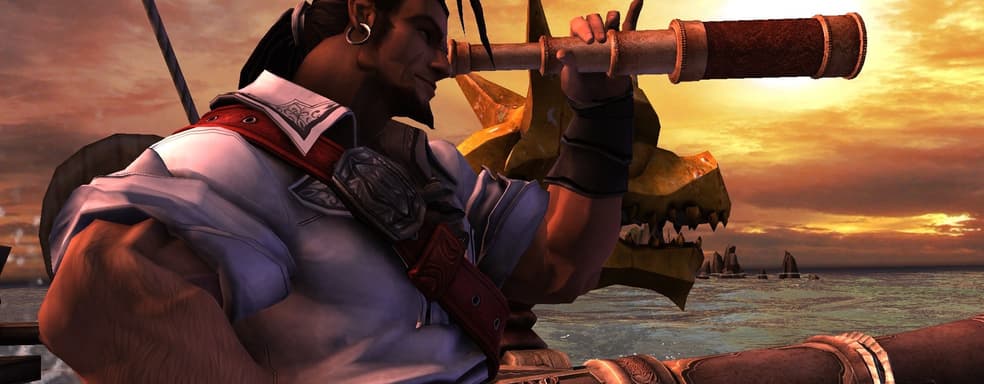
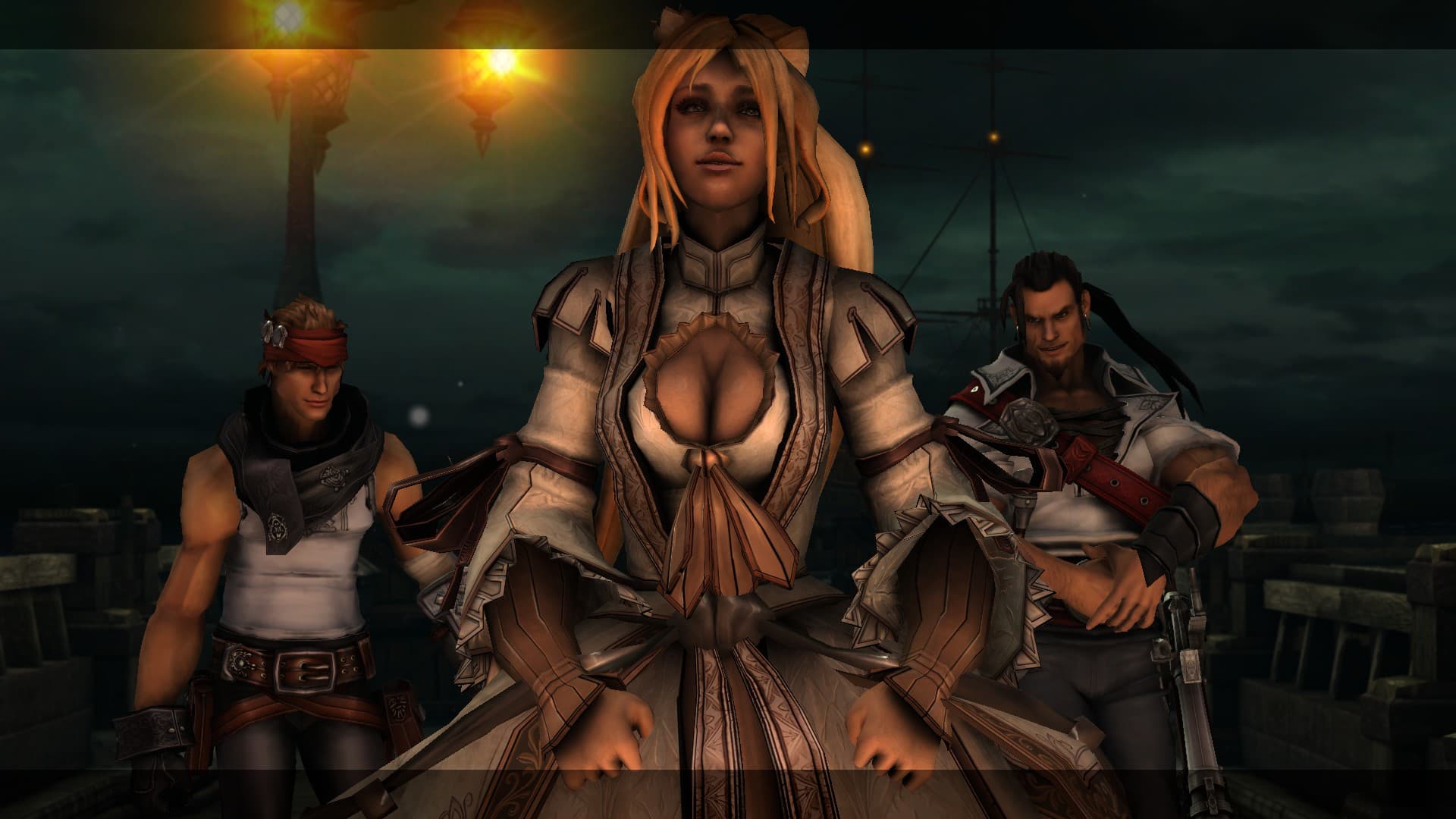
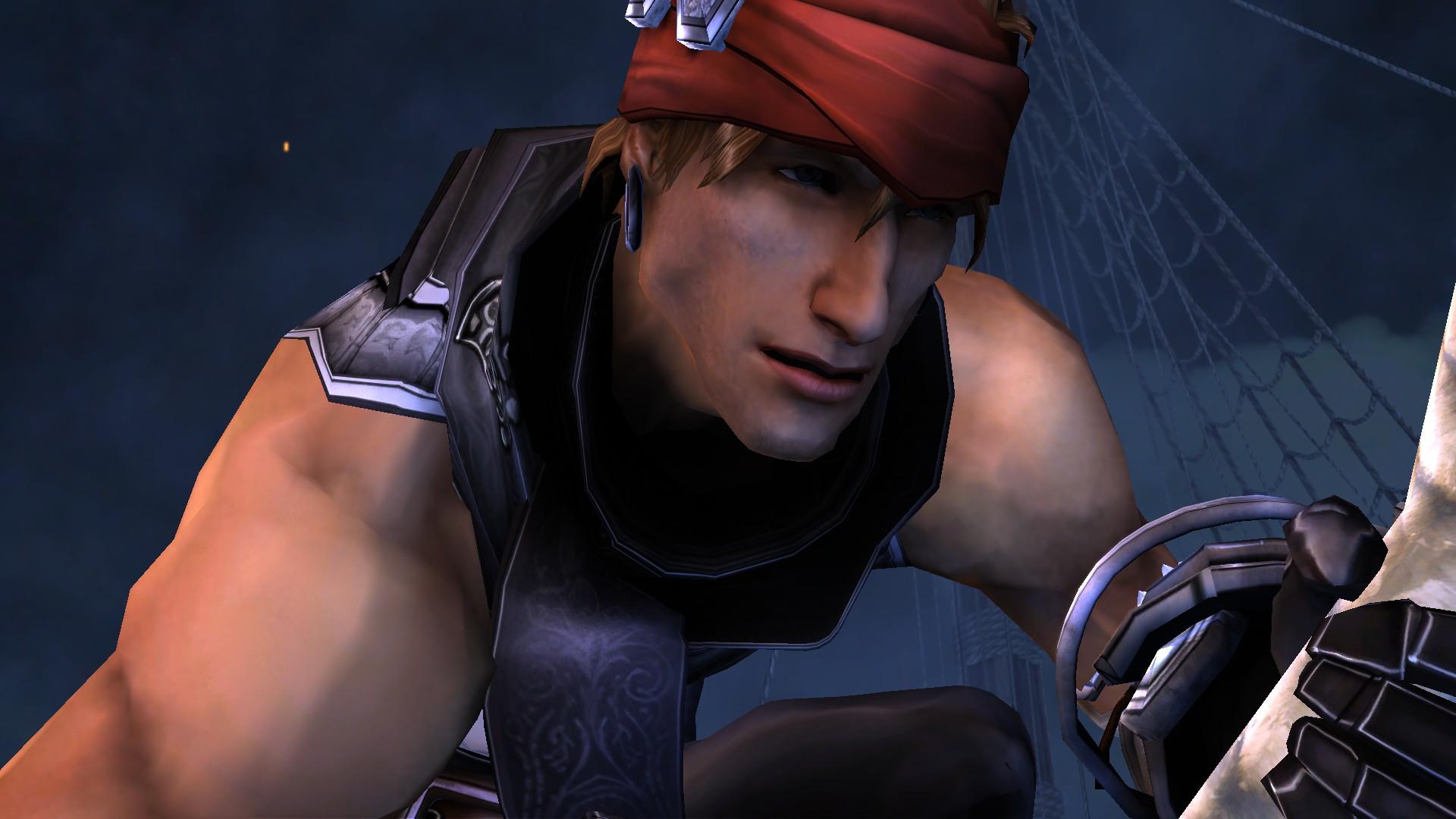
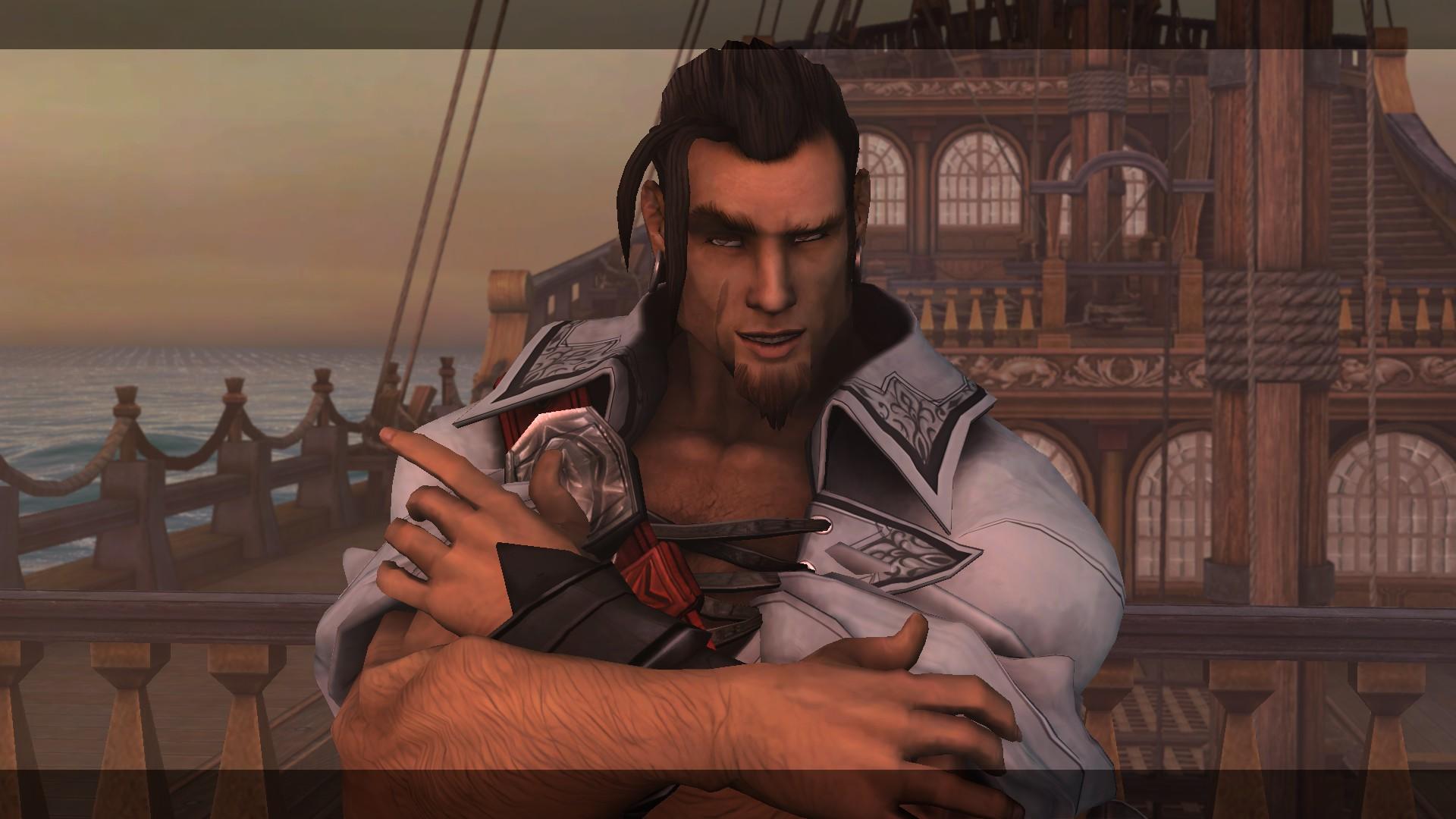
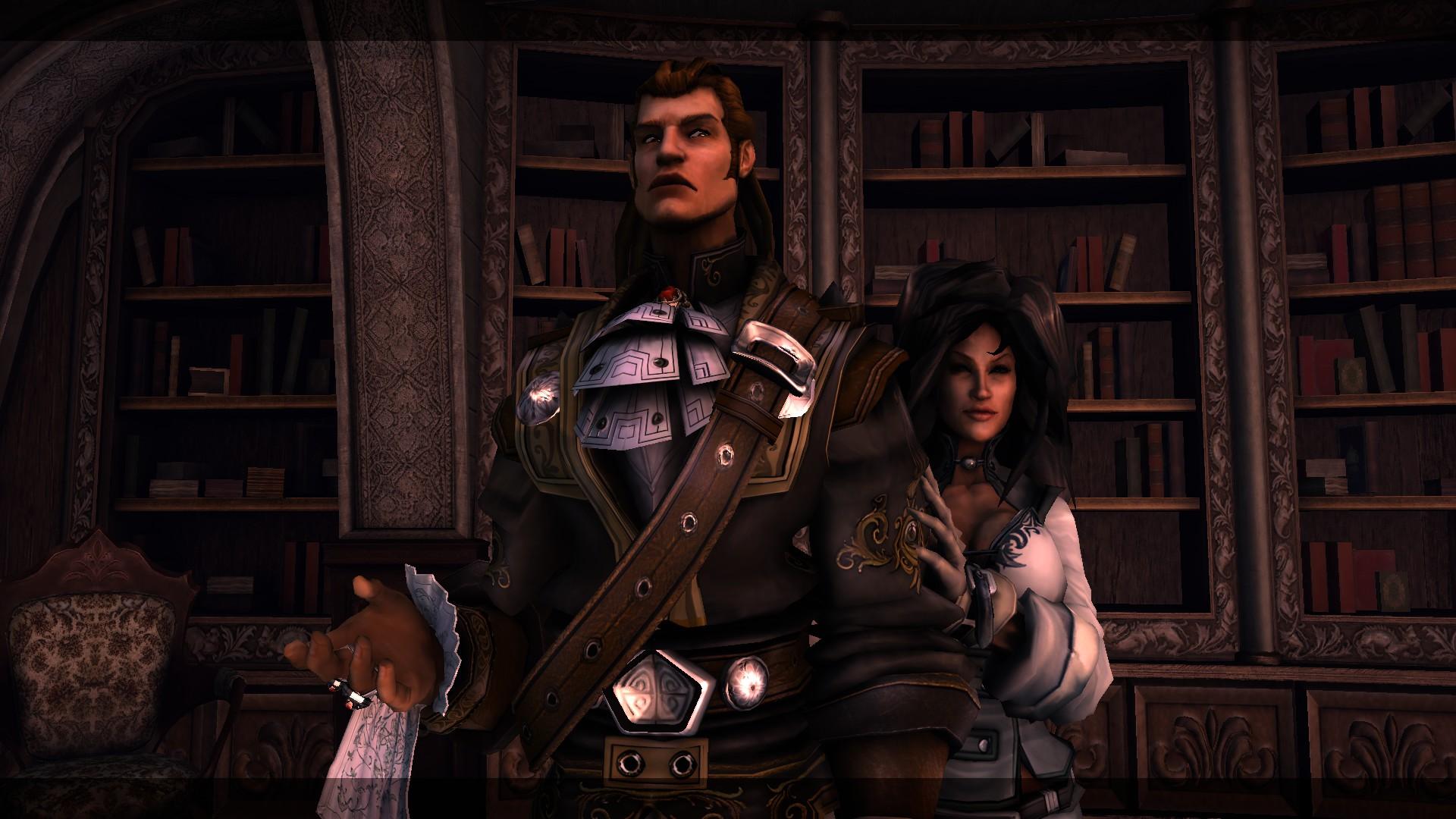
As for the characters, they turned out vibrant. They lack any depth whatsoever, but their archetypes are entertaining. For instance, the protagonist — Peter Blood — is a textbook action hero of the nineties and noughties: charismatic and masculine. He tears through hundreds of enemies without batting an eye.
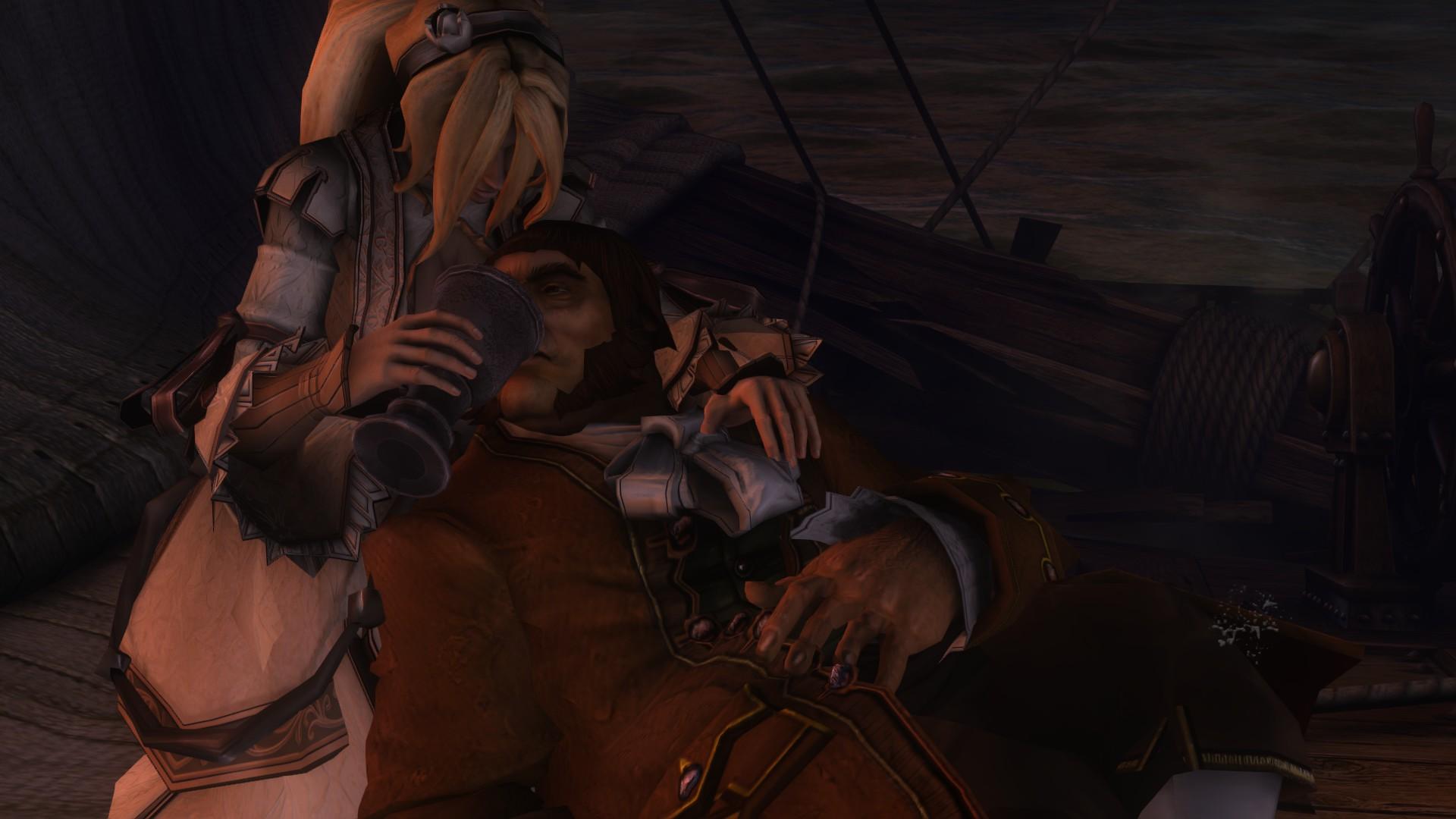
The direction also deserves praise. A substantial portion of the cutscenes impresses with its epic scale, especially considering the game was made in the 2000s. For example, the scene defeating the boss Don Sebastian stands out, where the protagonist dodges enemy shots before leaping off a falling platform.
And the atmosphere is quite decent too. It is certainly not a documentary-grade recreation of the period, but something close to a heroic epic with everything that entails: daring villains, brave heroes, and a sense of adventure. Although, given that the source material is literary fiction, that is precisely how narrative should be built in such a project.
Draw pistol and blade
“Captain Blood” is a classic hack-and-slash title, of which there used to be plenty. Gameplay centers on mowing down hundreds of foes and hunting for chests. There are two types of chests here: one restores health and bombs while giving a bit of gold, while the other treats you to a substantial sum of money.
Meanwhile, the camera has a mind of its own and depends heavily on the current location: in open areas, it resembles today’s familiar third-person view, while in cramped corners it can turn at an awkward angle and lock in place. Just like in the good old days.
The combat system is straightforward — the player has: light and heavy attacks that can be chained into various combos, a dodge roll, a block, the ability to fire a pistol, and throw bombs. Furthermore, by filling the rage meter, one can activate a special mode where damage increases drastically, but depletes very quickly.
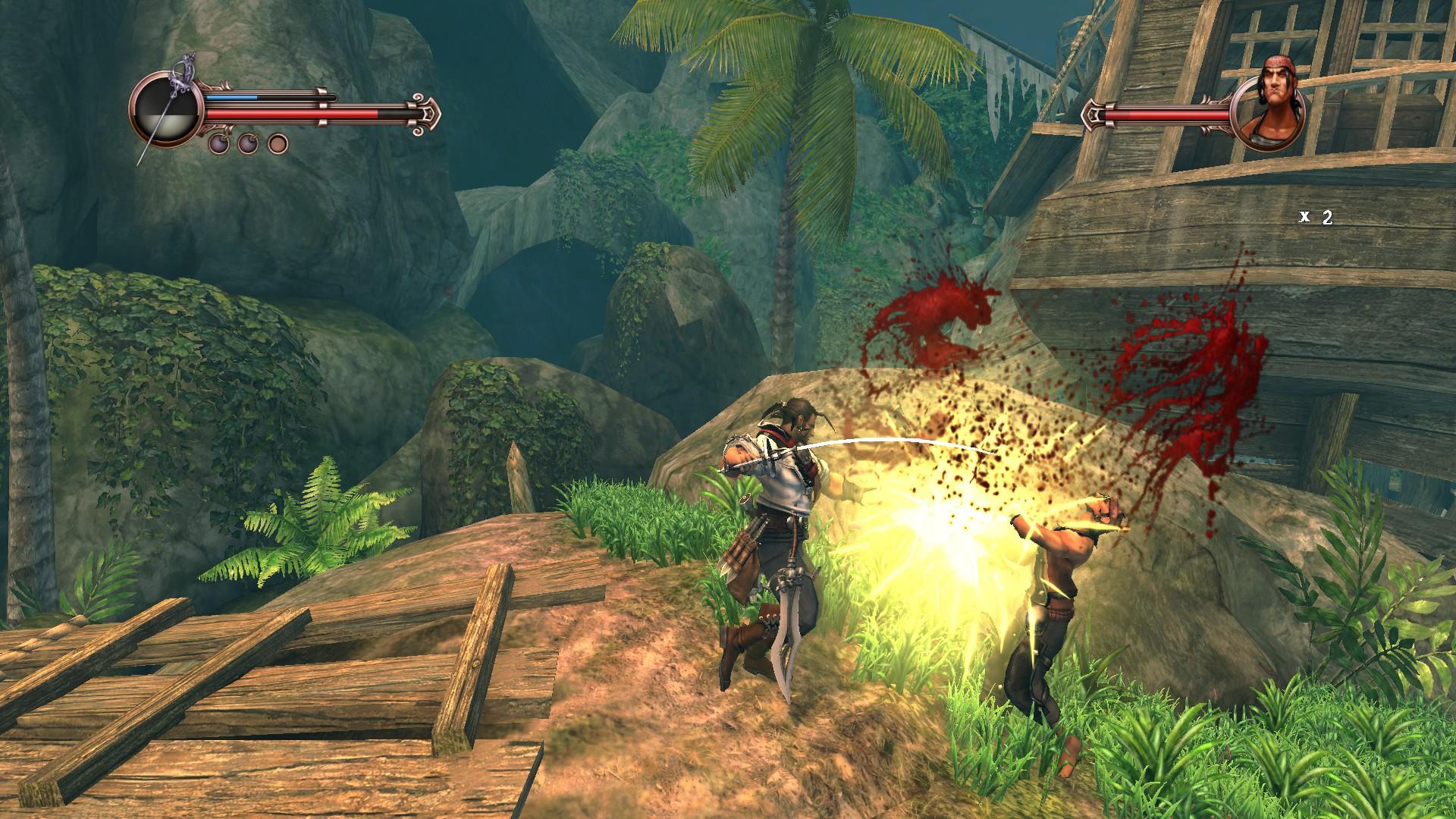
Occasionally, defeating an enemy allows you to pick up their weapon: it breaks almost instantly, but can prove useful in various combat situations. For instance, an axe is great for pounding tough brutes, while pistols disperse small groups quickly.
Once enemies are brought down to half health, you can finish them off in spectacular fashion. There are four types of finishers (executions), each of which — except for the basic one — offers unique perks: one refills the rage meter, the second yields maximum gold, and the third lets you strip the weapon from the foe.
Combat feels brisk: cutting down hordes of enemies is fun, and the bosses are fairly diverse. And, as mentioned earlier, they sometimes impress with their presentation.
Upgrades are handled between missions. Using gold collected during playthroughs, you can unlock executions, combos, and passive upgrades, such as maximum health, pistol power, and bomb capacity.
There are plenty of flaws, alas
First, as in any pirate game, “Captain Blood” features naval battles. Unfortunately, they turned out tedious: the player has to run back and forth across the deck, dodging incoming fire from enemy ships and trying to return fire — while only being able to fire one shot per cannon at a time, despite taking at least three to four hits to sink a single vessel. It makes sense logically, but it is terribly annoying!
And if you fail to repel an incoming boarding party, a small army of invaders joins the fray on top of everything else, forcing you to act faster — which only increases the chances of missing a cannon shot.
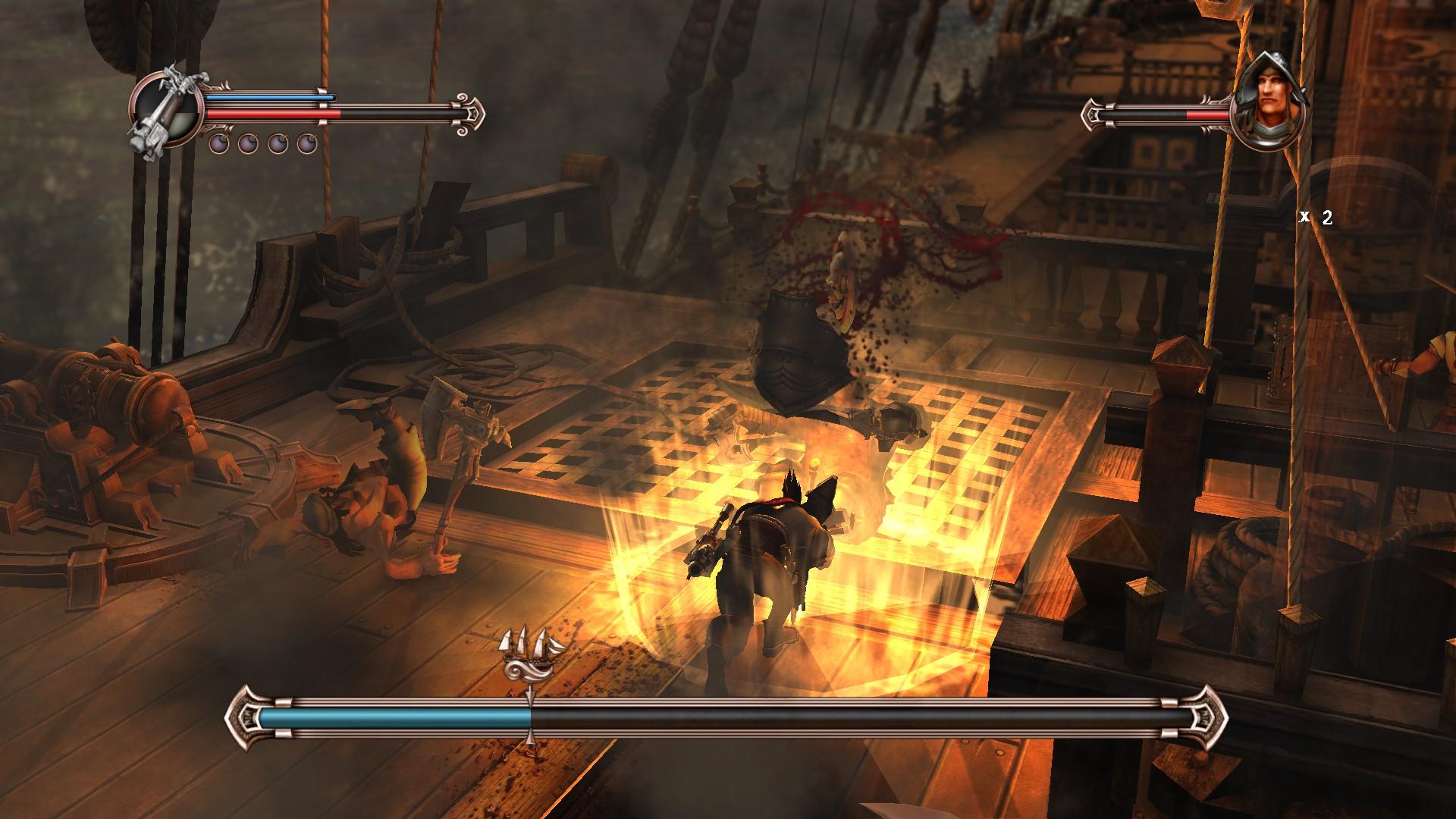
Second, the combat experience depends heavily on the chosen difficulty. While playing on “Hard” makes you truly suffer, on “Easy” you feel like an unstoppable action hero — immortal and badass. In this case, the selected difficulty determines not so much the severity of the journey as the degree of “immersion” into 20-year-old game design.
Third, scripts can break during boss encounters. In chapter two, during a boss battle, this happened to me several times — the nemesis’s health bar stopped depleting altogether. I had to restart the fight multiple times.
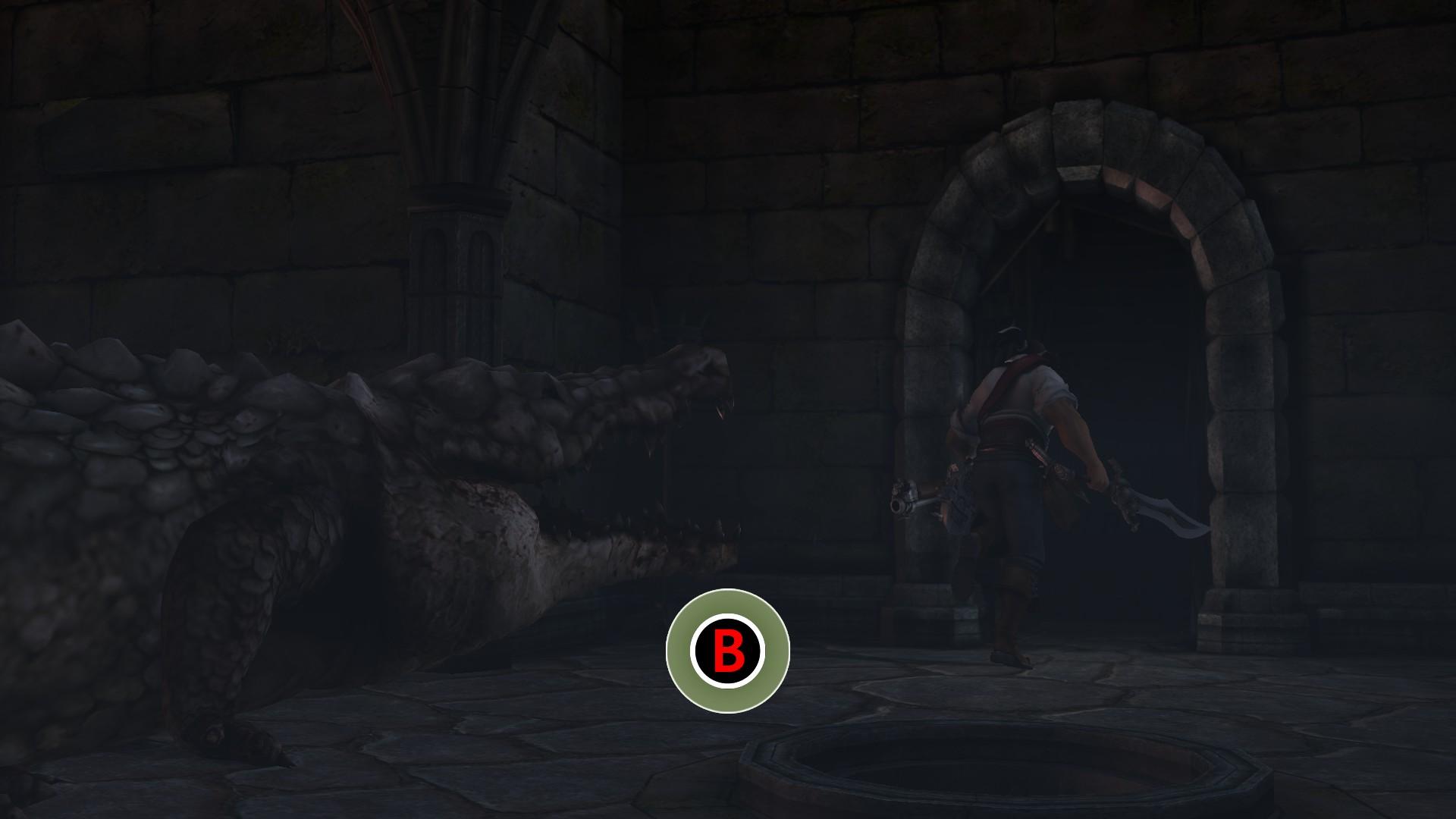
And the final nail in the coffin of Blood’s vessel — the game features an excessive amount of QTEs requiring quick button presses. When they occur during combat, it is tolerable, but when they suddenly pop up during cutscenes unannounced, it completely ruins the pacing and gets aggravating.
Technical performance
Optimization is a mixed bag. On my aging Nvidia GTX 1660 Super paired with a Ryzen 5 2600, the game runs fine. However, on our editor-in-chief Vitaly Kazunov’s PC featuring an RTX 4090 and Ryzen 7 9800X3D, the game flatly refused to launch.
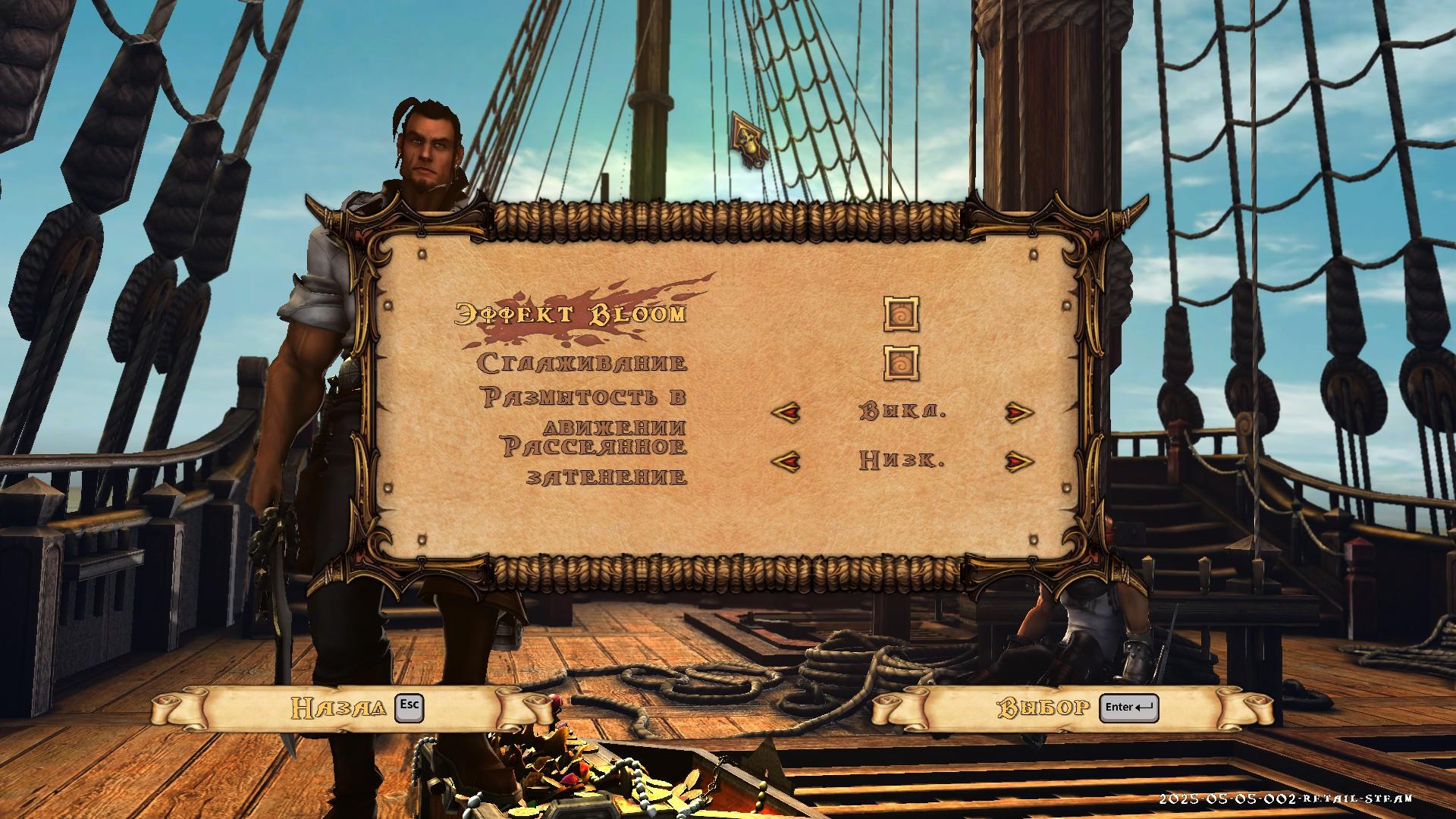
Furthermore, on the first launch, my PC roared like a jet turbine — it felt like it was about to explode! A minor tweak in the settings fixed it, and the PC stayed dead silent while playing thereafter. All I did was turn off HDR, Bloom, anti-aliasing, and motion blur, while setting ambient occlusion to low.
The visual presentation did not suffer at all; in fact, it looked slightly moodier and deeper.
The visuals themselves are peculiar: low polygon counts, stiff animations, and so forth. Yet it cannot be called bad — it feels like a deliberate retro styling. Besides, considering the game’s venerable age, expecting “next-gen” visuals would be absurd.
There were also issues with baseline audio balancing: battle sound effects and music completely drowned out voice acting — I had to lower their volume substantially. By the way, the voice acting also feels like a greeting from the mid-2000s: you can hear the voice of Andrei Yaroslavtsev, who voiced Zoltan Chivay in “The Witcher” games, Optimus Prime in “Transformers”, and many others — the actor passed away in 2021, making this encounter deeply unexpected and nostalgic.
Diagnosis
“Captain Blood” is a blast from the past. The Flying Dutchman, a ghost ship of the 2000s domestic video game industry, suddenly resurfacing decades later.
Had it launched back when it was supposed to, it could have achieved legendary status! The combat system, characters, presentation, visual design, and atmosphere turned out well — the game easily delivers a couple of entertaining evenings.
Today, it feels more like a historical tour of that era, offering a welcome break from the routine of modern gaming trends. What mars the experience are dull naval battles, an overabundance of QTEs, and a truncated story that goes nowhere — it feels as though it was simply left unfinished.
If you have a soft spot for old-school game design, you might enjoy “Captain Blood” — assuming your PC can get it running. That said, the price tag of 1,200 rubles is on the high side; had it been priced around 500–700 rubles, it would have been an ideal deal. For now, waiting for a discount is recommended.
Pro
- Classic hack-and-slash combat feel
- Spectacular staging
- Charismatic characters
- Engaging pirate adventure atmosphere
Contra
- Truncated story
- Inconsistent optimization
- Dull naval battles
- Excessive QTEs
- Inflated price tag
***
All images used belong to Seawolf Studio, General Arcade, and SNEG
Never miss our newsAdd this site to your preferred sources to see us more oftenAdd on Google