Sneaking Genshin Impact, Crouching MMORPG. A Review of the Wuxia Action RPG Where Winds Meet
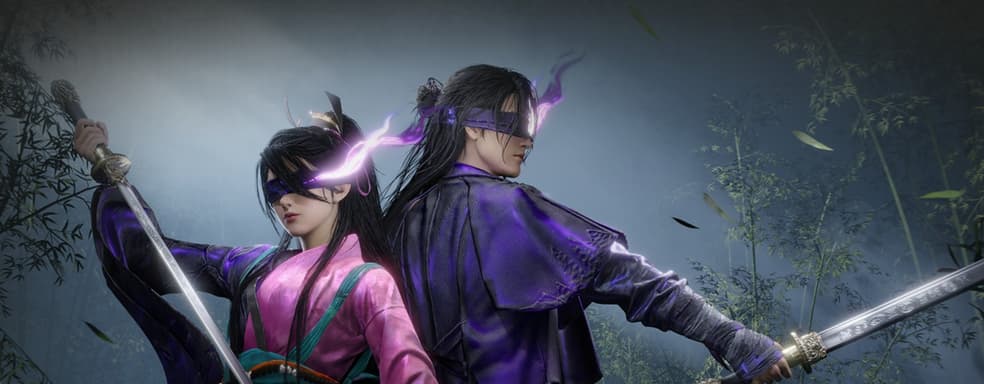
Where Winds Meet follows the classic formula popularized by the creators of Genshin Impact, combining a single-player open-world adventure with MMORPG elements. However, it offers players not a colorful anime fairy tale, but a harsh and realistic China, where everything is based on the philosophy of cultivation and wuxia traditions. Games in this genre have not yet offered such scale with the support of serious budgets, so Where Winds Meet confidently claims the title of one of the best wuxia action games.
Journey to the West
Many players of my generation, and those older, watched films in childhood that glorified Chinese martial arts and the philosophical teachings behind them. You don't have to look far: just remember "Crouching Tiger, Hidden Dragon" or the endless reruns of Bruce Lee films, which for decades did not leave television screens and were perceived on a par with Western pop culture phenomena like "Predator" or "Terminator." Over time, the wave of mass popularity subsided, and such action films, especially those with elements of fantasy, turned into a niche genre for a narrow circle of connoisseurs.
In the gaming industry, the situation remained similar for a long time. The Chinese market lived mainly within its own contour: internal mobile MMOs, local RPGs, projects created for the public inside the country and almost never going beyond its borders. Games with elements of wuxia, cultivation, and traditional mythology existed separately from the global market, developed in isolation, and most often represented those very "donate dumps" with tiny budgets and even smaller ambitions. Even now, in 2025, if you go in search of the most popular projects in this theme, you will run into a set of strange products that do not arouse the slightest desire to enter even out of curiosity.
The situation began to change rapidly in 2020, when miHoYo (HoYoverse) came on the scene and demonstrated that it is quite possible to create an expensive, beautiful, detailed, and at the same time free game. The success of Genshin Impact became clear proof that the international audience is ready to immerse themselves in projects based on Eastern cultural codes, if they are backed by quality, technology, and a clear artistic vision. It was Genshin that destroyed the entrenched belief that games from China inevitably look cheap, work crookedly, and are based on intrusive "pay to win" monetization, and set a new bar for what a world-class F2P product can be.
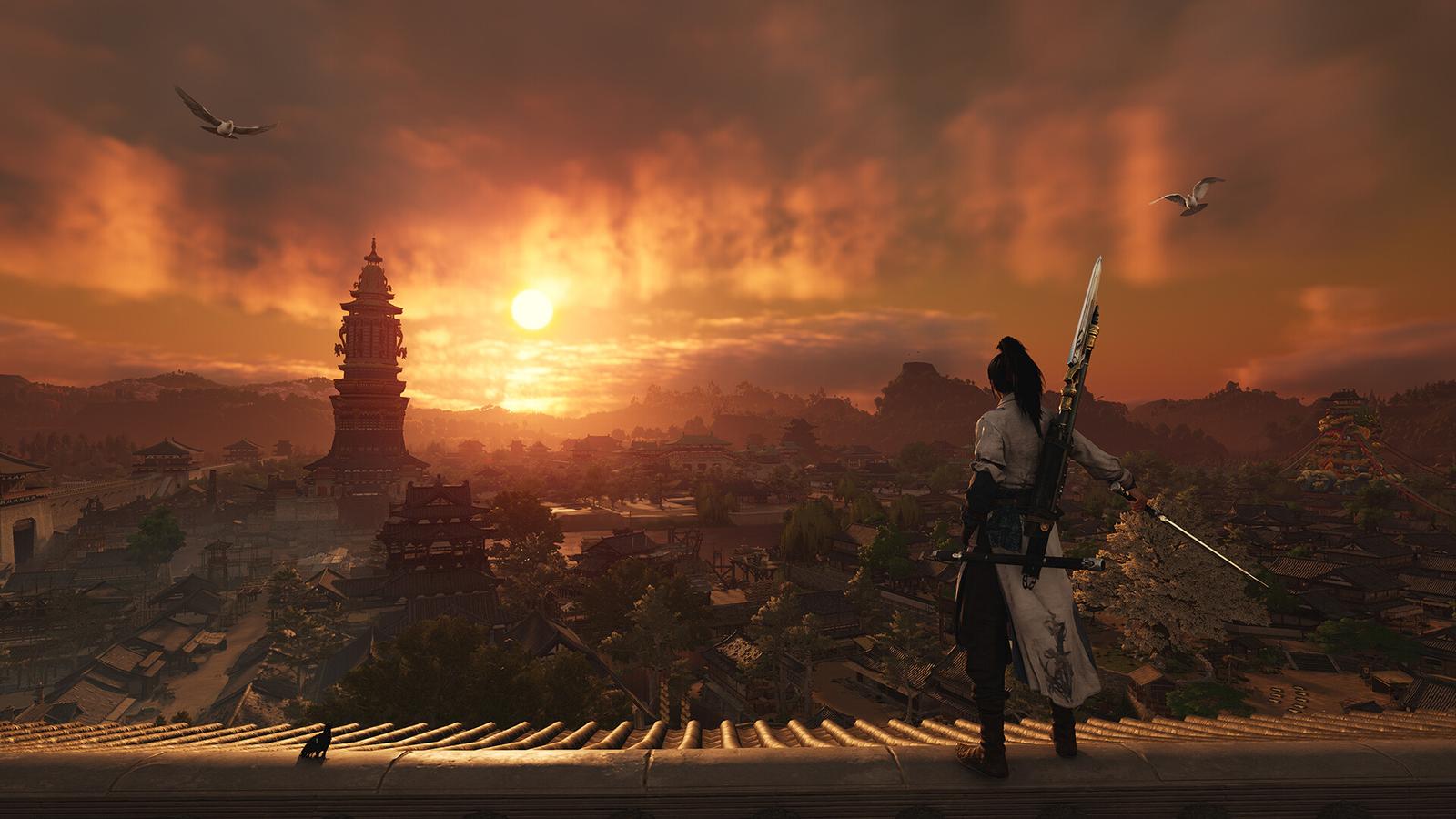
Already in 2024, the industry faced a new phenomenon — Black Myth: Wukong. It showed that Chinese studios are capable of creating not only service games, but also full-fledged expensive AAA projects, and that such games are of interest far beyond the local audience.
Collectively, these two phenomena created a new context. There was an expectation that China is capable of producing projects on its own cultural basis and at the same time maintain the interest of the Western audience. Where Winds Meet from Everstone Studio with the support of NetEase entered this niche. This is a project that not only picks up the trend, but strives to embody it with due scale. The game offers immersion in a realistic historical China, where wuxia, cultivation, and spirit-strengthening practices work not only as a cultural foundation, but also as system-forming mechanics. The scale and quality of production at the same time are approaching what the genre has historically lacked.
Sorry for this long introduction, but it is difficult to do without it, because Where Winds Meet cannot be considered in a vacuum. The game is noticeably inspired by the above-mentioned projects and many others, so one such prologue is better than endless remarks in the spirit of "this has already been in Genshin" or "well done — for a free game." Where Winds Meet is desperately trying to become that very "something for everyone," trying to please "both yours and ours," but in its scale it is sprayed on too many vectors, each of which does not always reach the desired goal.
Chinese turmoil
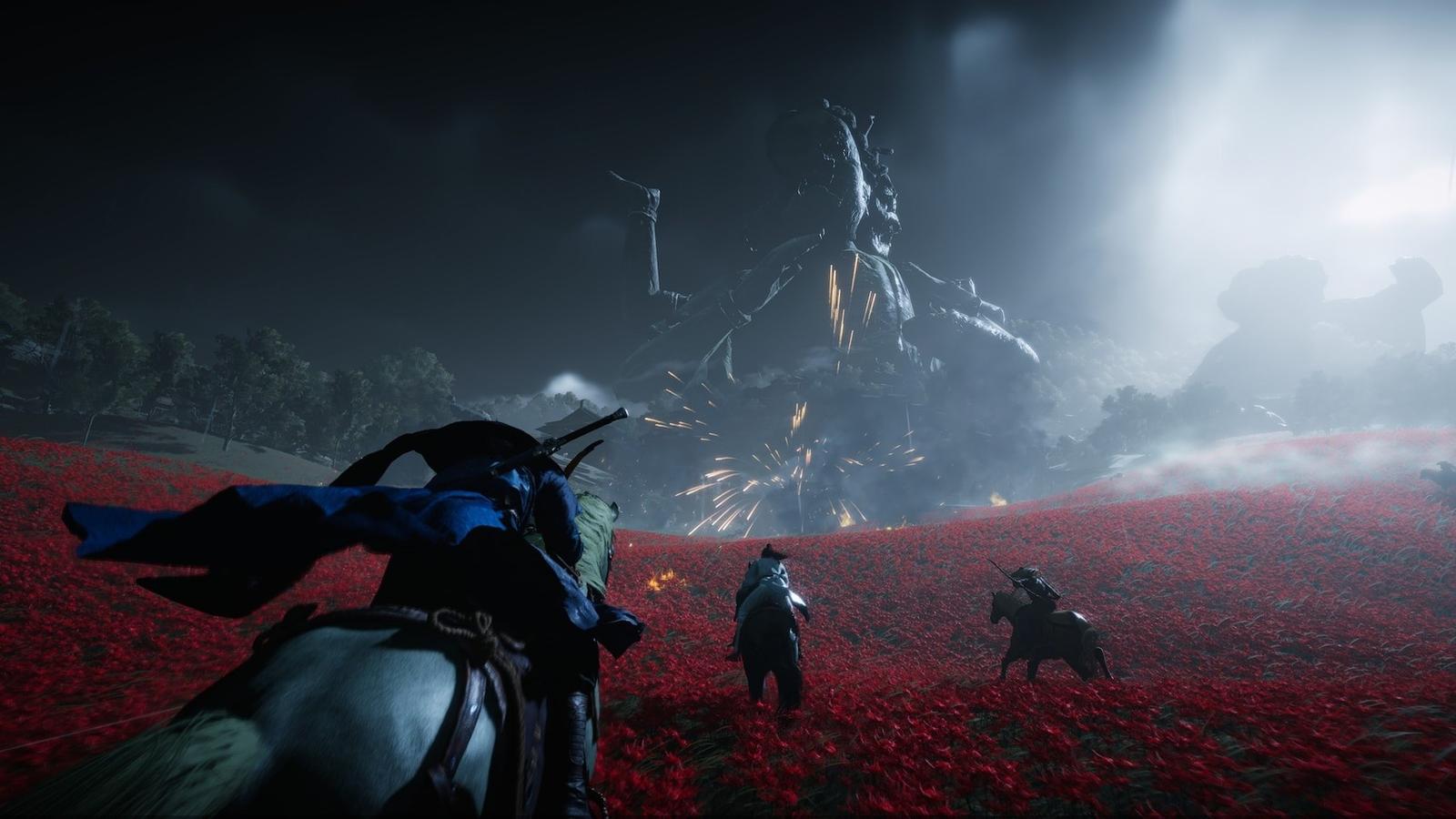
The story in Where Winds Meet is quite traditional for Chinese heroic fantasy — this is the easiest way to describe what "wuxia" is without going into complex terms. We find ourselves in China in the 10th century, in the troubled time of fragmentation, called the era of the Five Dynasties and Ten Kingdoms, when the country was just preparing to embark on the path of unification. We take on the role of a wandering warrior who has to gradually reveal the secret of his own origin, understand the intricacies of political conspiracy, and face the mystical background of this world.
But first, we are waiting for a rather impressive action prologue, in which the hero runs away from the chase on horseback and fights, holding a baby in his arms. The staging of this scene remains quite simple technically, including primitive QTE inserts, but at the same time achieves the desired effect.
Here we are taught the basic mechanics: archery, sword strikes, parrying, dodging, and using abilities. Then there is a timeskip: several years pass, and the baby from the prologue turns out to be an already grown-up hero (or heroine). At this point, the player is given the opportunity to create their own character.
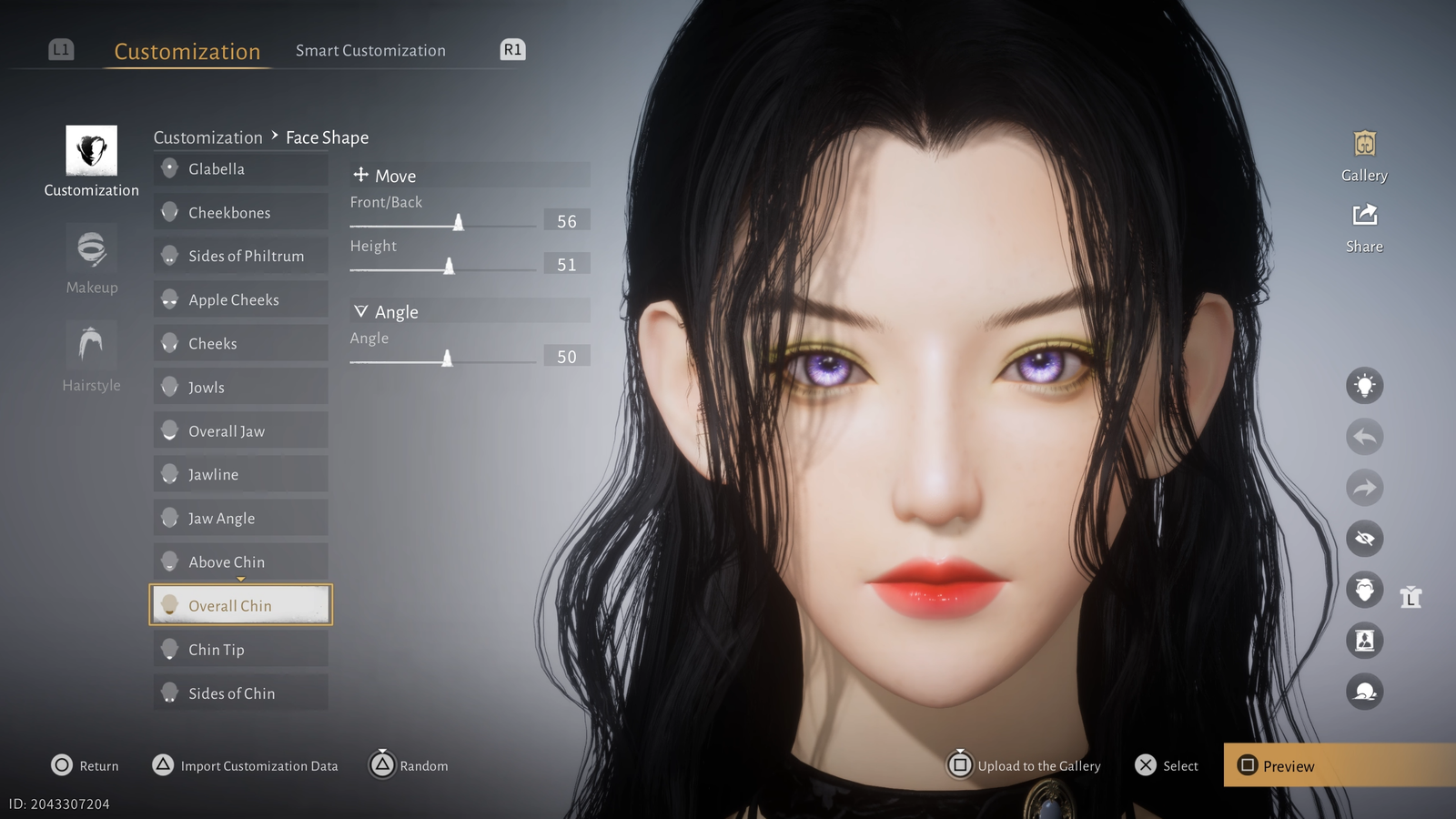
The customization tools are quite wide: after choosing the gender and one of the basic appearances, access to a detailed editor opens, in which you can spend more than one hour creating the character of your dreams. There are so many settings that you can't list them all, but the main ones — like breast size (hehe) — have not been delivered. However, you can customize the face, makeup in detail, import your photo for auto-generation of appearance, or spy on those already created by other players.
The plot in the game is presented in fragments and is currently not fully available. It is divided into chapters and episodes that will appear in the game by seasons (approximately once every three months). Moreover, the game artificially limits the pace of passage — and in several directions at once. After every few quests, you are inevitably stopped and sent to pump a few more levels before you can move further along the plot.
However, even with an endless supply of time, you will not be allowed to pump freely: every ten levels you need to pass a combat test in order to open further pumping and increase the level of the world. Reaching the fortieth level, I found that the game asks me to wait a day before I can pass this test.
Okay, I waited a day — I opened the level increase to 50, but it immediately turned out that the next increase in the level of the world to the sixth will be available only in four days. And how much it will take to get to the maximum eleventh level of the world is a big mystery.
This is a feature familiar from NetEase projects (I've seen a lot of them), and it artificially equalizes the progress of players, regardless of how much time they spend in the game. Therefore, I will immediately stipulate that at the time of writing this material, I have not completed the entire available plot, but this is not required, since due to the peculiarities of the development of such games, the completion of one large plot chapter will probably fit into an annual development cycle. Until then, it is somewhat meaningless to talk about its quality. So far, I can note that the story begins as a rather large-scale and confusing adventure, but so far it rather sets the mood than tells a complete story.
This is partly due to the crumpled plot moments: the game does not allow you to go through the story consistently and regularly forces you to be distracted by side activities due to the above-described restrictions. Partly — with the fact that, entering the international market, the developers of Where Winds Meet never provided the project with localization into the third most popular language in Steam.
There are not even Russian subtitles here, and the English version is mediocre: there are inaccurate translations, because of which it is sometimes difficult to understand what exactly is happening (and this is noted even by English-speaking players). The situation is aggravated by the almost complete absence of lip-sync and "laying" of voice acting. Characters often speak without opening their mouths, because the original Chinese replica was shorter, and some phrases in English are not voiced at all.
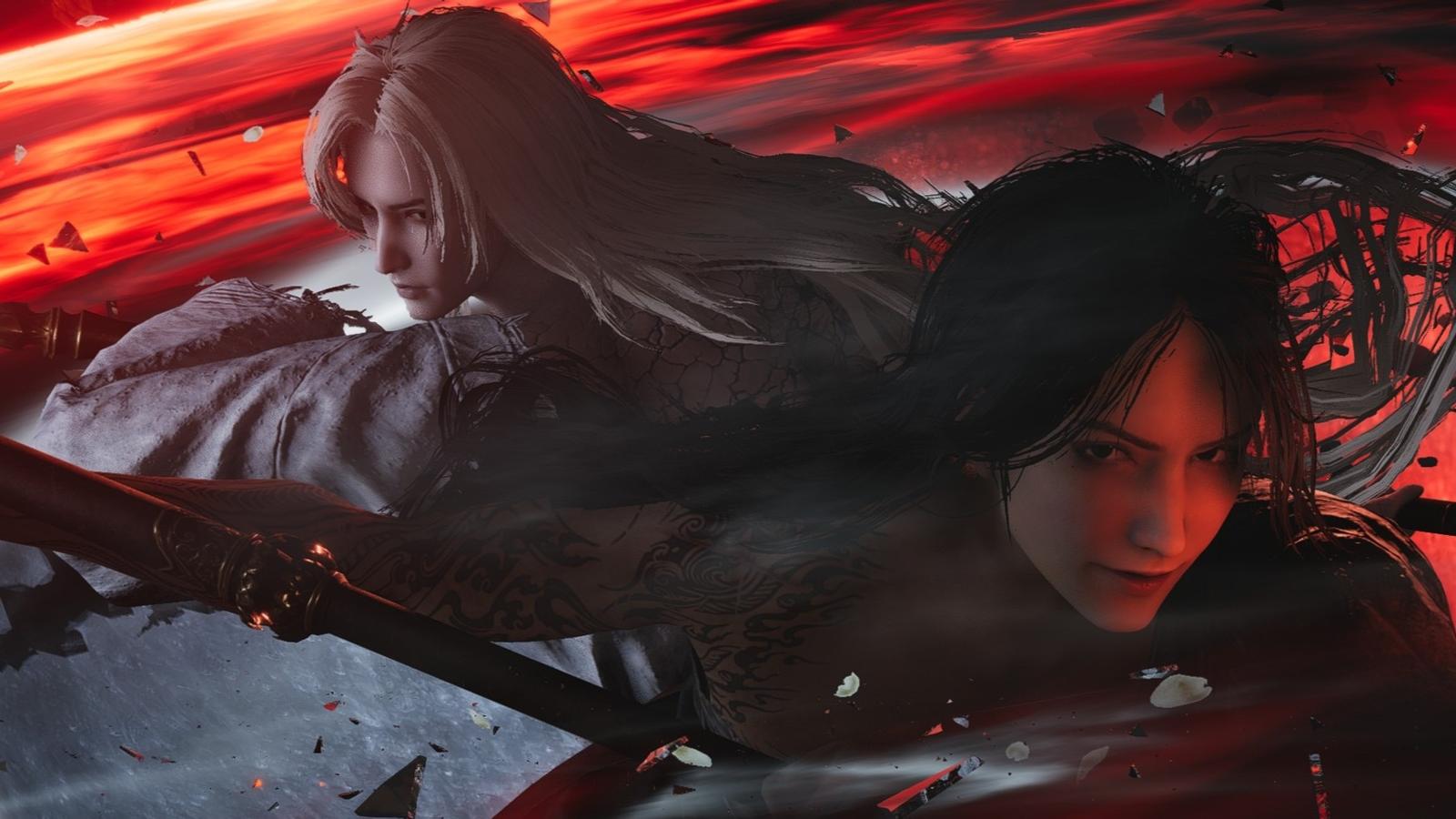
With all this, it cannot be said that the plot is completely boring. At times, Where Winds Meet rewards for advancing through the story, firing spectacular scenes made with the scope and pathos inherent in wuxia. For example, one of the battles with the boss unfolds almost in three dimensions: real and mirrored, divided in half.
However, the most interesting thing happens in the staged scene, when two characters drain jugs of rice wine in one gulp and burst into the crowd. A spectacular massacre begins in the best traditions of Chinese cinema: blades whistle, enemies scatter, and in the midst of the carnage, one of the heroes deftly substitutes a sword under a shard of a broken jug so that it rolls right into his mouth — and takes another sip of the intoxicating elixir, to start cutting opponents with renewed vigor.
Such moments are the quintessence of the hypertrophied style of wuxia: perhaps unnecessarily pretentious, but damn spectacular. In the rest, the plot so far acts more as a pretext for colorful battles and traveling through a huge open world, which we will talk about further.
Nice uniformity
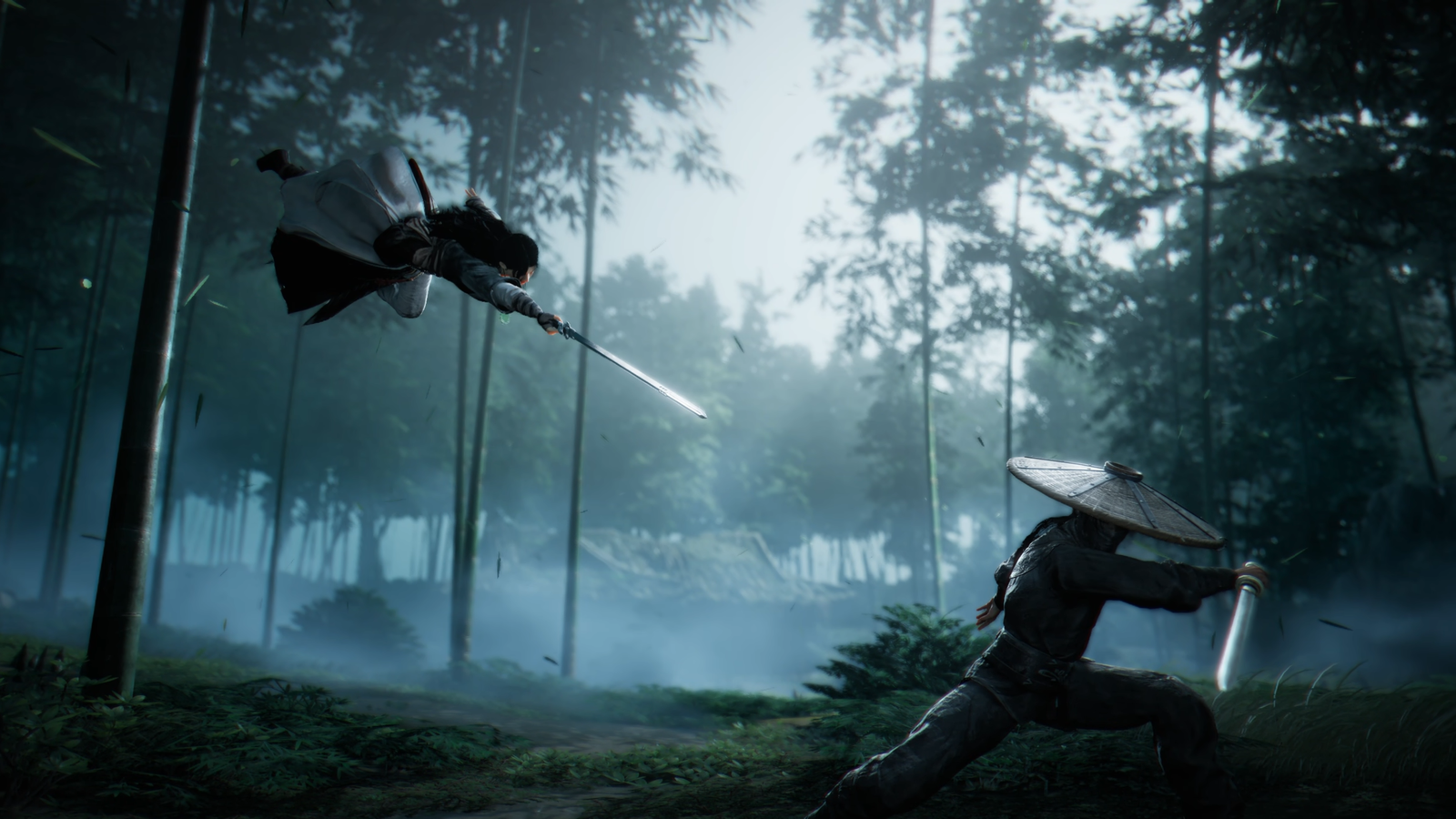
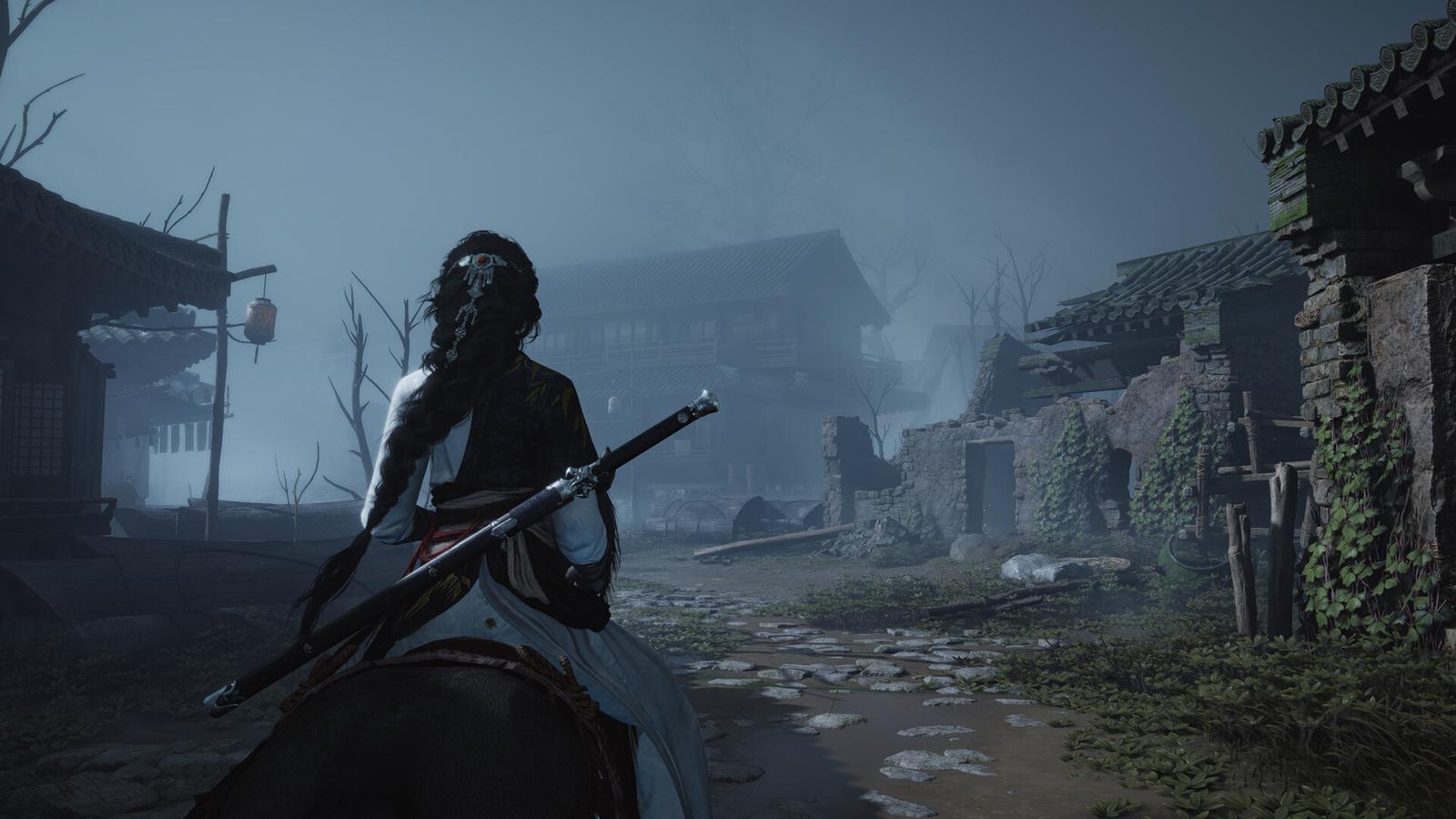
The open world and its technical implementation are something between Assassin’s Creed Shadows and Ghost of Tsushima: it is moderately realistic, able to please with details, but still relies more on the overall visual image than on an attempt to detail every detail.
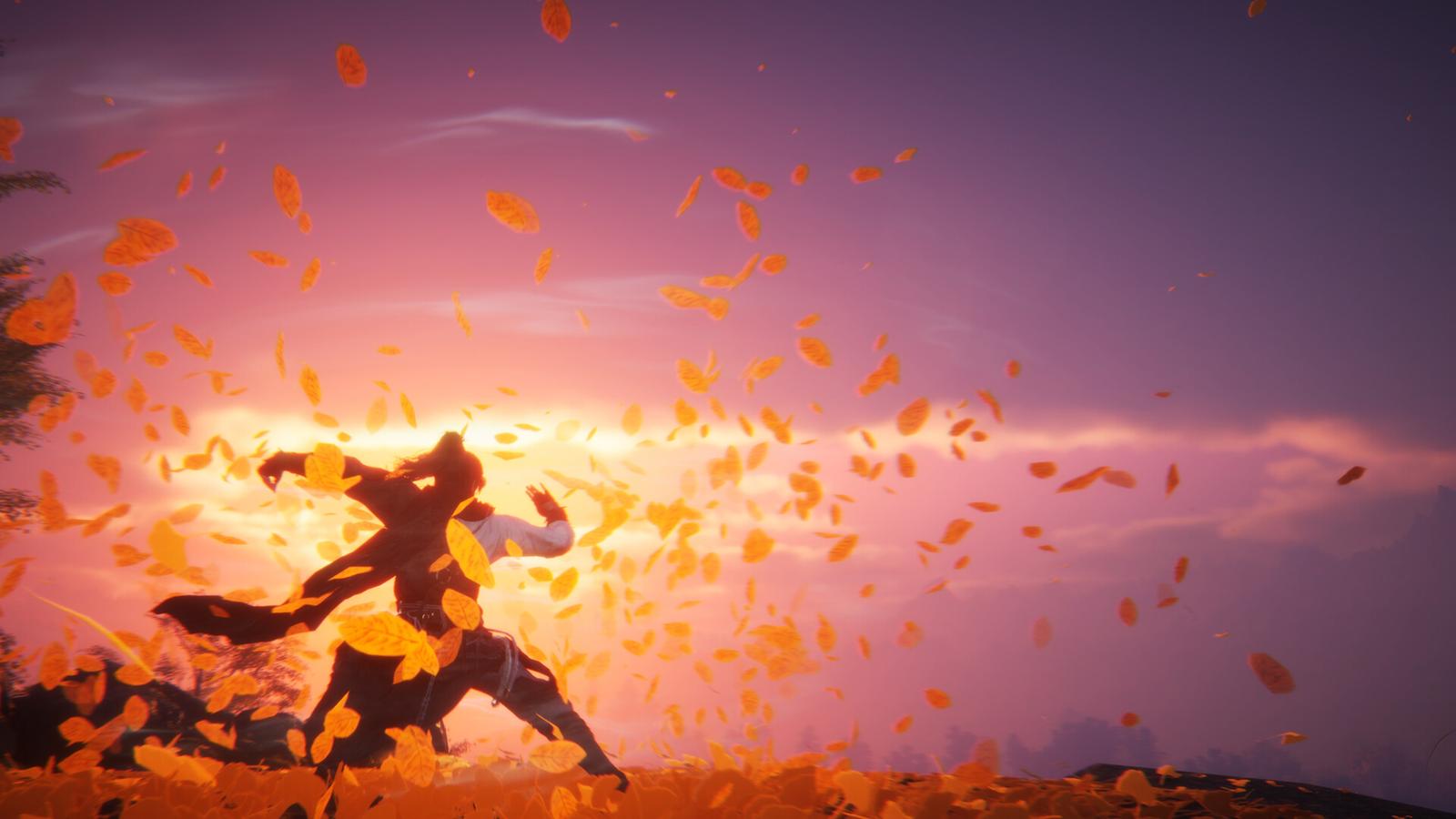
This is noticeable in the work of the physical model: somewhere you can cut down a whole bamboo forest or set fire to the grass with a fiery arrow, somewhere the use of ability will lift all the surrounding foliage into the air, and somewhere even a blade of grass will not stir — the environment remains completely static and practically does not react to your actions. There are also weather effects, picturesque gusts of wind and a dynamic change of time of day, which together creates a convincing feeling of a large, living space in which it is really pleasant to be.
The only thing that, in my opinion, it lacks is visual diversity. The locations presented at the moment look quite monotonous, representing forests, meadows, rivers and mountains, and I want to believe that with future updates there will be other, more saturated and bright biomes.
In terms of optimization, the game is also pleasing: on my RTX 4070 Super, it maintains a solid 95–100 frames in native 1440p, which is expected considering the planned December release on smartphones. However, it would be almost perfect if not for the periodic texture loading right before your eyes. I would gladly get rid of them by sacrificing frame rate, but I didn't find such an option in the PC version.
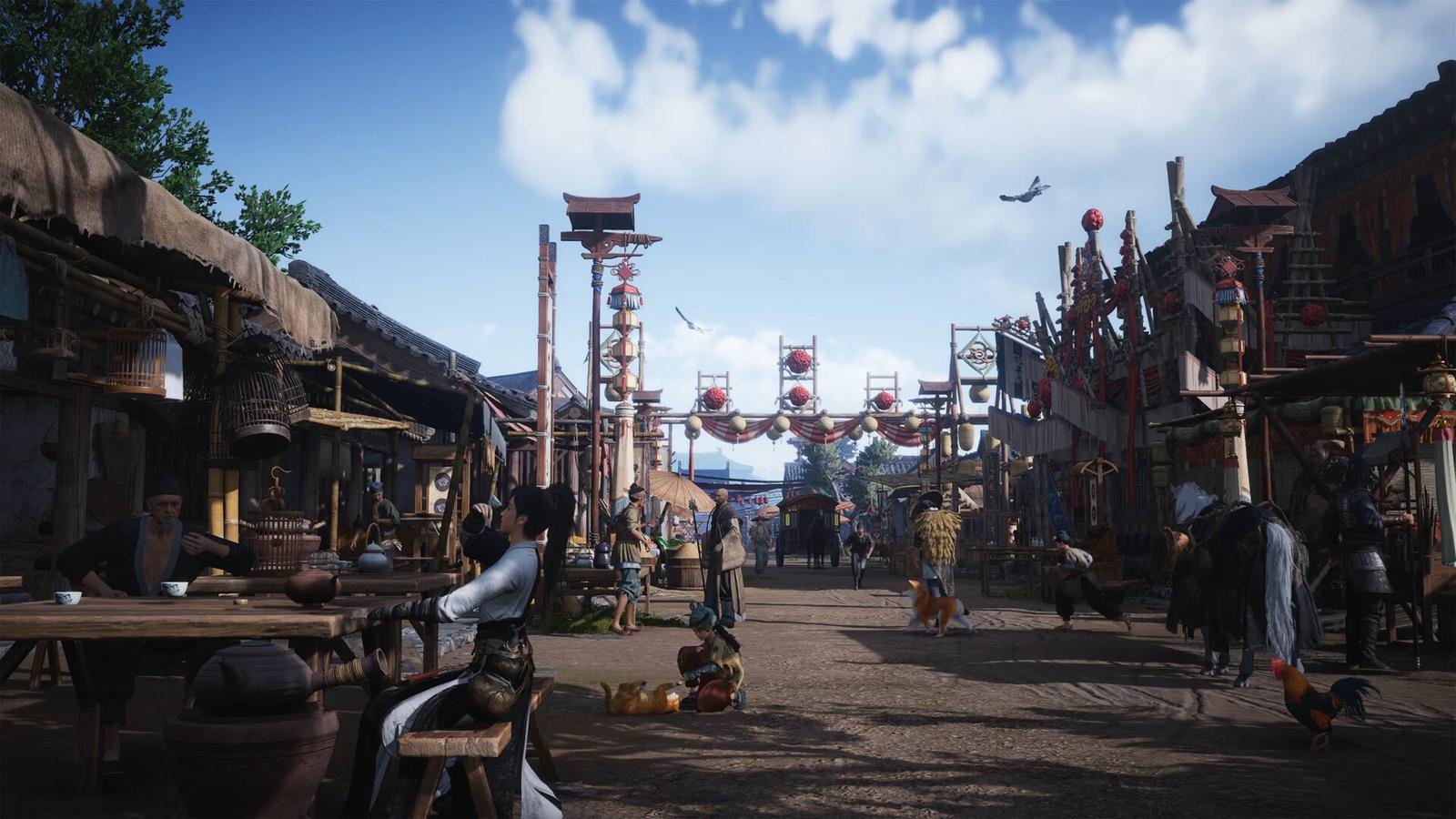
The capital, Kaifeng, is truly impressive. It is the largest and most detailed city in the game: it hides shopping stalls, fairs, piers, man-made lakes and streams, theater areas, temples, and gardens where life is in full swing. At first, you move around the capital slowly, as if on a real tour. It's a pity that you can't get into the imperial palace without an invitation, but I'm sure players will get it someday.
This location is very elaborate and heavily loads the system, dropping the frame rate down to 50 frames per second. The developers stated that there are about 10,000 NPCs here, and although I am not personally sure about this, I think it is not far from the truth, considering that the streets are really densely populated, and it will probably take more than one hour to fully explore every corner of the capital.
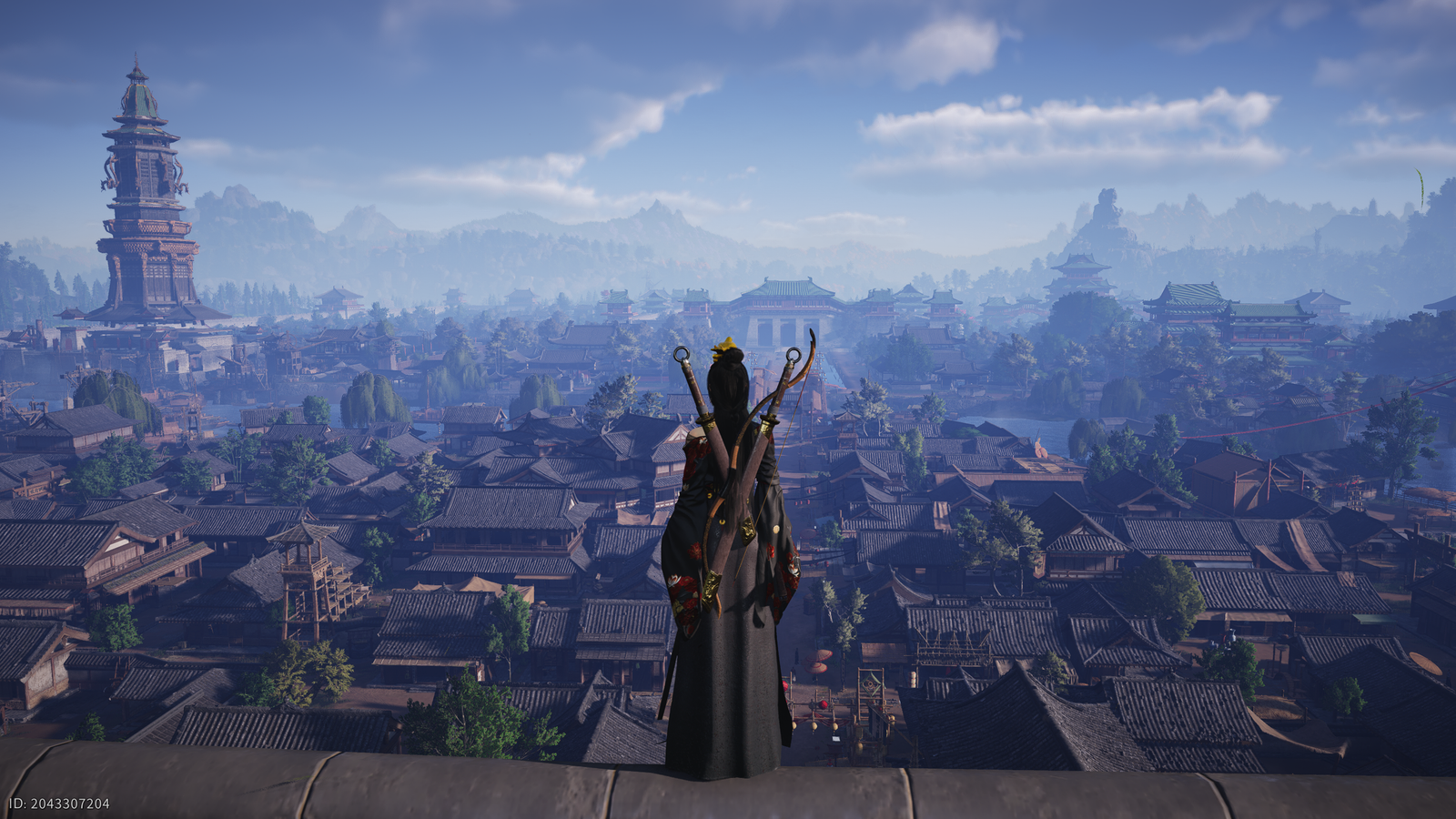
However, how "alive" this world feels is debatable. Despite the impressive number of NPCs and carefully crafted decorations, interaction with citizens is often minimal. Most characters play the role of background mass: they walk along predetermined routes, repeat short animations, react to the player only within a modest scenario, and rarely offer anything beyond the usual lines.
However, this does not interfere with immersion, since there are enough random events (which are not actually random), quest characters who have both routine and quite intriguing tasks; and even real AI-NPCs.
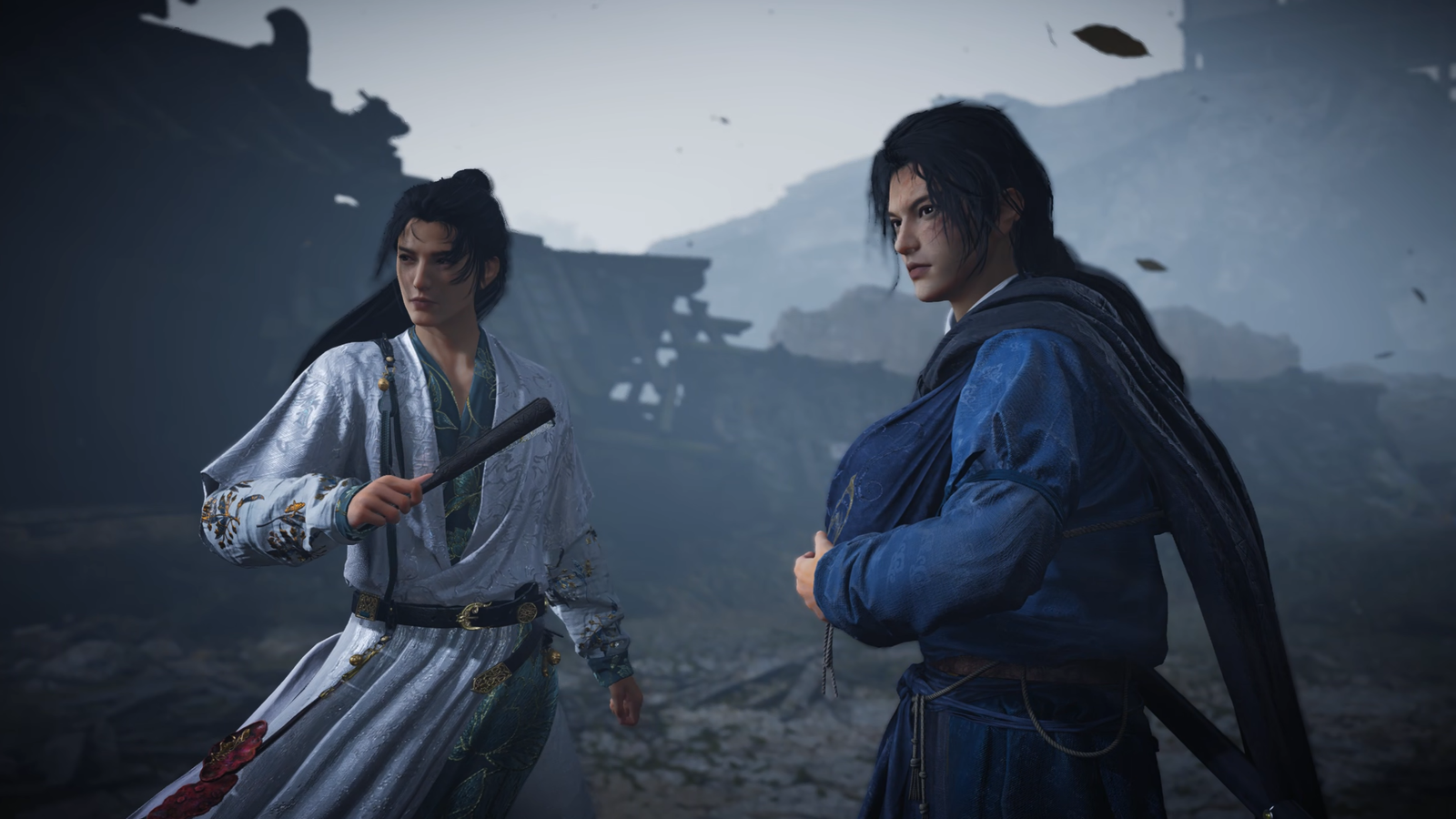
The developers are experimenting with a dialogue system based on neural network models: some characters really answer you not with pre-written phrases, but with dynamically generated lines in response to your phrases, which must be manually typed on the keyboard.
In practice, however, the system has few capabilities so far. Most of these NPCs support an extremely simplified conversation, repeat similar phrases, and quickly switch to a cycle of identical answers. Sometimes they just don't understand the context and offer meaningless comments.
Piled on — you wouldn't believe it!
While exploring the world, the game encourages you to look into the distance and go where curiosity leads you. Everything you see on the horizon is really achievable — you just need to figure out how to get there. However, moving on to the topic of content, I want to say that Where Winds Meet is so packed with it that I even, I confess, get lost in where to start. There is even too much content here for the starting version of any service game.
At a basic level, while exploring the world, you will encounter chests, hidden interactions, and puzzles at every step — from the most elementary, the solution of which lies on the surface, to multi-stage spatial problems with preliminary deciphering of clues from texts based on Chinese mythology.
Some of these puzzles require the use of so-called mythical abilities — such as "taiji", which creates a whirlwind, "heavenly capture" (telekinesis), or "meridian touch", which uses the target's acupuncture points (read: makes the target freeze), and others. These same abilities can be used in combat: for example, telekinesis allows you to disarm an enemy, and "cloud steps" not only allow you to be attracted to ledges, but also to quickly catch up with a fleeing enemy.
These abilities are unlocked by completing quests, and some, such as "taiji" or "jumping frog", are obtained when you observe the actions of animals and repeat their movements, passing a simple QTE game.
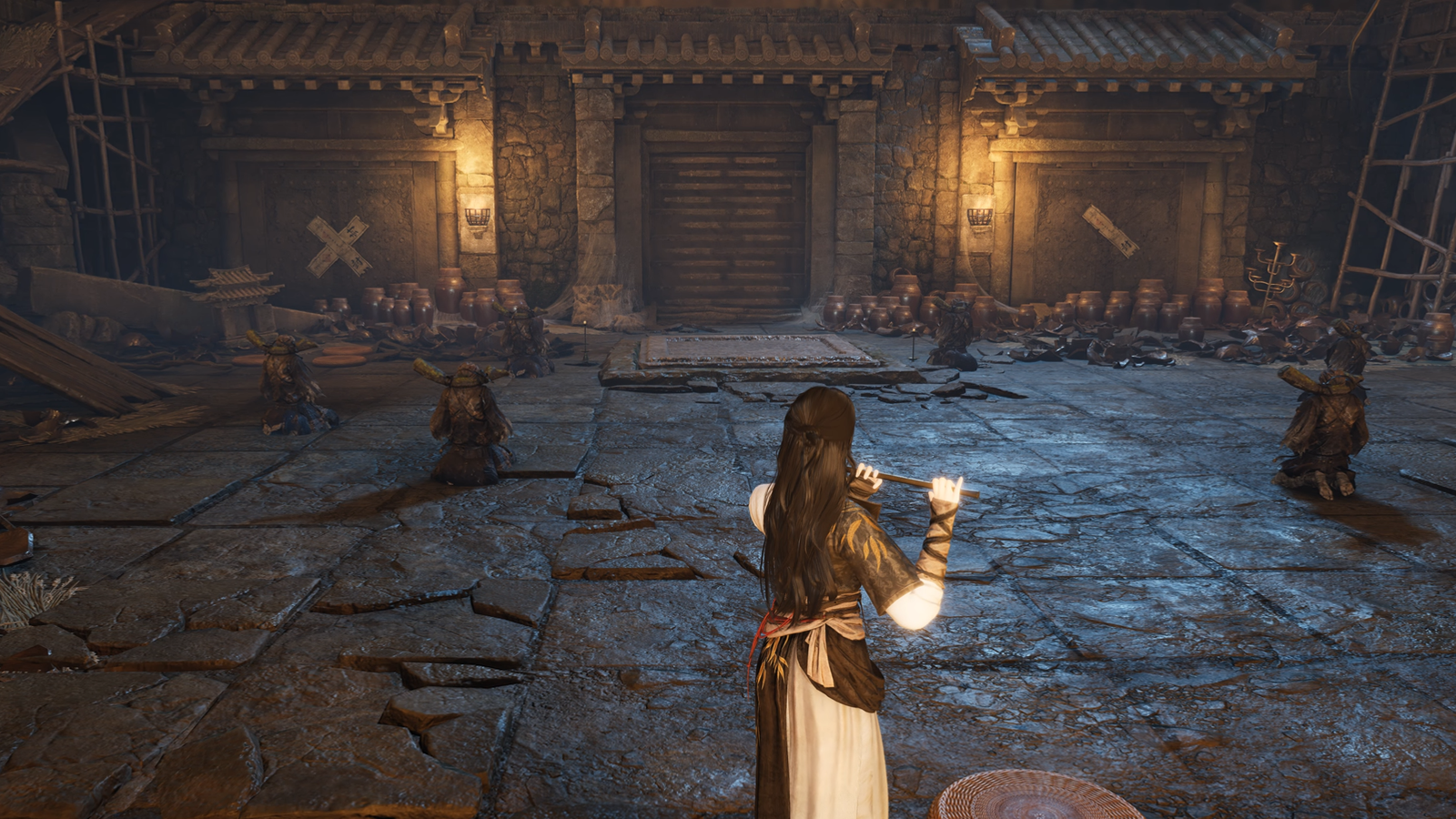
Among other activities are time-based item collection challenges, parkour and acrobatics sections, combat challenges with conditions, full-fledged stealth challenges, because yes, there is an invisibility ability here, and there are missions where you sneak into an enemy base, secretly eliminate enemies, loot chests, and get to the main goal to... no, not kill her, but to spy on a combat technique and unlock new opportunities for weapons.
And this is only a small part of what the game offers. I bet you don't expect to meet a card battler here, with the help of which you have to rid the goose of mental problems?!
We will talk more about the combat system and development later, but for now, let's clear up a little more of the "content" that the developers have piled on so much that it is simply impossible to list everything. To master it completely, you need hundreds of hours and almost a complete lack of personal life.
Therefore, you should also know that the game supports two modes: solo and multiplayer. In the first, you exist in your own separate world, explore, adventure, and go through the story, and in the second, you are transported to a common world with other players — and here, accordingly, another portion of multiplayer content awaits you.
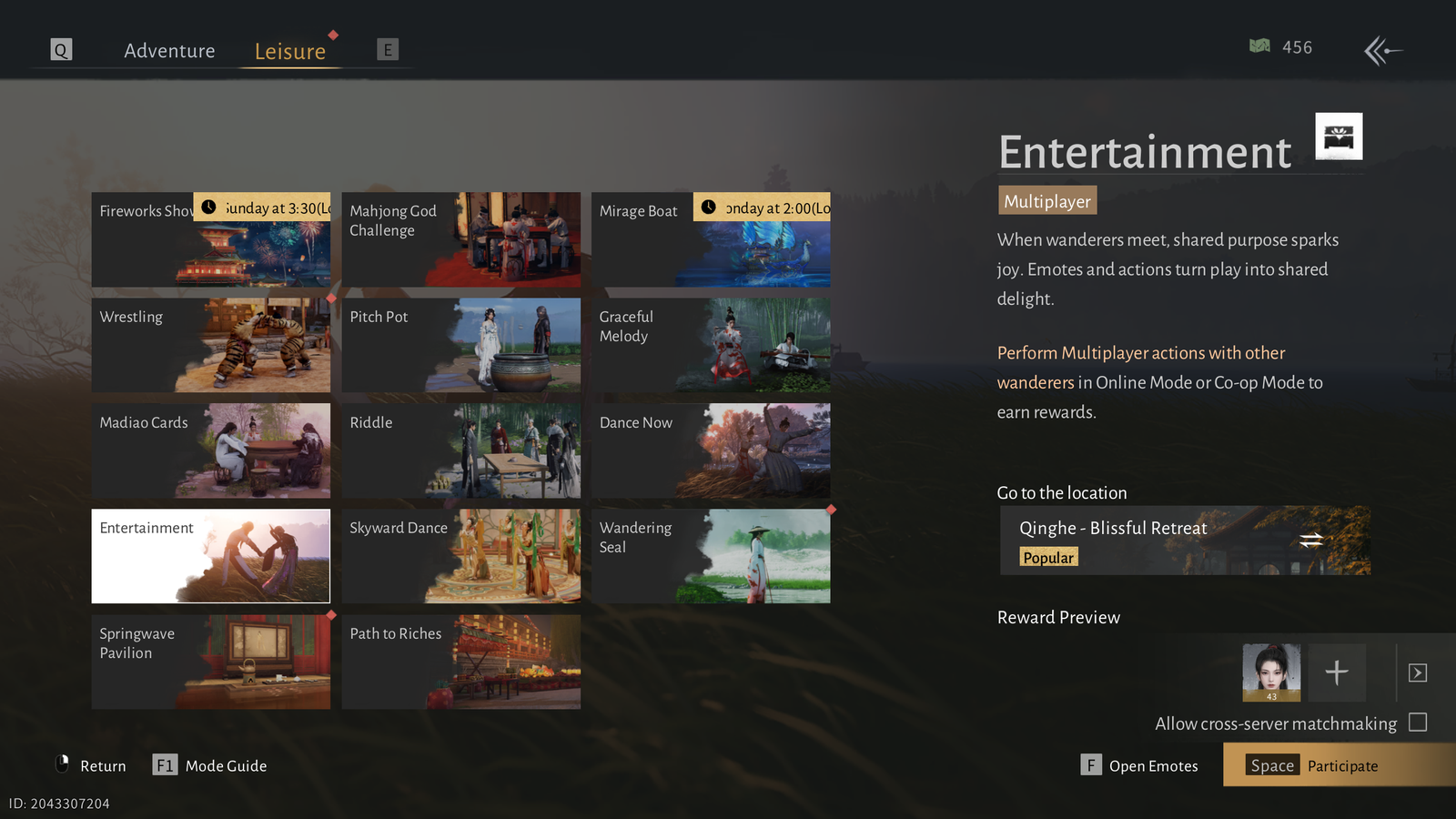
In multiplayer, the structure resembles a hybrid of a classic MMO and a themed amusement park: some of the modes are the same outpost clearing, stealth missions, and battles with bosses, only in the company of other players. But in the "peaceful" part, we are waiting for fun of a more exotic kind.
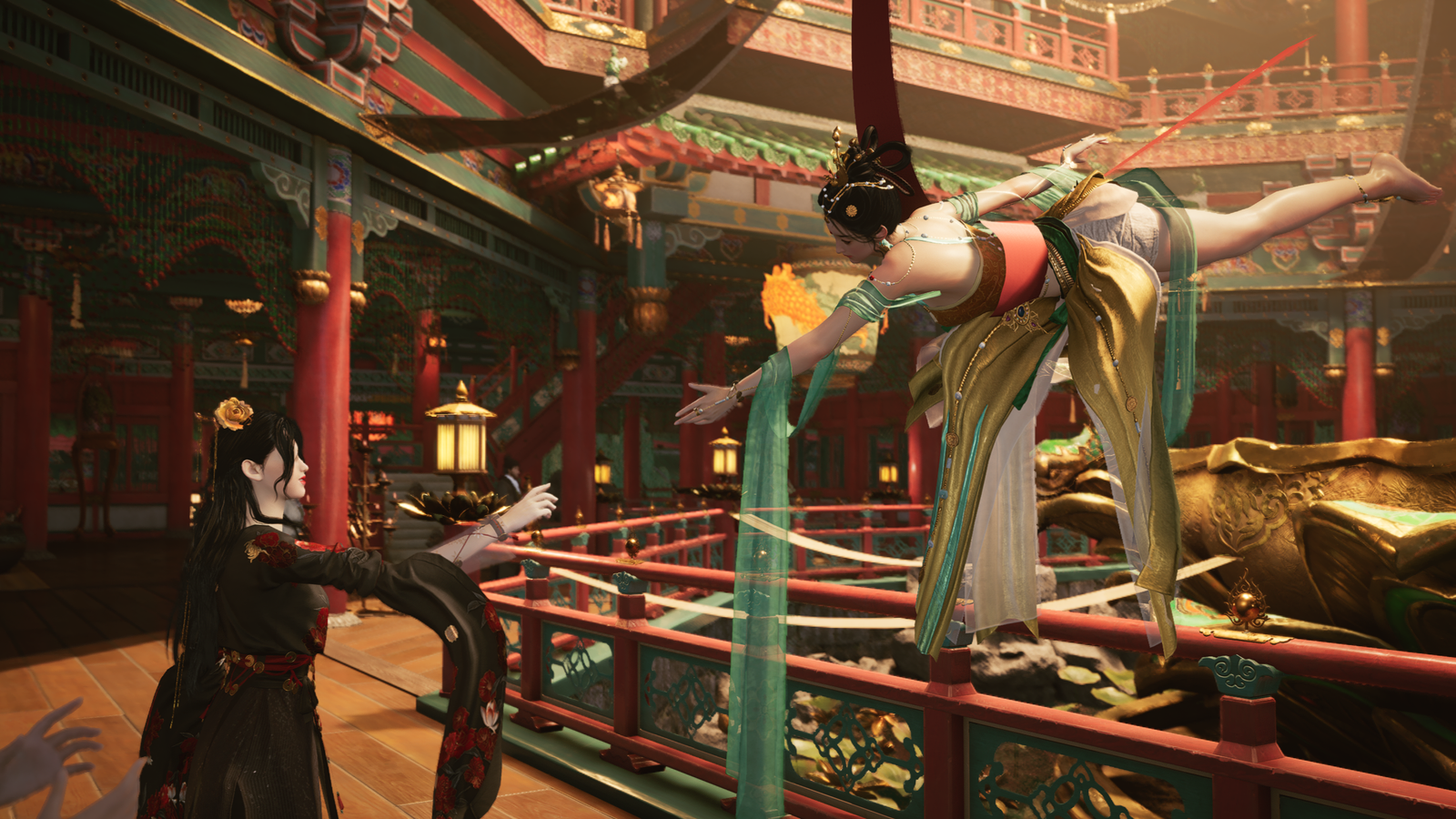
These are group practices such as various types of meditation, collective cultivation of Qi energy, running in circles while shouting slogans, group quizzes, retreats for treating villagers (in fact, a raid run, but in the format of a card battler), and much more.
Among the more "entertaining" events: fireworks shows, mahjong tournaments, cruises on a ship, drinking competitions, card games, guessing riddles, wrestling, making music, bathing in hot springs — you can even massage a friend's back. And this is far from the whole list: there are really a ton of activities.
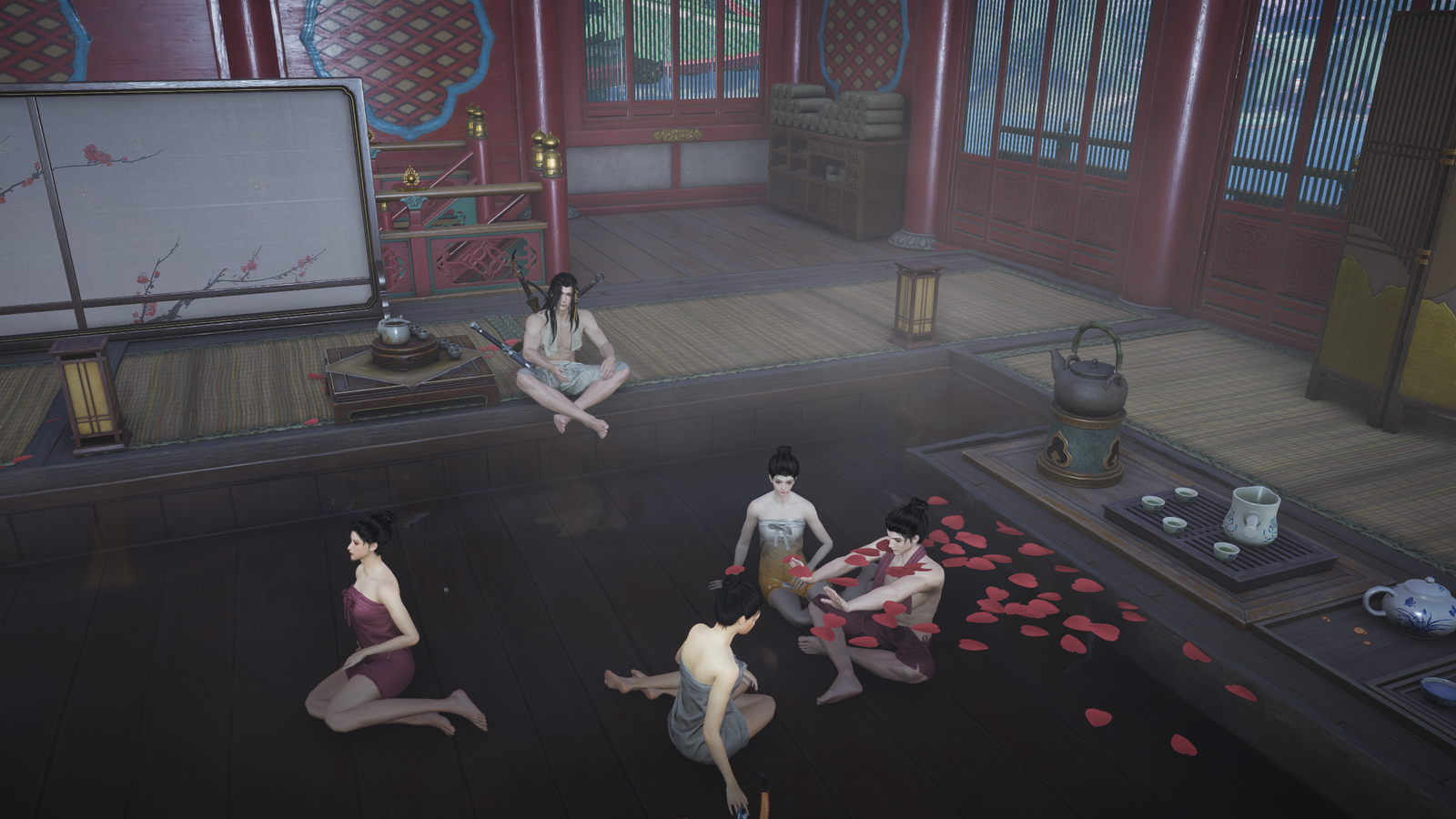
But this luxury has one problem: you quickly begin to notice how many activities are similar to each other. This is the key flaw. For example, debates and wrestling are fun mini-games, but in essence, they, like "healing diseases", are primitive card battlers with minimal differences in conditions.
In debates, in addition, it is impossible to read all the answer options in English in time to react. And in riddle-guessing competitions, a banal language barrier interferes: there is no automatic translator in the game, and when a Russian, a German, and a Czech gather in one team, the event falls apart, turning into a stale joke.
Yes, the developers really piled on a lot of everything — without exaggeration. But only a few of these activities are truly entertaining, and in the worst case, you just start to get confused in them. It is only saved by the fact that the game generously adds experience and resources for every sneeze, motivating you to at least try everything once.
Don't join — think about it
The sect system deserves a separate discussion — local martial arts schools or factions that a hero can join. In Where Winds Meet, sects function not only as part of the lore but also as a mechanical superstructure over the character. Each has its own rules, bonuses and penalties, a set of preferred martial arts, and its own store where unique items unavailable to representatives of other schools are sold for reputation.
You can't join a sect right away. First, you need to do what the game pushes you to do anyway: explore the world, collect clues, read notes, communicate with masters, and complete small tasks. Only when you have collected enough "clues" can you join a sect. After that, the cycle familiar from MMOs begins: increase your rank in the sect, complete tasks, gain reputation, and open access to new items and techniques.
For example, you can run around the world and heal other people by joining a sect of healers, or join the sect of the midnight blade and receive bonuses from battles with other players. And the sect of the righteous will allow you to give money to other players, but if you earn more than you should in a week, you will lose reputation points.
You can, however, refuse to belong to any sect at all and remain free. In this case, their rules do not apply to you, no one restricts you, but in return, you lose access to some of the benefits and pay a higher price for learning martial arts.
On paper, the system looks like another way to give the game a wuxia flavor: there are schools, there are their doctrines, there is a choice of path. In reality, however, it partially suffers from the same problems as the rest of the Where Winds Meet content. There are many sects, each with its own nuances, tasks, restrictions, and weekly limits on reputation and currency. This adds role-playing depth but at the same time reinforces the feeling of being overwhelmed: another system to keep in mind when you are already juggling story tasks, side activities, seasonal events, and other activities.
Showdowns in the style of flying daggers
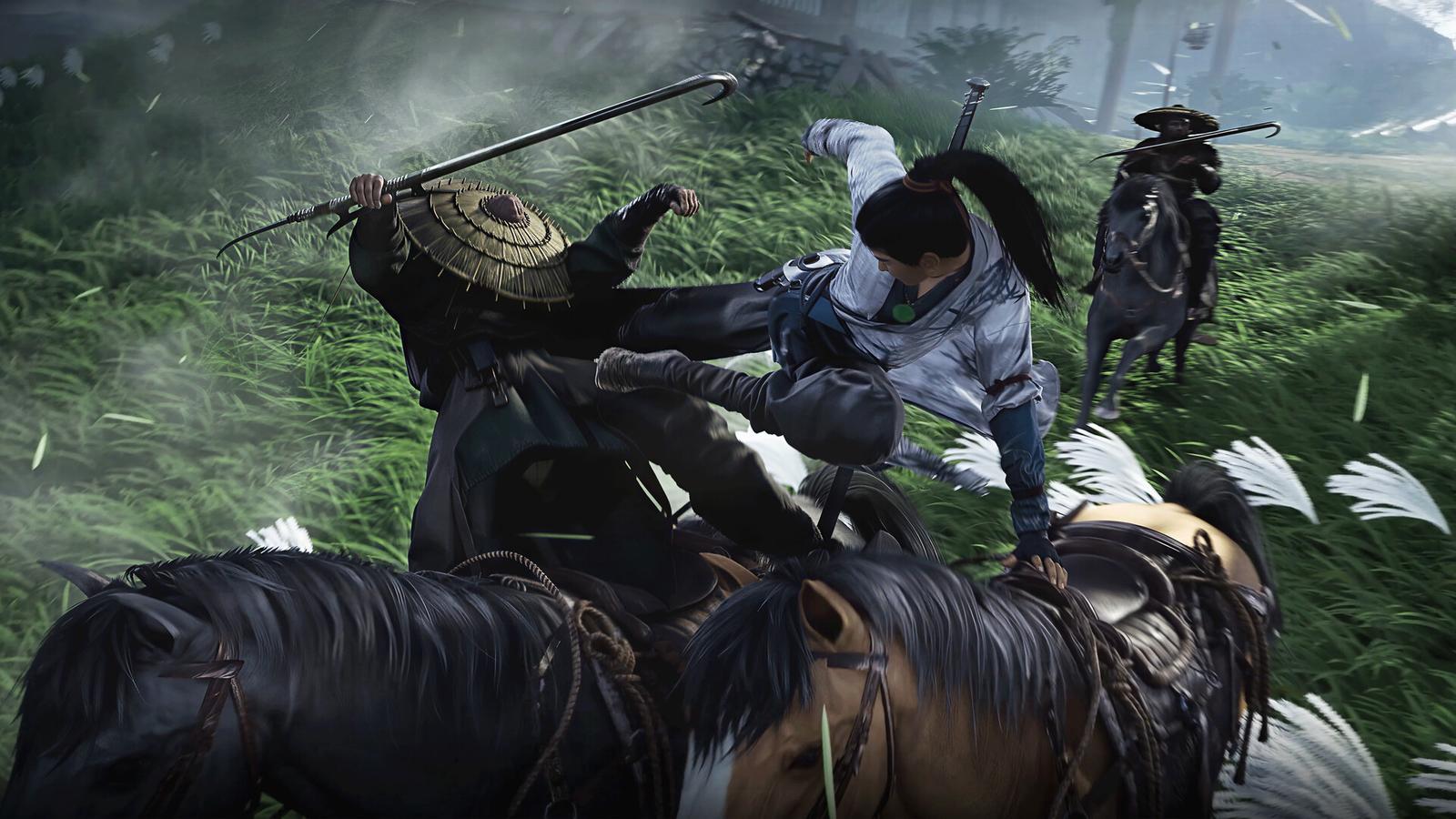
No wuxia game can exist without an expressive combat system, and the developers understood this perfectly. The local combat system resembles a hybrid of Sekiro, Wo Long: Fallen Dynasty, and Nioh — in approximately equal proportions, with parries, dashes and rolls, swift attacks and combining weapon techniques, mystical skills, switching between weapon types to continue combos, but with a much greater emphasis on acrobatics and technical flair inherent in wuxia. To describe the fight in simple terms: it is fast, technical, and requires reaction, but at the same time forgives mistakes for beginners.
The game has three basic difficulty levels (story, standard, and expert), as well as a hardcore mode with permanent death, which is not yet available. At the standard level, battles resemble a simplified Sekiro: enemies have a qi (concentration) scale that must be exhausted with a series of strikes and parries to break through their defense. The parrying mechanic here is classic: press the button before you get hit — you get the result, and if you dodge at the last moment, you can even slow down time.
However, the developers have included flexible settings and allow you to partially automate parrying, turning the reactive mechanic into a simplified QTE format, where every few seconds you are guaranteed to parry attacks by pressing just one button that lights up on the screen. This feature does not work in PvP mode, but in PvE it allows you to master the content even for those who came here exclusively to bask in the springs and play mahjong.
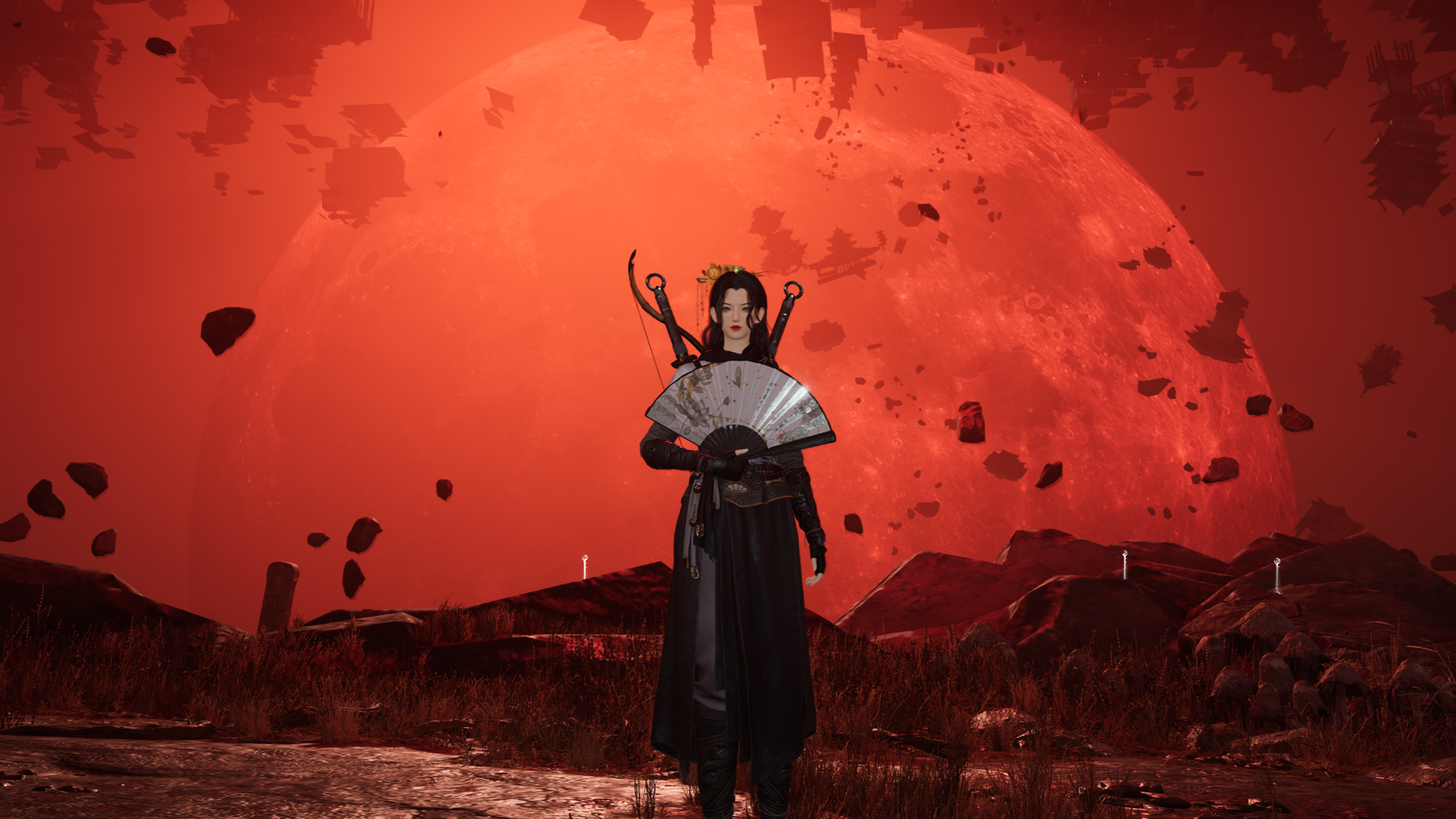
The game features eight types of weapons, each with its own set of techniques, stance, and even role: from paired blades and spears to a combat fan and umbrella. Moreover, one type of fan allows you to become a ranged mage, while another allows you to become a healer. The division into roles is mainly necessary for high-level group content, but even in single-player mode, I liked running with a set of swift paired blades with high damage, without depriving myself of the opportunity to switch to a fan to heal myself without interrupting the combo.
What's convenient is that you don't need to upgrade each weapon separately. It is the equipment slots that are improved: the left and right hand. Upgraded the slot — automatically strengthened any weapon inserted into it. In addition, there are separate improvements for specific types of weapons, but they are not tied to a specific blade either. However, it is necessary to pass various combat tests to unlock them.
Battles in this game are enjoyable and pleasing to the eye largely due to the decent animation and choreography of the battle — so much so that it is easy to turn a blind eye to the monotony of opponents (at least for now). But this praise applies only to the player's avatar, since hits on the opponent often feel insufficiently tactile: strikes — whether with a two-handed sword, a spear, or paired blades — most often look the same and do not have enough "weight". But, I repeat, this did not become a big problem for me, since you forgive a lot, simply enjoying the spectacle on the screen.
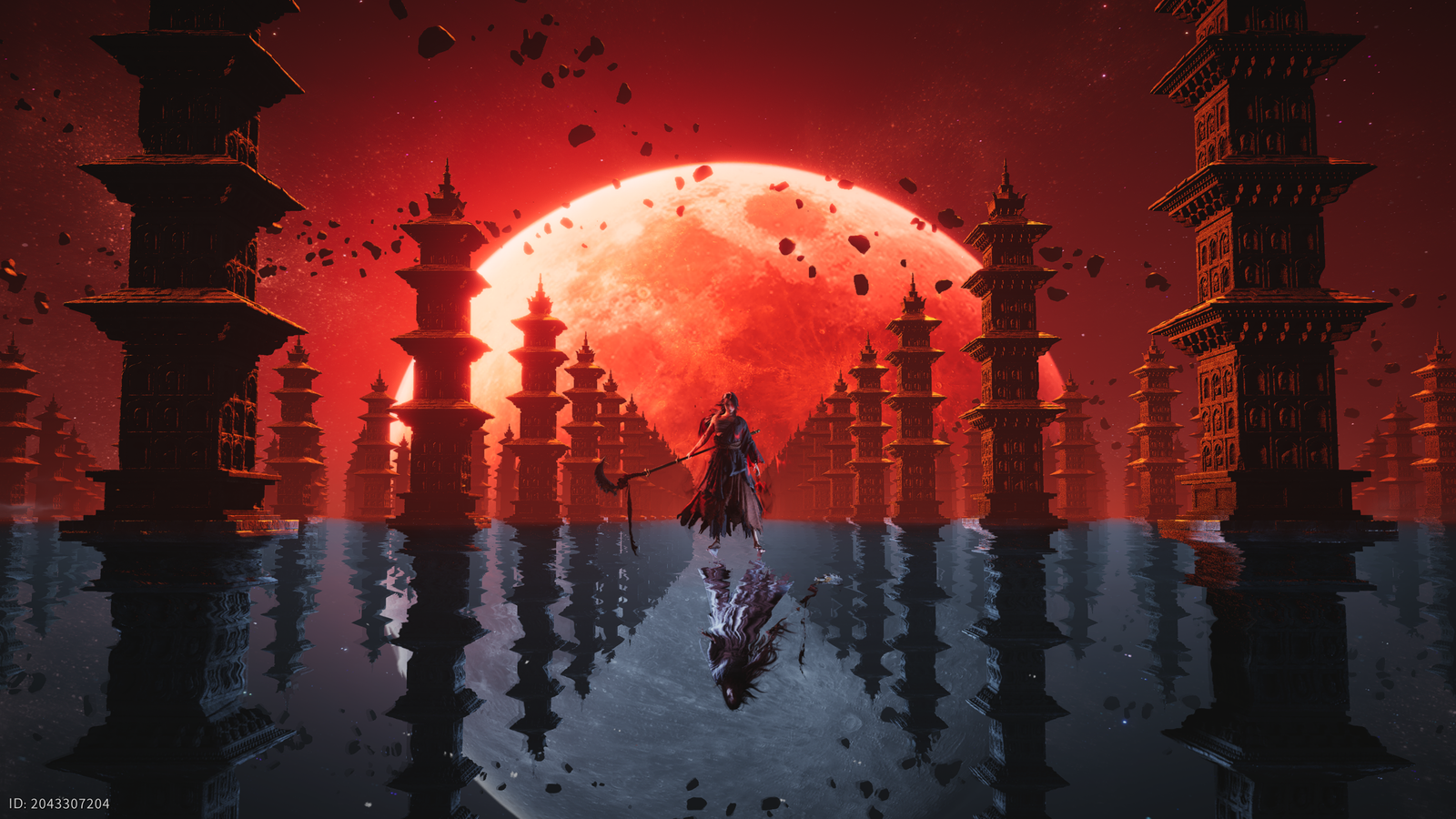
However, if it's fun to chop dummies here, you can't say the same when it comes to fighting other players. Where Winds Meet offers several confrontation modes: a one-on-one arena, which is only available at certain times, and a battle royale, which is always open.
The problem is that the combat system created for PvE stops working as expressively in PvP. All its strengths — the beauty of animations, dynamics, combos, and mystical arts — turn into a chaotic spam of a set of techniques until one of you falls down dead. The situation is aggravated by cases when the connection is unstable and the animations become more jerky — it looks sad.
The situation improves slightly in the battle royale mode, where battles stretch out in time and space, slowing down their pace and allowing you to use abilities wisely and control the distance. But even here, the thesis about superficial implementation does not go away. The local battle royale partially resembles Naraka: Bladepoint from the same NetEase and serves only as another item in a long list of activities. It is hard to imagine that someone will launch Where Winds Meet exclusively for this mode when there is a separate game that does the same thing much better.
On the positive side, PvP here takes place on equal terms, except that there is a separate branch for leveling up characteristics for PvP, which, if desired, allows you to ignore everything else if you are only interested in fighting other players. Otherwise, there are no "pay to win" mechanics here, and the monetization itself is much more generous than that of potential competitors.
Don't pay to win
At first glance, monetization offers a familiar "gentleman's set" of service games with gacha: a monthly subscription, a battle pass, and spins. But a pleasant moment is that here you do not need to knock out characters and upgrade them — all monetization is tied only to cosmetics. These are costumes for your hero, skins for your horse, pets, paints, accessories, and unique abilities of heroes.
At the same time, I will not say that the emphasis on monetization through cosmetics forced the developers to make basic items "ugly" — on the contrary, there is enough here to decorate your character even without investments. And some unique looks are obtained exclusively for your merits in various game modes, for example, in PvP — which will allow you to stand out among those who do not succeed as much as you.
In this sense, Where Winds Meet stands out favorably from its competitors: the game does not impose donation — if you want, you can play for months without spending a penny and not lose anything fundamental, except, perhaps, a couple of particularly beautiful outfits.
However, the complete absence of pressure does not mean the absence of temptation, so if you have difficulty avoiding impulsive spending, it is better to avoid the project in advance and remember that no matter how gentle the monetization system is, it remains part of the overall service ecosystem that determines the rhythm of the game.
Rewards, seasonal passes, dozens of currencies, leveling restrictions — all this reminds us that Where Winds Meet is not only a pleasant adventure but also a conditionally free platform that they plan to develop and "milk" for years.
Diagnosis
Where Winds Meet is a very strange project. On the one hand, it is the most standard online RPG with seasonal development, grinding, events, and dozens of systems that flash notifications and call you on the road for another portion of quick dopamine. On the other hand, it is a rather generous embodiment of Chinese heroic fantasy with an expressive combat system, a large (even now) world, and uncompromising immersion in Chinese history and culture. This is a large, sometimes spectacular, sometimes downright luxurious open-world project that is certainly capable of arousing interest, especially given that the entry ticket is zero.
But it is hampered by the fact that it is trying to be everything at once: a historical RPG, an online sandbox, a social MMO, an amusement park, a platform for PvP, and to surprise with many other entertainments — separate or related. The project at the start spreads wider faster than it manages to deepen, and therefore many mechanics look more like ridiculous sketches than well-developed ideas. What will happen next is difficult to say.
If you've been waiting for a major wuxia game based on Chinese history, martial arts, and cultivation, there are simply no alternatives to Where Winds Meet on the market. If you are interested in these activities, if you share the philosophy of cultivation, you can safely give it a try. If not, all these activities can just as safely be ignored, and this, in my opinion, is a definite plus.
However, if you are currently only interested in a single-player adventure, with an emphasis on exploration and boss battles in the style of a lighter Sekiro, then it is better to wait. For example, when the developers expand the game with story content, and at the same time, perhaps, refine some technical issues and finally translate the project into English. As an open-world grind game, it is made with quality and intelligence, but understanding it would certainly be easier in your native language.
Never miss our newsAdd this site to your preferred sources to see us more oftenAdd on Google


![[Video] RIP RTX 5090 / GTA 6 Leak / Blizzard Broke WC3 / Cyberpunk 2077 Movie / Phantom Blade Zero Preview](https://media.ixbt.games/fit-in/312x/ixbt-data/1725650/17ffaa31-1709-4a05-91a5-0ee4b75897d7.jpg)