Eternal Sonata - rest in peace, dear Frederic
Reviews
Aleksandr TutevichTranslated with AI from the Russian original.
The entire game world is the embodied fantasies and dreams of Frederic Chopin, weakened by medication. But, as Lao Tzu said: "Did I dream that I was a butterfly, or did the butterfly dream of me?" You will understand whether Chopin, Lao, or the game characters are right by completing the game.
Eternal Sonata is not the developers' first attempt to harness the wild steed of video games and the delicate doe of classical music in one carriage. But those were timid, hesitant attempts, as if done under duress or as a tribute to some unusual fashion. And yet, it would be wonderful if fragile youths with double bass cases under their arms rushed to the nearest store for a new part of GTA. Well, and seasoned 'Counter-Strike' players, arm in arm with The Sims fans, occupied conservatories demanding the first piano concerto with orchestra. Amusing dreams, aren't they?
The impression of Eternal Sonata is twofold. After turning it on, chopping a dozen mutant onions into cabbage, admiring the gorgeous landscapes, and listening to divine music, you involuntarily begin to think about a new religion, centered around Tri-Crescendo and Eternal Sonata itself. No, seriously, there's almost nothing to compare it to. Perhaps, with the blow of a huge, fragrant hammer, covered with melodically ringing pollen, to your long-suffering head. You sit, swaying, with a blissfully idiotic smile on your face, your gaze unfocused and turned inward. Fantastic sensations.
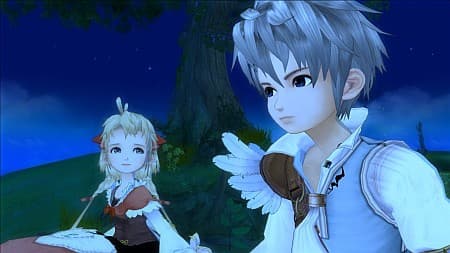
And only after fifteen to twenty hours of gameplay do you realize that everything is still the same, strictly according to the canons of Japanese role-playing games. That the main characters look and act like children, whose external body proportions are incompatible with normal, healthy existence. That you've heard the story about noble rebels and an evil empire somewhere, about a thousand times. A hangover in the morning - the empire is to blame. A difficult childhood - the Emperor's machinations. Bad weather - same thing. However, all this is carefully disguised and wrapped in layers of stunning external design and goes unnoticed against the backdrop of excavations into the fragile inner worlds of the heroes. In a game where you fight knights with two-handed umbrellas, you won't look for the answer to the question 'What the hell is the meaning of life?!'.
Now for the sad part. Frederic Chopin is dying, and we will be with him in his last hours. Approximately 25-30, more - only in the second playthrough. The entire game world is the embodied fantasies and dreams of Frederic, weakened by medication. But, as Lao Tzu said: 'Did I dream that I was a butterfly, or did the butterfly dream of me?'. You will understand whether Chopin, Lao, or the game characters are right by completing the game. But many will agree that you won't see wonderful landscapes in every dream. And Chopin was presented to us somewhat differently than an adept of the 'alleyway-cane-murder' style, capable of beating a medium-sized troll with a conductor's baton without a cappuccino break.
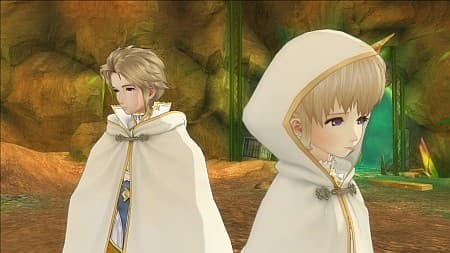
The entire game is built on contrasts. Take, for example, the beginning - an introductory presentation of a montage of scenes that are unclear for a while: a place strongly resembling hell and a suicidal girl, the happy childhood of this girl, worried relatives at the bedside of a seriously ill Chopin, a serene seaside town, homeless orphans. A street child living in the sewers flaunts a starched shirt and a washed, fresh face, and in a girl met in a moonlit meadow, the features of a long-dead sister are recognizable. Magic here is inextricably linked with the unfortunate's imminent demise - the more effectively a character casts spells, the more clearly a funeral march is heard in the ears. In a seemingly candy-coated world, eerie things happen, symbolizing the dying man's hidden phobias... And this shaky reality hooks you like a double-barbed fishing hook made of alloy steel. It's painful to get off, and you don't want to. Especially remembering the deficit of masterpieces from mysterious Japanese developers on a simple console called Xbox 360.
A huge drawback is the almost complete lack of side missions and plot branches. You move as if along a very bright, amusing, and interesting intestine. There are two entertainments. The first is collecting notes from various music lovers around the world. The reward is meager, the prizes useless. Closer to the end of the game, a tower appears with cool monsters, wagons of experience, and a new character as a bonus for completion. The tower is indeed difficult, predictably monotonous, but can add another dozen hours to the playthrough. Well, if you decide to immerse yourself in this world again, then on a second playthrough you can torment yourself by defeating monsters with 1.5 times increased attack, defense, and doubled health. At the same time, you will not retain anything except your beloved collection of notes, but you will get as many as four (!) side missions.
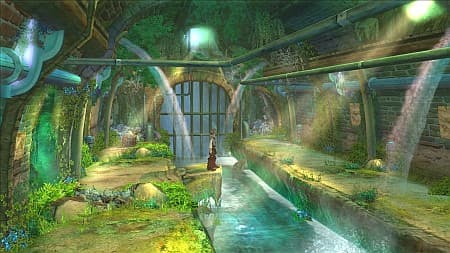
Lest we inadvertently forget that this is indeed a musical role-playing game, almost everything reminds us of it. The names of cities, chapters, weapon forms, even the names of the main characters. Polka - light, airy, cheerful, resonant. Rondo - stern, collected, ruthless, elegant. Jazz - imperturbable, playful, self-confident, always ready for action. The same applies to the names of techniques and the carefully, note by note, selected music for the levels. We will not hear Chopin himself and his immortal creations often; they usually accompany episodes from his real life. If you look closely and compare some facts with those that occur in the game, the world, like an oyster, will open before us. Or not. It's better to feel pride for our compatriot, pianist Stanislav Bunin, who played pieces for Eternal Sonata. For Motoi Sakuraba, who also provided melodic accompaniment for such famous series as Valkyrie Profile, Star Ocean, and Tales of..., let's just rejoice. Let's rejoice that such a person lives, breathes, and writes wonderful music.
The combat system is simple and elegant, like a six-barreled machine gun made of, say, foam plastic. It seems that various combo chains are present, and quick reaction to monster attacks is encouraged, and Light and Darkness are involved... But it all boils down to a simple thing - you rush to the nearest bearer of Evil and bash the attack button until your action points run out. Once they run out, the turn passes to another character. By the way, about Light and Darkness. Most levels have lit and darkened areas, and if a plush bug is pushed out of comfortable darkness into blinding light, it can angrily turn into an analogue of the Alien from the movie of the same name. And our heroes react very strangely to lighting: in the light, Polka works as a field doctor, in the dark she gathers all the dirty things in her and throws them at any monster that comes her way. From which the monster usually flips vehicles towards the sky and departs to the Infernal Office.
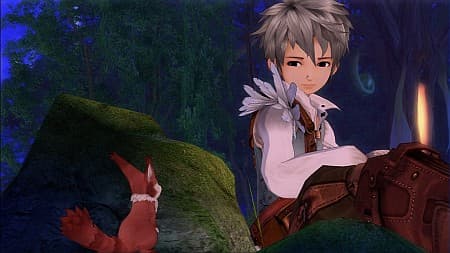
The lively and natural facial animation of the characters greatly enhances the impressions during emotional dialogues. A field of dandelions is precisely a field of yellow, airy, bright dandelions, not those cardboard monsters from other games. A church with stained glass windows makes you walk around in awe, with wide-open eyes. A dilapidated dungeon in the middle of the game crunches the nose of its colleague from TES4: Oblivion. And all this splendor is drawn in a light watercolor style, with soul and incredible talent.
Diagnosis
Eternal Sonata is a game of one playthrough, one thought, one movement. Like a river you cannot step into twice, the impressions from a second journey through the dreams of the dying composer will be completely different - like from an ordinary, gray game. The fairy tale will disappear. The sun will set behind the clouds. More like a full-length, beautiful animated film than a role-playing game, Sonata is similar to childhood - once, and never again. But forever.
Pro:
- Interactive and vivid fairy tale
- Excellent musical accompaniment
- Magnificent watercolor art design
- Interesting characters
- High-quality voice acting
- Short duration
- Mechanically - a completely standard Japanese role-playing game
Never miss our newsAdd this site to your preferred sources to see us more oftenAdd on Google