Edifier Hecate G2 BT wireless headset review: budget headphones for the young and thrifty
Translated with AI from the Russian original.
As a representative of the budget segment, the Edifier Hecate G2 BT turned out to be a success. By gaming device standards, the design is modest yet pleasing — there is even backlighting, and plenty of color options are available. The sound is highly specific, geared more toward gaming, although nothing prevents you from using the headphones to listen to music on the go. There is some latency in game mode, but it is minimal and allows playing even fast-paced shooters. The headband and ear cushion dimensions clearly suggest that the headset is aimed at kids and teens; as a first pair of headphones to beat up or simply an inexpensive solution for casual gaming, this is a very solid option.
Edifier decided to take serious care of gamers whose budget for buying a gaming headset is limited: young novices and those who occasionally fire up a favorite title or quickly “rush through” a new release once in a blue moon just to broaden their horizons. Recently, two models of budget gaming headphones hit the market, which, while not breaking any records (it would be strange to expect such feats from such budget devices), can cover all the basic needs of a gamer: from the ability to say a few kind words to someone during an online battle to the chance to meditate on dynamic backlighting.
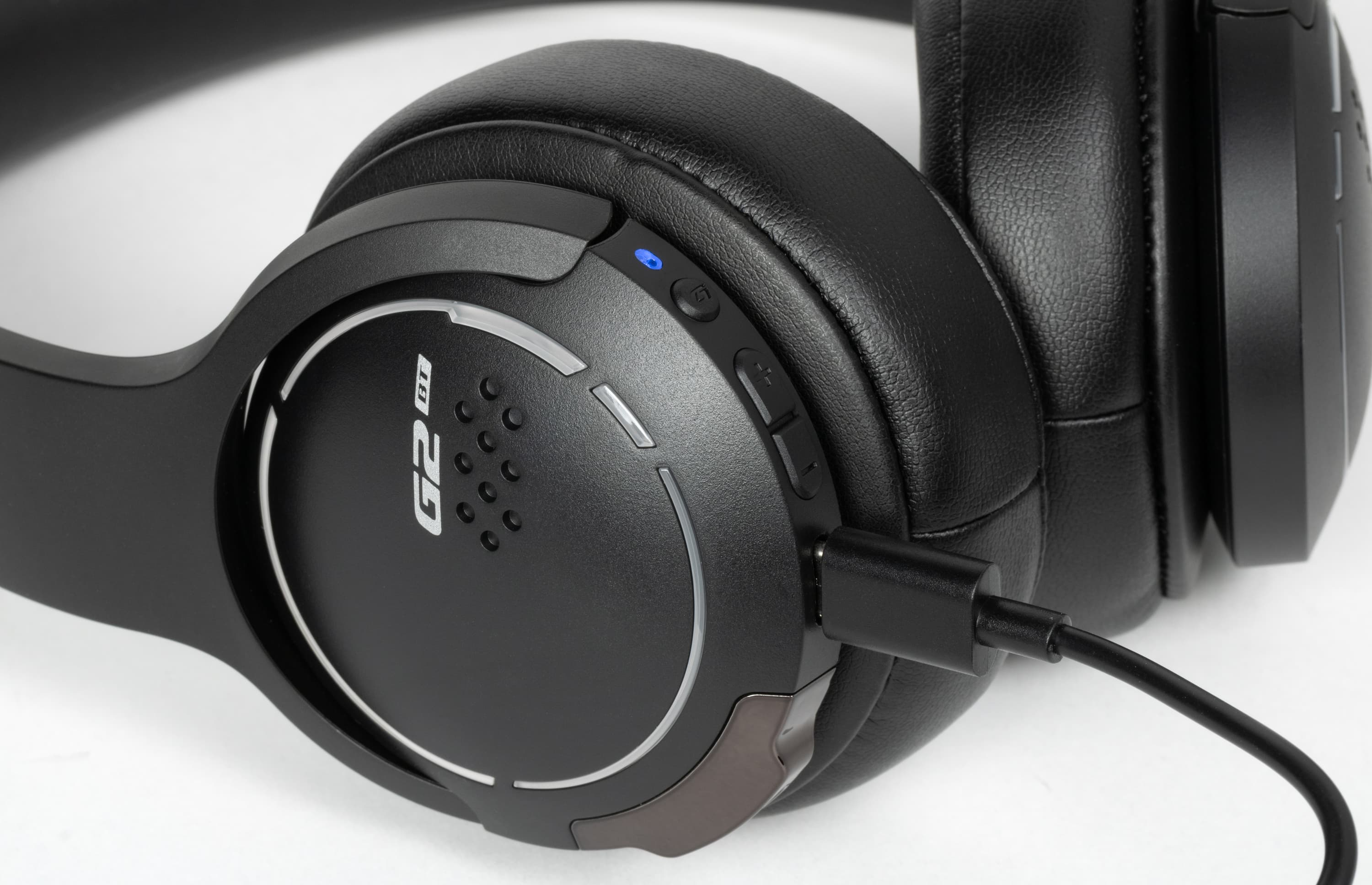
We have already discussed the wired Edifier Hecate G30 II — they coped with their task quite well, and given their relatively low cost, they even have configuration software. Today, we will look at the wireless Edifier G2BT model, which potentially looks no less interesting. The manufacturer promises ultra-low latency, gaming-tailored sound, a high-quality noise-canceling microphone, and backlighting, of course — what would we do without it. And all of this for around 2,900 rubles at the time of preparing the review.
Technical specifications
| Claimed frequency response | 20 Hz — 20 kHz |
| Impedance | 32 ohms |
| Sensitivity | 94 dB |
| Connectivity | Bluetooth 5.2 |
| Codec | SBC |
| Microphone | omnidirectional |
| Charging port | USB Type-C |
| Battery life | up to 36 hours (backlight off) |
| Charging time | about 2 hours |
| Weight | 180 g |
| Backlighting | RGB |
| Price | ≈ 3,000 RUB at the time of testing |
Packaging and package contents
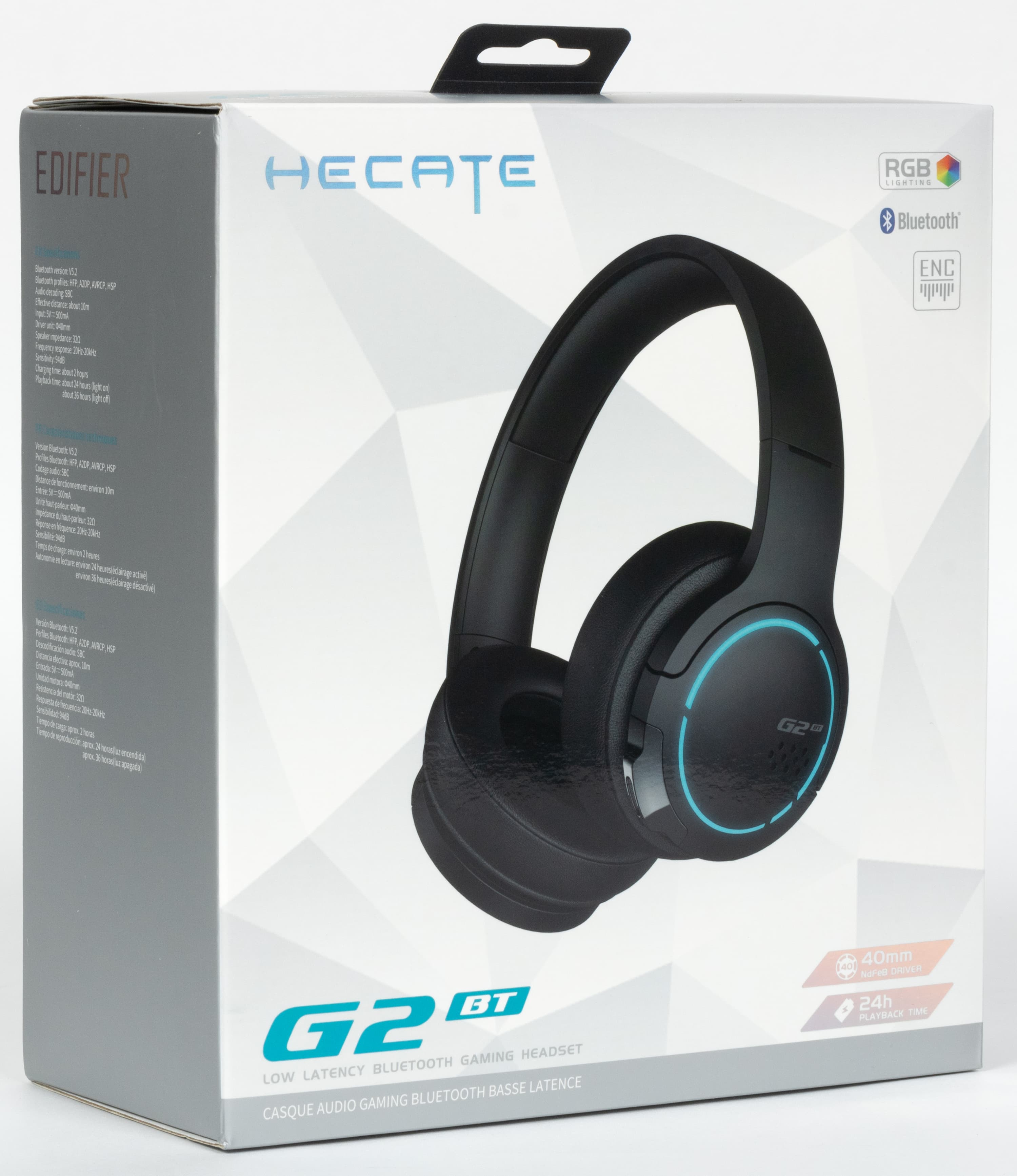
The Edifier G2 BT comes in a white cardboard box featuring images of the device and brief specifications. Although it looks somewhat simple, it is pleasant. Inside, the headset is held in place by a plastic tray, so you do not have to worry about its safety during shipping.
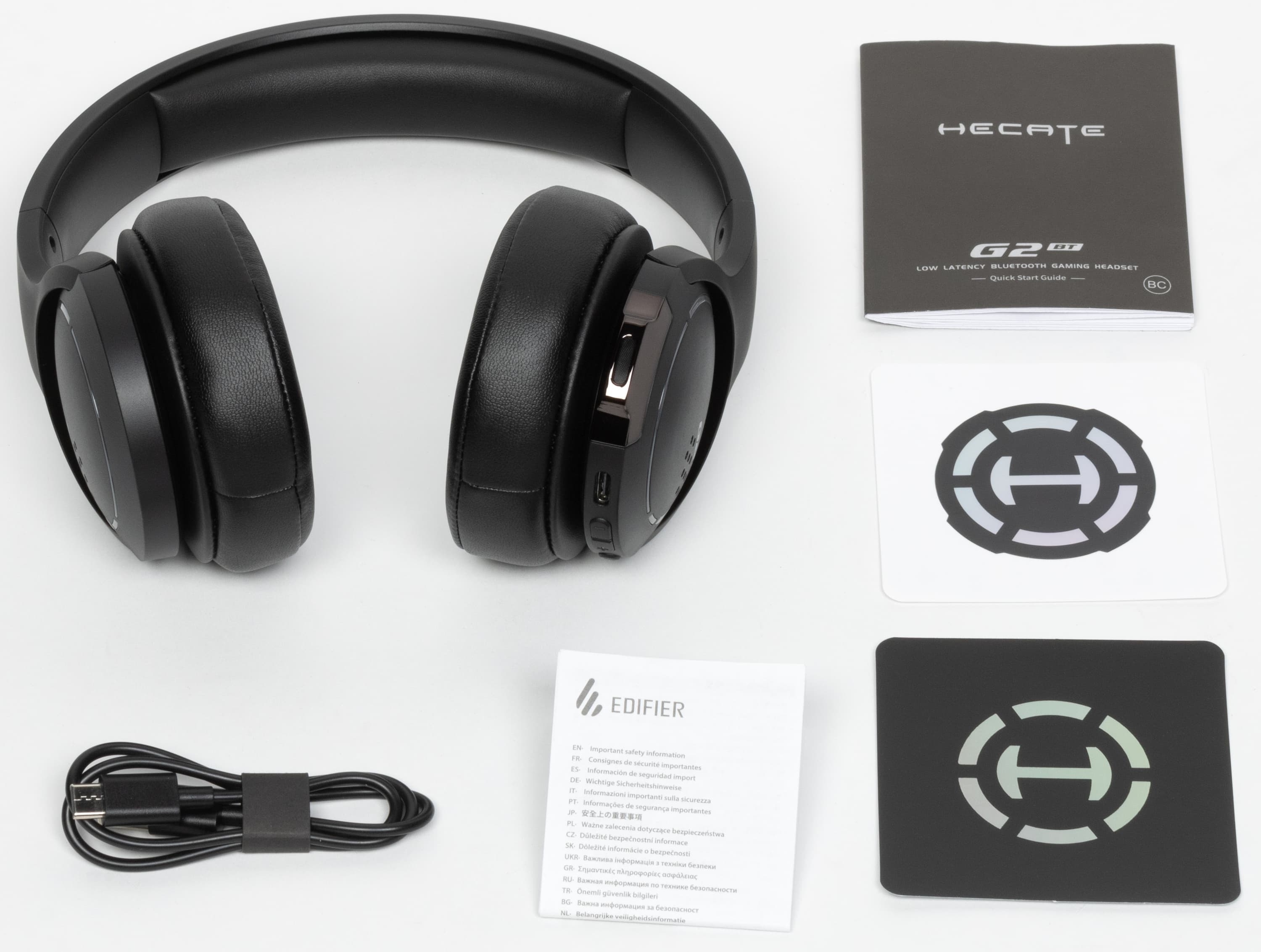
The package includes the headphones themselves, a charging cable, a quick start guide in several languages (including Russian), a “brand card”, and a branded sticker.
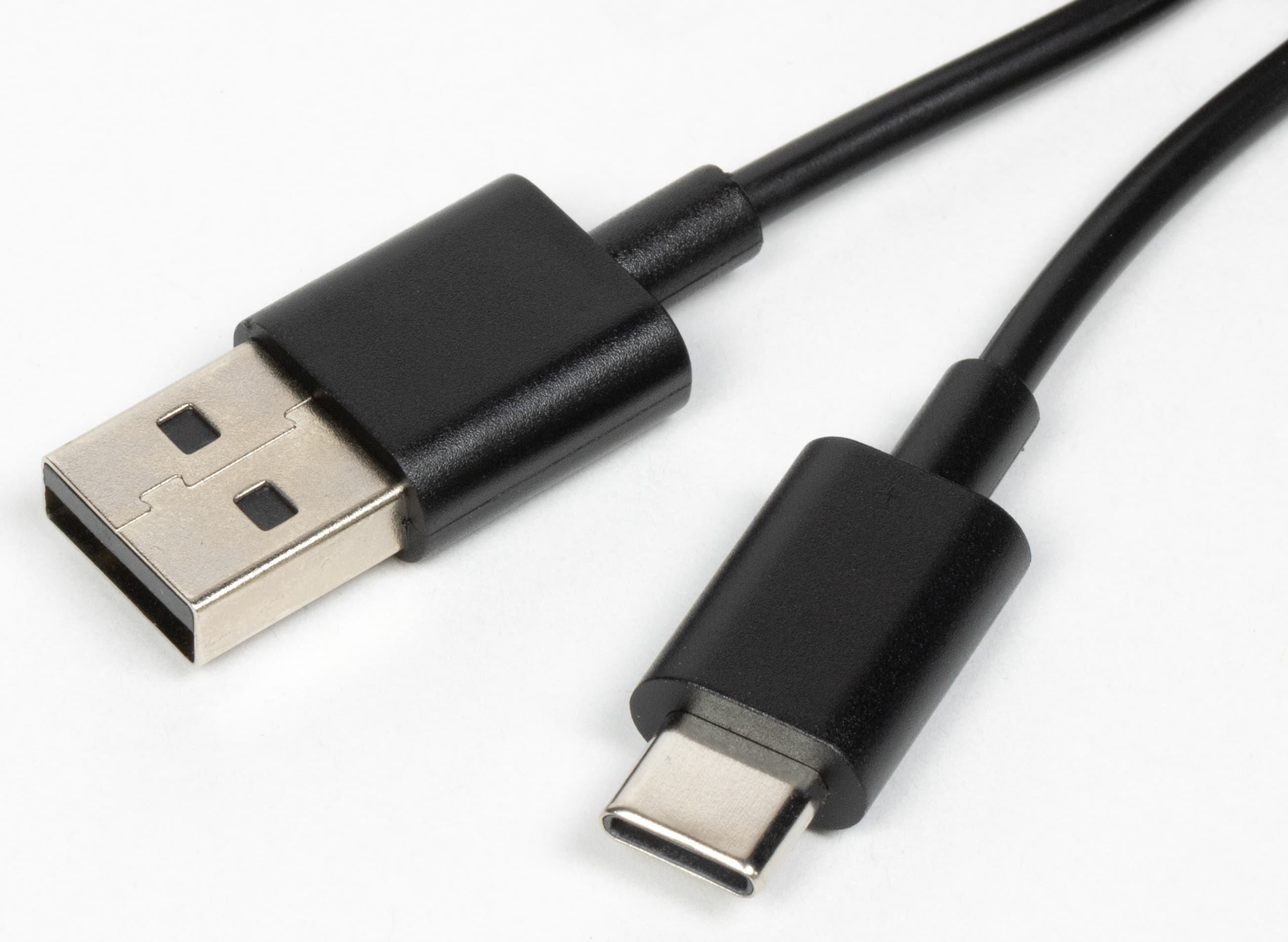
The USB-A to USB-C charging cable is made to an acceptable standard of quality and leaves no doubt about its reliability. Its length is short — just 50 cm, but if desired, it is easy to replace.
Design and construction
The headphones are designed simply and concisely — without unnecessary decorative elements or “aggressive” styling features typical of gaming solutions. On the other hand, there are plenty of colors — five to suit any taste: white, red, pink, gray, and black. For our test, we chose the “classic” latter option.
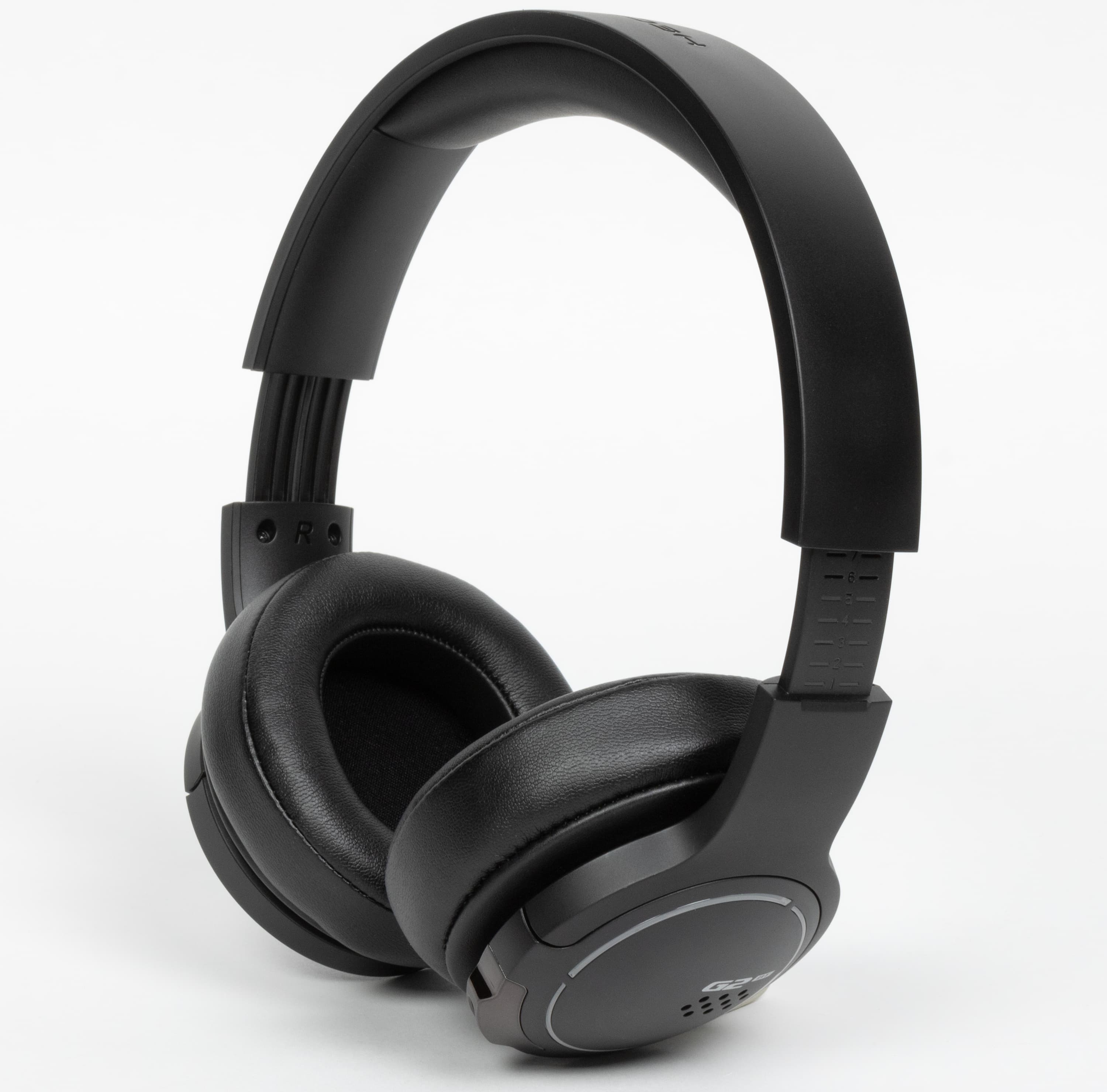
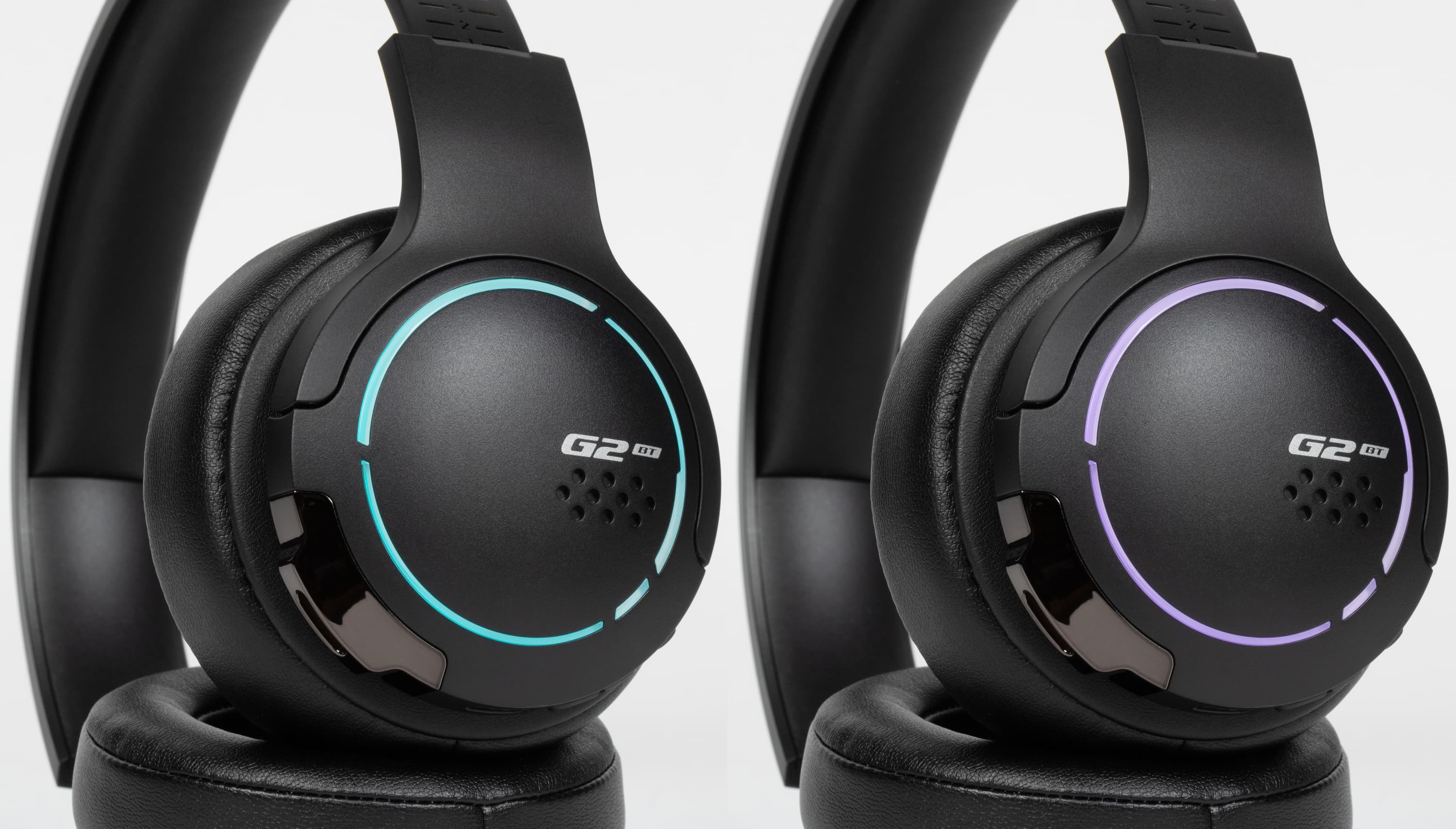
The body is entirely plastic, and the plastic quality is solidly average: it won't let you forget that the G2BT are budget headphones. That said, it is quite pleasant to the touch, provides the necessary level of durability, and looks decent. The surface is matte, resistant to dirt and fingerprint smudges. Since this is a gaming headset, backlighting was inevitable. And it is there, albeit very simple — shaped as a ring on the outer side of the earcups with a single operating mode that features a continuous, smooth color cycle. It looks neat, but it drains battery power and is not always appropriate — it can be turned off if desired.
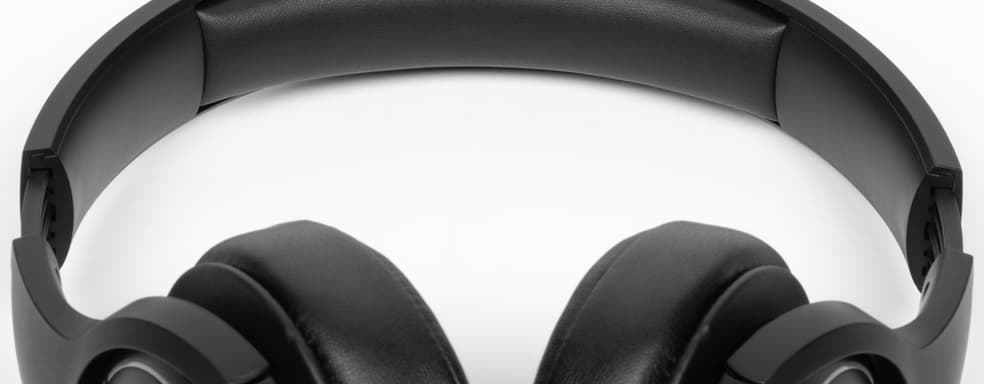
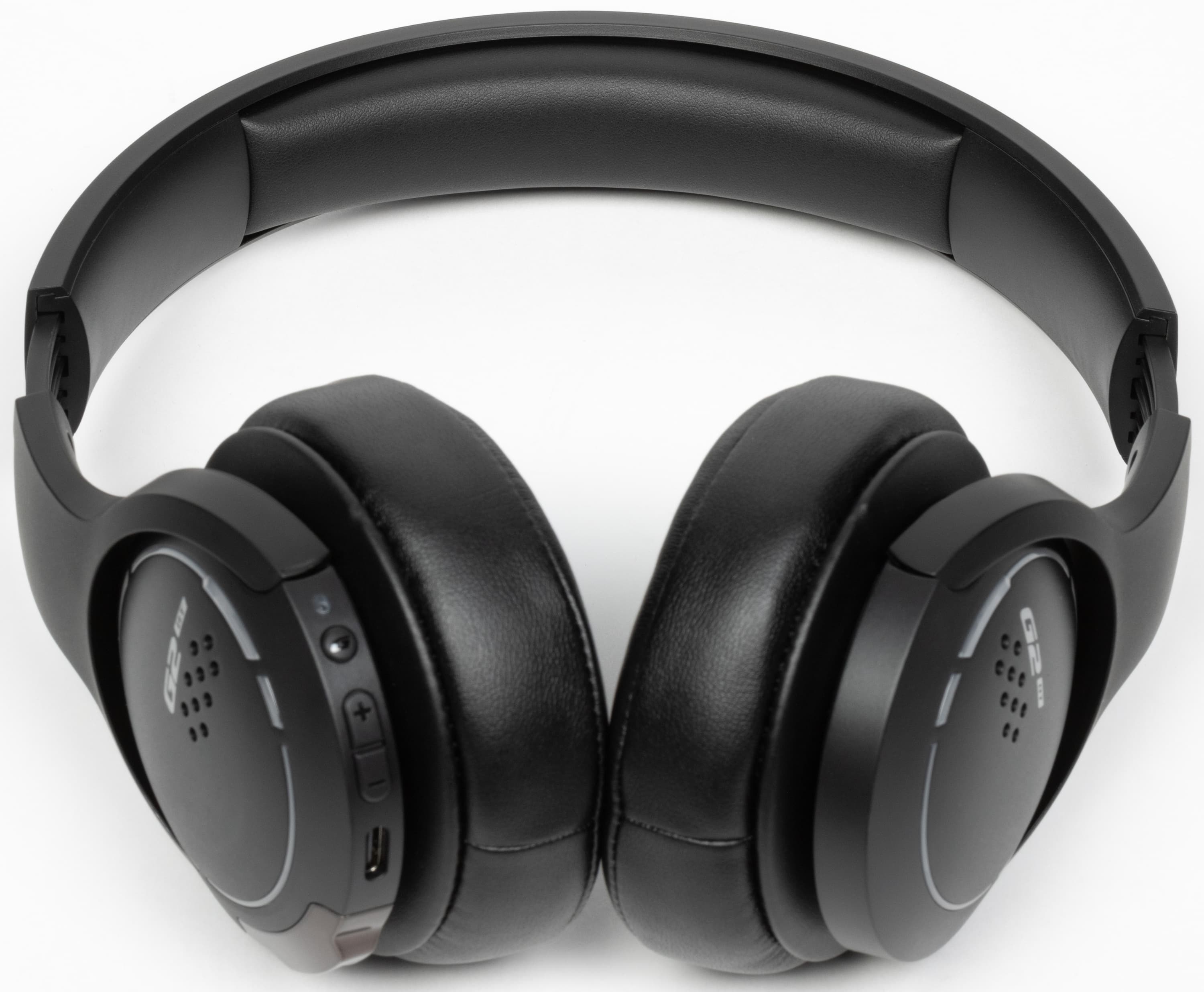
On the inner side of the headband, there is a soft faux-leather pad with foam filling, ensuring comfortable contact with the user’s head. It is relatively small, but it does its job completely. The control panel is located on the bottom part of the left earcup.
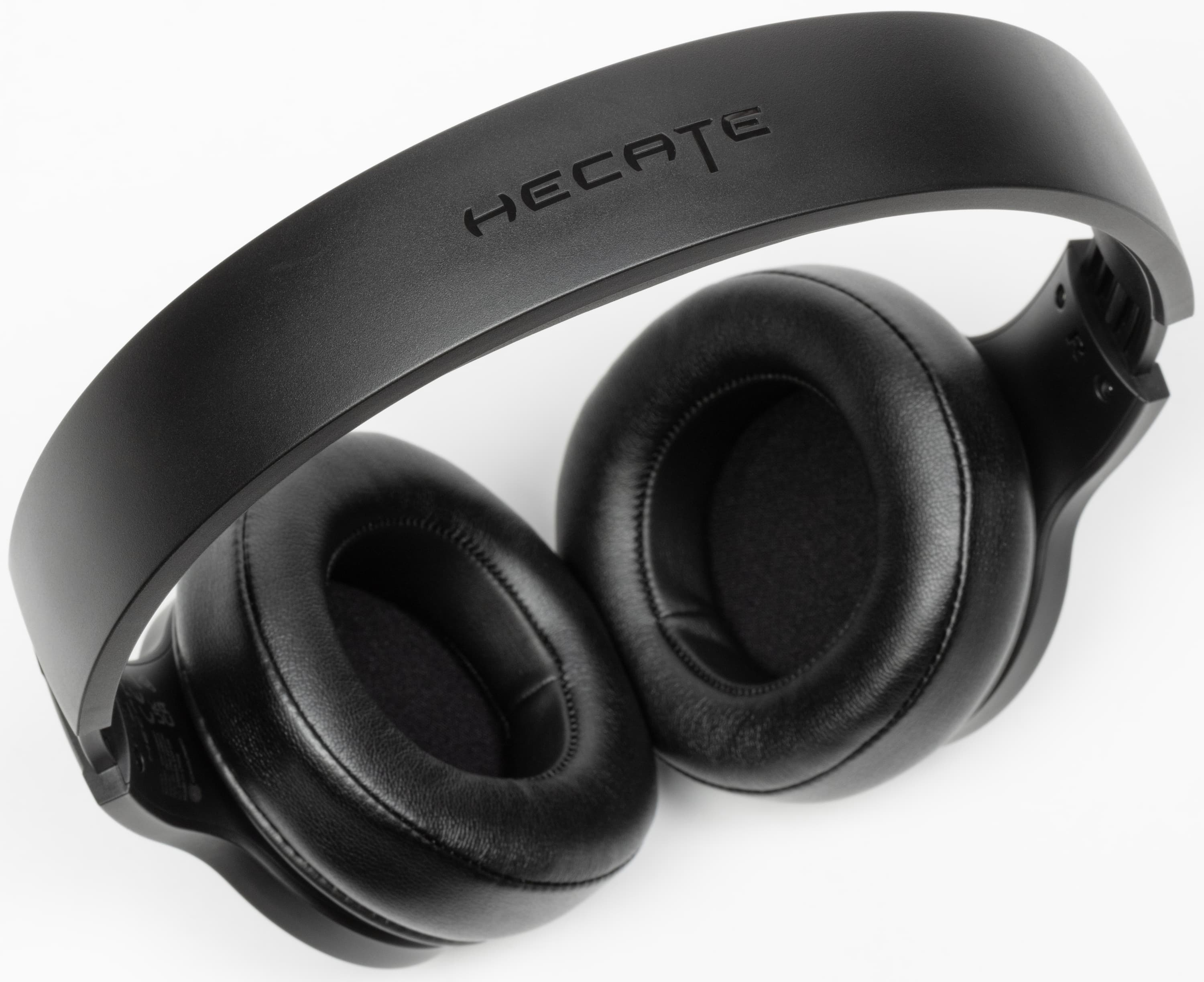
The outer part of the headband features the name of Edifier’s gaming lineup — Hecate (named after the ancient Greek goddess of moonlight and the underworld, patroness of necromancy and witchcraft). It is done very neatly — glossy black on matte black, so the lettering does not draw unnecessary attention to itself.
The voice microphone is housed inside a small protruding element made of glossy plastic on the outer part of the left earcup. It is positioned logically, helping to orient the microphone toward the user’s mouth.
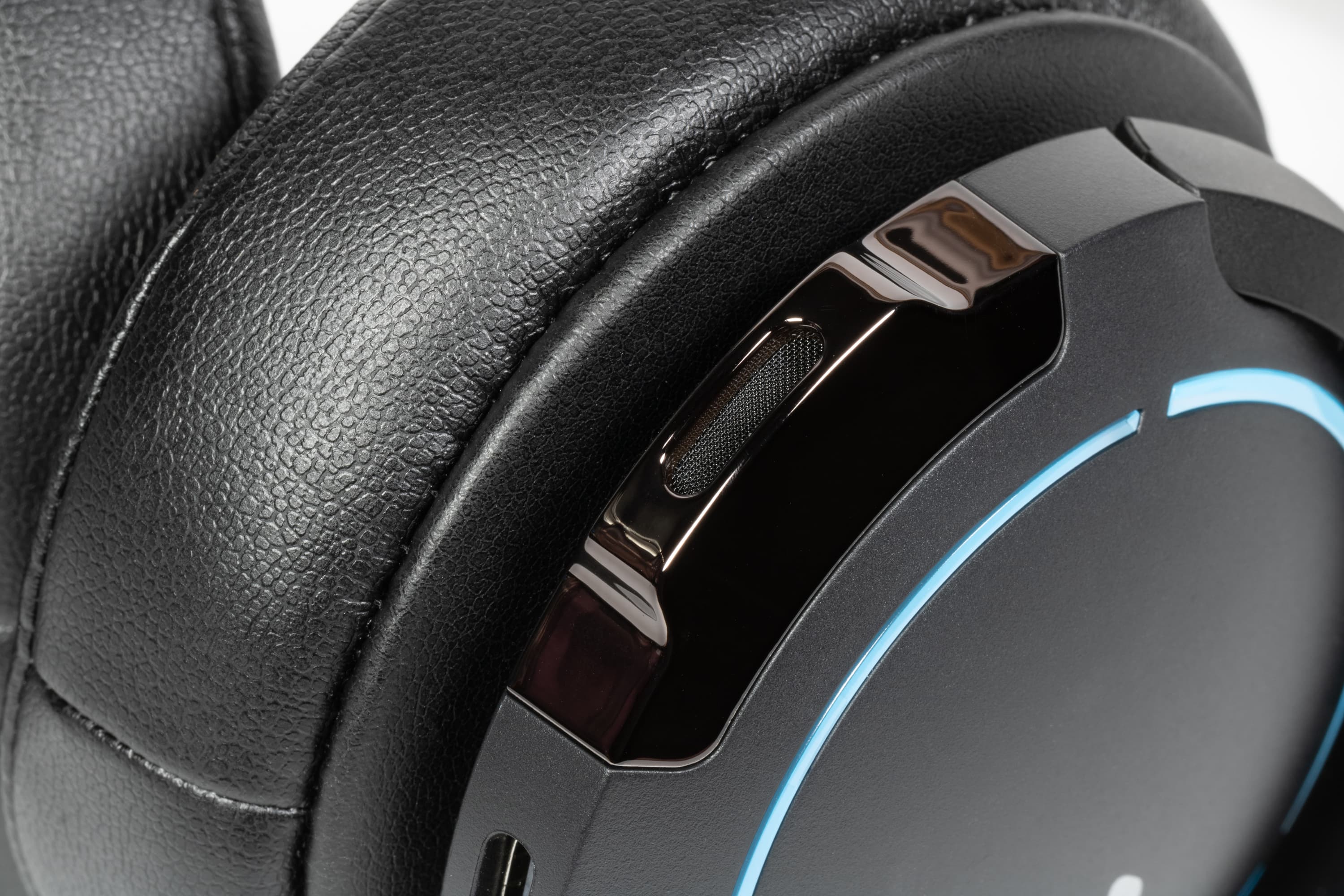
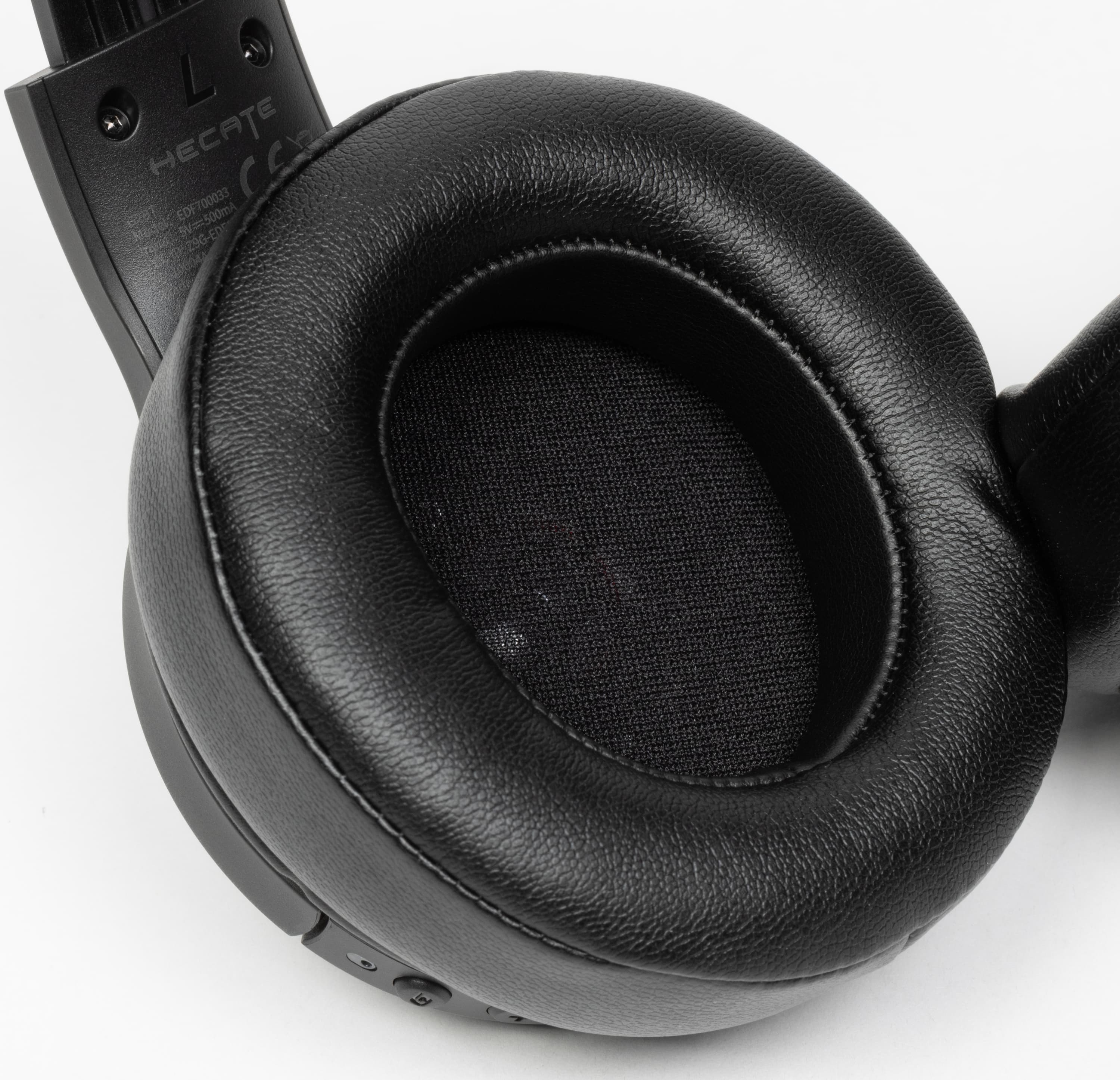
The ear pads are soft and pleasant to the touch, but small: the inner opening diameter is only 45 mm, so the Edifier Hecate G2 BT is closer to on-ear rather than over-ear solutions. Behind a layer of acoustically transparent fabric are drivers of a size standard for modern on-ear headphones — 40 mm.
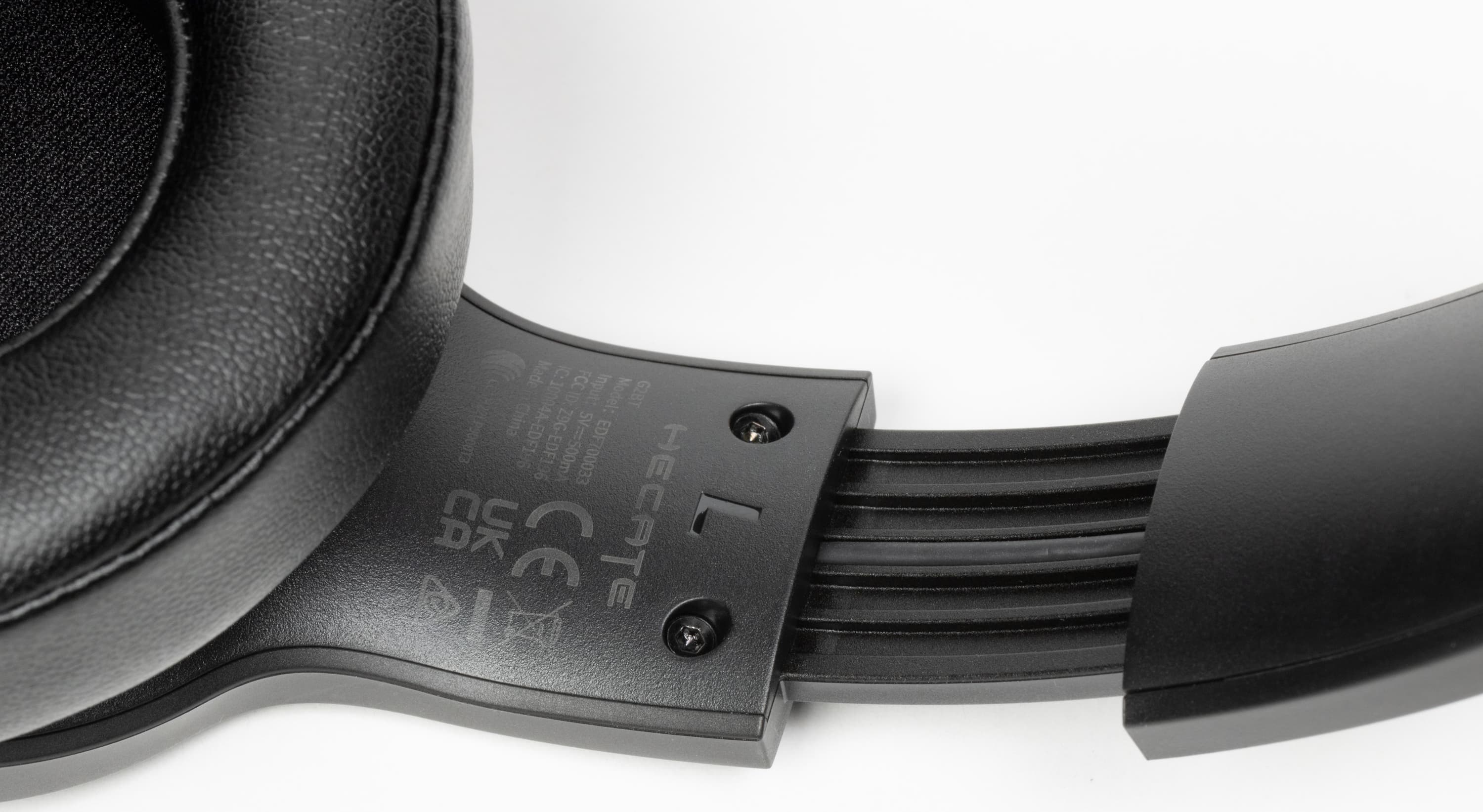
The extendable part of the headband, like the rest of the structural elements, is made of plastic; there is no reinforcing metal plate. This creates some doubts about the headphones’ durability, but user experience suggests there is no need to worry seriously — the body can even withstand being carried in a backpack without a case. Inside the extendable section, the cable connecting the earcups is visible.
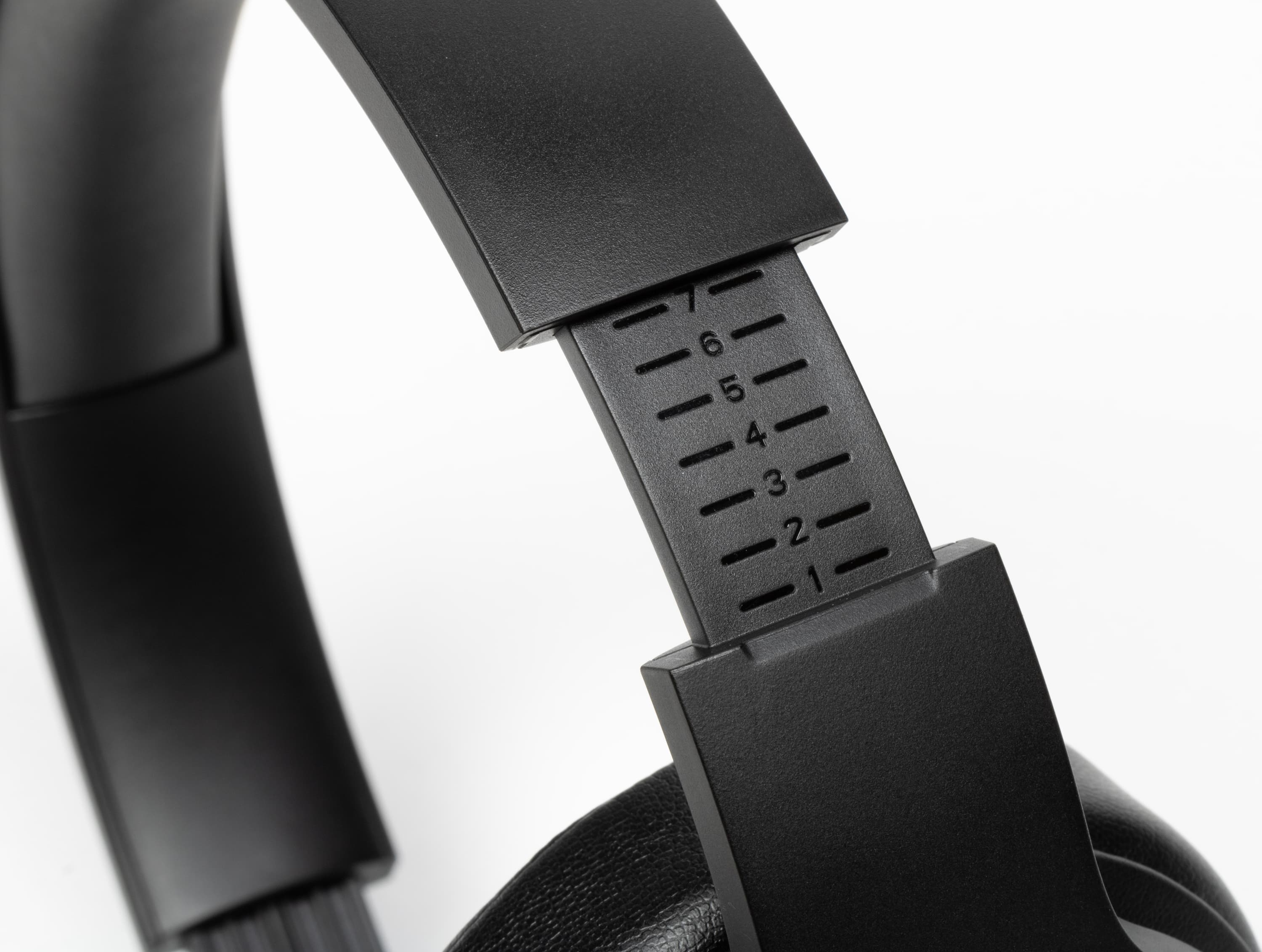
Length adjustment is stepped, with a total of 8 positions, including the extreme ones. The travel range is 3.5 cm on each side, adjustment requires a slight effort, and locking into intermediate positions occurs with a soft click.
Connectivity
Wireless connection works in the familiar way: after powering on, the headphones spend a few seconds trying to connect to already known devices, and if none are found, they activate pairing mode. Multipoint is not supported, which is slightly disappointing: connecting a headset to both a smartphone and a PC simultaneously is convenient for gamers as well. But here again, it is worth remembering the price of the Edifier Hecate G2BT and not demanding too much of it.
As usual, we obtained the full list of supported codecs and their modes using the Bluetooth Tweaker utility. There is only one codec — the basic SBC.

The maximum Bitpool parameter for SBC is set to 53, whereas the recommended High Quality profile implies a value of 51 — the codec will operate at the very peak of its capabilities. Another essential characteristic of wireless gaming headphones is, of course, latency. The manufacturer promises that thanks to the built-in PixArt chip, it is reduced to 40 ms in “gaming” mode. In our tests, latency in “music” mode reached 400 ms, which is unacceptably high — playing fast-paced shooters becomes uncomfortable. However, in “gaming” mode it dropped to the claimed 40–50 ms, allowing for quite comfortable gameplay.
Naturally, the Edifier Hecate G2BT is primarily designed for those who prefer combining mobile gaming with playing on PC or home consoles. Those who focus more on the second option should look into either wired headphones or models bundled with an adapter that allows connecting to the source via a radio channel.
Controls
The control buttons and a small LED status indicator are located on the rear surface of the left ear cup. They press easily with a distinct, sharp click.
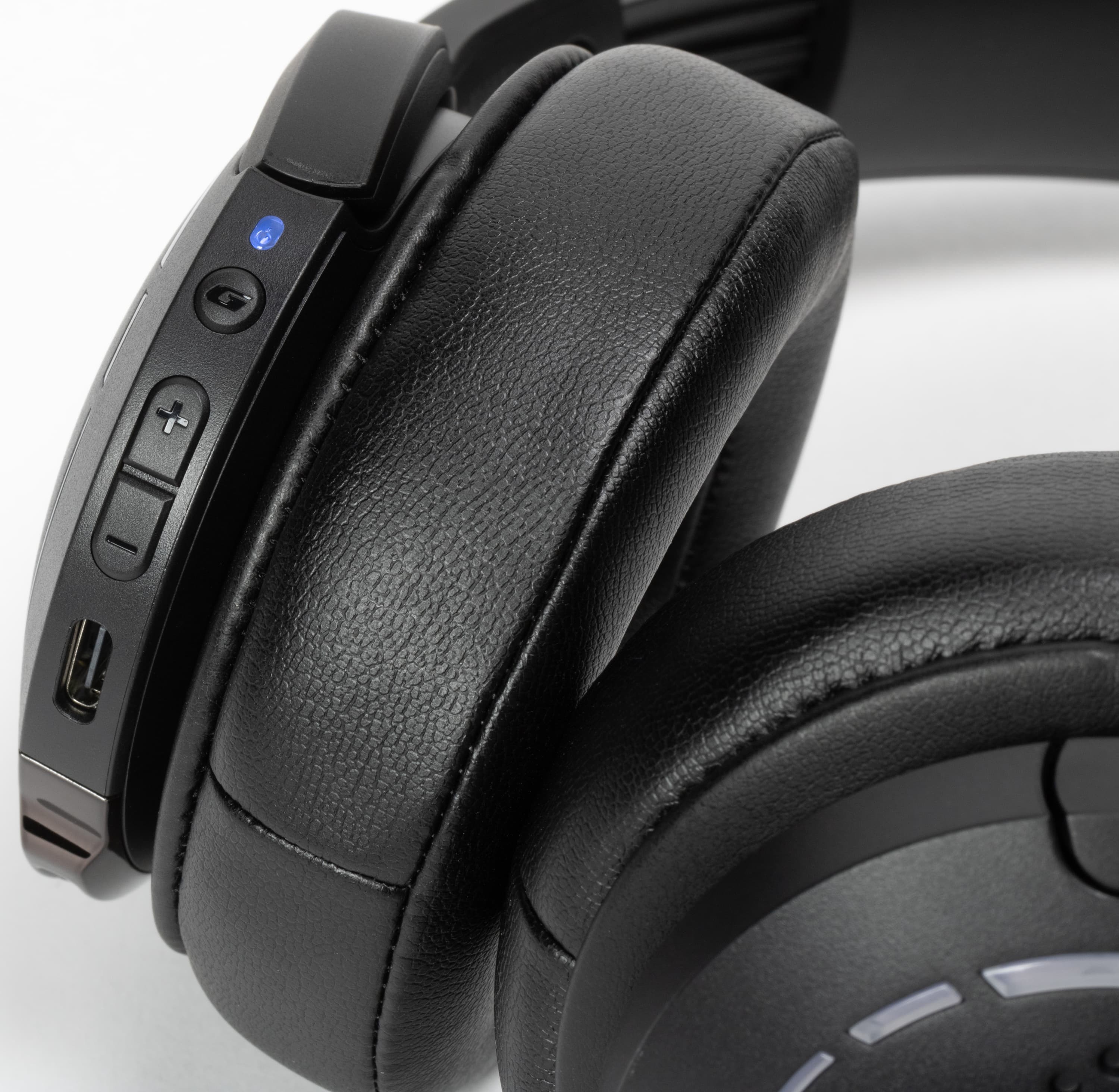
Volume adjustment and track skipping are handled by a two-button rocker, which is easy to find by touch after a couple of hours of getting used to the device. Meanwhile, the universal button next to the indicator handles everything else. To avoid lengthy listings, let us borrow a clear illustration from the manufacturer's website.
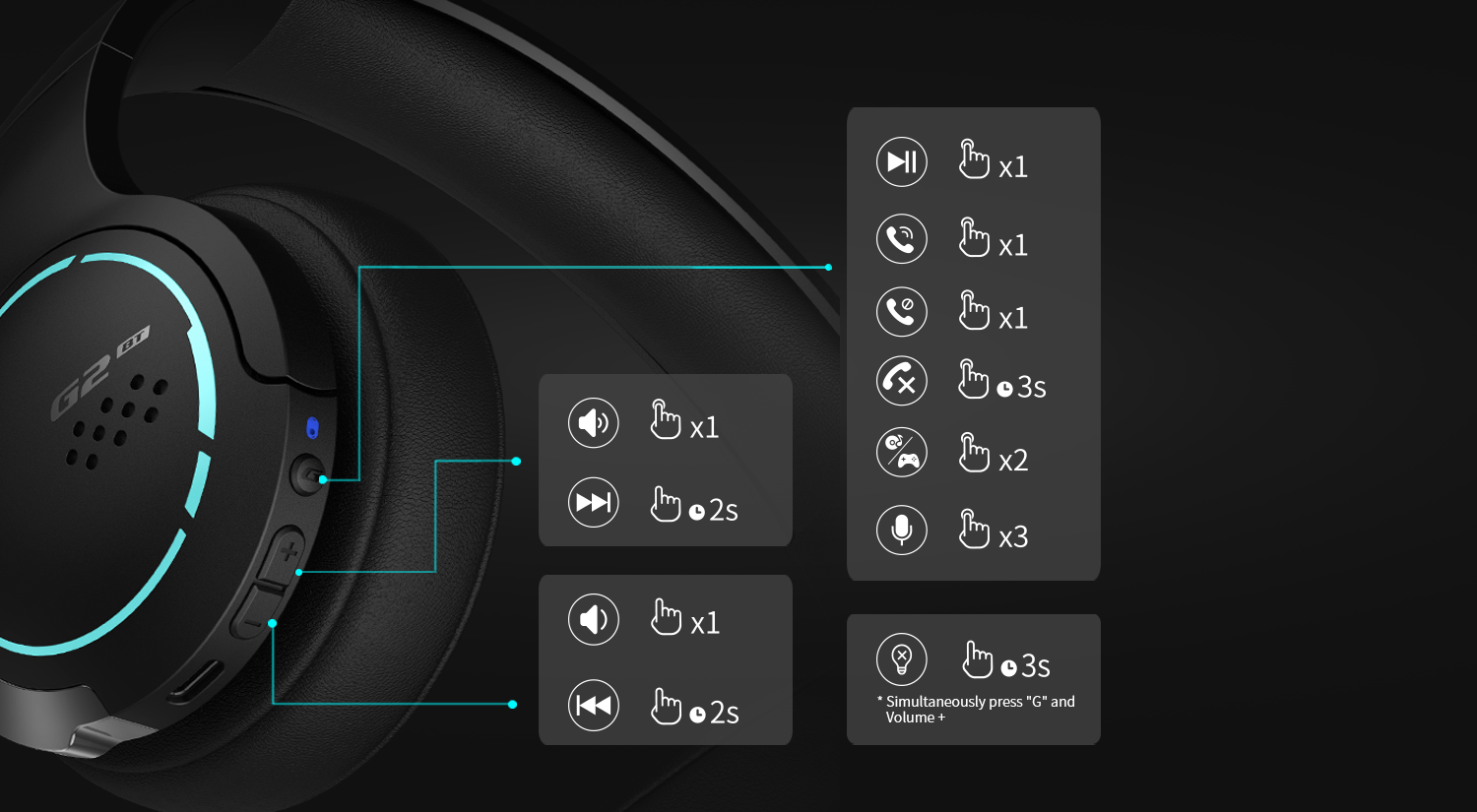
The Edifier Hecate G2 BT does not feature configuration software, sound profile switching, or other “advanced” functions, which is entirely normal for a budget headset.
Usage
The device is lightweight, the headband padding provides pleasant contact with the head, and the ear cushions are soft — potentially making the headphones very comfortable. But there are nuances. The headband is compact and initially designed for a small head. Of course, thanks to the extendable sliders, its size can be adjusted to fit a significantly larger head, but then the clamping pressure will be slightly excessive and may cause discomfort. Admittedly, this characteristic also has a positive side — the clamping force of the ear cushions will be higher, ensuring good passive sound isolation. However, there were few complaints about it to begin with.
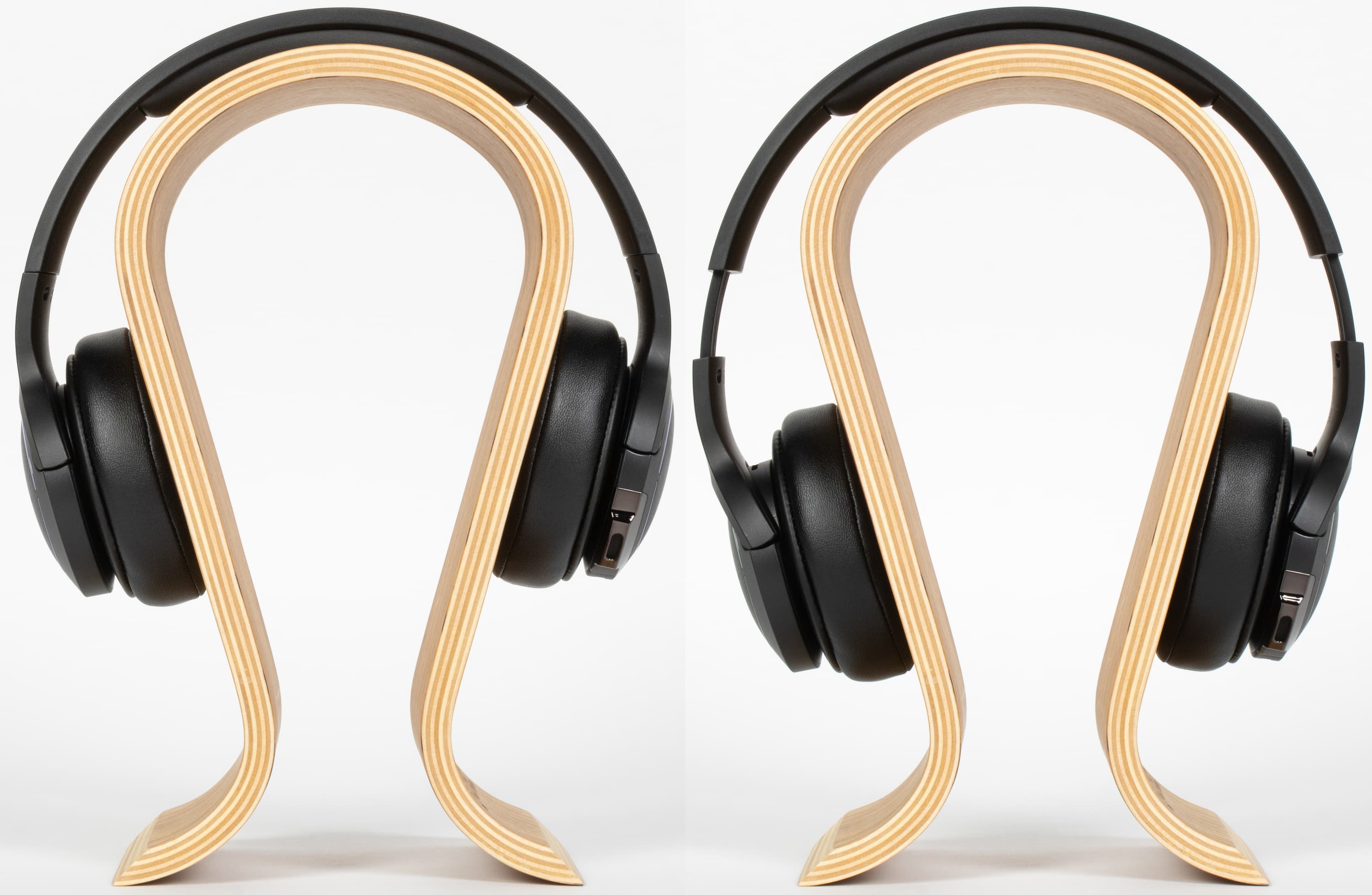
On top of that, the opening in the ear cushions is very small — its diameter is only 45 mm. Because of this, they can put uncomfortable pressure on the outer edges of even medium-sized ears, not to mention large ones. As a result, the Edifier Hecate G2 BT performs best on a small head with small ears — that is, children or teenagers. In fact, children and teenagers make up the main target audience for budget gaming headsets, so it all makes sense.
Microphone for voice communication
To measure the frequency response of microphones, we use a specially prepared room and a studio monitor acoustic system reproducing a sweep tone. Naturally, the frequency response of the speakers is far from flat, so we first capture its curve using a calibrated measurement microphone. The acquired data is used to build a correction profile designed to compensate for the acoustic characteristics of the room and speakers. After that, the signal is recorded using the device under test, placed in the exact same position as the measurement microphone earlier. The resulting curve is compensated using the previously generated profile, leaving us with the intrinsic frequency response of the tested microphone.
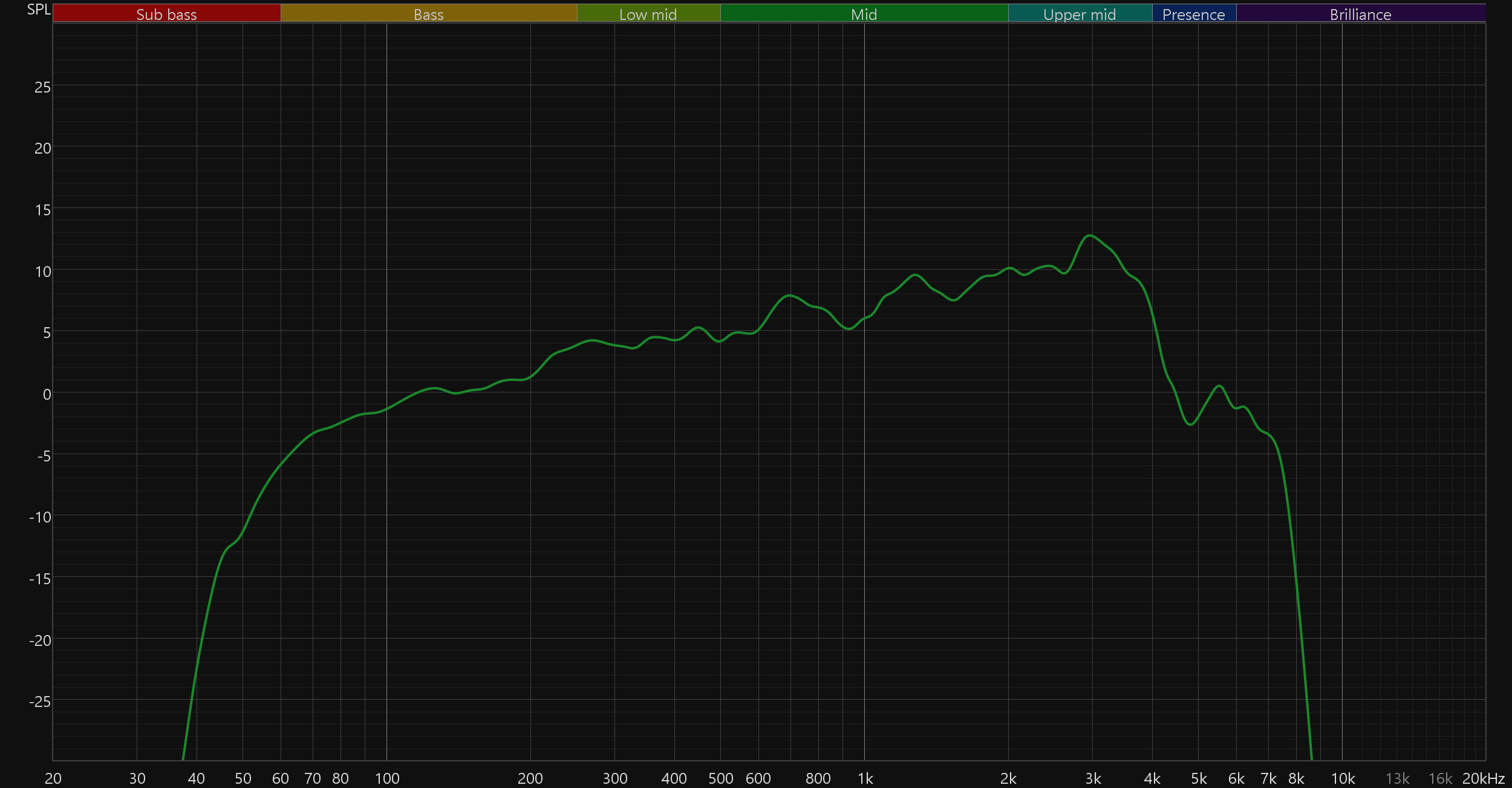
An adult male voice has a fundamental frequency between 85 and 155 Hz, while a female voice ranges from 165 to 255 Hz. However, voice transmission typically utilizes frequencies from 300 to 3400 Hz, often referred to as “voice” frequencies, as this band contains the so-called formants responsible for speech intelligibility. Frequencies below this range are cut off not only — and not so much — due to transmission channel limits, but because they carry various unwanted noises: engine rumble, low-frequency crowd murmur, and so on.
In this case, the low-frequency range is rolled off only around the “deep” bass, which provides a fuller-bodied voice reproduction, though it may introduce some boomy quality. The boost in the upper midrange is often intentional to enhance speech clarity, so this approach is logical. Let us see how it performs in practice. Two tracks are provided below. In the first, speech was recorded using the headset microphones. The second was recorded at approximately the same distance using a professional recorder with reliably high recording quality and is provided for comparison.
The voice sounds reasonably full-bodied, yet slightly “constricted” and boomy. Nevertheless, the Edifier Hecate G2 BT microphone shows noticeably better results than many full-size wireless headsets we have tested. It will definitely suffice for in-game communication. The manufacturer advertised call noise reduction, so let us record another short snippet reading text, but this time with added background noise — playing room sounds of a crowded space through nearby speakers.
Honestly speaking, the performance of the noise canceler was not particularly impressive: the voice began to sound less natural and slightly lost clarity, while external noises remained quite audible. Still, for a budget gaming headset, its performance can be considered acceptable: hardly anyone will be playing online games requiring constant voice chat while riding public transit or in a crowded office.
Battery life and charging
The claimed battery life of the Edifier Hecate G2 BT is up to 36 hours with the backlighting off and up to 24 hours with it turned on. These figures are average by modern standards, but fully sufficient for comfortable everyday use. Let us briefly review our testing methodology for wireless headphone battery life.
A sound pressure level of 75 dB is considered safe when listening to music, but in practice, most listeners prefer 90–100 dB. We feed white noise to the headphones, setting the SPL around 95 dB, and start recording the signal from the measurement fixture right after playback begins — the duration of the resulting track makes it easy to see how long the device lasted.
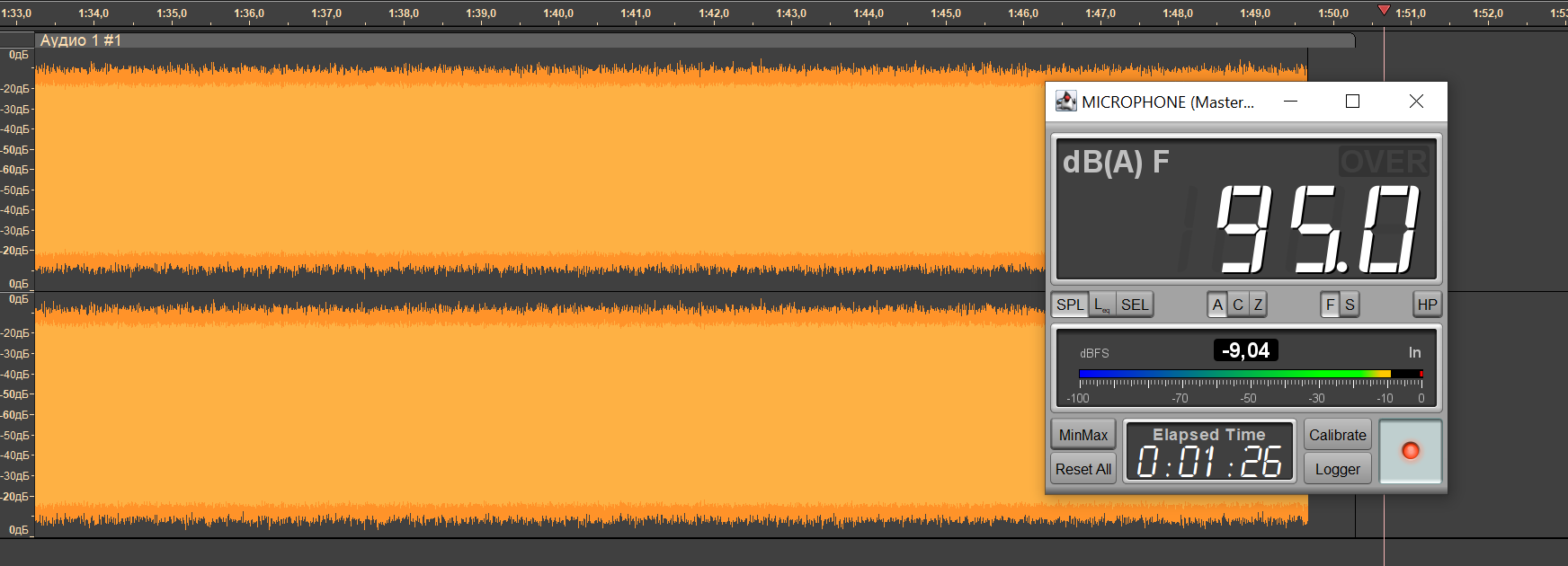
Without backlighting, the headphones lasted 33 hours and 45 minutes — slightly less than claimed, but still very solid. Lowering the volume a bit makes it possible to squeeze out the advertised 36 hours. Operating time with backlighting on is around 20 hours, which is also quite decent. Fully charging the depleted headphones takes 2 hours. Fast charging is not officially claimed, but after a 10-minute charge, the headset worked for slightly under 3 hours.
Sound and frequency response measurements
The sound profile of the Edifier Hecate G2 BT is clearly tuned more toward gaming than music — the frequency response chart clearly demonstrates this. Emphasized lower mids and a very uneven midrange with significant emphasis on its upper section — all of this is poorly suited for listening to music, but can prove useful in games: dialogues are well articulated, explosions sound fairly impactful, and all kinds of footsteps and rustling stand out brightly.
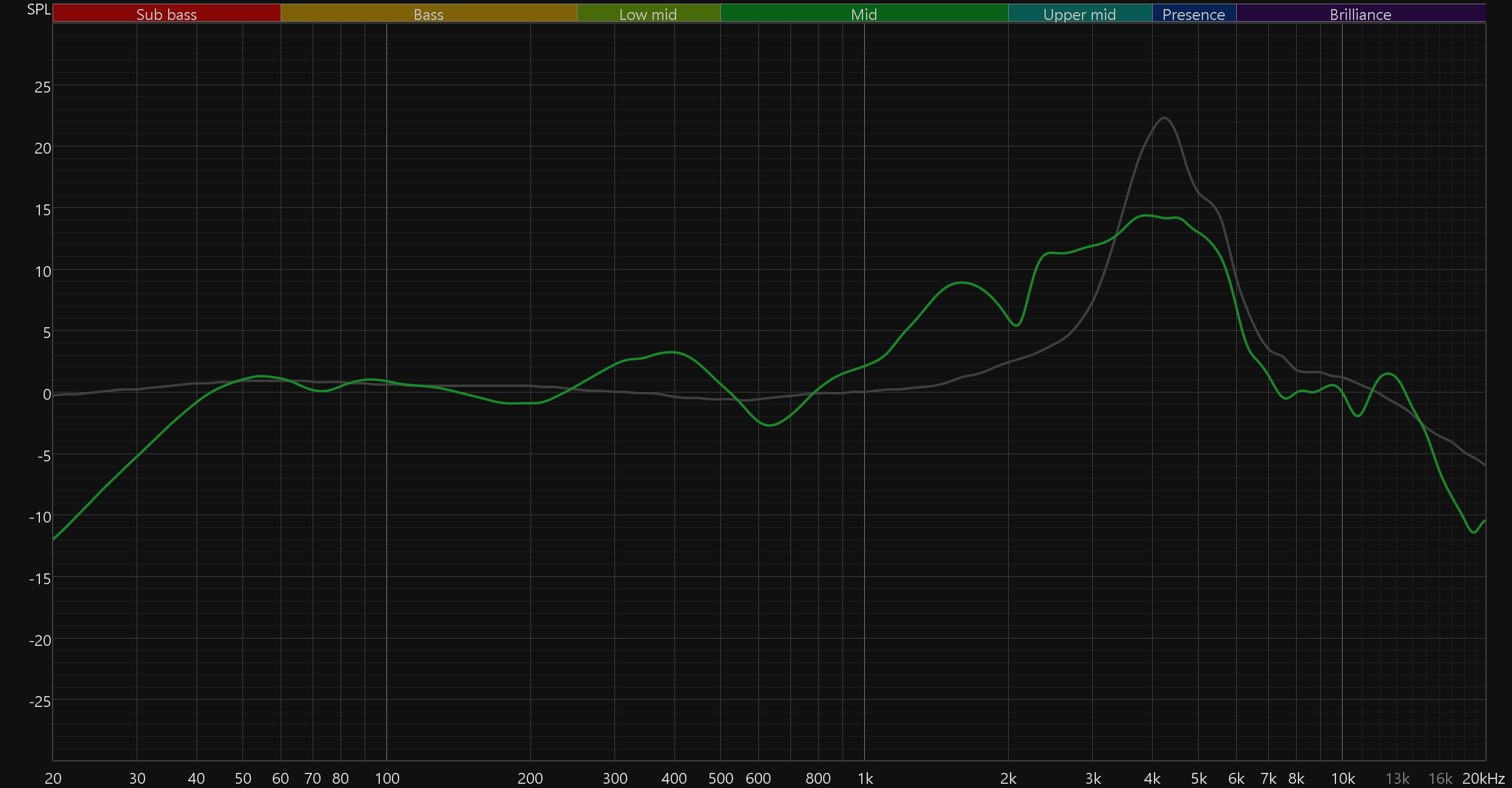
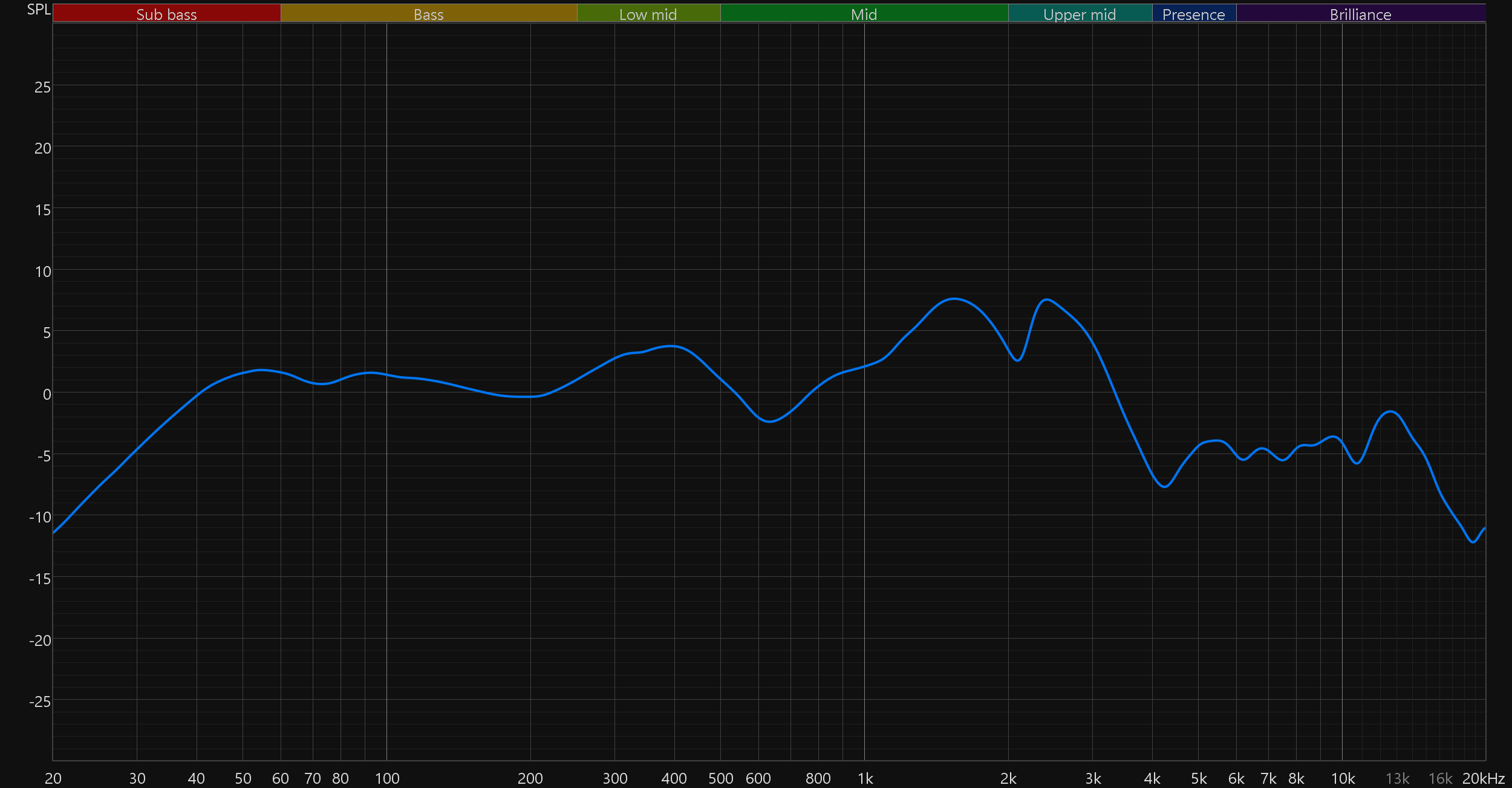
The frequency response curve is shown against the target curve provided by the manufacturer of the measurement fixture used. It represents a fixture-adapted equivalent of the so-called “Harman curve,” developed by the Harman International team under the leadership of Dr. Sean Olive. Human perception varies across different frequencies, so even the most accurate raw measurements may not match real-world user impressions. The target frequency response is used to compensate for these differences. Sound tuned close to it was rated by hundreds of experiment participants as neutral, balanced, natural, and so on. Let us compensate the measured frequency response in accordance with the target curve — in this form, it illustrates subjective listening impressions in the most comprehensive and illustrative way.
Conclusion
As an offering in the budget segment, the Edifier Hecate G2 BT turned out to be a success. The design is modest by gaming standards, but appealing — there is even backlighting, and plenty of color options are available. The sound signature is highly specific, geared heavily toward gaming, although nothing prevents you from using the headphones for casual music listening on the go. Latency is present in gaming mode, but it is minimal and allows playing even dynamic shooters. The size of the headband and ear cushions clearly hints that the headset is intended for children and teenagers; as a first pair of headphones “to beat up” or simply an affordable option for occasional gaming, it is a very solid choice.
Never miss our newsAdd this site to your preferred sources to see us more oftenAdd on Google