A Victim of Its Own Ambitions. Crimson Desert Divided Media Opinions
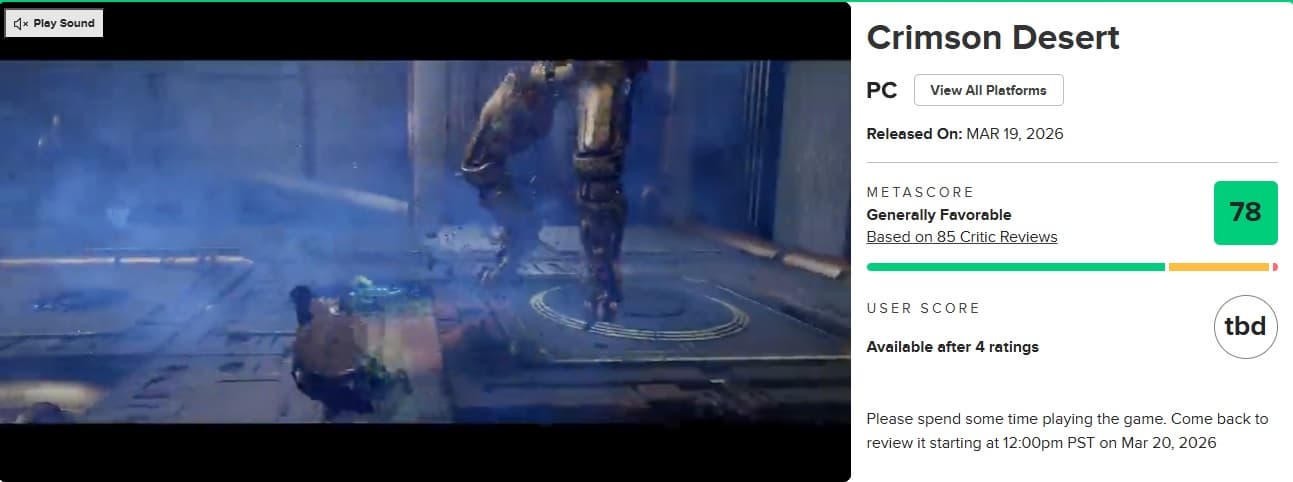
On aggregators Metacritic and OpenCritic, after dozens of reviews, ratings settled at 78% and 80% positive reviews, respectively.
Critics praise the scale and combat system but point to the overload and problems with perception.
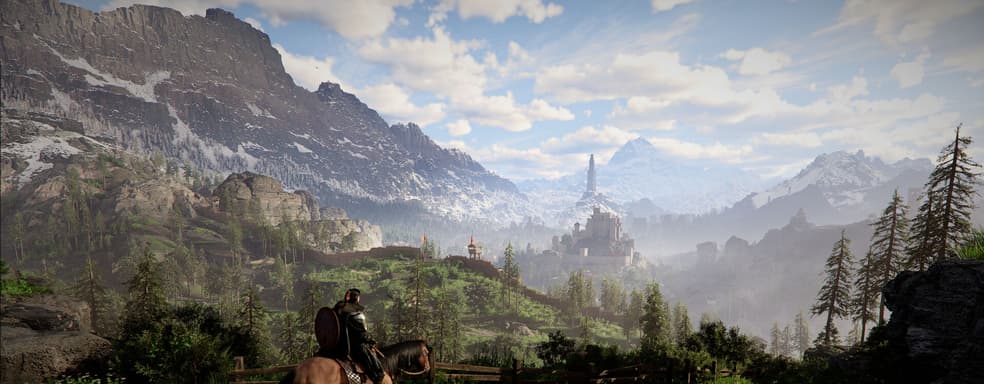
Strengths include a vast open world with high detail and rich events. Dynamic battles with physics, combos, and spectacular finishing moves are noted, as well as a variety of weapons and builds. The fights are called "tangible" and variable, and large battles are one of the main advantages.
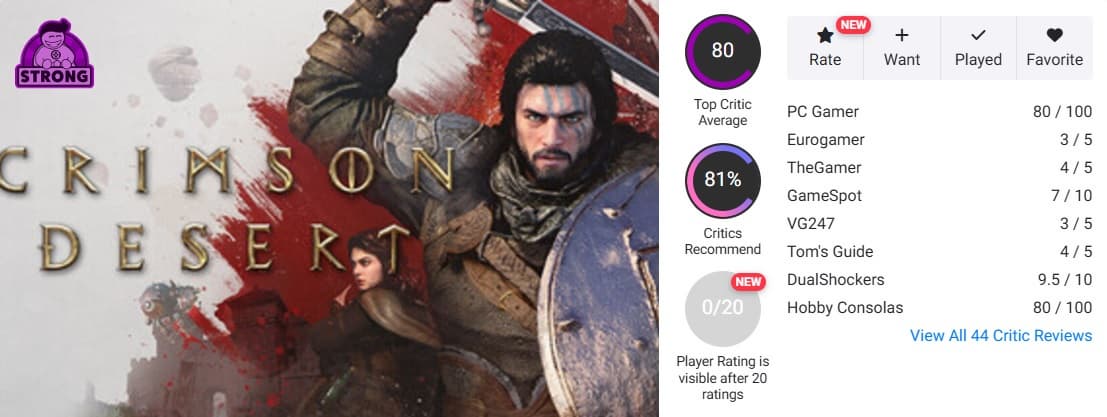
Critics also highlight the ambitious scope of the project: the game combines elements of various AAA titles, from sandbox to story-driven action, offering many systems and activities.
However, there are also downsides. Reviewers often point to the overload of mechanics – the game lacks focus, and the number of systems can be confusing. They note the uneven pace and difficulty of entry, which may cause some players to get lost at the start.
Some journalists admit that after 10-15 hours you feel tired, and after a few dozen more hours it will be difficult to force yourself to play, as many game decisions are empty shells.
Among the problems are also the imbalance of difficulty, overloaded battles with a large number of enemies, and the general feeling of an "overly large" project, where not all elements are equally well-developed.
Conclusion: Crimson Desert impresses with its scale and combat system but suffers from excessive ideas and difficulty of perception. Perhaps after months of patches, the game will change, but for now, it is a beautiful project with underdeveloped mechanics and not always well-thought-out solutions.
Never miss our newsAdd this site to your preferred sources to see us more oftenAdd on Google

![[STREAM] Dark Souls of the year. Valor Mortis](https://media.ixbt.games/fit-in/312x/ixbt-data/1725581/3ffa004e-044b-4d85-a878-777449753d95.jpg)