A heavenly treat for fans of card roguelikes. Monster Train 2 review
Translated with AI from the Russian original.
On May 21, Shiny Shoe released Monster Train 2—a massive sequel to one of the most prominent card roguelikes in recent years. The sequel not only builds upon the original mechanics, but also vividly demonstrates how deep and creative gameplay can be in a genre stuck in self-repetition. In this review, we cover the best way to pass the time while waiting for Slay the Spire 2.
A sequel with a catch
When you launch Monster Train 2 for the first time, you feel like the victim of a scam—as if instead of a sequel, you were handed the original with a refreshed interface and someone else’s save file. The first impression is confusing: the game looks like a spruced-up first installment—with a reworked UI, smoother animations, and improved detail on fighters and effects. It takes a little time to realize: we are indeed looking at a truly new game that confidently evolves the core ideas of Monster Train.
We are still hurtling forward on a train, only now not downward, but upward—through Heaven’s Gates toward the Great Abyss. The plot of Monster Train 2 continues the events of the original. Following the defeat of Heaven’s forces, Seraph—now ruling the Pearl Gates—desperately turns to the ancient Titans for help. This leads to the capture of the gates and endangers the existence of both worlds—Hell and Heaven. Seraph’s sister, Fel, becomes the leader of the Exiles and gathers a new crusade to restore the Concord between the realms, liberate Heaven from her brother’s tyranny, and push back the Titans.
Traditionally, the story unfolds as we progress, revealing dialogue scenes between representatives of different clans at the Concord outpost. Despite the gravity of the situation, these episodes are mostly comedic—they show how entirely different creatures try to find common ground, get to know each other, and learn to act together.
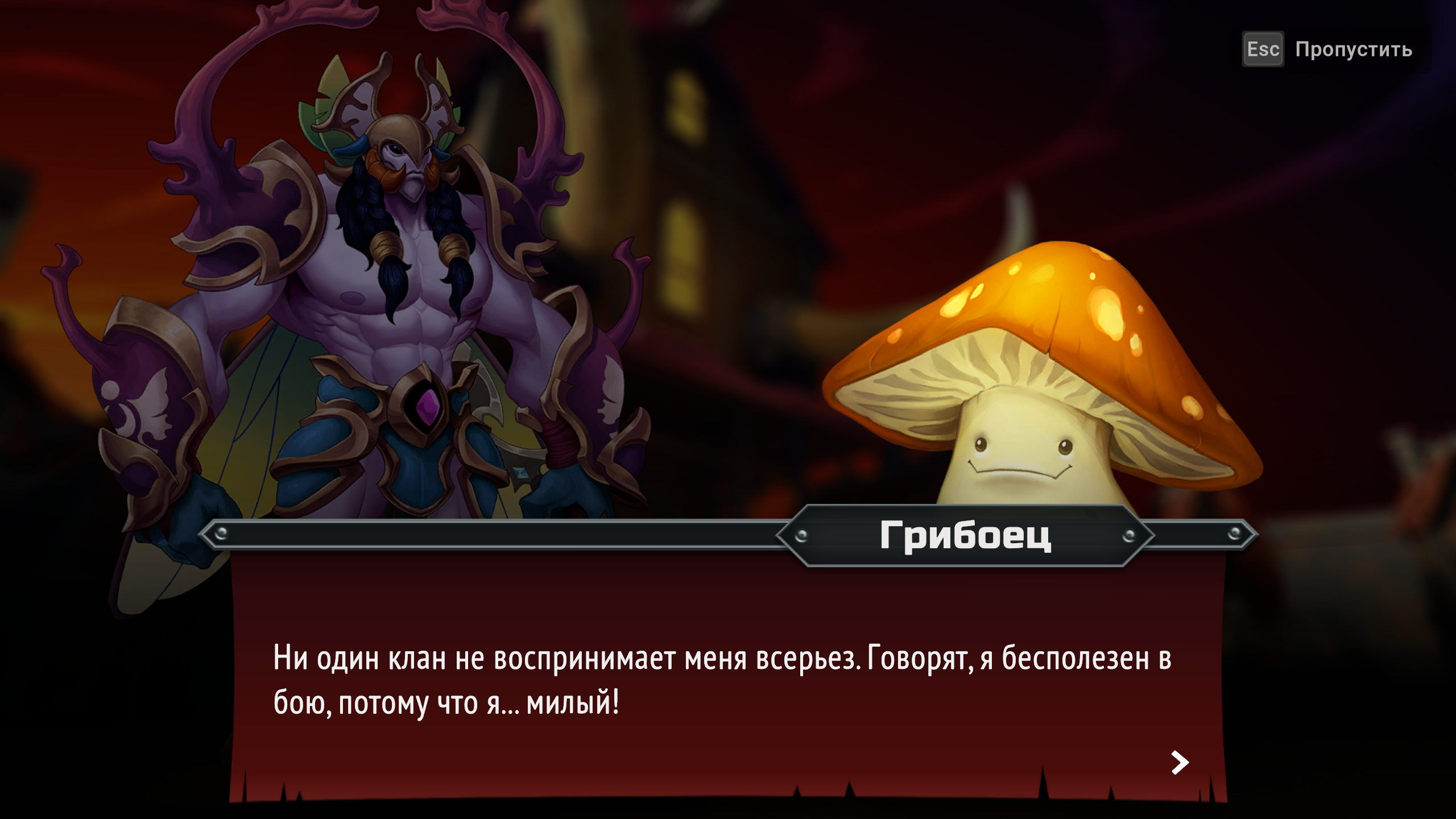
Take, for instance, Lord Phoenix of the Hellhorned clan—as befits an esteemed dragon brooding over gold—desperately trying to drive everyone into debt for “voluntarily” supplying the expedition with resources. Meanwhile, Mushroom Warrior faces prejudice from other races—purely due to his cute appearance, behind which no one sees a fierce warrior.
I’ve always appreciated it when even card roguelikes strive to offer not just mechanics, but a fully fleshed-out world with its own lore—and Monster Train 2 confidently moves in this direction, even including several rather unexpected plot twists. Some of them I’ll have to spoil later—once we get to mechanics and new clans.
Along familiar tracks with new mechanics
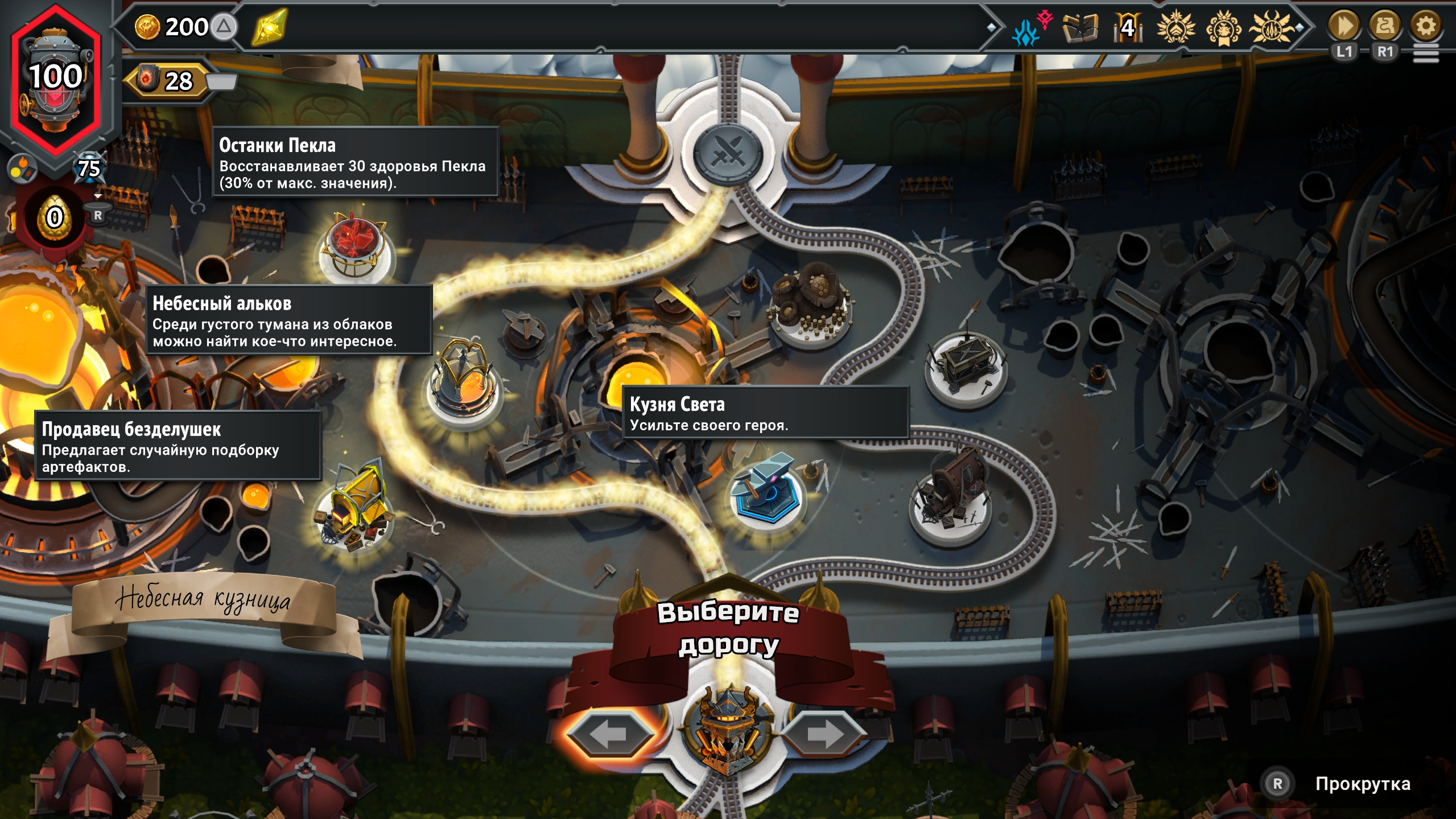
The core gameplay loop remains unchanged. As before, battles take place across three train floors where the player plays cards, places units, and casts spells, repelling waves of advancing enemies. Those who survive the round move up and try to reach the fourth floor, where the Pyre—the heart of our train—is located. If the Pyre is destroyed, the run ends, and you have to start over.
Each battle includes several enemy waves and culminates in a fight against a boss who possesses random abilities and the “Relentless” effect. This means the fight on that floor continues until either the boss dies or all of your units perish. After victory, the train rushes along its route, and we add new cards to our deck, upgrade existing ones, and grow stronger.
It is worth noting that Monster Train 2 doesn’t pull punches and demands a thoughtful approach to basic synergies and effects right from the opening battles. The developers have almost completely abandoned the gentle start with simple damage and defense cards with no traits—because of this, the game might initially seem harder than it actually is. Especially to those who aren’t well-versed in card roguelikes.
It is hard to call Monster Train 2 a revolution, but it is a powerful evolution and a rare example of a sequel that deepens gameplay while simultaneously making it more forgiving. The game still slaps your wrist for mistakes, but now the player has a chance to fix them—without having to restart the entire run from scratch. You can now undo a turn before ending it if you acted too quickly, played the wrong card, changed your mind, or spotted a miscalculation. What’s more, a battle can be restarted from the very beginning—and you are allowed to do this an unlimited number of times. These changes lower the overall hardcore barrier while encouraging experimentation—especially while the player is just getting acquainted with new clans, synergies, and mechanics.
While combat in the original began with turn one, in the sequel it is preceded by a deployment phase. The player receives a hand of cards—guaranteed to include units—and places them across floors. Only after that does the first full turn begin with a fresh draw. In other words, the player now gets two turns before the enemy attack begins: first—deployment, then—a full turn with the ability to cast spells. However, spells are unavailable during the deployment phase: you can only play units, room cards, and equipment.
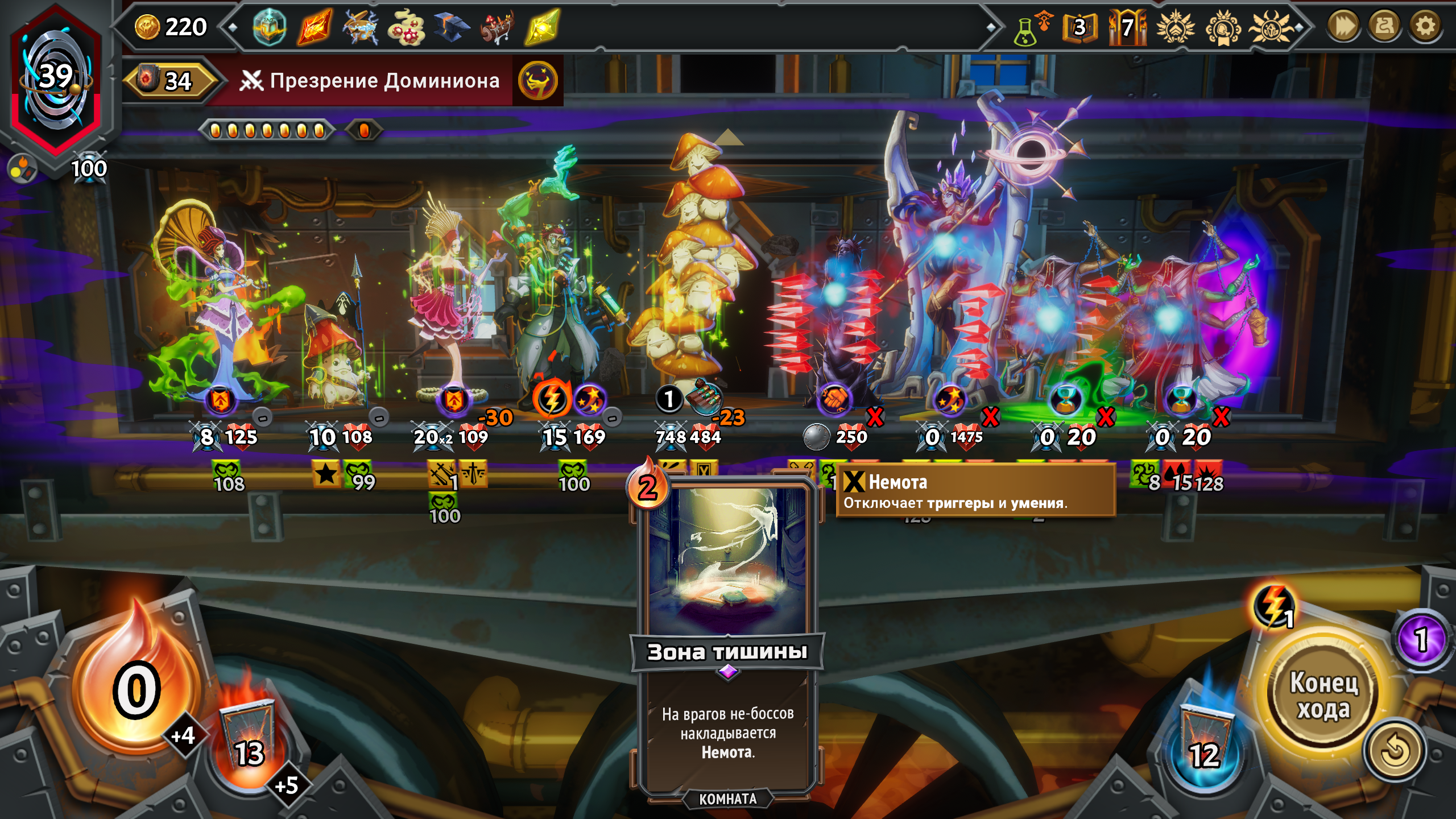
Room cards are a new card type that affects an entire floor. This could be bonus gold for every slain enemy, magic amplification, or reduced enemy attack. But there are more exotic options as well. Some rooms grant modest bonuses, while others radically alter the battle’s logic, flipping the virtual chessboard the moment they appear.
Equipment—as the name suggests—are cards that can be “equipped” onto units. Bonuses can be simple—like +health or +attack—or have real personality. Say, an item dealing damage equal to the current health pool of the unit being attacked by an enemy. Or an artifact dealing damage on every floor change. It is especially satisfying to equip one onto a flying boss—and watch their health melt away without your intervention.
Some items grant units active effects. For instance, potion brewing—the ability to generate buffing or debuffing potions for free every few turns. All of this is part of a massive new system introduced in Monster Train 2.
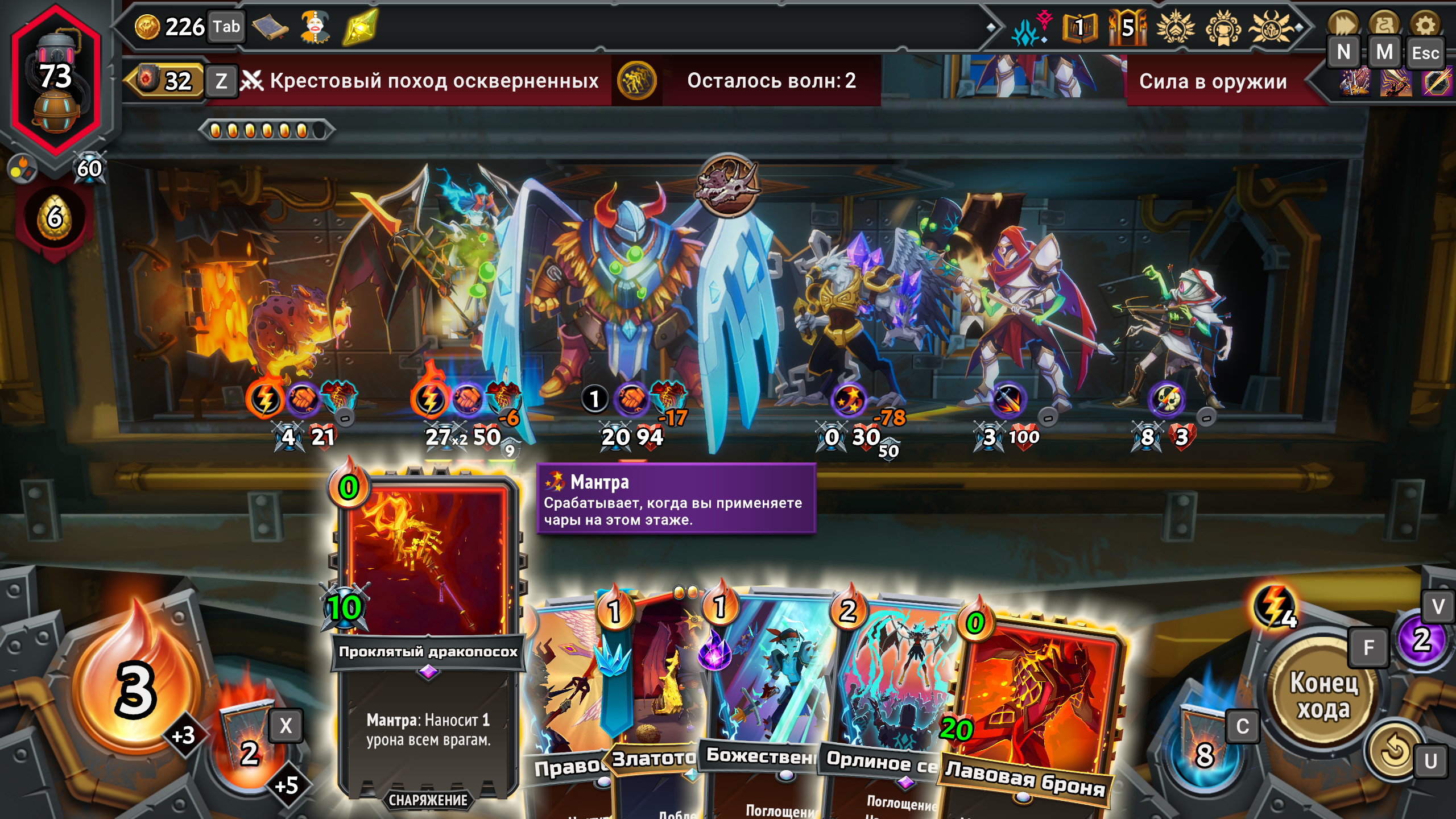
Beyond equipment, active effects between turns have also appeared on certain units. But most importantly, the impact of clan champions has grown substantially. Most of them now possess powerful active abilities around which battle strategy is often built.
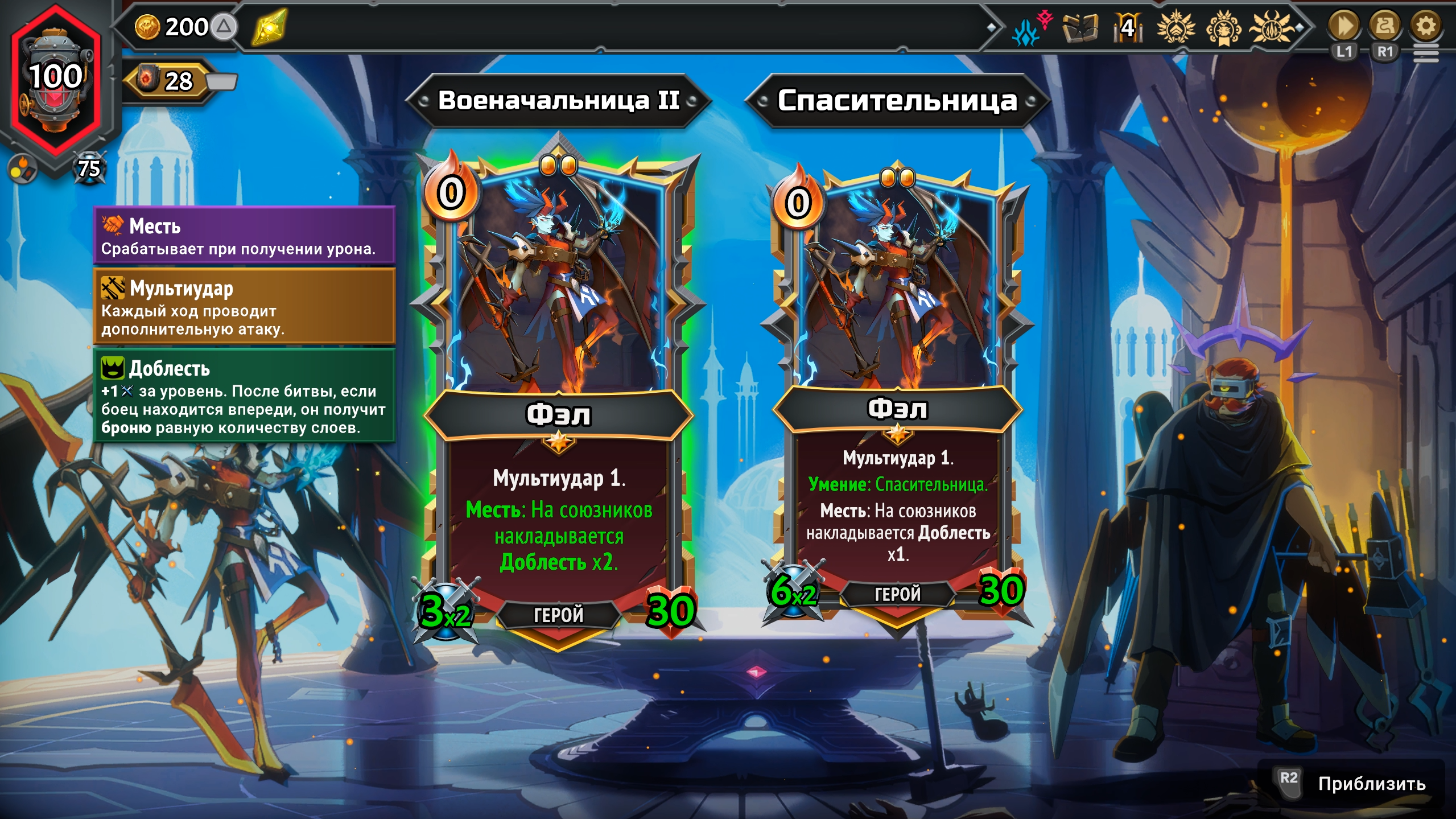
For example, Fel—the first champion we encounter—can grant herself Valor: an effect increasing outgoing damage and armor, turning her into a true frontline tank capable of screening the entire floor. One of the baseline early-game strategies revolves around buffing Fel with Valor as quickly as possible, transforming her into a practically immortal fighter capable of handling any enemy on her own.
The multi-floor battlefield previously underscored the importance of careful planning around enemy movement between floors. Now, with the introduction of active abilities, you also have to factor them in—deciding when it is best to trigger an ability and when to save it for a more opportune moment.
Yet the additions do not end there. If you played the original Monster Train, you likely remember: the Pyre has its own stats and can fight off enemies that reach the fourth floor—until its health runs out.
Now it is not just a “tower” to defend. By completing certain conditions, you can unlock alternative versions of the Pyre Heart—complete with passive, and sometimes active, effects. One, for instance, allows you to gain bonus mana once per battle, another adds random upgrades to all cards in the draft, and a third restores health to units. Thus, the developers have introduced yet another layer of synergies impacting strategy. If you aim for the “true ending,” you should pay close attention to the unlock requirements for these Hearts.
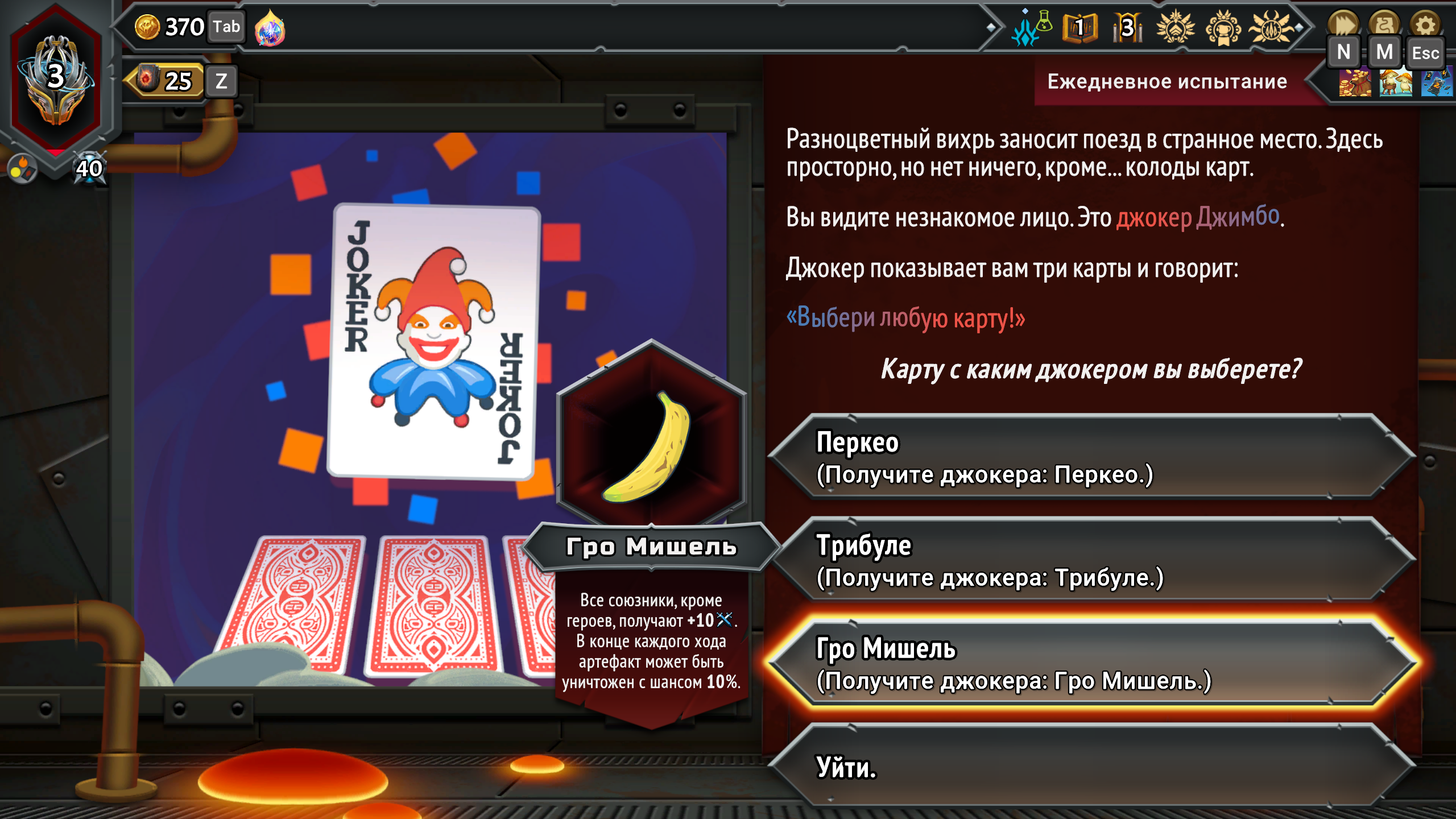
Naturally, Monster Train 2 features new artifacts, as well as random events with a variety of bonuses—some of which reference other well-known roguelikes. Along the way, you can encounter, for instance, Jokers or the Gros Michel banana from Balatro, stumble upon the Stoat from Inscryption, summon cultists from Cult of the Lamb, or pick up artifacts from Inkbound.
The classic cat merchants of steel and magic, allowing you to boost stats and apply new effects to unit and spell cards, haven't gone anywhere. They still help assemble deadly combinations. But now they are joined by weapons merchants selling equipment and room cards. Their main feature is the ability to fuse these cards, creating truly devastating effects.
All of this provides unprecedented room for build crafting within a single run, and the system turned out to be genuinely successful: the game never makes you feel for a second like you lost purely due to bad luck. It feels like the right approach can always be found—you can claw your way out of any situation if you don't get greedy and play smartly. And that shouldn't be underestimated: few roguelikes can deliver such a feeling.
But you realize that's not all yet, right? So far, I haven't said a single word about the new clans. Well, let's dive in.
Fresh blood and the old guard
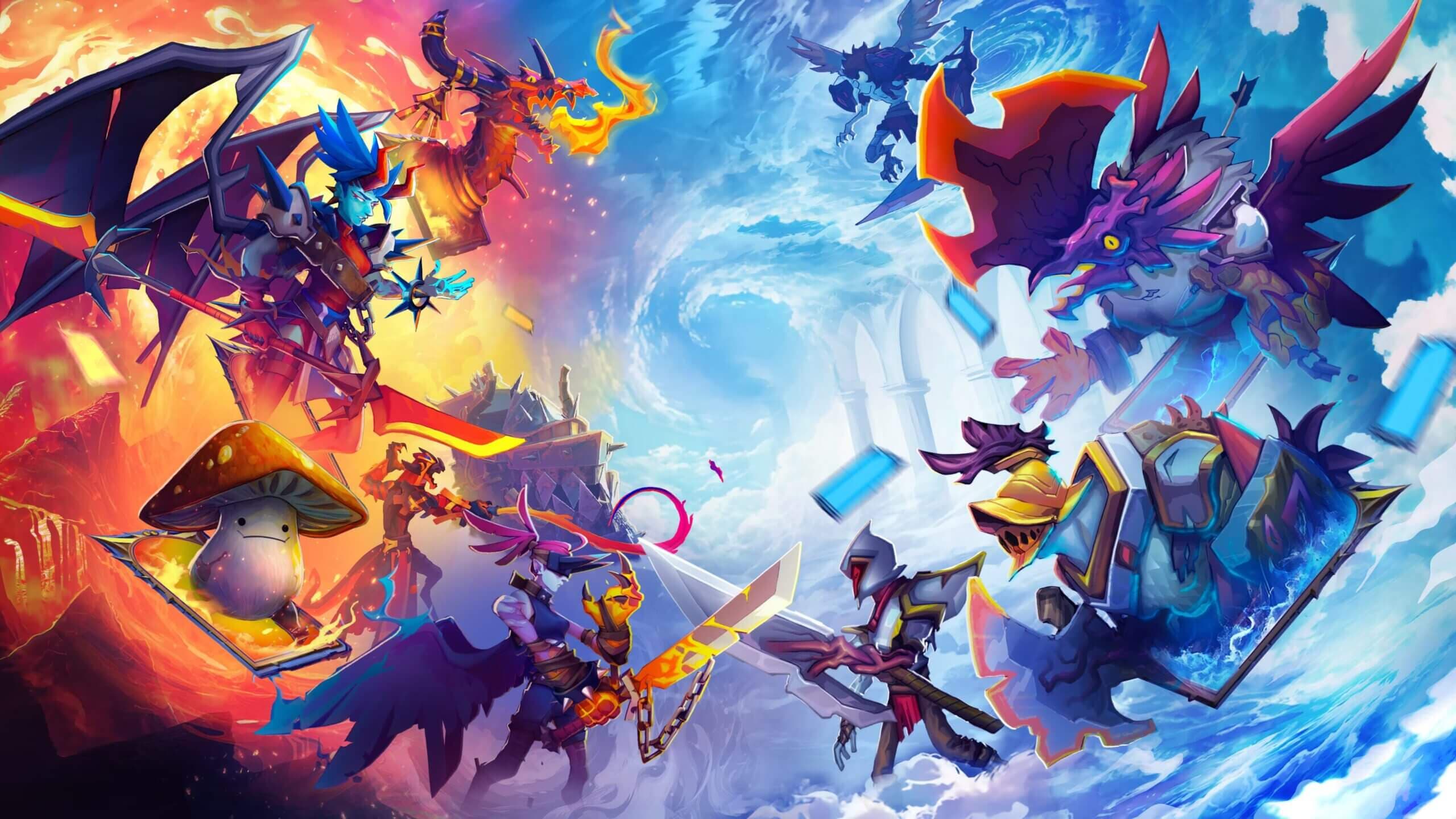
Monster Train 2 greets us with a set of five completely new clans that were not in the original game. In some ways, they echo familiar ones, but each feels slightly “leveled up”—thanks to strong, interesting cards available right from the start. This also reinforces the feeling that someone has already played for you and unlocked part of the content. At the same time, each clan brings unique mechanics and fresh ideas, noticeably enriching the gameplay.
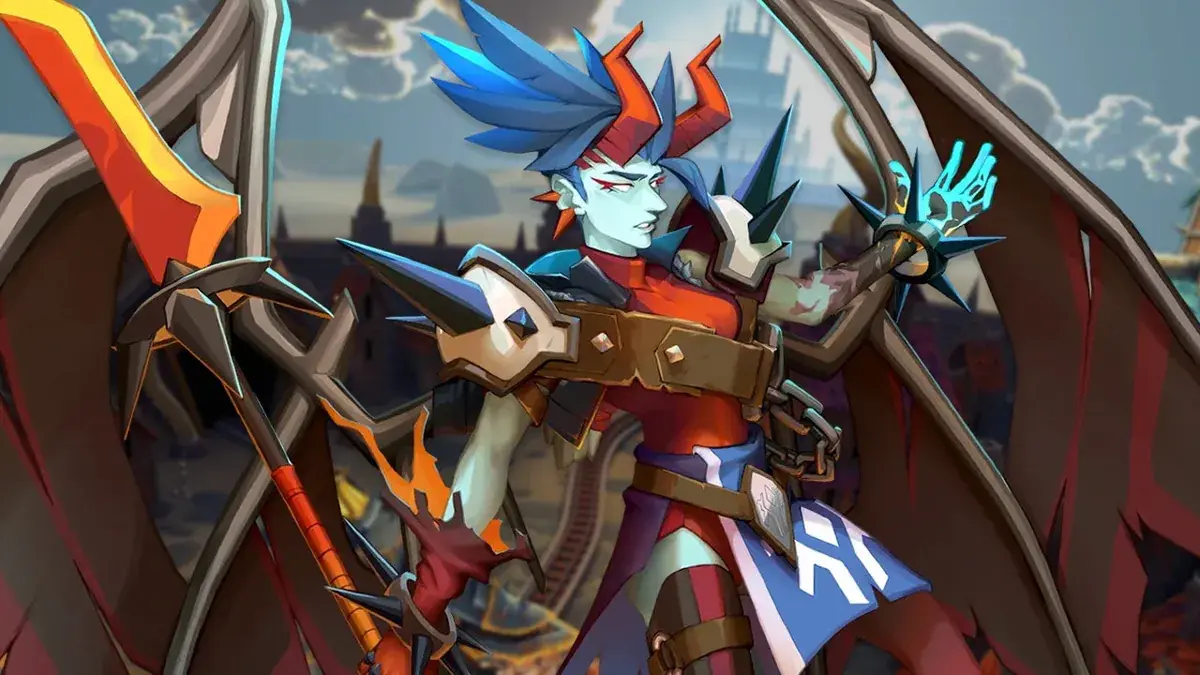
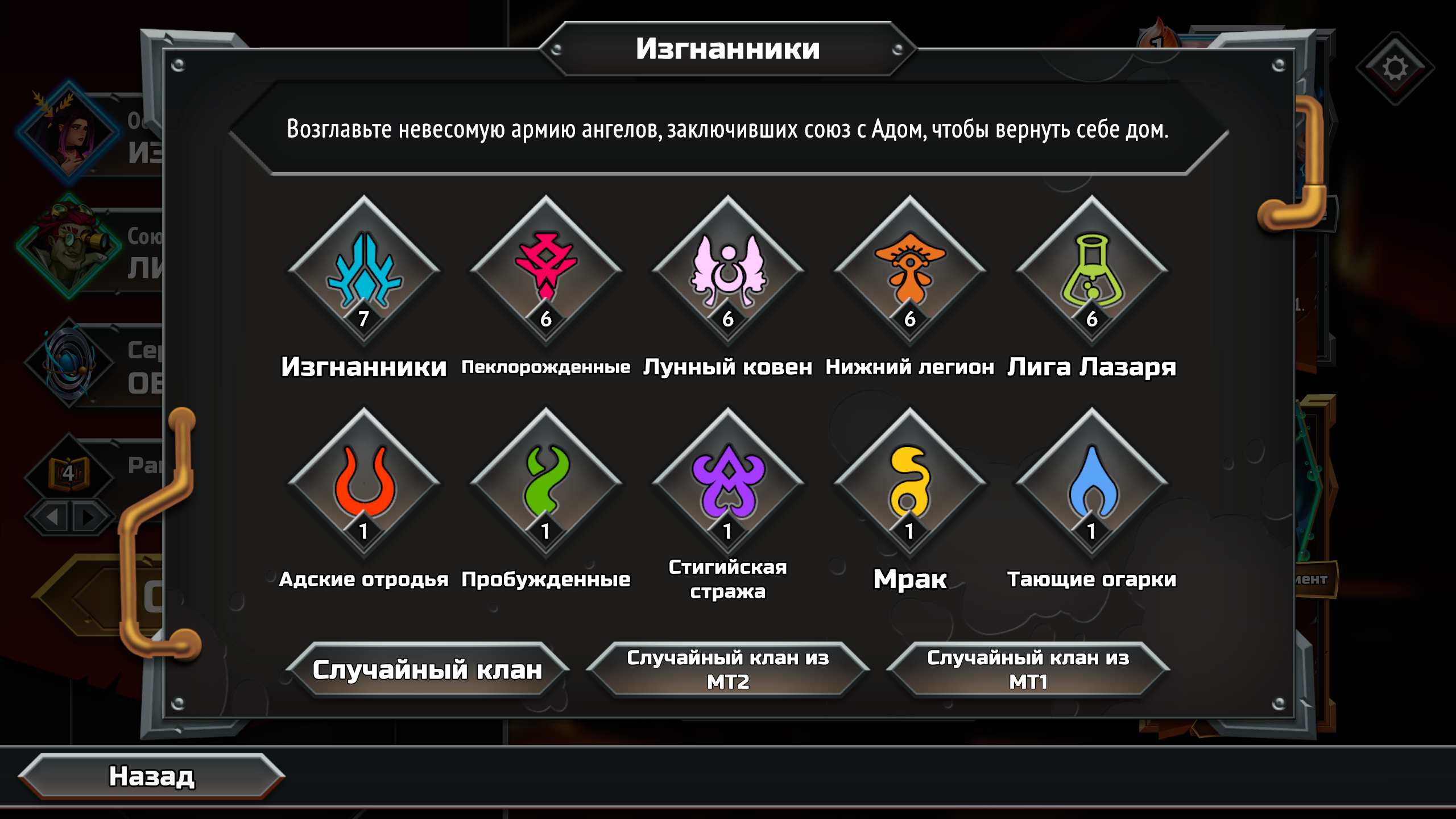
The Exiles—as the name suggests, these are runaway residents of Heaven led by Fel, cast out for rebelling against Seraph. They embody honor and order and, as you already know from Fel's skill, focus on scaling stats and creating powerful units.
The Moon Coven—mages with mastery over spells who build their strategy around buffs tied to changing moon phases that occur each turn. The clan has two main directions: first, utilizing phase shifts to gain powerful units, and second, building up channel to unleash destructive magic attacks. This is the best choice if you want to play around spells.
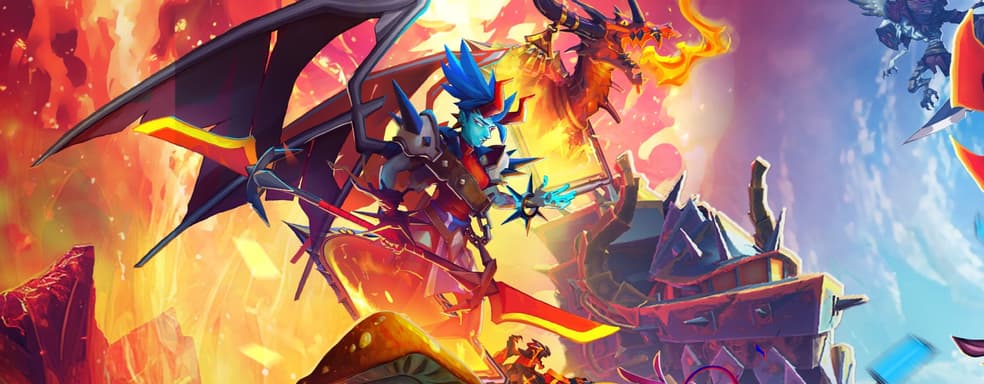
The Pyrebound—a clan of gold-greedy dragons for whom profit comes first. Their mechanics fully reflect this philosophy: mining pure gold, collecting golden eggs (which can be traded for artifacts and resources), spamming small kamikaze whelps that can be detonated with an active ability between turns. And, of course, their arsenal has plenty of ways to make enemies burn—both literally and figuratively.
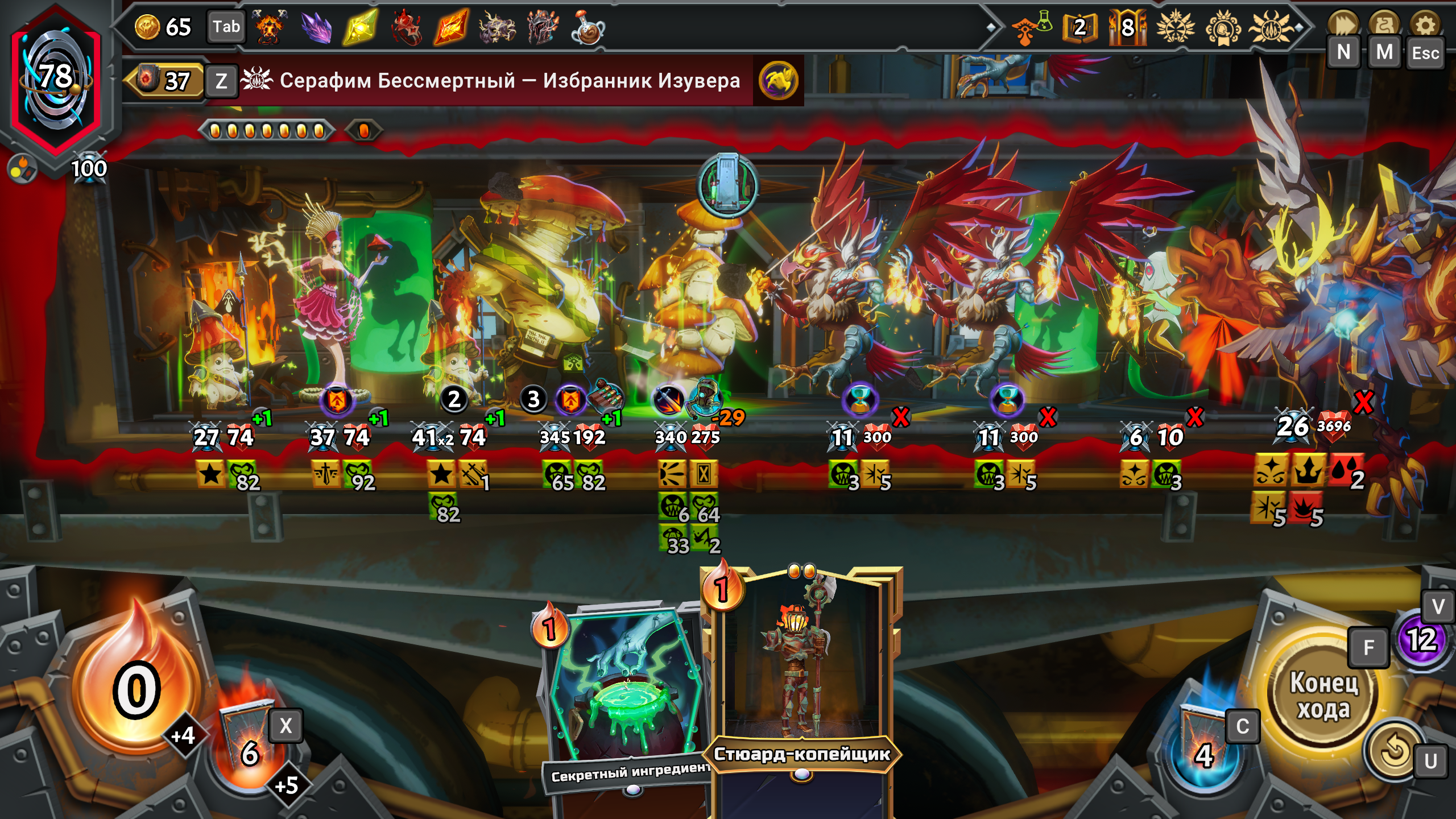
The Nether Legion—one of the most comfortable clans to play. The first path is methodically ramping up the stats of mushroom fighters to cyclopean proportions, where a single warrior, behind whom an entire mycelium is literally hiding, can take down a boss all by themselves. The second is playing through stacking numerous debuffs: damage over time, attack power reduction, and other nuisances. There is a common belief that the clan requires extensive leveling and unlocking key cards to reach its full potential, but even from the start, they are easy to play—especially when combined with buff effects from other clans.
The Lazarus League—mad alchemists and scientists whose mechanics revolve around instability that literally rips enemies apart, lifesteal, revivals, regeneration, and organ transplants from fallen fighters to survivors. The clan's main gimmick is summoning and reviving augmented creatures: with transplanted organs that drop as items upon death. These organs can be equipped onto other units, creating wicked synergies and turning your squad into a walking freak show.
And now—pay attention. I deliberately held off introducing the new clans so that you could fully appreciate the scale of changes before the biggest surprise. Spoilers ahead, if you can even call them that. Because... these aren't all the clans.
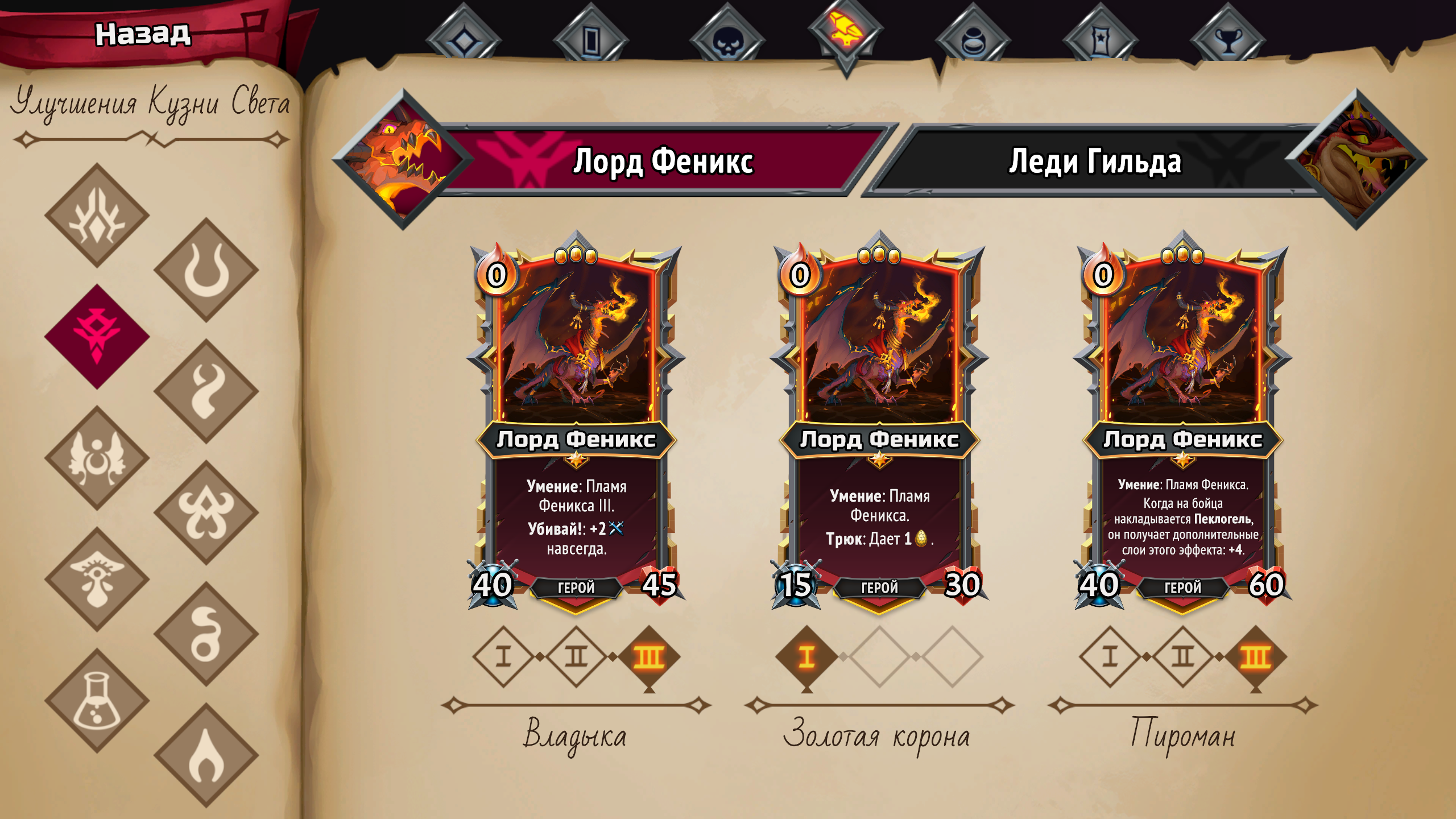
Yes, the developers didn't just add five completely new factions with their own quirks, but also brought back five clans from the original game—only the dragons from the expansion were left out. And that is, perhaps, both a plus and a minus. On the one hand, it's great that the old clans are back. On the other, compared to the new ones, they feel less fleshed out and frankly weaker in places, which can make runs with them feel noticeably harder. However, they work excellently as a secondary clan. Take, for instance, the Moon Coven and the Stygian Guard to boost magical power. Or the Mushroom Folk and the Awoken—as support to build a true “green” deck fighting in the name of nature.
To play each possible combination at least once and try out one build for each, you'll need around 50 hours. But don't forget: each clan has two champions, and each champion has three upgrade paths. At the same time, the number of possible synergies and interactions only grows—easily enough for at least 150 hours of content, where every run feels fresh. All of this gives Monster Train 2 truly high replayability—coupled with deep deck-building, progression, and experimentation options. And there's plenty of room to let your imagination run wild.
The final stop is not the limit
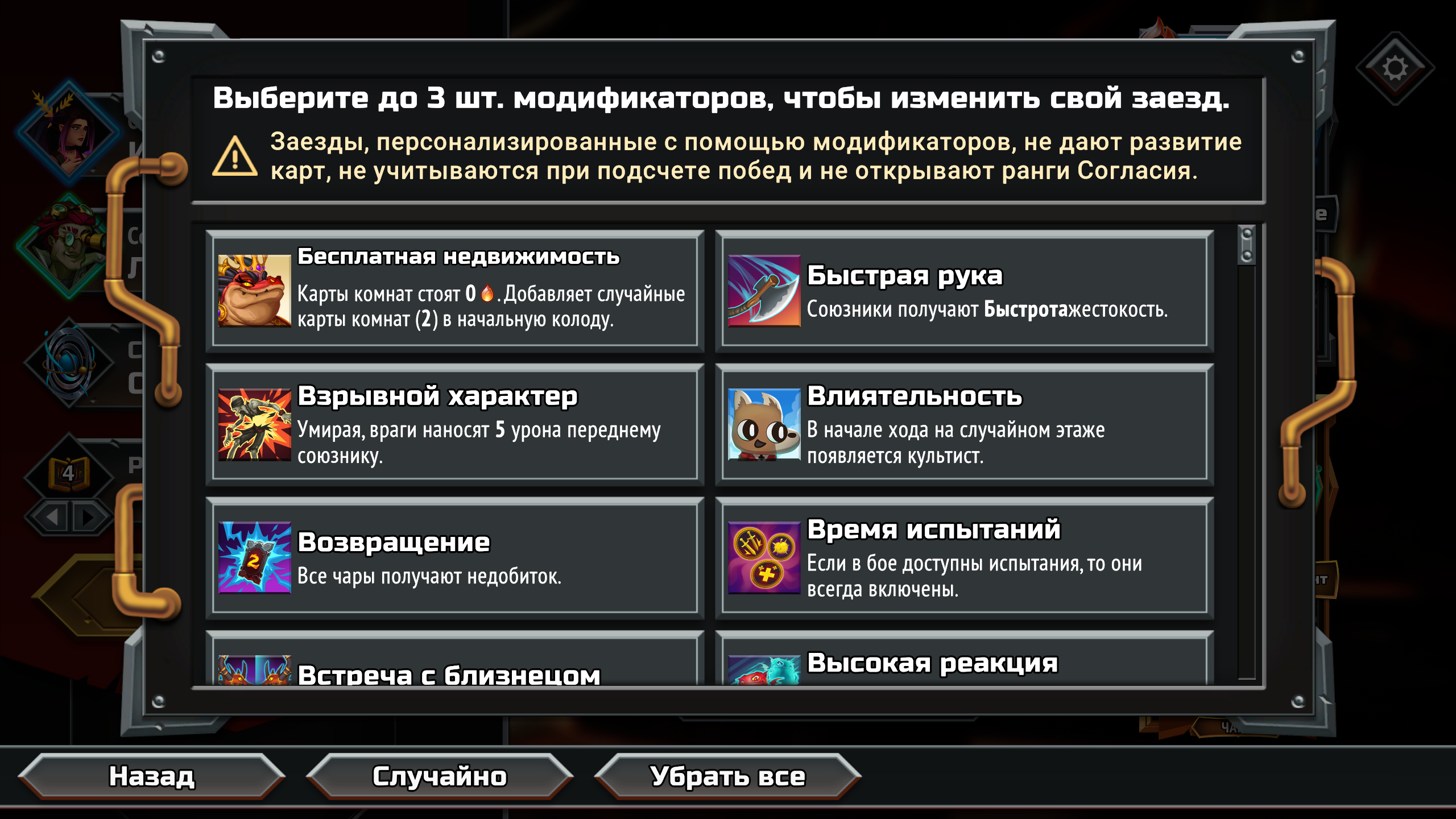
The story campaign itself isn't drawn out. If you're simply aiming to “beat” this roguelike without diving into high ascension levels, you can finish the job in 20–30 hours—including unlocking the “true” ending. Moreover, even if you find the game too difficult and only care about the story, the developers included the option to enable up to three buff modifiers—with them, runs turn into a walk in the park.
However, it should be noted: when using these modifiers, card mastery is locked, you won't earn a golden frame for winning, such runs don't count toward statistics, and they don't unlock new ascension levels.
However, if you enjoy experimenting and are ready to dive deep into mastering the game, Monster Train 2 has plenty to surprise you with. First, there are the aforementioned ascensions, here called Covenant ranks—ten progressively unlocked difficulty levels. Each subsequent rank ratchets up the difficulty: empowering bosses, increasing damage, health, and enemy numbers, while gradually weakening the player.
Nevertheless, some of these ascensions can easily be considered buffs. For example, right at Covenant rank 1, enemies become stronger, but you receive three extra cards at the start—allowing you to build right from the very first battle around a specific idea. Formally, the difficulty rises, but alongside it grows tactical flexibility.
Besides regular Covenant runs, the developers added a “spatial portal”—a mode of pre-built runs with a fixed set of clans and modifiers. Some challenges here are purely for fun, while others present a genuine test even for veteran players. Furthermore, you can complete the story campaign by alternating between classic runs and taking part in portal challenges.
For completing all spatial challenges, the player receives cosmetic rewards: a frame and room skins, which can then be swapped in the Depot.
In addition, the game features daily challenges generated randomly. In structure, they resemble the portal mode, but introduce a competitive element: points are awarded for completion speed and efficiency, determining your leaderboard ranking among all players on the platform.
Ultimately, everything we've discussed in this review turns Monster Train 2 into the definitive deckbuilding roguelike—the kind that will easily hook you for dozens, if not hundreds, of hours. If, of course, you have that much free time.
Diagnosis
Monster Train 2 can safely be called a worthy sequel to the original. The developers didn't just take the best parts of the first game and refine them—they practically doubled much of it. At its core, it's still the same card-battling across a multi-tiered battlefield, but the new clans, cards, artifacts, effects, and active hero abilities significantly expand depth, variety, and player freedom. At the same time, the game enhances the importance of tactics and long-term planning.
While we await Slay the Spire 2, Monster Train 2 is already setting the benchmark, proving that a familiar formula can expand not only in width but in depth—all without losing its identity.
If you love deckbuilding roguelikes, I can't name a single reason why you should pass on this project. Playing Monster Train 2 for genre fans is roughly like eating and drinking water on time: a basic need that's simply foolish to deny, because with an overwhelming likelihood, this is the genre's premier game for the next few years.
***
All image rights in this material belong to Shiny Shoe / Big Fan Games. iXBT Games uses them for informational and research purposes and makes no claim of ownership over them.
Never miss our newsAdd this site to your preferred sources to see us more oftenAdd on Google