Kids vs. aliens. Review of the Alien: Earth series [episodes 1–2]
Translated with AI from the Russian original.
On August 12, 2025, the first two episodes of the series “Alien: Earth” by Noah Hawley (“Fargo”, “Bones”) premiered. Critics who have already watched the entire season call the show “the best in the franchise since Ridley Scott’s original 1979 film.” We couldn't deny ourselves the pleasure of checking out the new chapter in the Xenomorph saga either—and in this piece, we share our impressions.
A world of triumphant capitalism
The events of “Alien: Earth” unfold in the year 2120—two years before the events of Ridley Scott’s original film. As is easy to guess from the title, the primary setting this time is our home planet. In the future, governments have given way to powerful corporations, and efforts to elevate humanity to the next evolutionary stage have boiled down to three paths:
- creating cybernetically enhanced humans—cyborgs;
- developing artificial intelligent beings—synths;
- creating synthetic bodies into which human consciousness is uploaded—hybrids.
Thus, we learn that good old Weyland-Yutani is merely one of five corporations, with a relatively young startup called Prodigy hot on its heels, led by the planet’s youngest trillionaire—Boy Kavalier (Samuel Blenkin). His company specializes in manufacturing hybrids: humans whose minds have been transferred into artificial bodies granting superhuman capabilities.
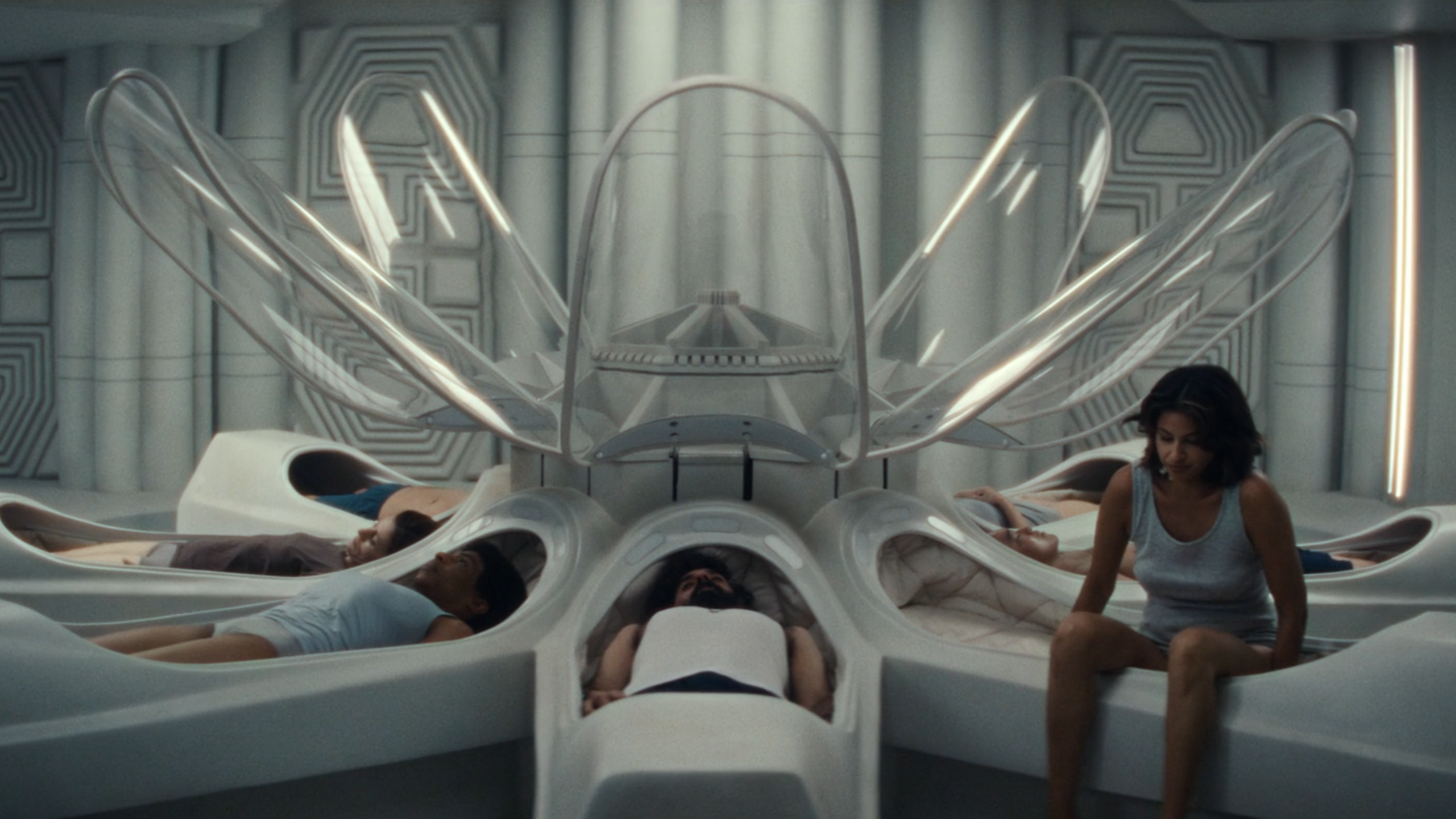
The audience receives these and other background details from the opening credits, as well as from the “future mincemeat” represented by the crew of the starship “Maginot”—bluntly named after the defensive line that offered a false sense of security. Noah Hawley shows he is a diligent student, delivering a near shot-for-shot recreation of the awakening and breakfast scene from the original “Alien,” utilizing familiar sets, props, camera angles, tunes, and even fonts, clearly fishing for praise from both his “teacher” and the fans.
The “Maginot” belongs to Weyland-Yutani and is returning from a deep-space expedition, hauling back a whole “menagerie” of alien specimens. Following a relaxed meal, the crew heads back into cryo-pods—Earth is still four months away. Yet by no means are all of them destined to wake up.
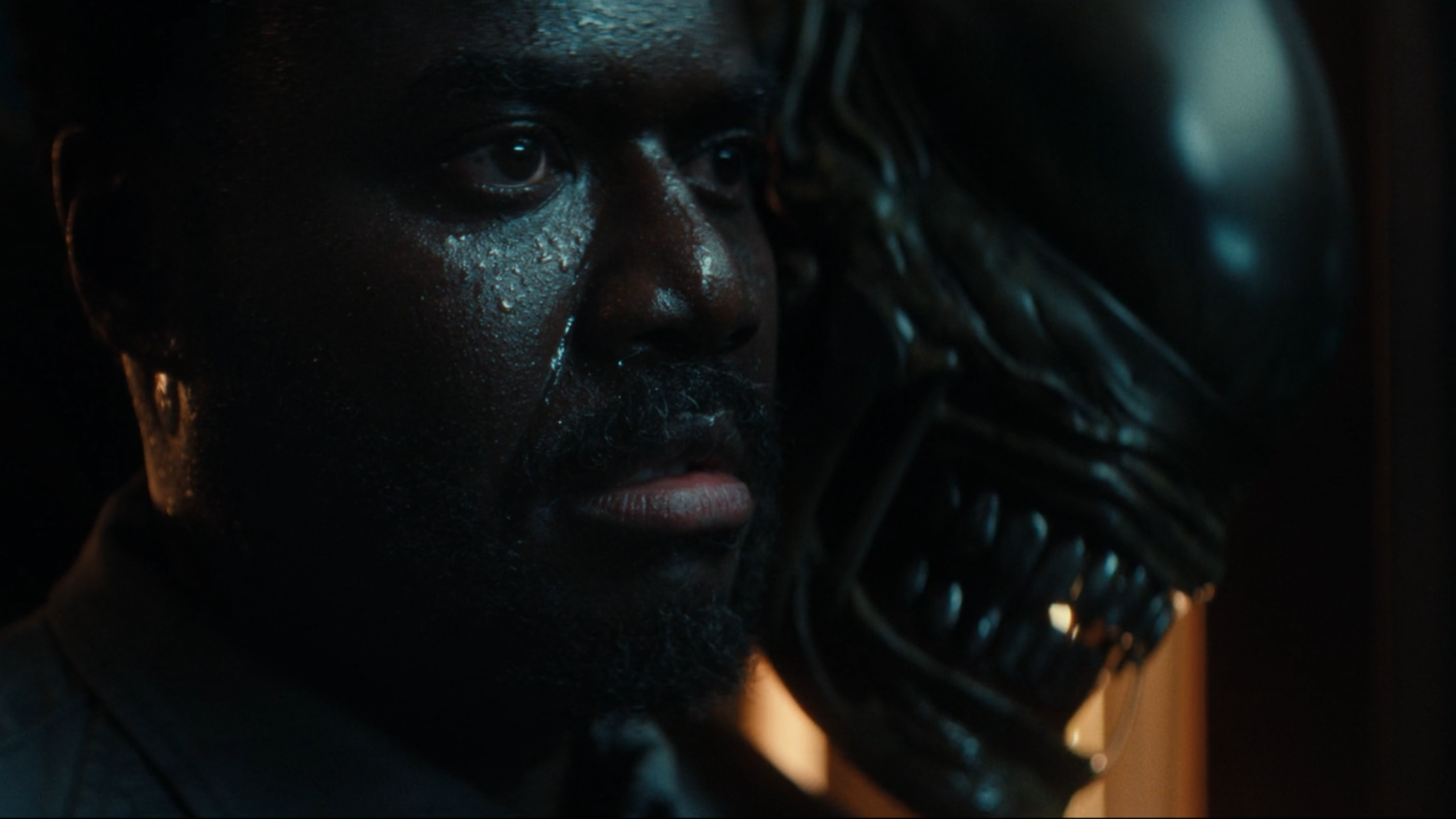
Naturally, “something went wrong”: on approach to the planet, the system malfunctioned—on its own or with someone’s help—and the entire “zoo,” spearheaded by a Xenomorph, breaks loose, unleashing chaos and destruction. Out of the entire crew, only cyborg captain Morrow (Babou Ceesay) survives, while the “Maginot” comes crashing spectacularly into the center of a Thai metropolis.
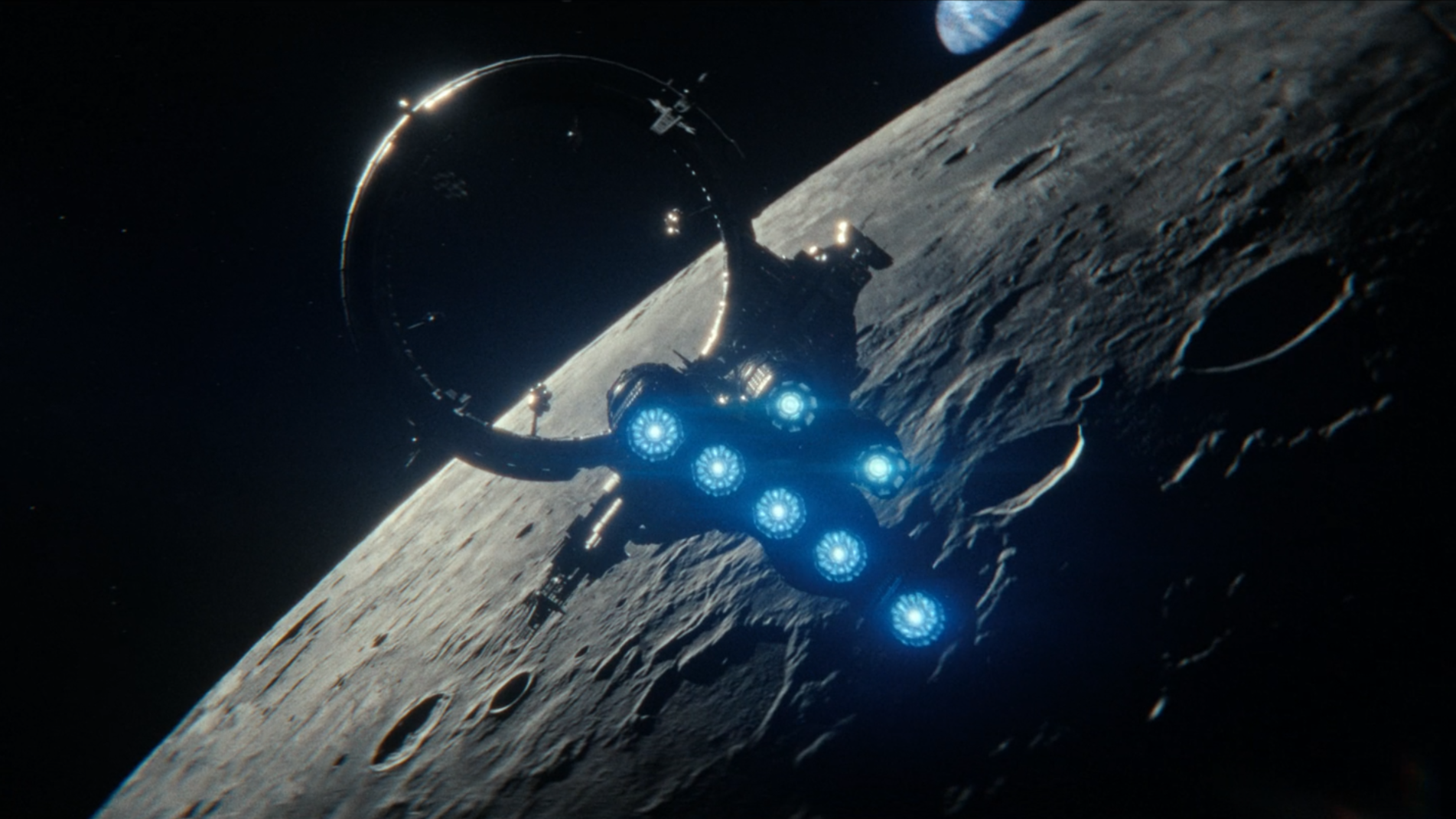
Leaving Neverland
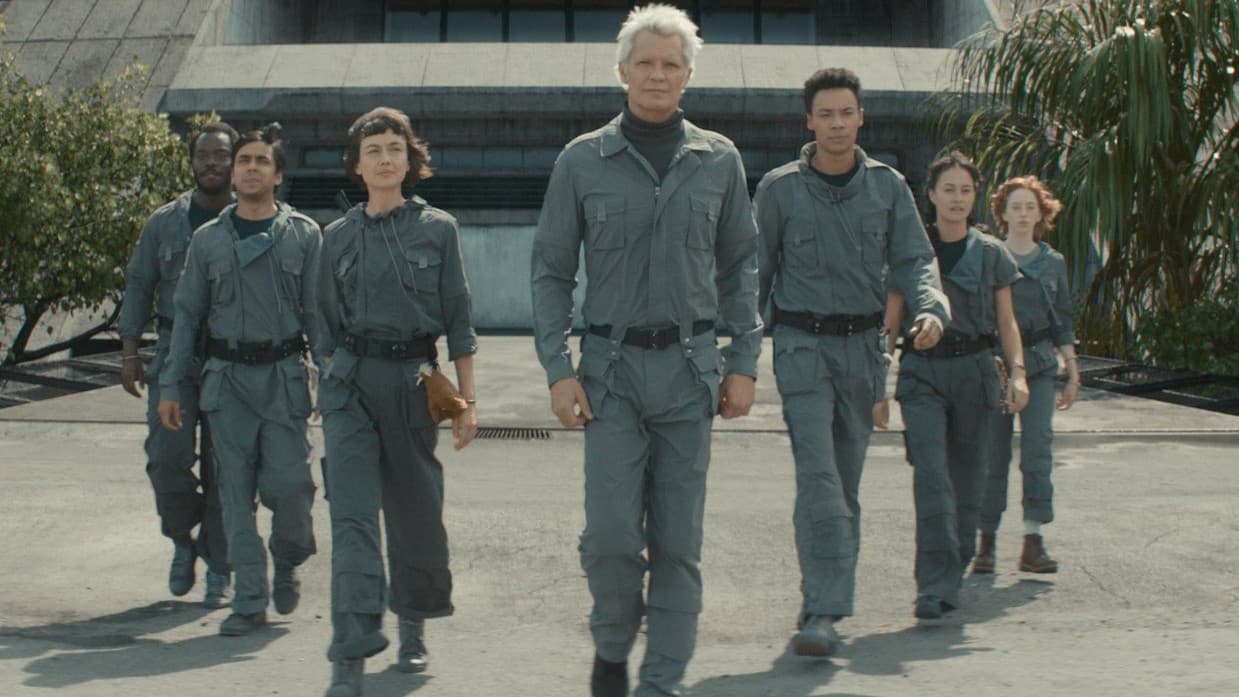
Parallel to these events, we are taken to the secret island belonging to the local “Peter Pan”—Kavalier. His Neverland serves as the testing ground for Prodigy’s hybrid experiments. The first human to undergo the consciousness transfer procedure is a terminally ill girl named Marcy. She adopts a new name—Wendy (Sydney Chandler)—and soon leads an entire group of hybrids, the very “Lost Boys” who will be dispatched to the crash site.
However, before we follow them, let us pause to discuss the obvious issues from which the show’s core flaws stem.
In case you haven’t caught on yet (just in case), the entire Prodigy project is one massive, heavy-handed homage to “Peter Pan,” hammered home so persistently throughout the series that the result ends up being… well, you know what. But damn it, it explains a great deal!
Dying children are used to create hybrids because their brains are more plastic. Yet the minds of these children are placed into adult bodies, since synthetic frames do not grow. The result is a comical dynamic: an adult actor portrays not just an emotionally immature person, but literally an eleven-year-old child.
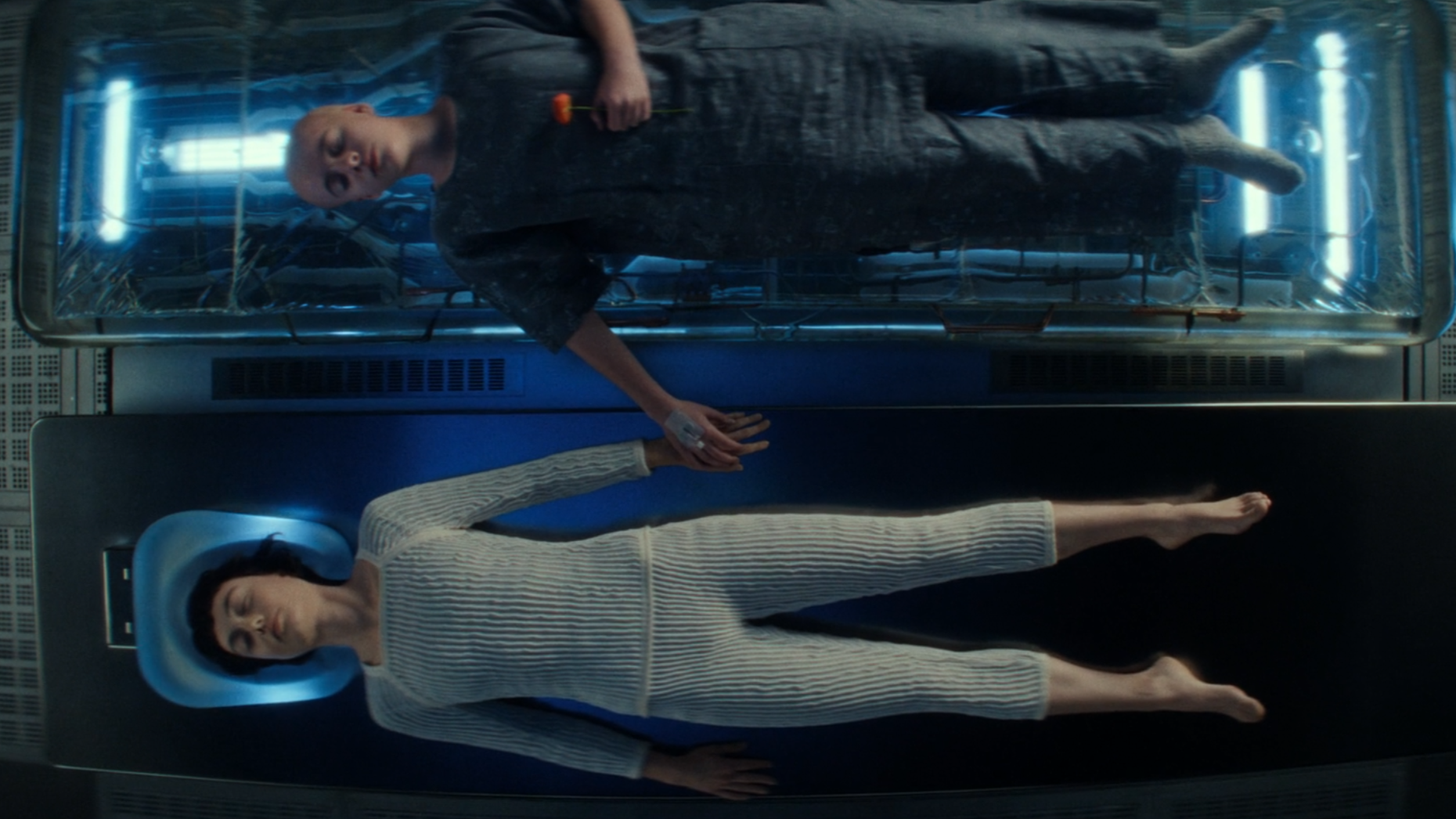
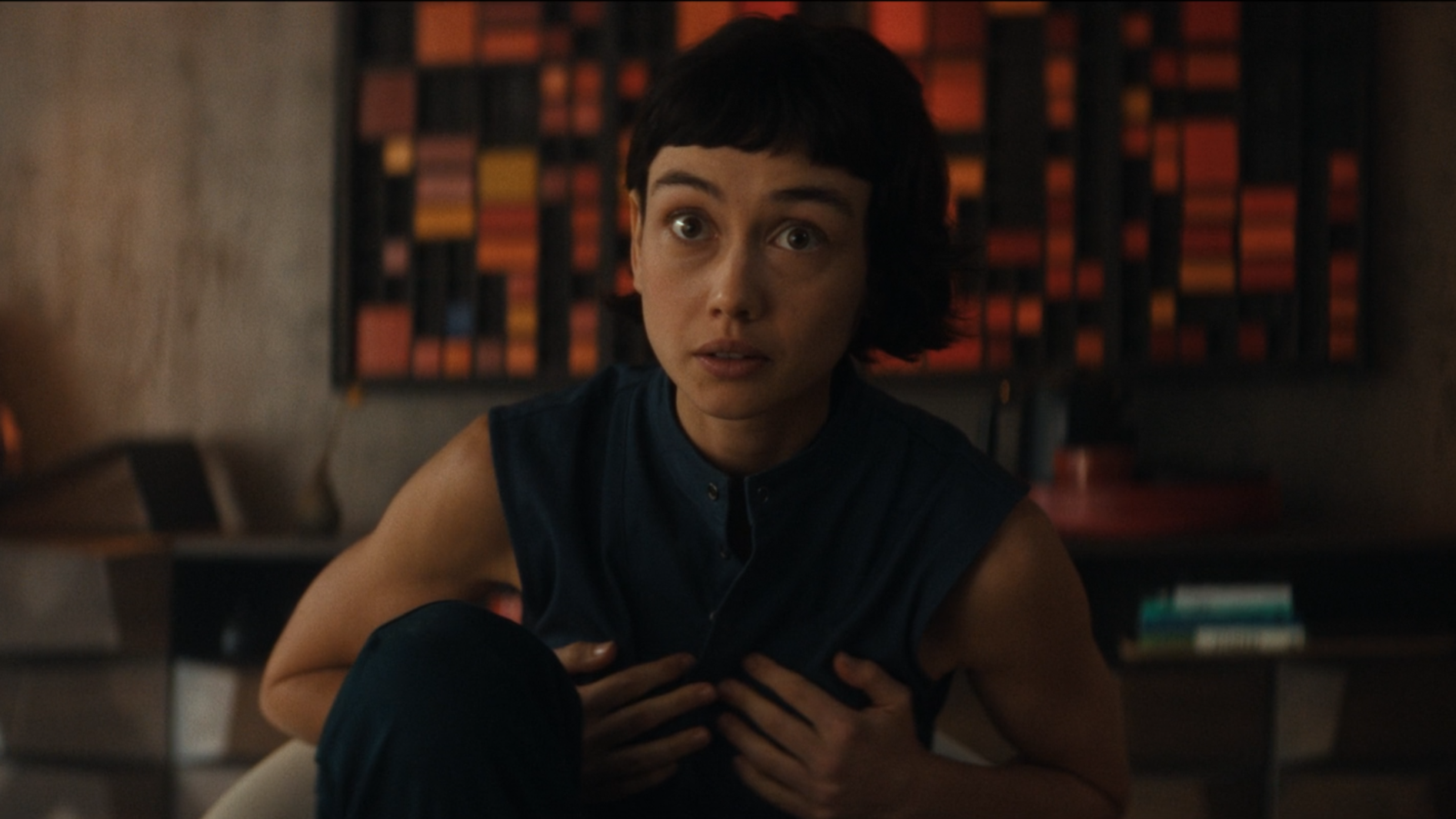
Wendy is surprised by how her chest bounces when she runs—which makes sense, given that Marcy had not yet developed secondary sexual characteristics. She pines for her brother, who believes she is dead because the project is classified. Chandler does great work with facial expressions, making her performance fascinating to watch at times, though awkward at others. The secondary hybrids, however, are mostly annoying: the actors lack charisma and range, and their depiction of “children in adult bodies” boils down to overacting and foolish decisions concocted by the writers, which only renders the characters cartoonish.
My daughter is nearly ten, so I can forgive and excuse some of the characters’ antics by chalking them up to them being, well, little… kids. For instance, within minutes of meeting Hermit, one of them blurts out that Wendy is his sister Marcy, thereby ruining a potentially dramatic plot twist down the line.
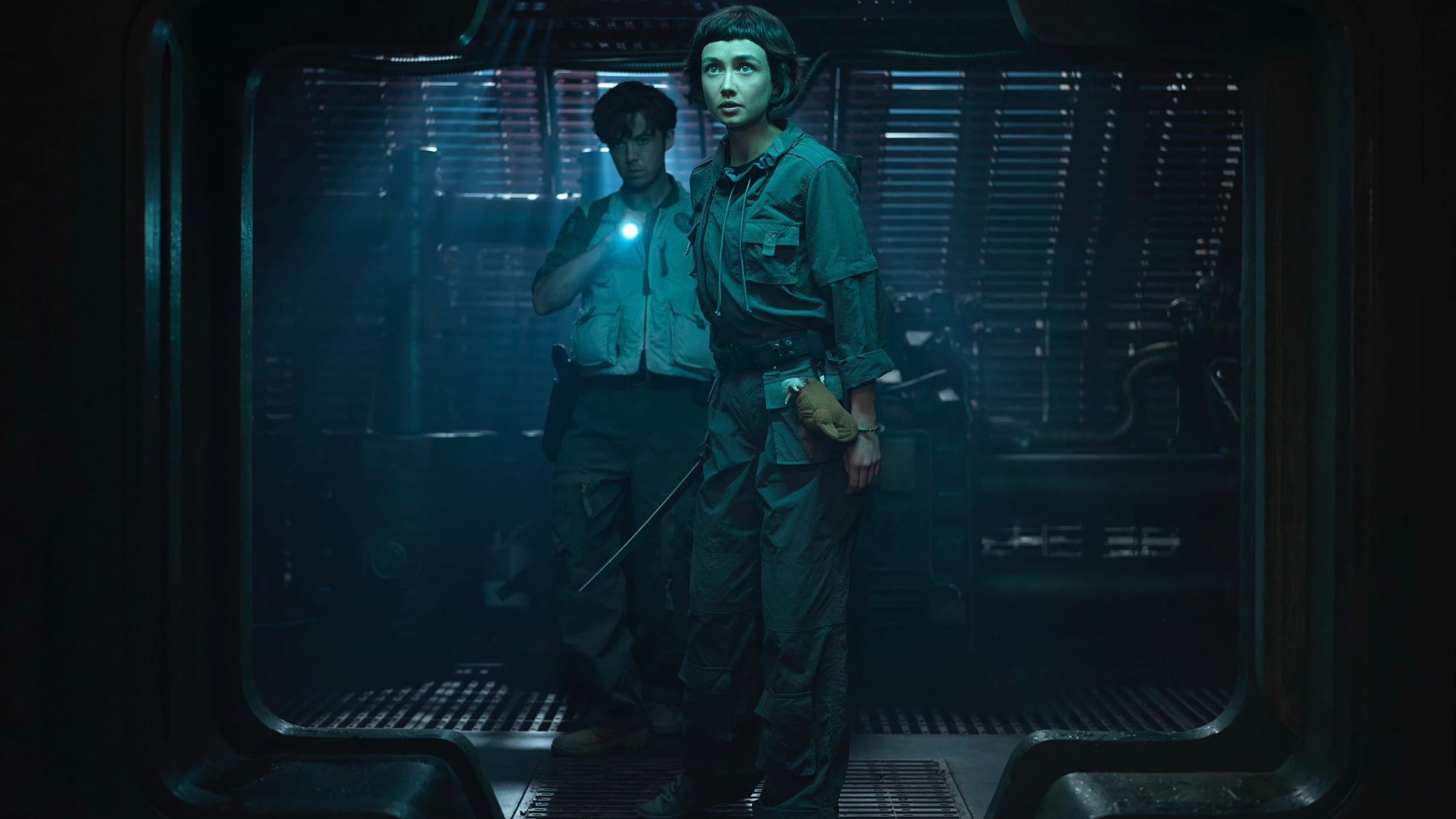
What I cannot fathom, however, is why Hermit—a grown man serving in the military, even if as a medic—wakes up after a Xenomorph attack amid a bloodbath and scattered entrails, casually examines a baseball with a blank face, reminisces, and in a subsequent scene shoves his face right up to a pulsating egg. I have no explanation, other than Alex Lawther forgetting that he wasn’t filming a new season of “The End of the F***ing World.” Honestly, James from that very series was precisely who I watched across both episodes—down to the character’s internal thoughts in “Alien” being voiced in an identical manner.
It is difficult to empathize with such characters. Why did the original “Alien” succeed so brilliantly back in 1979? There are many reasons, but among them was that the characters were adults, everyday working stiffs with whom the viewer could easily identify. Here, we get yet another batch of “superhumans,” albeit stunted ones, and the only prominent human—Hermit—lives up entirely to his moniker and is clad in plot armor so thick a Xenomorph would be jealous. Because of this, even the cliffhanger at the end of episode two falls flat: the audience has no doubt this guy is safe.
The “good” corporation
Nonetheless, not all of the cast invites doubt. Samuel Blenkin delivers a stellar performance as a young genius with an ego inflated to cosmic proportions. He is quirky, repulsive, and lives inside his own “brilliant” mental realm—which is likely exactly how he was conceived. The entire hybrid project exists merely so he can finally converse with someone smarter than himself. A human mind merged with Wendy’s synthetic brain could potentially offer that chance. To emphasize his hunger for knowledge, the creators even thrust the proverbial apple into his hands—after all, one cannot simply make an “Alien” project without a biblical reference.
When the “Maginot” crashes in Prodigy territory, Kavalier agrees to dispatch the hybrids to the wreck site to retrieve the “cargo.” While Wendy is driven by the desire to rescue her brother, Kavalier sees an opportunity to upstage Weyland-Yutani while putting the hybrids through their paces in field conditions. To him, they are not people, but an expensive experiment—and he treats them accordingly.
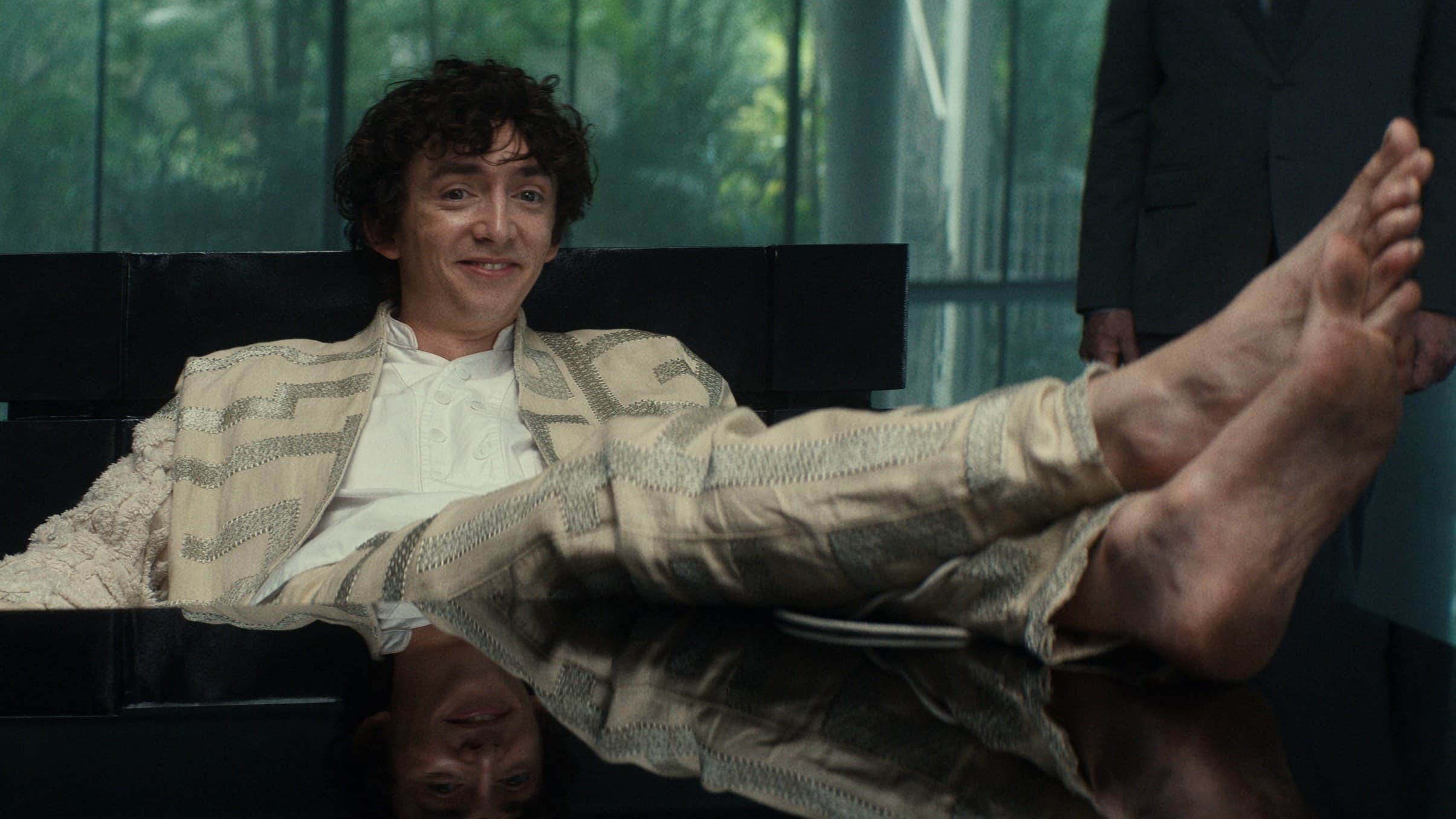
The show makes no secret of using Giger’s creation as a backdrop for a story about triumphant capitalism, where people are rescued based on the size of their income, and for reflections on transhumanism and human nature. Although, in truth, many would agree that the franchise has always been about just that. This is part of why the creators metaphorically contrast the synthetic Wendy, burning with human emotions, and Kavalier—a human stripped of conventional human feelings. And I am certain: this conflict will become one of the series’ cornerstones moving forward.
Other characters manage to spark interest as well: for instance, the synthetic Kirsh, portrayed by Timothy Olyphant, who serves as Wendy’s mentor and clearly knows more than he lets on; or cyborg Morrow representing Weyland-Yutani. They are intriguing to follow, if only out of curiosity regarding what comes next. Still, two episodes are too brief to judge them thoroughly.
“Alien” in the TikTok era
However, even if one sets aside logic and accepts the premise of children in adult bodies, fully immersing oneself in the atmosphere of sci-fi horror—or even action—remains elusive. Character logic is an important flaw in the early episodes, but far from the primary one. Far more troubling are the fragmented editing and narrative pacing.
On paper, all the elements for building tension are there: extraterrestrial beasts running amok, corporations conducting clandestine experiments, protagonists facing mortal danger. Yet time and again, the show squanders that tension through a series of missteps. No sooner does a scene gather momentum than the action is abruptly derailed by a flashback or a cut to another subplot. As our editor-in-chief aptly put it: “The editor was cutting Shorts or TikToks, and then was told to stitch them together”—and I couldn’t agree more.
For instance, right after the Xenomorph attack sequence, we are shown Wendy’s memory of hacking the security system, rewriting code to secretly signal her brother. Yes, this flashback establishes that Wendy has hacking skills, but its placement is so clumsy that it completely punctures the scene’s suspense. Every time tension builds, it gets deflated by jarringly shifting our focus.
Such jarring cuts occur constantly: rather than letting the action breathe and develop, the series wanders off into tangential musings or character flashbacks—sometimes loosely connected, or entirely disconnected, from what is happening on screen. Consequently, narrative cohesion suffers, splintering into disjointed fragments that prevent the viewer from becoming invested and emotionally engaged.
As a result, watching the first two episodes is… rather boring. Yes, exactly that: despite all the superficial hustle and bustle, there is virtually no internal tension because the rhythm is perpetually disjointed.
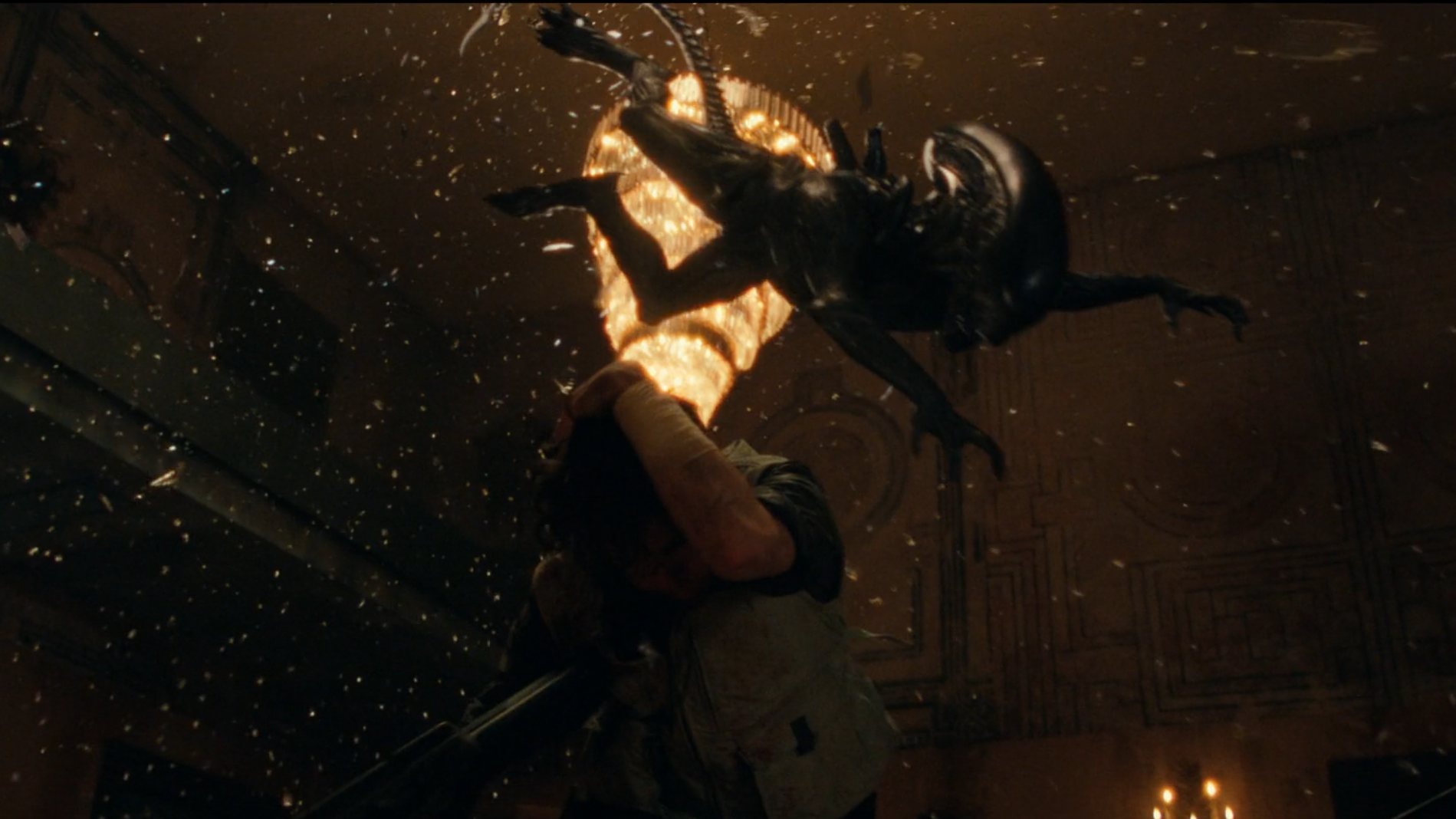
Moreover, across the combined 120 minutes of the first two episodes, the Xenomorph gets just under three minutes of screen time. Its appearances are staged masterfully, packing an impact and frequently nodding to the classics with dripping drool—leaving the viewer salivating in turn. Yet they remain far too sparse, and their effectiveness is undercut by the frequent scene-hopping mentioned earlier.
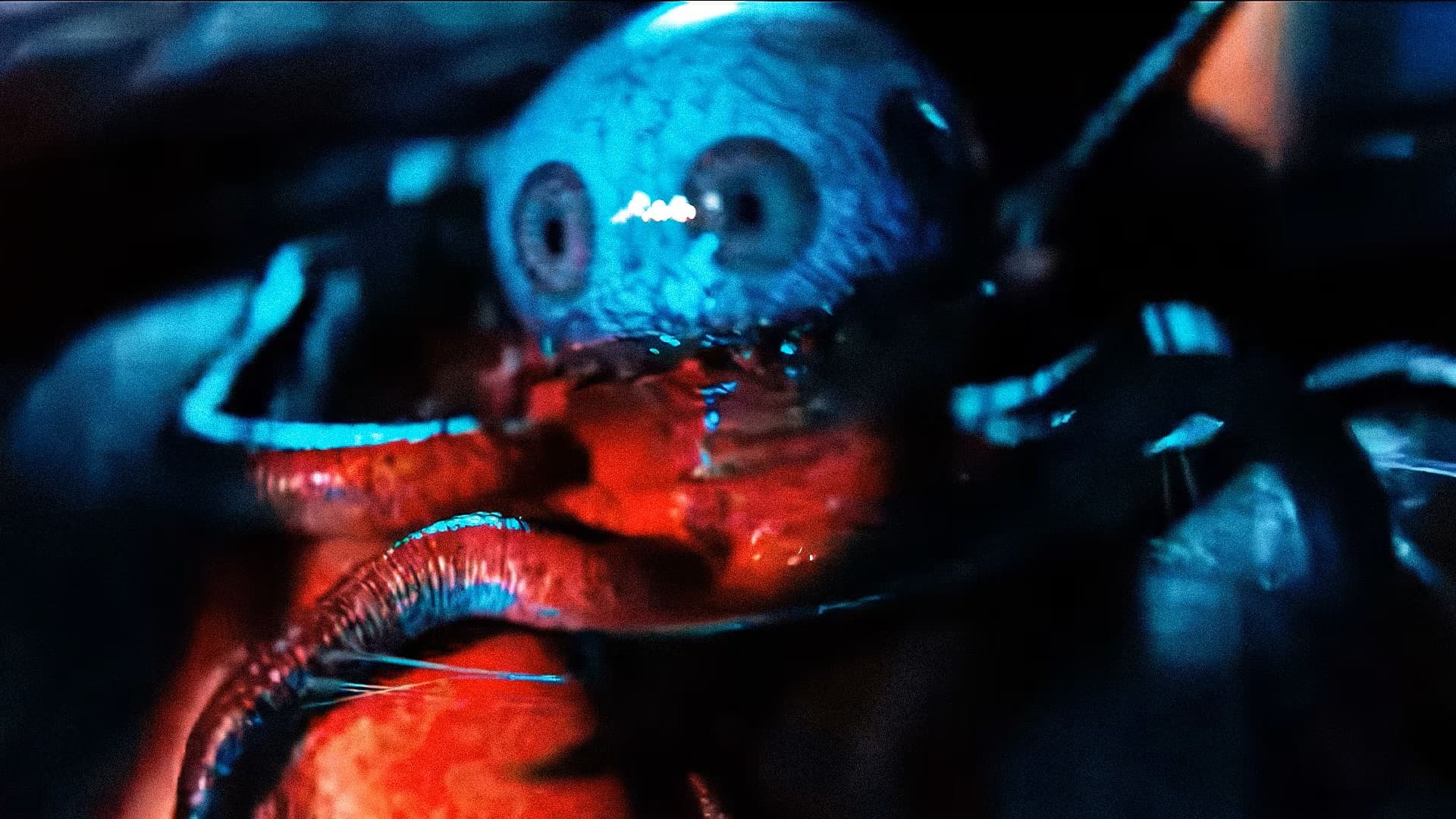
Meanwhile, the “entire zoo of lethal creatures from every corner of space” makes for a lackluster supporting act to the Xenomorph: some leeches, an octopus-eye, and other, even less distinct entities that inspire little fear, provoking instead an urge to grab a shoe and swat the pest.
Still, I wouldn’t be myself if I didn’t dust off my devil’s advocate robe and attempt to defend this as well. So, folks, I have good news: all is not lost.
Praise or condemn
To begin with, it is worth remembering that “Alien: Earth” is first and foremost a television series, and so far we have seen only two episodes. For a project rumored to be planned for five seasons (worry not, Hawley will tackle season six of “Fargo” right after season two of “Alien”), spending two episodes on exposition and planting Chekhov’s guns for future payoffs is par for the course.
Take the Prodigy system hacking scene, for example, which hints that Wendy will eventually use this skill against her creator. Or the moment with the scorpion and Kirsh, which virtually screams that at some point Wendy’s hand will hesitate over a Xenomorph or another creature “outside its natural habitat.” These scenes are clear and meaningful—they exist so viewers have fewer questions down the road. The first two episodes map out numerous arcs and conflicts, planting enough foreshadowing devices to fill an entire article.
Yet it is executed rather clumsily. The writers clearly try to pack too much into the opening two episodes instead of zeroing in on the essentials—grabbing the viewer by the collar, dragging them into a dark corner of sci-fi horror, and only then, after pinning them against the wall in a tight spaceship corridor, expanding into other storylines.
Ultimately, due to this disjointed structure and an eagerness to be everywhere at once, “Alien: Earth” risks alienating the very audience that tuned in hoping to see a fresh take on Giger’s creation.
This brings us back to the phrase in the subheading: praise or condemn. Where to cast judgment is still premature to say. Right now, the show is just as easy to criticize as it is to defend by noting that “things are only getting started.” Either way, it possesses every opportunity to right its course and avert disaster, but it also runs the risk of blowing the ship to smithereens.
Diagnosis
After two episodes, “Alien: Earth” leaves mixed impressions. On one hand, it is an intriguing attempt to expand the boundaries of a familiar universe: featuring social satire, corporate warfare, ethical experiments, and ties to classic films through careful—at times overly literal—callbacks. On the other hand, the viewing experience is not yet particularly engaging: erratic pacing, fragmented editing, and shortsighted character choices make watching somewhat of a chore in places.
Yes, this might simply be the warm-up—a prologue to a grander canvas—and what lies ahead could be a compelling story with a measured delivery of horror, action, and substance. For now, “Alien: Earth” wins points on concept, but fails to connect on an emotional level. One hopes its potential will unfold: that the corporate clash will ignite in full force, the Xenomorphs will grow ravenous, and the hybrid children will quickly mature and wise up under extreme circumstances.
Whether this remains a farce along the lines of “kids versus aliens and evil suits” or whether “Alien” finds its footing, we will determine in our full review once the season wraps up.
***
All image rights in this material belong to 20th Television / FX Productions. IXBT Games uses them strictly for informational and analytical purposes and claims no ownership over them.
Never miss our newsAdd this site to your preferred sources to see us more oftenAdd on Google