Lazy Return of DOOM Magic. Review of Heretic + Hexen Re-release
Nightdive Studios has once again confirmed its status as the main guardian of retro classics. At the recent QuakeCon, the studio resurrected two shooters from the golden age of the 90s at once - Heretic and Hexen from Raven Software. The re-release is a great opportunity to see how well the "magical" descendants of DOOM have aged and whether the changes made are enough to breathe new life into them.
DOOM Magic
If Fallout 3 was once dubbed "Oblivion with guns," then Heretic and Hexen have firmly established themselves in gaming folklore as "DOOM with magic." Especially Heretic - it would fit perfectly into that scene from "Scooby-Doo" where the mysterious monster's mask is torn off, and underneath it is... a doomguy.
In the mid-90s, on the wave of DOOM's success, Raven Software, on the advice of comrade John Carmack from id Software, decided to transfer the formula of the classic first-person shooter to a dark fantasy setting.
Thus, on December 23, 1994, Heretic appeared - a game that is considered the founder of the fantasy shooter genre. Formally, this is not entirely true: Raven had already released ShadowCaster before it. But today is not about it.
In Heretic, the player takes on the role of an elf named Corvus, a representative of the Sidhe race. The world is gripped by the tyranny of the Serpent Riders, who have enslaved humanity. The youngest of them - D'Sparil - remained to rule the conquered lands.
He tried to subdue the elves, but failed and in revenge declared them heretics. A massacre began, and most of the race was destroyed. Corvus is one of the few survivors, and now he embarks on a deadly campaign to avenge and end D'Sparil's tyranny.
The plot was not a strong point of early shooters: the setup served only as a pretext for the upcoming carnage. Heretic, which inherited the DOOM formula almost entirely, was no exception. It's still the same fast-paced first-person shooter with keys, secrets, enemies, and traps, only transferred to a dark fantasy world. However, Raven went further and added a few touches that made the game not just a "magical copy," but a neat evolution of the classic formula.
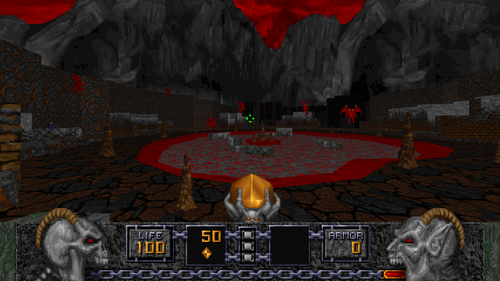
One of the key innovations of Heretic was the inventory system: now the player could not only pick up consumables, but also use them at the right moment. Healing potions, spheres of invisibility and invulnerability, torches for lighting dark halls, an egg that turns enemies into chickens, and even "Wings of Wrath" that allow you to soar into the air for a short time - for the mid-nineties, this seemed like unthinkable luxury. No less significant breakthrough was the ability to aim not only horizontally, but also up and down: Heretic was one of the first shooters with such a mechanic.
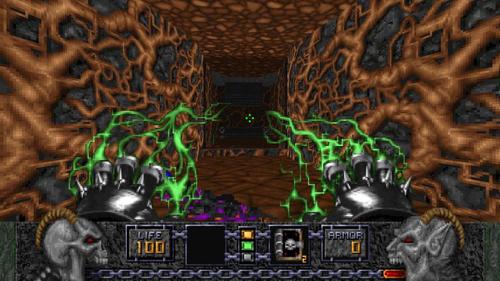
The arsenal as a whole was a magically rethought analogue of weapons from Doom: the staff replaced the fist, the ethereal crossbow and the Phoenix Rod took the place of the shotgun and rocket launcher. At the same time, a special consumable - the "Tome of Power" - allowed you to activate an alternative firing mode. With it, the Phoenix Rod turned into a flamethrower, and the necromancer's gloves - the local analogue of the chainsaw - not only shocked with electricity, but also restored health through vampirism.
In terms of structure, the levels in Heretic did not differ as much from DOOM as it might seem, but thanks to the change of scenery, they created a feeling of greater freedom and variety compared to their science fiction predecessor. In addition, Raven added a couple of touches to interactivity - for example, water surfaces received a flow effect that could carry the character away. However, the real experiment with the DOOM formula happened a year later - with the release of Hexen: Beyond Heretic.
"Soulslike" Before It Was Known
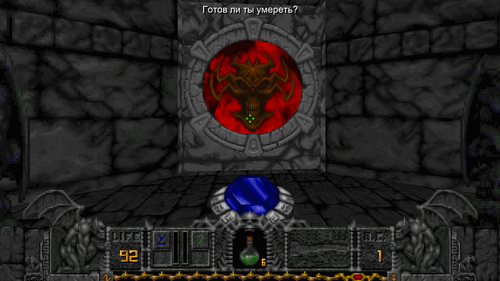
Hexen was released on October 30, 1995, and became an even more decisive step for Raven away from the usual Doom formula. The plot transferred players to a new world under the rule of the second Serpent Rider - Korax, and the game itself, while retaining the dark fantasy setting, offered a number of changes that allowed it to acquire its own identity.
Hexen introduced a system of three classes: mage, warrior, and cleric, each of which differed in characteristics, weapons, and a set of consumables, representing a completely different style of play.
In addition, Hexen became one of the first shooters to implement a full-fledged jump - an innovation that opened the way to vertical level design. Along with it, nonlinearity came into the game: unlike Heretic, the campaign here was built around a system of hubs connecting several interconnected levels.
Raven seriously upgraded the id Tech 1 engine, thanks to which Hexen introduced full-fledged moving objects. When levers were activated, levels could be rebuilt: stairs were erected, the floor collapsed - for the mid-90s, this was new. And what an impression the stained glass window shattering into dozens of fragments made - one can only imagine.
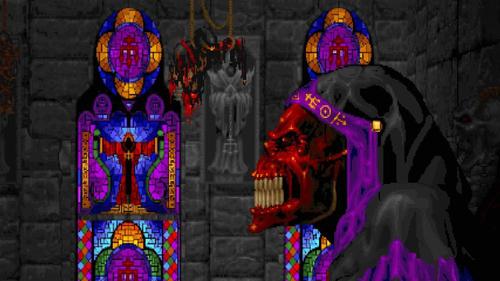
All this together allowed developers to create more complex level architecture with secret mechanisms, secrets, and puzzles. In spirit, it resembled a metroidvania - or, if you look at it from the perspective of today's player, an exemplary "soulslike," especially when playing as a slower warrior.
However, the main feature of Hexen - the complexity of the levels - simultaneously became the most frequent object of criticism. A lever on one end of the map could open a passage on the other, and the game didn't even try to explain where to go and what to do next.
In addition, exits were often hidden behind moving walls that did not stand out against the background of the environment. The player had to engage in pixel hunting: rummage along the walls and endlessly press the interaction button. Such a heavy structure broke the pace - instead of the expected drive from a fun monster slicing to music, the player received a protracted run, causing frustration.
And yet, Hexen became not just a step forward for shooters, but also a step to the side - into the area of more "thoughtful" gameplay, requiring attentiveness and patience from the player.
Now that we have delved a little into the context of these games, it's time to look at what Nightdive Studios has done so that the modern gamer doesn't feel excruciatingly painful - and what, alas, it didn't do.
Not a Remaster at All
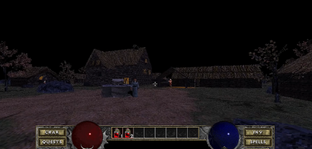
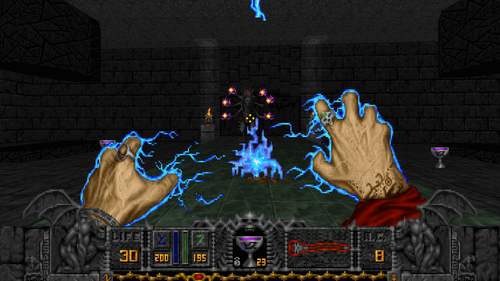
I'll start with an important clarification: we are not looking at a remaster (at least at the level of System Shock 2), but a technical re-release for modern platforms. These are still the same dark pixel worlds - only now with an acceptable FPS (in my case - 144), an official Russian translation (albeit with default fonts), increased resolution, gamepad support, quick saves, multiplayer, and remixes of the cult soundtrack from the icon of boomer shooters - Andrew Hulshult.
In addition, the collection includes new episodes - Heretic: Faith Renewed and Hexen: Vestiges of Grandeur. They do not claim to be full-fledged sequels, but offer a generous portion of content for those who, after completing the main campaigns and the Hexen: Deathkings of the Dark Citadel add-on, want a little more Heretic and Hexen. And most importantly - all this is available on any current platform: from PlayStation 4 and Nintendo Switch to PC. But is this enough to pay attention to Heretic and Hexen in 2025?
By and large - yes. Nightdive has something to praise, but there were also several reasons to throw a stone at their garden. The re-release really allows you to join these games without unnecessary hassle and dancing with a tambourine: press the "Buy" button - and after five minutes (depending on the download speed) you can play.
However, even within the framework of modest technical improvements, not everything is smooth. From time to time there is flickering of textures, and some of them become completely black at a certain angle. Sometimes you literally have to go by touch, hoping not to stumble upon a trap or fall into the abyss. Fortunately, quick saves come to the rescue.
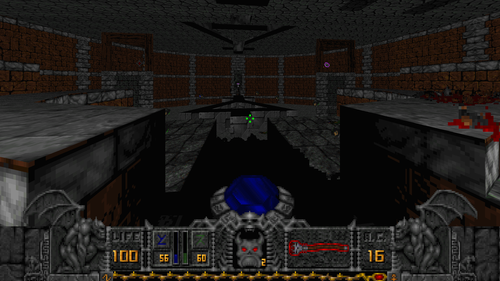
With the support of gamepads, the collection also has a full-fledged camera view - as in modern projects. True, there is no desire to look up once again: the geometry of the levels was not originally designed for such liberties and is noticeably distorted if the view goes beyond what Raven had in mind.
However, I, as a person who does not recognize a keyboard as a gaming device, was much more upset by the complete inoperability of vibration on the gamepad. It seems to be declared and even configured - but if you make one shot, the vibration feedback can continue indefinitely. The problem consistently occurs when playing over a wireless connection, and only completely disabling vibration in the settings saves. When connected by wire, vibration does not work at all.
Of course, you can get more "technological" versions of these games if you go through all the circles of hell of fan remasters, mods, reshades, and voxel retextures. But beautiful graphics are the last thing people turn to retro shooters for today. The lack of modern gloss does not at all interfere with enjoying the game, and the technical flaws of Nightdive, we hope, will still be corrected. Moreover, the studio has invested its main efforts in improving the user's "quality of life."
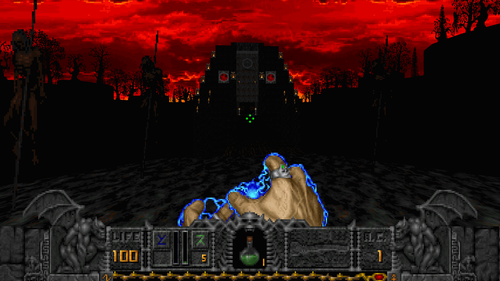
The updated map now marks key objects and indicates nearby points of interest. It does not completely get rid of running around and pixel hunting, but in Heretic it reduces them exactly enough so that the game maintains a confident pace from beginning to end. The classic Doom formula in a fantasy shell has survived the years with dignity and still brings pleasure - even despite the complete lack of events and the meager variety of scenery.
In Hexen, the marks on the map help even more - but the chains of puzzles with levers, activators, and item searches still make you run around a lot. Nightdive has made minor changes to the level design to make important objects more visible, but, I confess, several times I still resorted to "Google" to understand what they wanted from me. Most often, the reason turned out to be banal: I did not notice the switch among the textures or passed by another moving wall.
Nevertheless, the complexity of Hexen's levels still makes the game a more "viscous" experience, and only the new episode Vestiges of Grandeur in structure and pace is close to Heretic, offering more concentrated and verified gameplay in terms of dynamics. Nevertheless, according to the overall impression, Heretic - although older and less technological - pleased me much more, including thanks to a more diverse arsenal.
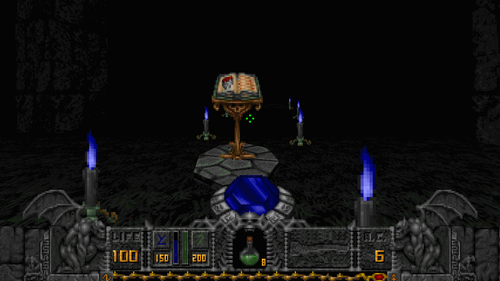
The division into classes in Hexen resulted in each having only four types of weapons - half as many as in Heretic. In the re-release, only the cleric received replenishment: in addition to the mace, he was given a shield, allowing him to feel like a doomguy from Doom: The Dark Ages - the shield not only blocks part of the damage, but also reflects flying projectiles.
In addition, Nightdive kindly added the ability to change the character class right in the middle of the playthrough. This adds some variety, but does not solve the problem if you only like one style of play.
At the same time, adherents of the "old school" can disable all these innovations and play the classic versions. But who might need this, except for the most devoted fans who oppose "casualization," I don't know. In my opinion, the balance and cosmetic changes only benefited: they added a little more overall dynamics, which, although not radically, still affected the perception of both games for the better.
Diagnosis
How successful was the re-release? In my opinion, Nightdive did not do as well as it could have. The studio has preserved the atmosphere and spirit of the originals, implementing the necessary minimum of improvements and useful functions sufficient for a comfortable game today, and supplemented all this with new content. However, technical shortcomings and the absence of truly fundamental changes do not allow us to confidently recommend these games to a wide audience. Like most retro shooters, this is still entertainment "for amateurs."
In their current form, Heretic and Hexen in 2025 are more like museum exhibits and an important chapter in the history of the genre, which should be addressed exclusively for "educational" or "nostalgic" purposes. These games require a large discount for age, since archaic elements still stick out through modern patches. Today, even retro shooters are trying to evolve, and Heretic and Hexen have remained true to themselves - with all the ensuing pros and cons.
***
The rights to all images in the material belong to Bethesda Softworks / id Software / Nightdive Studios. IXBT Games uses them exclusively for informational and analytical purposes and does not claim to own them.
Never miss our newsAdd this site to your preferred sources to see us more oftenAdd on Google