Everyone Hates "Return to Silent Hill," But Should They? Why the Year's Flop Deserves a Chance
Return with an "Asterisk"
"Return to Silent Hill" is, as we can now say for sure, a loose adaptation of Konami's cult psychological horror Silent Hill 2.
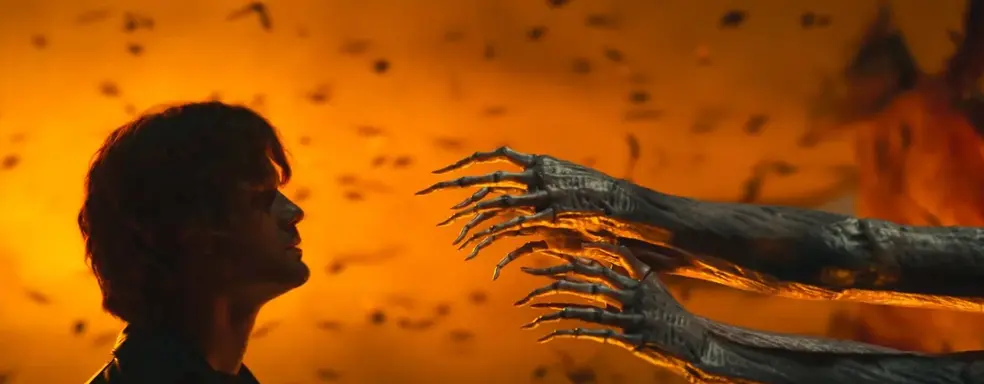
The film tells the story of a desperate man named James, who cannot come to terms with the loss of his fiancée Mary and gradually sinks into self-destruction. At one point, he receives a letter from her asking him to return to their "favorite place" — the foggy town of Silent Hill. Without bothering with questions, the hero goes there in the hope of finding her, but instead of answers, he finds himself in a distorted, nightmarish space that resembles an embodiment of hell on earth. With a constantly mutating reality and obscure creatures of nauseating appearance.
All of the above is a simplified synopsis for the most uninitiated readers and potential viewers. I will not analyze the symbolism and meanings of the original work: too much has been written about it in the past twenty years, and it will simply not be needed for further discussion. References and hints, of course, will be made, but they are addressed to longtime fans and should not spoil the impression for those who are getting acquainted with this story for the first time.

This is not the first attempt to bring the world of Silent Hill to the screen. Previously, two film adaptations based on the games in the series have already been released. We will not analyze the unequivocally failed "Silent Hill 2" (2012) today: the film is not related to the game of the same name or its themes, and its dubious "merits" can only be attributed to the fact that the film effectively put an end to the development of the film franchise.
But for the director of the first film adaptation — Christophe Gans — "Silent Hill" (2006) was not just an attempt to bring the game to the screen, but an independent author's statement. Over time, the film gained cult status, despite the controversial reception. At the same time, Gans himself never hid the fact that he wanted to film the second part as well, but in the mid-2000s he considered this task impossible — both in form and in the level of psychological depth of the material.
Filming Silent Hill 2 is generally a task with an "asterisk." This is a story built on understatement, personal interpretation, and — not least — on interactive experience. Transferring it to the format of a feature film means agreeing in advance to the loss of some of the meanings, rhythm, and internal tension. The only question was: at what cost?

The Human Factor
If you temporarily throw out scary words like "film adaptation" and "original source" from the dictionary, it becomes clear that we are facing a film with much more prosaic problems. Even at the casting stage and the first promotional materials, the central duo — Jeremy Irvine and Hannah Emily Anderson — managed to be labeled as anything from cosplay fashion shows to porn parodies, but not as a film adaptation of Silent Hill 2. The situation only worsened with the release.
The acting duo — starting with the costumes and ending with a string of scenes — never finds either screen chemistry or credibility.
Their romance looks contrived and artificial, as if some shadowy puppeteer is pulling the strings. The only problem is that, according to the plot, these relationships should be perceived as genuine. It's simply hard for the viewer to believe in them.

As a result, the central dramatic connection of the film does not receive the necessary weight. It is clear that we are being shown a tragic story of love, guilt, and loss, but it is hardly felt on an emotional level. And without this, the whole structure begins to falter.
James spends most of the time alone, but even in the deserted foggy town, Irvine cannot find space for a full-fledged realization of the role. His character seems to be conceived as tragic, but at the same time remains strikingly empty.
James moves through the plot in observer mode, almost not reacting emotionally to the nightmare unfolding around him. Only a couple of scenes in the whole film remind us that we are dealing with a living actor, and not a conditional avatar from a video game, where such detachment was justified.

When it comes to minor characters, outright discord begins. The figures, names, and interpretations thereof are well known to longtime fans, but look like a set of strange cameos to the casual viewer. They appear suddenly, throw a couple of clumsy lines, and disappear just as tracelessly, without gaining either dramatic weight or a coherent function.
Obviously, this is a conscious move. The characters are subjected to severe compression: the authors cut off their personal stories and conflicts, compressing the psychological material into one central image, and in some cases throwing it overboard altogether. As, for example, in the case of Eddie Dombrowski, who is simply not in the film.
The film seems to assume that the viewer already knows why these characters exist and what is behind them. As a result, "Return to Silent Hill" is constantly winking at those who are "in the know," but at the same time leaves other viewers in a state of confusion.
However, the film's problems are not limited to this. There are far more complaints about how exactly "Return" is assembled and implemented at the level of directing and editing.

Format vs. Canon
Structurally, Christophe Gans actively uses flashbacks. Every few scenes, the action is interrupted by James's memories of his life with Mary before the tragedy. These sketches perform a very specific task: they should enrich the story with context, explain what is happening on the screen, and connect disparate elements of the narrative into a more coherent picture.
Thus, Gans works out one of the long-standing fan theories, while helping the uninitiated viewer to find at least some ground under their feet. And bringing orthodox fans to another tantrum because of the encroachment on the sacred canon.
The irony here is not for mockery. I myself am a big fan of Silent Hill and far from the only one for whom the second part remains a favorite. But at the same time, it is important to remember the obvious thing: films are made not only for gamers, and the language of cinema by definition works differently. What can exist in interactive form is not always possible to transfer to a linear narrative without changes.
Moreover, even if you put this plot into the format of a mini-series, there is no guarantee that the story could do without transformations and still remain workable. Compromises are inevitable here — the only question is which of them turn out to be justified, and which begin to work against the film.

The main sin of flashbacks is that they systematically prevent the film from becoming a real horror. Almost every time, memories arise in the midst of tense scenes, interrupting the brewing suspense with bright, mostly romantic fragments from the past.
As a result, such insertions do not allow either the viewer or the actors to properly experience the emotions in the moment. Rarer but longer flashbacks that would provide context without releasing the tension before it has time to form are what this film needs.
The situation is exacerbated by production constraints. The film was allocated about $23 million; for comparison, the first "Silent Hill" twenty years ago cost twice as much.
Gans again uses dancers and acrobats to give the monsters supernatural plasticity, but there are fewer practical effects here than one would like. Soapy computer graphics are often masked by darkness, fog, sharp editing, and the aggressive light of a flashlight, which James for some reason regularly directs straight into the viewer's eyes.
Sometimes these techniques work, but more often they reveal an attempt to hide a lack of resources, rather than enhance the atmosphere. In some scenes, the camera gets too close to the creatures, destroying the illusion and reminding us that we are not looking at a monster, but a person in a costume.

However, here we need to scold the producers who allocated a budget for the adaptation of the cult game at the level of a passable genre horror, rather than Gans himself. For this money, he at least made something coherent, and some iconic images—including Pyramid Head and Abstract Daddy—are implemented really well. Although, of course, the nurses have seen better days—in the same 2006 film.
Against this background, it is especially noticeable that one element of the picture holds the bar more stable than the others. Akira Yamaoka's music works flawlessly and literally pulls out the atmosphere of "Return to Silent Hill" in certain moments. The soundtrack not only acts as a nostalgic anchor, reminding us of the legacy to which the film appeals. It serves as an emotional crutch for scenes where acting, visuals, and staging fall short.
So, is the film not worth watching at all if almost every element works with reservations—or doesn't work at all? And here the answer is not so clear-cut.

Who Should Watch "Return to Silent Hill" and Why
During and after watching "Return to Silent Hill," I went from hatred and irritation to acceptance—and I am ready to admit that, with all its flaws and compromises, this film has the right to exist. At least as a story based on motives.
In the process of reflection, I discovered in myself several "types of viewers" who are waging an internal struggle for their attitude to the picture. Therefore, instead of a formal final conclusion, I decided to reflect on who might actually find it useful to pay attention to it, and who should avoid it by a mile.
Orthodox fans of Silent Hill 2, waiting for a frame-by-frame adaptation and extremely careful handling of the symbolism and understatement of the original, the film is almost certainly not suitable. As an adaptation, it really fails: it simplifies the material, shifts the emphasis, and deprives the story of a significant part of its psychological depth. In this case, it is wiser to simply replay the game than to experience irritation from someone else's interpretation. It is only important to remember that the original does not disappear anywhere: "Return to Silent Hill" does not replace or cancel it, but offers only another—albeit controversial—view from the outside.

Silent Hill fans with flexible expectations may like the film much more. If you do not require an exact reconstruction of Silent Hill 2 and accept the author's interpretation, "Return to Silent Hill" will still have something to catch on to. The picture generously scatters fan service, reproducing familiar places, scenes, and angles almost frame by frame—from the architecture of the city to individual visual motifs and monsters.
If you perceive "Return" not as a retelling or replacement of the original, but as another fan view—you may not want to run to the cinema. But waiting for a digital release and spending an evening behind such a peculiar return to the foggy city through someone else's optics is a quite reasonable scenario.

For fans of Christoph Gans' first "Silent Hill", the new work may seem like a logical and organic continuation. With all the director's flaws, he can hardly be accused of soulless copying or cynical parasitizing on the brand. Rather, on the contrary—Gans wanted to invest too much from himself and sometimes went too far, but he did it out of sincere love for the material. His interpretation of Silent Hill 2 directly continues the approach of the 2006 film. Moreover, the viewer unfamiliar with the original will find several truly unexpected and shocking revelations.

A random viewer who is not familiar with either the games or the previous film adaptations may find the film a strange experiment at the intersection of psychological horror and romantic drama, but not necessarily disappointing. Yes, many details and characters look fragmented, and the logic of what is happening sometimes noticeably floats. But "Return" at least tries to tell a non-template story that does not boil down to a standard set of horror clichés. After all, there are almost no direct analogues of Silent Hill in cinema—unless, of course, you look for connections where they do not exist.
In an era when horrors reproduce the same techniques in a circle, the viewer is increasingly clinging not to the impeccable performance, but to the very attempt to tell something differently. Let it be uneven, let it be with reservations, but without the feeling that you are looking at another product assembled according to the textbook. Sometimes this is already enough to make you at least want to watch the film to the end.
And if it happens that "Return to Silent Hill" awakens interest in the original game—which will always be head and shoulders above any film adaptation and not so long ago received a successful remake from Bloober Team—this will already be a small victory.

Never miss our newsAdd this site to your preferred sources to see us more oftenAdd on Google