Quarantine Zone: The Last Check Review. Zombies, Viruses, and Other Delights of a Domestic Checkpoint Simulator
The Best and Only Employee
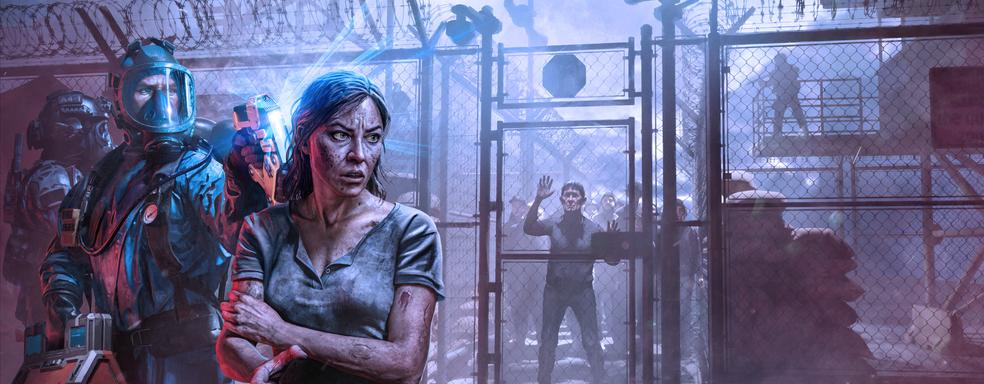
Looking at the game's page, you might think it's a checkpoint employee simulator. Formally, it is. Groups of people who survived the zombie apocalypse are sent to a military base where they are to be sorted. The player's task is to check each survivor for the virus. If you miss signs of infection, the patient will attack the others, which will lead to a monetary fine and a bad ending.
If a survivor is found to have an unknown disease, he must be sent to the laboratory. The employees standing at the laboratory exist for beauty — the player will have to cut out organs and study them himself. If you put a zombie in the laboratory, you will have to carry bodies to it: without food, the unfortunate zombie will die in a day.

As you progress, it becomes clear that only you and the man who pulls contraband out of the survivors work in the entire camp. Every morning the authorities give tasks: identify a special survivor; find the right contraband; get rid of rats; hunt zombies. Successful completion of tasks is rewarded with a decent amount of money.
Money is needed to buy base improvements. You will have to make sure that everyone has enough of everything, and regularly buy food and medicine. The entire base is supported by only one generator. If it breaks down, the player will have to deal with it himself. If a survivor does not have enough resources or space, he will die, and the authorities will issue you a fine.
An horde of zombies attacks the camp strictly on schedule. The horde includes ordinary, tenacious, and very tenacious zombies. You need to shoot back with the help of a drone, on which craftsmen hung three powerful guns. While one is reloading, you have to switch to others. Closer to the end, the authorities will reward you with the ability to launch air strikes. The process of shooting the horde is so fast and simple that it is almost impossible to lose here.
Show Me Your Ailments
The main occupation of the protagonist remains the examination of survivors. Diseases identified during the examination are divided into three categories:
- Safe. You can safely send them to the block of survivors;
- Dangerous. Such a survivor should be sent to quarantine to monitor the development of the disease;
- Signs of a zombie virus. The survivor will soon turn, and he can be sent to be shot with a clear conscience.
In quarantine, all potentially infected are crammed into one room. If at least one turns, he will kill the rest. For some reason, the military did not think to separate the detainees. From quarantine, a zombie can be transferred to a laboratory and receive impressive bonuses for its evacuation. But if you try to put a guaranteed infected person in quarantine, all the survivors sent there with suspicion will definitely die.

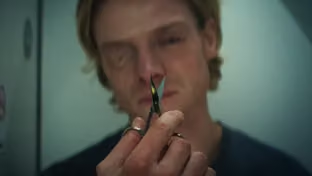
In the initial stages, you will have to identify the disease by external signs. You need to pay attention to the color of the eyes and skin. Check for bruises, injuries, or spots on the body. Many survivors are infected with herpes — it's scary to even imagine what they were doing before they got to the camp.
Over time, the virus will begin to evolve, and with it, the methods of detection. The player will be provided with devices for measuring temperature and pulse, checking reflexes, and listening to breathing. Survivors will start coughing or grabbing their stomachs, which will help you choose the right device. If you improve the frame at the entrance, it will begin to react to diseases and smuggled contraband.

At a certain point, the game gives out a syringe that is guaranteed to identify the infected. Syringes are given in exchange for "donating" survivors and zombies in the name of science, which makes them rare — they should be used when the choice becomes too difficult. I started filling the quarantine to capacity, and the next day I checked the detainees. After that, I memorized the results, restarted the day, and got all the syringes back.
For high-quality examinations and donations for scientific purposes, research points are awarded. They are needed to discover new improvements and upgrade tools. Most tools can be left as they are — why buy an increase in damage with a hammer on a zombie if a zombie can simply be shot?
Bugs and Flaws
Most often, bugs and flaws are found when completing tasks — the right person or item may not appear. In one of the tasks, the father wants to see his infected son. I sent my son for experiments, but the game reported that the father allegedly saw the guards getting rid of him.

The results of the examinations vary greatly. You can do everything with special care and still get a bad grade. Discussions write that the game sometimes does not load individual signs.
After receiving the pistol, zombies begin to appear on the territory of the camp. They walk around calmly and do not touch anyone until the soldiers kill them. But as soon as they notice the protagonist, they immediately rush to attack.
After each restart, the game spontaneously changed the voice acting language from English to Russian.
Verdict
Quarantine Zone: The Last Check has an excellent foundation. The part where you need to thoroughly study each survivor is really fascinating. You control people's destinies and are responsible for every failure.
But the developers have spread their attention too much on additional mechanics. Shooting the horde of zombies, feeding the zombies, and half of the mechanics for improving and maintaining the camp feel superfluous. There are so many minor tasks that by the end you lose the desire to do the main ones.
Never miss our newsAdd this site to your preferred sources to see us more oftenAdd on Google

![[STREAM] Ultimate Version - Cyberpunk 2077 Update 2.5](https://media.ixbt.games/fit-in/312x/ixbt-data/1730178/b6ca9a8e-de42-4e9a-b1aa-df5e519a7449.jpg)