Ace Combat 8: Wings of Theve Review - More Than "Call of Duty with Planes"
Translated with AI from the Russian original.
The Worst Pilot Candidate
Let me start with a confession: I am practically unfamiliar with the Ace Combat series. In the early 2000s, I launched something similar on the first PlayStation, but after so many years, I can't be sure it was exactly that. Back then, we played whatever we could get our hands on. However, my subsequent relationship with virtual aviation is much better etched in my memory – primarily due to choice expletives.
In my conscious age, every mandatory flight mission in another GTA or Far Cry made me want to return to solid ground as quickly as possible. As soon as I took to the air, I lost my spatial orientation. This helplessness seemed as inexplicable as my problems with animal bosses in hardcore action games: you understand what is required of you, but in practice, you often rely on Lady Luck.
Therefore, when the editor-in-chief suggested I take on the review of Ace Combat 8: Wings of Theve, I honestly warned him about my questionable flying qualifications. I was somewhat reassured by a definition of the series I'd heard somewhere: “Call of Duty with planes.” My imagination immediately conjured up a simple action game for a couple of evenings: you fly, you shoot, you admire explosions, and from time to time, you watch spectacular cutscenes. “I'll manage Call of Duty with planes somehow,” I thought, and pressed the “Play” button.
To my surprise, I had to revise both notions immediately. Virtual aviation turned out to be quite comfortable even for a clumsy pilot like me, and behind the cinematic facade, I discovered a deep and exciting game where you want to learn, understand, and get better. And it all started with meeting a legendary ace who never shot down anyone in his entire career.
Japanese “Top Gun” with Phantom Pain
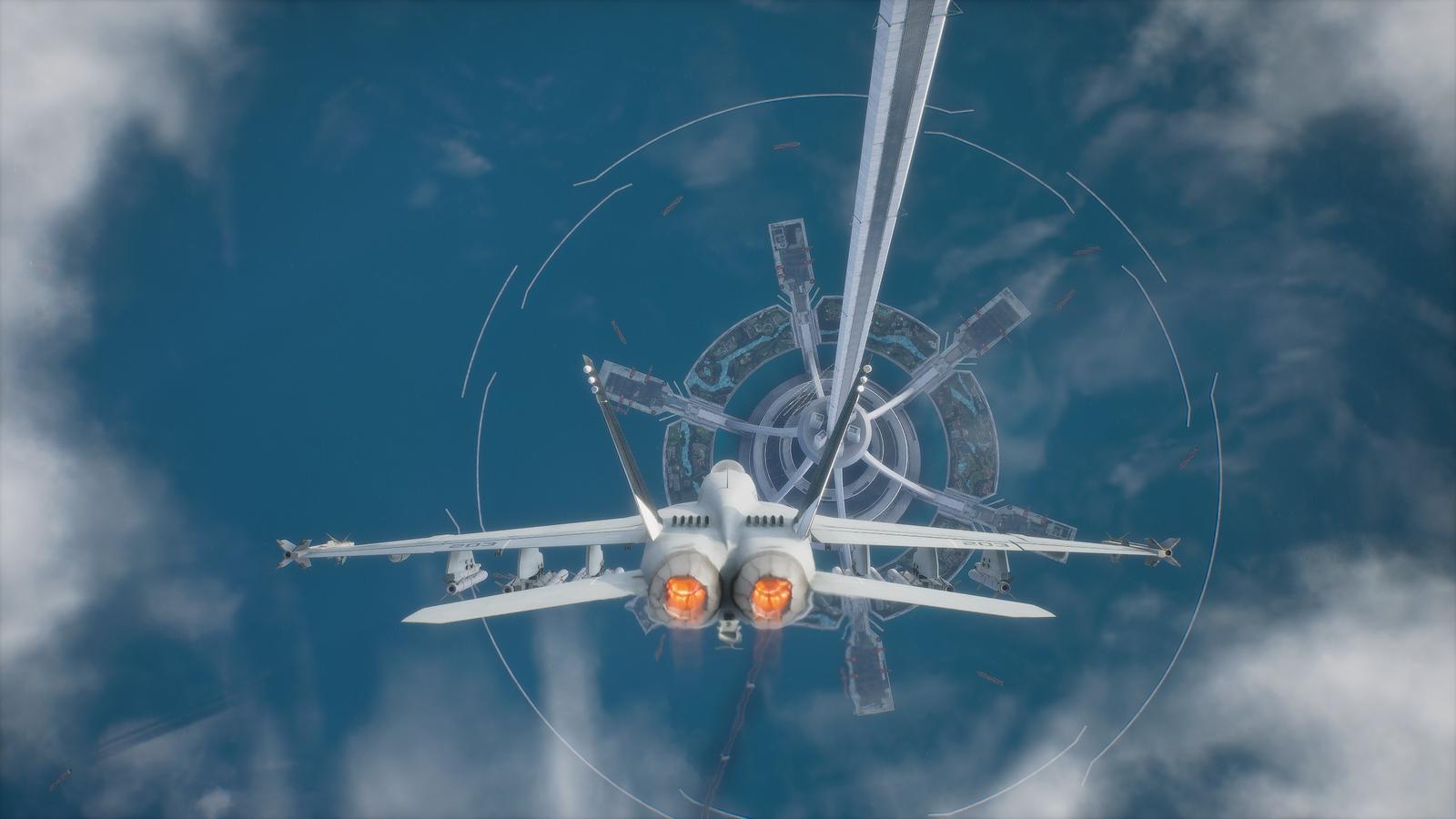
The events of Wings of Theve begin ten years after Ace Combat 7, when the Republic of Sotoa treacherously invades the territory of the Central Usean Federation. If these names mean nothing to you, that's fine: the series takes place in Strangereal – a fictional world with its own states and technologies. Familiar fighters coexist here with huge ground battleships armed with railguns, laser cannons strike from orbit, and a giant space elevator stretches to the clouds.
Against this military-fantasy backdrop unfolds a drama best described as “Top Gun: Maverick” directed by the Japanese, with an eye towards the ideas of Metal Gear Solid – specifically, Guns of the Patriots and The Phantom Pain. There's room here for social media disinformation, military economics, and the creation of heroes through propaganda. We are to become one such hero.
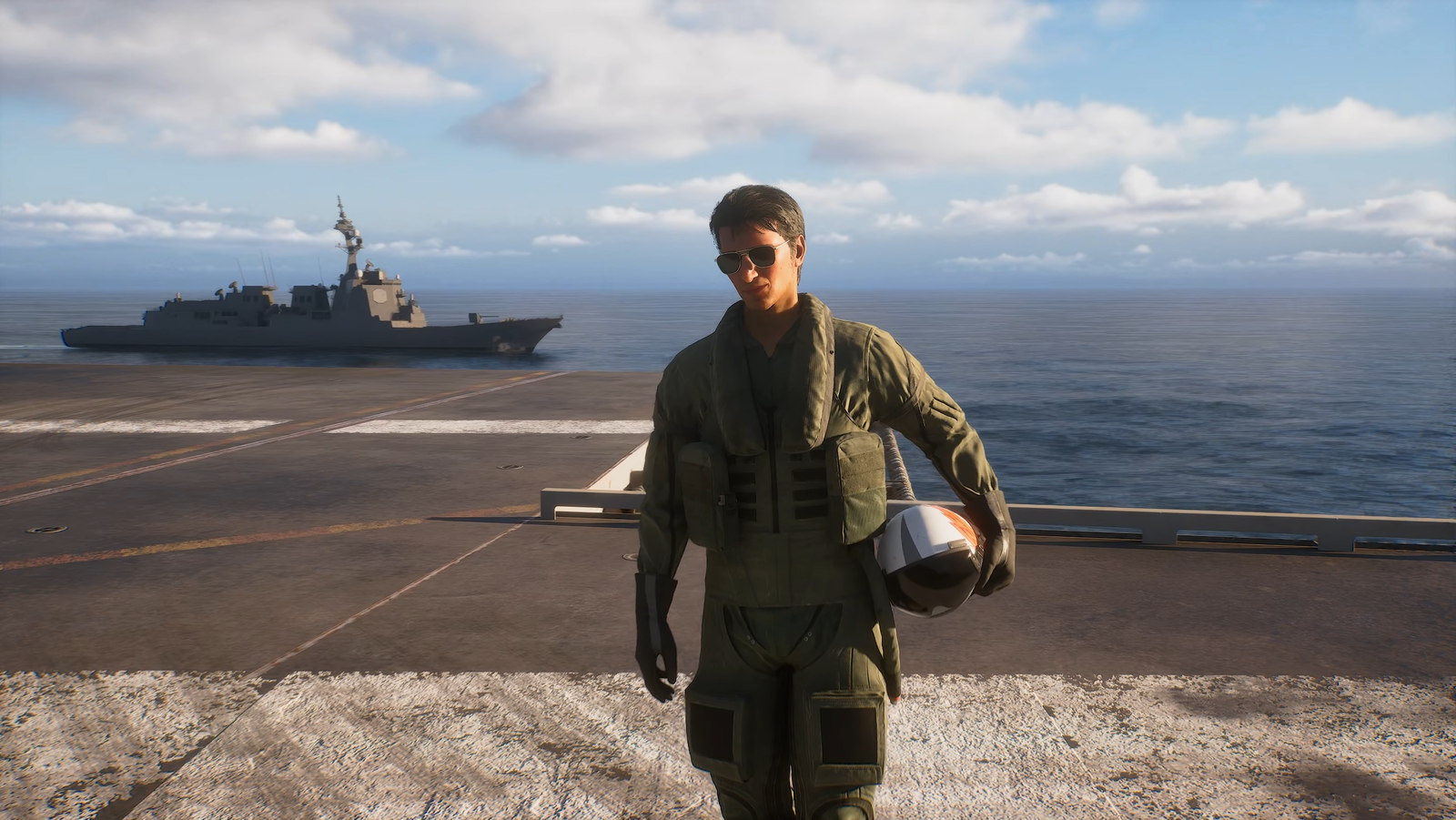
The only surviving stronghold of resistance is an aircraft carrier with the telling name “Endurance.” This is where the protagonist lands after a crash and meets the “Joker” squadron and its commander, Ian Cope, callsign “Rex,” who earned the nickname “Wings of Theve” for his combat merits.
But the celebrated ace is a figment of military propaganda. Throughout his career, Cope never shot down a single plane. His true talent is to protect his team and bring them home intact. Cope, however, could not protect himself: during the first joint mission, as he helps the hero get accustomed to the air, the squadron encounters an elite enemy ace, Shadow-22. Cope dies, and we secretly have to take his place, inherit his callsign, and fill the beautiful fairy tale with real victories.
The deceased captain, however, does not completely disappear: following Johnny Silverhand's precepts, he takes up residence in the protagonist's head. Throughout the campaign, Cope comments on what is happening, delivers gloomy philosophical remarks, speaks about his wingmates, and fills the pauses left by our silent hero.
The protagonist himself indeed does not utter a word throughout the entire game. Sometimes the player is even offered to choose between silent “Yes” and “No” – and it doesn't matter if you need to answer an interlocutor, encourage comrades, or comfort someone. Whether the hero says something or just nods – you have to figure it out yourself. This works for immersion, but in some emotional scenes, it looks frankly ridiculous.
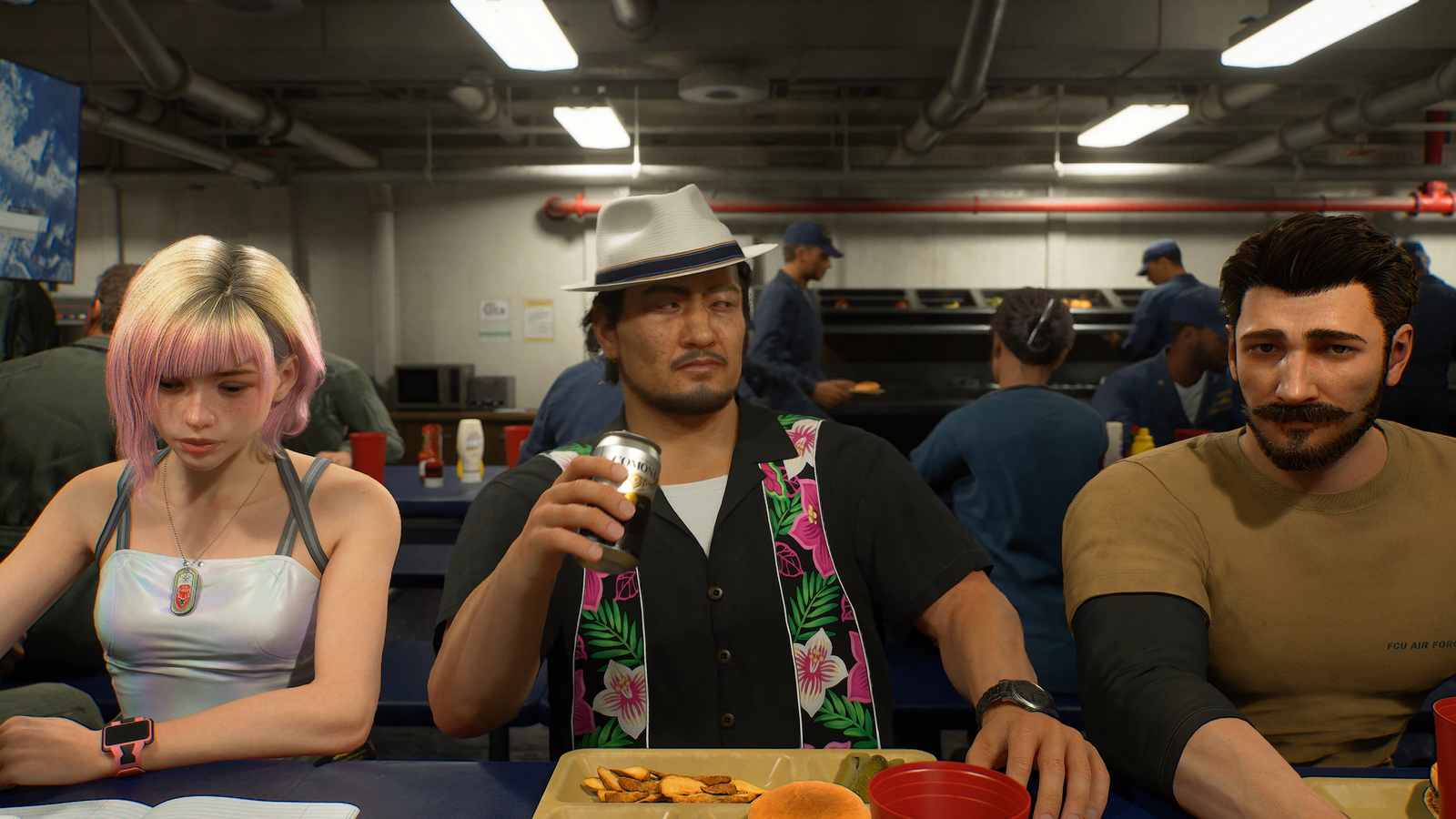
Fortunately, the surrounding characters don't have to be silent. The squadron has plenty of colorful heroes: for example, former teacher Baxter with the callsign “Professor” and rock music fan Coster, ready to rush into battle to ringing guitar riffs at any opportune moment. Their banter, jokes, and tactical discussions help you feel like part of the team. But the most prominent is the pink-haired Tasha – Anastasia Severskaya, a civilian stunt pilot from Yuktobania, who previously performed in the “Star” team. She pronounces the name in Russian, which hints at where the authors drew inspiration when creating her homeland – if you doubt it, just look at the flag of Yuktobania.
Among the others, Tasha also stands out because she ended up on the aircraft carrier completely by chance and, not being ready to kill, fundamentally refuses to shoot to kill. While Cope commanded the squadron, this did not create problems. However, with the arrival of our hero, the stakes sharply increase: the enemy is advancing on all fronts, war ceases to forgive pacifism – so it is especially interesting to observe how Tasha changes.
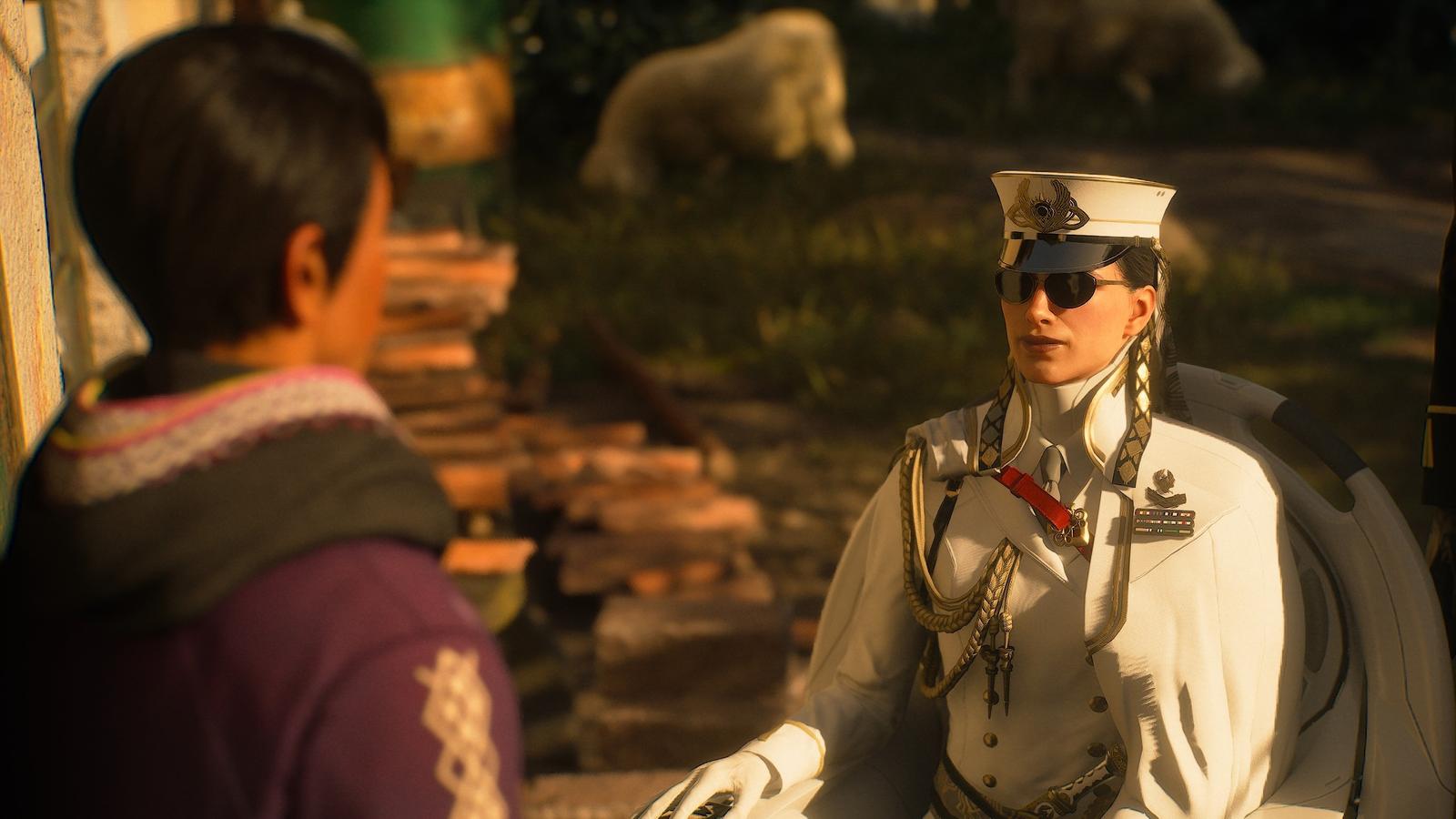
You grow fond of the other characters as well – fortunately, the authors don't skimp on vivid details. The story is presented with a pure Japanese flavor: with pathos, an orchestra, and constant talk of honor, duty, and fate. If it's an elite enemy, it's always with a mysterious callsign, a personal tragedy, and an impressive musical theme announcing their appearance (the main villainess even looks like she escaped from a fresh Final Fantasy). If they're allies, they're ready to shield you from enemy missiles with their own backs (in our case, fuselages). If it's drama, it's certainly with rain-soaked cockpit lights to a weeping violin. And it all ends, as usual, on such an emotional note that you meet the final missions with a lump in your throat.
Nuances in Turns
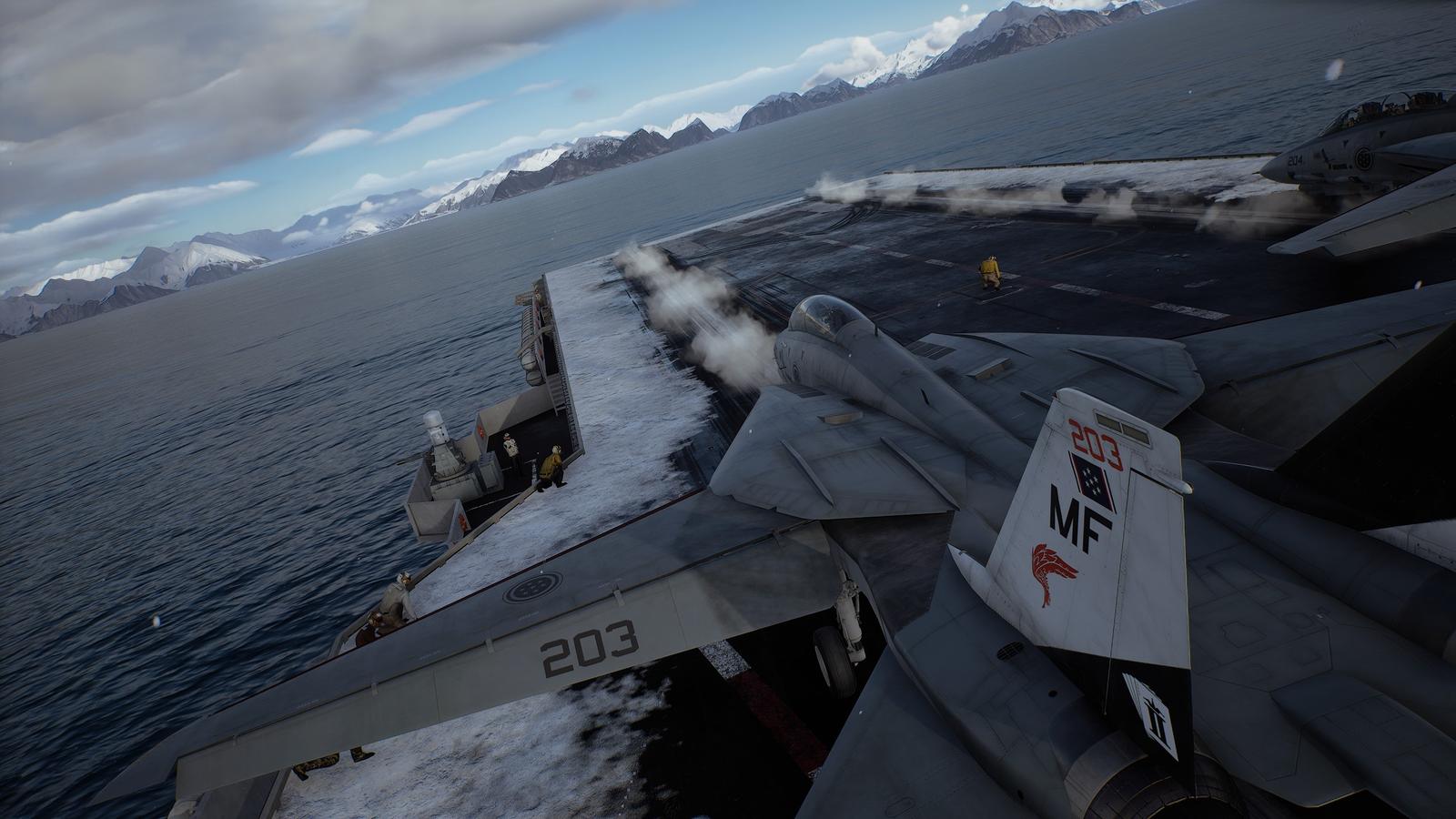
Ace Combat 8 impresses even before the plane lifts off the deck. Engines rev up, the roar intensifies, and the multi-ton machine takes off – the thrill is palpable even during takeoff. At the same time, no complex startup procedures, flicking switches, or system warm-ups are required: just hold the trigger – and you're already in the sky. After all, this is an arcade aerial combat game, not a hardcore simulator for amateur pilots with pedals under the desk.
In the air, you also feel that you have several tons of metal beneath you: at high speed, the plane needs space to turn, and for a sharp change of direction, you have to slow down or perform a maneuver with G-forces, pressing the gamepad triggers all the way and making sure the machine doesn't stall and start to fall.
Fortunately, Ace Combat 8 allows you to comfortably get used to the controls. The developers have taken care of newcomers and added two control schemes to choose from – a simplified one, where you just need to tilt the stick in the desired direction for turns, and an expert one – with separate control for roll and pitch.
In addition, there is also an autopilot: despite its name, it won't fly anywhere for you, but it will help quickly level the plane relative to the horizon if you lose orientation in battle. There is also a separate set of training missions: in a calm environment, you can master advanced maneuvers, practice using various types of weapons, and at the same time earn points to unlock the first upgrades – but more on that later.
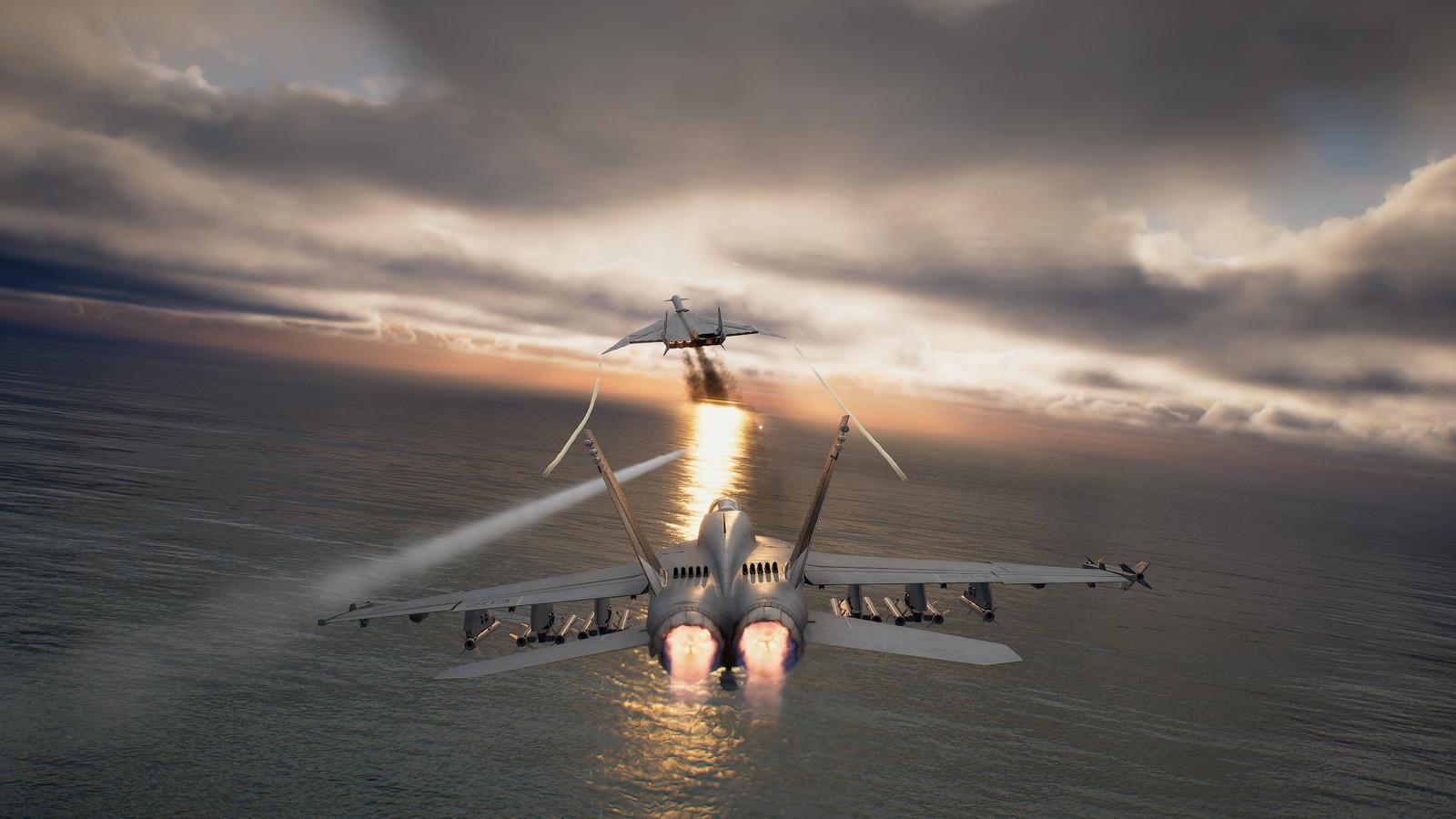
Once you engage in combat, it becomes clear: the label “Call of Duty with planes” applies, if at all, only to the cinematic quality and scale of the battles. From gameplay videos, everything seems as easy as pie: the auto-targeting system locks onto the enemy, you wait for the right moment, press a button – and it's done. In practice, launching a missile is just the final chord in a long chain of decisions and maneuvers.
Making a missile hit its target is an art. To increase the chances of a hit, it's best to close in on the enemy fighter, get on its tail, and align your flight path. Then you need to maintain position, preventing the enemy from breaking the lock and leaving your line of sight.
But even a perfect approach doesn't guarantee a hit. Enemy pilots actively deploy flares, execute sharp turns, and disappear into clouds. And clouds in Ace Combat 8 are a full-fledged part of the battle: they reduce the lock-on distance and impair missile guidance. If you follow, visibility will drop sharply, and if you linger, the plane will start to ice up, losing maneuverability.
The player has the same ways to evade an attack, and in addition, you have three wingmen under your command, to whom you can issue orders using the gamepad's D-pad. “Forward Attack” makes a comrade engage the selected target, and pressing it again switches him to a nearby enemy. “Dispersed Attack” gives the flight freedom to choose enemies independently. If someone is on your tail, you can request “Support”: wingmen will attack pursuers or draw fire to themselves. Finally, a separate command allows you to order wingmen to use special weapons – without your consent, they conserve their limited ammunition.
How intelligently the AI behaves, how aggressively enemies press, and how often they perform a “Pugachev's Cobra” to get on your tail – directly depends on the chosen difficulty. On the second level – “Pilot,” which I played most of the game on – the balance is excellent: enemies fight back and force you to actively maneuver. But switch to “Elite” – I managed to replay several missions on it, already having gained some skill – and the tension increases exponentially. Mistakes are very costly, and you have to get the most out of both your own skills and the fighter entrusted to you – without mastering the “expert” control scheme, which gives more control over the machine and allows you to perform complex maneuvers, many missions here are impossible.
Victory Begins with the Briefing
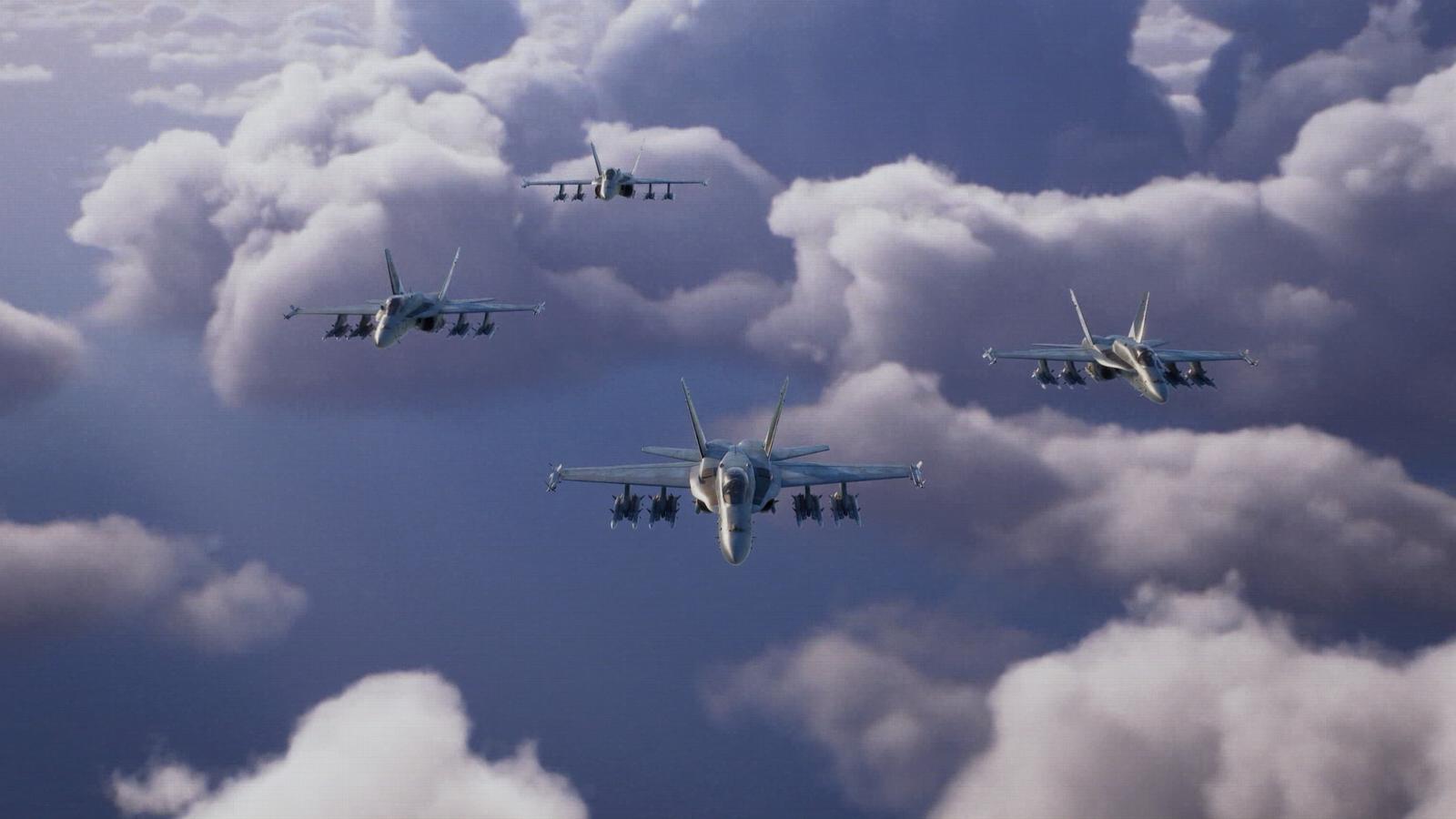
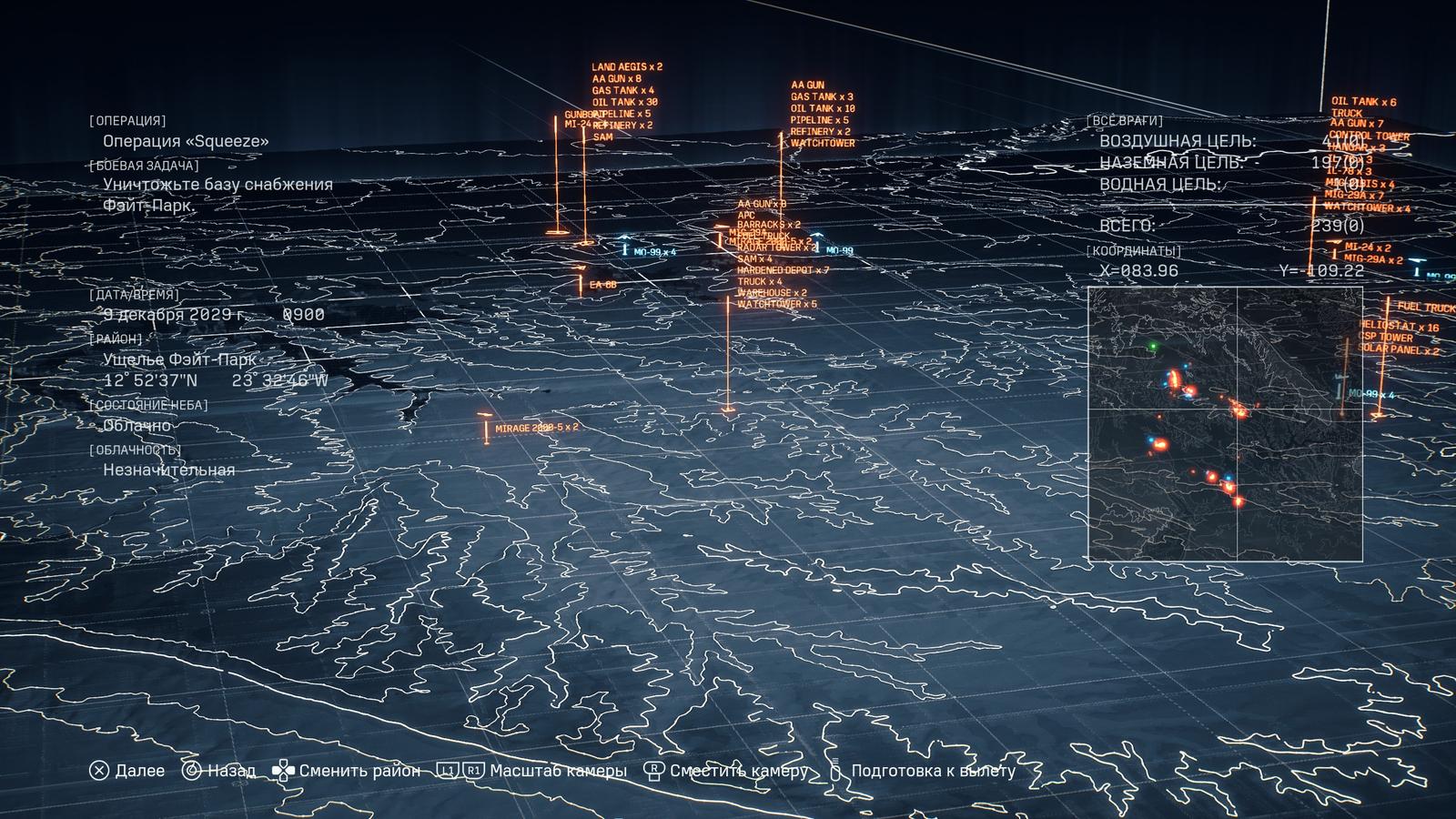
Each sortie begins with a briefing: we are shown the task on the map, the terrain, and the approximate enemy forces. I advise listening carefully, because the next step is choosing an aircraft and weapons for yourself and your wingmen.
There are more than thirty aircraft in the game, divided into four classes. Fighters like the MiG-29A or Typhoon are better suited for pure dogfighting over the sea. Attack aircraft – for example, the legendary A-10C Thunderbolt II – are born to engage ground targets and withstand air defense pressure. Multirole aircraft are useful in operations where you have to do a bit of everything, and EW aircraft allow you to jam enemy radars and cover your allies.
In addition to the basic machine gun and standard missiles, you'll also need to decide on special weapons – there are plenty of them here, although the available set depends on the aircraft. You can take RVV4 for simultaneous attack on multiple aerial targets, long-range anti-ship missiles to destroy fleets, or bombs against dense concentrations of equipment. There are also UUVs – high-precision missiles that require you to keep the enemy in your sights until impact. While escorting the target, you risk becoming an excellent target yourself, so the range advantage still needs to be used wisely.
Later, you'll be allowed to carry two types of special weapons simultaneously, but the stock of each will be reduced – so you still won't be able to put on an endless fireworks display in the name of freedom and democracy.
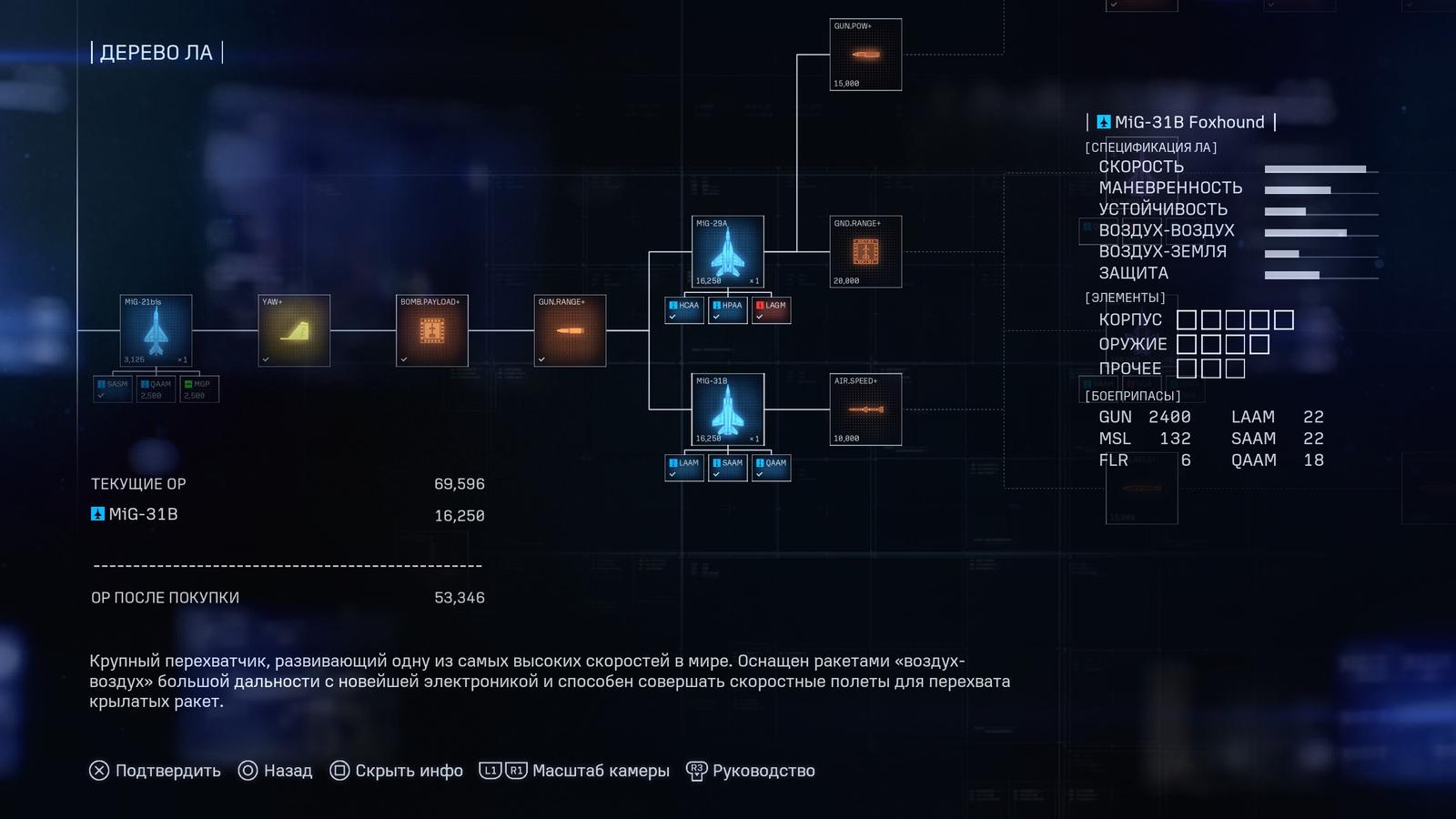
New equipment, special weapons, and upgrade modules are unlocked with rating points in a branched “Aircraft Tree” featuring American, European, and Russian aviation technology. Gradually, you assemble an arsenal to your liking and improve the characteristics of your aircraft: you can increase speed, strengthen the fuselage, improve missile guidance, or install a module that automatically opens machine gun fire when targeting.
Top-tier machines are very expensive, so you'll have to grind a lot for something like an F-35 Lightning II. But I wasn't bothered by the grind at all: points are given for each mission, including replays, so even without targeted farming, by the second half of the campaign, you can assemble your favorite set of “birds” for any situation, if you manage your earnings wisely. However, replaying favorite missions is only a joy – you can try out new equipment and earn some money for the next one.
The variety of tasks matches the rich hangar – and the developers skillfully alternate objectives, preventing boredom from repetitive actions. The game features classic assaults, support and escort of allied troops – both on land and at sea, dogfights with aces, and clear-outs where the player is given a practically infinite arsenal and allowed to wreak havoc until the timer runs out.
The most nerve-wracking missions for me were those defending allies. Something is constantly burning on the map, enemy reinforcements arrive, bombers approach their targets... While you're enthusiastically performing a “cobra” against one fighter, the entire operation is already falling apart at the other end of the location. And the game doesn't care how many kills you've racked up if the transport you're protecting turns into a burning torch – the mission will be failed.
Unique scenarios also appear: sometimes you have to navigate between radars in a decrepit attack aircraft that has seen better days, or scrutinize ship markings before launching a missile, so as not to accidentally sink a ship with civilians.
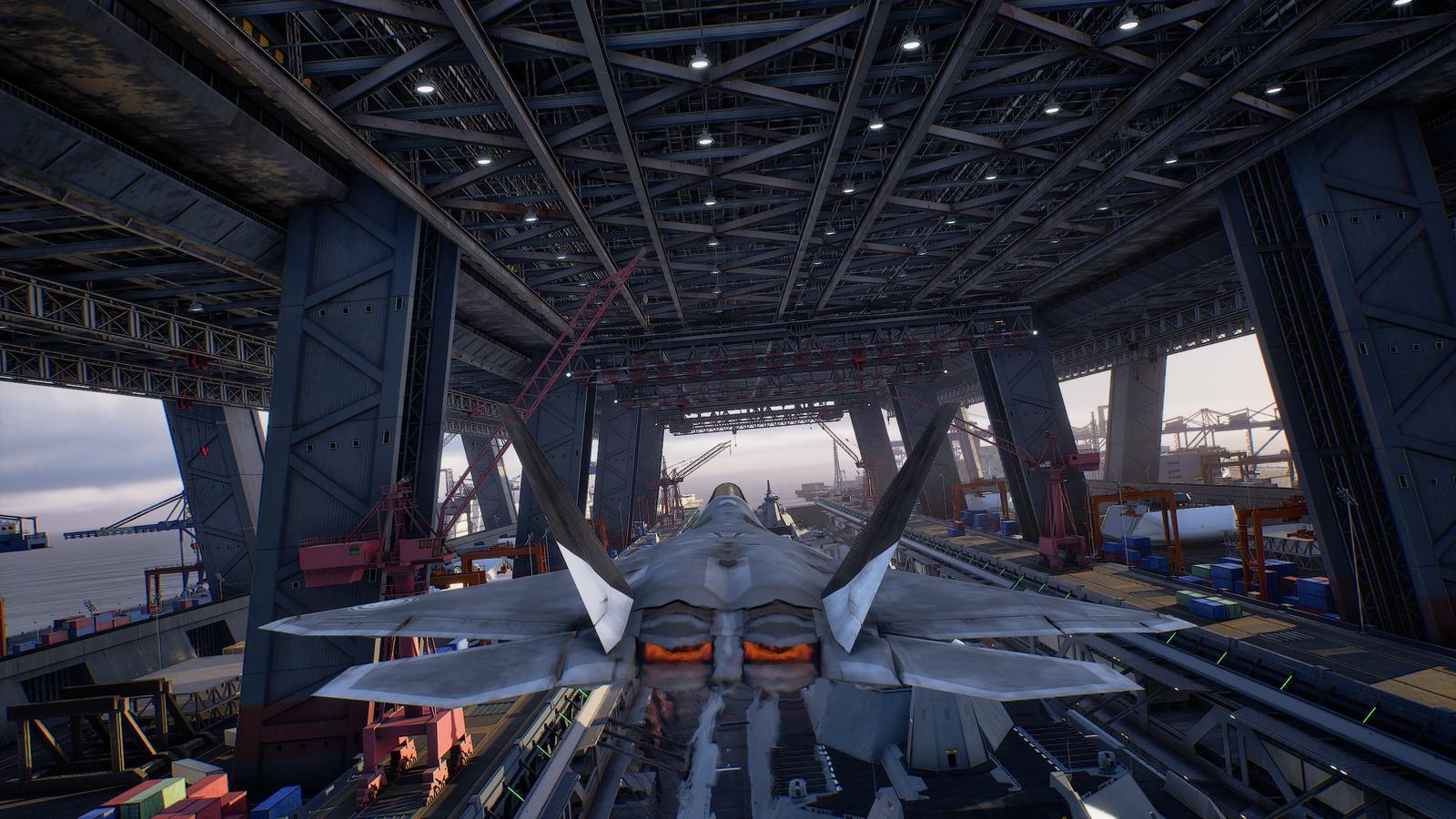
A mission usually takes 15 to 30 minutes. But with my flying skills, some tasks, including retries, stretched to an hour, and in rare cases, even two. In the end, the thirty-mission campaign took me 26 hours, but even after that, I absolutely didn't want to part with the game.
If You Don't Want to Get Out of the Cockpit
The good news is that aerial adventures don't end with the campaign finale. The “Aircraft Tree” still has plenty of unlocked equipment, and new ones appear after completion. Favorite operations can be replayed with different weapons, at a higher difficulty, and you can also earn virtual medals.
For example, I went to try “Elite” – and quickly found out that completing a mission and learning to confidently win it are completely different things. Nevertheless, you can find an approach and figure out enemy aces over time at any difficulty. But with live opponents, such confidence is no longer there – and that's where multiplayer comes to the rescue.
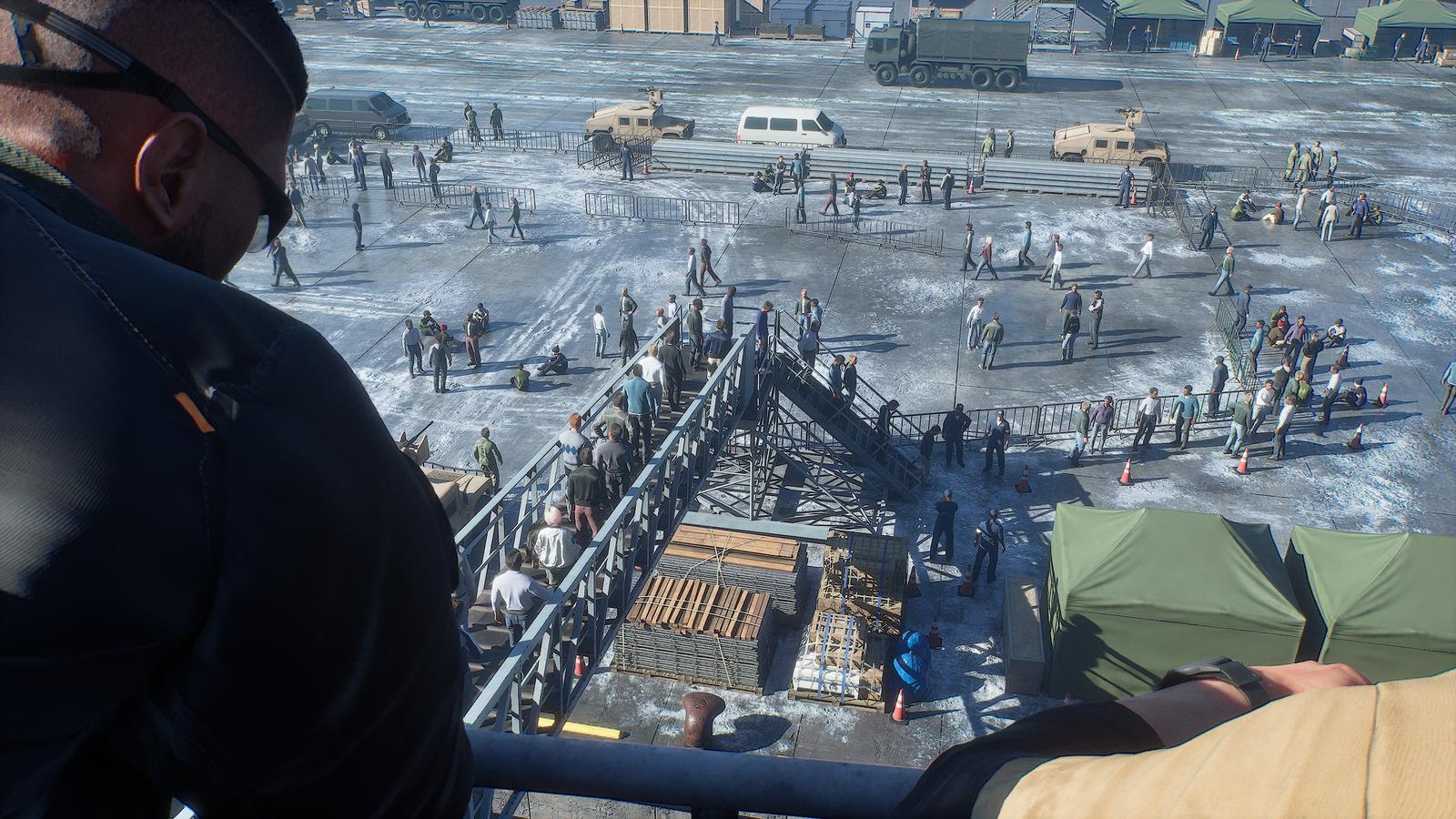
It is implemented as a separate module called Ace Combat Online, where we take on the role of a mercenary, customize the appearance of our own pilot, and go to a base where we can finally walk on foot. Here there is a hangar, training, missions, challenges, a shop, squadron settings, and even arcade machines with classic Bandai Namco games, including Pac-Man.
The modes offer both cooperative operations and player-versus-player battles, with the line between them often blurred. In “Cooperative Assault,” two teams destroy computer opponents but compete based on points scored: the better you perform, the higher the reward.
In “Cooperative Battles,” you are already allowed to shoot down pilots from the opposing team. There are missions to destroy a particularly dangerous squadron of enemy aircraft and “Urgent Sortie,” where eight players face off against a giant weapon. And if you want to find out who the best ace is, without extraneous objectives, there are regular eight-player duels and four-on-four team battles.
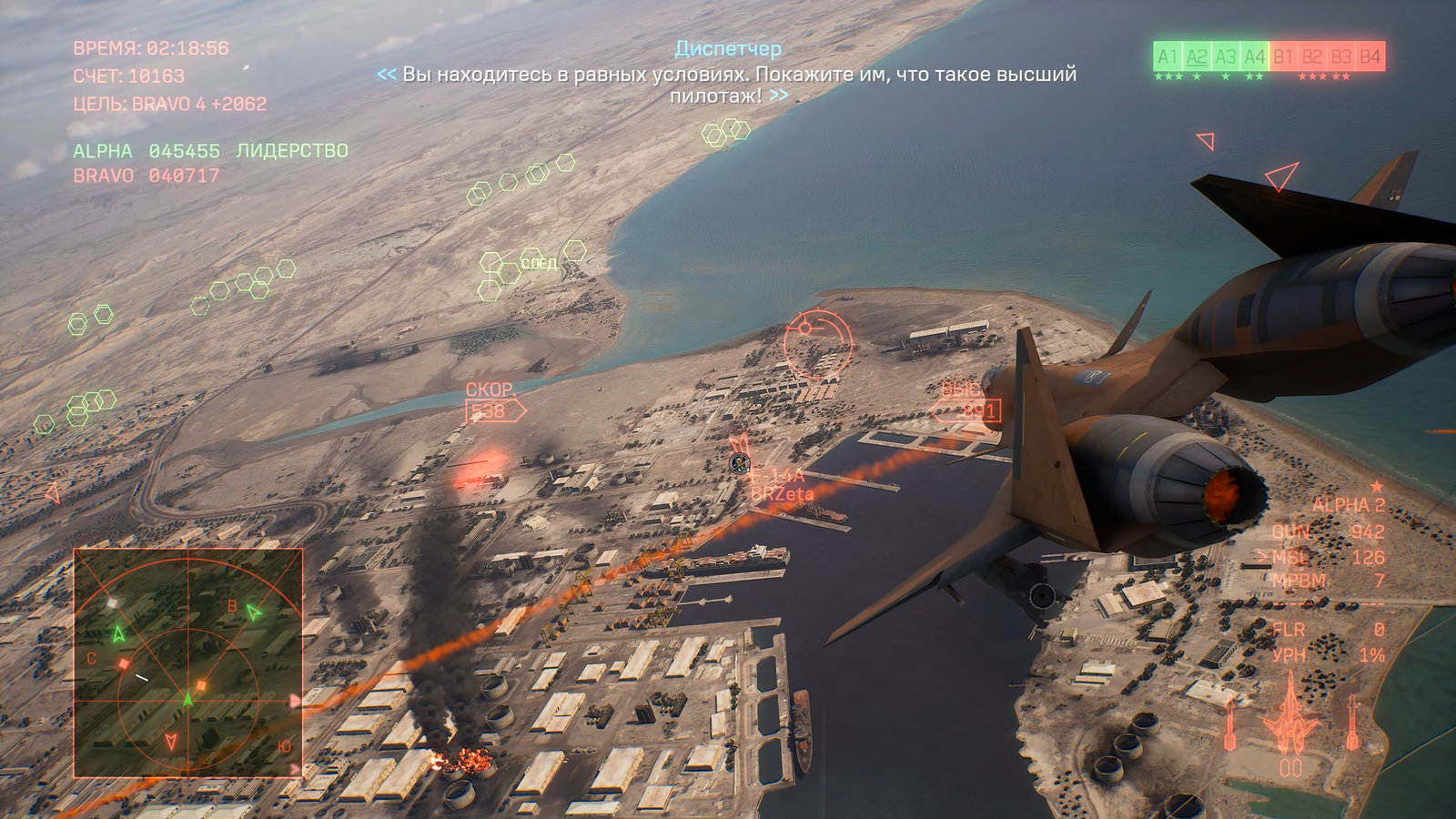
We receive rewards for sorties and develop our own fleet of aircraft – so there are plenty of reasons to stay here for a long time. I'm not a fan of multiplayer games, but for decency's sake, I spent some time online – and I must say, it's really engaging. The unpredictability of live opponents makes each encounter even more intense, but globally, these are still swift sorties that maintain the core gameplay loop of the campaign.
It's just a shame that everything is currently (I hope, only currently) clunky and inconvenient. The menu is confusing, and it takes a while to figure out where to find the desired mode, upgrades, or rewards. On top of that, there's a store and season passes – the usual set for a game that expects to settle into your schedule for a long time. At the same time, it's impossible to quickly switch between online mode and campaign due to the modular structure, so each time you have to wait for loading and click through different tabs to finally get to a mission.
Flights and Crashes
And you have to wait not only online – loading screens became tiresome even during the early access campaign. With each launch, the game enthusiastically compiles shaders, after which you have to wait for the campaign to load, prepare for the mission, take off… and then crash due to insufficient memory.
In the first few days, this happened regularly. Once, the game crashed on the replay screen after a completed mission, and I had to play it again – fortunately, that trick didn't repeat. I'm writing this on October 6th: there haven't been any crashes for three days, the developers are actively working on the problem, but I haven't seen a separate statement about its fix. Perhaps I'm just lucky so far.
There are also questions about performance. On my build with a Ryzen 5 7500F, RTX 4070 Super, and 32 GB DDR5, the game in 1440p at maximum settings with DLSS in “Quality” mode delivers about 80-90 FPS. Generally comfortable, but the graphics settings menu looks meager. The game requires a graphics card with hardware ray tracing support, but it doesn't really explain where and to what extent ray tracing is used – there's no separate toggle. Frame generation also cannot be enabled by default. I would like more options to reach my usual 100+ FPS without further reducing image quality – especially since there's plenty to admire here, believe me.
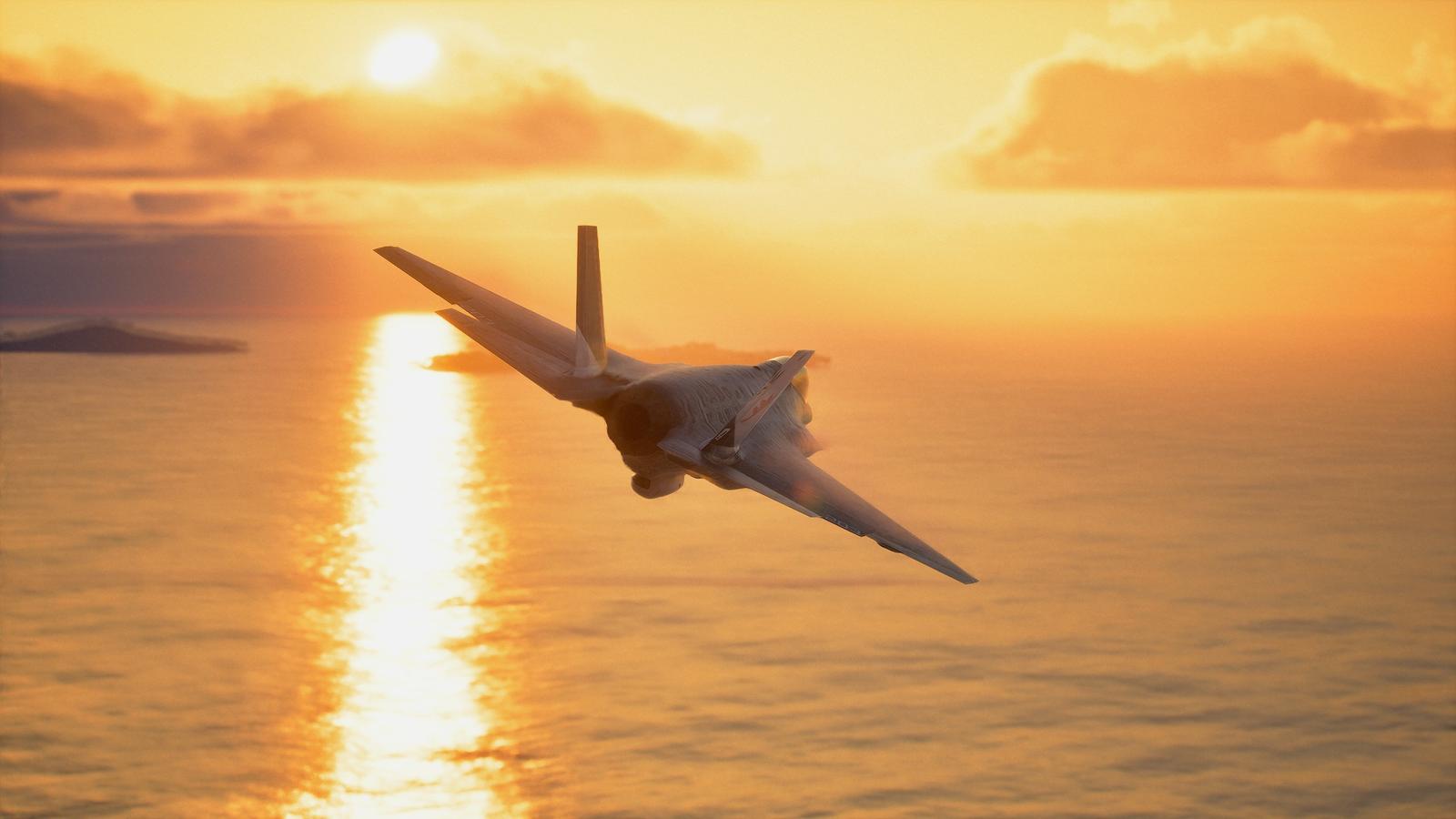
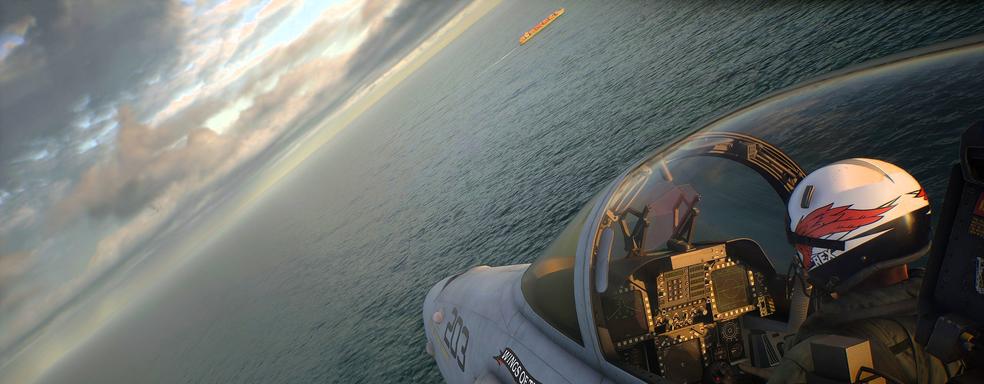
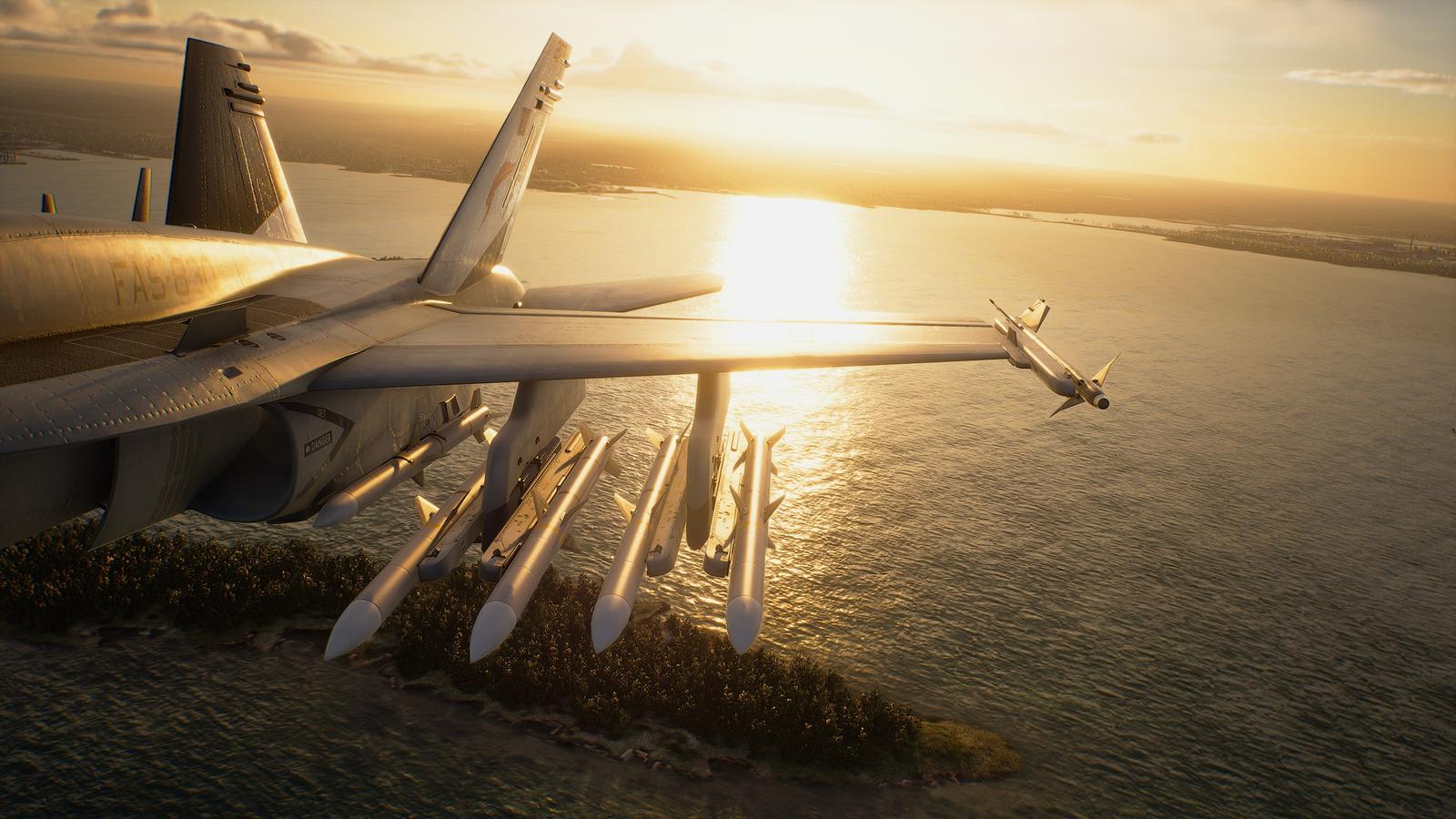
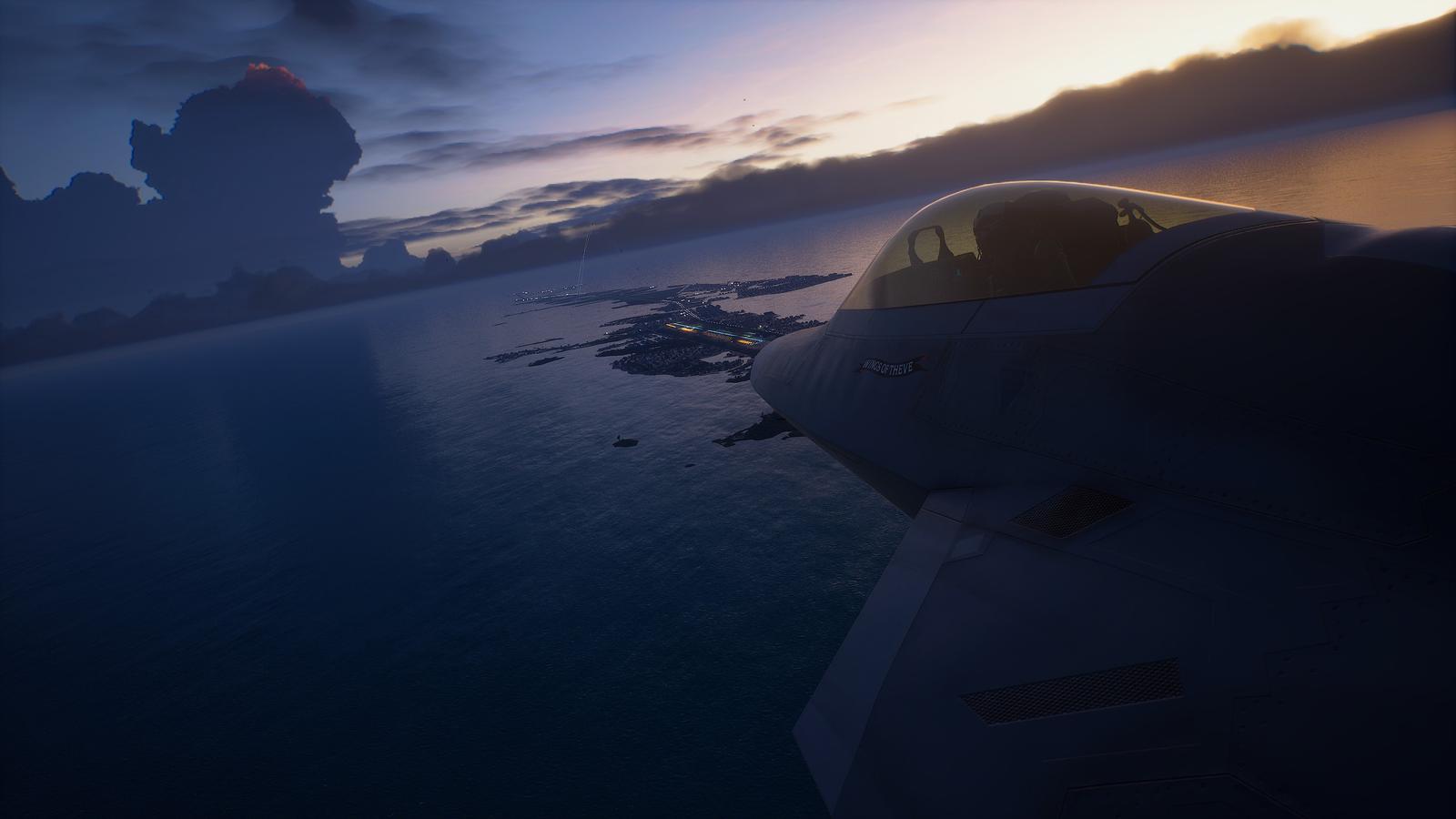
The game delivers one fantastic landscape after another: you fly over the sea, cities, mountain ranges – and you constantly want to take a screenshot. The sky and lighting are especially good: huge storm clouds are replaced by sunlit clouds, and by the end of the sortie, the landscape under the wing can be bathed in sunset colors. Sometimes you just want to forget about objectives and fly over all this without rushing – fortunately, a free flight mode has also been added.
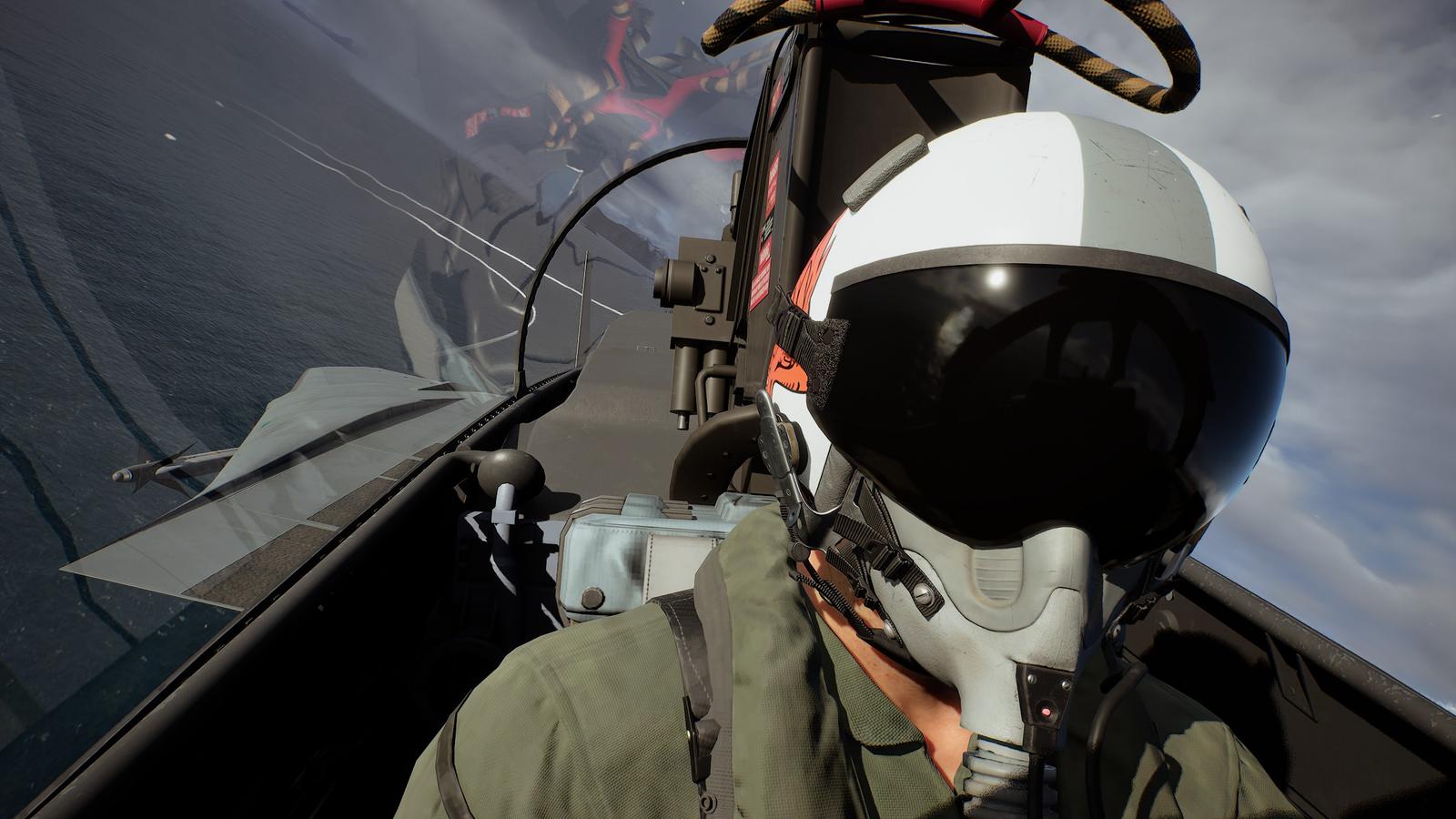
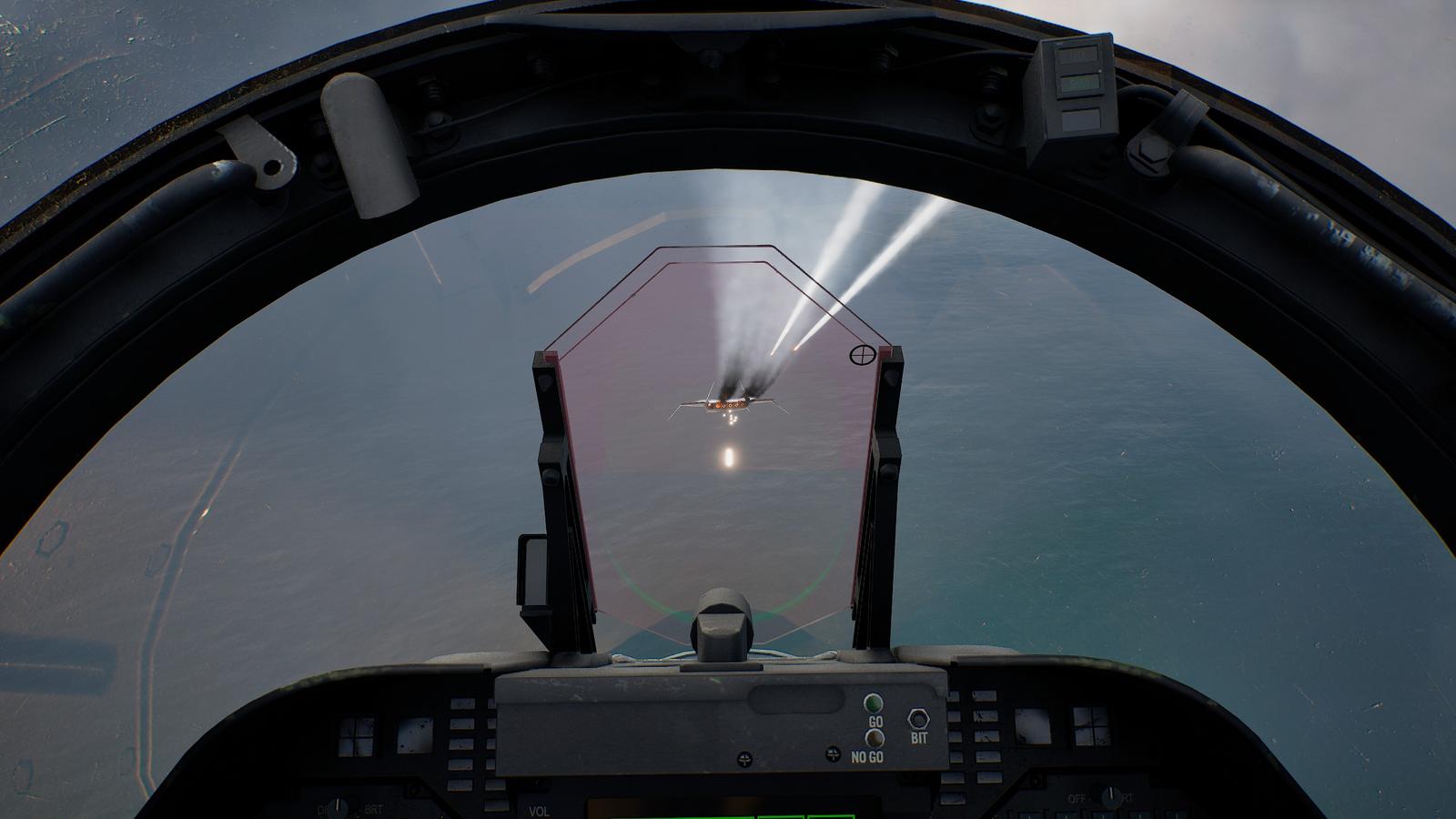
Up close, there are plenty of beauties: the planes are meticulously detailed, the air shimmers behind the engines, and in sharp turns, thin condensation trails appear at the wings. The cockpit view allows you to feel the flight even better: you dive into a cloud – and the canopy fogs up, drops run down the glass, reflections play on its surface. On the ground, there are simple textures and objects, but from a height and at combat speed, these conventions rarely catch the eye.
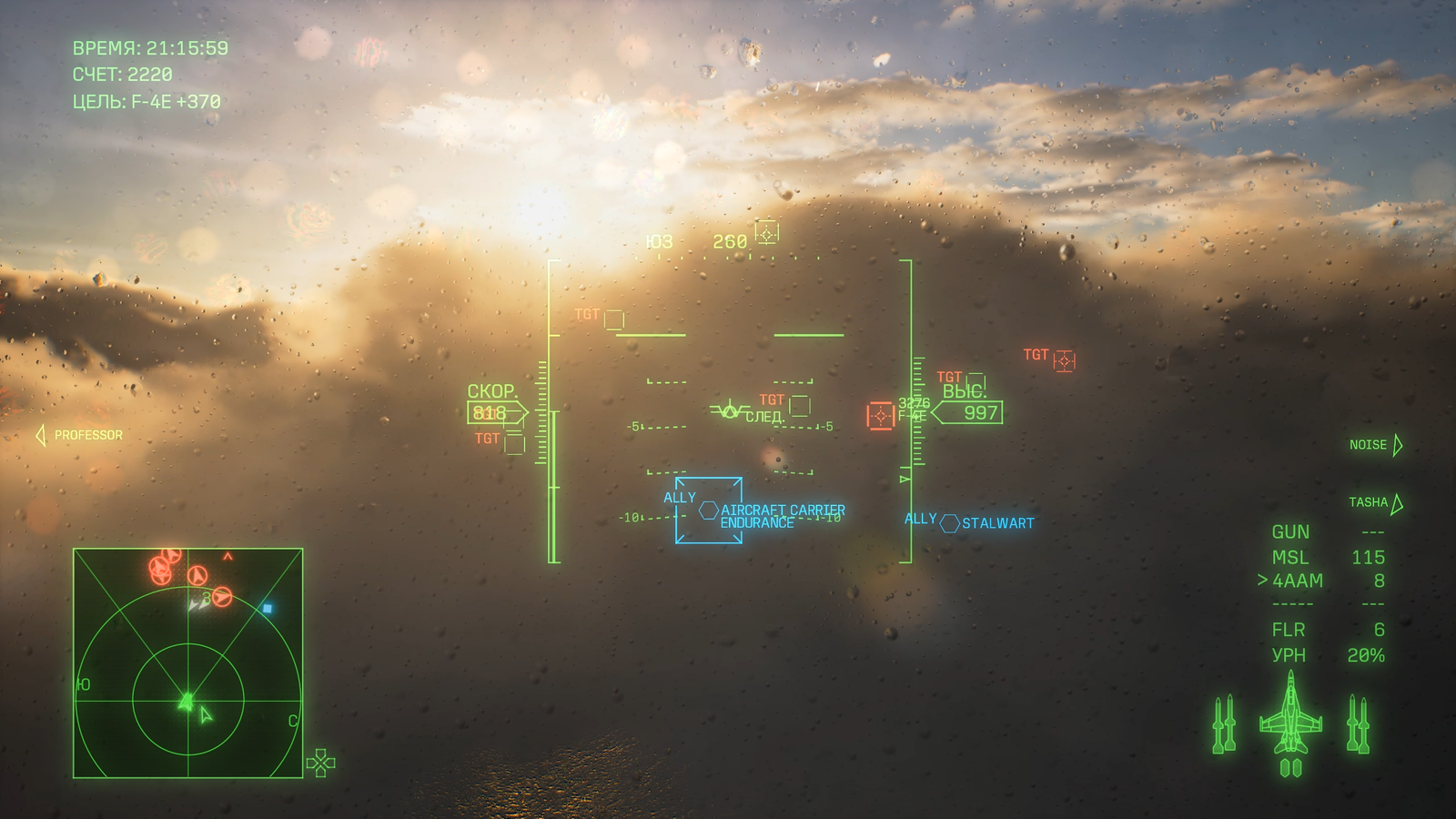
Replays after missions allow you to see your own exploits in all their glory – with a cinematic camera that turns every maneuver into a spectacular aerial combat scene. I'm sure some fans will even assemble a full-fledged movie from these recordings and cutscenes that wouldn't be ashamed to be shown in cinemas. As for me, I took more screenshots during the playthrough than in any other game in my life – over 130, not counting video footage. And there would have been even more if it weren't for that ill-fated crash on the replay screen.
After that, I started spending less time watching: I quickly scrolled to a memorable moment, took a screenshot, and moved on before the game decided to reset my efforts again. It's a shame, because in this game, you can really enjoy it twice – first at the controls, then as a spectator.
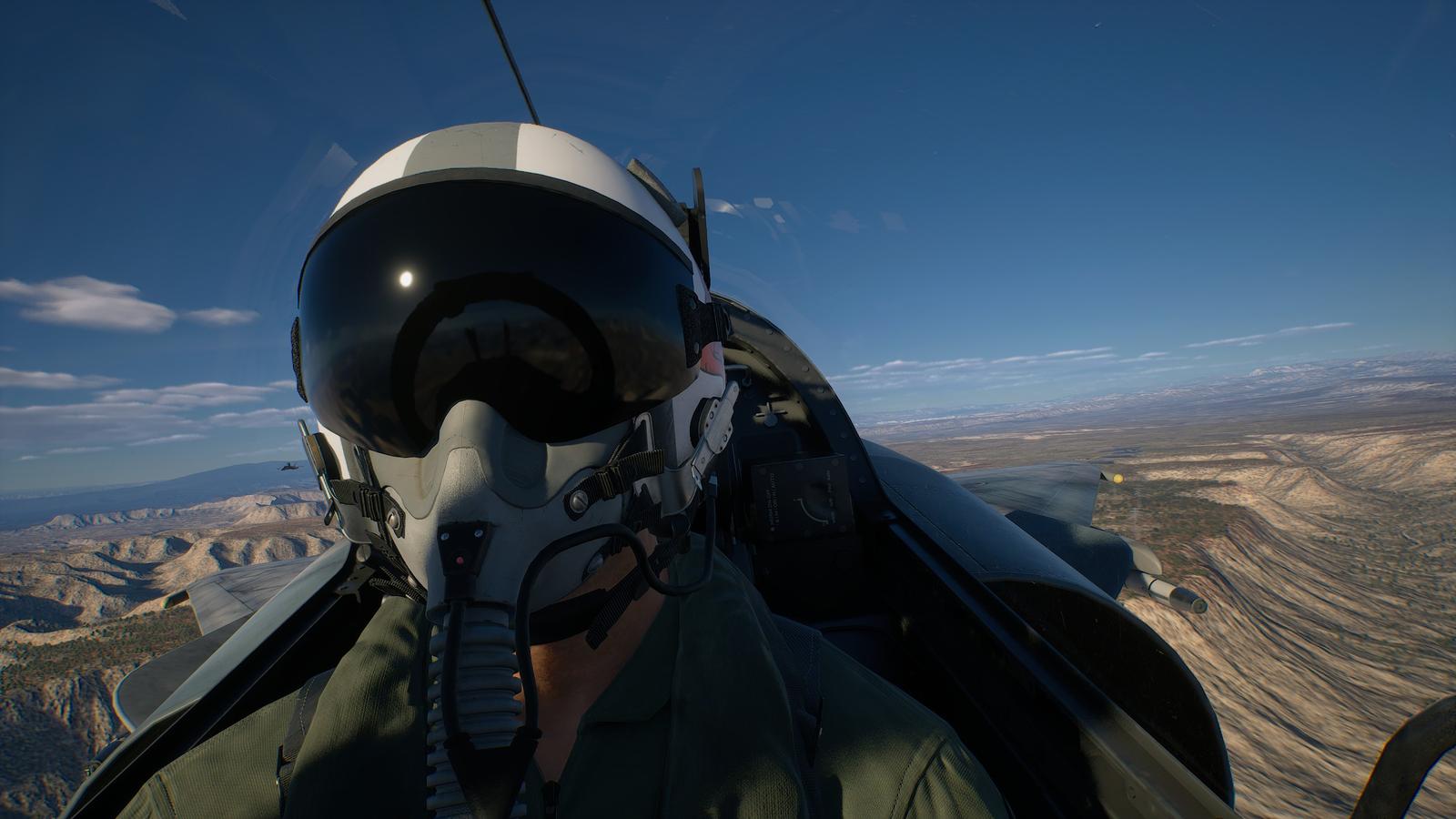
The sound design completes this beautiful picture. Multi-ton machines roar so powerfully that you feel their might through headphones and gamepad vibrations, and the sharp crack when breaking the sound barrier adds to the thrill of acceleration every time. Missile launches and the rumble of explosions make hits even more satisfying.
On top of all this, there's radio chatter: warnings about threats, squadron communications, and desperate pleas for help from ground troops. In the heat of battle, lines sometimes overlap, and it's not easy to make out everything, but this chaos entirely contributes to the atmosphere – after all, no one will discuss the weather in the tone of an English aristocrat in the middle of an aerial battle.
The music is also top-notch. Orchestral pieces perfectly emphasize the epic nature of what's happening, and the rock compositions that Coster plays fuel the excitement at certain moments. The personal theme of the “Shadow” squadron deserves special respect: as soon as this choral motif breaks through the radio interference, you immediately understand: the free ride is over, now they're going to hit hard. Already from the second encounter with “Shadow,” you recognize the theme from the first notes – and your fingers automatically clench the gamepad in a death grip, anticipating a bone-jarring dogfight.
Verdict
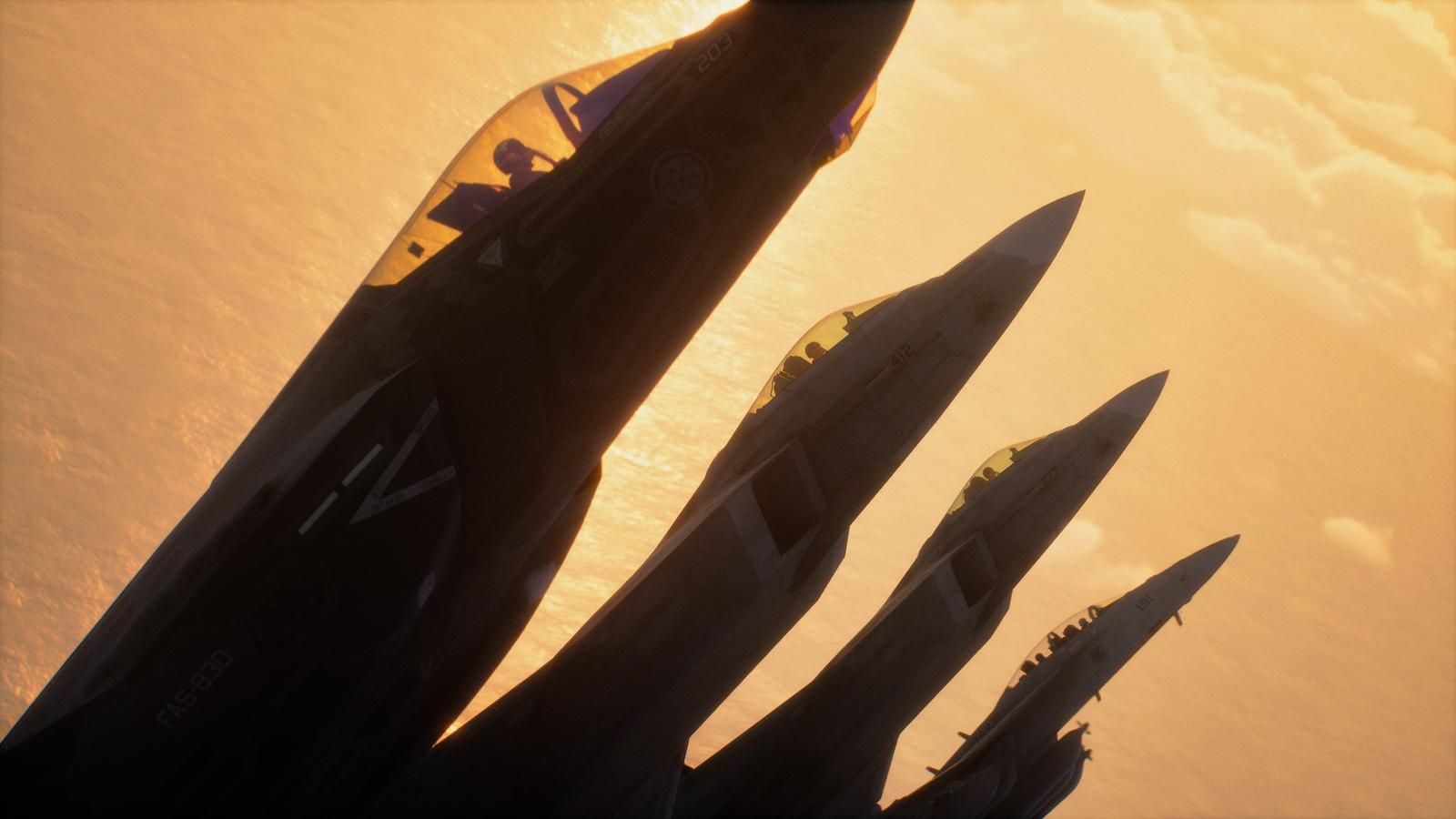
Ace Combat 8: Wings of Theve has become one of the most vivid gaming experiences for me recently. Of course, the fact that it's a completely new genre for me played a role – and every impression was a “first.” But even setting aside personal experience and the inability to compare the game with previous installments, it's still a big, spectacular, and exciting aerial action game that constantly provides new reasons to grip the gamepad tighter.
Project Aces managed to make the controls accessible enough to enjoy from the very first sorties, yet deep enough that there's still room to grow even after dozens of hours. The campaign skillfully changes pace and objectives, the story, despite its clichés, gives meaning to each mission, and you grow attached to the characters so much that you genuinely care about their fate. Add to this luxurious landscapes, powerful sound, and music that lingers in your head for a long time – and it's no wonder that even after the final credits, I absolutely didn't want to get out of the cockpit.
But the technical side still needs to be refined, and the service fuss online will probably not please everyone. And Bandai Namco still doesn't give due importance to regional pricing: five thousand rubles is an amount that not everyone is willing to pay for an introduction to an unfamiliar genre. After playing, I believe the game is worth the money, but if you're in doubt, it's wise to wait for discounts – and the technical side will also be improved with patches.
Never miss our newsAdd this site to your preferred sources to see us more oftenAdd on Google