Dark Project Tornado Review: An Exclusive Mechanical Gaming Keyboard in a Metal Case You Can't Just Go and Buy
Translated with AI from the Russian original.
Evaluating this product from a practical standpoint, in our opinion, makes little sense. It is not currently sold at retail; there might be more giveaways in the future, but in any case, it is an exclusive prize that doesn't require rational assessment. It performs its job at least as well as any top-tier gaming keyboard. This is further emphasized by the design-which isn't for everyone but effectively demonstrates Dark Project's expertise in keyboard development. Moreover, the foundation, featuring g3ms Aquamarine switches, is used in other models as well.
It cannot be said that the keyboard market is exactly bursting with life, but it has at least survived the era of laptop dominance—and has no plans to shrink. This is largely because manufacturers are finding new niches. One of the most rewarding, as we have written many times, is working with various smart devices, which are numerous in use today—whereas 20–30 years ago, a family often made do with just one computer.
However, those traditional desktops are not planning to give up their positions in certain areas. For example, everyone has somehow come to terms with the fact that a gaming laptop is usually not very "gaming" and not very portable—so for the same money, it's often better to look at a "big" computer. In recent years, gaming desktops have been one of the few segments showing sales growth despite everything. Simultaneously, this provided a second wind for mechanical keyboards, which seemed to have almost vanished into oblivion under the pressure of mass-market and inexpensive membrane keyboards or the scissor-switch types familiar to laptop users. However, gamers fully demand the high durability of mechanics, are willing to pay more than average (and against the backdrop of modern GPU prices, this "more" for peripherals is pocket change anyway), and the drawbacks of this keyboard type don't bother them much—hence the renaissance. Once, it was hard to find something decent in this segment that was visually more interesting than the 80s classics—today, there are plenty of offers for every taste and budget.
But "budget" only applies to products that reach retail chains. Manufacturers are regularly tempted to develop something "for the soul," not just for sale. Sometimes these are one-off exhibition concepts that they don't use themselves and don't let others use, only showing off the aesthetics. Sometimes, however, the goal is more practical, as happened with our heroine today.
Dark Project announced a special limited series of keyboards at the end of last year in collaboration with the Tornado Max Energy drink brand. One keyboard was intended to be unique, including its estimated price—a device in a titanium case was valued at 500,000 rubles. Naturally, the valuation is virtual—no sales were planned, and the keyboard itself, along with a year's supply of energy drinks, was raffled off in the Tornado Telegram channel. In addition to the grand prize winner, five other lucky individuals were determined, receiving similar keyboards but made of aluminum and with a month's supply of the drink. The story could have been considered finished on December 15, 2025, when the results were summarized, but in reality, the batch of keyboards turned out to be slightly larger, which allowed us to get acquainted with the device. And to introduce it to everyone interested as well.
Is this necessary given that sales of the device are not planned? It is useful. Plans sometimes change, so what has already been done might be repeated, either in the same or a simplified form—it doesn't matter much. Especially since the design elements are exclusive here, but the base is not. The g3ms Aquamarine switches, introduced about a year ago, for example, are used in other products, not only by Dark Project but also in more affordably priced Red Square keyboards. It's all the more interesting to see how it works. And it's possible that the pre-New Year giveaway wasn't the last, by the way, so chances to acquire such a device remain.
Package Contents
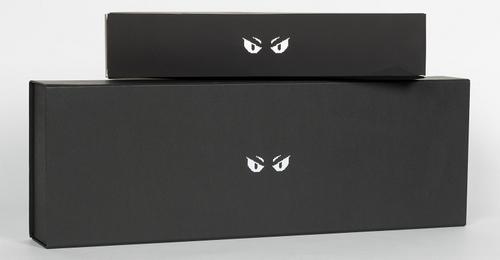
In fact, it includes not one, but two boxes. Both are austere black, with almost no identifying marks. Except for the cunning eyes of the virtual "Tornado" character living in the keyboard, which we will talk about a bit later.
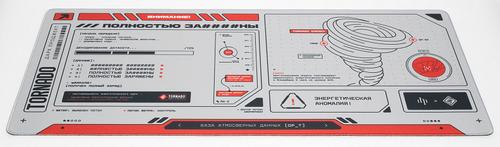
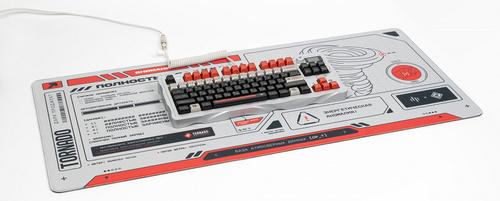
The small box contains a special mat. Or even a rug—the 90 × 40 cm dimensions allow it to cover a small desk almost entirely.
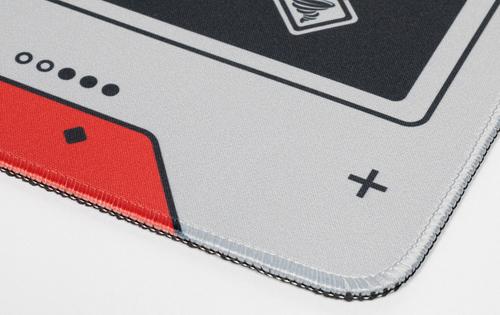
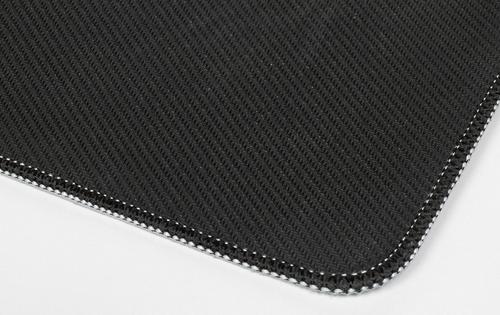
Dense, thick (about twice as thick as "ordinary" ones), well-stitched along the edges, non-slip—in short, not just a decorative element. But the coloring and inscriptions are exactly that, as they carry no special meaning. Just beautiful.
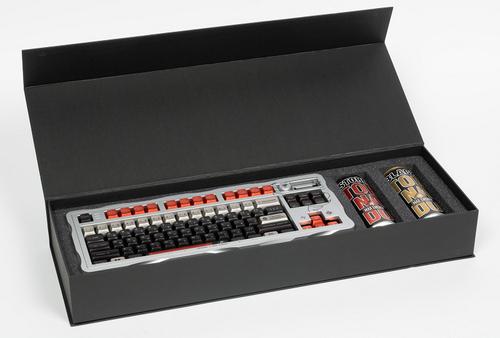
The large box contains the keyboard itself and a couple of cans of Tornado Max Energy.
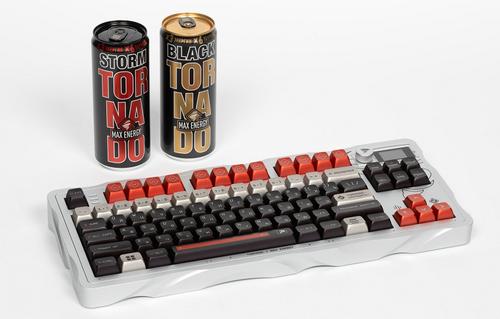
We didn't test the energy drink itself, as tastes differ anyway. But it looks fresh and interesting. Just as the keyboard itself has a very non-standard appearance.
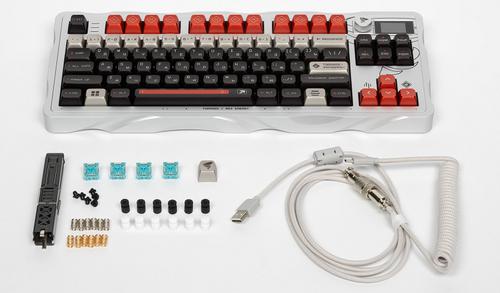
The package is unusually rich—specifically, there is a keycap puller, spare switches, and even another custom keycap with that same tornado. A fun element is the interface cable. Its length is two meters if not specifically stretched—the coiled "spring" allows for another meter if absolutely necessary. Thick with a powerful fabric braid, so nothing is likely to happen to it during operation.

But the detachability of the cable itself might come in handy—for example, if you want (or need—who knows how progress will evolve) to connect the keyboard to a USB Type-C port without any adapters, you can just take another cable. The keyboard has a Type-C port right in the middle of the case, where it belongs.
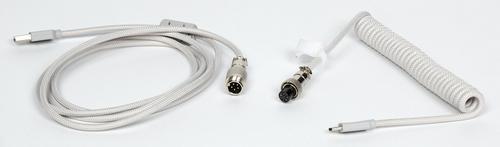
Or, perhaps, a corresponding replacement element will appear over time, since the cable consists of two parts connected via a screw-on DIN connector. A decorative trifle, it would seem, but how it is sometimes missed in the "standard" market of standardized solutions. Here, they didn't chase standards, making an exclusive product in every sense.
The Keyboard
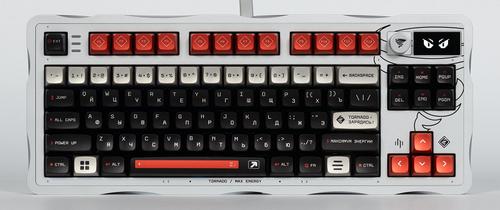
It would seem that a detachable cable suggests carrying the keyboard with you. But that's unlikely—since its total weight even without the cable is 2.75 kg, which is more than the vast majority of laptops.
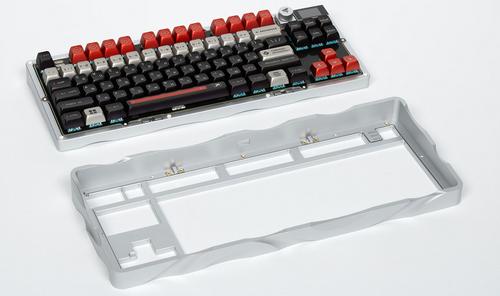
In principle, the construction can be lightened slightly by removing the upper aluminum cover, secured with magnets, which itself weighs 608 g. However, this doesn't radically change the situation—it still remains over 2 kg. Besides, without the cover, the keyboard itself starts to look touching and defenseless, so it's better to leave this option for maintenance procedures.
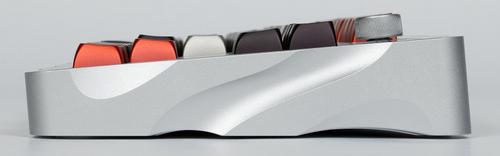
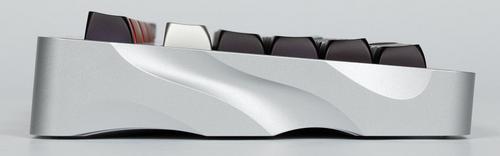
This is, after all, a radically desktop device that stays perfectly on the table, not shifting aside not only thanks to four rubberized "feet," but primarily due to its high mass. With relatively compact dimensions—we have the typical 80% for gaming models (i.e., without an additional numpad), so the 380 × 155 mm size is achieved only thanks to the metal multi-layer case. It also provides the tilt of the working surface due to its wedge shape (from 25 mm at the front to 35 mm at the back), since with such mass, there's no point in talking about any additional folding legs.
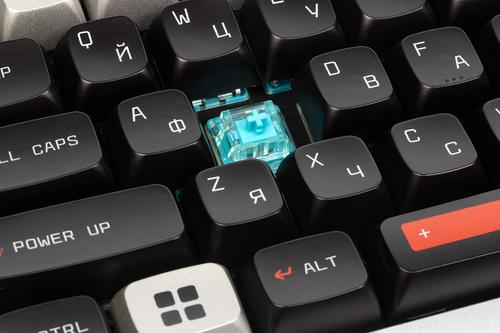
As for the basic functionality, as already mentioned, g3ms Aquamarine switches are used—one of the company's latest developments. According to their claims, they are assembled from a combination of POM, PC, and PA plastics and equipped with a shortened spring. Travel is 1.8 mm to the activation point, 4 mm to full press. Force is 45 g to the activation point, 55 g to full press. Naturally, all switches are lubricated, and the reinforced contact pads are treated with a protective coating that extends service life. As for the acoustic profile, we cannot do without a direct quote:
g3ms Aquamarine are premium linear switches with an original stem design that provides the deepest and most noble typing sound. That very "thocky" sound that enthusiasts have been hunting for years will be available right off the shelves of Russian stores here and now!
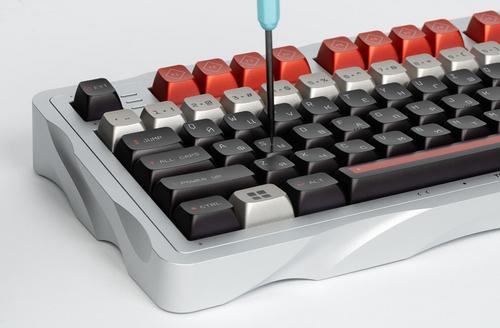
We can confirm that the sound here is indeed noble. And, surprisingly for mechanics, even relatively quiet—meaning distinct, but not annoying even during active work. Although the latter might be the merit of this specific model, or rather, its case and two-layer sound insulation. Expecting the same behavior from the same switches in inexpensive models is likely not worth it.
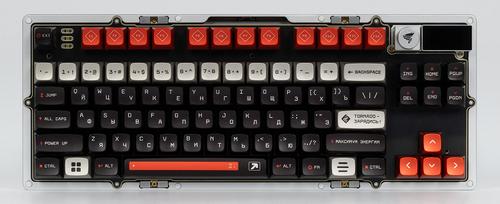
The declared lifespan of the switches is 80 million actuations. To match, the keys are made of polybutylene terephthalate (PBT)—practically eternal.
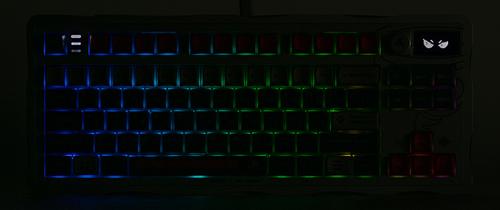
True, there is also a typical (practically the only) disadvantage of PBT keycaps—the inability to implement full backlighting of the symbols on the keys. This model has backlighting, but it's purely decorative in the end—only the gaps between the keys glow. But, we repeat, this is characteristic of all models with PBT, so you have to choose what is more important—durability (as ordinary plastic wears out quite quickly and becomes unpleasant to the touch) or backlighting. In this case, the manufacturer chose durability, so the typing experience won't deteriorate over time. It is further enhanced by Dark Project's proprietary CSA profile, but that (like the appearance) is largely a matter of taste.
Embellishments
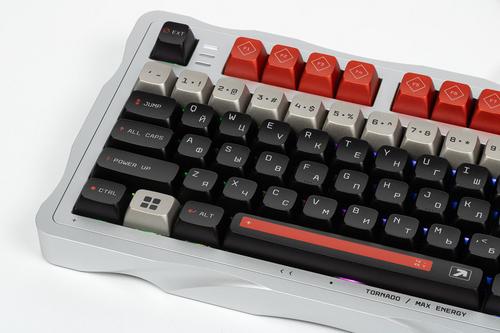
It's simply impossible to do without them when designing a gaming keyboard. Here, surprisingly, there aren't that many. That same gap backlighting, plus multi-colored keys and their labels, perhaps—but even the latter is in moderation. Although to each their own—some might dislike the lack of color highlighting for WASD, while others, conversely, might complain about renaming Tab to Jump. But that's all pure subjectivity.
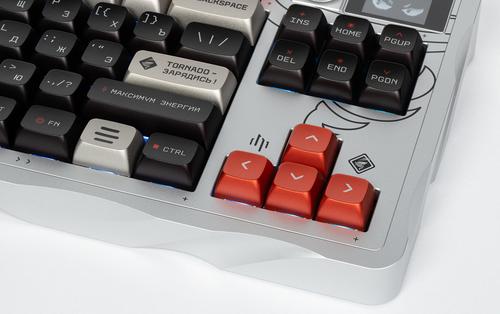
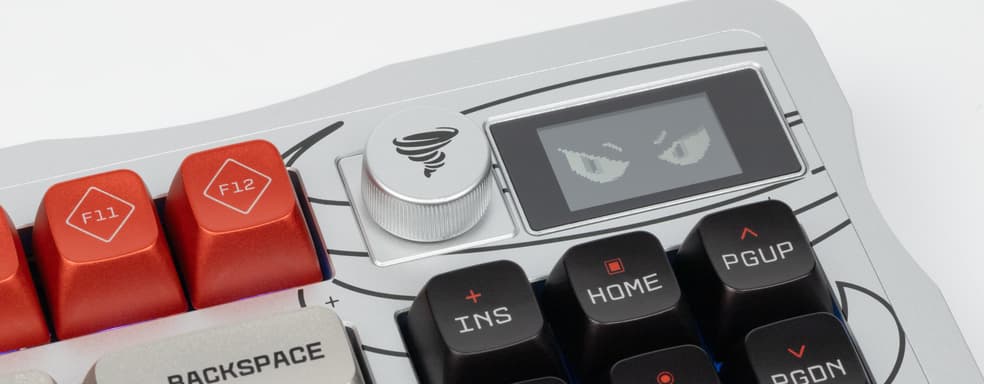
Unlike the hardware additions, of which there are literally two. First, an analog volume control, which might be more convenient to use than a key combination, not to mention software adjustments. It works exactly as expected; pressing it acts as Mute/UnMute—in short, not much to write here.
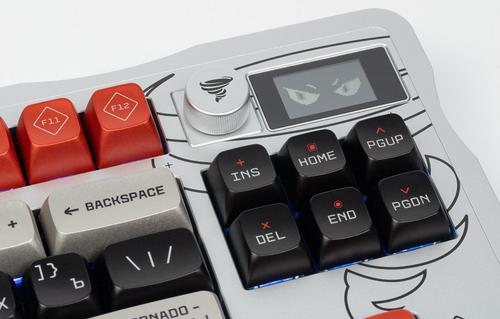
As for the "Tornado" living in the keyboard, he is not so simple—even though, in essence, he is a pure visual decoration. A small OLED display next to the volume control simply shows... different emotions depending on what you are typing on the keyboard. The work pace is analyzed—for example, if you don't touch anything for more than a minute, "Tornado" falls into hibernation, and at a pace of 60 presses in 10 seconds, he goes a little crazy. But that's not all—special animations are provided for some key combinations often used in chats—like GG, LOL, or a not-so-polite four-letter word. There's not much point in describing all this—it's better to watch. Or not watch, since, naturally, the facial expressions of "Tornado" carry no functional load. It just livens up the landscape. Why? Well, first of all, it's beautiful, and secondly—the first reason is enough. Such a small prank by the developers in an expensive conceptual product. They can afford it to increase the conceptuality.
Summary
Evaluating the product from a practical point of view, as it seems to us, makes little sense. It is not currently sold at retail, there might be more giveaways in the future—but in any case, it is an exclusive prize that does not require rational assessments. It certainly performs its job at least as well as any top-class gaming keyboard. This is reinforced by the design—which is not for everyone, but well demonstrates Dark Project's competencies in keyboard development. Moreover, we repeat, the base in the form of g3ms Aquamarine switches is used in other models. Which might be more practical, and you can buy them freely in a store. But there won't be such a wow-effect compared to this execution, of course. Which is why it's interesting—if only just to increase general awareness.
Never miss our newsAdd this site to your preferred sources to see us more oftenAdd on Google