The DNA of the industry's premier shooter. Why DOOM captured minds and is still loved by gamers
Translated with AI from the Russian original.
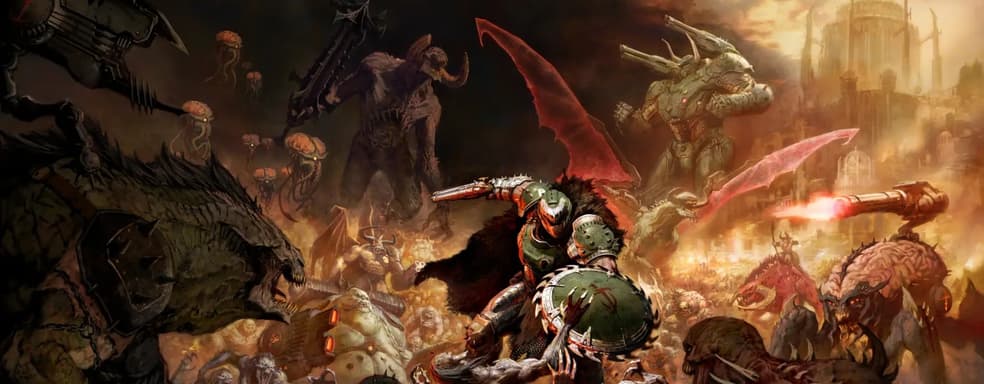
On May 15, a new installment of DOOM subtitled The Dark Ages is coming out. In an unusual format, we decided to look back and break down the DNA of the entire series — where it started, where it has arrived today, and why it still remains the premier shooter in the entire gaming industry.
DOOM — a name that today might be unfamiliar even to those who consider themselves gamers. In an era when the word “gamer” increasingly refers to fans of “tapping vegetables” in mobile games, ignorance of this title can be forgiven. Three decades ago, however, any self-respecting gamer was obliged to know Doom, and every second gamer was a “doomer.”
Although the game was not the pioneer of the first-person shooter (FPS) genre, whose origins trace back to 1973 and the game Maze War, it was Doom that became the symbol and benchmark of the genre. The game did not just set a new bar for the FPS of its time — it fundamentally redefined the rules of the genre, establishing standards that remain relevant to this day.
A year before the release of Doom, the id Software team launched Wolfenstein 3D, where many mechanics were tested that would later be implemented in their future hit. If Wolfenstein 3D represented an important evolutionary step, Doom made a true revolutionary breakthrough. The game not only elevated shooters to a qualitatively new level, but also brought them into the mainstream, turning FPS into one of the most popular video game genres.
While subsequent entries in the series did not exert quite as revolutionary an impact on the industry, the franchise remains one of the most iconic in video game history. Built into the genetic code of Doom is something far greater than just first-person shooter mechanics. This cultural phenomenon continues to influence the industry today.
The genetic code of Doom, much like the DNA of living organisms, consists of four key elements analogous to nucleotides: adenine represents narrative minimalism, guanine — technological breakthrough, cytosine embodies blazing mechanics, and thymine symbolizes design freedom. These components form Doom’s unique genetic code, which determined its outstanding place in video game history.
Doom I and II
Adenine: narrative minimalism
The idea that story in games is secondary to gameplay found its vivid expression in the first installments of Doom. John Carmack, one of the series’ creators, famously noted: “Story in a game is like a story in a porn movie. It's expected to be there, but it's not that important.” This quote accurately reflects the developers’ approach to storytelling in the early Doom titles. The entire narrative was stripped down to a minimum and fit into brief text files, which often went unnoticed by players. At the same time, their absence did not hinder immersion into the gameplay.
The plot of Doom I was extremely concise: the player took on the role of a space marine on Mars, where scientists opened a portal to Hell. Demons overran the research base, and the player’s objective was to destroy them. In Doom II, the storytelling became even more condensed: “You have returned to Earth, but it has also been overrun by demons. Save humanity.” No complex plot twists, detailed character motivation, or clearly articulated ending — only action.
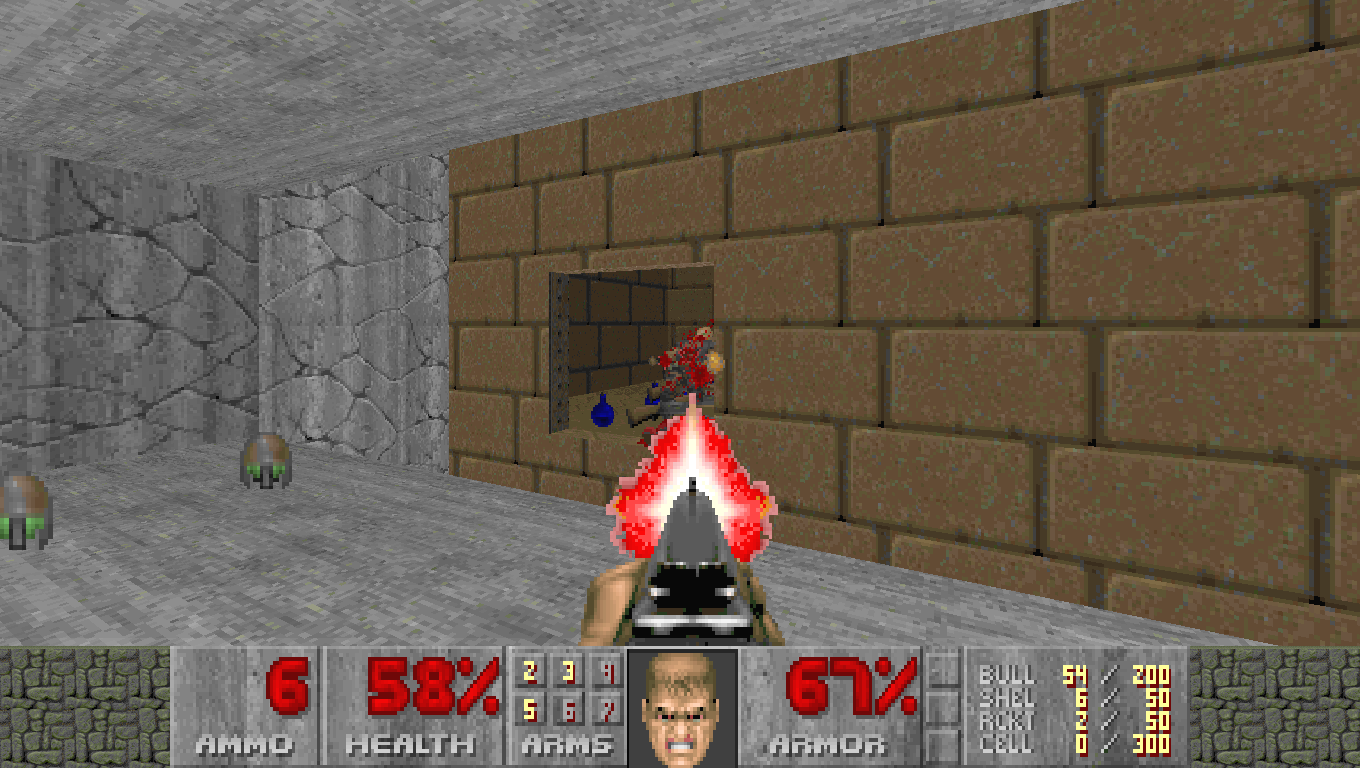 Doom II (PrBoom-Plus)
The question of how right John Carmack was remains open to debate. For example, our author George Petrovich takes the opposite view, arguing that storyline in games plays an important role. However, in the case of Doom, the facts speak for themselves: the lack of a deep narrative and character development did not prevent the first two installments from achieving cult status. They pulled off a genuine revolution in the shooter genre, the industry as a whole, and exerted a substantial influence on players’ minds.
In later parts of the series, attitudes toward story shifted, but experience shows that games in which developers strayed too far from the narrative minimalism characteristic of early Doom titles evoked mixed feelings from fans. Narrative minimalism is therefore not merely a trait of the early entries, but an inherent element of their genetic code.
Guanine: technological breakthrough
While Wolfenstein 3D, released in 1992, is perceived today as a primitive product, this definition does not apply to Doom. The game became a true technological breakthrough, radically transforming perceptions of what the FPS genre was capable of.
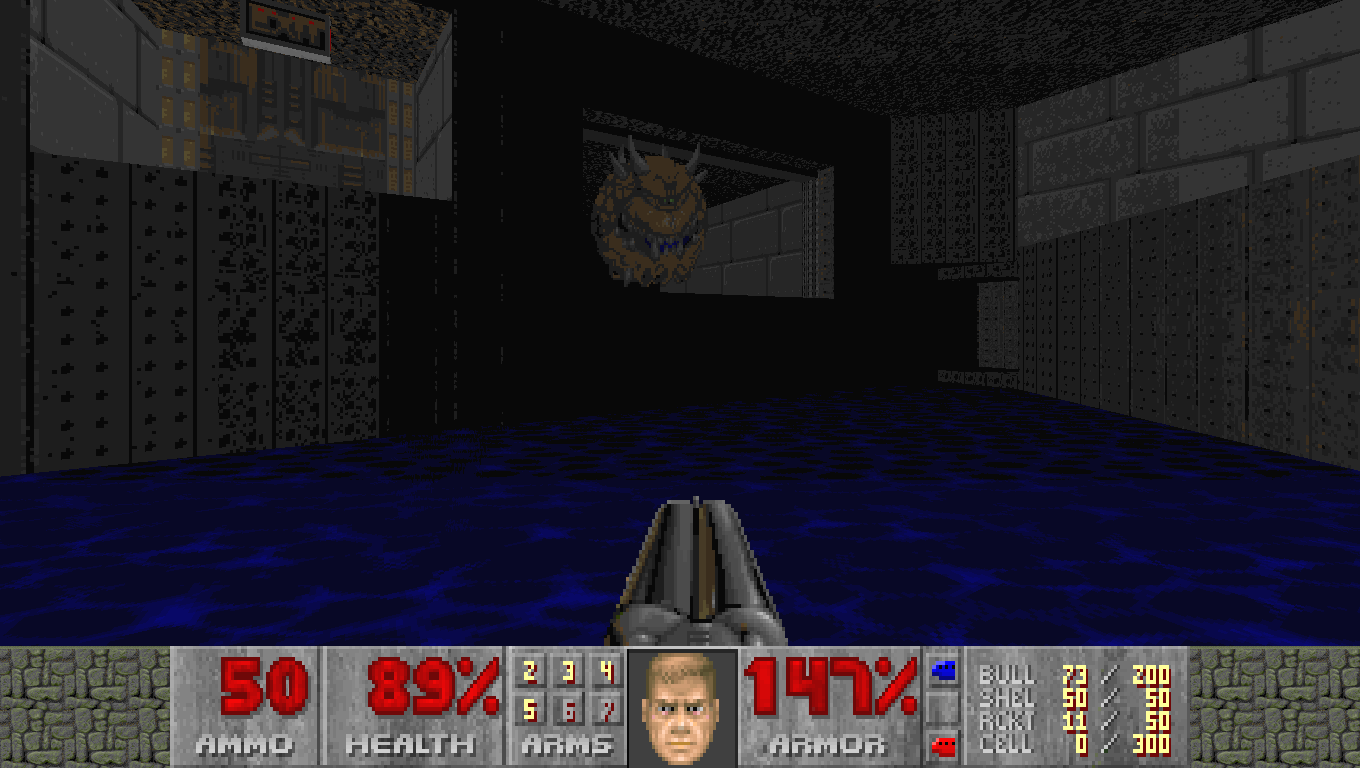
In contrast to the repetitive and flat corridors of Wolfenstein, Doom offered players a fundamentally new play space. Stairs, elevators, platforms, and pits were added to the game, creating the illusion of three-dimensionality. Although technically the levels remained two-dimensional (one location could not sit directly above another), meticulously crafted level design concealed these limitations. For the first time, players were able to interact with vertical space — jumping across obstacles, climbing onto high ground, or falling into chasms.
 Doom II (PrBoom-Plus)
Lighting in Doom was a real revelation. Instead of the static, uniform lighting characteristic of Wolfenstein, it introduced a dynamic system: flickering lamps, twilight in the corners, sudden flashes during firefights. Darkness stopped being a mere backdrop and turned into a vital gameplay element that created tension — it was impossible to anticipate precisely what was lurking in the shadows.
Textures gained a level of detail unheard of in 1993. Bloody footprints, cracked metal, terrifying imagery in the dark — every surface contributed to the atmosphere. The world of Doom felt alive and frighteningly authentic, something unthinkable in the era of Wolfenstein with its stylized, flat-colored textures.
A particularly valuable asset of Doom was its openness to modifications. The WAD file system allowed players to create their own levels, alter textures and weapons, and develop entire total conversions. This not only ensured the game’s longevity, but also laid the foundations of modern modding culture.
Students in the 1990s began recreating maps of their universities and dormitories, transferring familiar hallways, lecture halls, and other recognizable landmarks into the realm of multiplayer battles. This became not merely a hobby, but a new form of creative expression, filling the game’s universe with personal meanings and memories.
Technological flexibility became one of the key reasons behind Doom’s staying power. Even decades after the first installment’s release, fans continue to create new content, expanding the boundaries of the game. In this sense, Doom was ahead of its time: its engine became a sandbox for experimentation that significantly influenced the development of the entire industry.
Cytosine: blazing mechanics
At first glance, Doom I and II did not offer revolutionary innovations compared to other games of that era. They contained familiar elements: a first-person perspective, exploration of maze-like levels, and the straightforward mechanic of “see enemy — aim — fire.” Technically speaking, there were no sweeping innovations here. Yet Doom’s true uniqueness lay not in grand alterations, but in the flawless execution of every seemingly insignificant detail.
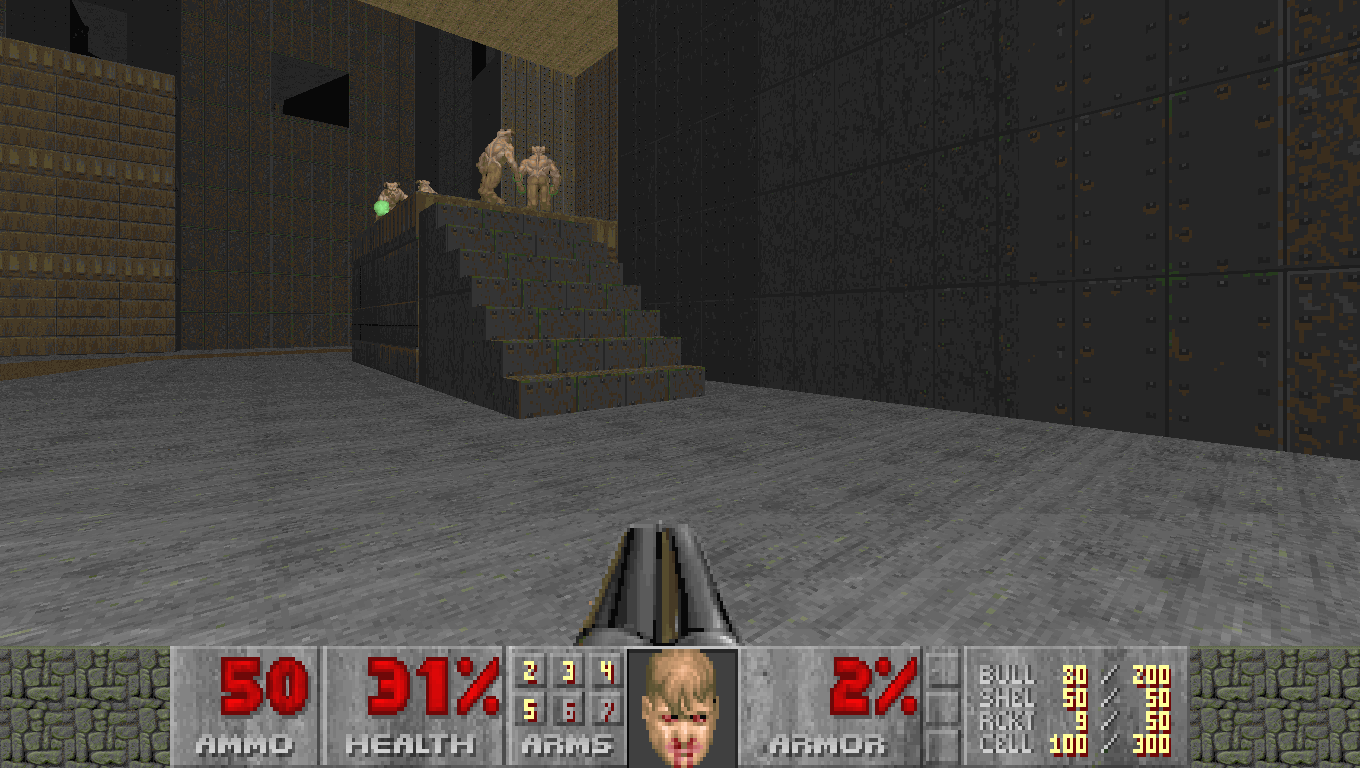
It was precisely these thoroughly polished elements that produced an entirely new tier of gameplay experience, which simply did not exist before Doom. Take weapons, for instance — an apparently standard attribute of any shooter. Yet in Doom, every gun possessed its own distinctive character and evoked completely unique sensations. The shotgun with its heavy punch and pellet spread, the menacingly slow reload of the super shotgun followed by a devastating double-barrel blast, the plasma rifle with its mesmerizing bursts of energy — all of this composed not just an arsenal for slaying demons, but a genuine symphony of violence.
 Doom II (PrBoom-Plus)
Special mention goes to the legendary BFG-9000. This weapon became the very emblem of Doom’s madness. A single shot transformed the screen into an apocalyptic spectacle of explosions, swirling plasma clouds, and disintegrating demons. No game of that era could deliver such emotions. Even the chainsaw, originally added as a joke, turned into a cult feature — not so much due to its efficiency as for the feeling of raw power and primal fury it embodied.
These nuances — from weapon recoil to sound design and enemy behavior — collectively produced an unmatched “feedback” that turned Doom into a cultural phenomenon. Every shot, every kill, every picked-up power-up brought incredible satisfaction. It was this meticulous attention to detail and obsession with delivering “pure fun” that became Doom’s greatest secret to success. While major technical innovations grew obsolete over time, the philosophy of “fun lies in the details” remains vital for the gaming industry today.
Thymine: design freedom
If the shooting mechanics set the tempo of the gameplay, the level design and visual style turned Doom into a manifesto of digital violence. The key feature of the game was absolute freedom, expressed both in the non-linear layout of locations and in raw, almost existential brutality.
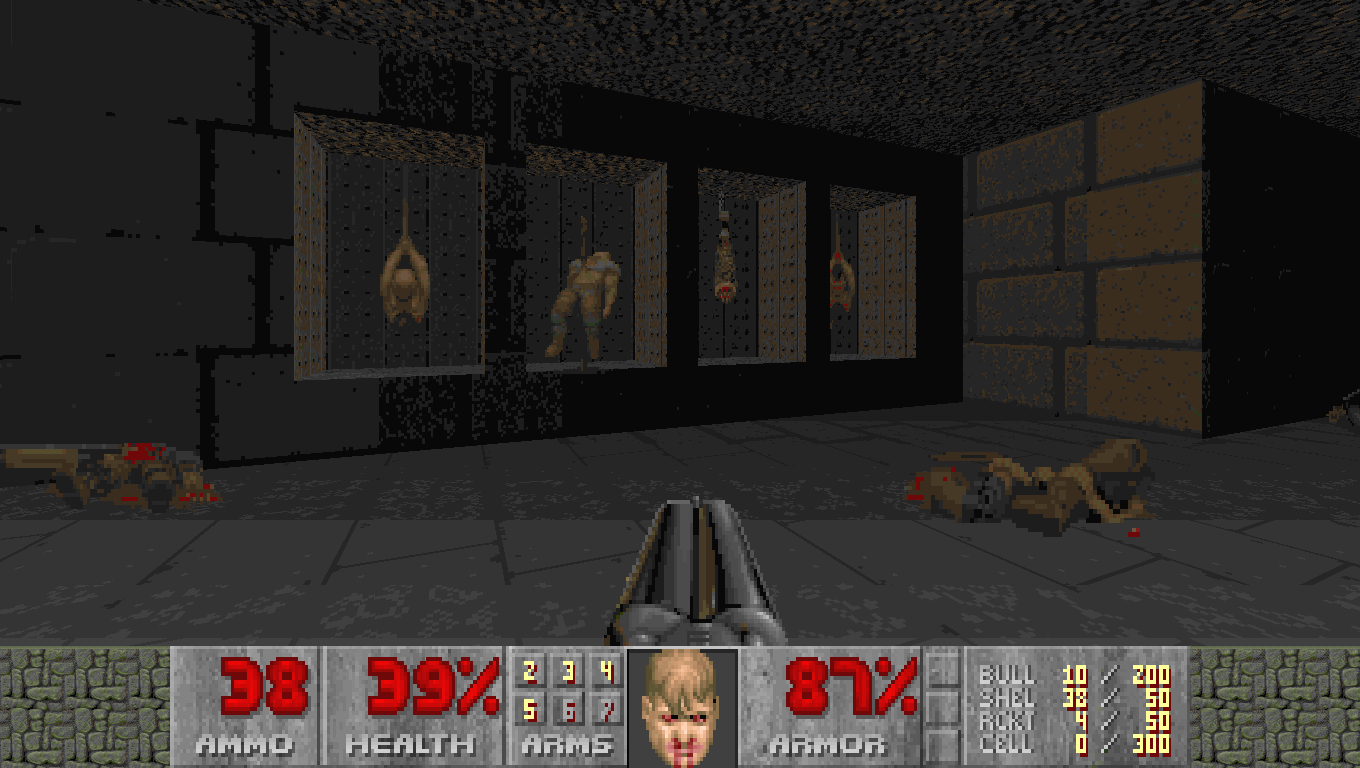
Doom became the forefather of “meat-grinder” shooters, where blood splatters and shredded flesh were not mere decoration, but a philosophy. Unlike Mortal Kombat (1992) with its theatrical fatalities, here violence became the player’s language of interaction with the world. Every shot left marks: floors were coated in the gory remnants of fallen foes, while demons writhed in their death throes. This was not routine gameplay, but a ritual of annihilation, where violence took on an almost meditative quality.
 Doom II (PrBoom-Plus)
Yet Doom offered more than just chaos — it gave the player the freedom to navigate this hell on their own terms. Levels resembled puzzles, where secret rooms with ammunition sat adjacent to deadly traps. A rocket launcher discovered behind a concealed door or a chainsaw hidden in the darkness rewarded curiosity, turning exploration into a perilous quest. Even cheat codes like IDDQD and IDKFA became part of this philosophy — granting the player temporary omnipotence to deliver bloody judgment across this digital underworld without restraint.
Vertical space introduced an added dynamic. Demons assaulted from elevated tiers, floors unexpectedly collapsed, and walls pressed inward, threatening to crush the unwary marine. These elements did not merely complicate gameplay — they gave violence meaning.
This was the paradox of Doom: a game centered on madness and destruction granted the player an unprecedented level of agency. One could methodically sweep room after room or tear through the level with a chainsaw, leaving behind a trail of blood. One could hunt for secrets or simply lay waste to everything in sight with the BFG. Doom did not dictate terms — it provided an arena where violence became an instrument of self-expression.
For younger players, an apt parallel might be GTA — particularly those moments when cheat codes are used to unleash havoc on the streets of Los Santos. The same catharsis, the same freedom to defy boundaries, only with police instead of demons and a tank instead of a chainsaw. Crucially, however, it was Doom that first turned digital violence into a pure, almost poetic form of liberation. While GTA grants dominion over a city, Doom handed players control over Hell itself. Freedom multiplied by impeccably refined chaos made the game not merely iconic, but truly everlasting.
The genotype of Doom I and II
Today, it may be hard to appreciate the revolutionary imprint the first two installments left on the gaming industry, especially when viewing these games three decades later. They not only set the benchmark for shooters, but also established fundamental principles for the entire video game landscape: freedom of action, focus on gameplay nuances, openness to modding, and an uncompromising commitment to entertainment.
These elements form the foundational DNA of the franchise. Now let us turn to how the developers subsequently built upon this legacy and how they envision the future of Doom.
Doom 3
My stance regarding Doom 3 is inevitably subjective — I firmly believe that the true third Doom was Quake 2. It was Quake 2 that continued the evolution of '90s shooters, retaining the genes of its predecessor (see the review of the remaster), falling short of the original perhaps only in design. History, however, took another course, and in 2004 under the name Doom 3, we received a radically different game.
Adenine: swinging to the other extreme
Released in the wake of the groundbreaking Half-Life, Doom 3 found itself in a challenging spot. The developers at id Software, always renowned for technological breakthroughs and gameplay, attempted to merge the franchise's DNA with emerging industry trends — deep storytelling and immersive atmosphere.
The plot revolving around a Martian base and a gateway to Hell formally honored series tradition, but its presentation shifted drastically. Concise text briefings gave way to fully realized cutscenes and audio logs. Instead of a faceless space marine, players followed a protagonist who finally spoke (and, surprisingly, it felt organic).
The narrative itself cannot be deemed poor. Critics and players generally praised it, though that enthusiasm lasted only until the release of Half-Life 2, which significantly outperformed Doom 3 in storytelling depth, execution, and polish.
The core problem is that a “proper storyline” stripped Doom 3 of its identity. Trying to break away from one extreme — short text summaries — the developers drifted straight into another. Even if this shift had set new industry standards, the outcome would still remain divisive. Unfortunately, that never happened. Today, hardly anyone looks back at Doom 3's storyline with warmth and nostalgia. Such people might exist, but they are clearly in the minority.
Guanine: yet another breakthrough
Doom 3 achieved a true technological revolution, reaffirming id Software's reputation as the standard-bearer for computer graphics. At the heart of this triumph was the groundbreaking id Tech 4 engine, which radically redefined perceptions of real-time 3D rendering.
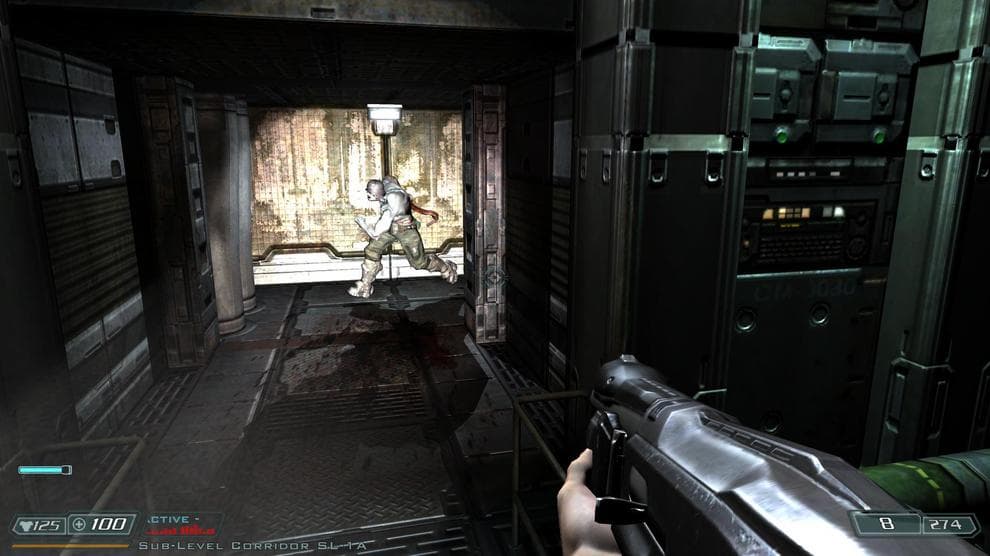
Its defining achievement was per-pixel dynamic lighting. Every lamp, every beam from the flashlight, and even muzzle flashes cast realistic, real-time shadows. This was a qualitative leap forward from the static, pre-baked lightmaps of the preceding generation toward true lighting dynamics.
 Doom 3 BFG Edition
However, technological progress came at a cost. Doom 3's system requirements proved so demanding that earlier-generation graphics cards, such as the GeForce 2 and Radeon 7000, were rendered obsolete overnight. Owners of those cards could only dream of running all the game's graphical features. In a sense, Doom 3 acted as a catalyst for industry progress, compelling gamers to upgrade their PCs en masse and hardware manufacturers to accelerate new developments.
The engine brought other innovations as well: an advanced audio engine featuring reverberation and spatial audio positioning — particularly haunting in the dark corridors of the Mars base — alongside a baseline physics engine that enhanced tactile authenticity. While the physics trailed behind the revolutionary setup in Half-Life 2, it still bolstered the sense of environmental interactivity.
Despite certain constraints, id Tech 4 brilliantly proved its technological superiority. The graphical innovations in Doom 3 influenced a whole generation of titles, while techniques like unified dynamic lighting became prerequisites for subsequent AAA releases. Even today, nearly two decades later, Doom 3 retains its visual punch — a rare feat for a game of its era.
Cytosine: a step aside
While gunplay in the original Doom titles was synonymous with ferocious fury and relentless chaos, Doom 3 adopted an entirely different philosophy. The focus shifted away from high speed toward suffocating tension. The game became slower, more deliberate, and even cautious. Players no longer plunged into hordes of demons with a plasma gun, spraying energy bolts left and right. Instead, armed with the “correct” and “appropriate” weapon, they cautiously crept through the labyrinthine corridors of the Martian complex.
Weapons in Doom 3 preserved their iconic standing, but the feel of every firearm changed. The legendary shotgun ceased to be an all-purpose close-quarters powerhouse — it now required tight precision and careful calculation. The plasma gun, once a symbol of the player’s unstoppable power, turned into more of a weapon of last resort. Even the chainsaw, an iconic staple of the originals, was transformed into a rare and hazardous indulgence.
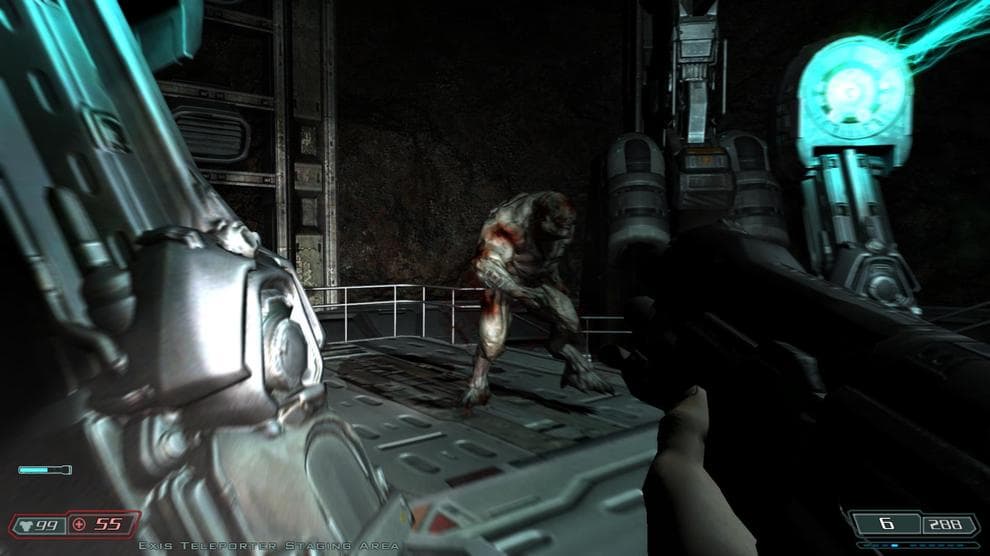
The symbol of Doom 3 became… the flashlight. Yes, a simple flashlight that could not be used at the same time as a weapon. This controversial design choice became one of the most discussed features of the game. On the one hand, it heightened tension: the player was forced to choose between illuminating dark corridors and having the ability to defend themselves. On the other hand — the spirit, the “fun” of the originals was lost.
It was this mechanic that best reflected the new philosophy of Doom 3. The game invited the player not just to fight demons, but to experience fear. In Doom 3, the player always felt vulnerable — and that was part of the design. The enemies also became more sophisticated. While in the first Doom games demons were rather obstacles on the way to the next fight, here they turned into true hunters.
Such an interpretation of shooter gameplay mechanics has a right to exist. But the question remains: can such a game bear the name Doom?
Thymine: in the vice
If the design of the first Doom games was a hymn to freedom, Doom 3 became its exact opposite. Here, the freedom of exploration and nonlinearity gave way to cramped corridors, linear routes, and a persistent sense of claustrophobia. This was no longer an arena for mad chaos, but a labyrinth where every step could turn into a deadly trap.
The visual style of Doom 3 differed radically from its predecessors. In the original Doom games, although there were no vivid colors, their dynamism was achieved through almost carnivalesque violence and energy. Doom 3 turned out to be different. Cold, sterile tones of a Martian base diluted with grim industrial details — every texture, every corner, every interior detail worked toward a single goal: to create tension.
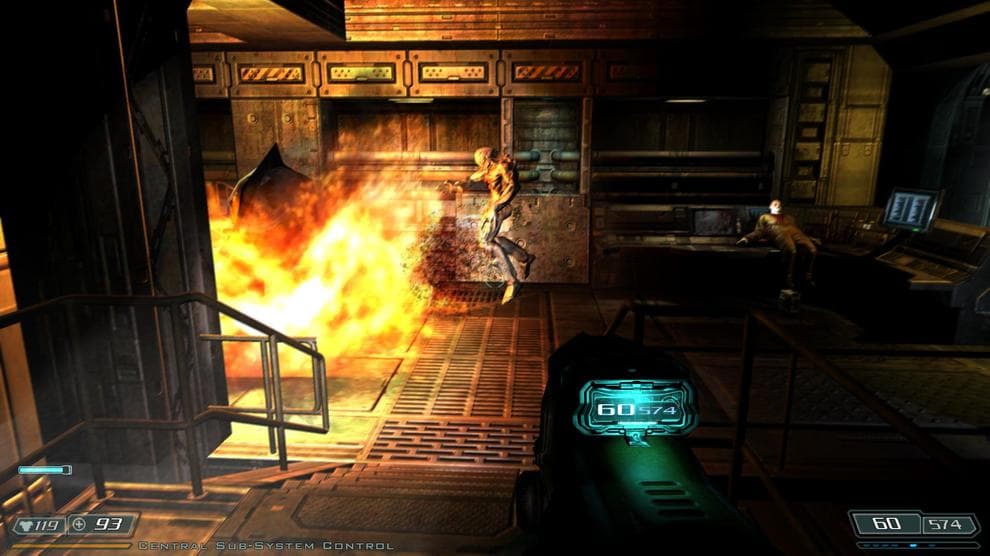
Many fans of the original Doom games criticized Doom 3 for excessive linearity and enclosed spaces. The open arenas where one could choose their own tactics, secret rooms that rewarded curiosity, and vertical variety that made fights more dynamic were gone. Instead, the player got narrow corridors where every battle turned into a struggle for survival.
The genotype of Doom 3
Nevertheless, it cannot be denied that Doom 3 offered a unique experience in terms of design. The game became a benchmark for horror in the shooter genre. Dark corners, sudden enemy spawns, the sounds of footsteps behind your back — all of this generated persistent tension. The developers masterfully used space to make the player feel vulnerable. Even the open zones, which were rare in the game, seemed unsafe due to their scale and the difficulty of controlling the situation.
The lighting work deserves special attention. While in the first Doom games lighting was primarily functional, here it became a key design element. Darkness hid not only enemies, but also clues, items, and escape routes. The player constantly had to balance the need to illuminate the path with the risk of being defenseless against an attack.
Doom 3’s influence on the gaming industry also cannot be ignored. Many elements of its engine were later adopted by other developers.
Ultimately, Doom 3 turned out to be a game of a transitional period. It attempted to combine the classic spirit of the series with modern technologies and design approaches. In some places it succeeded, in others — it did not. But one thing can be said for sure: Doom 3 proved once again that id Software remained a trendsetter in the world of shooters, even if its experiments were not always received unambiguously.
Doom 3 is an identity crisis in its purest form. On the one hand, flawless technologies for 2004 (dynamic lighting, physics). On the other — the loss of the very “feedback” and “fun” that made the first installments iconic.
Paradoxically, it was in technology that Doom 3 most faithfully preserved the spirit of the original series — the drive to be on the cutting edge of progress. If in gameplay and design it departed from the canon, technically it continued the tradition established back by the first installment: every new id Software engine had to redefine industry standards.
Doom (2016)
Doom 2016 rebooted the legendary series, reimagining its heritage in the era of console dominance and modern technology. More than ten years had passed since the release of Doom 3, and the gaming industry had changed beyond recognition. Shooters, having started by imitating Half-Life and Doom 3, turned either into bright, dynamic cinematic action titles like Call of Duty: Advanced Warfare (2014) or into philosophical reflections with deep storytelling and an attempt to explore the protagonist’s inner world, as seen, for example, in BioShock Infinite (2013).
In this largely “vegetarian” atmosphere, the developers at id Software decided to return to the series’ bloody roots while simultaneously adapting them to the demands of a new generation of players.
Adenine: a balance found
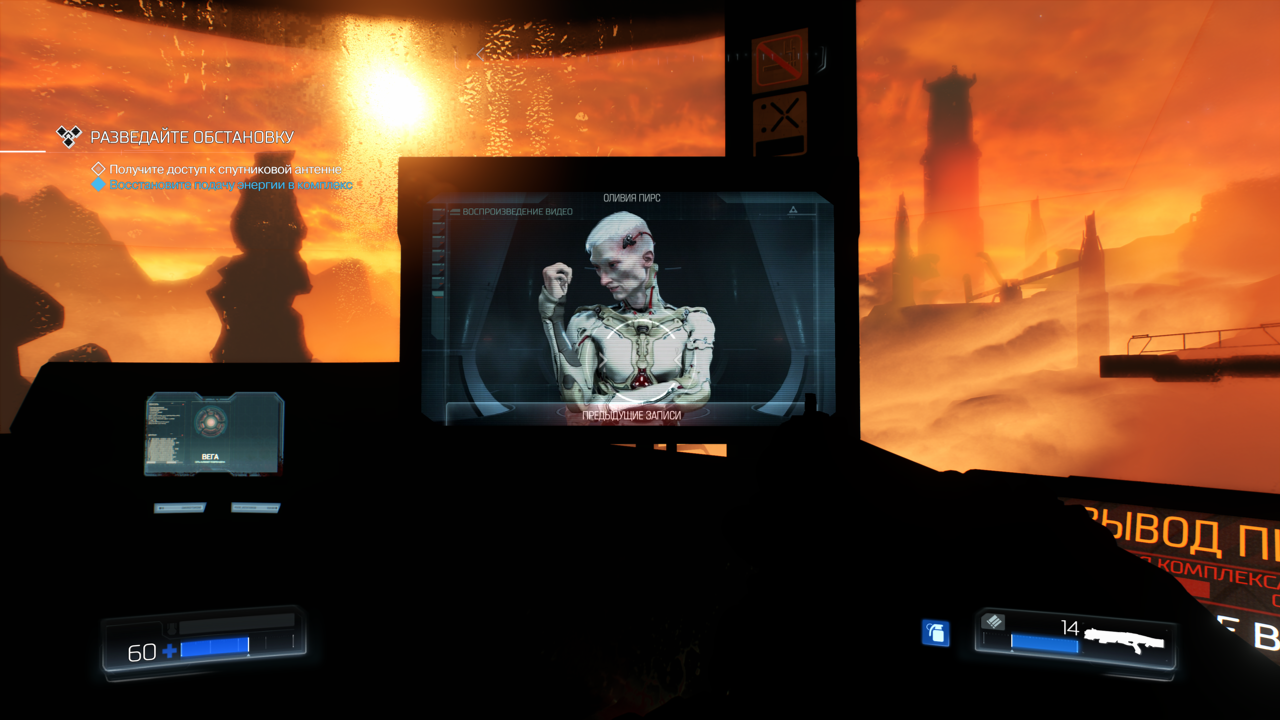
The plot of Doom 2016 was extremely concise, as if responding to the criticism of Doom 3. The game hardly tried to impose a complex story on the player — instead, it offered a basic framework, leaving the details to those who wanted to discover them. The action once again unfolds on a Martian base where scientists of the UAC corporation, engaged in extracting energy from Hell, upset the balance between worlds. As a result, demons poured into the base, destroying everything in their path. The player must stop the invasion using any available means.
Unlike previous installments, the story is revealed through found documents, audio recordings, and video clips that can be ignored without detracting from the gameplay. This approach became a compromise between the minimalism of the first Doom games and the narrative ambitions of Doom 3. The developers made it clear: the main thing here is not the plot, but the action.
 Doom 2016 (Xbox Series X)
Nevertheless, this is precisely the philosophy of the original Doom games. Just like 20 years before this moment, Doom 2016 does not tell long stories about the hero — it shows him through action. The silent protagonist does not ponder the fate of humanity or engage in philosophical conversations with other characters. He speaks the language of the shotgun, the plasma rifle, and the chainsaw. This is not just a tribute to classic Doom games, but also a statement: sometimes less is more.
Thus, Doom 2016 gives players exactly what they expected from the revival of the iconic series — mad, uncompromising, and non-stop action and fun. Leaving an opportunity to find meaning for those players who seek it.
Guanine: technological compromise
Doom 2016 became an important step forward in terms of technology, but it also demonstrated a certain departure from the series’ traditions. The game was powered by the new id Tech 6 engine, developed without the participation of John Carmack, whose revolutionary ideas set the tone for the entire series in the past. Although the engine provided a high level of graphical and technical execution, it did not offer the breakthrough solutions associated with classic Doom installments.
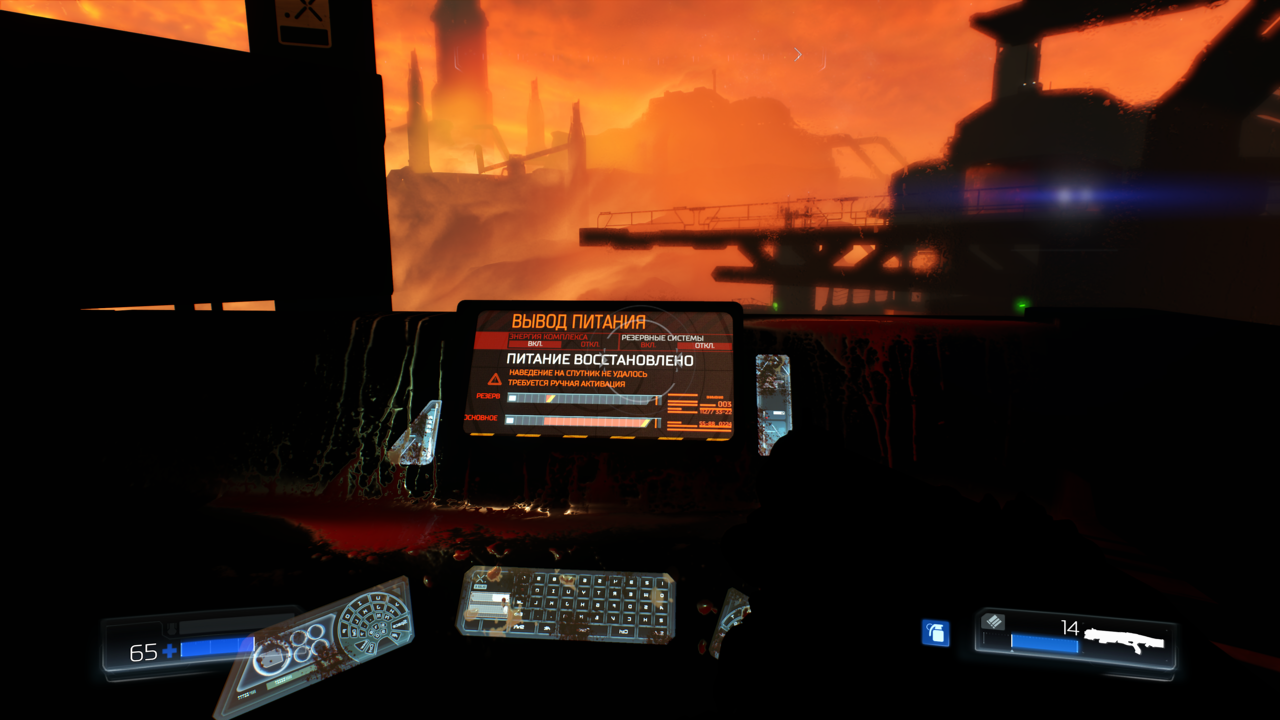
Dynamic lighting, realistic textures, and environmental interaction effects made the world of Doom 2016 incredibly detailed. Flashes of fire, shimmering lava, and reflections of plasma created the feeling of a living, pulsing world. However, these technologies were already available in other engines of the time, such as Unreal Engine 4 (2014) or CryEngine 4 (2013).
 Doom 2016 (Xbox Series X)
Unlike early Doom games, where the emphasis was on innovative mechanics and unique solutions (such as pseudo-3D in Doom or dynamic lighting in Doom 3), id Tech 6 was a product of evolution rather than revolution. It was an excellent tool for crafting massive battles and visually impressive locations, but it did not set new standards for the entire industry the way previous id Software projects did.
Instead, the engine was tuned to match the philosophy of Doom as closely as possible. id Tech 6 delivered uncompromising performance: levels loaded almost instantaneously, and even the largest-scale encounters involving dozens of demons took place without hitching. This was crucial for maintaining the game’s pace, which significantly surpassed the dynamics of all previous installments in the series.
Thus, Doom 2016 demonstrated that technology can serve not only as a showcase of technical progress, but also as a means of enhancing gameplay. However, this is not the technological breakthrough associated with classic Doom games. The departure from tradition is evident in the fact that the game focused on spectacle and optimization instead of proposing fundamentally new solutions. In this sense, Doom 2016 became a product of its time — polished and impressive, but devoid of that revolutionary quality that once defined the spirit of the series.
Cytosine: revival of fiery mechanics
Doom 2016 returned the series to its roots, preserving the continuity and spirit of the original Doom games. While Doom 3 focused on tension and caution, Doom 2016 shifted the focus back to frantic fury, chaos, and uncompromising action. This was precisely what fans had been expecting from the reboot — a return to the dynamic and aggressive essence of Doom.
At the core of Doom 2016’s gameplay lies the idea of “combat choreography” — constant movement that is simultaneously purposeful and efficient. Unlike many popular shooters of that era that emphasized cover and tactical planning (such as the nearly quintessential example in this regard, Gears of War 4, released in the same year, 2016), Doom demanded relentless momentum from the player. Cover was absent as a gameplay element, and attempting to hunker down led to inevitable death. The game literally forced you to move, shoot, and destroy.
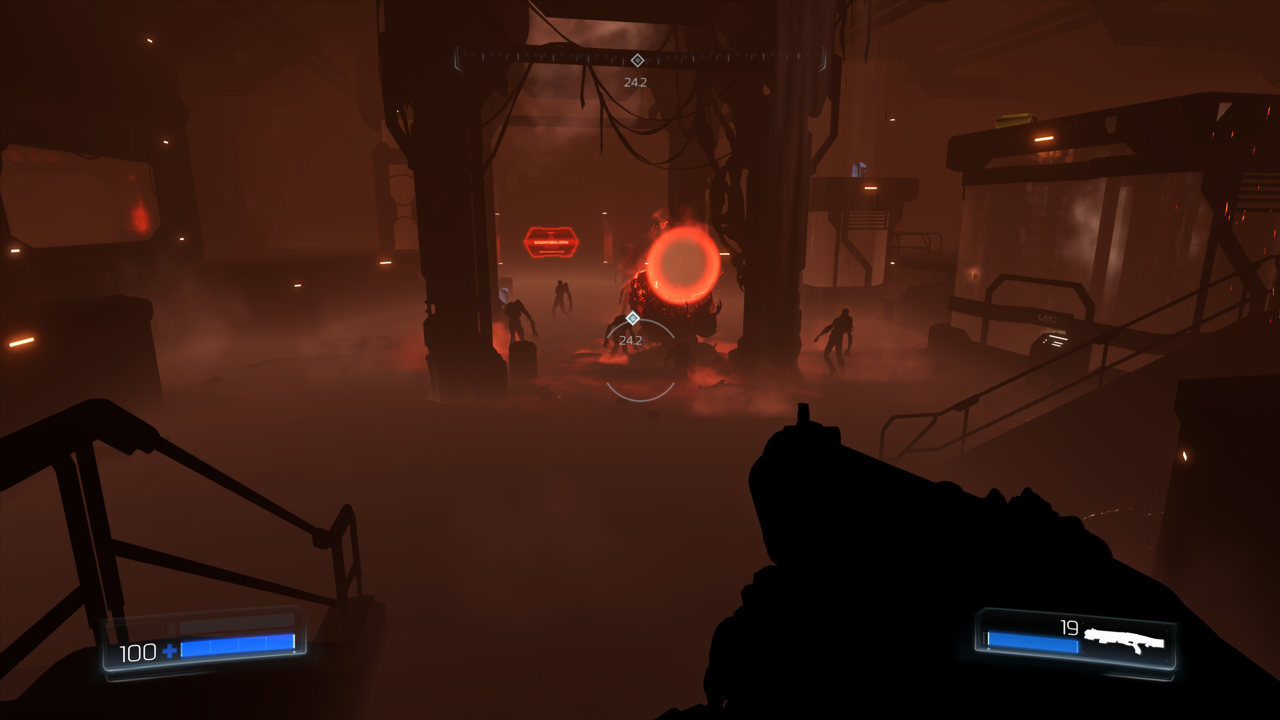 Doom 2016 (Xbox Series X)
This mechanic was reinforced by the Glory Kills system. When a demon’s health dropped below a certain threshold, an opportunity appeared to execute a special finisher. This not only added spectacle, but also served a practical purpose: more resources, such as ammo and health, dropped after a Glory Kill. Thus, the game encouraged an aggressive playstyle, motivating the player to maintain a high combat tempo.
Iconic elements from past installments returned to the Doomers’ arsenal, such as the Super Shotgun, the BFG-9000, and the chainsaw, but all of them were reimagined and supplemented with modern mechanics. Each weapon featured a unique modification system that allowed it to be tailored to one’s playstyle. For instance, the shotgun could be equipped with a drum magazine to increase the fire rate, while the rocket launcher could receive a lock-on system for precision strikes.
Classic elements also received a new interpretation. The chainsaw became a resource management tool: using it guaranteed ammo recovery, but required caution due to limited fuel reserves. The BFG-9000 retained its devastating power, but became a rarer and more strategically vital weapon requiring calculated use.
Demons in Doom 2016 became more than just targets; they were full-fledged elements of the gameplay mechanics. Each enemy type had its own behavioral patterns and vulnerabilities. For instance, the Imp could barrage the player with fireballs, while the Pinky relied on melee combat and speed. This variety forced players to adapt and switch tactics depending on the enemy lineup.
Bosses such as the Cyberdemon offered massive, spectacular encounters that demanded not only firepower, but also tactical thinking. These moments became some of the most memorable in the game.
As in the series’ first installments, attention to detail was a key element of Doom 2016’s success. From recoil force to the sound design of every shot — everything worked together to deliver unmistakable “feedback.” This approach made it possible to recreate that very “fun” that made the original titles legendary.
Thymine: design as a challenge to tradition
Doom 2016 marked a major step forward not only in technology and mechanics, but also in level design. While Doom 3 confined the player to cramped corridors and linear routes, Doom 2016 brought back the freedom of exploration, reimagining it through the lens of modern approaches. This was no longer the chaotic maze of the first Doom games or the minimalist horror of Doom 3, but a carefully thought-out space where every detail worked for the gameplay.
However, one nuance should be noted here. In the first two Doom games, technologies capable of rendering large open spaces in shooters simply did not exist due to platform constraints. Yet in both the first and second Doom installments, maze-like levels regularly alternated with arena-like stages. In this respect, Doom 2016, combining open arenas with narrower sections, emerged as a modern embodiment of the classic formula.
Just like in the original Doom games, the arenas became true battlegrounds where the player could choose tactics: from a head-on assault to using the environment to gain an advantage. And just like in the first installments, verticality played its part — platforms, ledges, and hidden paths added depth both visually and mechanically.
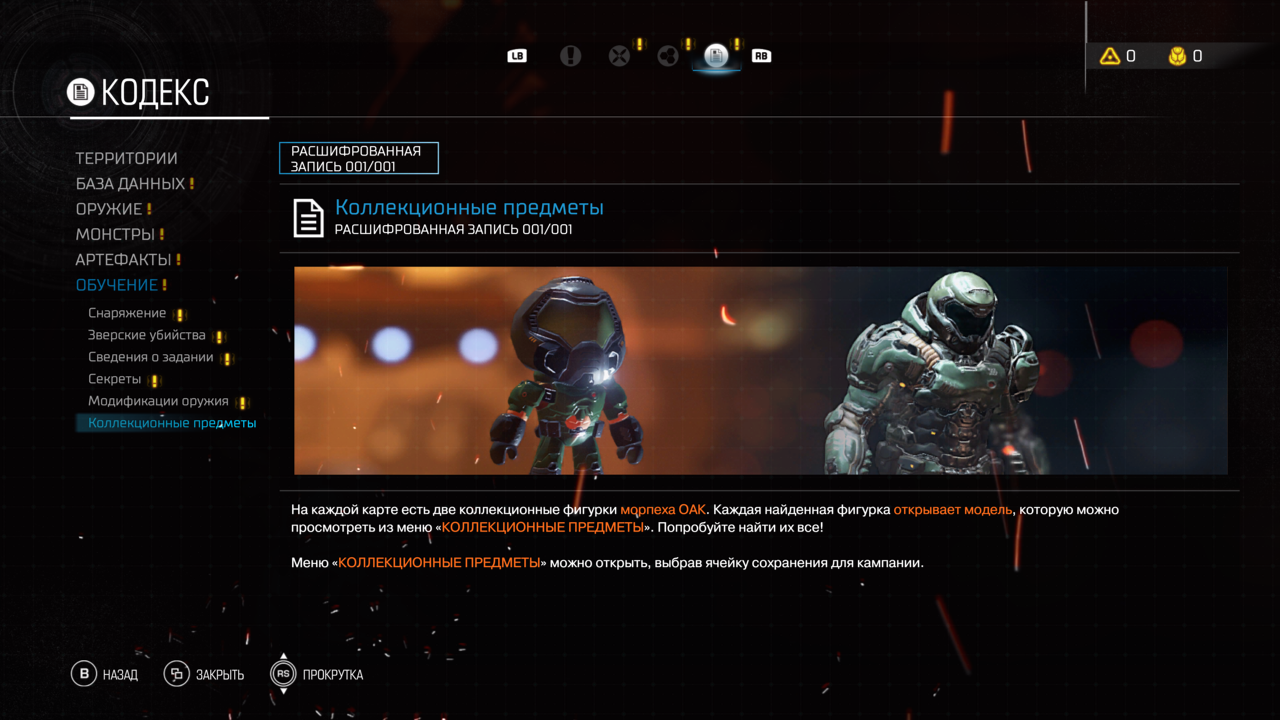 Doom 2016 (Xbox Series X)
This was particularly important in the context of the revived “combat choreography” mechanic. The player could use height for aerial attacks, evade enemies, or discover secrets. The level design encouraged experimentation, granting the player freedom of action while remaining intuitive.
Visually, Doom 2016 differed radically from its predecessor, Doom 3. While that game was cold, gloomy, and almost austere, the new Doom exploded on screen with vivid colors and detailed textures. The game world pulsed with energy: from fiery bursts and flickering lights to bloody demon trails.
As in classic Doom games, the developers hid numerous secrets that rewarded the player for attentiveness and exploration. These could be extra ammunition, weapon upgrades, or simply fun easter eggs referencing the series’ history. In Doom 2016, however, secrets were integrated more seamlessly: they did not interrupt the game’s flow, but rather became part of the exploration process.
Demon design maintained continuity and, as originally intended, also became an essential part of the game’s overall aesthetic. Each enemy was unique not only in behavior, but also visually. Their appearance reflected their character and role in the game world: from the fast and agile Imp to the massive and terrifying Cyberdemon.
In this sense, Doom 2016 once again returned to its roots while adapting them to modern realities. The game did not impose rigid rules or playthrough routes on the player. Instead, it offered an arena where everyone could find their own playstyle: whether methodical elimination of enemies, exploiting the environment for tactical advantage, or reckless chainsaw-wielding chaos.
Doom 2016 proved that freedom of design is not merely a tribute to the past, but a powerful tool for crafting an unforgettable gaming experience. It was this freedom that became one of the main reasons why the game managed to return the series to the peak of popularity while preserving the spirit of the originals.
The genotype of Doom 2016
The id Tech 6 engine, while not introducing groundbreaking ideas, delivered a high level of graphical detail, performance, and optimization. This is perhaps the only gene that Doom 2016 did not fully inherit from its forebears. In every other respect, however — narrative minimalism, fiery mechanics, design freedom, and iconic “fun” — the game remained flesh and blood of Doom.
Doom 2016 brought back the focus on mad fury and chaos characteristic of the series’ classic entries. The game proved that the franchise could evolve while staying true to its roots. It gave players exactly what they had been waiting for: crazy, uncompromising, and thrilling action, becoming a benchmark for how a reboot can honor the past without being afraid to look into the future.
Doom Eternal
Surprisingly, the next installment of Doom arrived not after ten years, as was the case between Doom 3 and Doom 2016, but rather “swiftly” — just four years after the 2016 reboot. Although the same id Software team was responsible for Doom Eternal, the new game turned out to be noticeably different. It retained the key elements that made the previous installment successful, but offered a more ambitious approach to gameplay, design, and storytelling.
However, it is precisely in these changes that one can see another departure from the DNA of classic Doom. If Doom 2016 was a revival of the series that returned it to its roots, Doom Eternal was an attempt to reimagine its legacy, adapting it to modern realities and industry demands.
Adenine: narrative balance
id Software decided not to alter the balance between narrative and action found in Doom 2016. The game still offers a minimalist story that does not impose itself on the player, yet simultaneously expands the series’ lore.
Just like in Doom 2016, all this information is presented in the form of supplementary materials: audio logs, texts, and character dialogues. This allows the player to either fully immerse themselves in the lore or simply ignore it, focusing on the action.
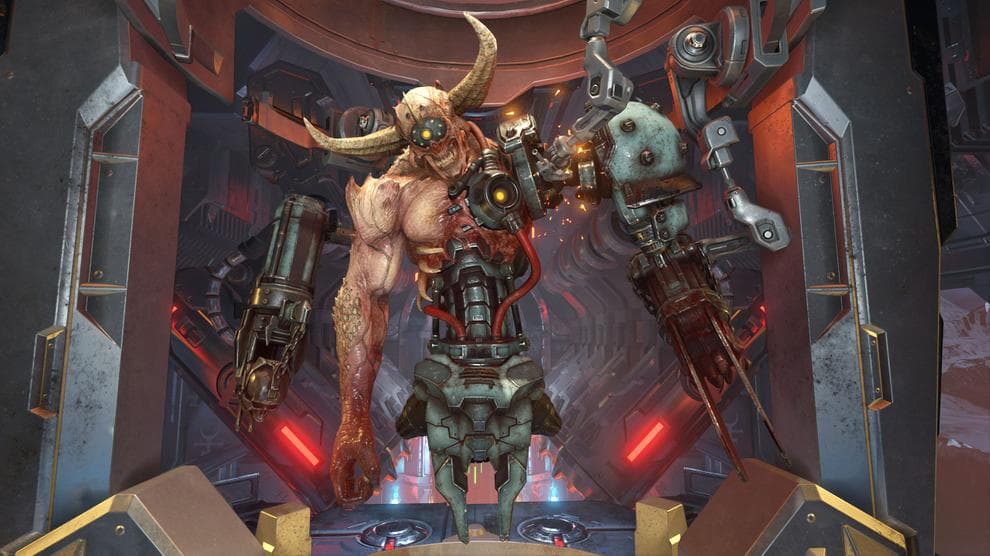 Doom Eternal (PC)
This approach maintains continuity with the classic Doom games, where the plot was a secondary element. But at the same time, Doom Eternal adds more details for those interested in the depth of the world.
Although striking a complete balance was not quite achieved. Every now and then, the game dumps tons of unnecessary and sometimes silly pathos onto the player, leaving them with the silent question: “Why?”
Guanine: technological stagnation
Generally speaking, id Tech 7 can hardly be considered a full-fledged new engine version. Among the significant innovations, the developers offered only a tenfold increase in geometric detail and texture fidelity compared to id Tech 6, and implemented a system called “Destructible Demons”. This mechanic allowed enemies' bodies to gradually deteriorate and break down in combat as damage was dealt. However, even the not-so-groundbreaking id Tech 6 could boast a more impressive list of changes.
To be fair, graphical technology in the modern gaming industry is in a state of stagnation. The point is that the explosive growth in hardware performance seen in past decades has largely run its course. Nevertheless, this is no excuse for a complete lack of innovation. The developers of Unreal Engine, for example, continue to offer fresh solutions that set new standards across the industry.
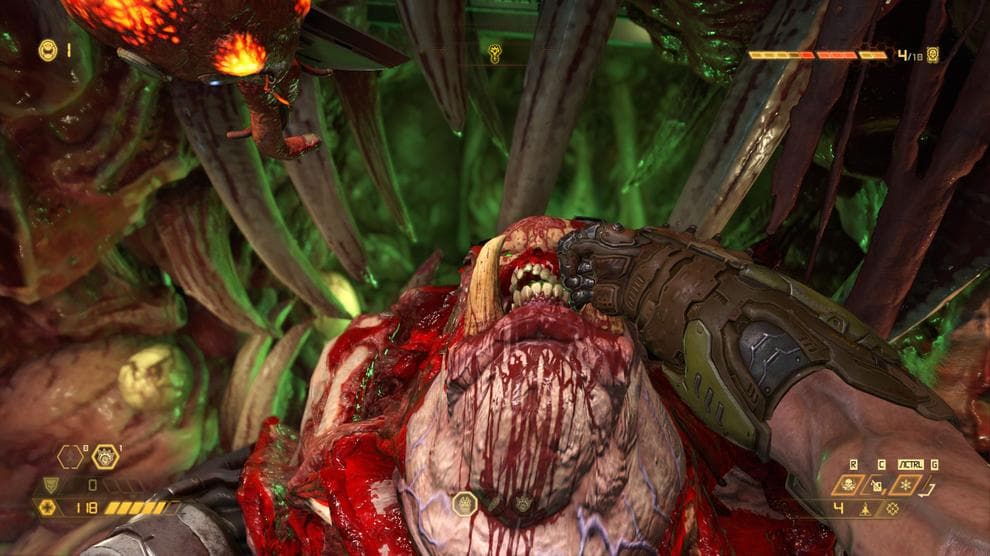 Doom Eternal (PC)
As for Doom Eternal, its engine certainly remains technologically advanced. It delivers excellent performance, boasts great visuals, and maintains high frame rates even in the most intense action scenes. However, the wow factor that accompanied the release of previous Doom installments is gone. While Doom 2016 still sparked admiration as the resurrection of a legendary series with modern graphics, Doom Eternal looks more like an evolutionary step than a revolutionary leap.
Unfortunately, newer Doom installments no longer showcase the technological leadership that once made the series legendary. While in the Doom 2016 era id Software could still compete on the front lines of graphical capabilities, with the release of Doom Eternal that situation began to shift.
At the same time, another point is important to note. Doom’s gameplay mechanics and design have always depended to some extent on technology—and were held hostage by it. The bottom line is that the developers could use new engine capabilities to push both design and gameplay forward. But id Tech 7 does not provide such an opportunity. As we will see later, the developers still tried to do something new and unusual, but just like with Doom 3, the result turned out to be mixed.
Cytosine: mechanics on the edge
Doom Eternal largely continued the traditions established in Doom 2016, but emphasized deepening and expanding existing mechanics. The same combat choreography, the same dynamic battles, the same feeling of constant momentum remained. However, the key innovation was an even greater emphasis on the Glory Kills system and its derivatives—now the player had to not just finish off demons to get resources, but constantly manage multiple survival parameters. This brought a new level of difficulty to the game, but also raised questions about where the line lies between a shooter and a slasher.
In Doom Eternal, the developers decided to make the focus on resource management more prominent. Now every action the player takes—whether using the chainsaw to restore ammo, setting enemies on fire to get armor, or executing glory kills to restore health—became part of an intricate survival ecosystem. This created a feeling of constant scarcity in everything: ammo, health, armor. The player was forced to constantly seek ways to replenish supplies, making every battle more intense and demanding.
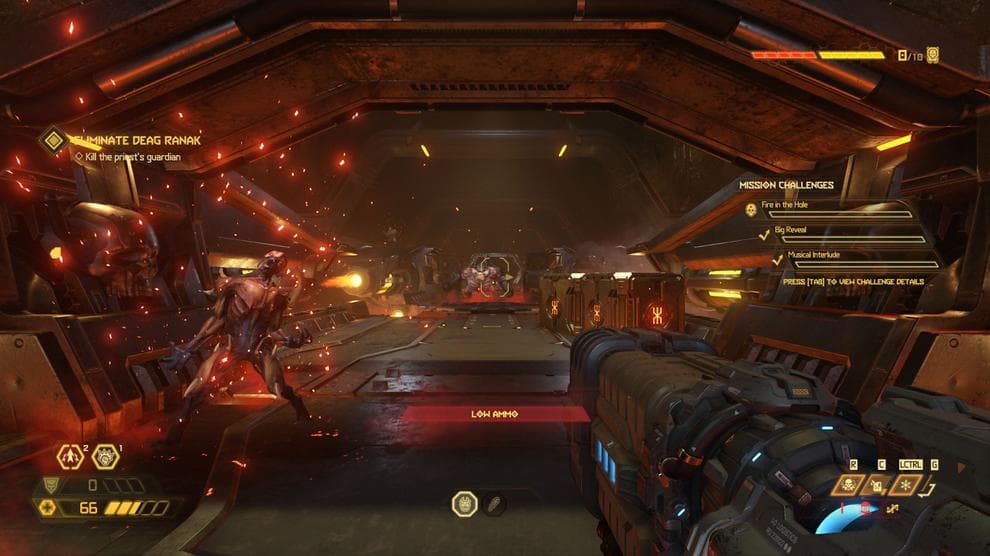 Doom Eternal (PC)
However, this approach came at a price. While in Doom 2016 the Glory Kills system was an addition to core gameplay, in Doom Eternal it became its central pillar. Finishers ceased to be merely a spectacular bonus—they became a necessity. Without them, the player quickly found themselves in a situation where continuing the fight became virtually impossible. This gave the impression that the shooter was turning into a slasher, where the focus shifted from gunplay to physical annihilation of enemies.
Increasing the focus on brutal glory kills and resource management is a logical evolution of Doom 2016’s ideas, but here it went a bit “too far,” changing the very nature of the game. For the first time in the series’ history, players could feel not just powerful, but also constrained. This contradicted the spirit of classic Doom games, where the sense of permissiveness and boundless power was a core gameplay element.
Thus, Doom Eternal truly teetered on the edge between a shooter and a slasher. On the one hand, this added uniqueness and challenge to the game. On the other, it could alienate those who came to Doom for wild, uncompromising gunplay rather than constant planning and calculation.
Of course, one cannot say this completely altered the essence of the series. However, Doom Eternal became a prime example of how an attempt to evolve can lead to a partial loss of identity. Doom, a synonym for “shooter,” became a bit less “shooter-like” and a bit more “slasher-like.”
Thymine: design as cognitive dissonance
In terms of design, Doom Eternal continues many ideas laid out in Doom 2016, but shows a notable departure from the classic principles of the series. While Doom 2016 brought back exploratory freedom and dynamic arenas, Eternal delved into mechanical complexity and resource management. However, this complexity led to unexpected consequences—the visual design became hostage to the chosen combat concept.
In Doom Eternal, the developers faced the need to explicitly convey information to the player regarding available and required resources. This led to an abundance of icons on the screen: indicators for health, armor, ammo, as well as prompts for glory kills, power-ups, and other mechanics. Amidst the bloody chaos and frenetic combat pace, these bright UI elements created cognitive dissonance. It felt as if rainbow ponies had invaded a bloodbath.
This approach was dictated by game mechanics, where every player action depended on resource management. However, such design contradicted the spirit of classic Doom games, where HUD minimalism allowed players to focus entirely on the action. In Eternal, the player’s attention was constantly divided between visual on-screen data and what was happening in the game.
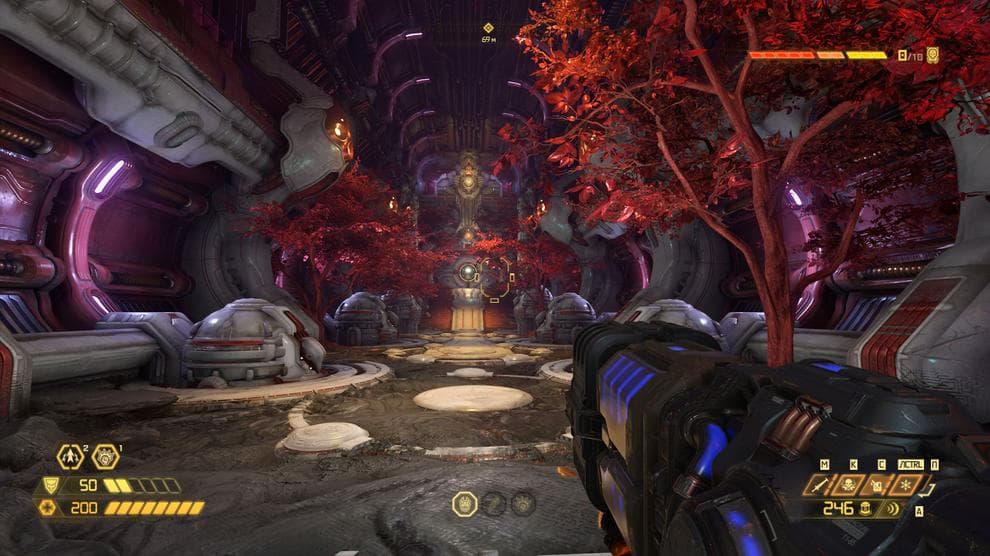 Doom Eternal (PC)
Playing with verticality became another hallmark of level design in Doom Eternal. The developers actively incorporated platforming, offering players the chance to scale heights, leap between platforms, and use a grappling hook to traverse environments. This element added a new dimension to gameplay, but raised questions about whether it aligned with the series' spirit.
Of course, verticality has always been part of Doom—even in the earliest entries, players could interact with height using stairs, elevators, and platforms. However, in Eternal, this aspect was pushed to the extreme. Platforming became not just a supplement, but a key element of navigating certain locations. At times this worked in the game’s favor by adding variety to encounters, but at other times it got in the way, disrupting the game’s rhythm and distracting from the core action.
Demon and environment design in Doom Eternal also underwent changes. While in Doom 2016 enemies were more traditional, here their appearance became even more elaborate and detailed. Each demon was unique not only in behavior, but visually, emphasizing their role in the game world.
However, this detail sometimes created issues. The multitude of bright colors, effects, and animations on screen could overwhelm perception, especially during intense battles. Environments also became more saturated, yet often lost that atmosphere of dread and chaos that was characteristic of earlier installments.
In Doom Eternal, exploratory freedom, once one of the series' hallmarks, underwent substantial changes. While in the first Doom games secrets were part of the game's philosophy—rewarding curiosity, encouraging experimentation, and adding depth to gameplay—in Eternal this approach transformed into something more mechanical. Locations became overloaded with bonuses, and the player faces a “secrets for the sake of secrets” approach.
Every corner, every room, every hallway conceals something: suit tokens, weapon upgrade points, runes, unlockables for other items, and challenge bypass tokens. However, not all of these elements prove useful or interesting. Many upgrades go unused, while some items simply sit in the inventory without bringing any tangible benefit.
This approach creates a sense of artificiality. Instead of being an organic part of the gameplay loop, secrets and bonuses start feeling like a mandatory design checklist that distracts more than it helps. This runs counter to the spirit of classic Doom titles, where every secret discovered was a meaningful event rather than just another checklist item.
Doom Eternal genotype
Doom Eternal cannot be called a “bad” game. It is an engaging and distinctive project offering many original solutions. However, as with Doom 3, departing from traditional values makes it “different.” In screenshots and descriptions it looks like Doom, but during gameplay that feeling begins to dissipate.
This contrast did not escape players or reviewers. For instance, the main takeaway in Mikhail Shkredov’s review of Doom Eternal reads: “Doom Eternal is not a step forward, but a step sideways from Doom 2016. Therefore, the sequel can just as easily captivate as it can disappoint. Greatly disappoint.”
What saves Doom Eternal from completely breaking away from the spirit of the series is its classic game mechanics and, in places, that same iconic “fun” that made the original games legendary. Yet for the first time in the series' history, it is worth noting that this project contributed very little genuinely new to the gaming industry.
While Doom 2016 was a resurrection of the series, returning it to its roots and offering a fresh take on shooters, Doom Eternal experiments more with existing ideas, sometimes pushing them too far. This does not make the game bad, but it calls into question its place in the evolutionary lineage of Doom as a flagship franchise.
Doom: The Dark Ages
Judging the nuances of the plot, tech, mechanics, and design based on video materials presented by the developers is a thankless task. It is easy to take what amounts to a shot in the dark. Players waiting for this shooter's release have surely watched all the videos themselves and formed their own opinions.
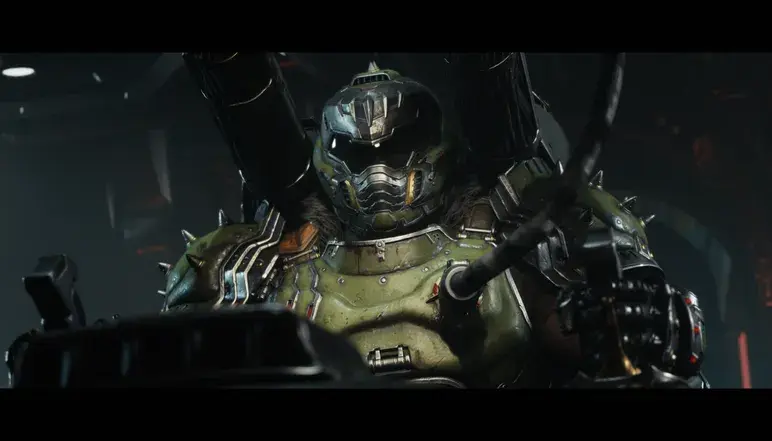
Nonetheless, we will venture to comment on what has been shown. Overall, The Dark Ages leaves a pleasant impression. What we see is almost Doom 2016 with a few innovations. Not all of these innovations are being received positively right now, but we will see how things play out in the actual game.
On the whole, The Dark Ages demonstrates continuity on one hand, while on the other, the developers are not afraid to experiment with mechanics and format. Perhaps this is the right call. Otherwise, Doom as we knew it would have ceased to exist long ago.
Analysis
Looking back at the history of the Doom series, one can notice that every installment in the franchise had its own unique traits. While maintaining continuity with the original 1993 game, the series continues to stir fans’ emotions even in 2025—and that is a good thing. After all, the main thing is that they do not remain indifferent.
An analysis of all Doom installments shows that the games achieving the greatest success were those that carefully preserved the franchise's DNA. This is not about literally copying mechanics or style, but about retaining the spirit—that very explosive mix of fast-paced gameplay, freedom of action, and wild “fun” that turned the first game into a cult classic.
Doom: The Dark Ages will be released soon, and it is already evident that id Software is seeking a balance between tradition and innovation. On one hand, the game attempts to unite time-tested elements with fresh ideas—which is natural, as a franchise must evolve. On the other hand, there is always a risk of losing that very Doom magic.
The experience of the series proves that its success has always hinged on how harmoniously new elements blended with its foundation. If The Dark Ages manages to preserve the classic spirit while offering something new, it could become another memorable chapter in Doom history.
* * *
All images belong to id Software and Bethesda. Source: the editorial staff's own screenshots, cover art, and Doom: The Dark Ages: Bethesda.net.
Never miss our newsAdd this site to your preferred sources to see us more oftenAdd on Google