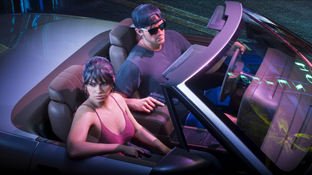
The story of the grand car thief. How the Grand Theft Auto series evolved and influenced the gaming industry
Translated with AI from the Russian original.
The long-awaited official announcement of Grand Theft Auto VI in late 2023 caused a stormy reaction — the game's trailer was viewed hundreds of millions of times, and the game itself became the most anticipated title in the eponymous nomination at The Game Awards 2024. That is because GTA is a special gaming franchise that has had a colossal impact on the entire gaming industry several times over. That is what our article today is about.
The rise of grand car theft — Grand Theft Auto
The first installment of “Grand Theft Auto” was released in 1997. It was developed by DMA Design, the future Rockstar North.
Originally, the project was planned as a racing game where players could play either as a civilian participating in illegal street races or as a police officer trying to prevent a group of street racers from reaching the finish line. But an amusing bug during development turned the game into a pure open-world action title that revolutionized the genre.
Grand Theft Auto’s gameplay was built around the fact that the player could drive any vehicle, work for mobsters, and unleash sheer chaos on the streets of three cities: Liberty City, Vice City, and San Andreas.
The project was so well-received by the audience that players could spend hours in the game without even touching the main storyline. The original GTA was one of the first sandboxes where the player could adventure at their own pace, which became one of the key strengths of all future installments and the reason players loved it so much.
The police system also contributed to the success. It was born from an algorithmic glitch — the virtual “cops” behaved much more aggressively than the developers had anticipated.
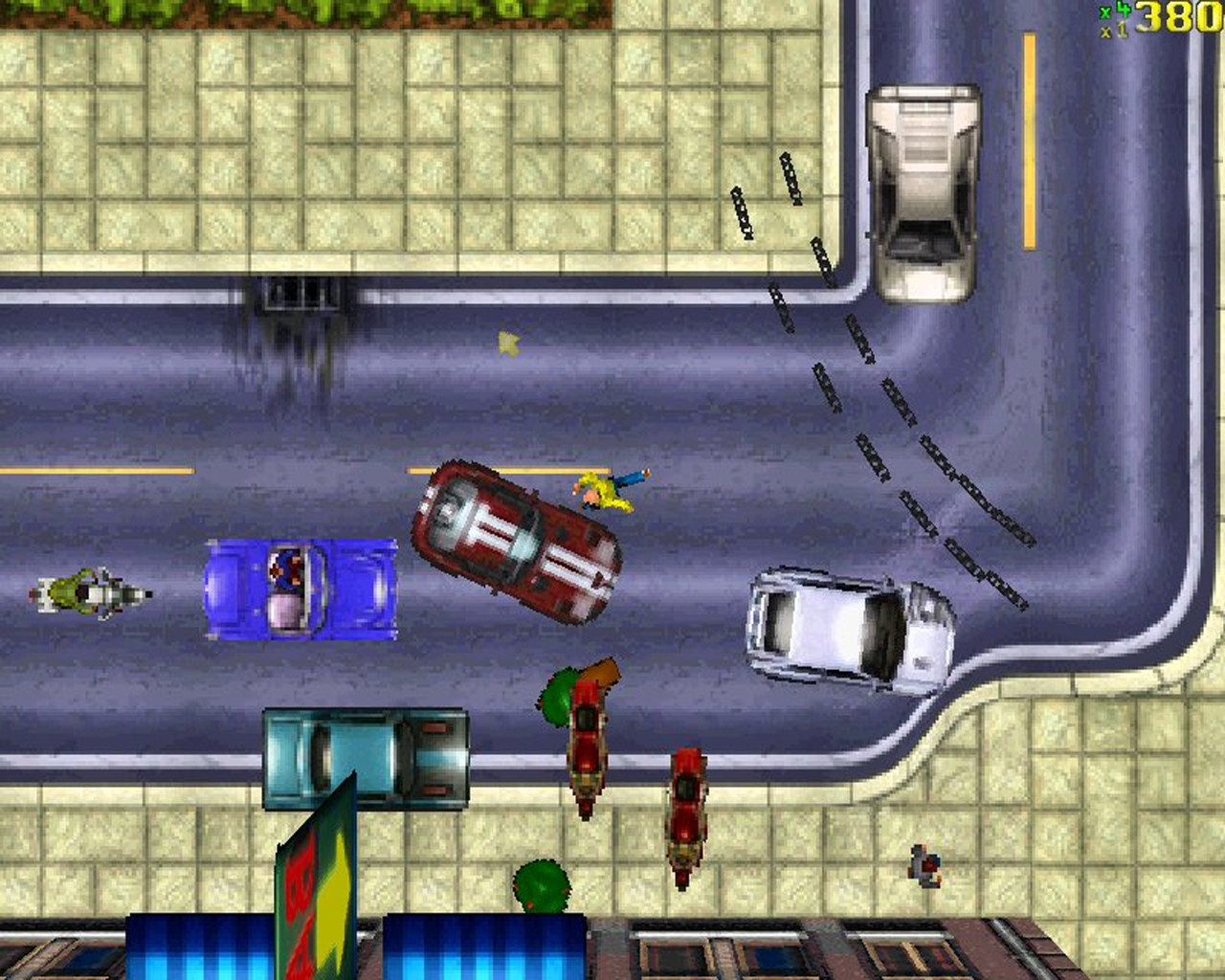
Image belongs to Rockstar and Take-Two Interactive
Somehow, the pathfinding algorithm meant to guide police officers toward the player got corrupted. The law officer decided that their true target was located inside the player’s car, rather than a few centimeters away from it. Thus, the police officers never reached their destination, instead trying over and over again to reach that unattainable point at the center of the player’s car. This created the very “aggression” of GTA cops, who do not try to arrest the offender, but simply ram into them and try to destroy them.
Playtesters liked this bug so much that the developers kept it, and the originally planned racing game became a cult action hit and turned into one of the most popular and important franchises in video game history.
Gary Penn, creative director at DMA Design who oversaw the release of the first Grand Theft Auto, spoke about this in an interview with Gamasutra:
“It was awesome, so [the police bug] stayed. It was tweaked slightly, but it stayed because it was fun. Suddenly, the game became more dramatic and wasn't boring anymore — all because the police are constantly trying to take you down. They chase you, they try to push you off the [favorite] road. Everyone suddenly thought, ‘Hey, this is really cool. There's something in this, it works.’ It wasn't so much about the missions, which we always thought were kind of rubbish, as about the core game — just about having fun.”
Image belongs to Rockstar and Take-Two Interactive
The second step toward crime — Grand Theft Auto 2
The second Grand Theft Auto was released in 1999 and built upon the success of the first. Especially in terms of the police — now the player could be pursued not only by “cops,” but also by SWAT teams, federal agents, and army forces.
They appeared if the player’s wanted level rose high enough — it was in GTA 2 that a full-fledged six-“star” wanted system first appeared, which later became an integral part of the series. The artificial intelligence of law enforcement was noticeably improved — some claim that the police here are smarter than in some future entries, such as GTA 3 and GTA: Vice City.
The sequel also introduced a gang reputation system: each district of the city had three different gangs, and the protagonist had a special meter displaying their attitude toward the player. It affected how gangs reacted to the player and which missions were available to them.
If the reputation was high enough, gang members did not attack the player and could even assist them in shootouts. If it was low or negative, the protagonist was immediately attacked on sight. Each gang had its own specific relationships affecting reputation progression. For example, the Scientists gang appreciated it if you fought the Zaibatsu corporation, while the Rednecks were in conflict with the Hare Krishnas.
GTA 2 became one of the prototypes for faction systems in games — especially for open-world projects. For instance, Far Cry 2 (2008) featured a similar mechanic of conflict between factions in Africa, where the player had to choose a side or manipulate both, while the original Mount & Blade (2008) evolved this concept into managing entire alliances.
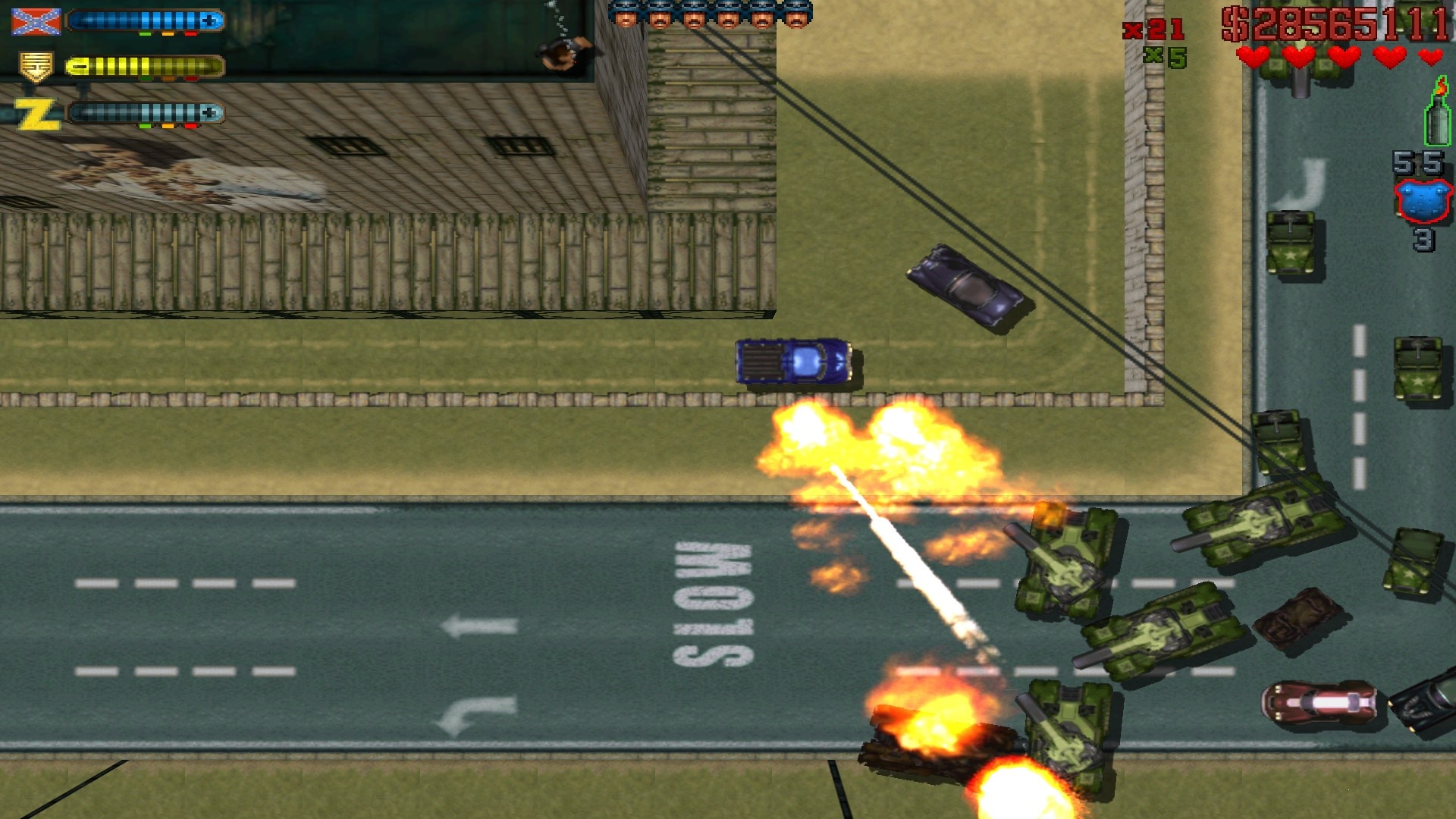
Image belongs to Rockstar and Take-Two Interactive, Source: Steam Community
A new milestone in the life of grand theft auto — Grand Theft Auto III and its younger siblings
The third installment was released in 2001. Grand Theft Auto III didn't just expand upon the success of the previous two, but brought the series into three-dimensional space. This delivered not only a sense of absolute freedom, but also significantly enhanced immersion — a full 3D world and a third-person perspective allowed players to identify with the protagonist.
The RenderWare 3D engine was used to achieve this. It was flexible and worked well across the platforms of that era — PC, PlayStation 2, and Xbox — without significant performance drops, enabling GTA 3 to reach a massive player base. At the same time, it supported visual effects such as fog, dynamic shadows, and basic lighting, creating the atmosphere of Liberty City.
The engine consisted of several modules (graphics, audio, and physics), allowing developers to freely customize the game world. For instance, the engine did not dictate rigid rules for NPC behavior — this was implemented via custom code.
Grand Theft Auto III not only let players step into the shoes of a gangster, but also introduced new possibilities: one could become a taxi or ambulance driver. That said, it didn't mean that the player had to follow every rule — the ability to cause virtual mayhem was still very much there.
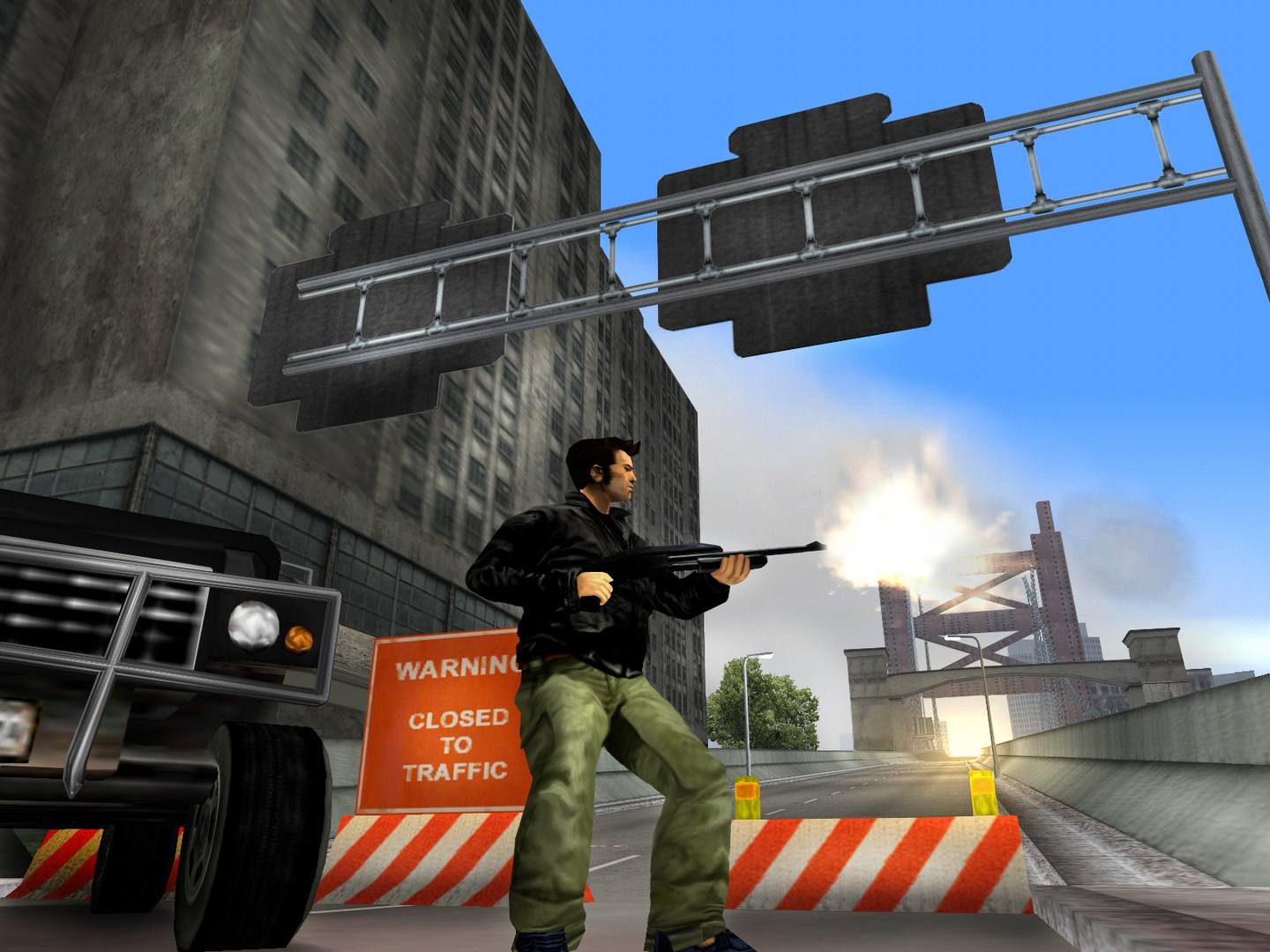
Image belongs to Rockstar and Take-Two Interactive, Source: Steam
The storytelling became more serious — the plot was made more cinematic and deeper through the addition of full cutscenes. The characters also turned out more complex, if not perfect — the protagonist never uttered a single word throughout the entire game, and we only learned his name later, from another game. In addition, some missions could be approached in different ways using wit, further enhancing immersion in the game world and the sense of freedom.
This shifted the approach to game design, inspiring developers to build more complex and vibrant game worlds. Grand Theft Auto III largely gave birth to today’s popular open-world games in the form we know them.
In the years following the release of “GTA 3,” the gaming industry was literally flooded with GTA 3 clones, an epidemic that went on for years: the True Crime series, The Godfather: The Game, and of the more modern ones — the Watch Dogs series, the late Sleeping Dogs, and dozens of others. All of these were successors to that third installment, albeit with an eye toward Rockstar’s later projects.
By the way, not all projects were “GTA” clones, but many consider them as such to this day.
For instance, Mafia: The City of Lost Heaven — a game by Czech game designer Daniel Vavra — was developed in parallel with Rockstar’s project, and its gameplay differed noticeably, being somewhat more linear and hardcore. Or the Driver series, where the first two entries appeared before GTA 3 and specialized specifically in driving rather than exploring the world on foot.
It was the intricate game design and diverse gameplay that allowed us to remember the third “GTA” as a new milestone in gaming evolution, rather than any other similar project.
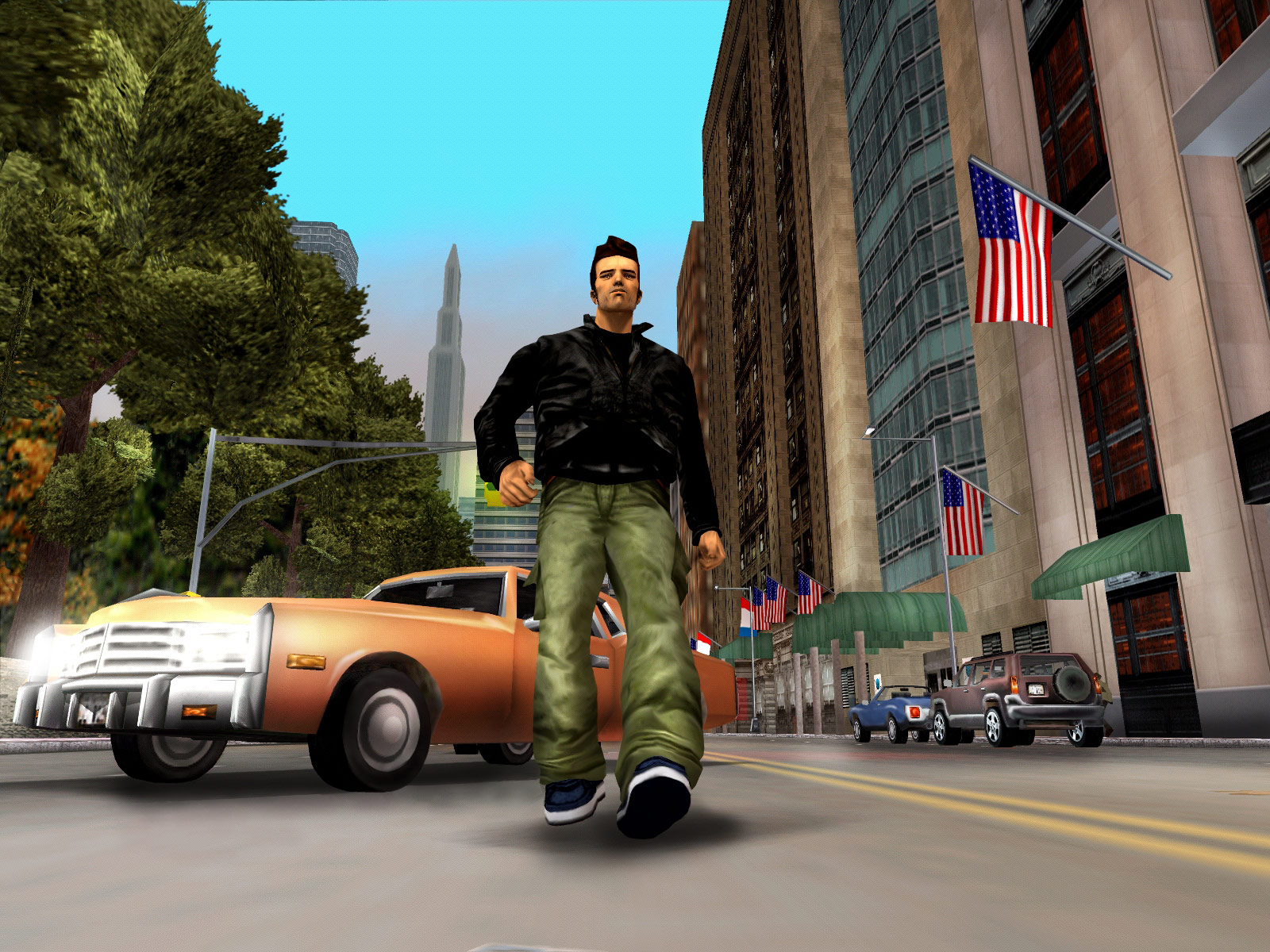
Image belongs to Rockstar and Take-Two Interactive, Source: Steam
The next two games — Vice City and San Andreas — noticeably built upon the concepts of GTA III. Their game worlds proved more cohesive, while their stories and characters gained greater depth. The protagonists of these titles are fondly remembered to this day.
Vice City stood out for its 1980s aesthetic and satirical narrative featuring social commentary on that era — a hallmark that became one of the franchise's defining features.
In San Andreas, the satire became even more prominent, while gameplay offered a broad spectrum of activities: from street racing to workouts and even business management. This proved how gameplay variety can boost player engagement.
Yet the revolution was not confined to gameplay and narrative alone. The release of these titles also triggered a major controversy regarding the potential impact of in-game violence on players, particularly children.
Most memorable was American attorney Jack Thompson, who vocalized fierce criticism against video games: his accusations had targeted GTA since the very first installment, and following the release of GTA III, his attacks escalated significantly.
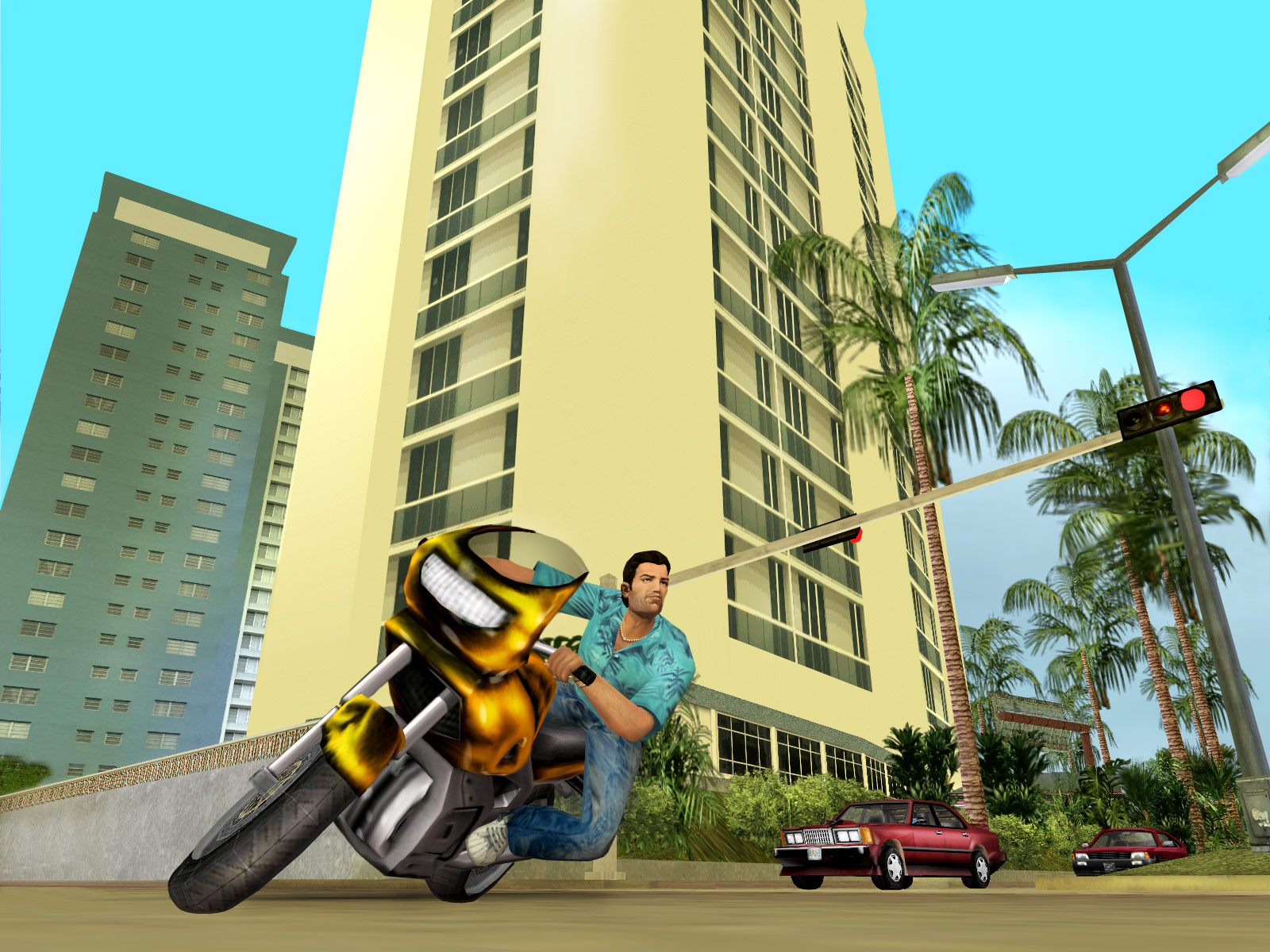
Image belongs to Rockstar and Take-Two Interactive, Source: Steam
His argument rested on the claim that violent video games were repeatedly used by teenagers as “murder simulators.” He sought in every way to ban them, appealing to politicians and advocacy groups, though with little success.
As Thompson stated: “If some screwball adult wants to spend his time playing Grand Theft Auto: Vice City, one has to question why he isn’t living a full life. But when it comes to children, it has a measurable impact on their behavior and the development of their frontal lobes.”
Yet despite numerous lawsuits and fierce criticism, many studies found no conclusive link between video game violence and real-world societal violence. In 2008, the Supreme Court of Florida disbarred Thompson for “unprofessional conduct,” including abusive correspondence and unfounded allegations against opposing counsel.
Following that case, the topic linking virtual and real violence was never officially revived on such a scale, although discussions surrounding video game content regulation remain relevant and debated to this day.
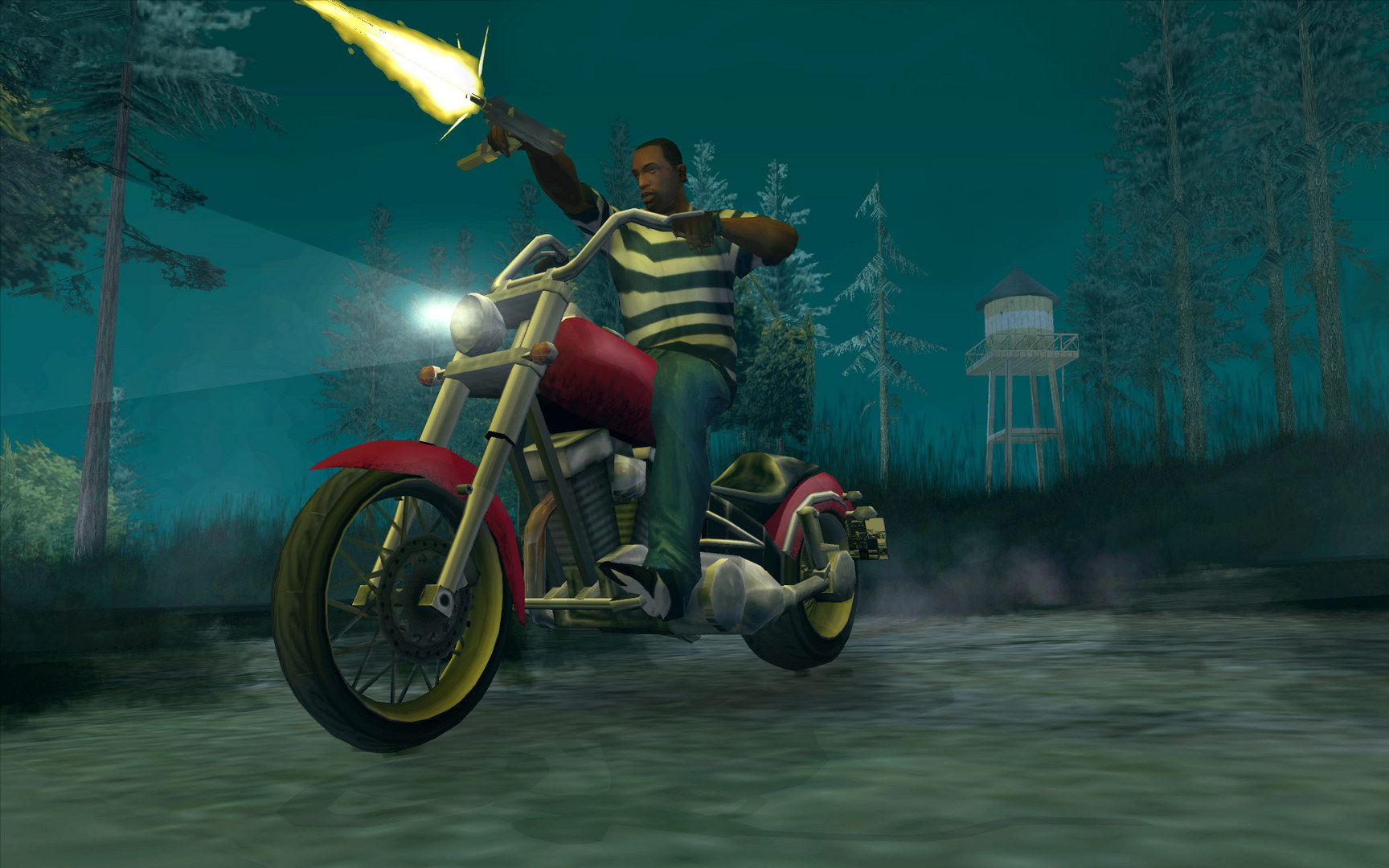
Image belongs to Rockstar and Take-Two Interactive, Source: Steam
Our Grand Car Thief — Grand Theft Auto IV
Grand Theft Auto IV, released in 2008, is considered today the most polarizing entry in the franchise. Some players deem it the weakest installment, while others regard it as the absolute best. Nevertheless, GTA IV cannot be written off! The game delivered its own mini-revolution — specifically in physics, artificial intelligence, and interactivity.
Thanks to the Euphoria physics animation engine and Rockstar’s hallmark attention to animation fidelity, the game was remembered as one of the most realistic open-world experiences: from vehicle handling and ragdoll physics to vehicle deformation systems and expanded interactivity. Players could interact with the environment and NPCs on an unprecedented level.
To compute physics, the game utilized the RAGE engine — Rockstar Advanced Game Engine. Euphoria operated in tandem with RAGE, overlaying a layer of “organic” animations to heighten on-screen realism.
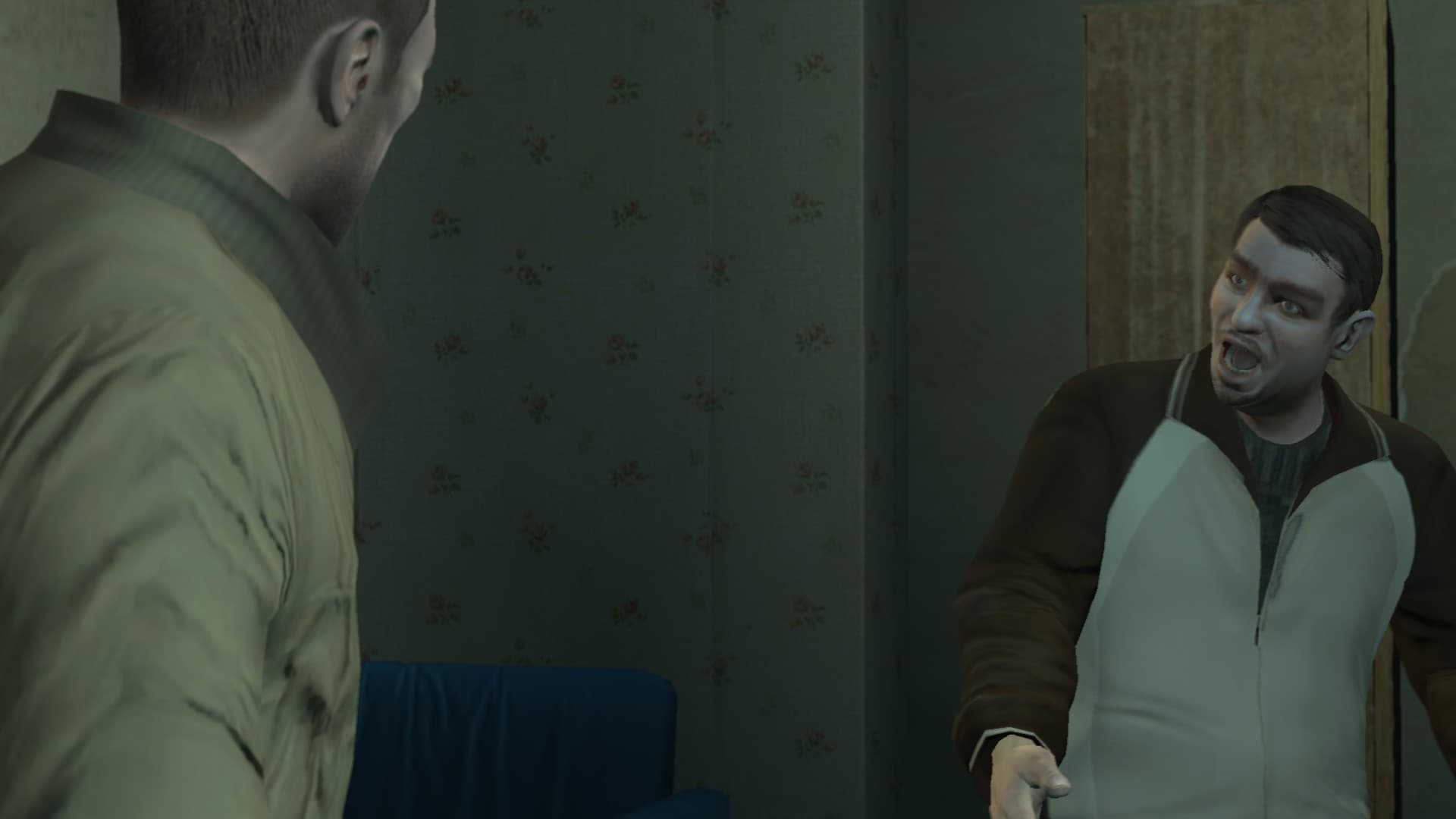
Image belongs to Rockstar and Take-Two Interactive
Another advantage of the Euphoria system was its contribution to NPC artificial intelligence — non-playable characters and the protagonist could dynamically react to the environment and events based on physics and character “awareness.” For instance, they would cling to the ledge of a wall or fence to cushion a fall. When shot in the leg, an NPC would start limping; if struck by a vehicle, they might grab onto the hood or roll across the pavement, bracing themselves to soften the blow.
This system also transformed the open world itself. For example, players routinely encounter intoxicated NPCs who stumble around, fall over, and clumsily struggle back to their feet.
Hand-to-hand combat received significant refinement as well. A punch to the jaw causes an opponent to stagger backward, and if you try pushing someone off a ledge, they might cling to the protagonist to save themselves — or at least take Niko Bellic down with them.
Certain visual elements — such as volumetric fog — look stunning even today, and the game world stands as one of the most vibrant not only in the franchise, but across the entire gaming industry. It seems virtually no one has managed to match the bar set by Rockstar in Grand Theft Auto IV.
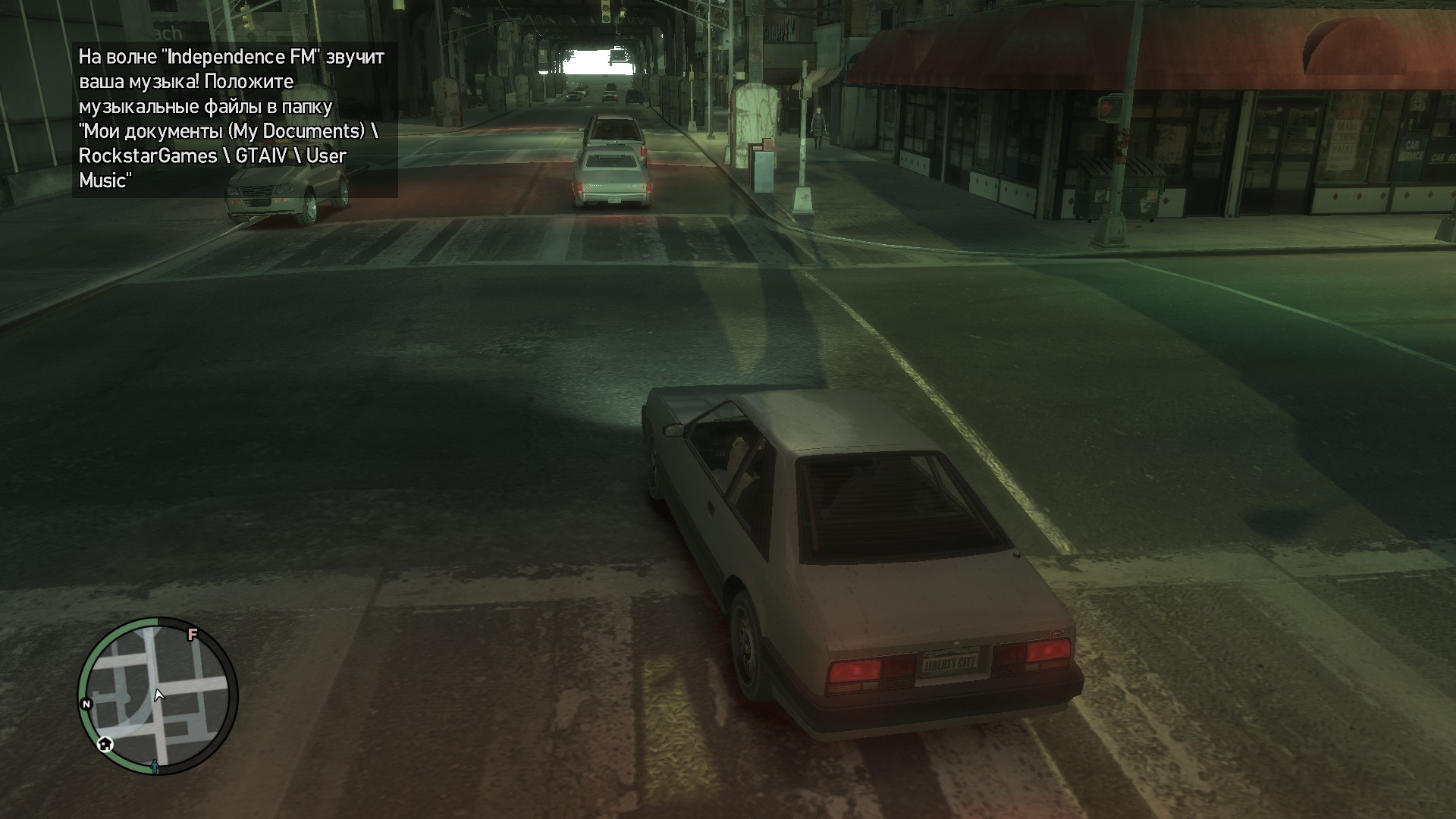
Image belongs to Rockstar and Take-Two Interactive
The Grand Car Thief Sets Trends Again — Grand Theft Auto V
In the fifth installment, released in 2013, most of the fourth game’s defining features were abandoned in favor of a more arcade-like, lighthearted approach, turning GTA IV into an alternative path of the franchise's evolution.
Rather than pursuing realistic physics, the developers shifted focus toward populating the world with content. The density of features increased across all levels: from varied Easter eggs to a full-fledged wildlife simulation borrowed from Red Dead Redemption. Rockstar essentially expanded outward rather than inward.
The game stripped away the very aspect GTA IV was criticized for — gloominess. Consequently, GTA V became the franchise gold standard for mainstream audiences: an entertaining GTA with bombastic gameplay, an intensely satirical storyline, and game mechanics complementing both aspects. Rockstar understood there was little sense in swimming against the tide.
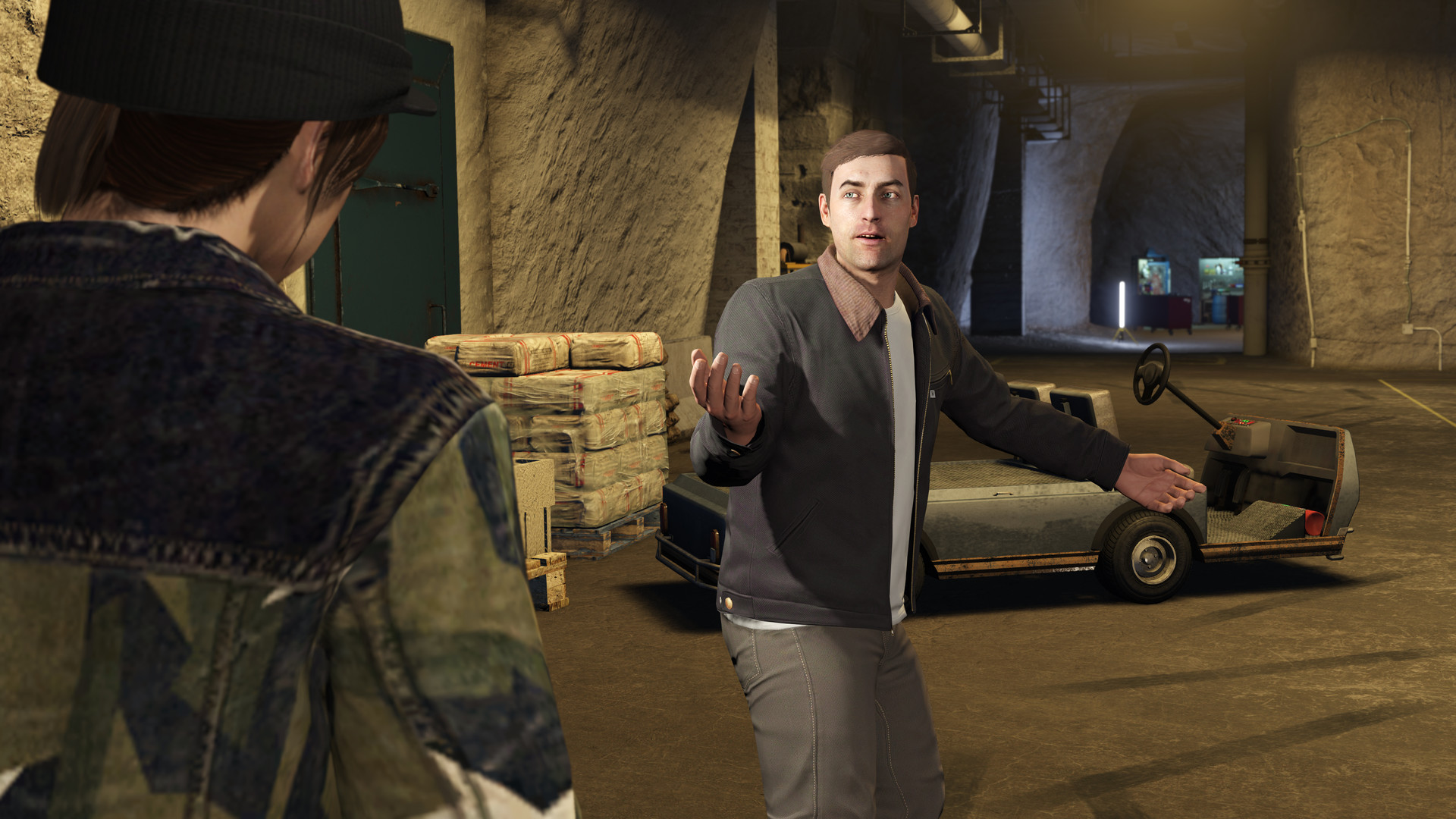
Image belongs to Rockstar and Take-Two Interactive, Source: Steam
Yet the defining revolution of GTA V was undoubtedly its multiplayer component. Multiplayer existed in previous iterations, but GTA Online elevated it to new heights. There were two key drivers behind its success.
First, the multiplayer mode did not reinvent the wheel — it simply provided concentrated mayhem and fun, the very qualities the franchise was always renowned for. What changed was the online environment itself: the presence of other players generated endless dynamic emergent gameplay scenarios.
Heists from the campaign mode also became a cornerstone of the multiplayer experience — they are plentiful, and new ones arrive with each major update, earning high praise from players. It is genuine cooperative gameplay that demands planning every aspect of the mission, detailed preparation, and almost always produces unpredictable outcomes.
Second, GTA Online continues to receive active support to this day — new content arrives regularly, maintaining consistent quality. The online mode has been running for 12 years, actively expanding and generating colossal revenue for Take-Two.
Third, at launch, the multiplayer mode supported up to 30 concurrent players in a shared lobby. For 2013, this was an impressive achievement for open-world online games — exerting a notable influence on subsequent open-world titles like Fallout 76 and Sea of Thieves.
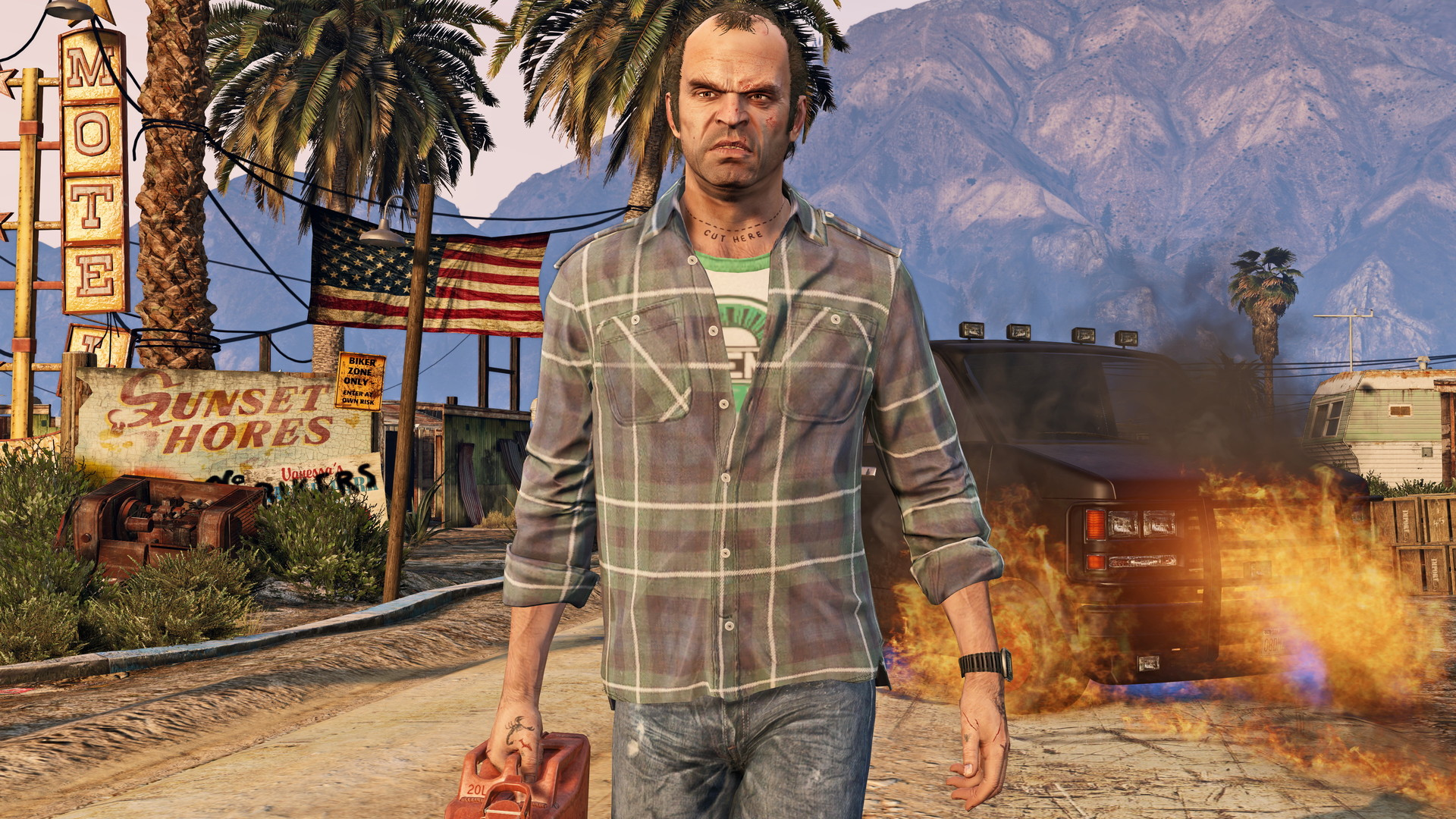
Image belongs to Rockstar and Take-Two Interactive, Source: Steam
Monetization followed an unconventional path. Rockstar conceived the Shark Cards system. These are virtual “cards” purchasable in the GTA Online store — each grants a specified amount of GTA$, the in-game currency used to buy items: vehicles, weapons, real estate, clothing, and more. As of March 2025, there are 6 card tiers named after various shark species, with prices ranging from three to one hundred dollars.
The Shark Cards system turned out to be a goldmine for Rockstar and publisher Take-Two Interactive. In 2021, Take-Two reported that microtransactions accounted for roughly 60% of their total revenue, and by 2023, GTA Online had generated over $8 billion.
The launch of GTA Online inspired numerous developers to adopt live-service models as we know them today. Many studios attempt time and again to duplicate GTA Online’s success, though few succeed — even Rockstar itself fell short when attempting to mirror that success with Red Dead Online. Players did not embrace the concept there, failing to yield expected dividends for the publisher — the pacing and purpose of “Red Dead Online” centered around contemplative world exploration rather than the madcap action Rockstar capitalized on in GTA Online.
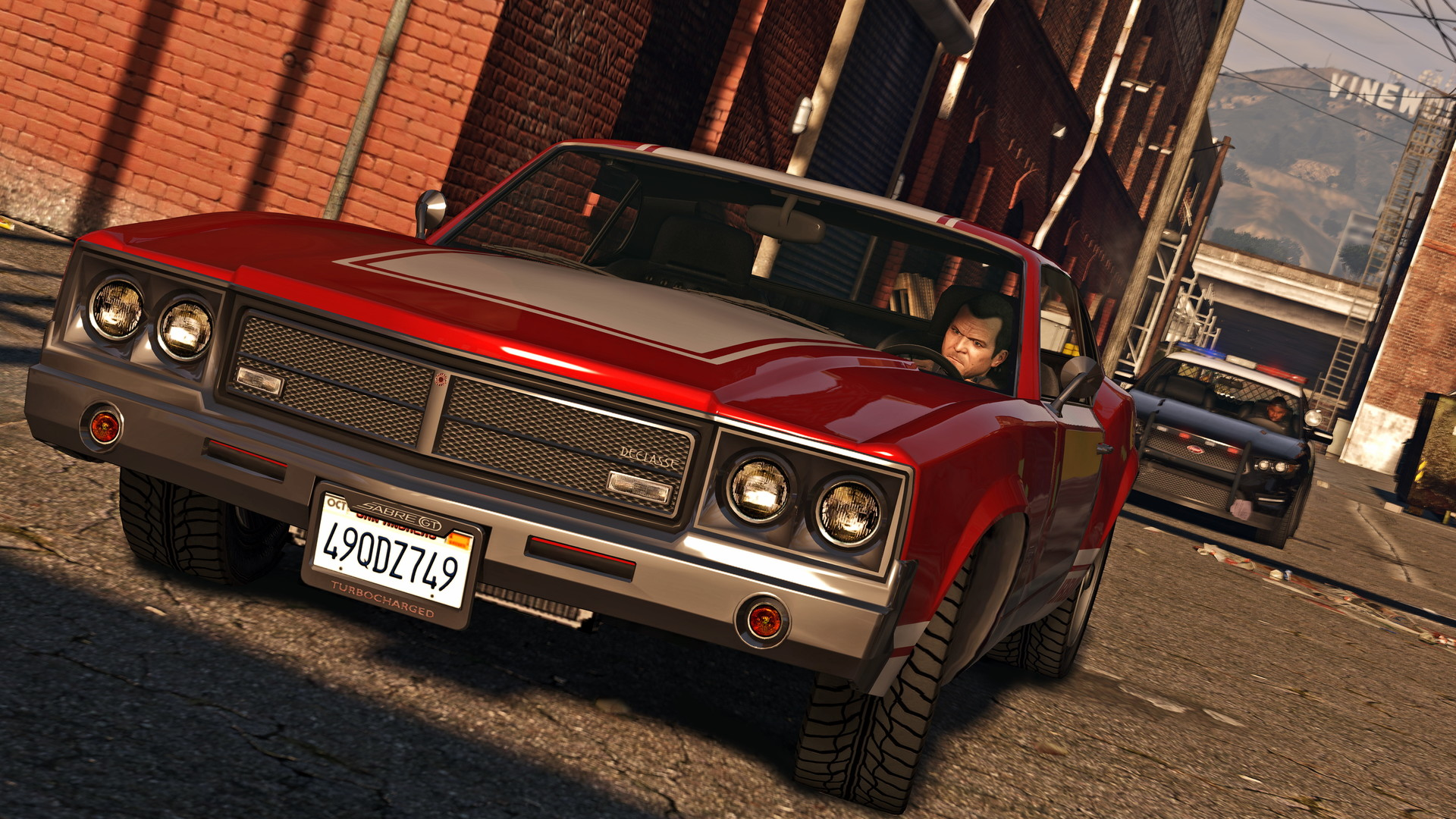
Image belongs to Rockstar and Take-Two Interactive, Source: Steam
A Worthy Successor to the Grand Car Thief — Grand Theft Auto VI?
Answering whether GTA VI can deliver something truly groundbreaking is difficult. Multiple signs indicate that a major revolution may not materialize at all:
- Dan Houser — a primary creative lead on previous installments — departed Rockstar following the release of Red Dead Redemption 2;
- a heavy emphasis will likely center on multiplayer — a story campaign will exist, but there are no guarantees regarding its quality;
- hardware constraints, particularly with the Xbox Series S, will prevent building anything significantly more intricate and massive than what GTA V already featured;
- open-world game design has stagnated: developers currently do little more than flood maps with repetitive activities — even when matching high production values.
Considering potential areas where GTA 6 could innovate, neural networks stand out — a trending developmental direction that does not impose heavy hardware loads.
Developers could make the world vastly more alive by providing its population with greater intelligence, richer behavioral algorithms, and neural networks to enable more complex decision-making — enhancing the realism of the setting. Citizens could react contextually to the protagonist or engage in conversations — while GTA is certainly not an RPG, such an approach is entirely characteristic of Rockstar.
Conversely, if Rockstar overcomes these non-trivial challenges and delivers fresh ideas in game design, they will once again reaffirm their standing as the industry’s finest.
Estimates suggest GTA 6’s budget may have surpassed two billion dollars — an astronomical figure. Where could such funds have gone? Either the developers are crafting something monumental, or development underwent multiple reboots — a scenario that seems quite plausible given the nearly 7-year production cycle.
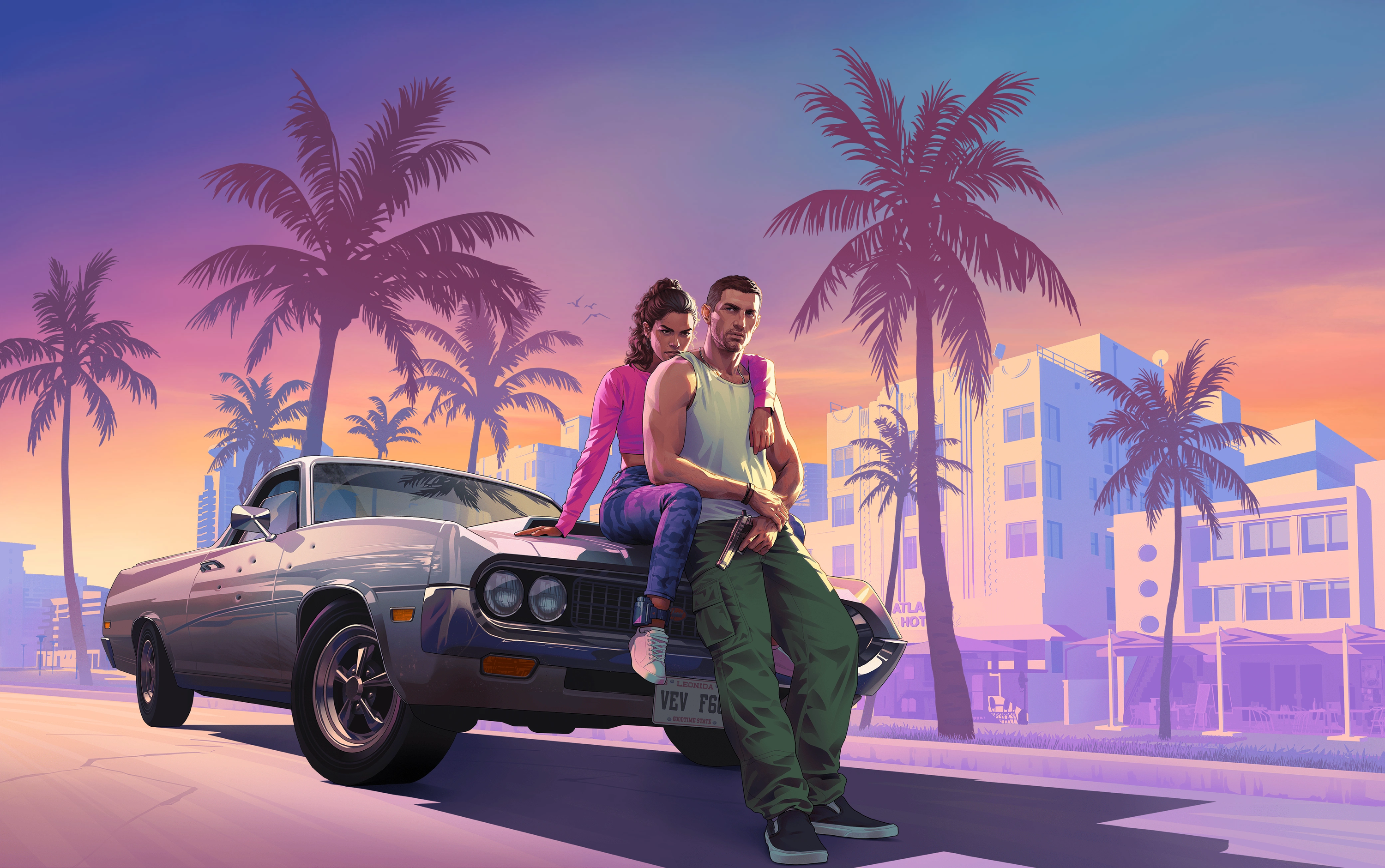
Image belongs to Rockstar and Take-Two Interactive. Source: RockstarGames.com
Analysis
The Grand Theft Auto franchise has exerted a massive influence on the gaming industry — nearly every core entry proved revolutionary in some respect: advanced law enforcement mechanics, gang territories and reputation systems, pioneering 3D game worlds, realistic physics and AI, multiplayer ecosystems, live services, and much more.
It is easy to see why the sixth entry is eagerly anticipated by tens — if not hundreds — of millions of players worldwide. But will it deliver something sufficiently revolutionary to stand shoulder to shoulder with its predecessors? That question remains wide open, with multiple indicators hinting at a skeptical outlook.
Regrettably, today's gaming industry is trapped in severe stagnation, making groundbreaking innovations — especially global ones — unlikely. Furthermore, leadership changes at Rockstar coupled with prevailing market trends only compound the problem.
Nevertheless, as noted earlier: if Rockstar fails to turn the tide with Grand Theft Auto VI and offer new paradigms for the industry to follow, it is unlikely anyone else will.
***
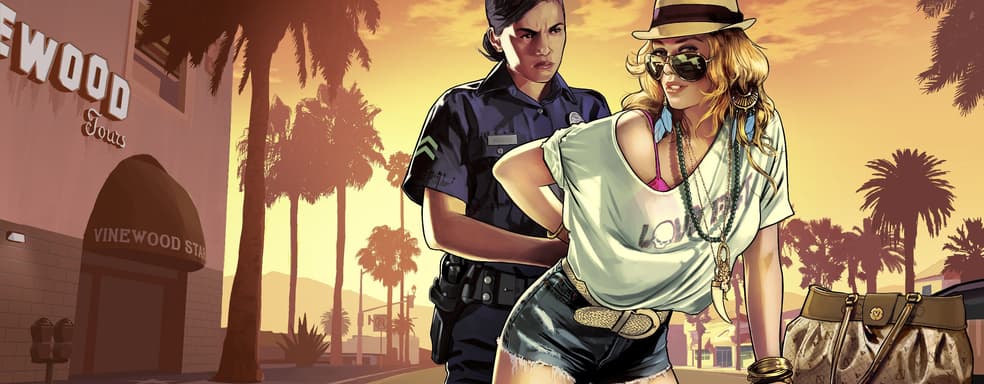
Cover image belongs to Rockstar and Take-Two Interactive.
Never miss our newsAdd this site to your preferred sources to see us more oftenAdd on Google