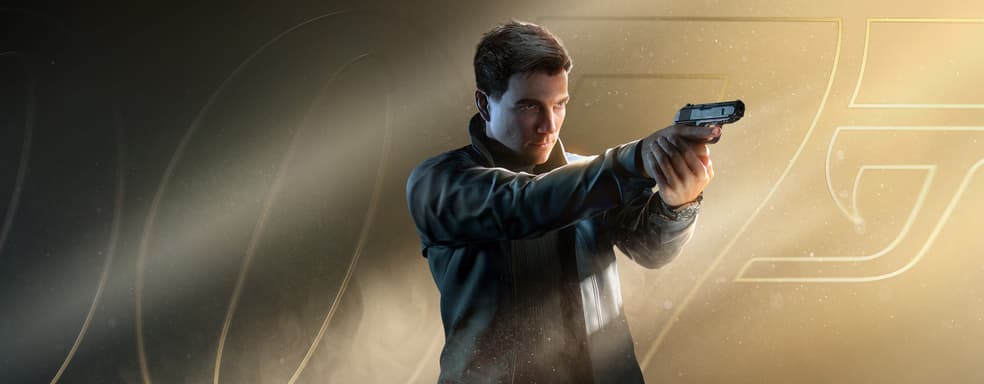
Not Just GoldenEye: 5 Great James Bond Games That Are Not Embarrassing
Translated with AI from the Russian original.
It is generally believed that in the James Bond game series, there is the great GoldenEye 007, and everything else is just mediocre licensed projects. There is some truth to this: Agent 007 rarely had stable releases. However, among dozens of attempts to transfer the adventures of the British spy to monitors, there were those that deserve attention no less than the classics from Rare studio. We talk about five James Bond games that are definitely not embarrassing.
Because of this, the conversation about the best James Bond games almost always goes beyond simple nostalgia. Here it is important not only to recall famous titles but also to understand why some projects still seem successful, while others remained merely an appendix to the films. A good game should convey the very essence of the Bond series: pace, spy fantasy, a sense of risk, and freedom of action.
Therefore, in our selection, we tried to gather only those projects that can be called worthy of the franchise. Somewhere it will be a successful adaptation of a film, somewhere an independent adventure, and somewhere a rare case where the developers managed to strike the right balance between cinematic spectacle and a working game formula.
Tomorrow Never Dies
A linear third-person shooter with elements of stealth, where the core is almost always the same: move forward, eliminate guards, complete the task, and move to the next scene. Formally, the game added variety – there were skiing episodes, a chase in an armed Aston Martin, and a short segment with a plane – but even then, critics noted that all these inserts were more for changing the pace than for depth.
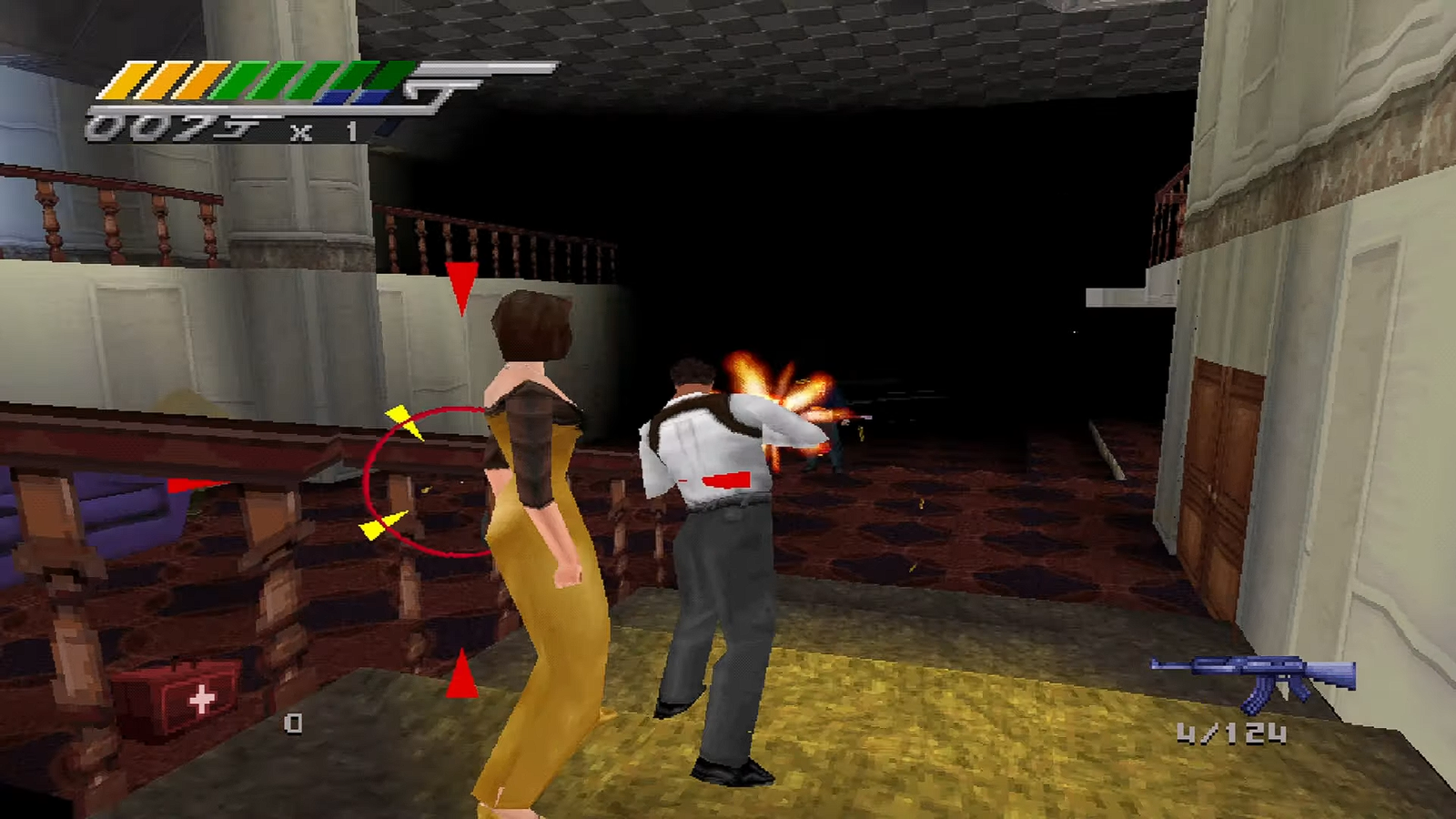
Here, the story is presented in a more “cinematic” style. Tomorrow Never Dies featured voiced lines and used fragments from the film between levels to stitch the plot together faster and cheaper. Because of this, the game was perceived not as an independent spy sandbox, but as an uninvited retelling of the movie.
And yet, it's hard to call the game a failure: even critics admitted that it at least tried to diversify the formula and give the Bond series a little more gameplay variety. It was a step towards licensed Hollywood action, which did not become a new standard but showed that Bond could have a different pace in games.
Agent Under Fire
The main difference of Agent Under Fire from many previous games in the franchise was that it did not rely on a specific film. Instead of an adaptation, the developers took an original plot: Bond tries to stop an organization that clones world leaders and replaces their originals. The game truly tried to exist not as an addition to another film, but as an independent spy adventure within the Bond series.
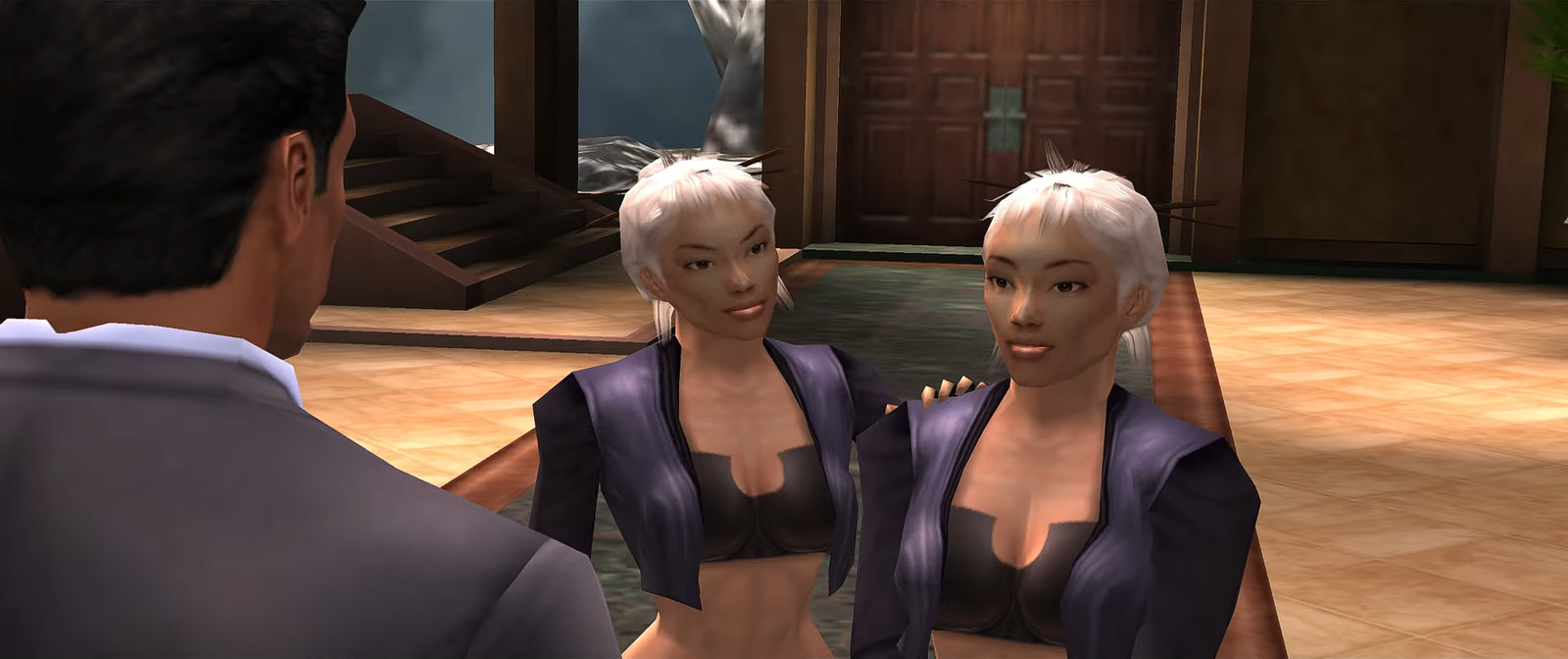
At its core, Agent Under Fire remained a first-person shooter. Most of the time, Bond shot and completed tasks in on-foot missions, but between them were episodes with vehicles: chases, rides in a modified BMW, scenes in armored vehicles, and other inserts that diversified the monotony. Plus, the game incorporated a set of signature gadgets from Q's arsenal.
It was here that the series began to find a more coherent image of the gaming Bond. The developers themselves said that they wanted to create an experience as close as possible to the Bond series. It is important that this was not just an advertising slogan: even in reviews of those years, the game was often praised precisely for the feeling of a spy attraction, and not just for shooting.
Everything or Nothing
From the very beginning, the project was conceived as a larger and more expensive action game in the Bond series: a separate adventure with its own story, a new camera, and a wider scope.
What set it apart was how the game handled Bond's image. In Everything or Nothing, EA already had not just a license, but an almost full-fledged digital movie with a cast from the film franchise. Pierce Brosnan lent his voice and likeness to Bond, and many other actors from those films returned with him. Willem Dafoe took on the role of the antagonist. And the script was written by Bruce Feirstein – he also worked on the Brosnan-era films.
But the main change was in the gameplay. The developers deliberately switched to a third-person view. Their logic was simple: for the player to feel like Bond, they must see Bond on the screen, not just his hands with a weapon. This decision opened access to hand-to-hand combat techniques, cover, more explicit movement staging, and a “cinematic” feel for the character.
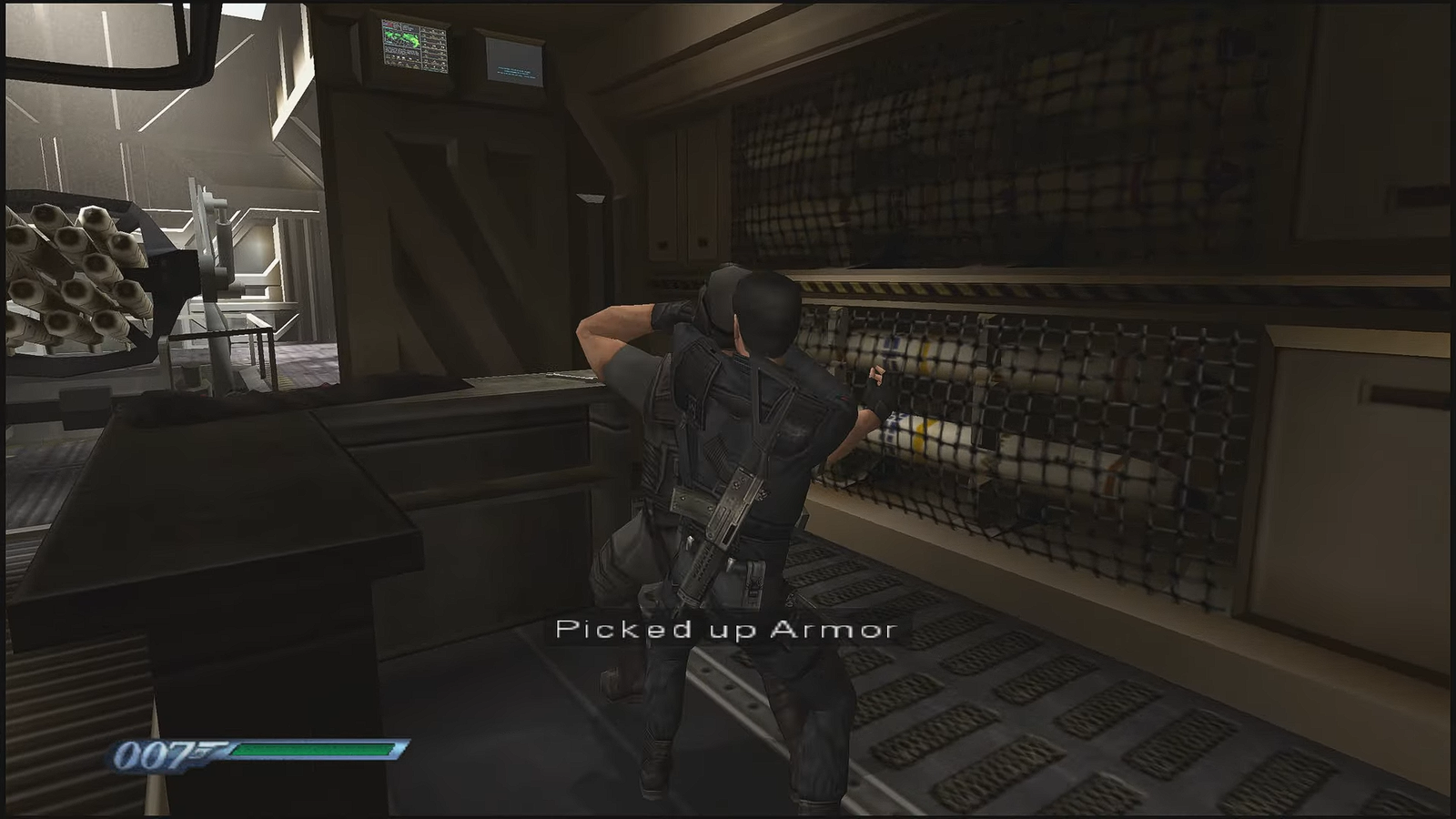
Everything or Nothing incorporated the essential attributes: exotic locations, secret bases, signature gadgets, music, spectacular chases, and a sense of involvement in an interactive action movie with a high density of events. Even critics acknowledged that the game had a strong sense of scale and expensive presentation. In this sense, it was closer to an interactive movie than other projects in the series.
Everything or Nothing managed to establish itself in the Bond game series as one of the most successful of its era. Its average Metacritic score reaches 84 points, and adult players fondly remember this project.
From Russia with Love
After several standalone stories, Electronic Arts decided not to invent a new villain and a new era, but to return to one of the main films of the franchise. The intention was clear: to make not just another action game about Agent 007, but a separate game centered around the classic image of Sean Connery. This was an unexpected turn to early Bondiana, although a reboot with Daniel Craig was planned for the cinema.
However, From Russia with Love was not recreated shot-for-shot. The authors received permission to expand the plot: add a new introduction, change the middle, rework the ending, and integrate new characters. In terms of gameplay, From Russia with Love followed the previous project – it was again a linear third-person action game where on-foot gunfights were combined with additional activities.
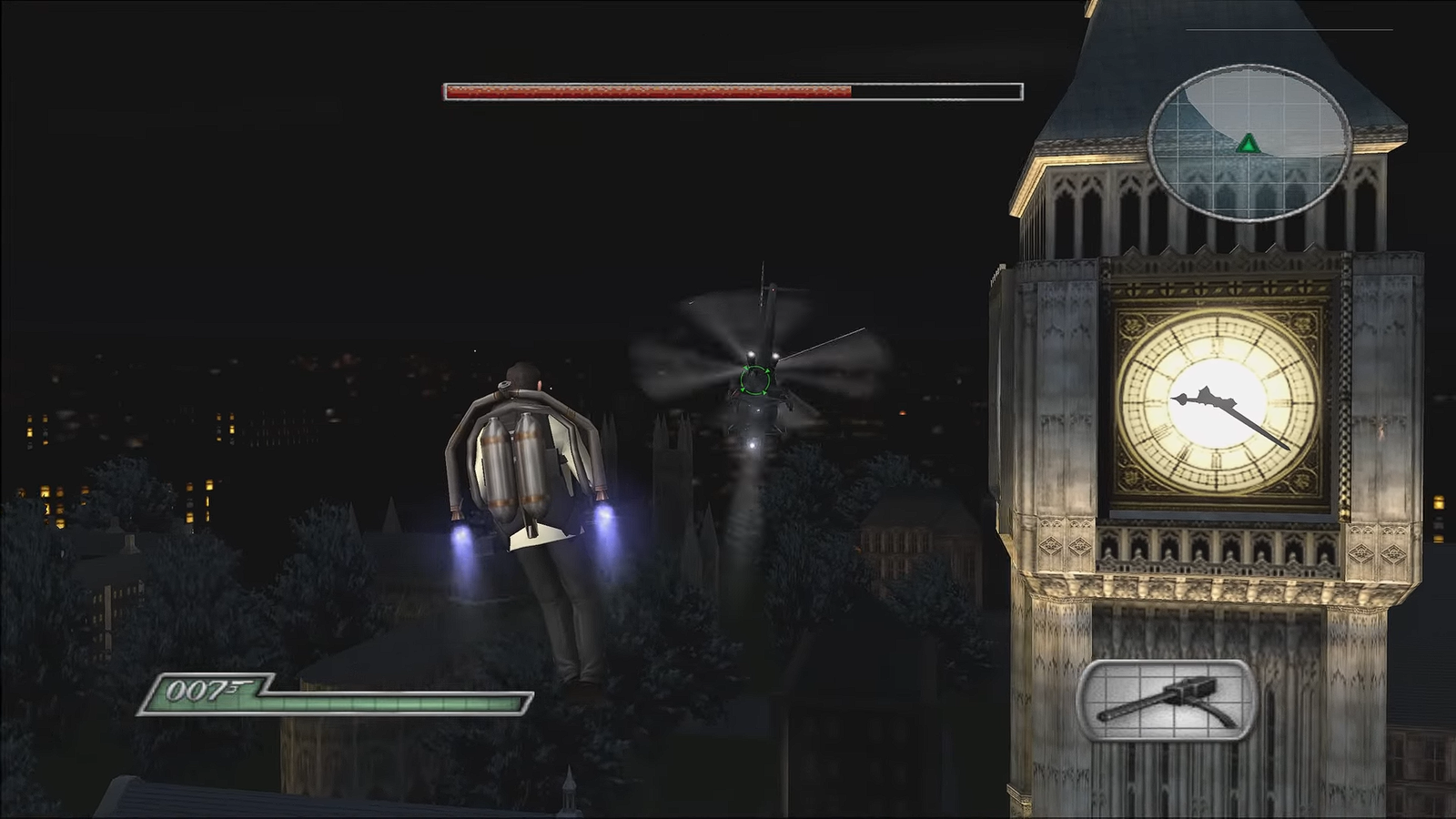
The developers gave people what they wanted from the Bond series: an unrealistic spy story and a lighthearted next-generation action game – with insane pacing and familiar settings from early Bondiana.
Blood Stone
Blood Stone occupied a specific place in the Bond game series. It was a standalone story starring Daniel Craig, but the game was published by Activision, which had already released several projects in the franchise. But all of them failed because the publisher released “007 Call of Duty” – these were simply corridor shooters where the number of enemies exceeded dozens.
In defense of this, many pointed out that times had changed – this was a different Agent 007. Bond, as portrayed by Daniel Craig, is tougher, less playful, closer to a realistic action movie about a man constantly working to exhaustion. And the game did not hide this shift. Right from the start, it throws the hero into a spectacular scene on a yacht, and then immediately shifts the action to a chase on water and land vehicles. The game starts with intensity and staging from the very first minutes.
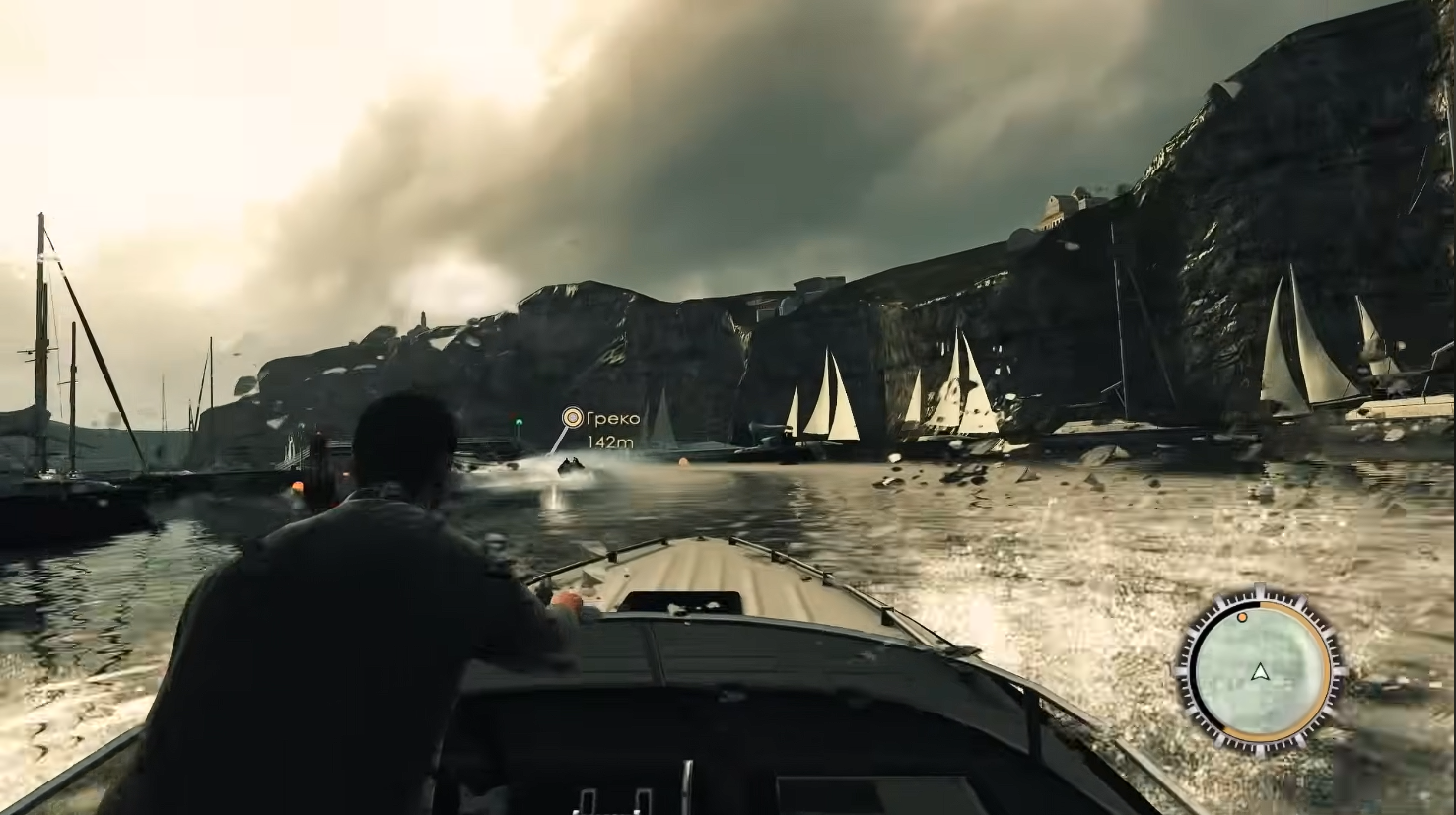
Gameplay-wise, Blood Stone was a third-person action game with cover and hand-to-hand takedowns. For fans of the Bond game series, this was as disappointing as other Activision games. On the other hand, it did what the entire franchise had been doing all this time – adapting to the trends of its era.
A significant advantage of Blood Stone is considered to be its vehicle scenes. The development studio, Bizarre Creations, specialized in racing projects – it is often the chases that are remembered as the best episodes. They were spectacular and helped the game maintain a sense of spy adventure when ordinary shooting started to get boring.
Why GoldenEye 007 is the peak of the series
GoldenEye 007 is the game that makes the entire Bond game series still perceived with some disappointment. After all, before and after it, no other project achieved such overwhelming success. Rare studio managed to create a masterpiece that greatly influenced the development of the entire genre of console shooters.
Now this sounds familiar, but in 1997, the idea itself was atypical. Before GoldenEye 007, there were either hasty 2D adaptations or just text-based RPGs. Here, the opposite happened.
Rare took the plot and scenes from the film as a basis, but built a structure around them where the player didn't just go forward and shoot, but performed specific tasks. Moreover, depending on the difficulty level, there were more of these tasks, which changed the very perception of the game. Levels ceased to be just a shooting range and turned into missions where you had to remember the route and memorize the sequence of actions.
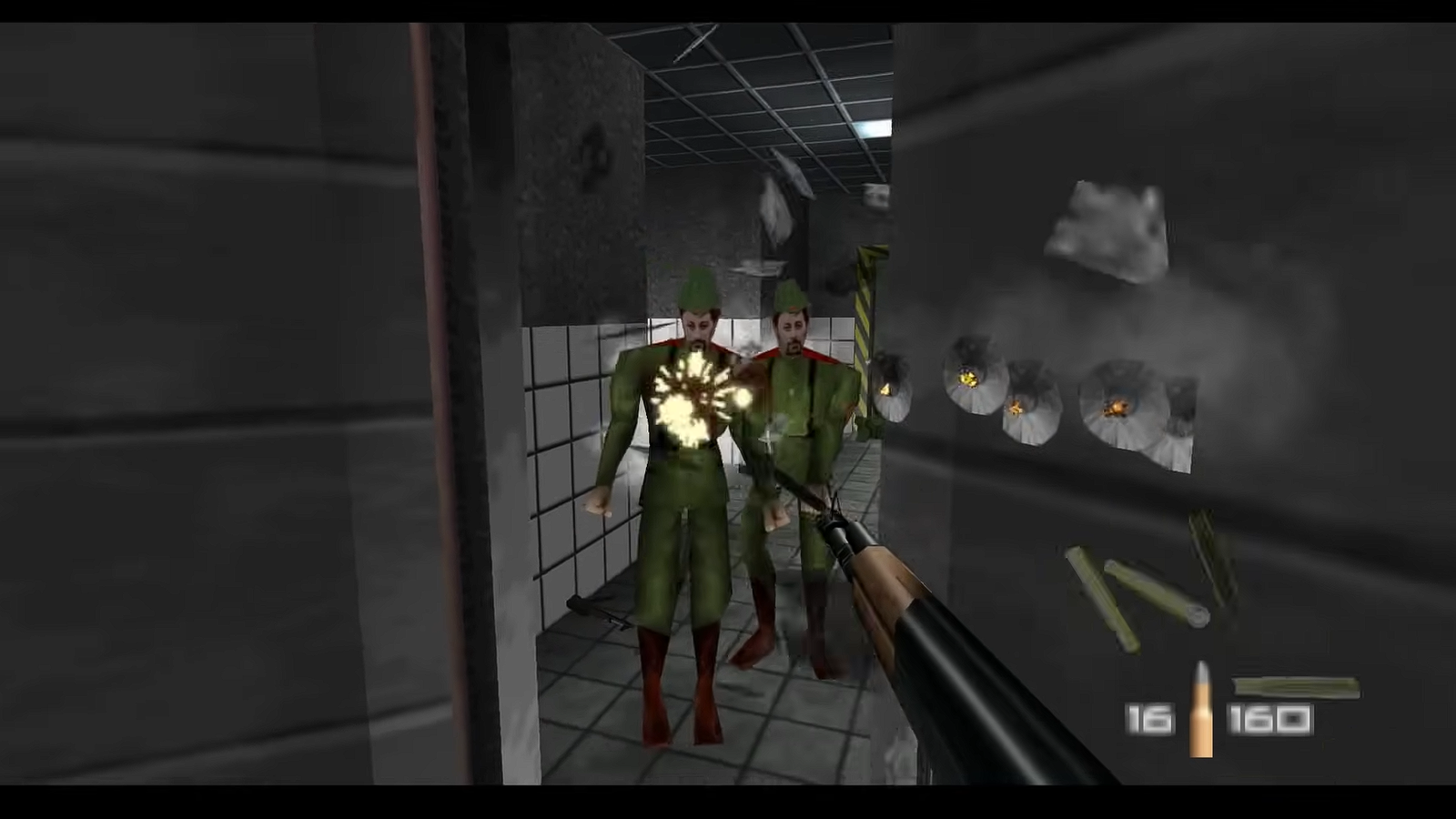
It is especially important that GoldenEye found a balance between brute force and stealth. Silent weapons, alarms, guard reactions, and the risk of mission failure due to an alert tried to complement the gameplay, guiding it in the right direction. In this sense, GoldenEye adapted the Bond series better than many later games.
Another key element is the split-screen multiplayer mode. Today it is remembered as something self-evident, but it was almost not in the original plan. This mode was added literally in the last six weeks of development. And the authors only realized at release that they had created something groundbreaking, which made even them want to play their project.
Speaking of legacy, it is worth recalling that in 2025, GoldenEye was inducted into the World Video Game Hall of Fame for its influence on the genre and multiplayer mode.
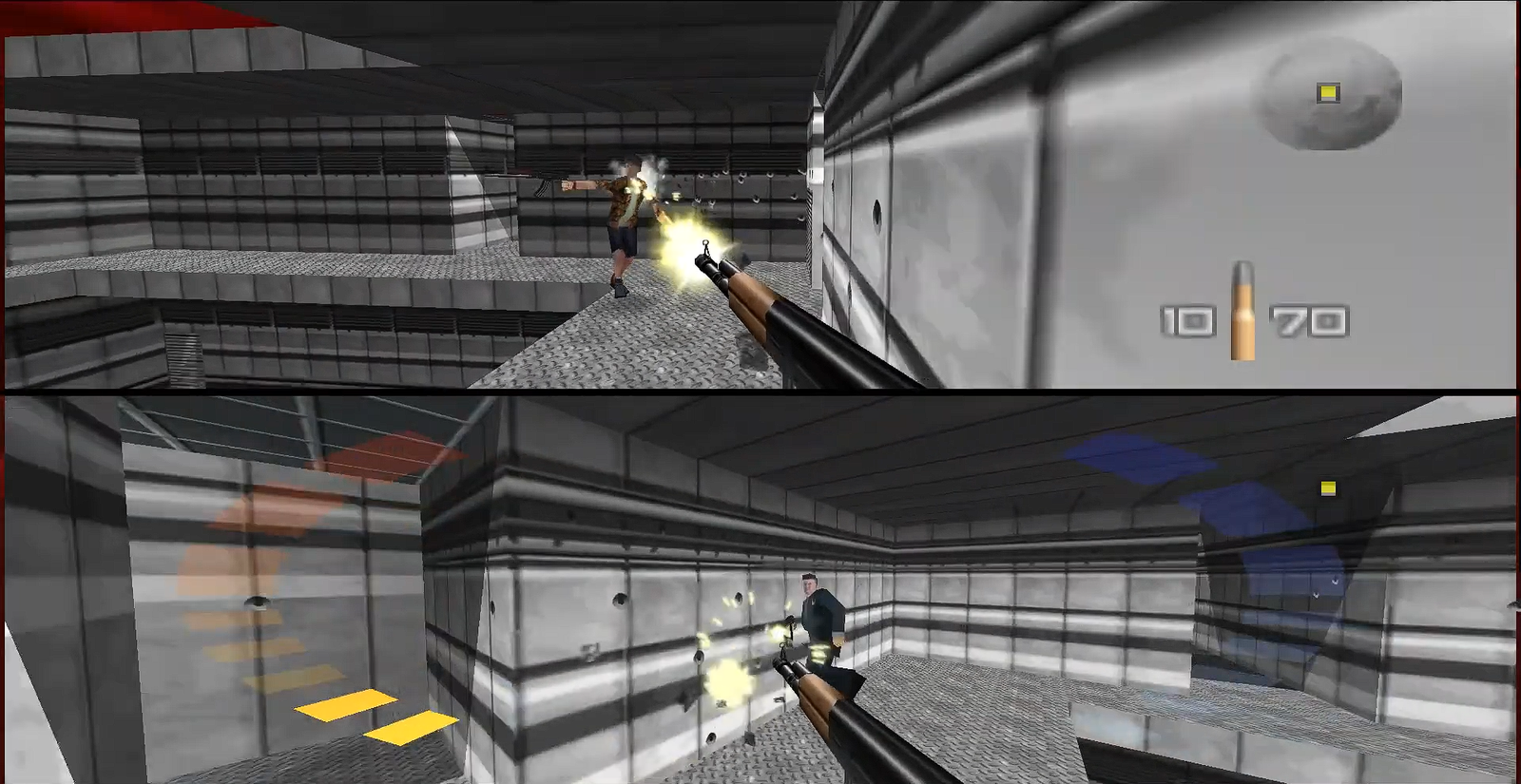
Therefore, GoldenEye closes our selection. It remains the main benchmark of the franchise and better than others explains what a truly successful Bond game should be: not just licensed, spectacular, and with convenient shooting, but holistic and with a rich set of mechanics. Agent 007 should not feel like a signboard behind another corridor shooter. It should be a full-fledged project about working for Her Majesty's Secret Service.
Verdict
The Bond game series never had quality control. The series had successful experiments and rare moments when developers truly managed to find the right balance between a spy thriller, staging, and a more or less working formula. But any such conversation still comes down to GoldenEye 007 – not only because it is the most famous game in the franchise, but also because it still remains the main benchmark for everything that came after it.
Therefore, it is especially interesting now to look at 007 First Light. IO Interactive is making a full reboot of Bond's story, and given their experience with Hitman, the game will be built as a full-fledged social stealth-action game. In it, Bond will not only be able to move stealthily but also show charisma to avoid fights. And the shooting segments should only be a last resort when all other options fail – because the agent will have to earn his license to kill.
One hopes that 007 First Light will finally do what the series has failed to do for decades: successfully transfer James Bond's adventures into a game format.
Never miss our newsAdd this site to your preferred sources to see us more oftenAdd on Google