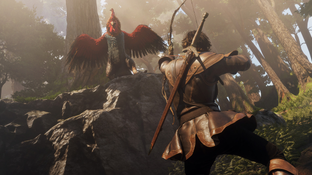
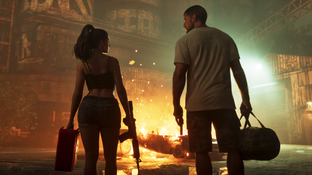
Gaming archive: iconic games released in 2005 that became cult classics
Translated with AI from the Russian original.
Twenty years have passed since the release of games that once upended the industry and became true cult phenomena. Sadly, not all of them stood the test of time: some remained locked to obsolete platforms forever, while others vanished into obscurity due to publisher neglect of their own heritage. Yet there are those still very much alive — titles that are well worth playing even in 2025. Their visuals won't blow anyone away today, and modern feature support shouldn't be expected, but the atmosphere, gameplay, and emotional punch remain outstanding. And best of all, they can be enjoyed for a modest price.
Resident Evil 4 (GameCube, PlayStation 2) — January 11
The fourth installment of Resident Evil is rightfully considered the second rebirth of the franchise — and not the last. Although the series retains familiar characters, narratively it is a standalone story. The main thing is a revolution in gameplay: a dynamic survival action game with a pinch of horror, where survival is built not on saving ammo, but on tactical shootouts, maneuvering, and crowd control. Instead of the stale dread of castles and laboratories — tense skirmishes with an aggressive mob in an open rural landscape.
A long search for a new direction concluded under the leadership of Shinji Mikami, who insisted on changing the camera perspective, dropping the Umbrella Corporation, and completely reimagining the genre. The result — a game closer to modern RE standards than to the original trilogy.
Fans initially grumbled: “Resident Evil isn’t what it used to be.” But the public welcomed it enthusiastically — despite its exclusivity for the niche GameCube. Later, its release on PlayStation 2 elevated the game to cult status. In Russia, discs were highly prized — both the console and the copies themselves cost quite a bit. PC gamers waited for a port, but the 2007 version turned out to be a technical disaster: only the most resilient could play it. Critics unanimously advised getting console editions. Patches partially fixed the situation, but today playing this port makes sense only for nostalgia’s sake. Why bother when there are better alternatives?
In 2023, Capcom released a remake for modern platforms, bringing the formula close to perfection (see the review by Maxim Dragan). Now the original’s fans are grumbling: “Resident Evil isn’t what it used to be!”. So when choosing between the classic and the remake — go with the remake. However, the prices of the remake and the old version are incomparable. If you want to experience the classic without spending much — you can buy that very same 2007 PC port on Steam. But if genuine atmosphere is what matters — it is worth hunting down a GameCube with the original. That, however, is strictly for die-hard fans.

Image belongs to CAPCOM Co., Ltd. Image source — Steam.
Devil May Cry 3: Dante's Awakening (PlayStation 2) — February 17
A masterpiece — that is how most who played it describe Devil May Cry 3. And for good reason: to this day, slashers are measured against this game as the gold standard of the genre.
The action unfolds in a dark, demon-infested world where the supernatural is the norm, and the war between hell and mankind is waged by half-breeds. The protagonist is Dante, an audacious, cocky demon hunter with a demonic heritage. The third installment is a prequel revealing his past: the clash with his twin brother Vergil, betrayal, revenge, and the birth of a legend.
Yet despite the ambitious story, fans dive into DMC3 not for the lore. They are drawn to the gameplay — polished, aggressive, almost choreographic. Director Hideaki Itsuno deliberately returned to the spirit of the first game, but went further: cranked up the pace, deepened the combat system, and turned every fight into a show. Players have six styles at their disposal: four primary and two secondary, with 3 levels for each primary style, varied weapons, and a style ranking system (“SSStylish!”) — all pushing you not merely to win, but to win in grand fashion. Difficulty levels, including the legendary “Dante Must Die,” challenged even the most seasoned gamers.
The result — the best entry in the franchise according to the majority. A game that has not aged even after nearly twenty years. Thanks to re-releases on PlayStation 4, Xbox One, and Switch, you can still enjoy it today. Console is the best way to do so. The PC port was made by the same team behind the Resident Evil 4 port. And it turned out just as disastrous: unstable performance, clunky key bindings, zero optimization. Although the community later fixed a lot via custom patches, it was never completely remedied. A mere 62% positive rating for Devil May Cry 3 Special Edition on Steam speaks for itself.
Devil May Cry 3 is not just a game. It is a benchmark everyone aspires to reach. Where every strike is a dare, every jump is art, and a successful run is a triumph. For slasher fans, it is a must-play. For everyone else — an example of how gameplay can achieve legendary status.

Image belongs to CAPCOM Co., Ltd. Image source — GOG.
Tekken 5 (PlayStation 2) — February 25
We wouldn’t be far off in guessing that most Russian gamers first encountered Tekken not at home, but in arcade halls. In the mid-2000s, PlayStation 2 was an expensive luxury, while playing Tekken at an arcade was an accessible treat. All this makes it even more impressive that Tekken 5 became iconic both in arcades and on the home console, where it arrived shortly after the arcade edition.
Yet its significance lies not just in its popularity. In the opinion of most fans, it was the fifth installment that saved and revived the series, bringing back its drive following controversial experiments in earlier chapters. Returning to vibrant arenas, improved physics, and the Devil Within mode for Jin proved to be welcome changes.
Simple controls made the game accessible even to those unfamiliar with the fighting genre. Many learned to strike, block, and parry specifically in Tekken 5. It stands as one of the most balanced titles in genre history — striking a rare harmony between high-level depth and beginner accessibility. Advanced for 2004, the visuals — boasting detailed character models and fluid animations — amplified the impact. The roster of fighters was diverse yet instantly recognizable: Jin in devil form, King with his mask, and other colorful characters. Later, the Dark Resurrection version perfected the balance and laid the groundwork for online modes in subsequent entries.
Thanks to all this, Tekken 5 became one of the best-selling fighting games on PS2.
BANDAI NAMCO’s philosophy regarding the franchise deserves respect: “if it works, don’t touch it.” They did not chase drastic changes; instead, they gradually refined a proven formula. That is why the inability to launch Tekken 5 on modern platforms, while disappointing, is no tragedy. Tekken 7 and Tekken 8 are already here — on PC and current-gen consoles. They carry on the tradition: the same brawl, the same rhythm, the same challenge. A classic evolves — while staying true to itself. But if you want a truly complete immersion into that atmosphere, you will need to find either a PlayStation 2 or a way to run PS2 games on a computer.

Image belongs to Bandai Namco Entertainment. Image source — IMDb.
Star Wars: Republic Commando (PC) — March 1
The mid-2000s marked the peak golden age of the Star Wars universe. The prequel trilogy, despite criticism from some fans, brought in millions of newcomers. The year 2005 delivered the culmination — Episode III: Revenge of the Sith. A few months prior came Star Wars: Republic Commando, which arrived as part of a massive promotional buildup spanning books, comics, and The Clone Wars animated series.
The game’s release was impeccably timed. In an era before Disney rewrote the canon, and when LucasArts still maintained the spirit of the original, Republic Commando delivered the feeling of living inside the movie. Twenty-year-old screenshots still impress: while the graphics fall short of modern standards, they look solid and atmospheric — showing few signs of full obsolescence. Unreal Engine 2 provided quality lighting, shaders, and detail that hold up even today.
Yet visuals are not the headline here. Republic Commando is one of the best narrative-driven shooters in the Star Wars franchise. You are not a faceless gunner, but the squad leader of an elite clone commando squad operating behind enemy lines. Gameplay centers on tactics, coordination, and tight control: you issue orders to your troopers — “attack,” “suppress,” “breach” — and the whole unit acts as an extension of your will. Combat is intense, grim, and unromanticized — just rain, grime, breathing inside the helmet, and radio chatter. For the first time, clone troopers felt like distinct individuals — complete with unique voices, personalities, and squad camaraderie.
Today, the game is undoubtedly outdated technically. But think about it: how many genuine shooters set in Star Wars were ever made? Dark Forces, Jedi Knight, Republic Commando, Battlefront — though Battlefront is not quite a shooter in the purest sense. The list goes no further.
That is precisely why Republic Commando remains sought-after. It is still available to purchase — though you may need to bypass regional restrictions. Running it on modern systems will likely take some fiddling: patches, compatibility tweaks, and mods. The fan-made Remastered project is gradually bringing the title closer to the new generation. Yet even without it — it is well worth the effort. Believe it.
If you haven’t played it — give it a shot. Just remember to install a couple of mods: they will restore stability and comfort.

Image belongs to LucasArts, Lucasfilm, Disney. Image source — Steam.
Gran Turismo 4 (PlayStation 2) — March 9, 2005
Stuck in traffic jams behind the wheel of an economy sedan, or commuting to work or school on a packed bus, you often catch yourself daydreaming: how great it would be to just floor the gas pedal and blaze from point A to point B behind the wheel of a real supercar. In reality, it mostly stays as a poster on the wall — even if you are well past forty and your name isn’t Jeremy Clarkson. But in the evening, back at that very same point A, you can briefly become who you want to be — and in the mid-2000s, Gran Turismo 4 captured that feeling better than anything else.
On PC, Need for Speed and Juiced reigned supreme back then — flashy, fast, yet far too arcade-like for those longing for an authentic driving experience. Meanwhile, Gran Turismo 4 on PlayStation 2 boldly called itself The Real Driving Simulator — and lived up to the name.
721 cars from 80 manufacturers. 51 tracks, including the legendary Nürburgring and Suzuka. A physics model built around hundreds of parameters for every vehicle — from curb weight to tire grip. The developers benchmarked against real-world telemetry: when comparing a lap around the Nürburgring, the discrepancy between the game and reality was a mere 2%.
In the sixth episode of Top Gear’s seventh season, Jeremy Clarkson drove Laguna Seca in a Honda NSX — first in GT4, then in real life. In the game — 1:41. In reality — 1:57. The difference lay not in driving skill, but in physical sensations: inside the simulator there is no fear, no fatigue, no G-forces, no ABS pulsing, and no bumps that you can feel from your couch. In reality, the car proved unforgiving, unruly, and alive. Yet that is exactly why GT4 impressed Clarkson — it proved capable of acting as an actual tool, not merely a video game. As he noted, he felt the car had the capability to achieve the time set in GT4.
GT4 impressed not only with realism, but also with an ambiance that felt almost museum-grade. Photo Mode let you capture the perfect shot of your dream car — and hang it on the wall. Not as an ordinary poster, but as proof: I was there.
Critics and players praised GT4 for its depth, scale, and faithfulness to the spirit of motorsport. Yet the game remained a prisoner of its era — a PlayStation 2 exclusive that never made it onto modern hardware. Technically fit to thrive today, it remains locked in the architecture of the past.
Today we have Gran Turismo 7 — technically advanced, gorgeous, cutting-edge. Yet deep down — is it truly better? For many, the answer is obvious. GT4 is still remembered as the pinnacle. Not simply because it came earlier, but because it feels more accurate, more honest. It feels real.

Image belongs to Sony Interactive Entertainment Inc. Image source — gran-turismo.com.
God of War (PlayStation 2) — March 22
God of War isn’t what it used to be. Gamers complain. Critics and our reviewer run.code complained too in the review of Ragnarök. But when was it truly itself? In 2018, after the reboot? No. It was truly itself in 2005: raw, relentless, visceral, back when David Jaffe helmed the project.
As one of the co-creators of Twisted Metal (1995), he infused God of War with that same energy — aggression, cinematic flair, and uncompromising brutality. It wasn’t just an action title. It was a blood-soaked ritual of vengeance.
Kratos, a former Spartan warrior turned into an instrument of fury by the gods, tears enemies apart with bare hands, wields chained blades, and tears through entire legions with blinding wrath in his eyes. The game never shied away from violence — it celebrated it. It was precisely that edge, that defiance, and that spectacle that drew crowds in. Audiences weren’t turned off — they cleared copies off retail shelves.
Gameplay stood as a core reason behind its cult status. Straightforward yet rich: strike — block — dodge — execute. Combos came by instinct, and QTE sequences transformed boss encounters into cinematic duels where victory depended on sheer engagement rather than raw reflexes alone. Every takedown — a showpiece. Every scene — pure spectacle.
The narrative, rooted in Greek mythology, never aimed to be “family-friendly.” Authentic ancient Greek myths are a raw pulp thriller or an ancient Game of Thrones, far removed from modern sanitized fairy tales for children. God of War stayed closer to that original literary foundation — brutal, unvarnished, packed with betrayal and spiteful gods. Not a polished myth — a blood-drenched tragedy. And it held you in suspense right until the final blow.
It’s a shame that the only ways to play that God of War today are on PS2, PS3, or through emulation. The God of War Saga collection for PS3 can be streamed on PS5 via PS Plus Premium — but that remains cloud emulation, not a native port. The 2018 reboot is a fine game, rightfully praised, yet it represents an entirely different universe: more reserved, reflective, centered around parenthood. The vibe is distinct.
So if you want to touch the original font of pure fury — it is well worth going out of your way. Because God of War (2005) is not simply where a legend started. It is that legend in its rawest, most unvarnished form. Just like genuine ancient Greek literature.

Image belongs to Sony Interactive Entertainment Inc. Image source — IMDb.
Tom Clancy’s Splinter Cell: Chaos Theory (PC, PlayStation 2, Xbox, GameCube) — March 31
What matters most to you in games? Visuals? Realistic reflections, vivid colors, high detail? In Splinter Cell, none of that takes center stage. What counts here is audio — footsteps scraping on metal grating, a guard’s breathing around the bend, distant water droplets. And that unmistakable high-pitched chirp when turning on night vision goggles. Because you are now Sam Fisher. Silent, invisible, lethal.
Chaos Theory represents the series at its absolute best. Stealth mechanics achieved ideal balance: light and shadow became more than just an aesthetic touch. A single reckless step, a ray of light catching a combat boot — and your mission is compromised. But in return comes total player agency previously unseen in earlier installments. You can bypass hostiles entirely, silently neutralize them, employ tactical gadgets, or simply melt away into shadows. The sole objective is reaching the end of the mission, and how to get there is entirely up to the player.
The franchise has consistently prioritized authenticity — tempered by gameplay design conventions — along with tension, adrenaline, agency, and freedom of choice. Even today, twenty years on, the core loop of Chaos Theory feels remarkably modern.
If you haven’t played it — do so. Right now. Flip on the NVGs. Hold your breath. And remember what it truly means to be invisible.

Image belongs to Ubisoft. Image source — Steam.
SWAT 4 (PC) — April 5
What does a shooter mean to most gamers? Doom — all bloody fun; Half-Life — cinematic atmosphere; Counter-Strike — esports thrill; Rainbow Six — cold tactics. And SWAT 4? It is not about bombast. Not about leaderboard records. It is about accountability.
It stands as a rare example of a thinking police shooter devoid of cartoonish villains and world-domination plots. You don’t get to shoot at will here. Instead you get briefings, tactical floor plans, coordinated squad commands, and rigid rules of engagement: weapons free only under direct threat, deadly force is a failure, not a goal. Each assignment is not an assault run, but a calculated tactical deployment: securing hostages, arresting suspects, keeping casualties to a minimum. One misplaced round — and the operation fails.
By 2005 standards, the visuals were modest, and the tone was bleak and grounded. Yet that is where its power lies. What unfolds on screen is not sci-fi fantasy, but the unvarnished reality of police tactical operations. Tactics, discipline, nerves of steel.
In its day, SWAT 4 became the benchmark of the genre. And what came after? A few projects could be added to the list if we expand it to include military operations as well. But when it comes specifically to the work of police special forces, perhaps only Ready or Not comes to mind — where ideas laid down twenty years ago are clearly felt. And between them lies a time chasm, as shown in the iXBT video about tactical SWAT simulators.
Today, the game is not merely relevant — it is almost unique. Where else can you feel the weight of a command, the cost of a mistake, the responsibility for every single breath?
Alas, it is not on Steam, but the Gold Edition is available on GOG. And the graphics? What difference does it make? People still play CS 1.6 — not for the pixels, but for the experience. SWAT 4 is not entertainment, it is a simulator. And if you haven't played it yet — give it a try. Especially if you think you know what a tactical shooter is.

Image belongs to Irrational Games and Activision. Image source — GOG.
Psychonauts (PC, Xbox) — April 19
Where to begin the story of Psychonauts? With its failure at launch? With the fact that the market simply failed to notice the project, and sales by the end of the year amounted to only 100 thousand copies? We could. But failure is not a death sentence. The history of entertainment is full of examples: a movie, a book, or a game, misunderstood in their time, later became cult classics. Psychonauts is one of those cases.
Or maybe start with the fact that many players — including our editorial team — do not consider it a cult classic? That works too. But denying that the game has a devoted community that defended, explained, and essentially rescued the franchise for years — is to turn a blind eye to the obvious. It was this community that made the release of Psychonauts 2 possible nearly twenty years later.
Or we could start with the most important thing: according to Tim Schafer, the creator of the game (and the author of iconic mid-90s LucasArts quests), Psychonauts was born out of an idea of a hallucinogenic trip taken by the protagonist of Full Throttle. And that, perhaps, explains everything.
Because Psychonauts is not just a platformer with unusual visuals. It is a guided tour through fractured minds, where each level is a metaphor for the psyche: a summer camp for young psychic agents, a maze of paranoia, battles with inner demons. The game combines absurdity, dark humor, touching depth, and flawless mechanics. Here you can leap across thoughts and battle anxiety in the form of a monster. At the same time — everything makes sense. And, strangely enough, — it feels honest.
Should you play Psychonauts now? Absolutely. Over twenty years, its gameplay mechanics have not aged a bit. And thanks to its unique design, it still looks fresh today. Yes, you risk joining the ranks of those who call it a cult classic forever. Or — more likely — your mind will simply be blown.

Image belongs to Double Fine Productions. Image source — Steam.
Battlefield 2 (PC, Xbox, Xbox 360, PS2) — June 21
The Battlefield series is currently in turmoil. A series of controversial decisions alienated longtime fans, while the surrounding hype frightens new players more than it attracts them. But there is a chance for a revival. Battlefield 6 is an attempt to return to its roots. A recent trailer sparked a surge of hope, and the game instantly landed on the wishlists of hundreds of thousands of players.
So what is the magic of Battlefield?
It all begins with Battlefield 2. It was the second installment that brought the series into the 21st century, moving away from the retro settings of 1942 and the arcade nature of Heroes. It laid the foundation for beloved titles Battlefield 3 and 4 — and that is precisely what, judging by leaks and trailers, Battlefield 2042 is trying to return to.
The secret of Battlefield 2 is simple: it is not in the plot, nor in cinematic cutscenes. It lies — in scale. In supporting up to 64 players on a map. In near-realistic tank breakthroughs, coordination between infantry and aviation, in destructibility that alters tactics in real time. The secret is that every engagement is not a scripted set piece, but an adrenaline-fueled firefight. It is that you are not a hero, but part of an army with your own duties and skills.
Today, the plot about a conflict between China and NATO sounds frighteningly relevant. Playing through a campaign would have been interesting — if only for the drama. We can leave the realism of a global confrontation aside. But Battlefield 2 is pure multiplayer. And it can still be played today. Servers are out there, mods work, and the atmosphere feels just like 2005: tense, chaotic, real.
If Battlefield 6 truly returns to its roots, perhaps the franchise will once again become what it once was: not merely a shooter — but a battlefield. In the meantime — give Battlefield 2 (or 3, or 4) a try. You can find instructions online.

Image belongs to Electronic Arts. Image source — IXBT.com.
F.E.A.R. (PC) — October 17
Fear. The unknown is terrifying. But F.E.A.R. — you shouldn't be afraid of it, even though it's a bit of a horror game. Even if it is already 20 years old. It is a well-known, time-tested game. On the contrary — if you still haven't played it, but appreciate stylish, intense shooters with polished gameplay, you should not put off getting to know it.
Yes, at first glance, it looks like just another narrative-driven mid-2000s shooter. The era of Half-Life 2, whose sequel fans anticipate like a messiah, and Crysis with visuals that even today's budget graphics cards could hardly handle on ultra settings. But F.E.A.R. stands out not because of scale or graphics — it was remembered for its brains. More precisely — the artificial intelligence of its enemies.
Yes, it was an illusion. Not machine learning, not neural networks — but finely tuned scripts, reactions, tactics. But the result? The feeling that the enemies were actually thinking. They flank you, take cover, sprint across lines of fire, suppress you, and coordinate their actions. Such a level of adaptability has never been seen again in single-player shooters. No AI since has produced such tension. Comparable feelings were found only in online matches — against living players.
Monolith left the entire gaming world breathless. Everyone said: “This is it! The future! Now all shooters will be like this.” That did not happen.
Yet F.E.A.R. is not just about AI. It is about rhythm. It is a blend of horror, action, and the supernatural. It is the slow sweep of a building where anything could be waiting around the corner. It is the reflex time mode, where bullets hang in mid-air. It is an atmosphere drenched in dread.
And it is — one of the most balanced shooters of its era: not overloaded with gadgets, not reliant on cinematic spectacle, but built around a sense of control, danger, and adrenaline.
Today, Monolith Productions is gone. Closed in 2025. Sad? Yes. Though they hadn't made games like they did 20 years ago for a long time. It's clear that modern shooters give players too much freedom. Levels are open, enemies are window dressing. An AI like the one in F.E.A.R. is simply impossible under such conditions.
Yet maybe we shouldn't rush toward open worlds? Maybe we should return to confined spaces, to tension, to tactics? To something in the vein of F.E.A.R.? Only one thing remains: boot up a 20-year-old game. And remember what it feels like — to play against an enemy that is genuinely afraid of you… and of whom you are afraid too.

Image belongs to Monolith Productions, Inc. and Timegate. Image source — SteamDB.
Shadow of the Colossus (PlayStation 2) — October 18
Shadow of the Colossus is a striking example of how a game can transcend entertainment and become true art. Not a trendy art piece displayed in a gallery for shock value, not performance art, not a postmodernist meta-game — but something greater: pure creativity. This is not an imitation of art. This is — genuine art, where form, meaning, and emotion are one.
And yet Shadow of the Colossus does not turn into arthouse cinema for the chosen few. Yes, its visual language — majestic landscapes, minimalism, light and shadow — is gorgeous and poetic. But the game remains a game. With clear rules, mechanics, and objectives. With an austere yet profound narrative revealed through sound and silence, and even in the gait of the horse Agro climbing up a mountain.
You set out into empty lands, find a colossus — a living, almost sacred creature of monumental proportions — and, armed only with cold steel, search for a way to scale it, seeking a weak spot hidden beneath its fur, within its joints, or under its wing. Every battle is not a duel, but an ascent. You cling, slip, plummet, and climb back up again, feeling the colossus tremble beneath your feet. And when the colossus crashes down, a brief spark of triumph gives way to grief for the fallen giant.
The year 2005 on the PlayStation 2 was unprecedented: God of War, Resident Evil 4, Kingdom Hearts II, Guitar Hero, Gran Turismo 4 — that list alone would suffice for several modern gaming generations. Many of those titles now languish trapped inside an outdated ecosystem.
Yet Shadow of the Colossus was fortunate. A remake arrived on PlayStation 4 in 2018 — not merely a graphical update, but a retelling crafted, as our author Mikhail Shkredov put it, by ‘masters deeply passionate about their craft.’ The same silence. The same desolate valleys. The same crushing weight behind every stride. Except now — brought alive by the whisper of the wind, intricate details on the colossi’s hides, and fissures etched across ancient stone.
One can only lament that the remake never came to PC, lest it remain locked within a walled garden. Because Shadow of the Colossus is not just a video game. It is a singular journey. And it belongs in the hands of everyone.

Image belongs to Team Ico and Sony Interactive Entertainment Inc. Image source — IXBT.com.
Sid Meier's Civilization IV (PC) — October 25
One could debate endlessly which Civilization is beloved the most — the third for its quantum leap, the fifth for its polish, the sixth for its visual flair. Yet our editorial debate was settled definitively by the editor-in-chief: in Russia, every installment enjoys cult status, but Civilization IV is ‘more iconic than any other.’ Arguing with the editor is an exercise in futility. And why bother anyway — he happens to be right.
Civilization IV did not merely blend into the franchise — in many respects, it defined its future. Mechanics forged in 2005 remain vibrant throughout the series to this day. It might not look like quite the radical leap that Civ III was with its tile network and diplomacy, nor does it glisten with the glossy sheen of Civ V, yet its core concepts are bold, deliberate, and full of life.
This was the first entry where religion ceased to be mere window dressing and became a full-fledged strategic instrument. You can proselytize Christianity, propagate Islam, or — why not — bestow Russian Zen Buddhism upon the world. Religious doctrines sway city happiness, cement imperial unity, and ignite wars. It is no mere gimmick — it is a profound system.
Expansion was overhauled from the ground up. The spread of cities and realms was no longer an uncontrolled building spree in pursuit of raw resources, but a deeply calculated endeavor. Careless sprawl led straight to inevitable ruin. Suddenly you had to weigh benefits and blueprint your growth. That very mechanic laid the bedrock for generations of sequels to come.
It was also here that adaptive music made its series debut, shifting alongside civilizational progress. From modest choral chants in ancient antiquity accompanied by folk instruments to majestic symphonies in the space age — the soundtrack of Civ IV endures as one of the most unforgettable in gaming history.
Staying faithful to Sid Meier’s core philosophy — easy to learn, difficult to master — Civilization IV delivers a cadence all its own. Every era, every victory, every national crisis feels distinctly different compared to any other entry.
If your journey with Civ began with the fifth or sixth installment, you owe it to yourself to experience the fourth. It yields nothing to them. Quite the contrary — in several areas it surpasses them outright. Not simply because it is superior, but because it possesses a gameplay rhythm entirely unique to itself. Intelligent, evocative, somewhat meditative, yet thrilling when the stakes rise.
And yes — it still looks handsome today. Especially once that iconic score begins to play.

Image belongs to Firaxis Games and 2K. Image source — Steam.
Call of Duty 2 (PC, Xbox 360) — October 25
“War never changes,” intones the somber narrator across every Fallout intro since 1997.
Meanwhile, the creators of Call of Duty likely smirked and muttered, “Why so serious?” — before turning armed conflict into a cinematic, pulse-pounding, rollicking shooter. Since then, the assembly line has never stopped for a single day.
In 2005, Call of Duty 2 arrived — and catapulted the series to unprecedented heights. War, even the Second World War, is certainly no laughing matter. Missions across Soviet, British, and American soldier perspectives were anchored in historic engagements — from the Battle of Moscow in 1941, through North Africa and Stalingrad in 1942, to the D-Day landings in Normandy in 1944. The narrative tone was restrained, almost documentary-like.
The gameplay, however? Anything but a documentary. CoD was always designed as a thrilling shooting gallery — and the sequel polished this formula to perfection.
Yes, everything here runs on scripts. Foes will not spawn until you cross an invisible trigger. Until you rush ahead, the offensive will not commence. Until you dive into cover, the next wave will not advance. And yes — cannon fodder AI will peek from behind barriers repeatedly until the next sequence activates.
It is not a simulation. It is a spectacle. CoD 2 set the quintessential blueprint: short, dense missions, varied theaters of war, cinematic camera angles, the whistle of a bullet grazing past your ear, and the visceral sense of standing right in the epicenter of the apocalypse.
Critics quipped: “This isn’t war, it’s an amusement park ride.” Yet ask anyone who played it back then: was it fun? Immensely so. Beyond doubt. Infinity Ward and Activision did not merely make a game — they reshaped the very concept of warfare in interactive entertainment. They made it accessible, dramatic, spectacular. And, truth be told, exhilarating.
Call of Duty 2 never claimed historical verisimilitude. It delivered pure sensation.
And therein lies its genius.

Image belongs to Infinity Ward and Activision. Image source — Steam.
Star Wars: Battlefront II (PC, PlayStation 2, Xbox) — November 1
In 2005, the Star Wars universe grew richer not only through Republic Commando, but also with Star Wars: Battlefront II — a sweeping, roaring, uninhibited celebration of galactic war far, far away.
Technically, the title included a single-player campaign — experienced through the sights of a 501st Legion trooper, tracing the journey from serving the Republic to rising within the Empire. There was a narrative, cinematics, and genuinely dramatic beats. Yet fondness for it remains largely nostalgic. The true reason players booted up the disc was entirely different: multiplayer.
The title alone made the pitch clear: EA was fashioning Battlefield in a Star Wars skin. And everyone welcomed it with open arms.
Because here, for the very first time, you could step directly onto the battlefields rather than merely observing them on screen. Online firefights featuring dozens of players, untamed chaos sweeping across the terrain, shouts echoing over comms, explosions rocking every corridor — this felt less like an ordinary shooter and more like total warfare.
Furthermore, the freedom to command iconic Imperial and Rebel vehicles transformed every encounter into wish fulfillment. You could strap into an X-wing cockpit and trade laser fire with TIE fighters, reenacting silver screen showdowns. Or step inside an AT-AT and march upon Rebel positions just like in Return of the Jedi, crushing infantry beneath massive legs while deflecting incoming ordnance. You were living out movie scenes firsthand.
Unforgettable memories immediately flash back: lumbering walkers swaying under heavy barrage, fiery detonations across the frozen wastes of Hoth, and lightsaber duels erupting amid the mayhem.
Today, of course, revisiting the 2005 Battlefront II is hardly advisable — unless you seek pure nostalgia or want to finish the campaign. The official master servers are offline, and its technical foundations show their age.
For modern multiplayer warfare, there is the 2017 Battlefront II — visually stunning and expansive, though not without controversy. It drew sharp rebuke for microtransactions, balance issues, and straying from the original spirit. Yet despite everything — it remains the premier avenue to experience the scale of Star Wars in online play.

Image belongs to LucasArts, Lucasfilm, Disney. Image source — Steam.
The Movies (PC) — November 8
The Movies never redefined the business simulation genre, yet thanks to its distinct originality, it secured a fiercely loyal following. Amid an ocean of games about managing cities and harvesting farms, it arrived as an eccentric yet ingenious venture: a film studio tycoon. For nearly two decades, it stood as the sole high-caliber title dedicated to the art of filmmaking.
The concept sprang from Peter Molyneux — a designer gifted with boundless vision. His modern reputation is complicated, yet back in 2005, his vision for The Movies was greeted with warm acclaim — and, crucially, executed with brilliance.
You establish a studio from scratch: build soundstages, cast actors, and produce films — spanning the silent era to effect-laden modern blockbusters. You balance production budgets, steer star careers, and negotiate salaries. Then comes the centerpiece — stepping behind the director’s chair. In the filming mode, you craft scenes yourself: position actors, script lines, frame camera angles, and trigger special effects. The end result is not always cinematic gold, but it is almost invariably hilarious.
Afterward, you could upload your film to The Movies Online, the dedicated platform where creators showcased their triumphs (alongside schlocky B-movies), while peers watched, rated, laughed, and found inspiration. It proved to be an early, shining triumph of user-generated content in simulation gaming — and it worked wonderfully.
The servers have long since gone dark, but The Movies remains fascinating. Not because it was flawless. But because hardly anything like it exists. Blockbuster Inc., viewed by some as its spiritual successor, falls well short of that benchmark. Where else can you juggle the roles of executive producer, director, and screenwriter simultaneously? Where else can you craft an awful melodrama about zombie robots and feel genuinely proud of it? Perhaps in Hollywood Animal — described by our reviewer Viktor Zaytsev as ‘a one-of-a-kind project combining a movie studio sim with an evocative historical journey into mid-20th-century Hollywood.’ Yet that project is still in early access.
So if you are looking not for promises, but for a fully realized experience, even 20 years later The Movies remains not merely a collector’s gem — but a peerless journey.

Image belongs to Lionhead Studios and Activision. Image source — IXBT.com.
Guitar Hero (PlayStation 2) — November 8
“Real guitars are for old people,” proclaims Eric Cartman in season 11, episode 13 of South Park, an episode centered squarely on Guitar Hero. And while the mockery is dialed to eleven, the mere fact that the show dedicated an episode to it speaks volumes. Very few video games turn into cultural phenomenons — Guitar Hero found itself in the rare company of World of Warcraft.
Satirists skewered it mercilessly: had players invested half that time into a genuine instrument, they might have become musicians. Yet denying the cultural impact of Guitar Hero is impossible.
Released in 2005, the title became a global sensation. It took the rhythm genre and made it an electrifying stage performance. Players weren’t merely pressing buttons. They were swinging guitar necks, locking into riffs, dropping to their knees like seasoned rock legends to the roar of virtual stadiums. Guitar Hero transformed living rooms into amphitheaters, and schoolkids into stadium gods with calluses on their fingertips from plastic strings — or rather, buttons.
Within a few years, the franchise generated over a billion dollars. It went far beyond a gaming hit — it became an entertainment empire: concert tours, official soundtrack releases, spin-offs, and legendary licenses spanning Metallica to Aerosmith.
And yes, the itch to fire it up today is strong. Alas, you won’t be able to — unless you dig up a PlayStation 2.
Rhythm games featuring rock tracks certainly exist today. What they lack, however, is the magic ingredient — that plastic Gibson packed inside the original box. Guitar Hero offered more than just music; it offered the realization of a dream. Even if only for a brief moment.
Today it might look kitschy and naive. In 2005 — it was pure genius.

Image belongs to Harmonix Music Systems and RedOctane. Image source — IXBT.com.
Condemned: Criminal Origins (Xbox 360) — November 15
If you don’t need to fear F.E.A.R., Condemned: Criminal Origins is one you definitely should fear. And delightfully so.
Crafted by the very same developer — Monolith Productions — yet endowed with a completely different soul. This stands among the grimmest, most atmospheric, and physically harrowing horror titles of the 2000s. Not survival horror in the traditional vein — but its raw, street-level reinterpretation.
You will find no cinematic shootouts here. Firearms are a precious rarity. Combat is brutal and melee-focused. The adversaries are not disciplined special forces, but vagrants, psychopaths, and deranged wanderers armed with rusted pipes, fire axes, and unbridled fury. They strike in packs, out of pitch-black corners, without warning. You are a lone investigator navigating forsaken labyrinths of morgues and decrepit tenements, breath catching in your throat, defending yourself with whatever junk lies nearby.
The mechanics pivot on close-quarters encounters: swings, parries, counters. Everything feels unrefined, yet agonizingly real. The darker, tighter, and more repulsive the corridors become, the heavier the dread presses down. Combine that with forensic investigations — processing clues, latent prints, blood spatter — and you get a rare union of horror and detective procedural.
The plot unfolds as a bleak enigma: a serial butcher, mass hysteria, and the protagonist’s own buried truths.
Western critics received the title with caution, lauding the thick ambiance while recoiling from the relentless brutality and grime. Russian gamers and outlets, by contrast, embraced it enthusiastically — perhaps reflecting memories of the turbulent 1990s burned into collective consciousness.
Is Condemned worth experiencing today? Without question — assuming your taste leans toward horror where dread stems not from cheap jump scares, but from vulnerability, filth, and proximity to madness.
Visually the game has aged, but never enough to shatter immersion. When today’s players gravitate toward indie horror reveling in gritty visuals and suffocating decay, Condemned emerges as more than a worthy alternative. It remains the gold standard.

Image belongs to Monolith Productions and SEGA. Image source — IXBT.com.
Need for Speed: Most Wanted (PC, PlayStation 2, Xbox, Xbox 360) — November 15
Most Wanted is the quintessence of the Need for Speed franchise. Full stop. This comes straight from an Underground 2 devotee who, to be frank, takes little pleasure in tangling with squad cars. Yet truth takes precedence. Synthesizing the finest elements of its predecessors — the raw momentum of Underground 2, white-knuckle pursuits, the liberty of an open world — it became the benchmark the series chases to this day. A peak it has arguably never reached again.
The developers did not simply piece together technology and gameplay loops — they bottled an adrenaline rush. The thrill of illicit street racing, the battle for notoriety, and the climb to become the most wanted driver in town. Every single event is a challenge, every police pursuit a test of driving reflex.
Most Wanted traded away the flashy neon style of the Underground era — yet preserved the core essence of that duology: tuning, swagger, street dominance. It dismissed sterile circuit racers where hitting braking marks takes precedence over an adrenaline spike or the road beneath your tires. Nor did Most Wanted mimic Hot Pursuit, where chases boiled down to memorized highways and endless roadblock corridors.
The city here is alive. You compete in sprints and speed traps, but at any second the hunter can become the prey, and vice versa. Spend some time with Most Wanted. Compare it to contemporary titles like Forza Horizon or The Crew, and you will see: even against pristine, modern marvels, it has never faded, nor will it decades later. It remains the absolute pinnacle of arcade racing.

Image belongs to Criterion Games and Electronic Arts
Prince of Persia: The Two Thrones (PC, PlayStation 2, Xbox, GameCube) — December 1
The true Prince of Persia debuted in 1989 on the Apple II — nimble, graceful, lethal with surgical precision in every bound. Yet disregarding the brilliance of Ubisoft’s trilogy means ignoring the era when the saga discovered its second wind. Prince of Persia: The Two Thrones, arriving in 2005, served as the ultimate chapter in a narrative arc sparked by The Sands of Time (2003) and carried forward by Warrior Within (2004).
Three games — a single odyssey. While each stands firmly on its own feet, together they form an iconic trilogy: a cohesive storyline, a pervasive quest for redemption, and the transformation of a hero — from a naive custodian of time into a battle-hardened, ruthless warrior. Most crucial of all — immaculate gameplay.
Ubisoft Montreal during the mid-2000s understood how to create extraordinary games. Unlike today.
Jumps, rolls, wall slides, dodges — everything is choreographed with pinpoint precision. The Sands of Time mechanic — with its time manipulation — became the heart of the trilogy. And The Two Thrones added a new dimension: internal struggle. The Prince is no longer alone — within him lives the Dark Prince, full of rage and chaos, clawing his way out. Behind what seems like a simple “berserker” gameplay mechanic lies a genuine character drama. And along with that drama, The Two Thrones blends action and platforming into a harmonious adventure that gives players the very thing they play for — emotions.
Players are still waiting for the long-announced remake of The Sands of Time, even though it was originally promised back in 2021. But the 2020 showcase turned into a disaster: fans were outraged — the animation, the visuals, the atmosphere — everything felt off. Ubisoft acknowledged the failure and promised to rework everything from scratch.
In the meantime, only one thing remains — to return to the original. To the trilogy where we leaped, fought, and cared. And The Two Thrones became not just the conclusion of the story. It became a farewell.
Yes, there were Prince of Persia (2008) and an attempt to recapture past success in The Forgotten Sands. There was an ambiguous experiment with format in The Rogue Prince of Persia — a roguelike from Evil Empire. But that trilogy is perhaps the best thing that happened to the franchise after the legendary first game.

Image belongs to Ubisoft. Image source — Steam.
Yakuza (PlayStation 2) — December 8
The Like a Dragon series, formerly known as Yakuza, is a unique phenomenon in the gaming industry. Over 20 years, it has evolved: graphics were overhauled, the combat system was rebuilt, and the narrative expanded. RPG elements emerged, and the recent Like a Dragon: Pirate Yakuza in Hawaii sent the legendary Goro Majima on swashbuckling pirate adventures in Hawaii. Yet at the core of it all lies an enduring recipe established by the original Yakuza back in 2005.
And this recipe is simple: crime drama, absurd humor, a city teeming with life, a mountain of minigames, and one unwavering hero. Shaken, not stirred… though that is from a different franchise.
You are Kazuma Kiryu, “Like a Dragon,” a yakuza who cannot escape his past. You are thrown into a whirlwind of crime, betrayal, and family drama. But Yakuza wouldn’t be what it is today if, between bouts, you couldn’t play the UFO Catcher (claw crane), practice at the batting cages, hit the casino to lose cash on roulette, or embark on a multitude of hilarious and sometimes ridiculous side adventures unrelated to the main plot. In short, let loose entirely.
The game world is Tokyo in miniature. It is packed with details, characters, and chance encounters. Here, every stall, every passerby, and every door is a potential plot twist or a fountain of absurdity. The protagonist, Kiryu, is far from flat. He combines the ruthlessness of a yakuza carving out victories through bloodshed with touching tenderness for those he considers family.
Experiencing the original Yakuza today the way people did back then is nearly impossible: it was released on PS2, and even with emulation, the experience won’t be complete. The game is technically outdated, and visually a product of its era. But if you want to understand where it all began, you can try Yakuza Kiwami — a modern remake where the original story is retold with updated graphics, combat, and additional story threads. If only for the love of the craft.
Or you could simply pick up any modern entry: Yakuza: Like a Dragon (2020), Like a Dragon: Infinite Wealth (2024), or Pirate Yakuza in Hawaii — and get the exact same thing: madness, drama, and adventure. Because the essence of the series isn’t in its graphics or its combat system.

Image belongs to Sega. Image source — IXBT.com.
***
The cover image was created using the ChatGPT neural network
Never miss our newsAdd this site to your preferred sources to see us more oftenAdd on Google