A great foundation that needs refinement. Review of the domestic role-playing game Gedonia 2 [Early Access]
Translated with AI from the Russian original.
In Gedonia 2, players once again get the opportunity to return to the magical lands of Gedonia. Alone or alongside companions, they will have to choose a class and tackle emerging challenges in a unique way. The storyline, meanwhile, will unfold according to their choices.
A new beginning
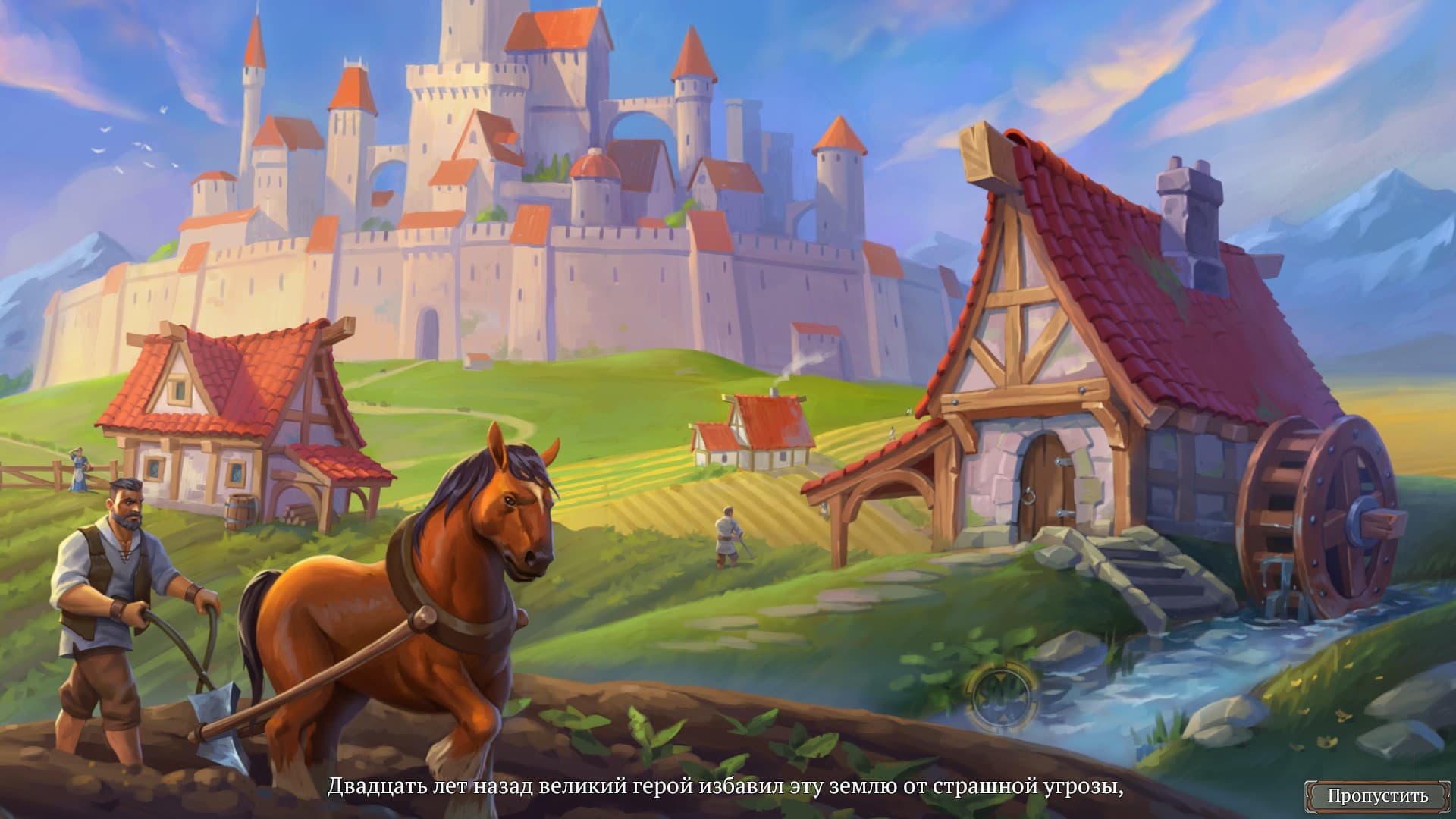
The game begins with a detailed character creator. One of the choices involves the hero’s backstory, with the player deciding who they want to be: a mysterious stranger, a mercenary, a nobleman, a prisoner, or a peasant. This choice affects not only starting equipment and skills, but also dialogue options. For instance, a peasant will more easily find common ground with other “hard workers,” while a former nobleman feels more comfortable among the aristocracy.
It is also important to properly allocate points into basic attributes:
- Strength: helps hit hard in melee combat and wear heavy equipment. Strong characters can move large objects;
- Agility: needed for a more nuanced approach to handling issues. Allows you to dodge roll;
- Intellect: indispensable for mages and for crafting items and potions;
- Charisma: suitable for those who want to command a small army. Charismatic heroes can resolve conflicts peacefully and periodically receive discounts.
After character creation, you are faced with a choice between an arena and an open world. The arena lets you test your mettle against waves of enemies. The open world can be explored either in splendid isolation or in the company of friends.
Choose your destiny
By completing quests and killing monsters, the player levels up. The points gained upon leveling can be spent on attributes and skills:
- Warrior’s Path: the simplest and most straightforward progression path. You can don heavy armor and wield a sword and shield in melee combat. Agility builds will be able to shoot bows and roll;
- Specialist’s Path: you can dual-wield daggers and deal massive damage from stealth. As the saying goes: “rogues do it from behind.” Heroes with developed leadership are capable of supporting and buffing their own squad of fighters and beasts;
- Mage’s Path: allows you to heal and attack using the power of nature, earth, and lightning. Or you can become an adept of dark magic – ruthlessly destroying enemies and summoning minions.
At the time of writing, illusion magic, shapeshifting, and “animal husbandry” are currently in development.
A vibrant fantasy world
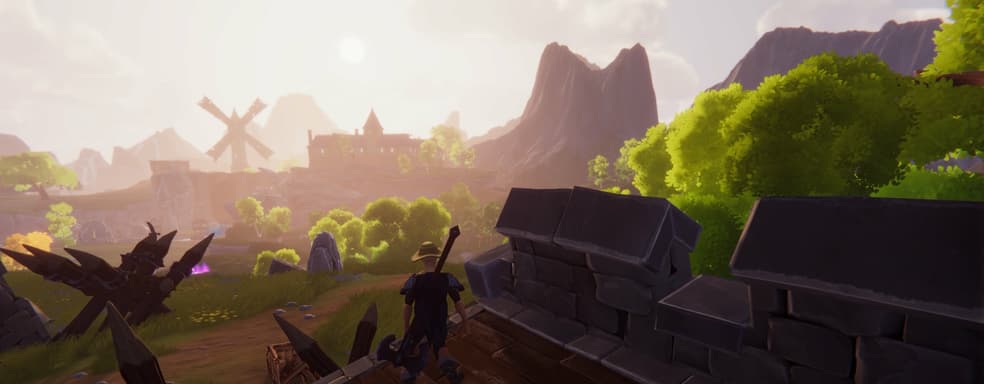
Visually and mechanically, the world of Gedonia resembles World of Warcraft. The created character, walking with the gait of someone who soiled their pants, explores lands filled with resources and enemies. You can go wherever you please – the only limitation being the level of the enemies you encounter. As time passes, not only the time of day changes, but also the weather conditions.
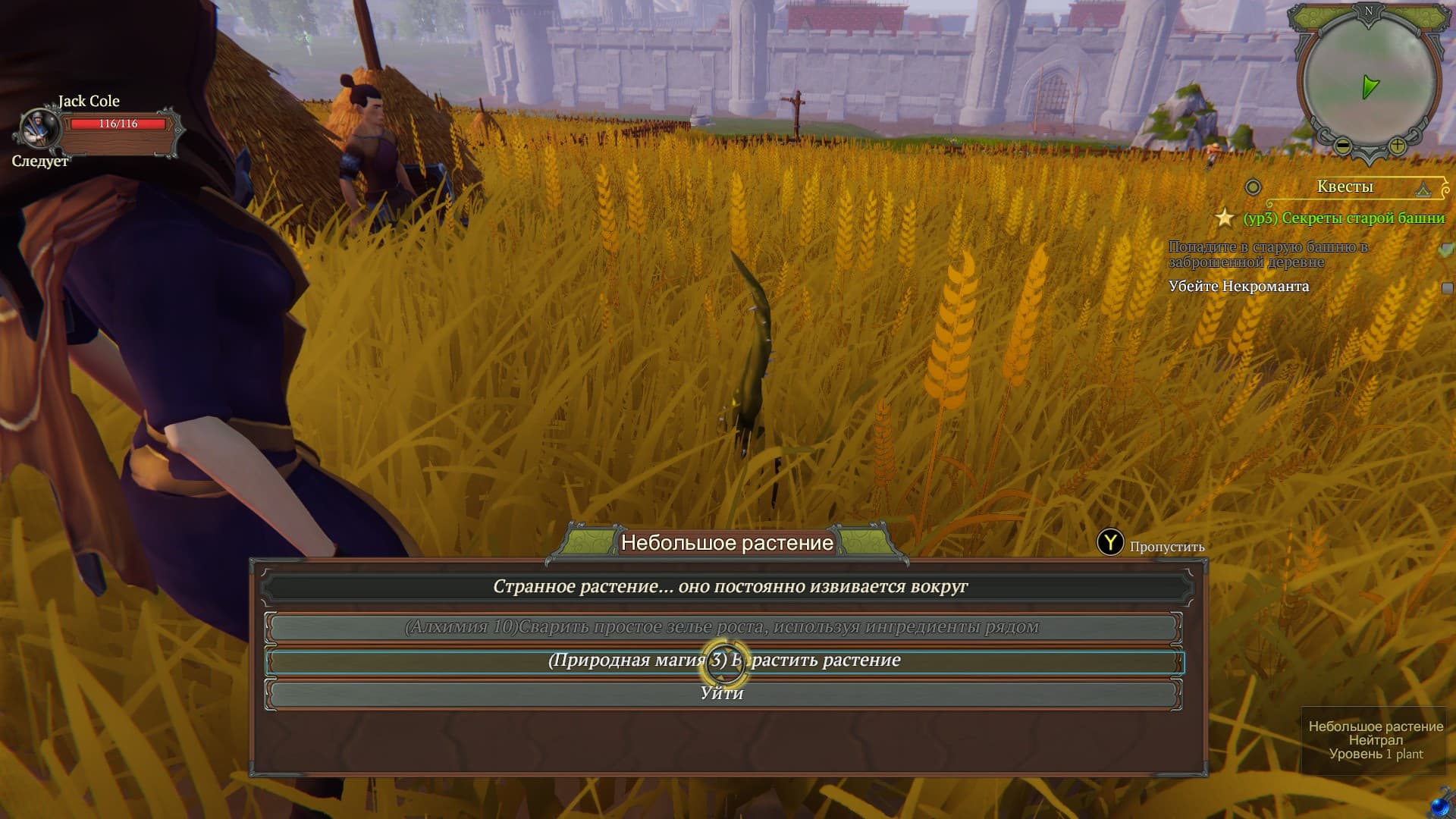
The character can gather ore, wood, and berries. Resources come in handy not only for selling and restoring health, but also for crafting and enchanting items. Occasionally, the game lets you get creative – a pouch hanging on a rope can be shot down with a bow to snatch valuable loot. Or you can stack boxes to climb up onto a ledge.
Outside safe zones roam the wolves, spiders, vicious birds, and elementals familiar to RPGs. Due to terrain peculiarities – it is very easy to snipe them with a bow from a safe position. At the time of playthrough – this method had two significant drawbacks:
- Switching between sword and bow requires equipping the appropriate weapon in the inventory;
- Ammunition runs out very quickly. It can be replenished in the field, but this skill has a long cooldown – often forcing you to just stand and wait.
I would like to give a special “shoutout” to the genius who placed crafting arrows and traps among archery skills. Why isn’t crafting placed in a separate category?
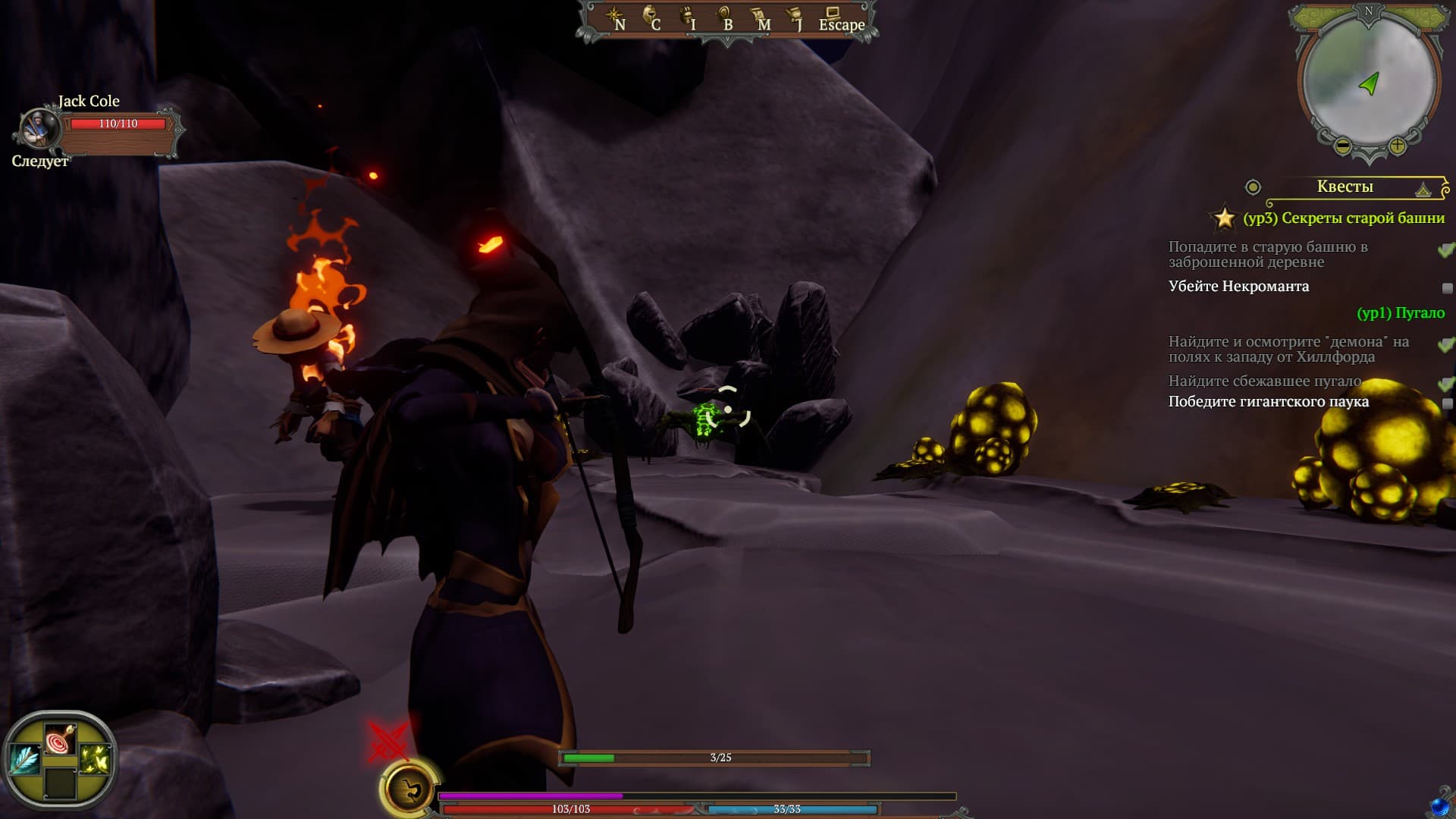
Except for pathfinding issues – the monsters make for decent adversaries. In combat, they leap, shoot, teleport, and use skills. Some even execute various move combos! Meanwhile, the hero can knock enemies down and interrupt their incoming abilities.
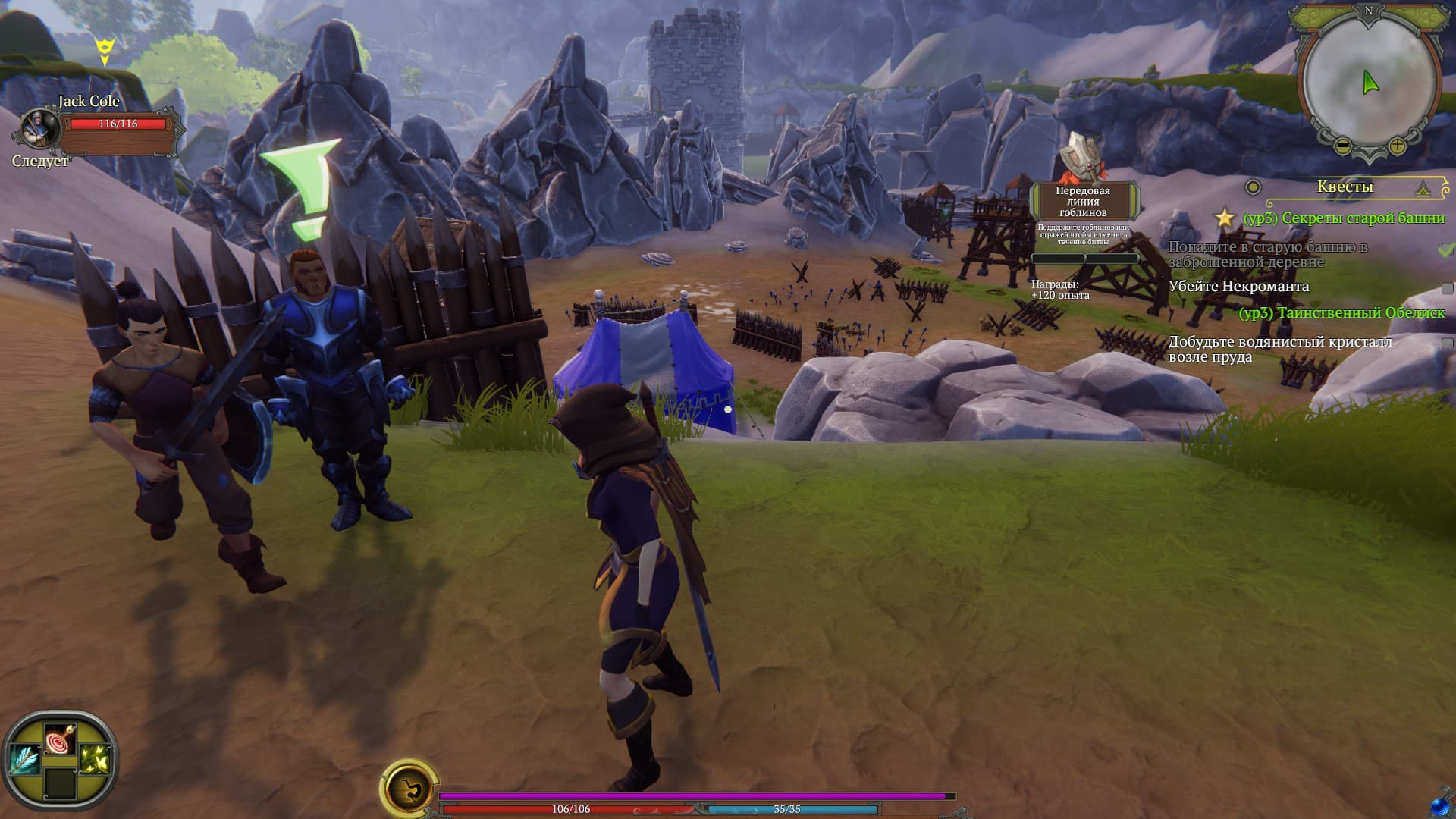
A fun reference is the goblin camps, which look like the bokoblin camps from the latest two The Legend of Zelda games. The camps even feature the famous explosive barrels! Alas, shooting them with a bow or tossing them into a campfire does not make them explode.
Choices and their consequences
The road of adventure leads to characters handing out fetch-and-kill quests. The difficulty arises when trying to interact with them – you have to circle around the quest giver just for the option to initiate conversation to finally appear.
Quest progression depends on character build. The chosen backstory lets you find common ground with bandits or peasants. Additional dialogue options depend on attributes and build progression. In one questline, you need to retrieve a lute from bandits, and one option is to kill a hostage who could otherwise be freed. If you cold-bloodedly murder him, the bandits will be terrified and steer clear of the hero.
Besides completing quests – you can participate in a local conflict. Three factions fight for territory: guards, rebels, and goblins. The player is free to side with one of them and help deal with the others.
The characters were voiced by the GamesVoice team. Thanks to their efforts – conversing with NPCs and completing quests is even more amusing and engaging.
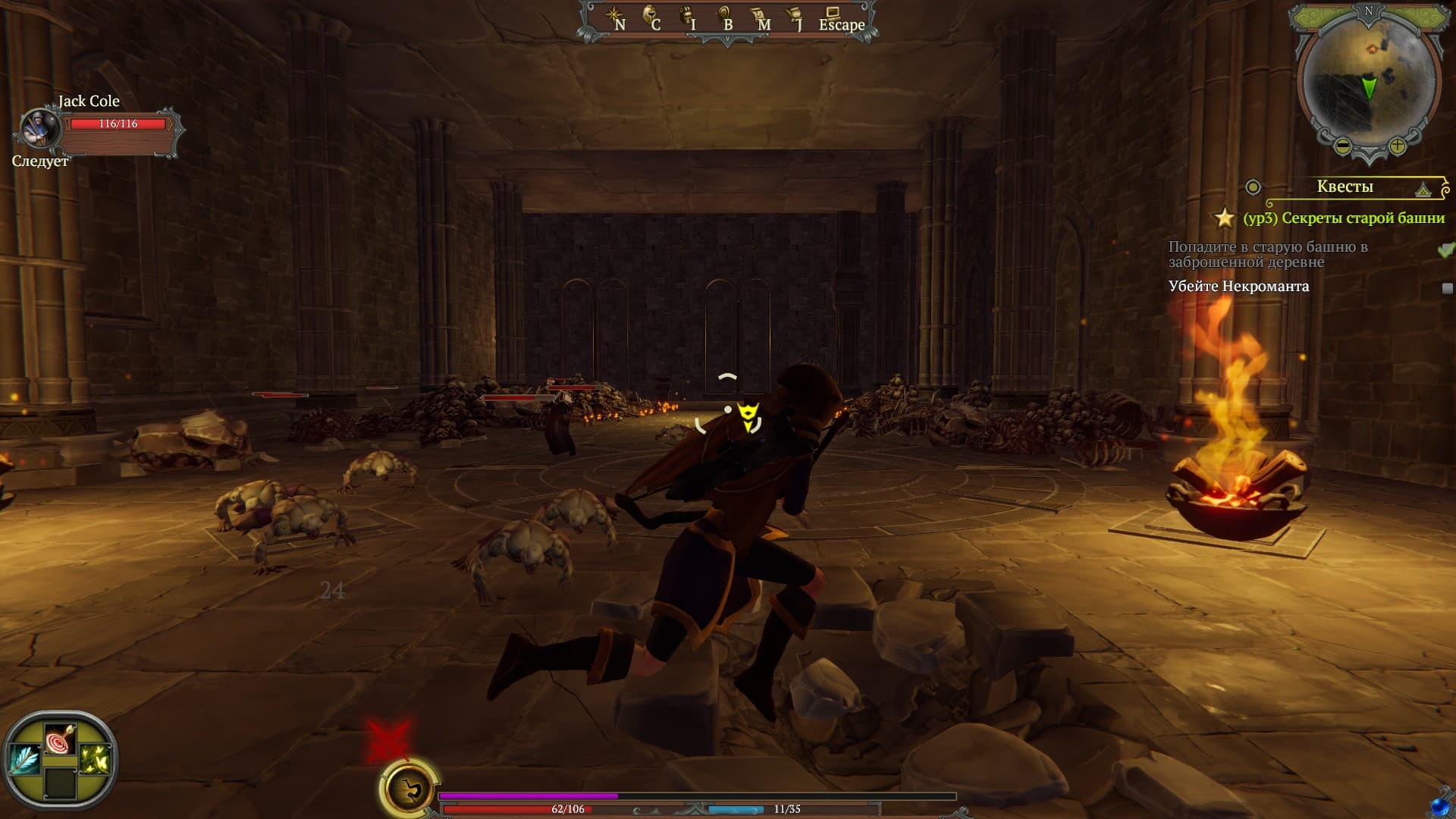
It is a shame that bugs also occur in the main quest. For instance, in the mission where you have to get rid of a necromancer:
- If you die during battle, all the undead he summoned remain in the arena — and he keeps summoning more;
- If you rejoin the game, all unlocked shortcuts to the boss close, and you will have to traverse the entire location all over again from the beginning.
Setting aside quest and world bugs, early access is quite well “polished.” I played through the game using a gamepad and experienced no issues, nor did I encounter any lag or crashes. However, world loading speeds and asset pop-in in locations leave much to be desired.
It is also worth mentioning the clunky interface, which was the most irritating aspect, but keep in mind that these are just the initial early access builds — the developer can still change and improve a lot.
Diagnosis
First and foremost, Gedonia 2 is valuable for its variety of ways to complete quests – the outcome depends on character build and can lead to unusual and amusing consequences. The sheer variety of build paths is also appealing, allowing players to role-play a warrior, a mage, a specialist, or something in between.
I look forward to seeing in the full release how the game behaves when quests are tackled by multiple players. If everyone chooses different backstories, attributes, and skills, will all completion methods be available, or will players have to negotiate during the adventure? If the latter is true, Gedonia 2 could turn out to be a magnificent role-playing game — with an emphasis on the word “role-playing.”
***
Image rights belong to Kazakov Oleg. The preview image is taken from SteamDB
Never miss our newsAdd this site to your preferred sources to see us more oftenAdd on Google