The throne beneath Denuvo is wobbling. Examining how Irdeto’s anti-tamper protection harms major publishers
Translated with AI from the Russian original.
The anti-piracy DRM protection Denuvo Anti-Tamper — or simply Denuvo — is today an absolute monopolist in its field: many major game companies install this software into their projects despite performance issues, and hardly anyone dares to crack it anymore. Nevertheless, the company remains unsatisfied and for some reason wades into controversies with players.
A year of failures for Denuvo
Over the past few months, several events have occurred involving Denuvo Software Solutions GmbH and their anti-piracy DRM protection Denuvo Anti-Tamper.
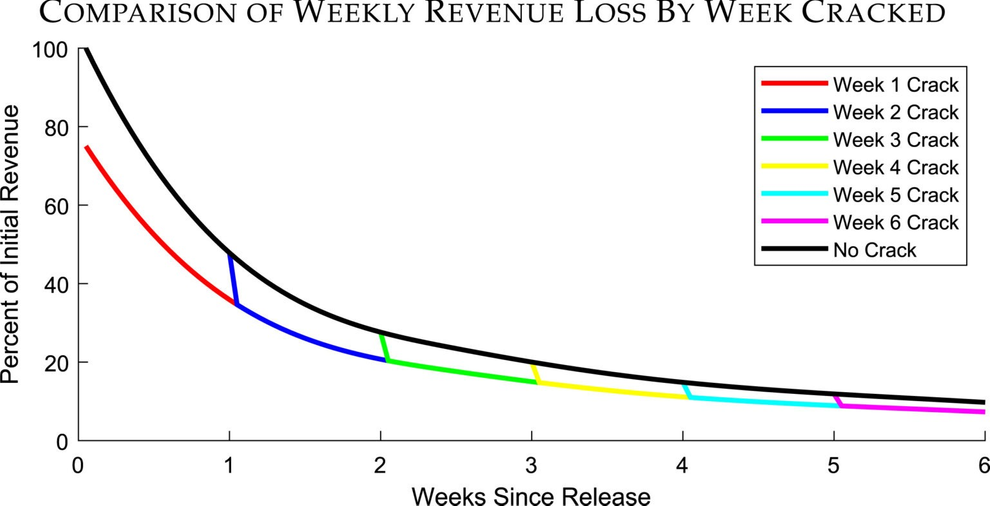
First, in October 2024, William Volckmann, a specialist at the University of North Carolina at Chapel Hill, published an article titled “Revenue effects of Denuvo digital rights management on PC video games” in the scientific journal Entertainment Computing. It focuses on the impact of piracy and anti-tamper solutions on game sales.
The conclusions are that DRM protection exerts its primary impact on sales during the first weeks after a game’s release — if the system is cracked quickly, developers risk losing up to 20% of revenue. If the crack occurs after six weeks, potential losses drop to 5%. And if it happens later, the publisher loses nothing at all.
Then, just a couple of weeks later, Denuvo representatives launched their own Discord server in order to “get closer to players.”
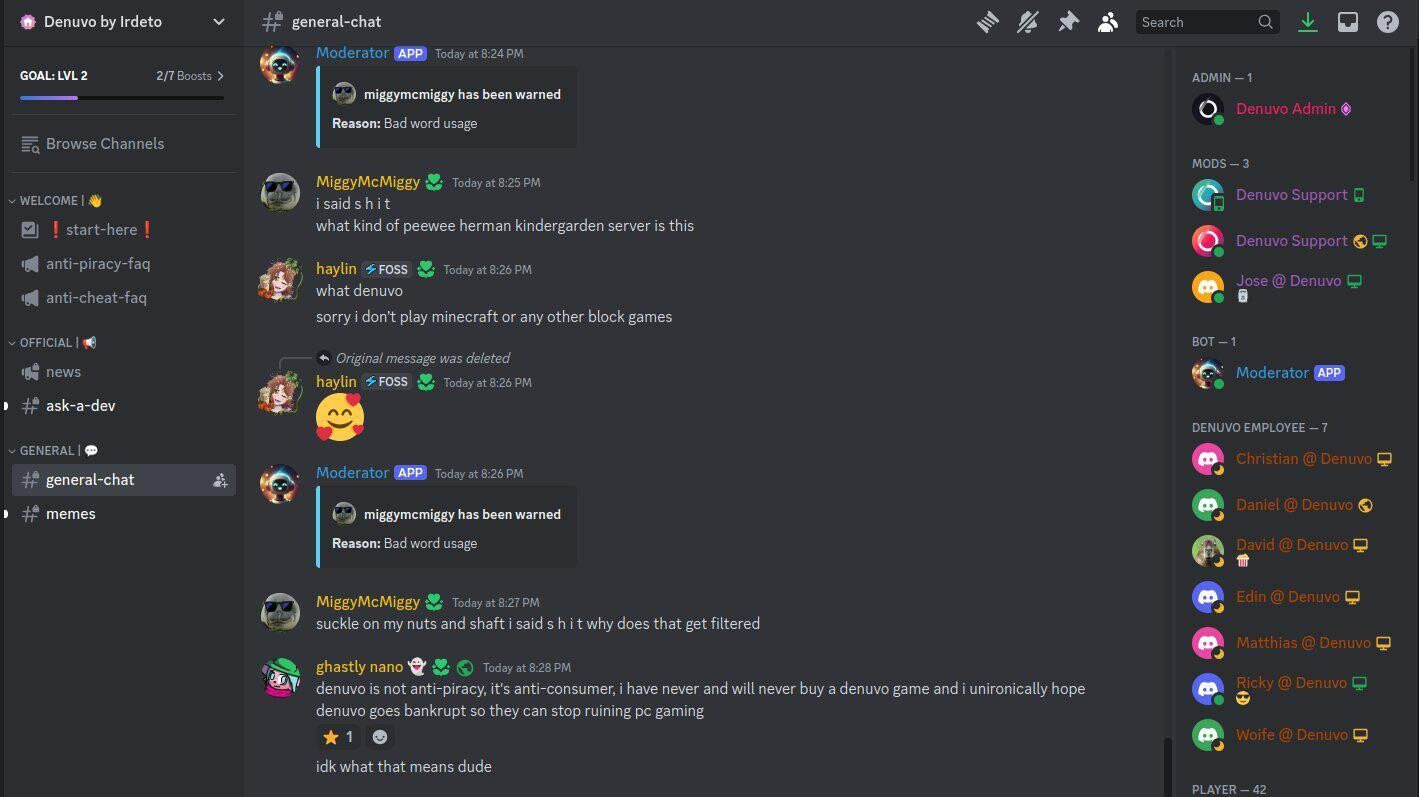
Yet the obvious happened — people who joined the server began insulting the company and its software in every possible way. In particular, they criticized the DRM protection for significantly degrading game performance, and given the trend toward poor optimization along with the issues of the increasingly popular Unreal Engine 5, anti-tamper software only harms the projects it is added to.
Ultimately, the server administration decided to restrict users from sending messages, essentially stripping their server of its initial reason for existing.
Source: DTF
The third event was an interview given to the Rock Paper Shotgun portal by Andreas Ullmann, Denuvo’s product manager.
There, Ullmann reiterated that only Denuvo can genuinely protect games against piracy. However, he complained that far from all companies use the system — and toxic players are to blame! “It hurts to see what people write about us, even though it has been refuted as false hundreds of times.”
According to Ullmann, many developers would gladly protect their projects, but fearing backlash from players, they prefer to leave their games to the mercy of pirates to avoid it.
Reality or fiction?
Now let us take a closer look at each case.
Does Denuvo affect sales in the first months?
Logically, William Volckmann’s study might seem reasonable. But only if we lived in an ideal world where everyone who launched a pirated copy of a game would certainly have bought it had it been protected — which is not the case.
In reality, many gamers simply cannot afford to buy the games they want, so they bypass them: prices are rising, the number of releases continues to grow, and recklessly spending limited funds on everything in sight amid an escalating economic crisis is not the best decision.
Others, on the contrary, use cracked versions of games as demos, wanting to see if they like the project and whether it will run on their PC — which makes sense given the recurring optimization issues in recent releases.
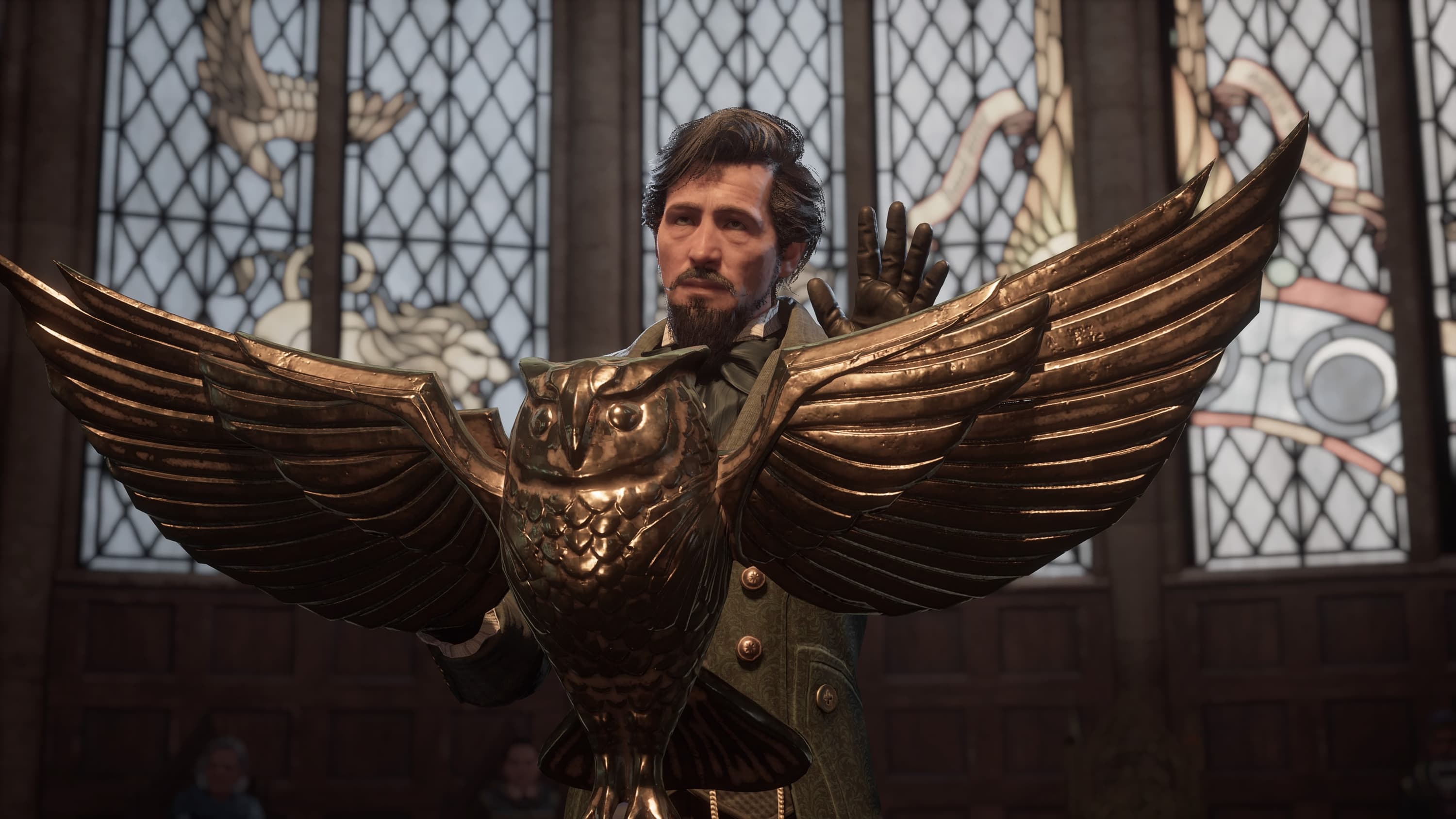
Image belongs to Avalanche Software and Warner Bros. Games
This approach actually benefits sales. For example, in the third quarter of 2024, Russians purchased 68% of the games they had previously downloaded for free. This figure increased by 15% compared to the first quarter, when it stood at 53%. This was reported by analysts from the XYZ online school.
Many publishers often fail to realize this, fearing that players will simply wait until DRM is removed, no matter how long it takes. A situation arises where players refuse to buy games, while publishers are in no rush to remove anti-tamper software — for example, in Marvel’s Midnight Suns, released in December 2022, the protection remains active even though the game is already two years old.
On the other hand, several major publishers are beginning to phase out anti-tamper protection in their titles. A genuine trend of moving away from DRM is emerging here — Denuvo has already been bypassed or dropped in:
- Dragon Age: The Veilguard, published by Electronic Arts;
- Indiana Jones and the Great Circle, handled by Microsoft;
- Kingdom Come: Deliverance 2 from Warhorse Studios.
Yet while the “independent” Daniel Vavra can afford to take this step in defiance of corporate executives, the abandonment of DRM by EA and Microsoft is an interesting precedent. It demonstrates that even the biggest industry titans understand that while piracy may be an evil, it is a necessary one — and by putting DRM on their products, they ultimately do more harm to sales in the long run than good.
Moreover, licensing products with Denuvo costs money on its own, potentially harming sales while consuming a substantial portion of the budget simply by being there — as of 2020, a one-year license could cost 140,000 euros. In 2022, the price tag climbed to 160,000, and given inflation and other economic factors, there is little doubt the price has multiplied since. Only very large publishers can afford this. And does it make sense? Losses from piracy might turn out to be far smaller!
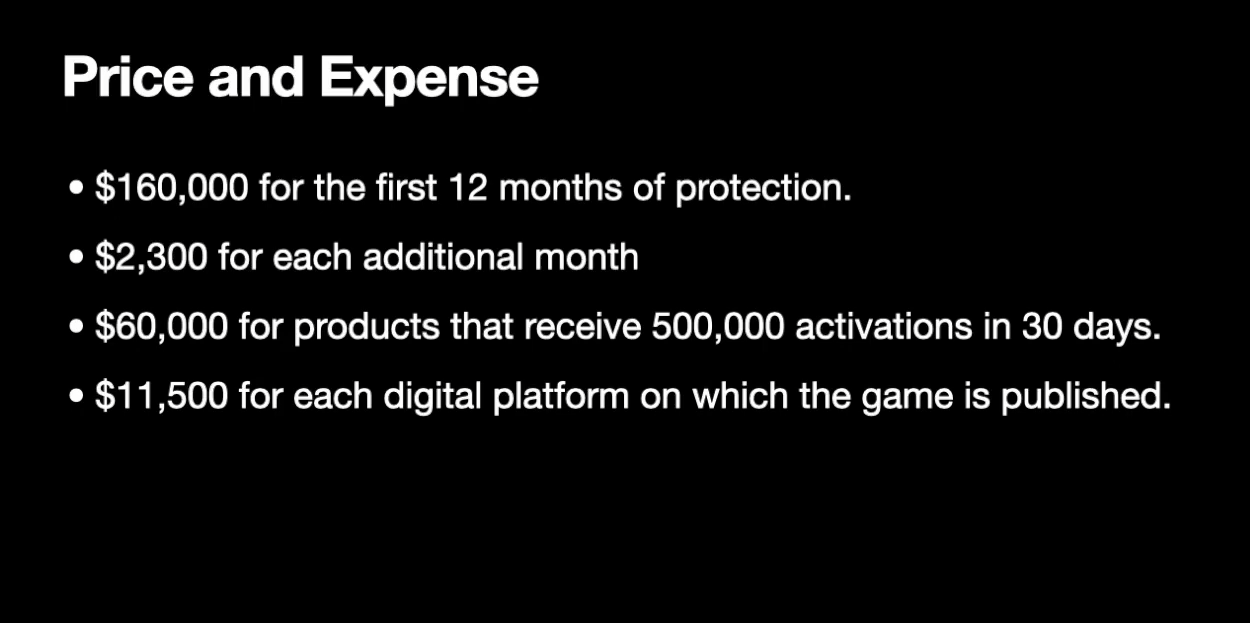
Image source: YouTube
It is entirely possible that other major companies will eventually start abandoning anti-tamper protection as well. As Gabe Newell once said, “you don't fight piracy, you compete with it” — Steam has its own anti-tamper protection, but people learned to bypass it in mere minutes after a game’s release long ago. Valve knows this but does nothing, because the company offers not just games, but a convenient service with regional pricing and a vibrant community, validating the words of its leader.
Does anti-tamper protection “eat up” PC resources?
Denuvo really can impact a PC by reducing performance in games — it comes down to how the anti-tamper software operates.
Using VMProtect — specialized software designed to protect code — the DRM attaches itself to the game’s executable file, simultaneously encrypting and decrypting game data while obfuscating program code — that is, the system takes the code and turns it into junk and nonsense that jumps all over the system.
Added to this are compression routines, virtual machine detection, file integrity checks, and various anti-debugging mechanisms. All of this combined comes crashing down on gamers’ PCs, noticeably cutting into the performance allocated to games — after all, about a dozen Denuvo background tasks must still be processed.
Denuvo representatives tried to brush off the problem, claiming their software does not affect performance — though empirical tests have repeatedly proven otherwise. For example, one can recall Resident Evil Village, where after DRM was removed, the frame rate in certain scenes increased nearly two-and-a-half times.
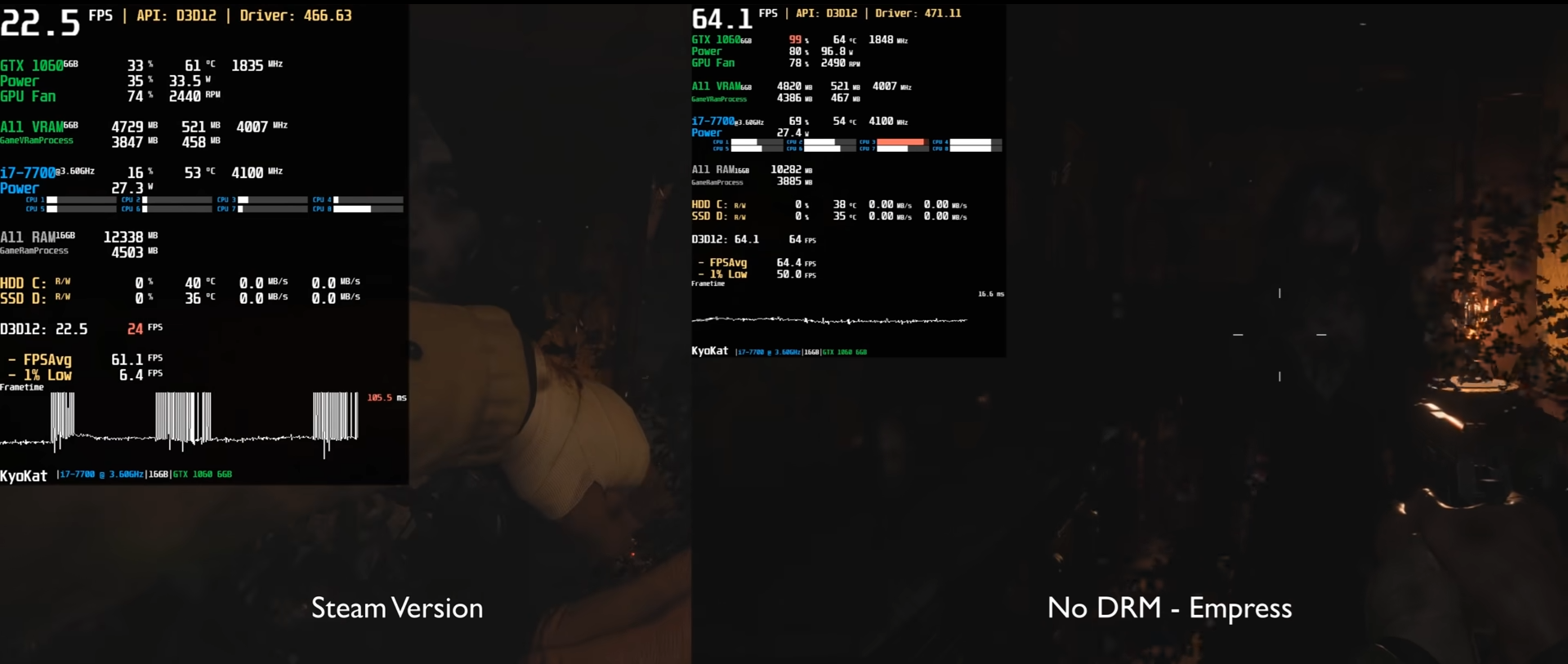
Image belongs to Capcom. Source: YouTube
Community hysteria
Regarding the launch of the Discord server and the subsequent interview, it looks as though the company deliberately created a space where gamers could vent their negative feelings — only to use it later as an excuse. It is easy to blame “toxic” players on the internet, isn’t it?
Everything stated in the interview looks like nothing more than a pathetic PR stunt by a company looking to extract more money — even though they are already a monopoly in their field. Even Volckmann’s study, taken out of context, was initiated and sponsored by Denuvo itself — meaning it would have been trivial for them to manipulate its findings. After all, whoever commissions the study reaps the results!
And Ullmann’s statement about developers’ fear of gamer backlash forcing them to abandon DRM stands up to neither criticism nor logic — Dragon Age: The Veilguard was already despised among gamers long before its release. Incorporating anti-tamper software would have only worsened the situation for EA and BioWare. This way, they managed to earn revenue not only from those who tried a pirated version and subsequently bought the game on Steam, but also from those who refuse on principle to buy titles with Denuvo. Dropping the protection helped slightly rebuild trust in the developer and publisher.
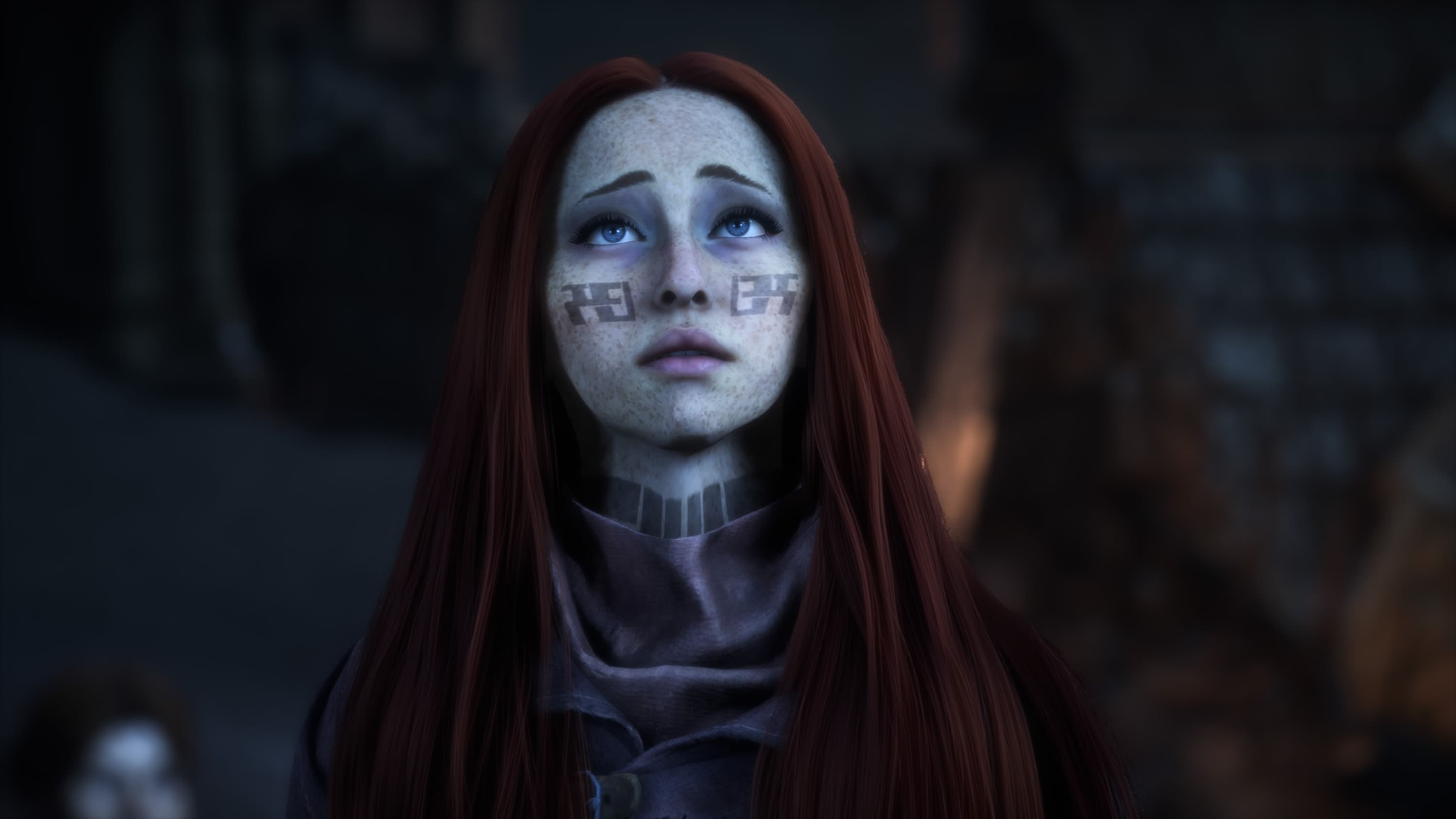
Image belongs to BioWare and Electronic Arts
Analysis
Perhaps Denuvo’s leadership, having more data at hand, realize that demand for their software will only dwindle over time. That is why they decided to act proactively and pulled the stunt with the study and community toxicity in advance.
The chair beneath Denuvo has simply begun to wobble — and they felt it. Several major projects, including titles from large corporations, have started ditching DRM protection, which could lead to dire consequences for the company.
After all, major publishers might ask themselves: “If competitors’ games sell well without protection, what is the point of paying Denuvo and taking a hit to our reputation?” Although there are currently no guarantees of a full-scale abandonment of anti-tamper protection by major publishers — today, these are isolated precedents.
Yet the first spark has already drifted toward the bonfire that might soon burn Denuvo to ashes. And they understand this.
***
Cover image belongs to Irdeto
Never miss our newsAdd this site to your preferred sources to see us more oftenAdd on Google