The DOOM Illusion: 11 Strange Places the Game Was Run, and Their Secrets
There are two eternal questions about hardware: "can it run Crysis?" and "can it run DOOM?" — and today they have become complete opposites. Crysis is still remembered as a stress test, where even modern systems can struggle with settings and optimization, while DOOM has become a meme about accessibility — it is run on anything.
Over the years, a huge ecosystem has grown around DOOM. It has everything: from simple texture packs and cosmetic tweaks to mods that feel like separate games. At some point, the shooter became not so much a product as a training ground where people practice, joke, and compete — who will come up with a stranger and more ridiculous way to run it.
Hence the world record for the number of devices on which the game has been launched. And it's not just about consoles and PCs. For many years, craftsmen have been embedding DOOM into various electronics, and each successful "re-release" repeatedly pops up in hardware news and memes.
DOOM on Headphones
It would seem that the worst possible platform for DOOM is headphones: they have no screen, so the very idea sounds as absurd as possible.
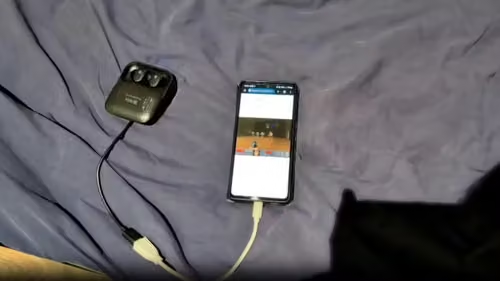
Technically, the project relies on the fact that modern wireless headphones have a full-fledged processor inside. In the case of PineBuds Pro, the author overclocked the frequency and disabled energy-saving modes to have enough power for a cut-down build of DOOM. The choice of a specific headphone model was explained by the openness of the firmware source code.
A separate part of the trick is displaying the image. In Doombuds, frames are streamed directly, and the phone acts as a display. At the same time, the game runs in a browser window. So, it's not "DOOM on headphones", but "DOOM on the processor inside the headphones".
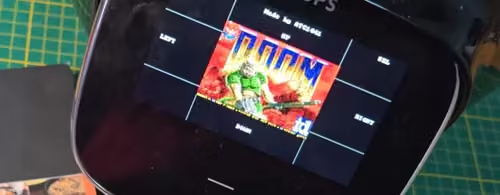
DOOM on a Multicooker
With a multicooker, what's important is not the meme, but the device of modern "smart" appliances. They often have two independent circuits of electronics: one is responsible for heating and safety, and the other is for the screen, menu, and control.
Therefore, DOOM is launched not "on the pot", but on the interface board, where a small embedded computer lives. It spins the picture, accepts touches, and exchanges data with the main part of the device.
Then reverse engineering begins: the enthusiast gets to the firmware, studies how the system is arranged, and reflashes it where possible. At the same time, the critically important "safe" part responsible for heating, as a rule, remains isolated.
DOOM on an Oscilloscope
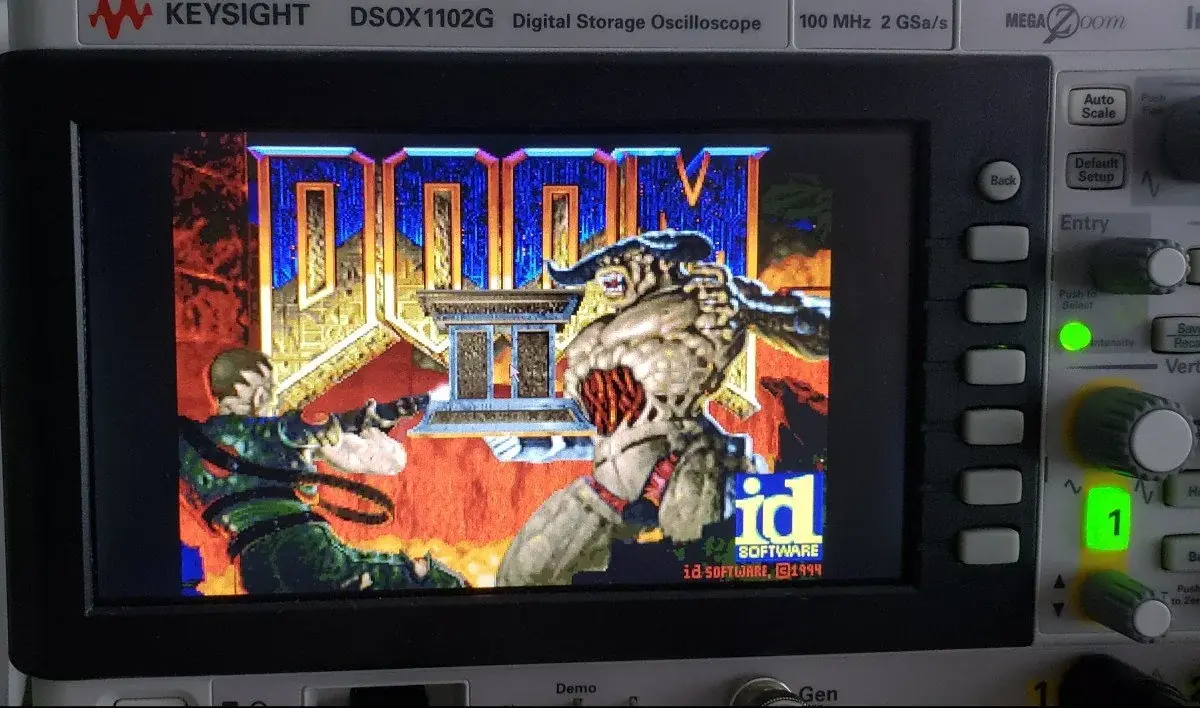
An oscilloscope is a device for measuring and analyzing electrical signals, searching for interference, and diagnosing electronics. It has a large display, software, and an internal control system. Therefore, running DOOM on such a device seemed quite logical.
Key fact: a specific model from Keysight Technologies runs on Windows CE. The enthusiast gets to the operating system and runs DOOM as proof of access to a full-fledged environment, and not just to the manufacturer's menu.
The performance there is symbolic, but in this case it is not fundamental. The game was installed not for comfortable gameplay. It is also noteworthy that not only the first part of DOOM, but also the second, could be launched on the oscilloscope.
DOOM on a Tractor
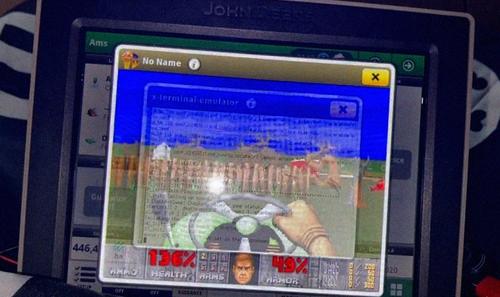
Tractor and DOOM — this is always a blow to expectations: agricultural machinery seems like pure mechanics. But today, even such equipment has its own electronics with a panel and interface.
It was with this module that the craftsmen worked. It's about physical access to the device, working with boards, media, and system settings, that is, a full-fledged hack.
This example stands out for its unusual context. At the DEF CON hacker conference in Las Vegas, a participant with the nickname Sick Codes showed a video where he gained access to the John Deere tractor interface and launched DOOM on its on-board computer.
Sick Codes advocates for the "right to repair": he looks for vulnerabilities and ways to bypass manufacturer restrictions so that equipment owners can repair it and use functions without unnecessary blocking and surcharges. He has already spoken at DEF CON with an analysis of problems and approaches to such systems, and after public reports, companies have to close the discovered loopholes.
DOOM on a Camera
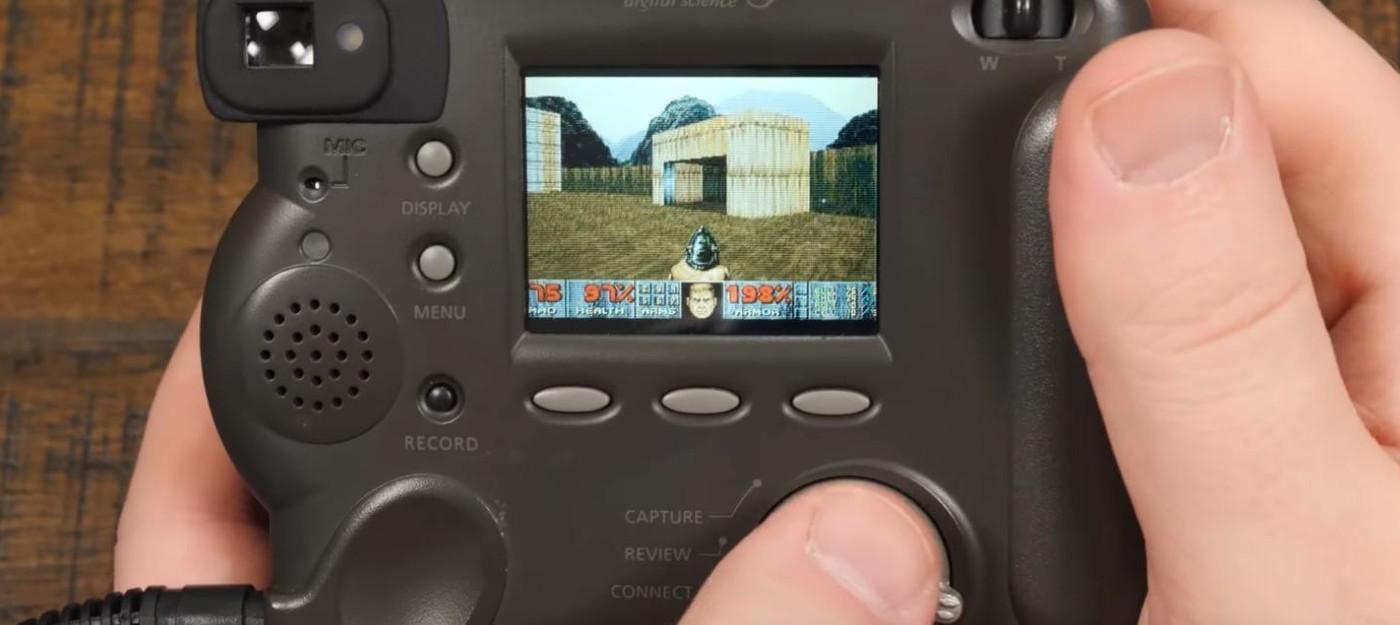
A camera from the late 90s seems like an unsuitable device for games: it should take pictures, save them, and show the menu. But here DOOM looks especially interesting.
Important fact: the Kodak DC260 camera runs on DigitaOS, one of the early operating systems for cameras. Therefore, running DOOM here is not so much a "hack for fun" as a demonstration that the platform allows more than just standard photography.
There is also a practical detail: the camera has a composite video output. Therefore, "playing on a camera" easily turns into "playing on a TV through a camera" — and this makes the example even clearer.
DOOM on Minecraft without mods
Usually, "DOOM in Minecraft" implies a mod: you install an add-on and play in a ready-made window. But what's much more interesting is that people have tried to run DOOM in the vanilla version, without mods or plugins — there have been several such attempts.
In early versions, this looked like an in-game computer made of redstone: the authors literally forced Minecraft to perform a giant chain of actions to assemble a single frame. The speed there was microscopic — the creator of one such implementation directly wrote that it took about one frame per minute.
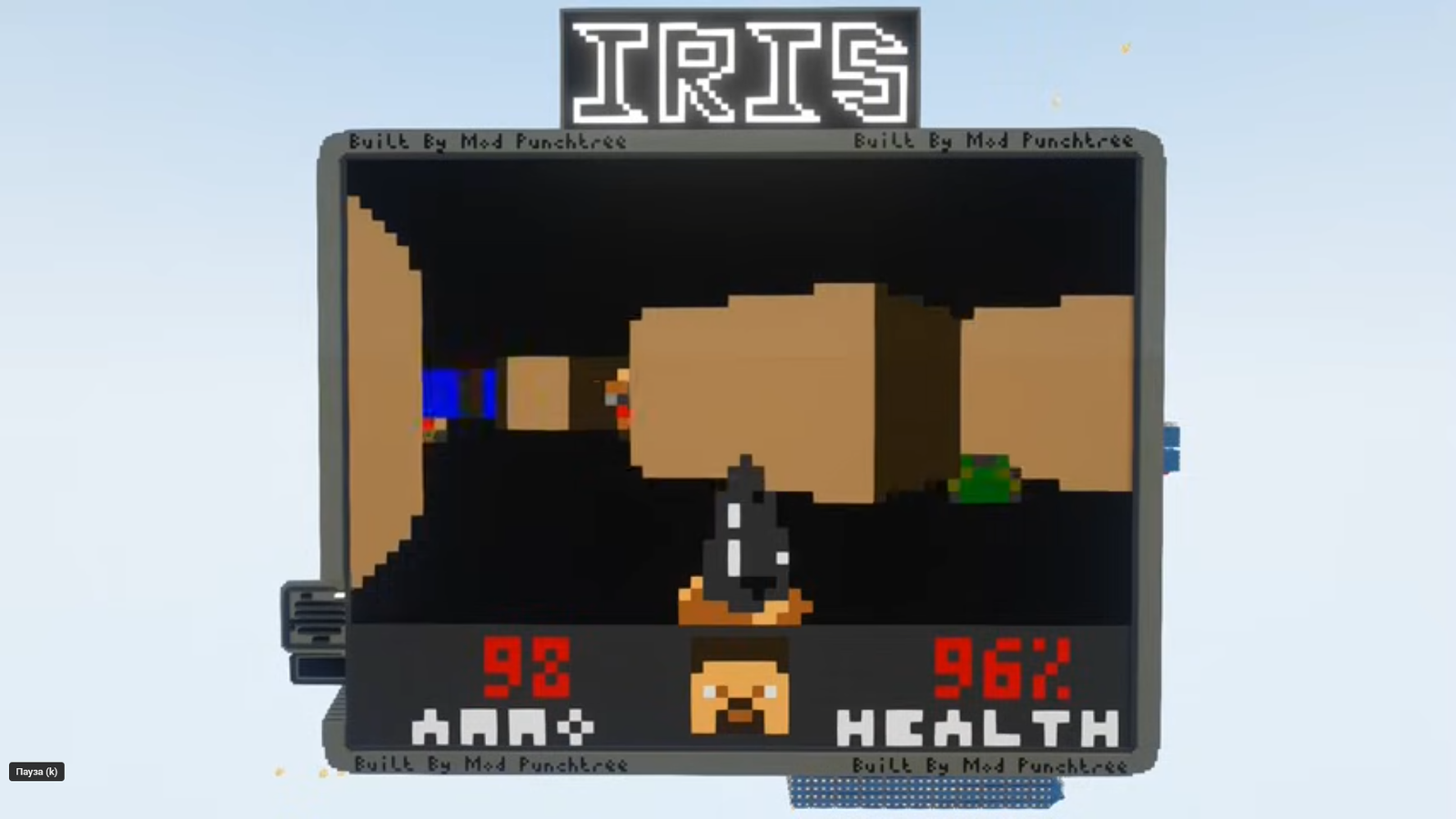
The most notable version to date has taken a different path: DOOM is launched on a redstone computer assembled inside the world called IRIS. The developer demonstrated a much greater result: about one frame every 23 seconds.
DOOM via X (Twitter)
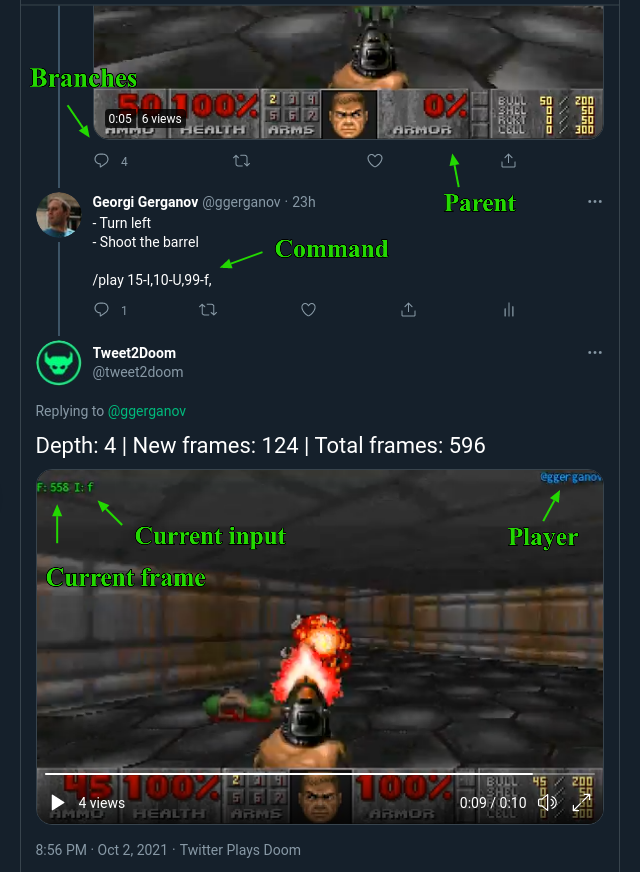
This launch looks even stranger, because there is no familiar game window here. The social network turns into an interface: you interact with DOOM through messages.
The Tweet2Doom project works like this: you send a command or a conditional set of actions, the bot reproduces it in the game and publishes a short video with the result. Then you reply to the tweet — and continue from the state where you left off.
In essence, you are playing a kind of self-written visual novel, where the game independently performs all the actions, and you only have to make decisions in specific situations.
DOOM in a PDF file
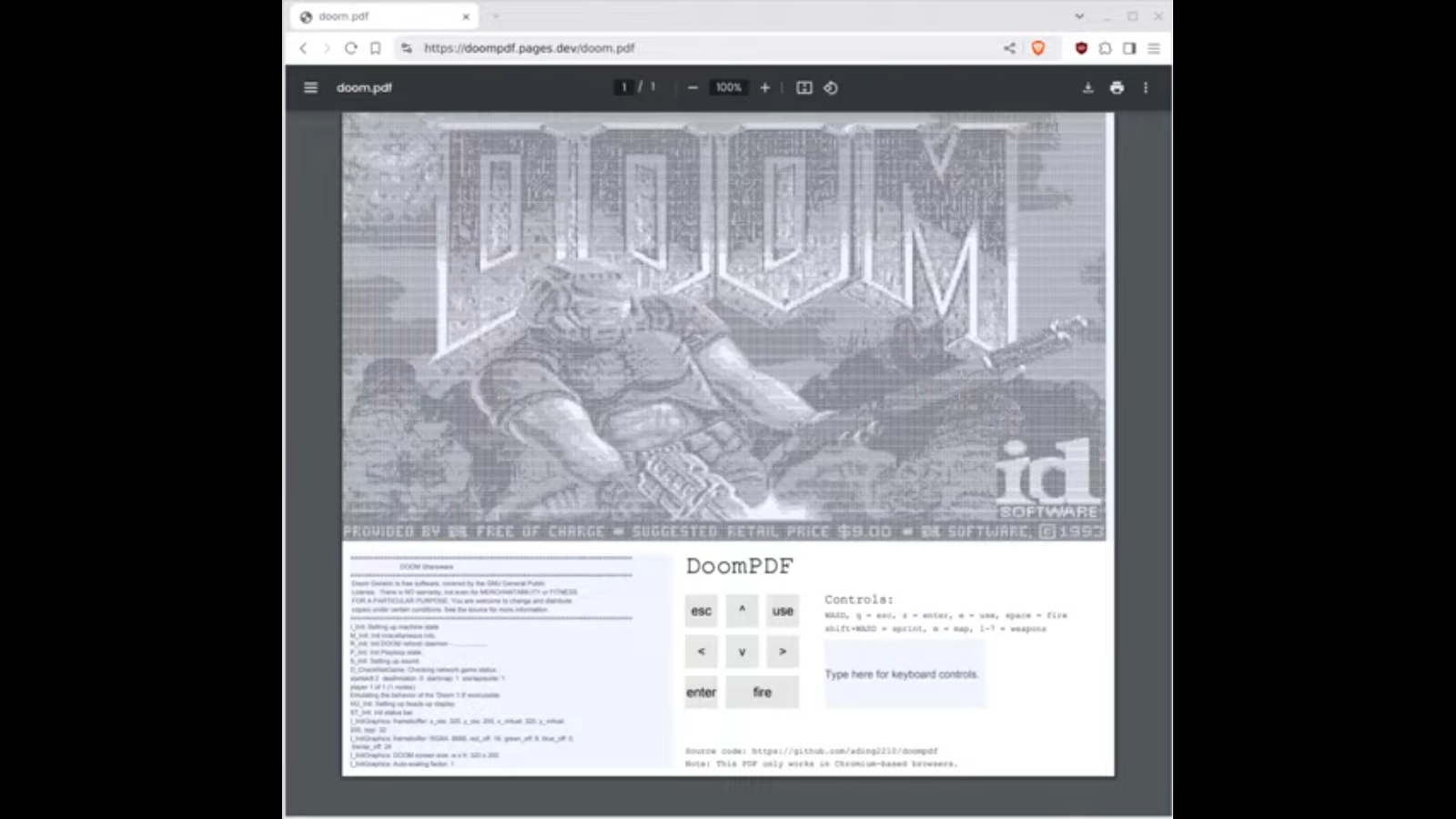
A PDF file is usually perceived as a "digital sheet of paper" that should be static. Therefore, DOOM inside a PDF is one of the most illustrative examples of the formula "game as a file."
The game is hidden directly inside the document. The authors made a version of DOOM that works within the capabilities of the PDF viewer application. At the same time, the image becomes black and white.
Control is implemented through fields and buttons that are usually needed for questionnaires. And the picture is displayed in a "deceptive" way: PDF is not intended for fast games, so the frame is assembled from many simple elements and constantly updated to create a semblance of a screen.
DOOM in a Word text document
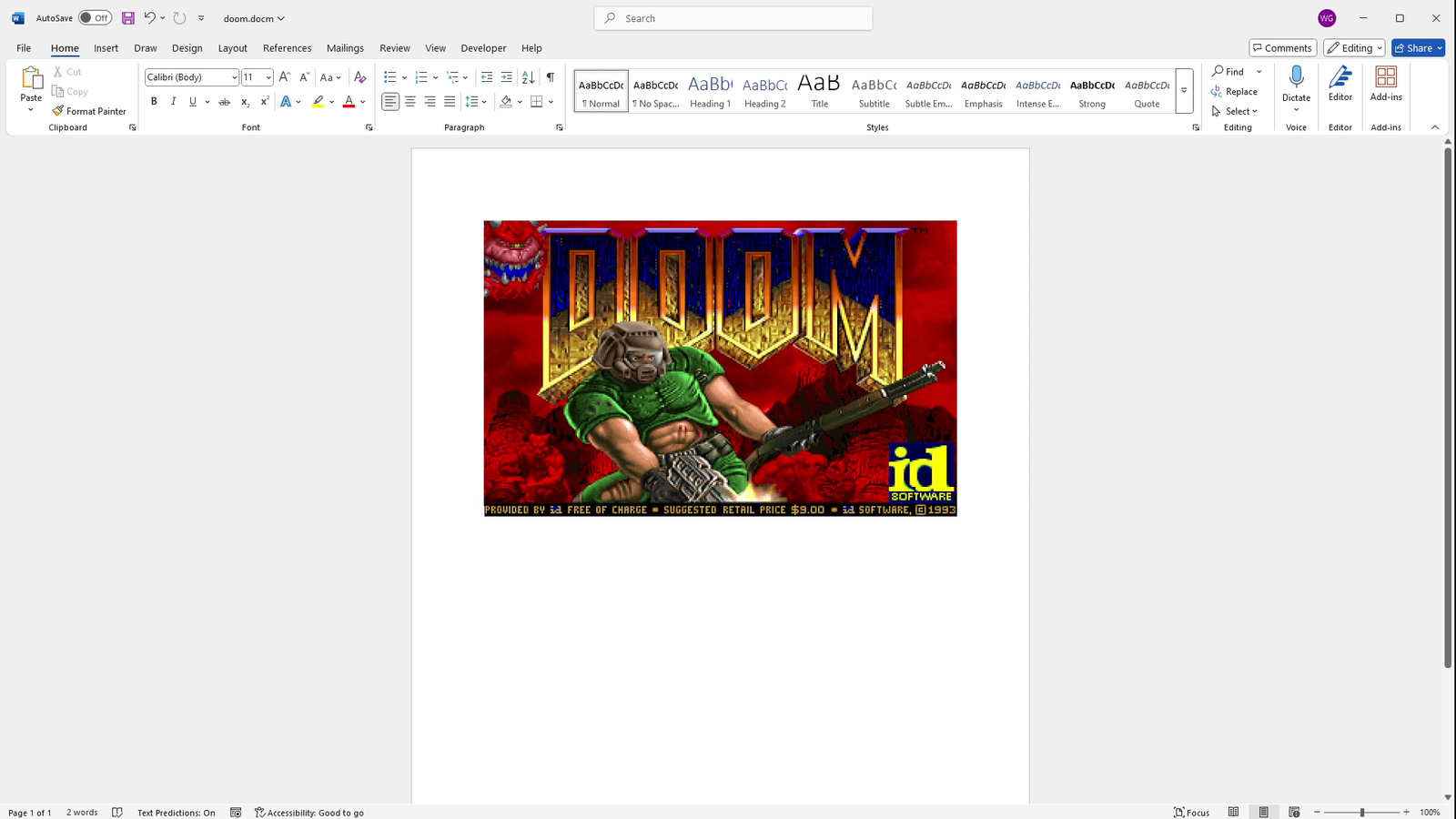
After the story with DOOM in PDF, enthusiasts quickly found the next "platform" — the Microsoft Word text editor. An author under the nickname wojciech-graj assembled the doom-docm project and suggested running the shooter directly from the document.
The basis there is simple: doomgeneric is used — a ready-made template that helps to transfer DOOM to new environments without rewriting the game from scratch. Word in this scheme does not become a "game console" — it serves as a shell inside which you can show a picture and accept commands.
Two important components are hidden inside the Word file: a file with the program code and a file with the game data (doom1.wad). When the document is opened, the built-in Word script extracts this data, saves it on the computer, and starts the game.
Then everything works on the principle of "frame by frame": the game draws the current picture as a regular BMP file, and Word replaces the image on the page with a new one. Unfortunately, the frame rate was not measured, but it is low.
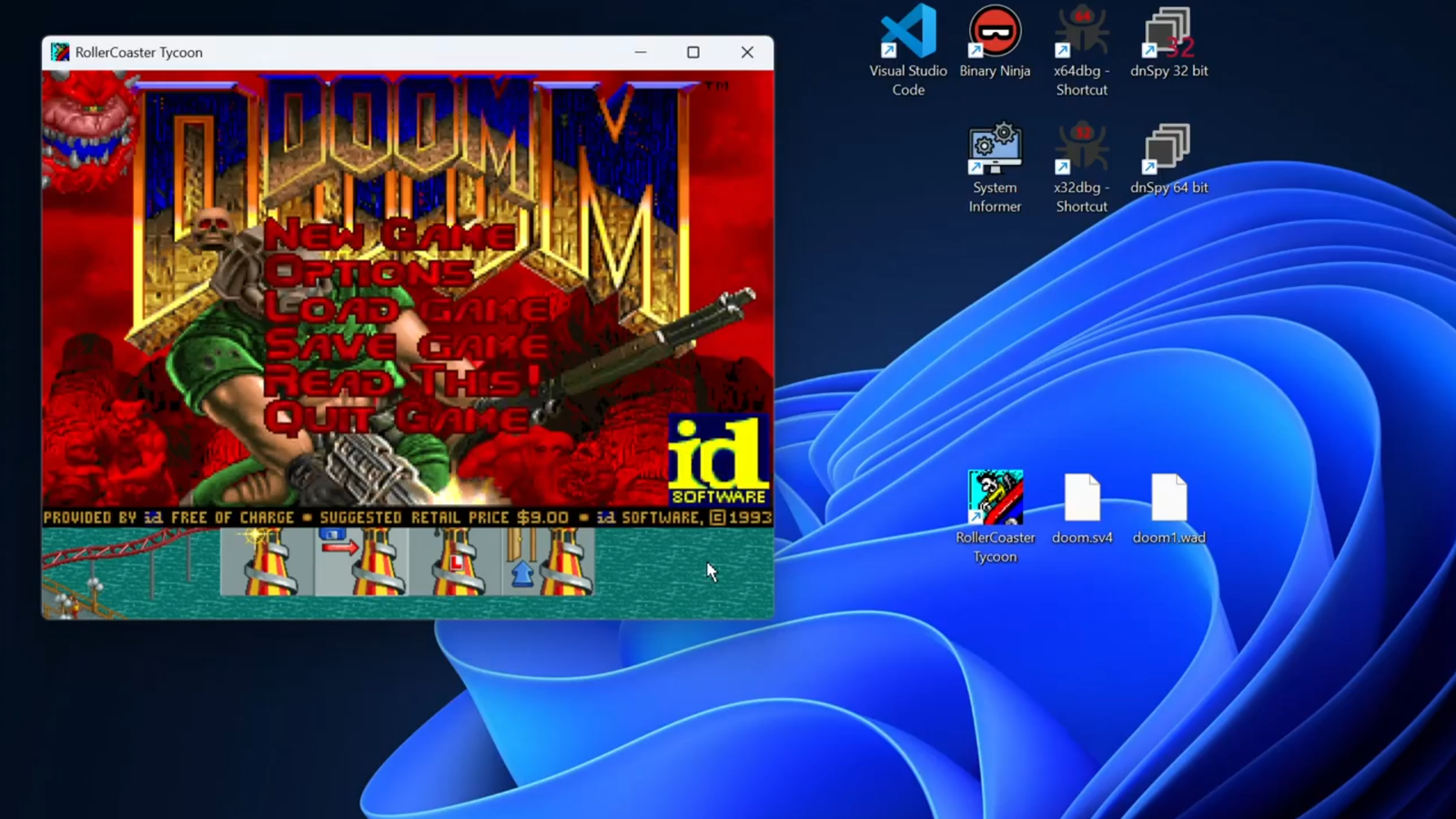
DOOM inside RollerCoaster Tycoon
Old games often store data about player actions in a non-standard way — it is because of this specificity that the project turned out to be a convenient platform for the "focus behind the launch." Here, DOOM appears inside someone else's game not because it was intended, but because a workaround was found.
RollerCoaster Tycoon has its own approach to reading and displaying data from saves. Enthusiasts have created a special save file, inside which there is not the usual progress of construction and park management, but completely different data.
As a result, when loading, the game starts to display a different picture and actually slips the player a different "gameplay". This example stands out because it looks impossible: DOOM is literally hiding inside an old application.
DOOM on E. coli
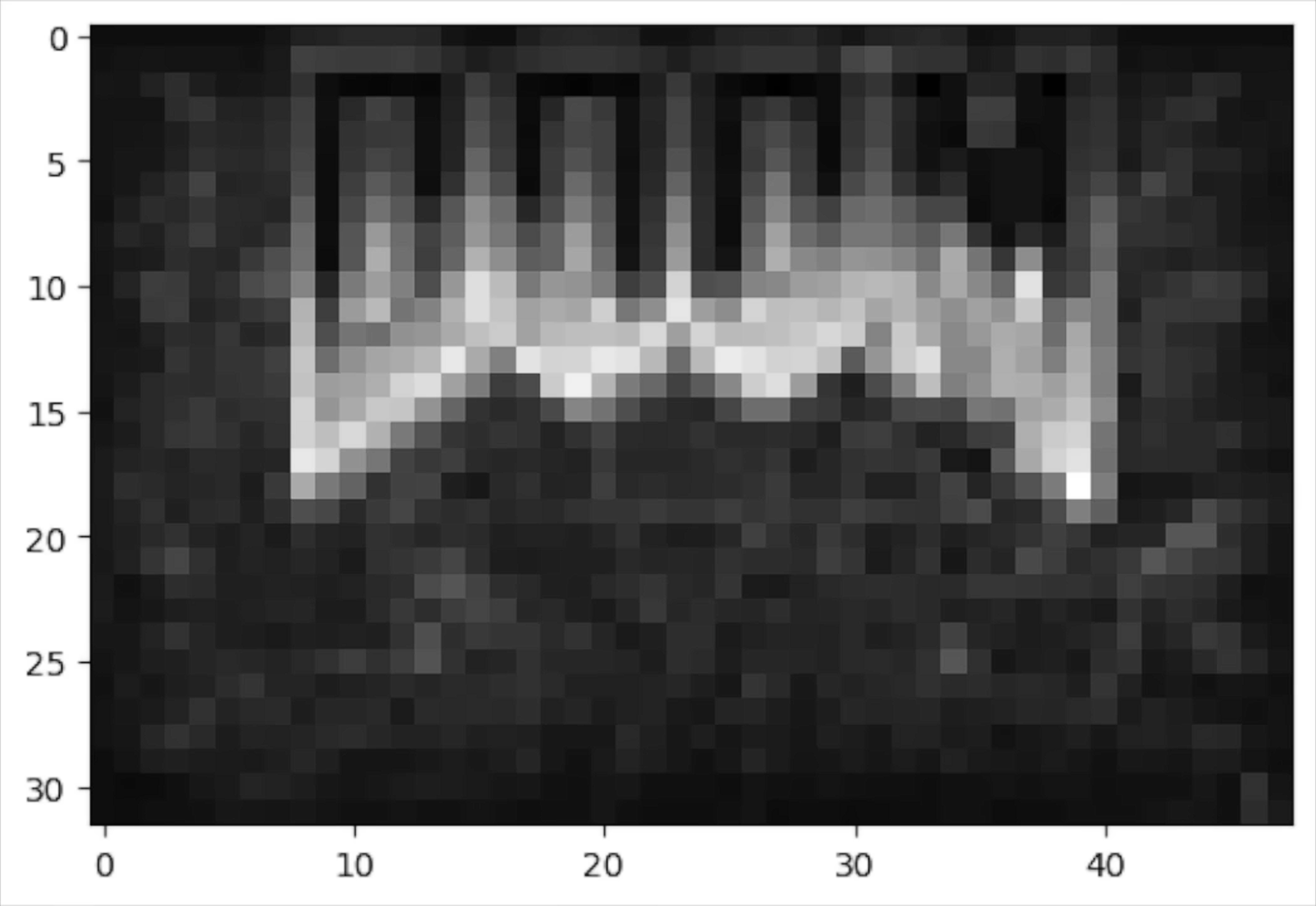
This story is unique even by the standards of the DOOM community. Here, instead of the usual platform, they tried to make a literally "living" screen. To do this, they created a matrix of 1536 wells — this is a "display" with a resolution of 48×32 pixels, which can only show black and white. The wells contain E. coli, and DOOM itself runs on a regular computer: it translates the image into binary code and forces the cells to change state accordingly.
The nuance of such a "monitor" lies in the speed of its operation. The system needs about an hour to start up, and another eight hours to display the image. In total — almost nine hours per frame.
Hence the entertaining calculations: passing the game in this way would take almost 600 years. But this is the most illustrative demonstration of how far the idea of "running DOOM on anything" can go.
Illusion of Deception or the Mystery of Re-releases
If you delve into the topic, it becomes clear that the sensations in the headlines are clickbait. Most of these stories answer the same questions: where to execute the code, where to output the image and how to organize command input. These three points are solved in hundreds of ways, and DOOM is just a convenient, recognizable, and long-tamed object for demonstrating the result. Because of this, the news almost always follows two stable scenarios:
- DOOM on third-party hardware;
- DOOM inside another program.
When they talk about it, it sounds like they made a gaming PC out of a kettle. But many household appliances today already have computing electronics with a custom operating system designed to load the interface, store files, and perform tasks. Therefore, the first step in such stories is not inventing a port, but accessing an environment where you can run the game.
Next, you need to decide where to output the picture and how to configure the controls. At this stage, the headlines begin to mislead. If the device does not have a normal screen or buttons, third-party equipment is connected to it. And if the screen is formally there, but it is inconvenient, the game is simplified: the image quality is reduced, the resolution is reduced, or it is run at an extremely low frame rate. This experience cannot be called full-fledged "gaming".
As a result, each new launch differs only in the headline. Instead of a regular monitor, they show the screen of a multicooker, and the effect of sensation arises. But in essence, it is the same trick, adapted to the next limitations.
Running DOOM inside another program is much easier. Enthusiasts find an environment that can display images and receive commands, and turn it into an emulator for a single game. The main work here comes down to adjusting to the requirements of the selected environment - the image refresh rate, the method of transmitting commands, and data storage.
In the headlines, it still sounds interesting, but in reality, such "re-releases" are much less presentable than running the game on refrigerators or microwave ovens. Here you do not need to fight with the hardware and its limitations, because you are working in familiar conditions - on a computer where there is already a screen, input device and the ability to run code. Therefore, such projects are more of a demonstration of ingenuity and love for memes than a story about a "serious" technological breakthrough.
Verdict
In this topic, the simple rule works best: the louder the headline, the more boring the "secret". News about DOOM has long lived by the laws of the rabbit trick. In the magic hat, it is almost always the same thing: the game is launched where there is already a computing filling, and the rest is just a beautiful way to show it.
Therefore, such publications are deceptive not because the authors are lying, but because the wording "launched" on something deliberately erases the details, without which the event ceases to be a sensation. Because of this, news about DOOM "re-releases" does not end. The game perfectly attracts attention. It doesn't matter what's under the hood - the main thing is the result.
Never miss our newsAdd this site to your preferred sources to see us more oftenAdd on Google