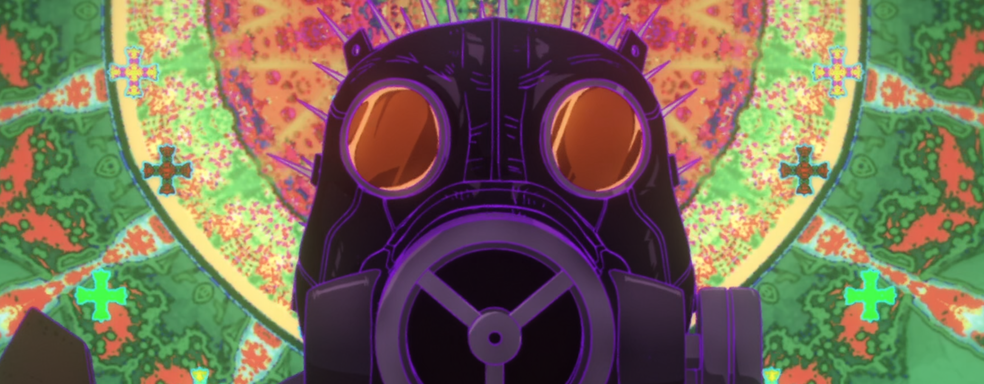
(18+) Dirt, Blood, and a Three-Meter Cockroach. Why "Dorohedoro" Will Hook You More Than Other Anime
Dirt Mixed with Dirt
"Dorohedoro" is an adaptation of the manga of the same name by Q Hayashida, on which she worked from 2000 to 2018. The adaptation was handled by Studio MAPPA, which has long been skilled in harsh, dark, and visually aggressive material. Its portfolio includes "Attack on Titan," "Chainsaw Man," "Jujutsu Kaisen," and other projects that bite off a significant chunk of the infosphere with each new season.
Against this background, "Dorohedoro" remains a thing in itself. Too dirty, too strange, and too chaotic to become a truly massive hit. At first, it may seem that its only task is to shock the viewer with a mixture of ugliness, violence, and absurdity. But this impression is deceptive. In fact, "Dorohedoro" is only pretending to be chaos. Behind the aggressive shell lies a story about people trying to preserve themselves in a world where cruelty has long become part of everyday life.
This sense of deliberate carelessness is largely due to Q Hayashida herself. Little is known about the mangaka. She deliberately stays in the shadows, works under a pseudonym, and even before "Dorohedoro" managed to release a manga adaptation of the slasher Maken X Another from Atlus. Later, Hayashida also participated in projects related to Shadows of the Damned. Therefore, in its love for fleshy texture, grotesque, and black humor, "Dorohedoro" sometimes looks like something that could have been born somewhere in the depths of Grasshopper Manufacture.
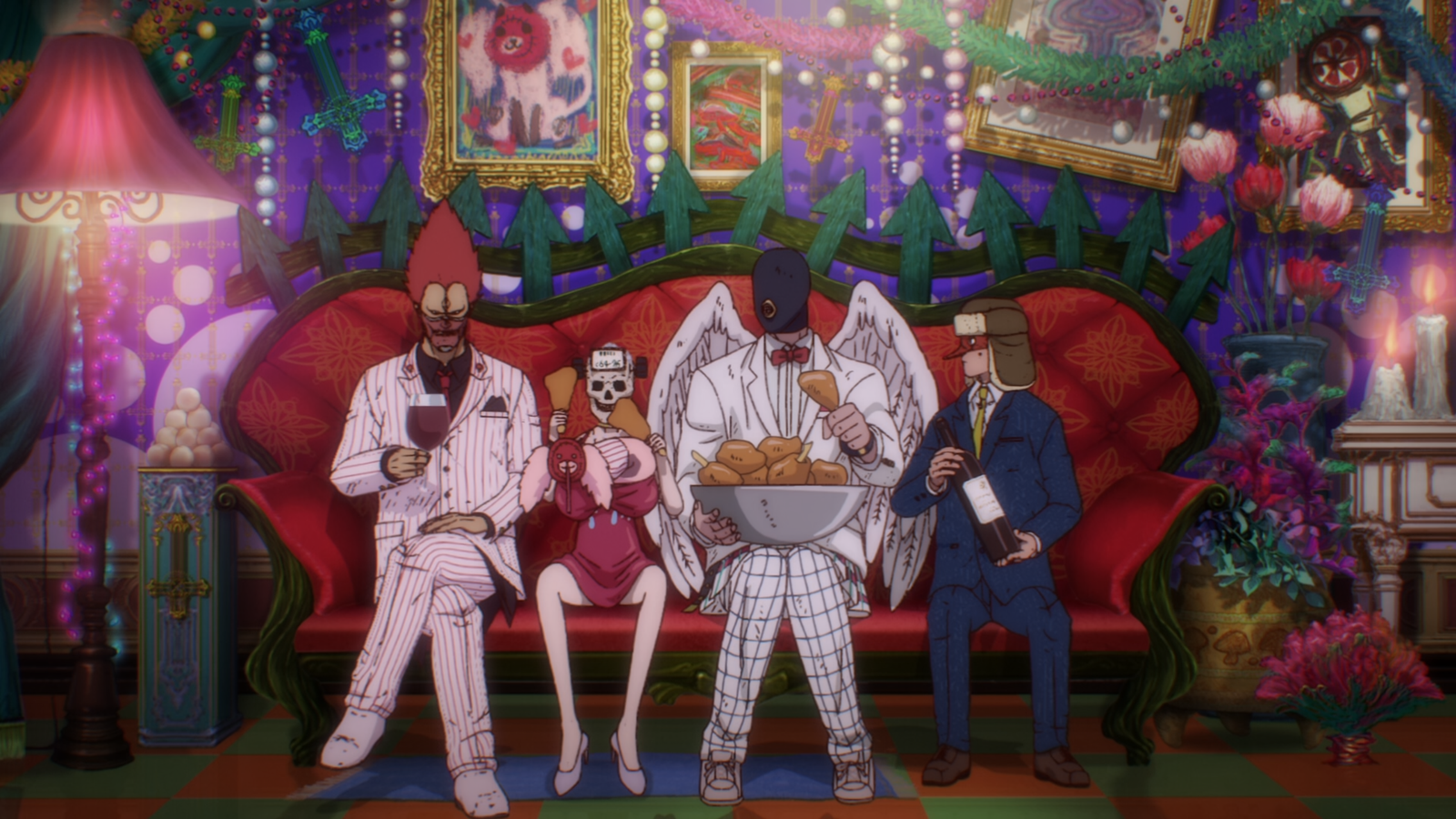
From Hayashida's rare interviews, it is known that she is interested not in "beautiful" forms, but in roughness, physicality, and imperfection, something that can be almost physically felt even through a drawing. In this sense, the very name is indicative. "Dorohedoro" is often interpreted as "dirt mixed with dirt." This is not just a successful metaphor, but an accurate description of a world where everything is mixed beyond recognition: ugliness and comfort, cruelty and everyday life, chaos and a well-defined structure.
Hayashida created "Dorohedoro" without assistants, carefully built the chapters, worked out the plot, distributed the scenes, and polished the dialogues even before the final drawing. It was important for her that the story worked not through direct explanations, but through experience.
So "Dorohedoro" does not speak its meanings directly, but forces the viewer and reader to piece together a picture of the world from fragments, details, and collisions. There are almost no random elements here. Even a trifle that at first seems just strange or funny can later reveal a character, shift the emphasis in a scene, or show how this world is actually arranged.
A World Where Violence Has Become the Background
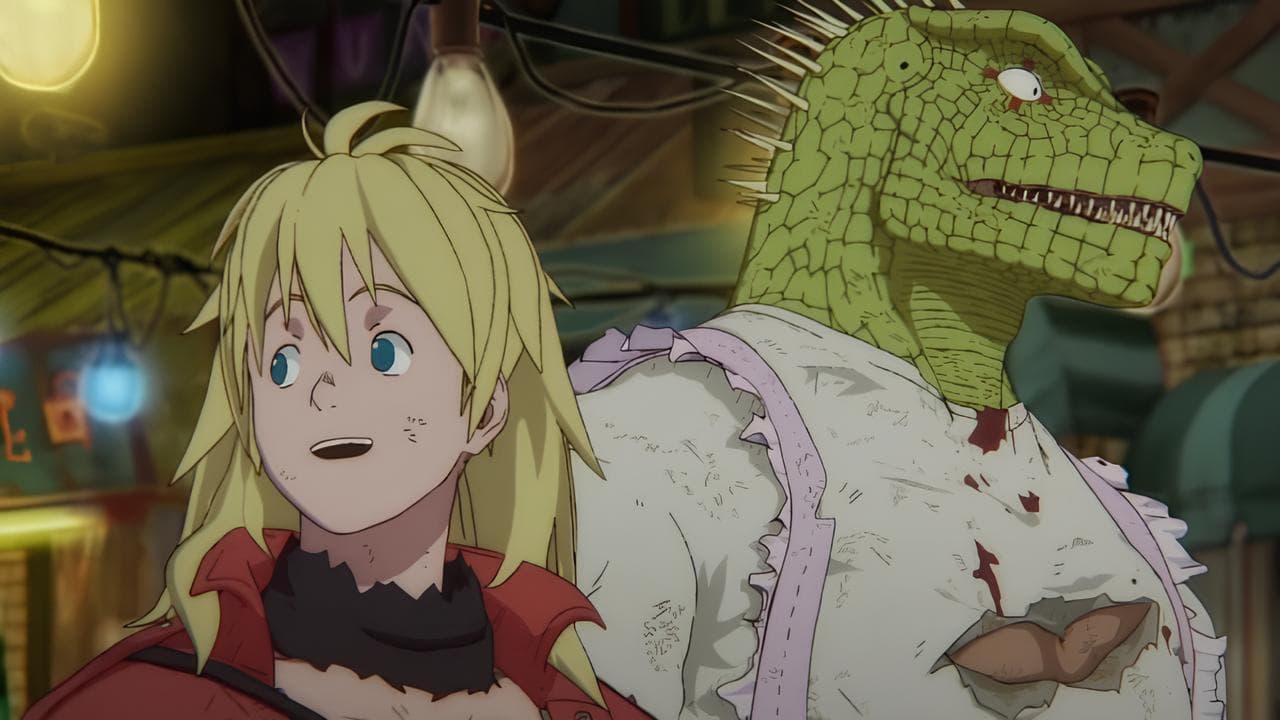
"Dorohedoro" tells the story of a man nicknamed Caiman, a two-meter giant who one day wakes up in a dirty alley, packed in a body bag. And this is not his biggest problem by far.
Worse, instead of a human head, he now has the face of a reptile. In addition, Caiman has lost his memory and does not remember who he was before. Now he has one goal — to find the magician who cursed him, kill him, and return to his former appearance, and with it his former life.
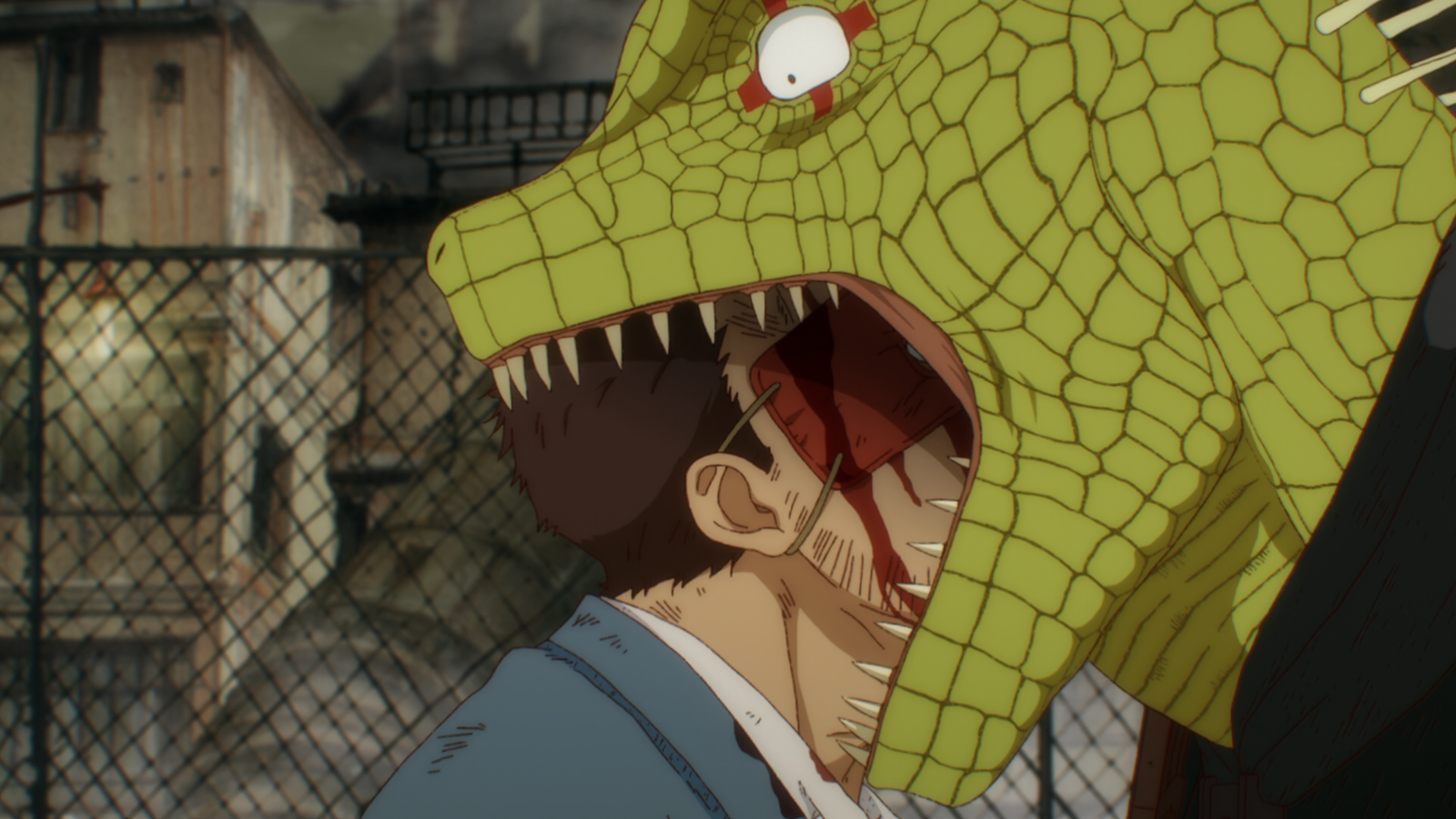
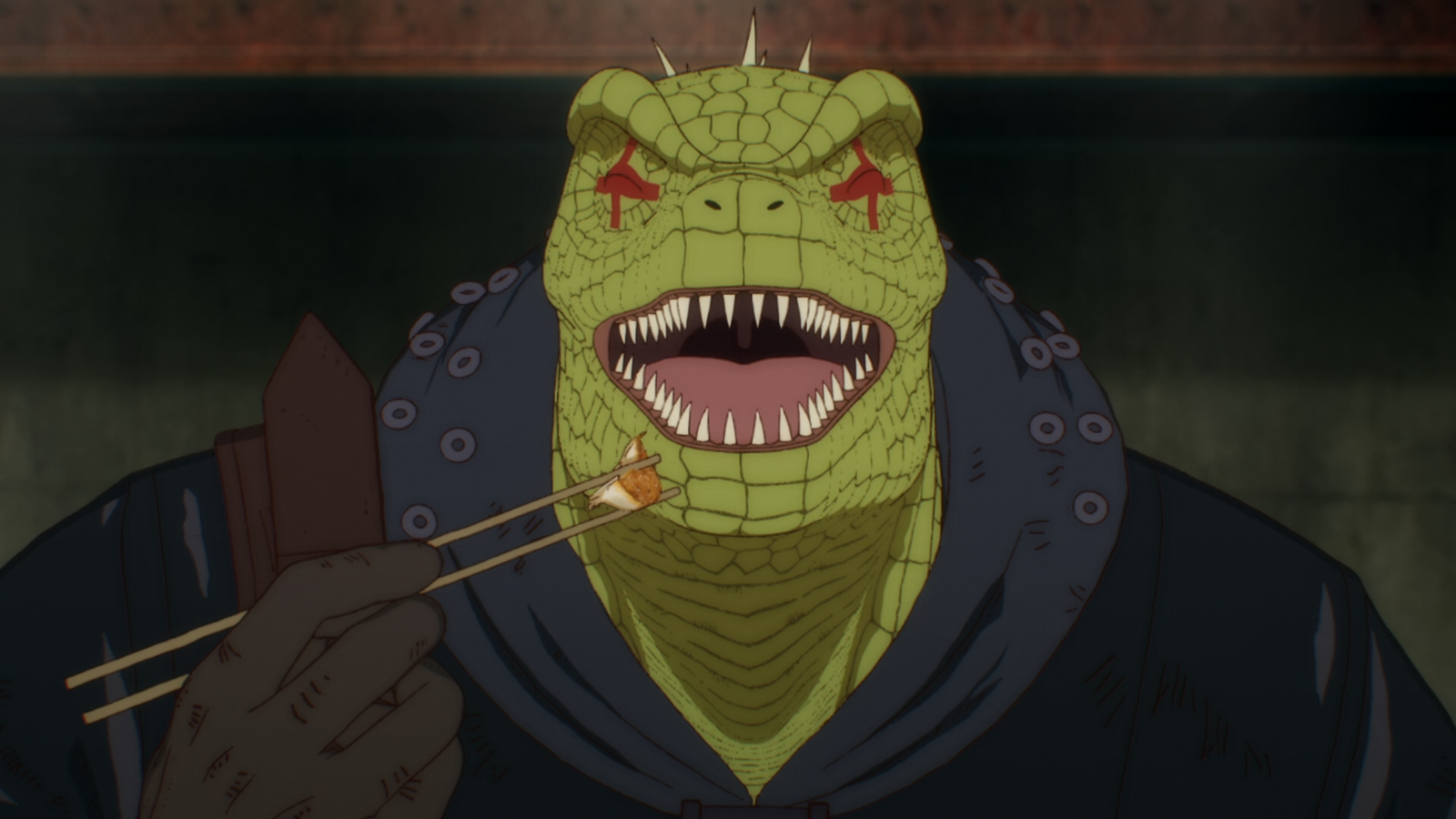
The curse not only disfigured Caiman, but also made him unique. He is completely immune to magic and can shove the heads of magicians into his mouth. After that, a strange man with crosses around his eyes appears from his throat and delivers a verdict: whether this is the magician who turned Caiman, or the search needs to continue.
The method is peculiar, but Caiman has no other. Time after time, he tracks down magicians, and Nikaido, the brisk owner of the Hungry Bug diner, known throughout the district for its fried gyoza, without which Caiman cannot live a day, helps him in this.
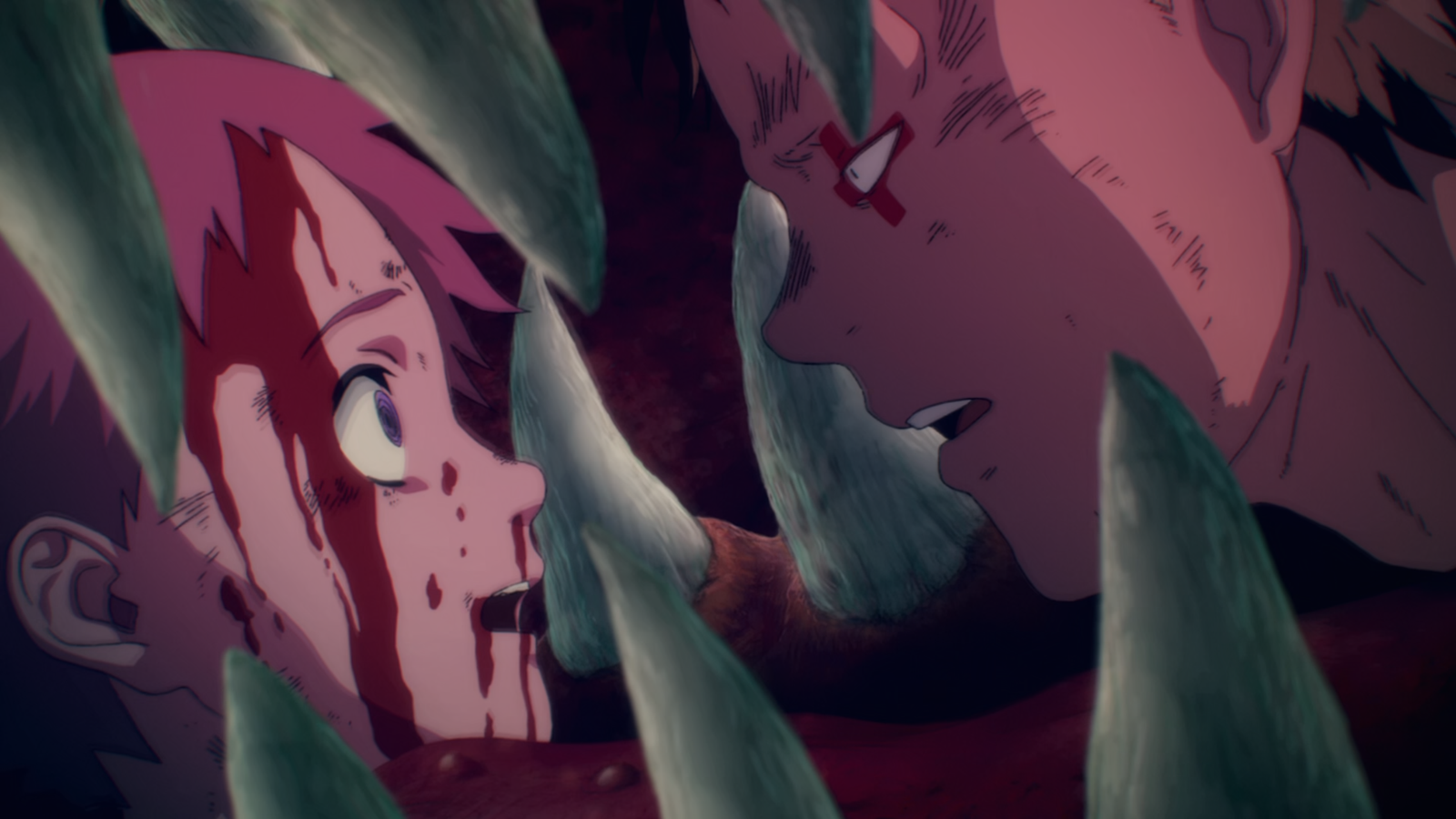
But do not be mistaken, as if we have another banal revenge story in front of us. Everything is more complicated, because the world of "Dorohedoro" itself is split between two realities.
The first is the Hole. The very name unmistakably hints that nothing good should be expected from this place. And so it is. This is an industrial ghetto with dirty streets, dilapidated houses, and people who are trying their best to make ends meet. There is no police, no government, not even a hint of order here.
The second reality is the world of magicians. More elaborate, almost theatrical, and noticeably more prosperous. There are enough problems there too, but life is still better. At least because no one invades here from another dimension for experiments on the locals. But magicians, on the contrary, freely penetrate into the Hole through portals, cripple people, kill them, and treat them like expendable material.
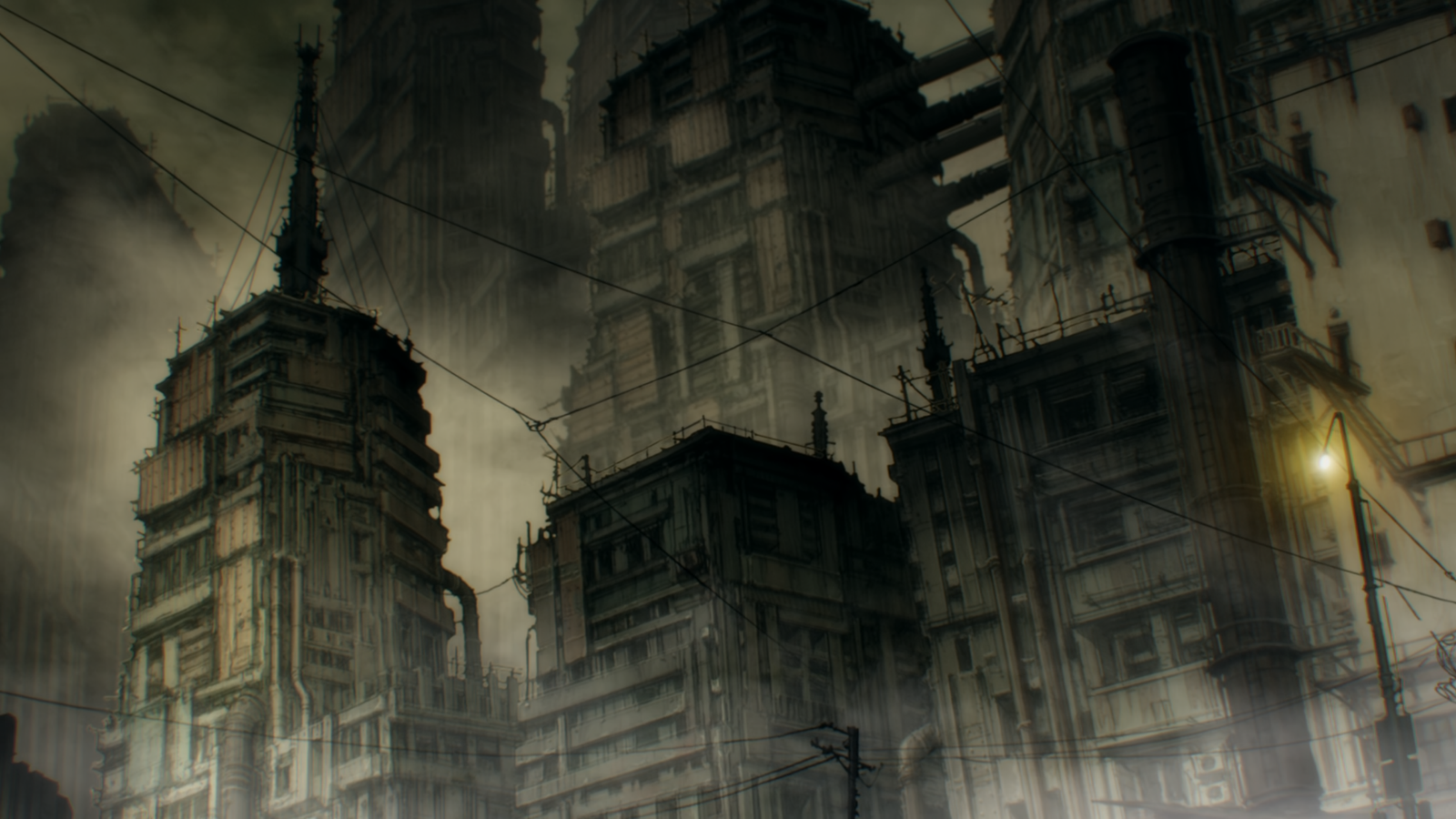
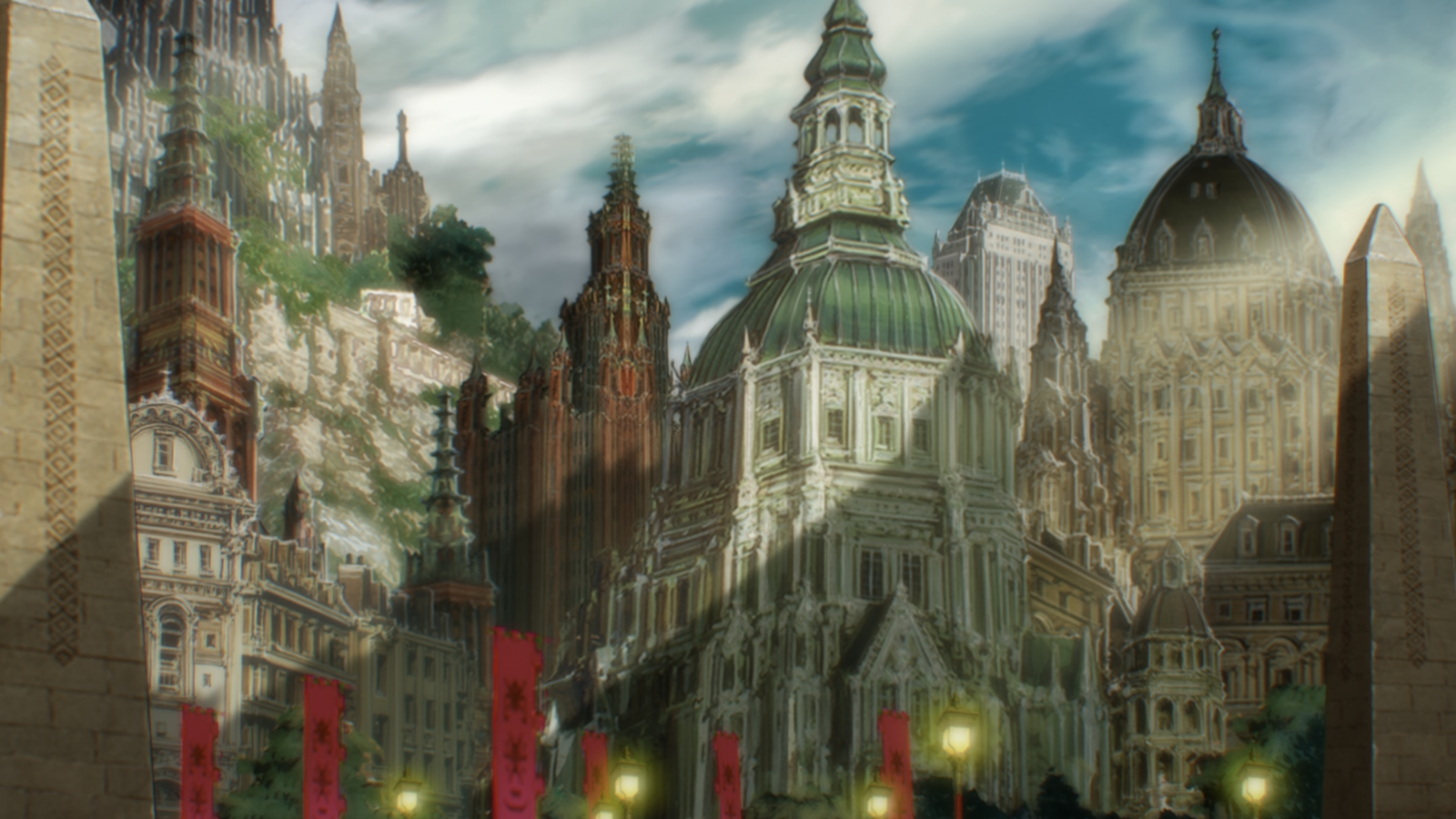
Moreover, local magic is not at all like fairy-tale magic. Here it takes the form of thick black smoke. This is an ironic inversion of Arthur Clarke's famous formula, where magic resembles toxic technology, poisons space, and disfigures human bodies.
Once people tried to resist, but the forces were too unequal. Gradually, most simply resigned themselves. Magicians take advantage of this. They know that there is almost no one to stop them in the Hole. Therefore, violence here is felt not as an exception, but as part of the environment itself.
Such an exposition seems to push towards a simple division. Here are the oppressed and the oppressors, here are the victims and the perpetrators. But it very quickly becomes clear that "Dorohedoro" is not going to put everyone on convenient shelves.
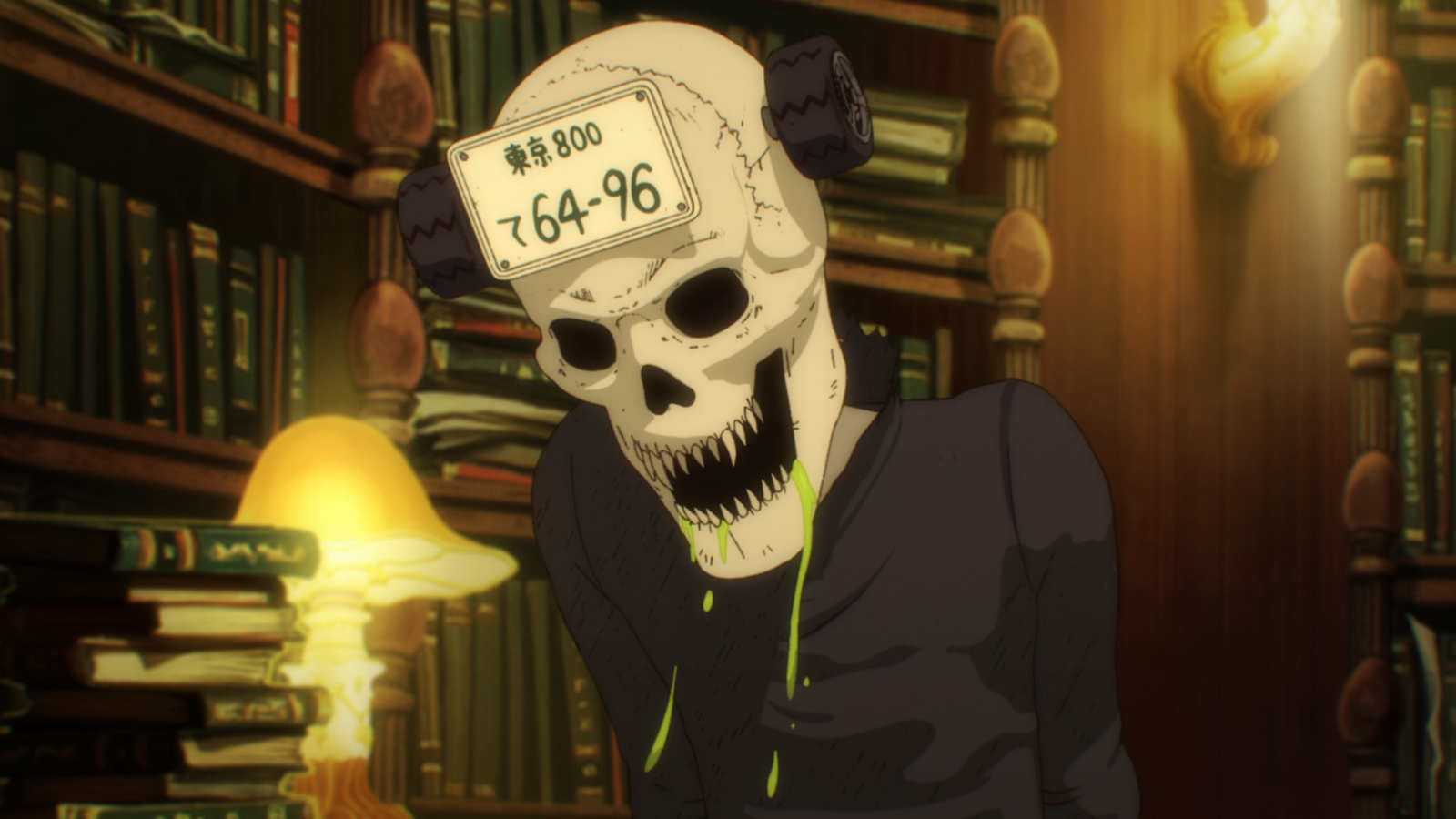
No Heroes and Villains
At first, we see how Caiman methodically terrorizes magicians in the Hole, trying to find the one who took away his memory and turned him into a lizard. But then the anime turns to the other side and shows what is happening through the eyes of the magicians themselves. For them, Caiman is not at all an avenger to be sympathized with, but a monster with a crocodile head that breaks into their lives, kills, and leaves behind disfigured bodies.
Therefore, in "Dorohedoro" there is no one main character in the usual sense. We look at this ugly world from different sides of the conflict and gradually delve into the motivation, fears, and internal logic of almost all the actors. It very quickly becomes clear that in a world where old norms have long been destroyed, and new ones have not yet appeared, a person can less and less afford to be himself. His behavior is determined not so much by moral principles as by circumstances and the balance of power.
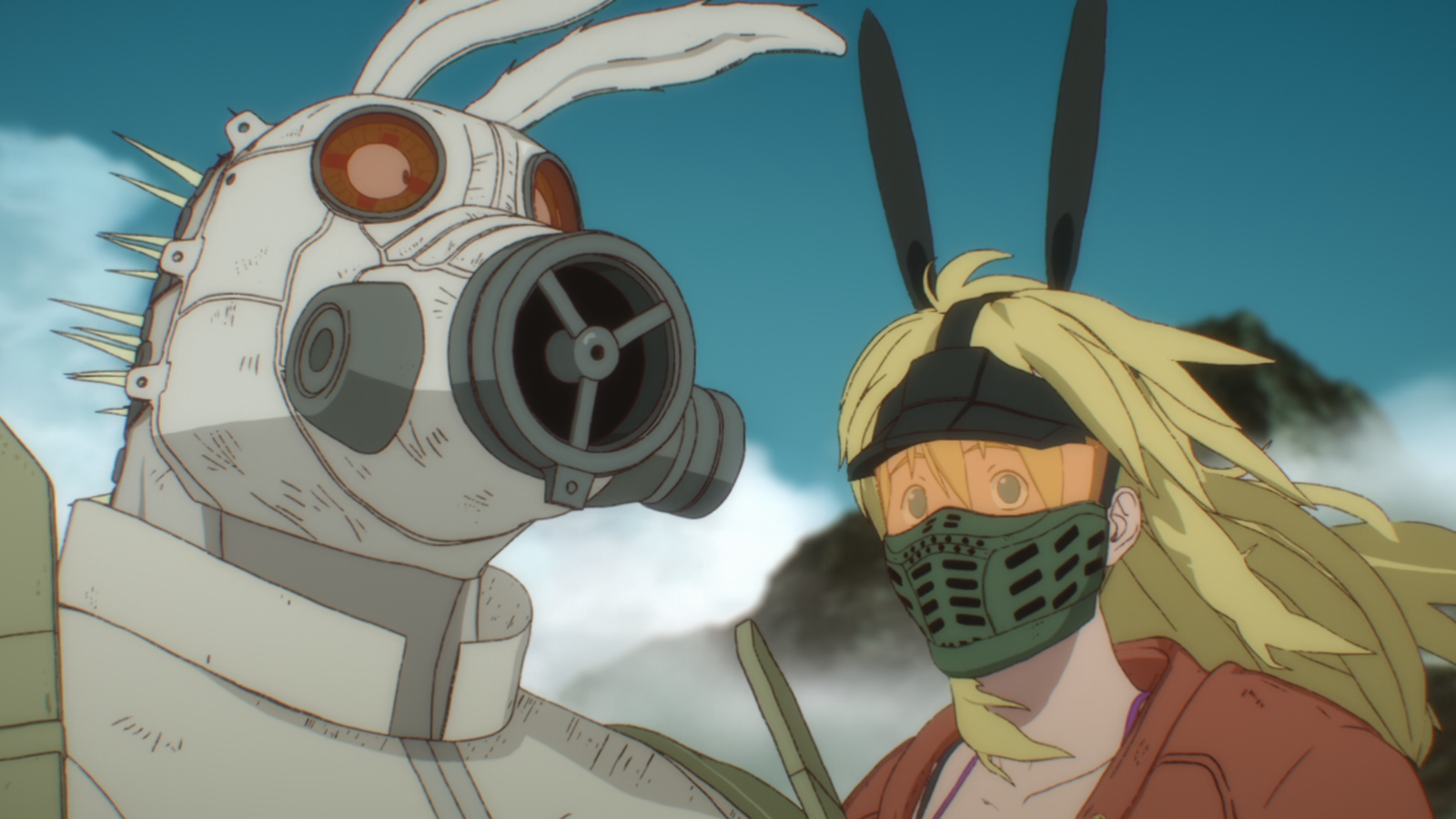
To preserve themselves, many heroes hide in a function, in a role, in a mask. Almost everyone wears masks here — especially when they commit violence. They hide their faces, erase facial expressions, and seem to free a person from the need to feel. The personal dissolves into the official. In this state, violence is committed not by a specific person, but by the role he plays. The banality of evil in all its glory.
That is why moments when the mask is removed, literally or metaphorically, are so important. Then it becomes clear that in the world of "Dorohedoro" there are almost no unambiguously good or 100% bad people. Behind the most terrible shell, there is almost always a person with his fears, habits, attachments, and motives.
First you begin to understand him, and then you catch yourself thinking that you already sympathize with him and worry about him. Because these people not only support the system of violence, but are themselves greatly crippled by it.
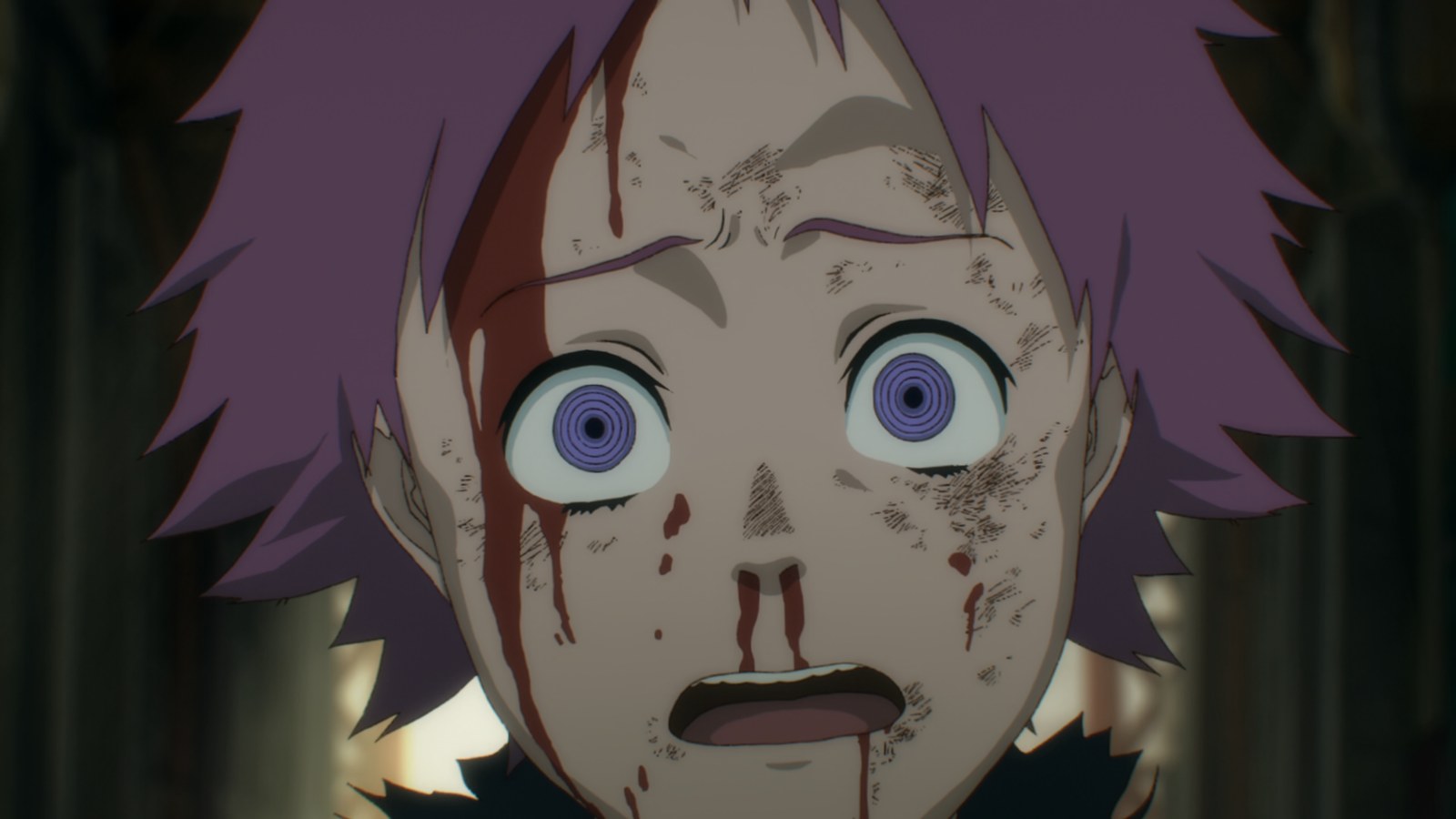
This is best seen in those who, by all the laws of the genre, should have remained just spectacular second-tier villains. For example, Shin and Noi, cleaners for En, a criminal authority and one of the most powerful magicians in this world. Formally, they are killers for whom violence has long become a routine job. But Shin's story is not the story of a villain in the usual sense. It is the story of a person who was first broken and then taught to survive in the only way available.
And yet, Shin does not completely dissolve into the role of a killer. He has his own principles. He does not use magic against those who do not possess it themselves. Even on the verge of death, he tries to do without it. And under the heart-shaped mask, he really hides a living heart that remembers not only the evil done to him, but also the good. And he is also capable of responding to this good, even if he is a formal enemy. These principles help him not to lose himself in a world of total chaos.
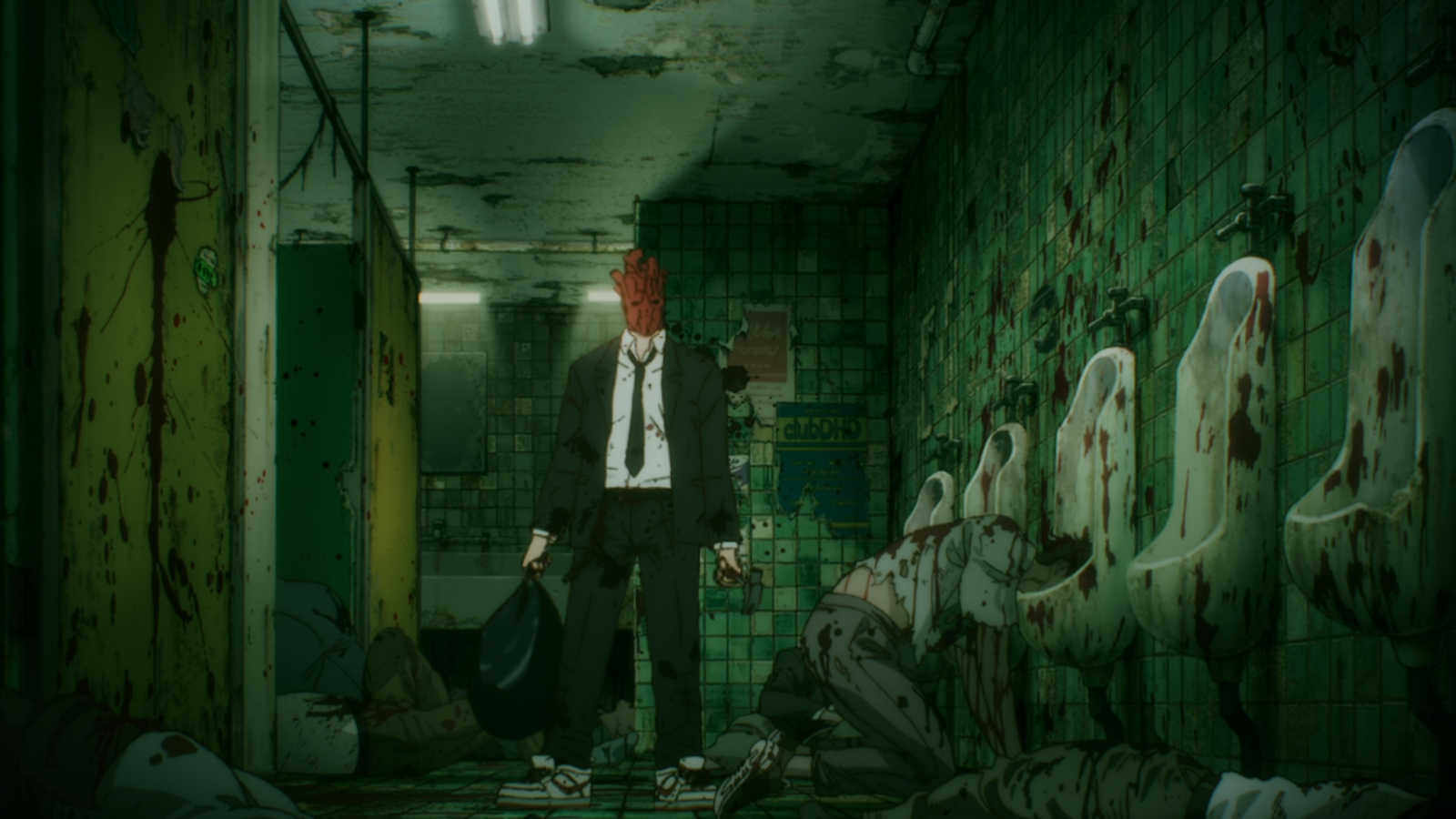
Things are even more interesting with Noi. She possesses healing magic, that is, a power that in any other story would automatically mark her as a carrier of good. But "Dorohedoro" does not recognize such simple schemes. Noi can literally put a person back together, bring them back from the brink of death, undo the consequences of someone else's cruelty. But this is the paradox. She can save a specific person, but she cannot correct the logic of the environment, which immediately turns this salvation into a continuation of cruelty.
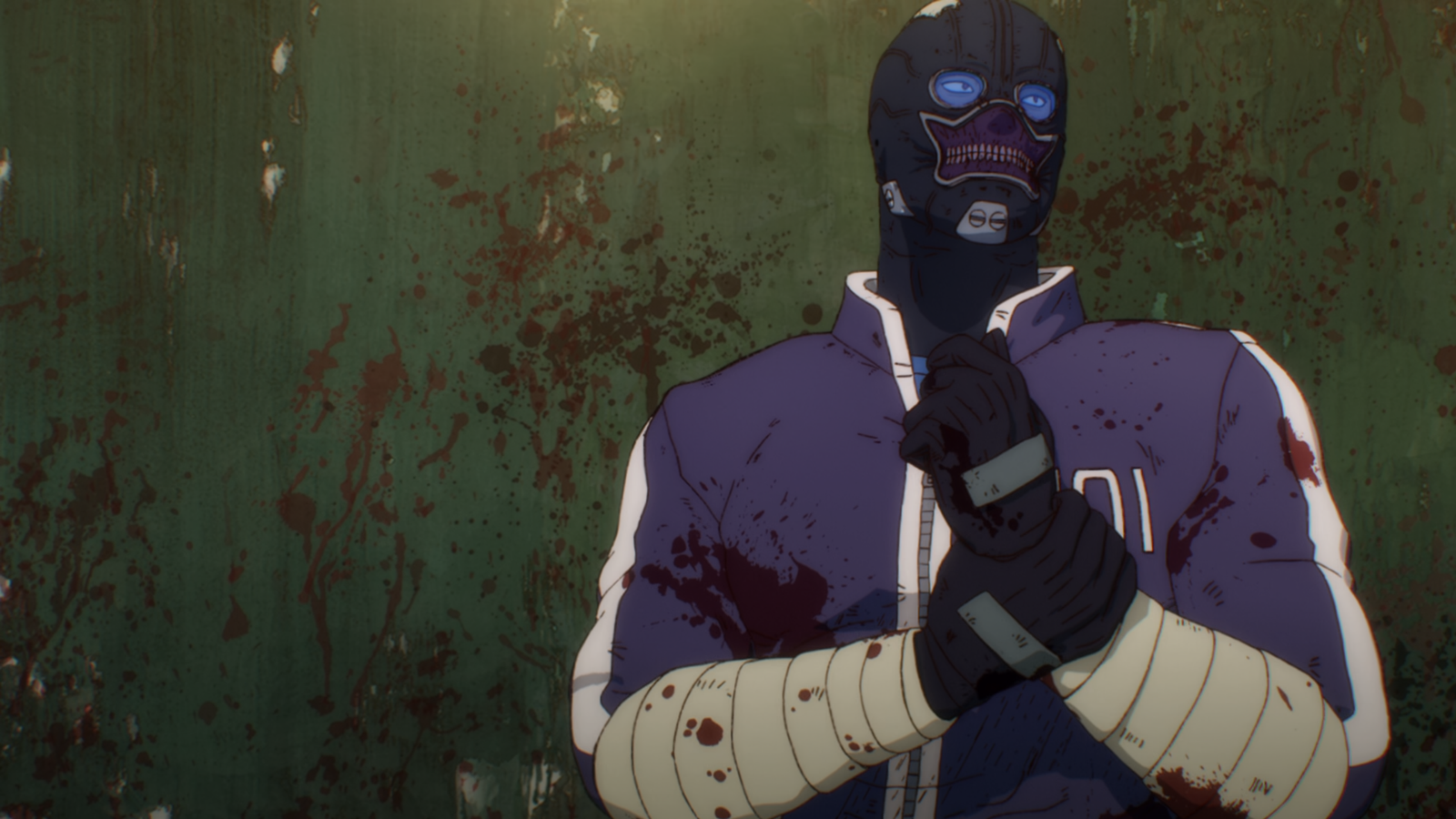
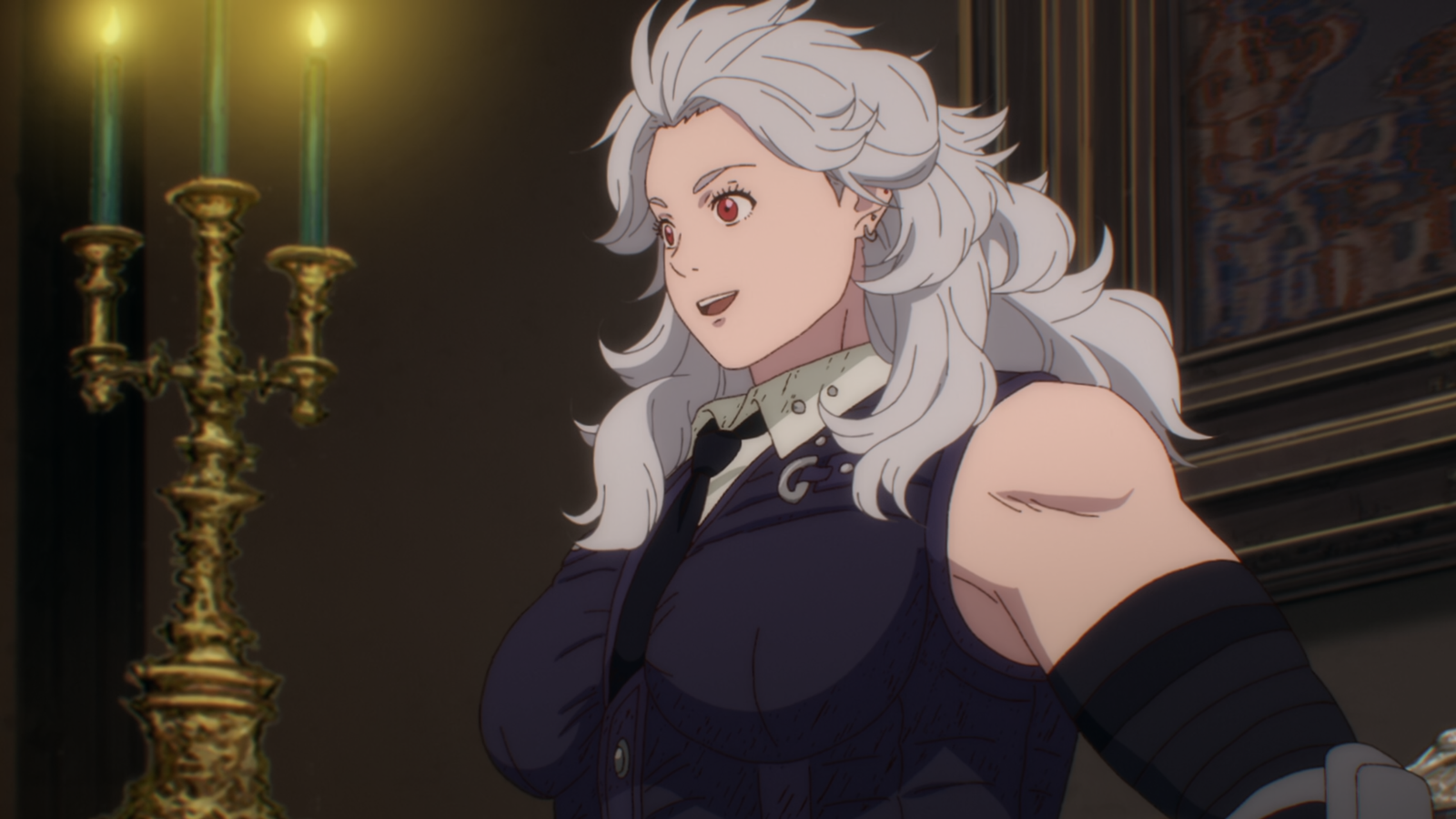
The same prism can be used to look at En, who would be easiest to write down as the main antagonist. He builds a criminal empire, eliminates the unwanted, and unhesitatingly turns the guilty into mushrooms. But at the same time, he gathers something like a family around him and really cares about his people. Moreover, his empire itself largely grew as a response to the exploitation of magicians. Because of this, his cruelty looks not like abstract evil, but as another way to bring order to a world where the very concept of order is almost gone.
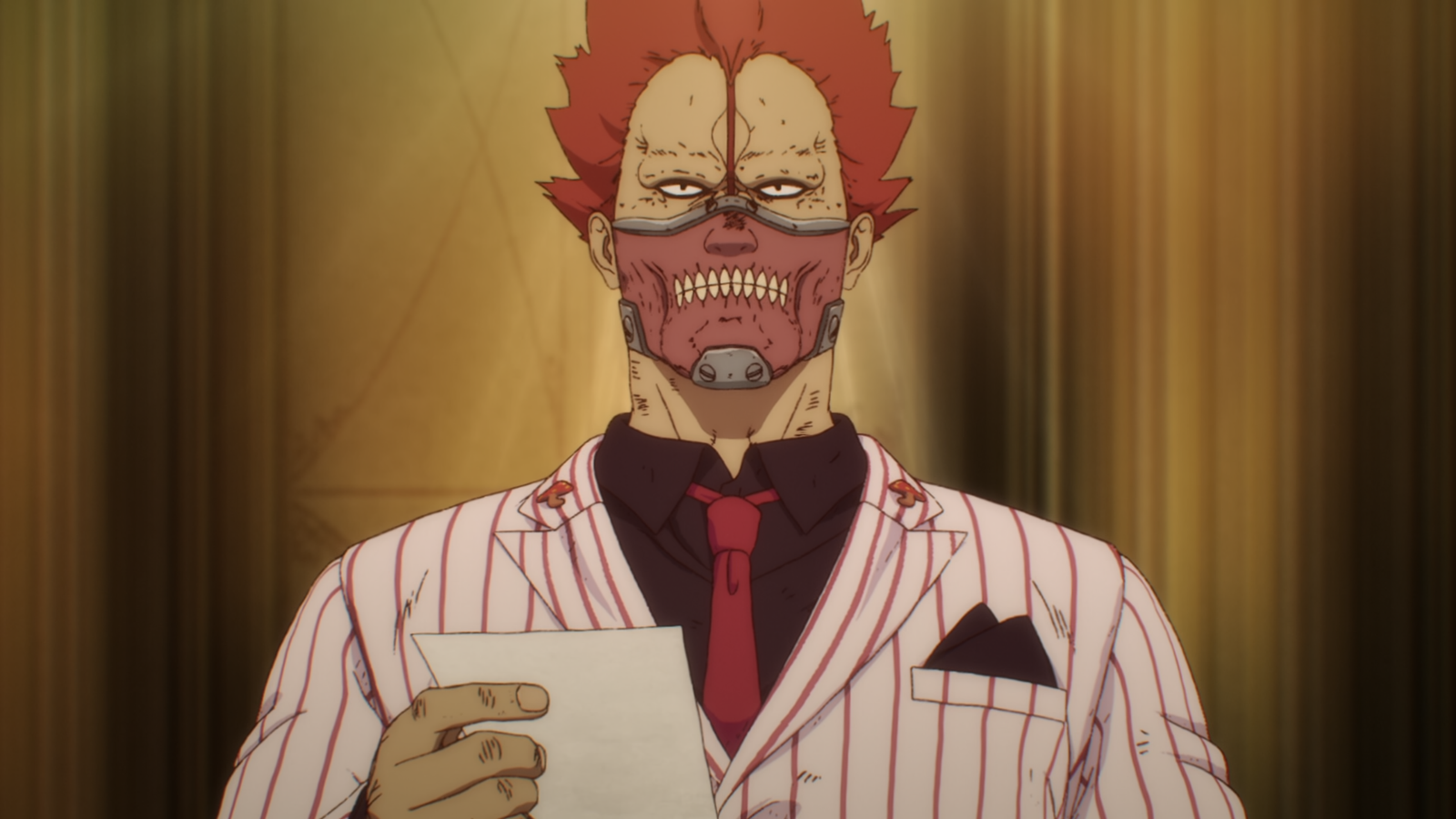
It's easy to slip into banality like "we're not like this, life is like this", but "Dorohedoro" takes this idea to the limit. Usually in such stories there is one tragically broken villain who is carefully given a difficult past. Here everything is different. This is how literally the whole world lives. Everyone around is deformed by the environment, everyone has learned to survive through violence, everyone is somehow stained with blood.
So cruelty in "Dorohedoro" does not work as an exceptional event and not as a culmination. It does not interrupt the narrative, but is woven into the very fabric of everyday life. Characters can stage a bloody massacre, and a minute later they can calmly eat, argue, joke, or discuss plans for the evening. For them, there is no contradiction in this, because the world has long lived by such rules.
Humanity within chaos
The same thing gradually happens to the viewer. At first, "Dorohedoro" shocks with its everyday cruelty. Not just the amount of blood, but how easily and naturally the most terrible things are done here. But the longer you watch, the more the optics shift.
Violence does not disappear and does not become less terrible. But it ceases to be the only thing you notice. And then completely different things begin to appear in the frame. A friendly dinner. A silly joke. Recurring rituals and promises that suddenly begin to mean more than any loud words.
The point here is not in abstract morality and not in a set of correct slogans. In the world of "Dorohedoro", the formula "I don't kill anyone, therefore I'm good" simply doesn't work. Something alive is preserved in something else. In how people exist next to each other. In care. In affection. In the very fact of returning to each other. In rituals that maintain a sense of normalcy.
It is no coincidence that in anxious periods people often rewatch familiar films and TV series. The recognizable calms. Repetition creates the illusion of control. In "Dorohedoro", the characters experience approximately the same thing.
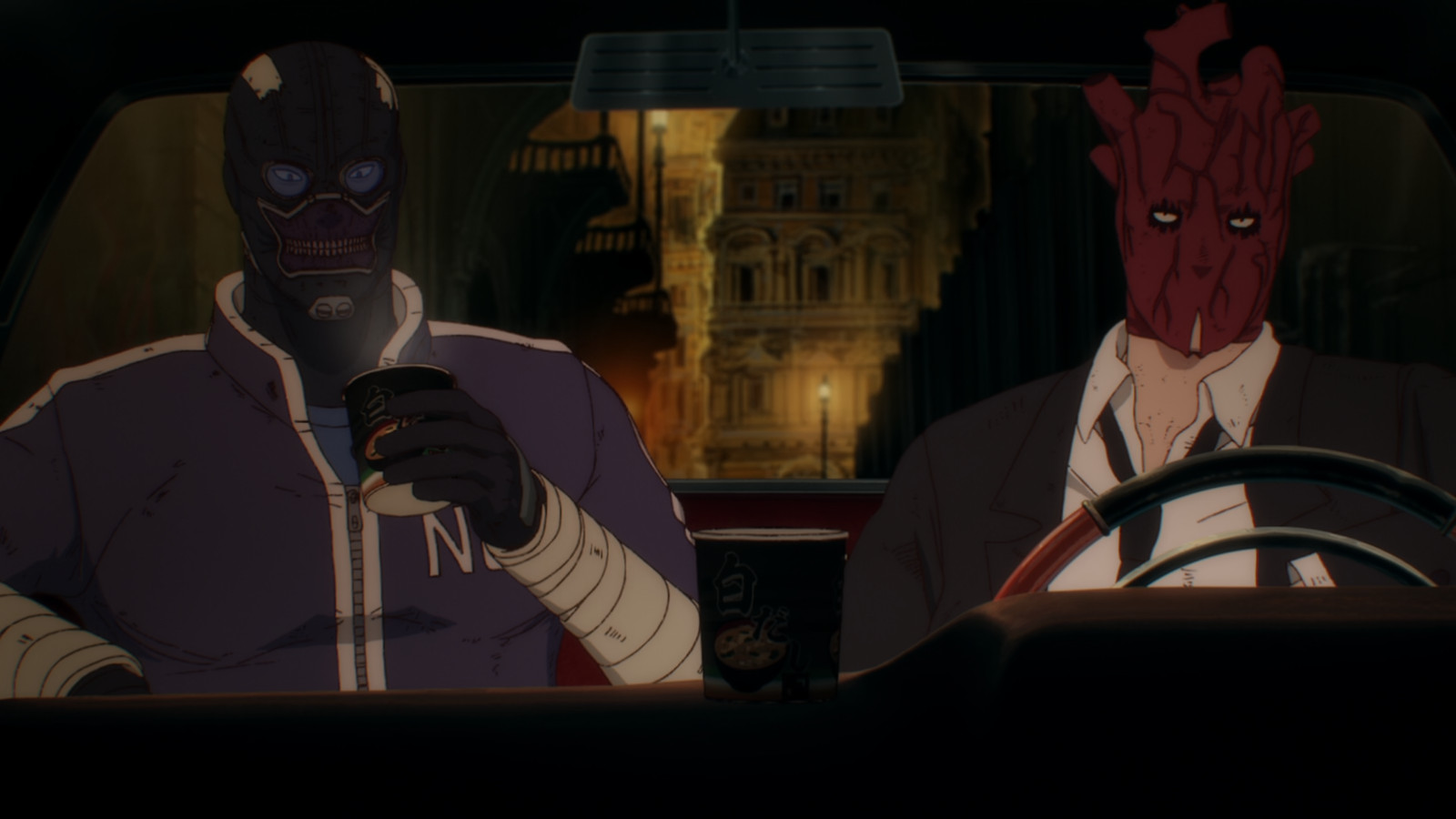
Shin and Noi return to the same diner again and again. They eat for fun, joke, and tease each other. They are interesting to watch. You start to worry about them. And you even feel awkward when their relationship balances between family closeness and suppressed romance. All this shows that they have not dissolved into violence without a trace. They have a normal life besides murder. And as long as these little habits are reproduced, at least a fragile illusion remains that the world has not completely fallen apart.
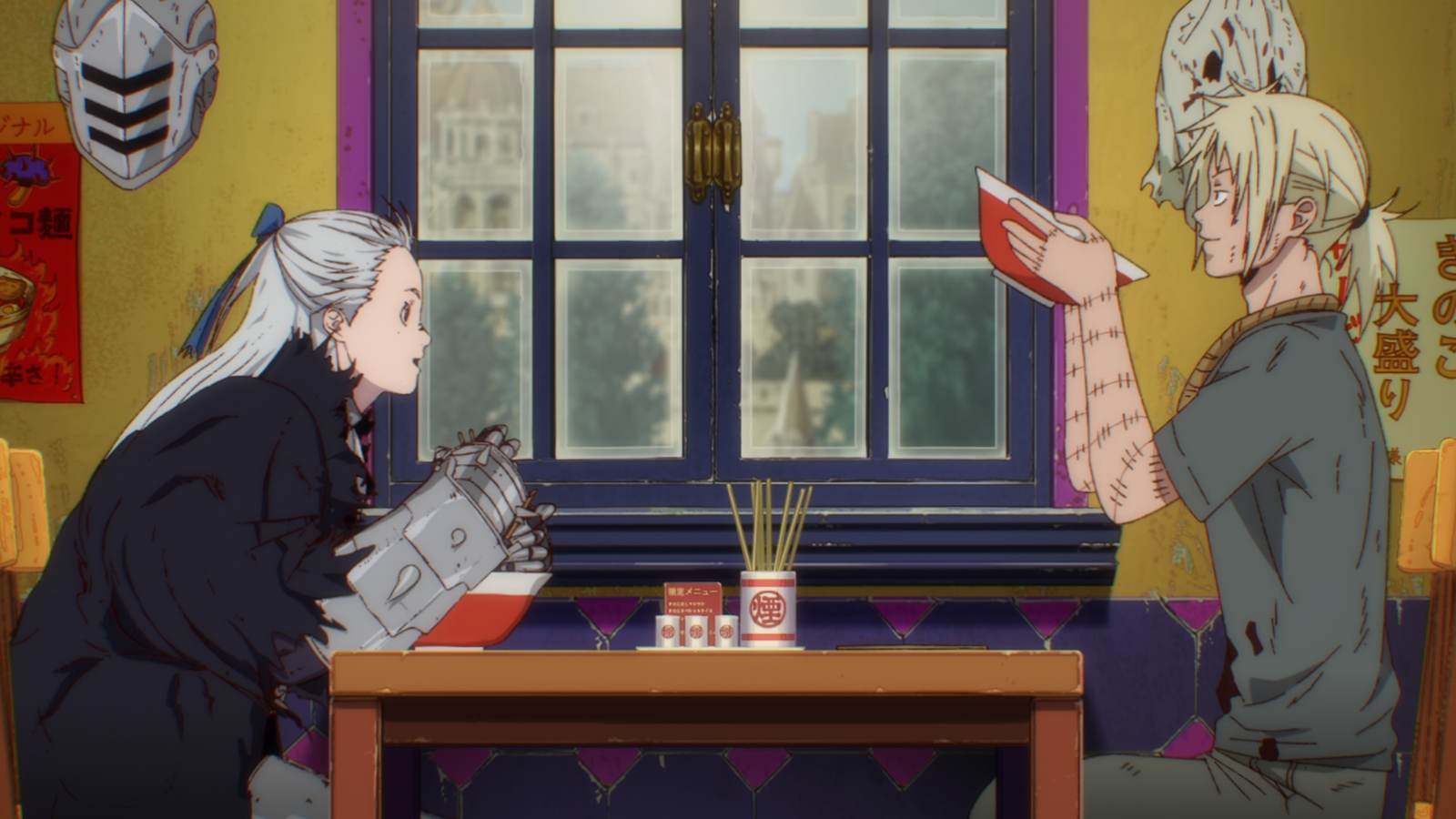
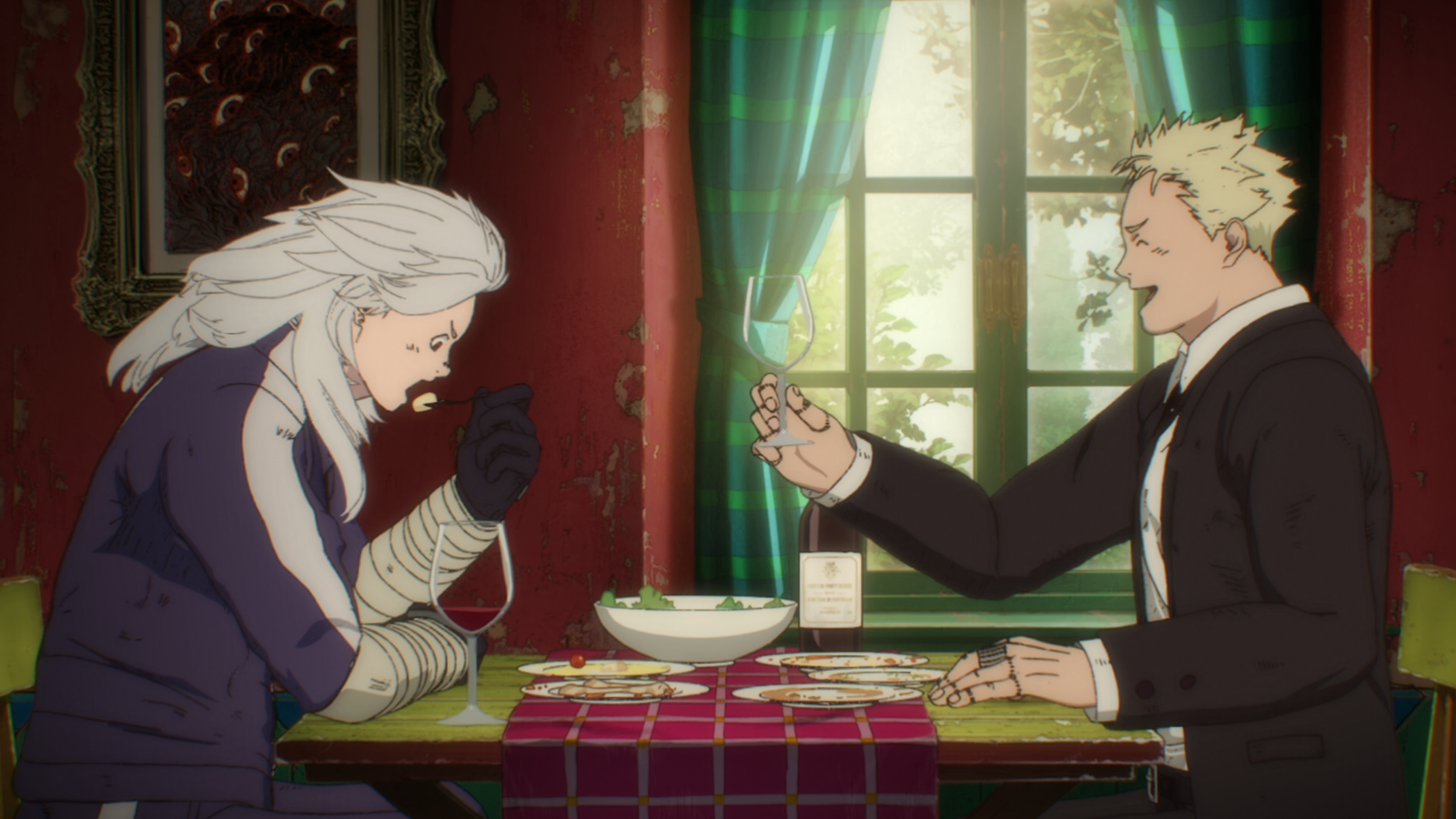
The same thing happens with Kaiman and Nikaido. A sincere connection develops between them, which is based on the simplest everyday things. Nikaido gives him not only food, but also a foothold in a world where he has neither a past, nor a normal body, nor even his own name. And he returns to her again and again not only because he loves gyoza. Next to her, he generally has at least some semblance of a normal life.
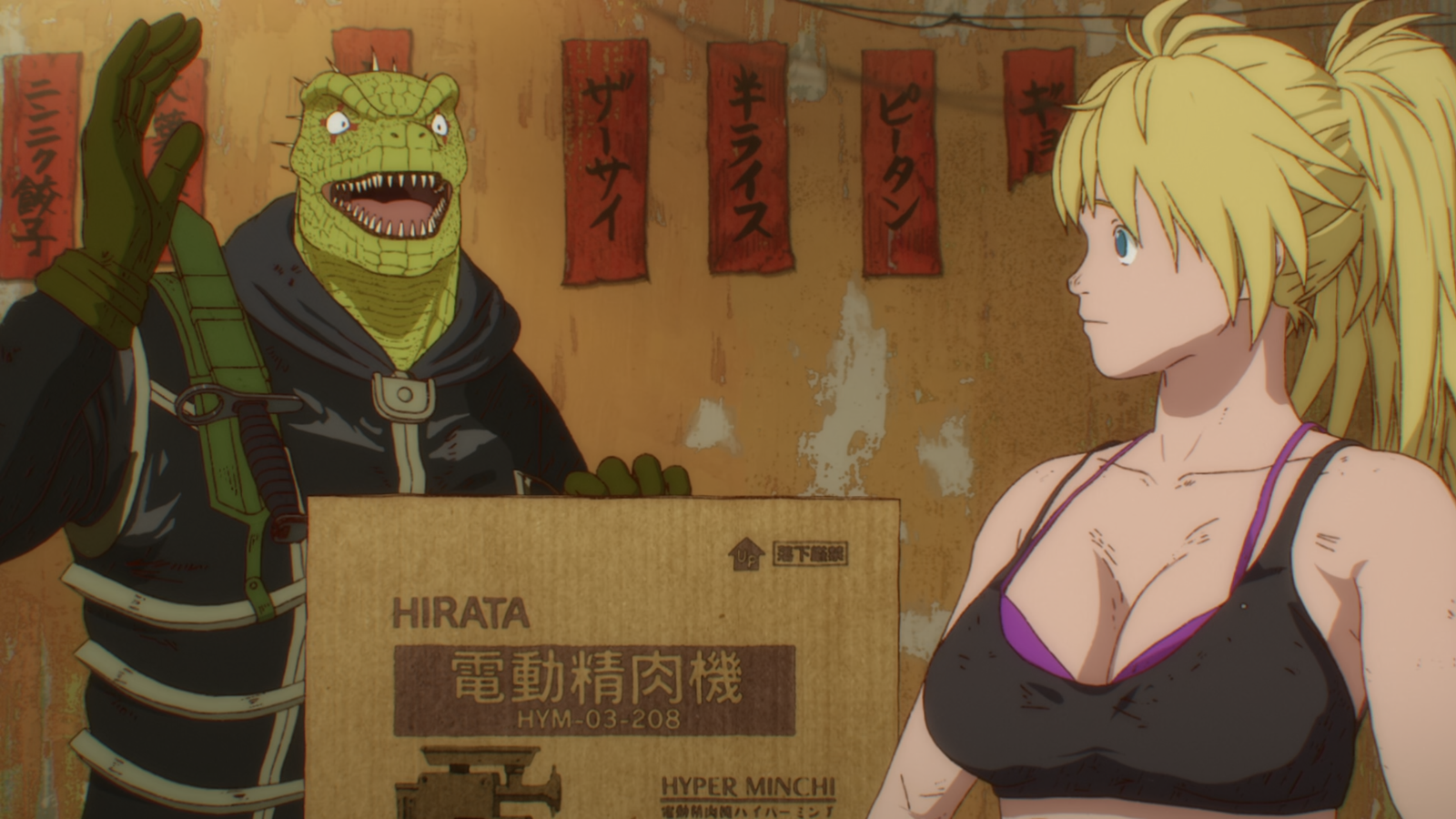
And in this silly everyday life, something truly alive is born. The world may be falling apart, the insides may be falling out. But Kaiman, who has just had his head cut off, first of all thinks about bringing Nikaido the meat grinder that they fought for on the Day of the Risen Dead. This is one of the strongest moments of the first season. Because friends keep their word. And because now gyoza can be cooked faster.
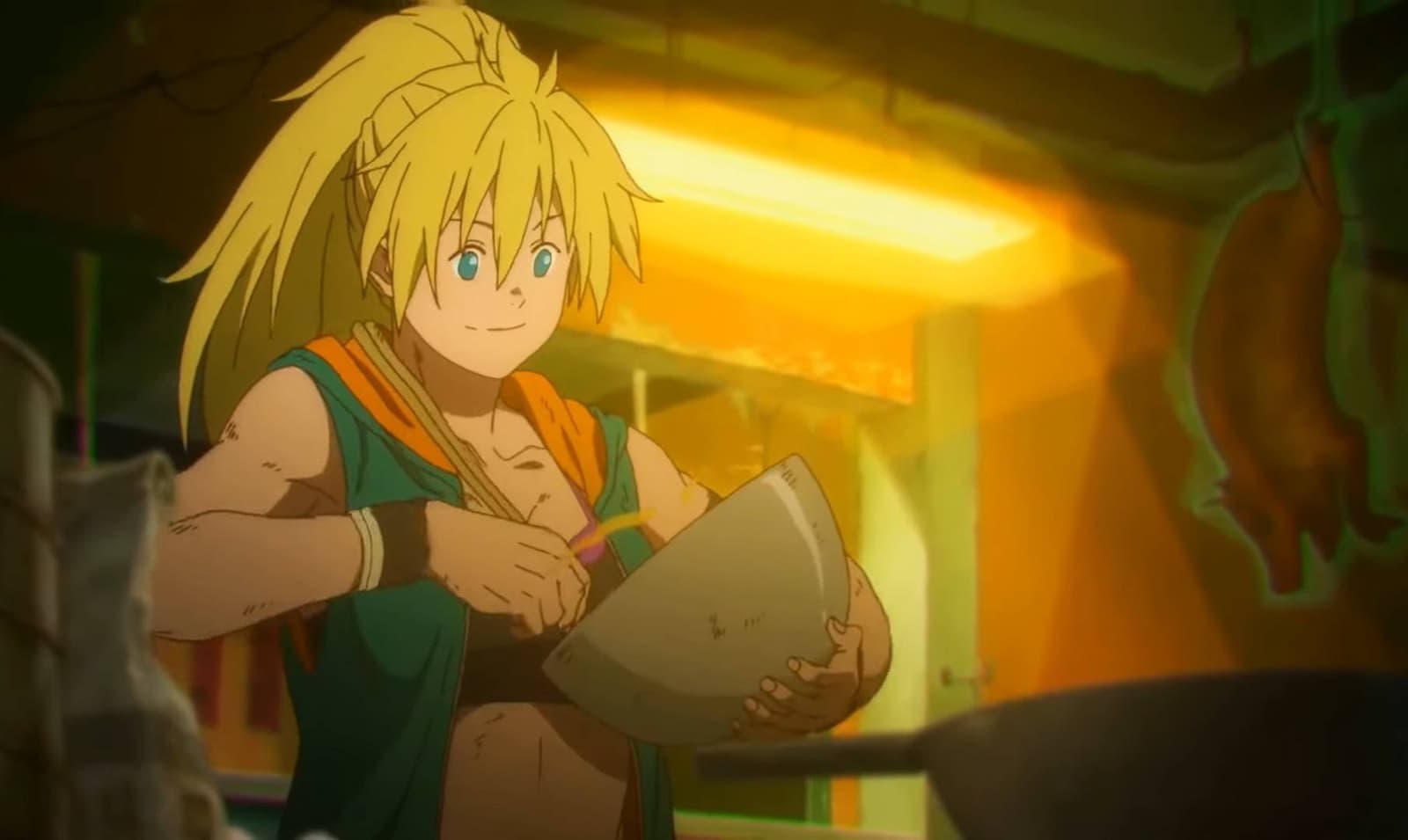
Sometimes "Dorohedoro" generally begins to resemble a culinary anime. And this is not just a funny contrast in the spirit of "here's dismemberment for you, and here are appetizing dumplings." Food here performs a very specific function. It also returns a sense of normalcy to the world. After all, everyone eats. This is a simple, primary, almost animal action.
That's why Nikaido's gyoza mean much more than just Kaiman's favorite dish. It's something beautiful and right in a world where almost everything else is distorted and destroyed. It is a marker of attachment and life. A person eats - it means he lives. A person cooks for another - it means he cares. A person returns to the same place for the same dish - it means he is trying to keep at least something stable in the world. And the more broken the world itself is, the more these simple things mean.
The same goes for humor. For all its gloom, "Dorohedoro" is constantly joking. And not on top of the horror, but right inside it. The most brutal scenes here can easily end with some ridiculous everyday trifle. Shin's bloody backstory with murders and dismemberment suddenly breaks off with him simply sneezing loudly. A trivial moment, but it works brilliantly. It does not completely relieve the tension, but makes it even more textured and alive.
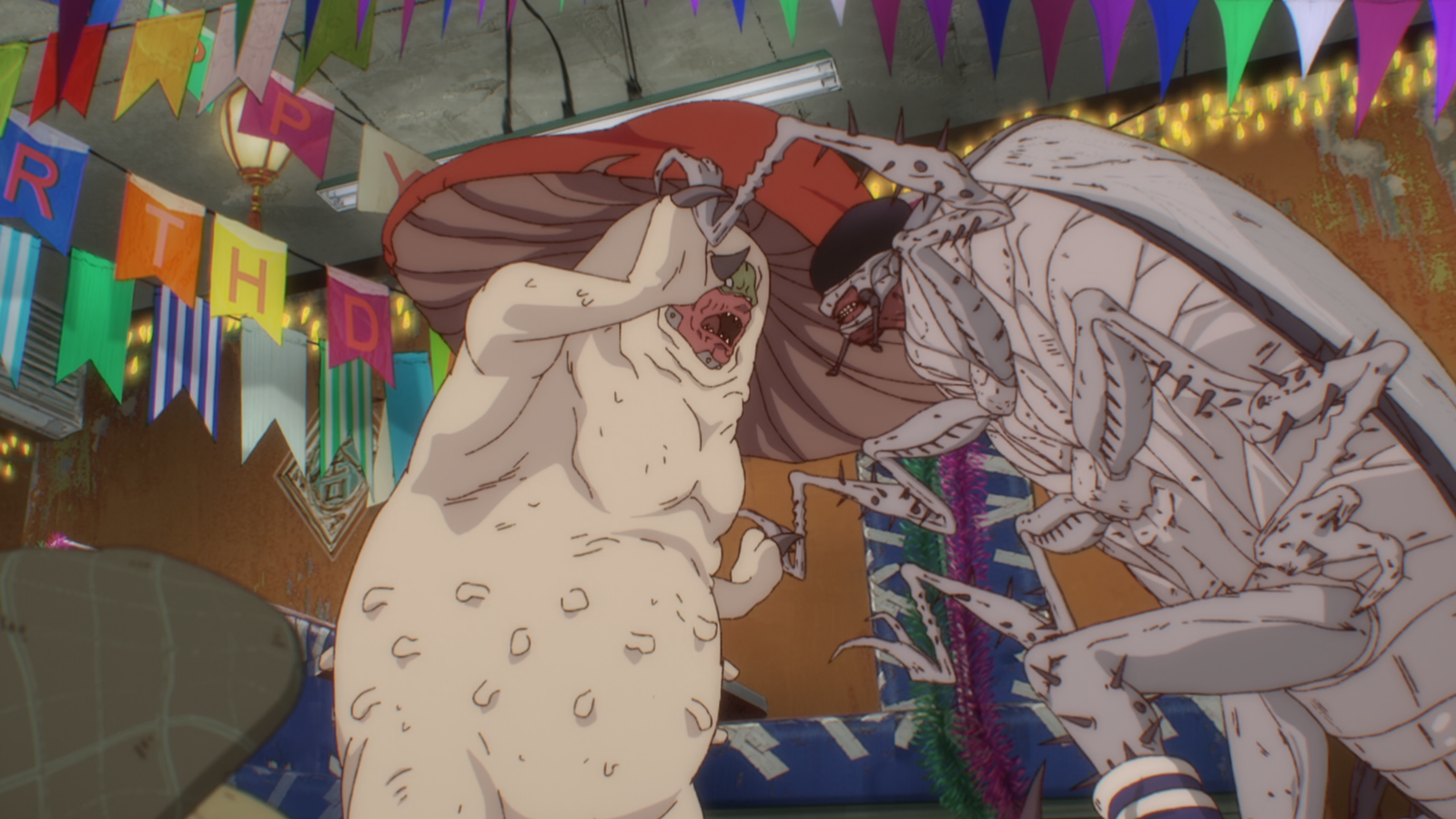
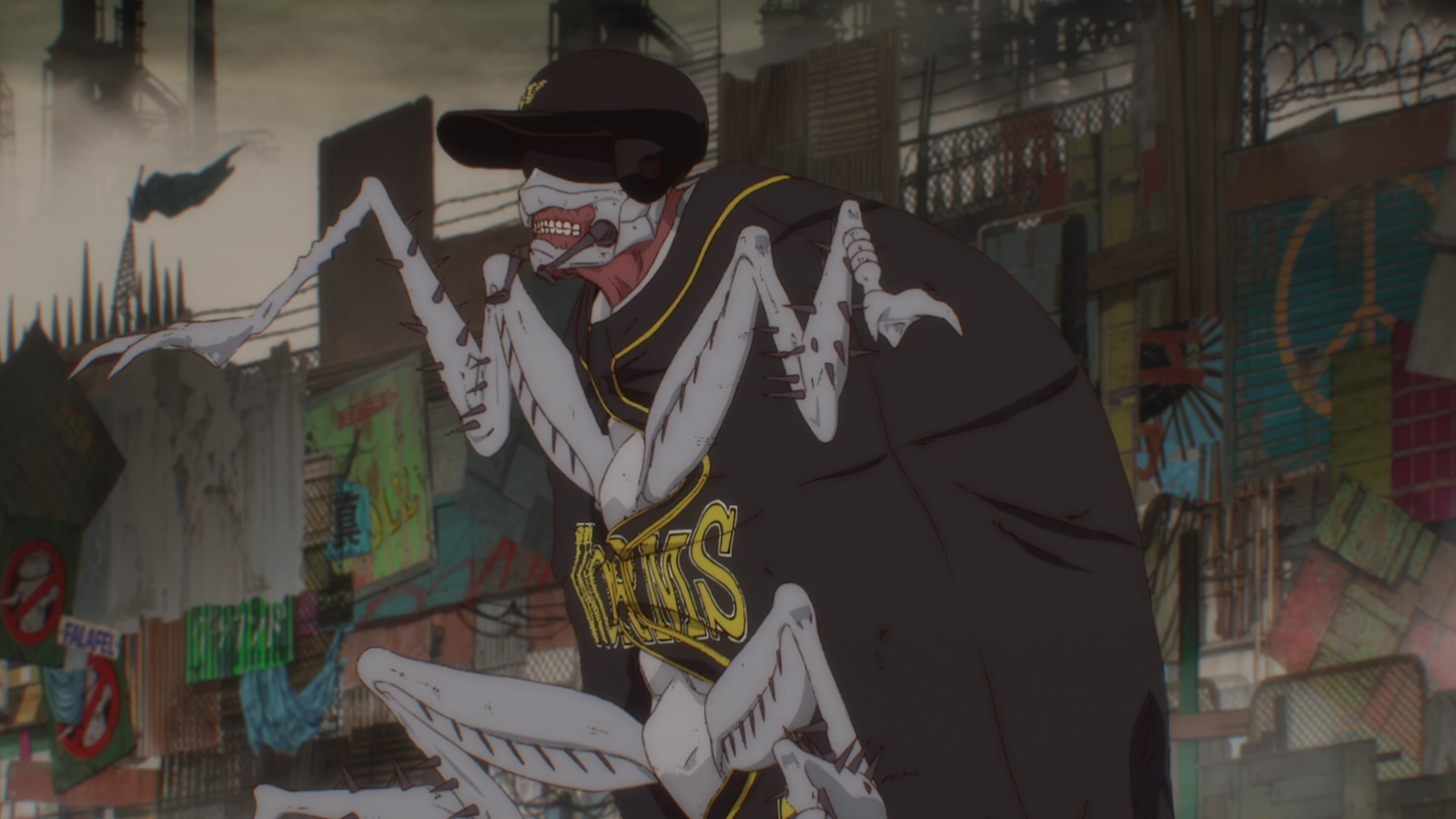
The world does not freeze in one continuous tragedy. He continues to breathe, smack, joke, argue, eat, swear, play baseball with the dead and a three-meter cockroach. Therefore, it does not feel like a cardboard nightmare, but like a physical environment in which someone really lives.
Contrast makes all this truly important. In a conditionally normal world, friendship, food, care and silly habits are often perceived as a background. But here, against the background of constant dirt, cruelty and absurdity, they come to the fore and do not allow the characters to completely lose their humanity.
Verdict
«Dorohedoro» only pretends to be chaos. On the outside, it's a stream of dirt, blood, and absurdity, where many events seem almost random. But this anime is arranged much more precisely than it seems at first glance. Food, masks, everyday scenes, the contrast between the grotesque and the cozy - everything here works for one task: to show a world where humanity does not defeat violence, but stubbornly refuses to be erased.
Therefore, «Dorohedoro» is not just a story about Caiman and his searches. This is a full-fledged world where the entire ensemble of characters and the environment in which they are trying to survive are important. Interest is maintained not only by riddles and answers, but also by characters, images and the very feeling of life that passes through battles and everyday life.
Ultimately, this world begins to talk not only about itself, but also about us. Yes, our reality is not the Hole, and three-meter cockroaches with demons are not running through the streets yet. But we also live in a world where cruelty too easily turns into a background, into dry statistics and into headlines that flash before our eyes and immediately disappear.
But it does not follow from this that humanity is doomed. It is stored in the same place as the heroes of «Dorohedoro»: in the ability to maintain connections, in small rituals, in the ability to rejoice, care, laugh and build internal rules for themselves even when chaos reigns around.
That's why «Dorohedoro» seems to be one of the most disgusting and most cozy anime of recent years at the same time. It may repel with its design, rudeness and abundance of blood, but if you stay with it a little longer, you quickly realize that all this wildness is not needed for the sake of shock. Through the dirt, cruelty and absurdity, an anime about people, rare in its accuracy and intonation, shines through here. Therefore, you want to return to the Hole, and the release of the second season is a great reason to finally look there, because this world has become even more insane, bloodier and more alive.
Never miss our newsAdd this site to your preferred sources to see us more oftenAdd on Google
![[Video] RIP RTX 5090 / GTA 6 Leak / Blizzard Broke WC3 / Cyberpunk 2077 Movie / Phantom Blade Zero Preview](https://media.ixbt.games/fit-in/312x/ixbt-data/1725650/17ffaa31-1709-4a05-91a5-0ee4b75897d7.jpg)