Success won't save you: why studios close after hits
Translated with AI from the Russian original.
Until recently, the connection between a game's success and a studio's stability seemed obvious. Failure led to budget cuts and layoffs. A successful release was considered the best protection for the team. If a project found an audience, strengthened the company's reputation, and brought good feedback, it was perceived as proof of the studio's necessity. But in recent years, this logic has failed.
The industry has seen more stories where a high-profile release didn't open a new chapter for the team but ended in layoffs, freezing of future projects, or studio closures. Game quality, good reception, and even reputational benefits for the publisher are no longer sufficient guarantees.
The main question here is not why companies lay off people at all. What's more important is why the success of a release itself is no longer considered a strong argument for keeping a team. Why a strong game and a good start are increasingly losing out to the internal logic of a corporation that views projects through expenses, forecasts, and profitability requirements.
The era of cuts and optimizations
The layoffs of recent years are the result of the post-pandemic market cooling, constantly rising development costs, inflated investor expectations, and large companies' attempts to maintain the growth rates of the global lockdown era. Against this backdrop, layoffs have transformed from an emergency measure into a routine business adjustment tool.
During the pandemic, the gaming industry experienced a rapid boom. People spent more time at home, played more, and spent more. On this wave, publishers expanded teams, acquired studios, launched new directions, and planned for further growth. The problem was that many mistook a temporary surge in demand for a new normal.
When the market returned to a calmer state, it became clear that previous expectations were too high. Games didn't stop earning, but the pace of growth no longer looked the same. At the same time, expenses had significantly increased. Development took more time, technical requirements were higher, marketing was more expensive, and maintaining large teams became a heavier burden on the budget.
At this point, management priorities also shifted. While the market was growing rapidly, expansion was the main concern. When growth slowed, cost efficiency came to the forefront. Companies needed to show that they could quickly cut costs, focus on priorities, and maintain the required level of profitability.
Therefore, many layoffs occurred not against a backdrop of complete crisis, but against a portfolio review. Companies compared different directions and abandoned those that did not promise the desired scale or took too long to pay off. This is an important shift: a studio's fate depends less and less solely on its own work and more and more on its place in the overall system of corporate priorities. This was compounded by a staffing imbalance. During growth, companies actively hired people, and later the same staff began to be considered redundant.
But even more indicative is that in recent years, not only problematic teams but also studios with truly well-received releases have been hit. The most striking example is Tango Gameworks.
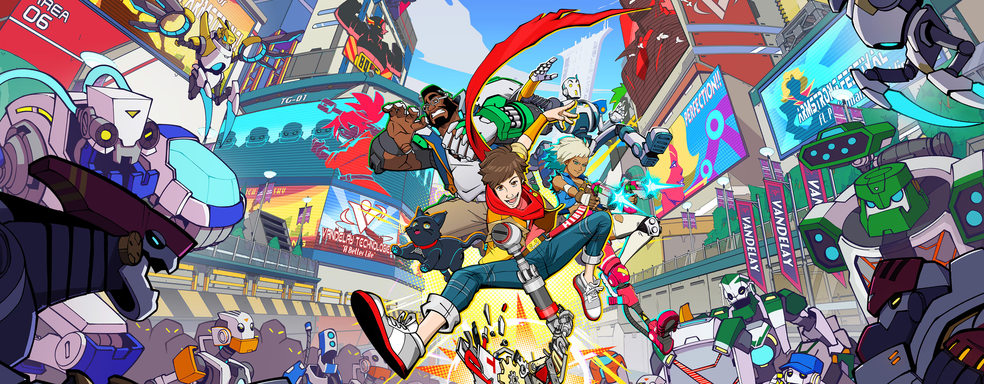
Hi-Fi RUSH didn't look like a failure: the game quickly gained audience recognition and high ratings from publications, reaching 3 million players by August 2023. But in spring 2024, Microsoft still closed the studio as part of its focus on prioritizing so-called “high-efficiency” projects.
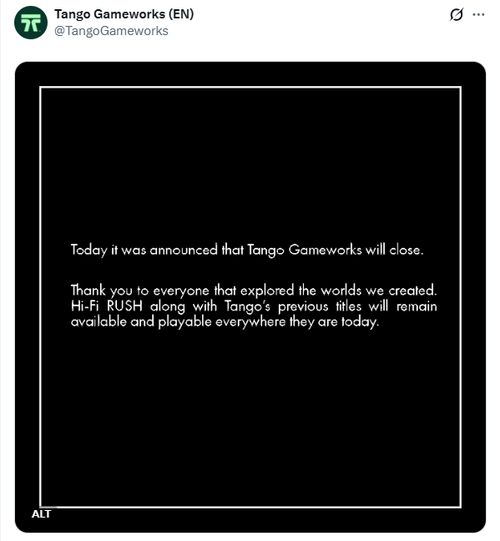
The irony of the situation is that a few months later, Krafton acquired Tango Gameworks and the rights to Hi-Fi RUSH, giving the team a chance to continue their work. This turn of events itself says a lot about the nature of current “optimizations”: a studio is first deemed not important enough for a large corporate portfolio, and then another owner sees value in it and saves it from final disappearance.
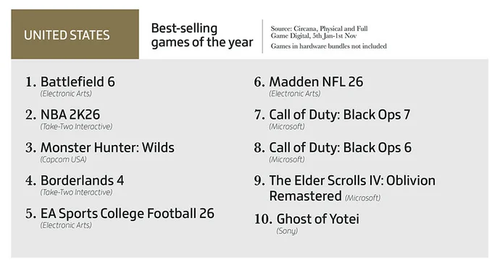
A similar logic can be seen in the example of Battlefield Studios. In autumn 2025, Battlefield 6 looked like a rare case of almost undisputed market success for Electronic Arts. According to Circana, in the US, Battlefield 6 finished 2025 in first place for sales, surpassing Call of Duty: Black Ops 7, among others. It would seem that this was precisely the case where a major release should have provided the team with stability.
EA officially reported that it was the biggest launch in the series' history: over 7 million copies sold in the first three days. In February, the company already reported that Battlefield 6 was the main driver of the quarter: net cash flow increased by 38% year-over-year, and the game itself was named the best-selling shooter of 2025. But already in March, EA conducted layoffs.
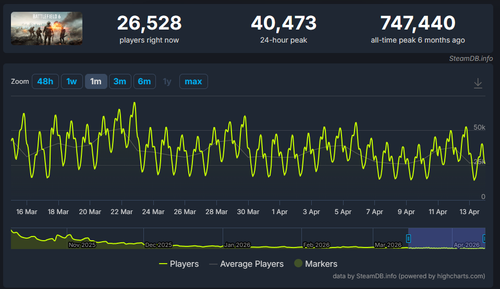
Post-release support for Battlefield 6 quickly showed that the game had content problems. In recent months, players complained about a slow progression system and meager content. Because of this, online players dropped from 747 thousand to 15-40. At the same time, the last two updates of the second season could not bring back any part of the former audience. At the same time, EA conducted layoffs.
It is especially telling how EA explained these layoffs. In a comment to The Verge, the company's VP of Corporate Communications, Justin Higgs, said that the layoffs were aimed at better engaging with players.
We have made targeted changes to the Battlefield structure to better align teams around what matters most to our community.
He further added that EA would continue to invest in the series, guided by player feedback and data from Battlefield Labs. That is, even layoffs here are presented not as an abandonment of the project, but as an action supposedly in the interest of the audience.
Success needs to be calculated
The main problem in evaluating layoffs is the different understanding of “success.” In the public sphere, it usually means the same thing: the game received good reviews, gathered an audience, became a notable release, and strengthened the reputation of the publisher or platform. For a large corporation, this is not enough. There, a game is evaluated not only as a successful launch but also as part of a large portfolio. The project must be predictable, scalable, and useful for the business “in the long run.”
Management looks at whether the project helps build a sustainable monetary model, whether the franchise can be developed, whether it will generate super-profits, and whether it would be more profitable to invest the same resources in another product.
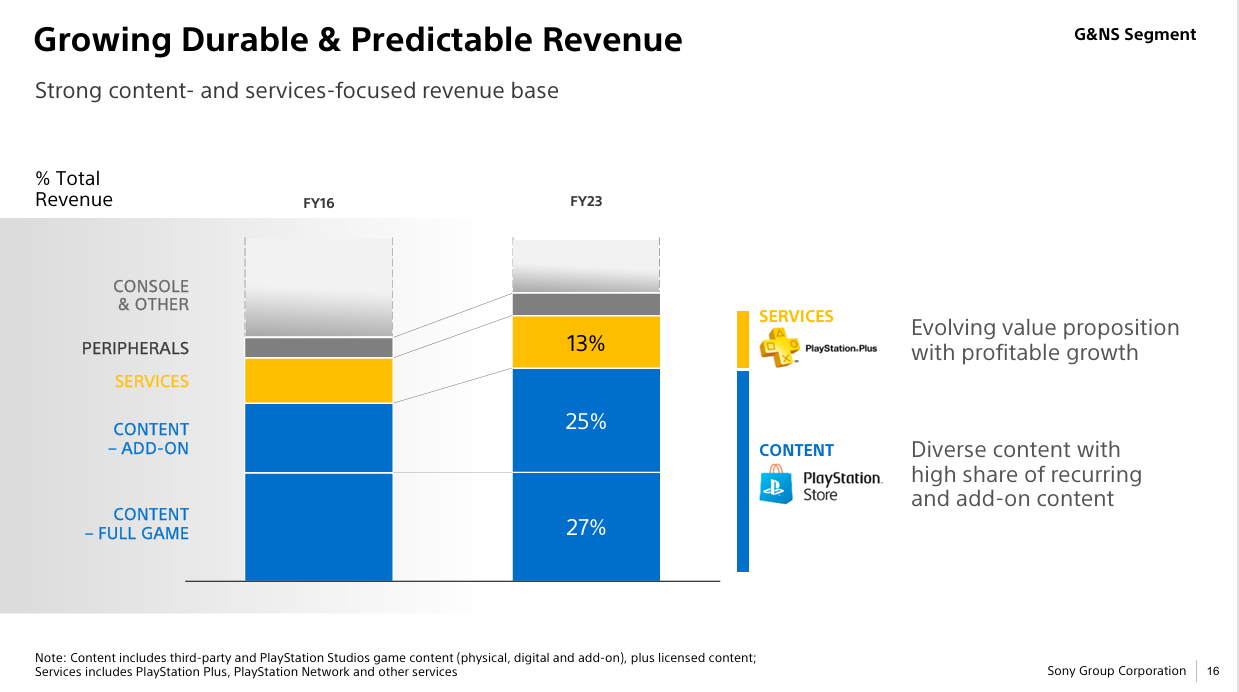
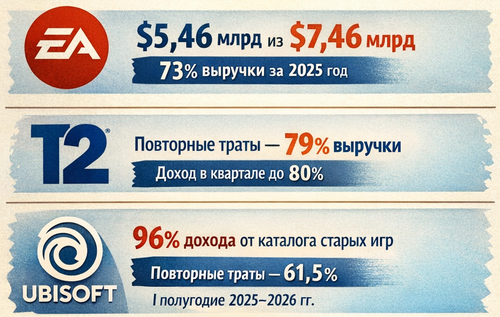
In investor materials, Sony talks about growing recurring and predictable revenue, cost control, and increased efficiency. Take-Two emphasizes the importance of repeat user spending year after year. For a large publisher, not just a good launch is important, but a beautiful financial report for the game.
Therefore, the same game can look completely different depending on the point of view. For example, for the audience and the press, Hi-Fi RUSH became a rare example of a bright, compact, and prestigious release. The game brought the platform sympathy, awards, and reputational benefits. But Microsoft remained dissatisfied with sales and was preparing another restructuring with a focus on more profitable projects. In such a system, a game can be beloved, prestigious, and good for the image, but still lose the battle for budget and people.
The market situation exacerbates the problem. According to Newzoo, 90% of revenue from new games in 2023 went to only 43 projects. The average quarterly playtime on PC and consoles was 26% lower than in Q1 2021. In such an environment, companies start to look at releases more strictly. If player attention and money are drawn to a few major games and services, any project outside this group looks more vulnerable. This doesn't mean it's bad. It means that for corporations, its success seems too short-lived or difficult to scale.
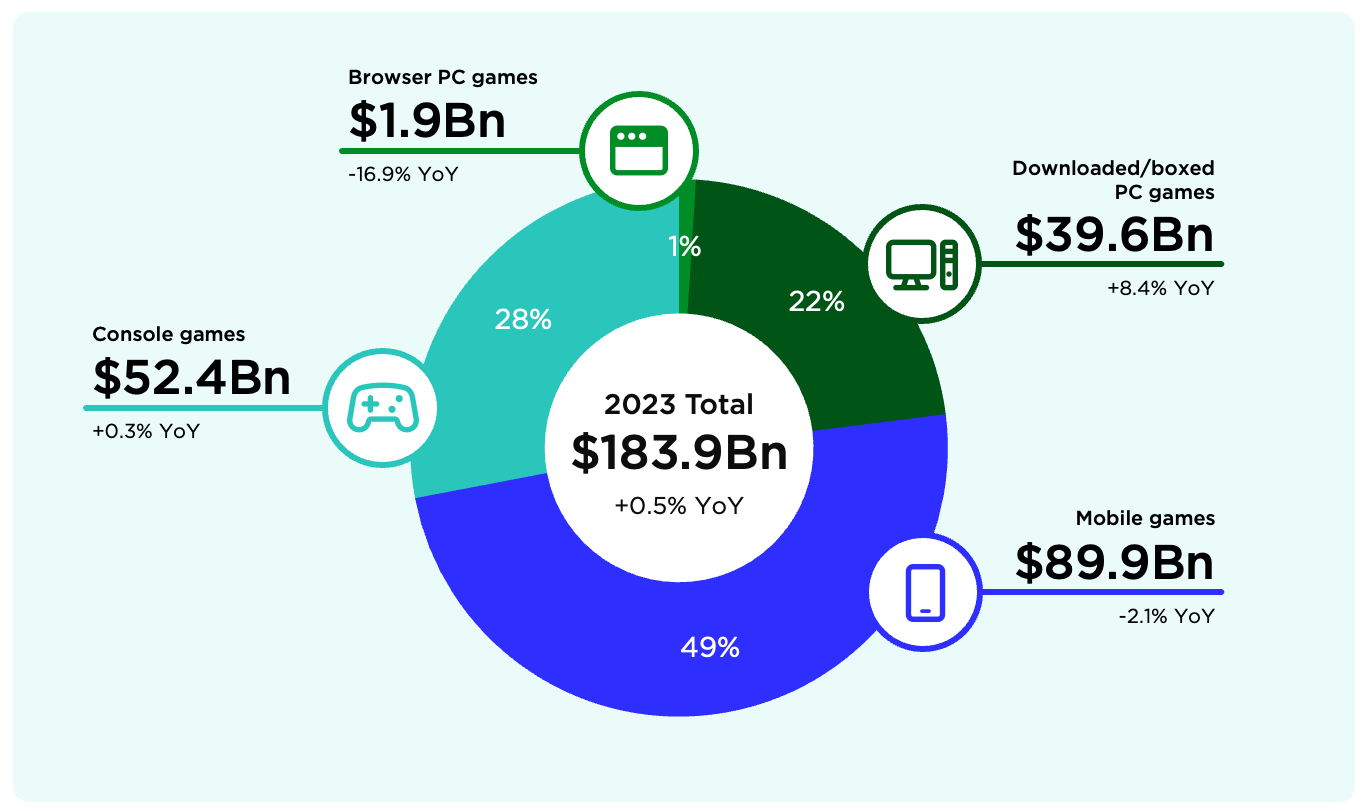
Therefore, today it is no longer enough to say that the game was a success. It is necessary to immediately clarify in what sense and for whom. If the answer is not obvious, the studio finds itself in a risk zone even after a strong release.
In business terms
For a publisher and a public company, a game has long ceased to be an end in itself. They evaluate how effectively years of work, a large staff, and millions in investments have been converted into sustainable and predictable profit.
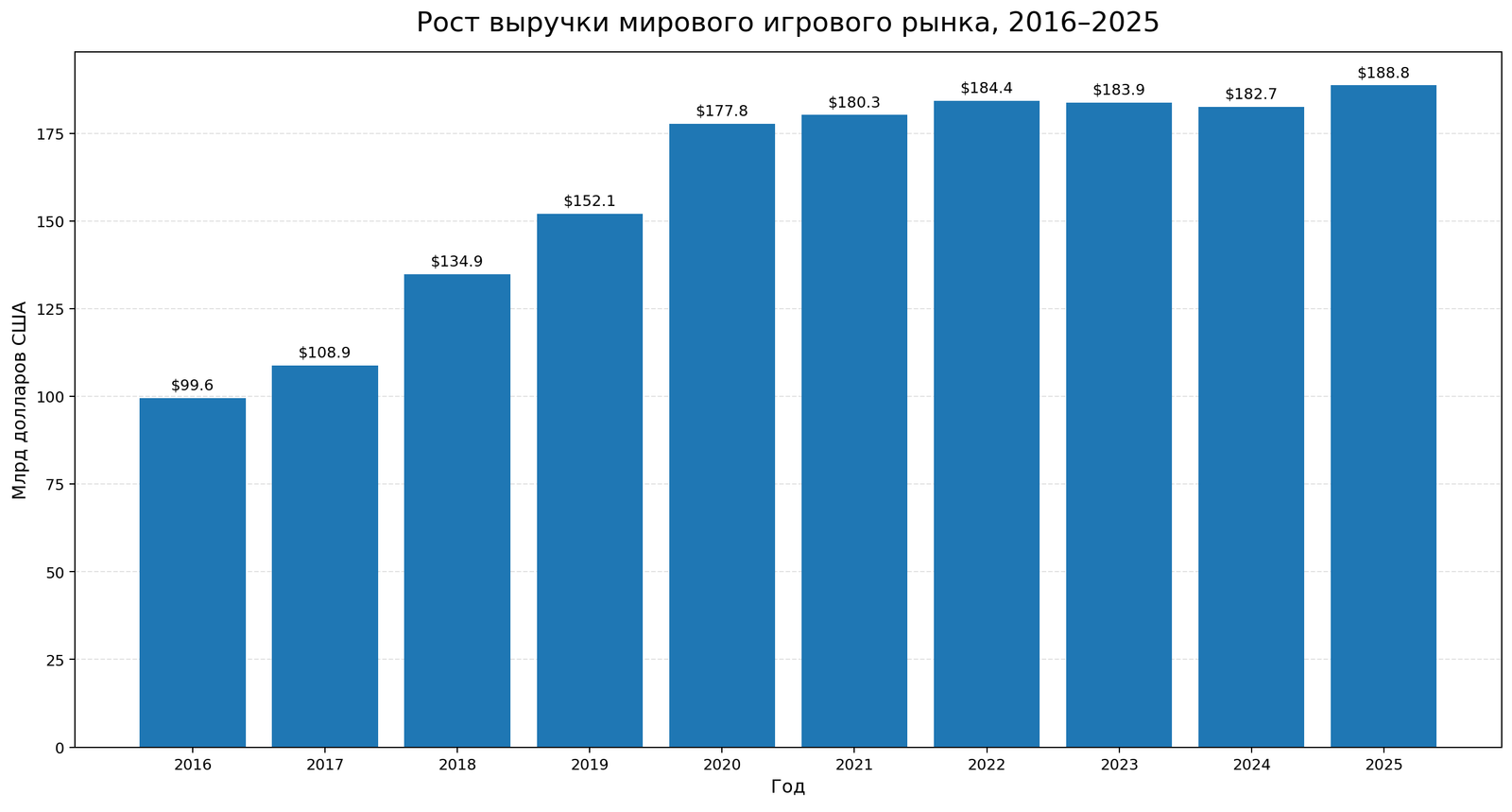
According to Boston Consulting Group, the global gaming market grew from $131 billion to $211 billion between 2017 and 2021. Annual growth was 13%, but in 2021–2023, the average annual rate decreased to 1%.
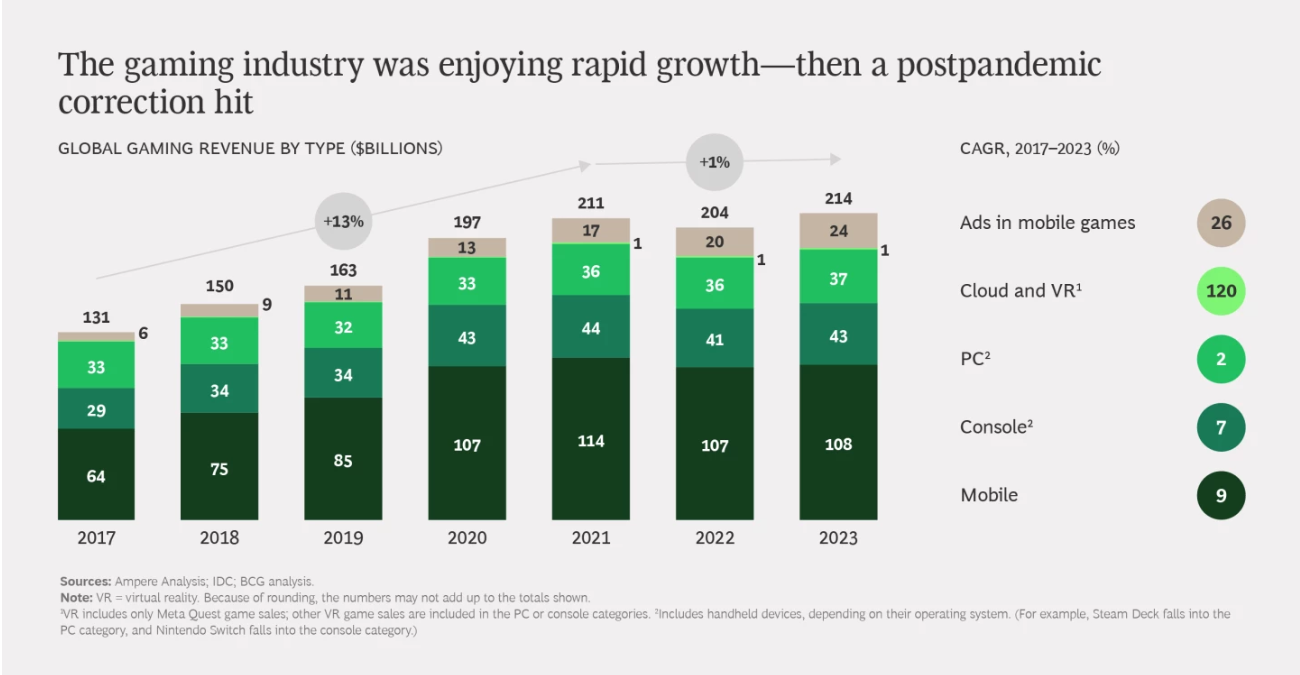
The same Boston Consulting Group explicitly states that development costs are growing faster than revenues. Each new game becomes more expensive, which means that the requirements for its profitability and the speed of return on investment inevitably increase. In such conditions, high ratings are not enough if the project does not show large numbers in reports.
Hence the main structural shift of recent years. Large publishers are not interested in a one-time sale of a new game and are paying more and more attention to regular player spending. This is clearly visible in the official reports of the companies themselves. For Electronic Arts, at the end of fiscal year 2025, service areas and other recurring revenue sources brought in $5.46 billion out of a total revenue of $7.46 billion, or about 73%. And for Take-Two, microtransactions accounted for 79% of revenue.
The ideal product for a publisher is a project capable of retaining an audience for years and selling them add-ons, in-game currency, cosmetic items, season passes, subscriptions, and other related products. Therefore, a single premium game that is bought, played, and put away always looks weaker within corporate logic than a live service.
In its fiscal year 2025 report, Electronic Arts stated that it intends to return at least 80% of its free cash flow to shareholders through share buybacks and dividends. Take-Two openly announced in February 2024 that it was undertaking a significant cost-cutting program to increase profitability and ensure that profits grow faster than revenue. And Xbox Game Studios was tasked with increasing the net profit share of the gaming division to 30%, which was initially considered impossible by many financiers — both within the gaming industry and within large businesses.
How layoffs became revenue
The main thing to understand when talking about layoffs is that a company does not directly make money by firing people.
Management organizes purges for three goals. The first is to reduce the constant burden on the business: salaries, support for redundant teams, infrastructure costs, and general maintenance of areas that do not provide the desired return. The second is to reallocate capital to segments that management deems more profitable. The third is to show investors that the company is not going to tolerate a decline in efficiency and is willing to sacrifice part of the production structure to protect profits.
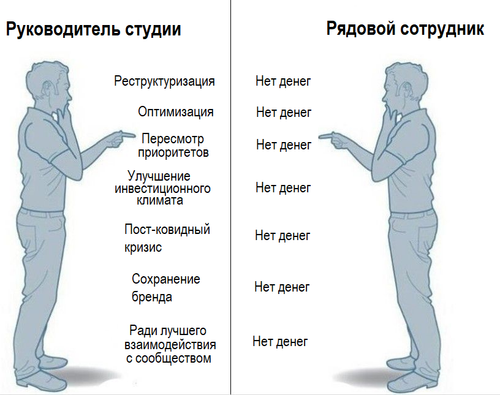
Ubisoft can serve as a clear example here. In 2025, the company directly reported that its initial cost reduction program was completed ahead of schedule, fixed operating expenses decreased by approximately 205 million euros compared to the 2022–2023 fiscal year, and then the company immediately aimed for another 100 million euros in structural savings.
In practice, this works very simply. Today, the company acknowledges a one-time hit to its financial statements, and then promises annual savings, increased profitability, and improved cash flow. For Take-Two, this logic was almost explicitly stated: the company announced a reduction of about 5% of its staff and the cancellation of several projects, while Reuters, citing the company, reported that the program should yield over $165 million in annual savings. In this understanding, layoffs begin to look not like the destruction of a team, but as an investment in more profitable future quarters.
Even more advantageous for companies is that the market often prefers to look not at the full accounting picture, but at its “cleaned-up” version.
The situation of Embracer Group is particularly indicative — the crisis there did not arise out of nowhere. For several years, Lars Wingefors inflated the company through aggressive acquisitions of studios, publishers, and franchises, effectively assembling a huge conglomerate of dozens of assets. This structure long looked like a rapidly growing bubble that was supposed to be justified by a large deal and subsequent resale of the business.
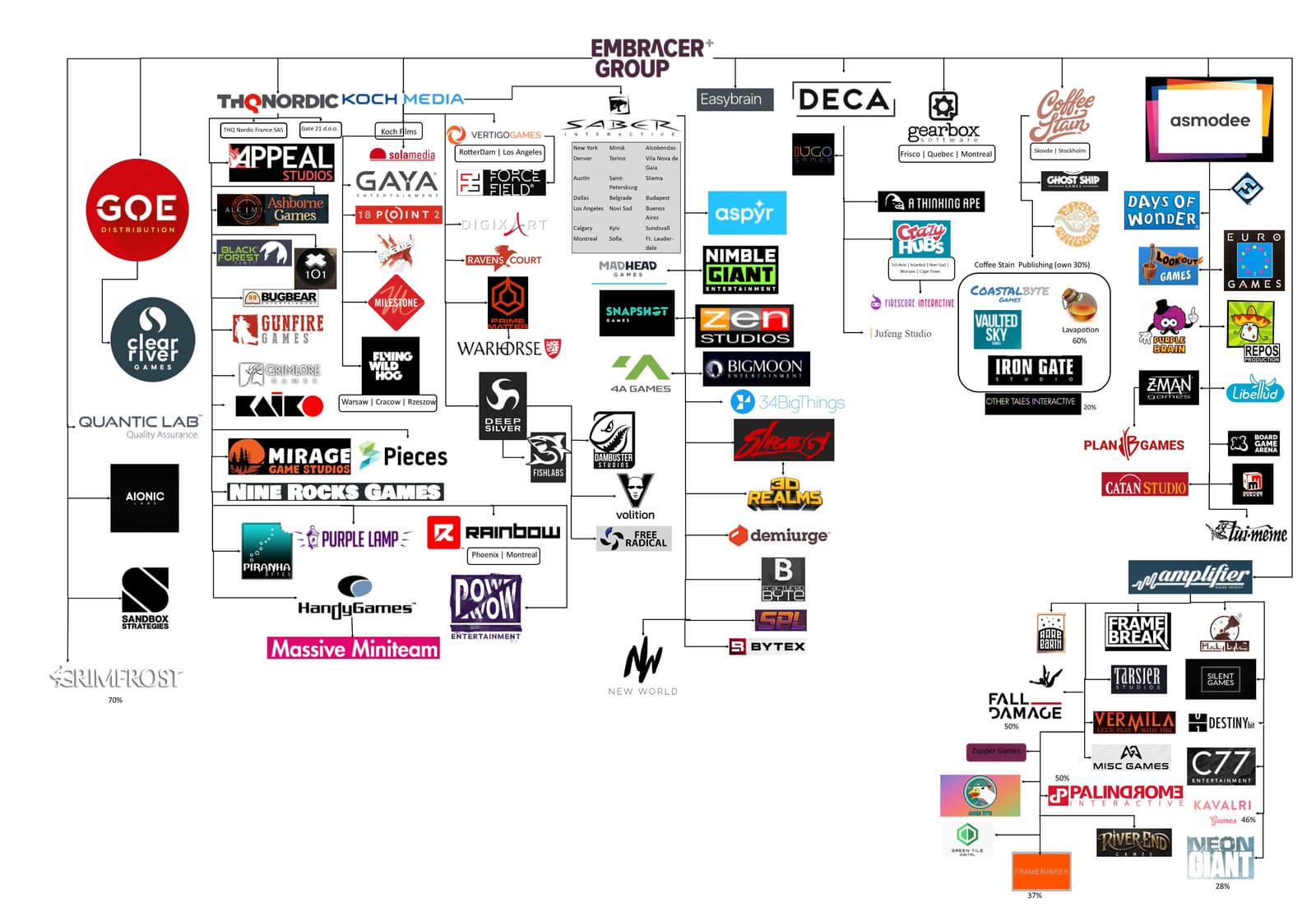
But after the cancellation of a $2 billion deal in 2023, Embracer moved to asset sales, closures, and massive cost reductions. Against this backdrop, the restructuring was presented to investors not as a consequence of erroneous expansion, but as a step towards creating a more profitable company.
Management promised to sharply reduce capital expenditures and annual overheads, while one-time costs for layoffs and project cancellations were effectively excluded – as temporary pain for future financial stability. In reality, we saw how this led to the final closure of a whole host of popular franchises, the continuations of which we will never see again.
Another reason for layoffs is that they help the company show investors that it knows not only how to release games, but also how to quickly free up money within its own business.
In 2024, Electronic Arts acknowledged that the restructuring would cost it approximately $125–165 million, meaning that layoffs and the closure of some divisions initially create new expenses. But for the market, what happens after this one-time hit is more important. By the end of the same fiscal year, EA reported record cash flow from operations – $2.3 billion – and a return of $1.5 billion to shareholders through share buybacks and dividends.
The purges are presented as a way to make the company cheaper to maintain and retain more free cash. All to increase profitability and shareholder payouts.
What happens after layoffs
If you look at the wave of layoffs only through company press releases, it seems that it is about dry financial business tuning. But the picture changes dramatically when the developers themselves start talking – both those who were laid off and those who remained.
For the former, this story often boils down not only to job loss but also to the feeling that the industry has ceased to be a place where experience and dedication to the profession guarantee anything. For the latter, it's about living in a state of constant anxiety, where after each “optimization,” the team is required to do the same amount of work with fewer resources.
The scale of the problem has long gone beyond a few high-profile stories. According to the Game Industry Layoffs project, approximately 10,500 layoffs were recorded in the industry in 2023, about 14,600 in 2024, about 5,300 in 2025, and by March 26, 2026, the tracker already counted about 3,000 lost jobs and 13 closed studios.
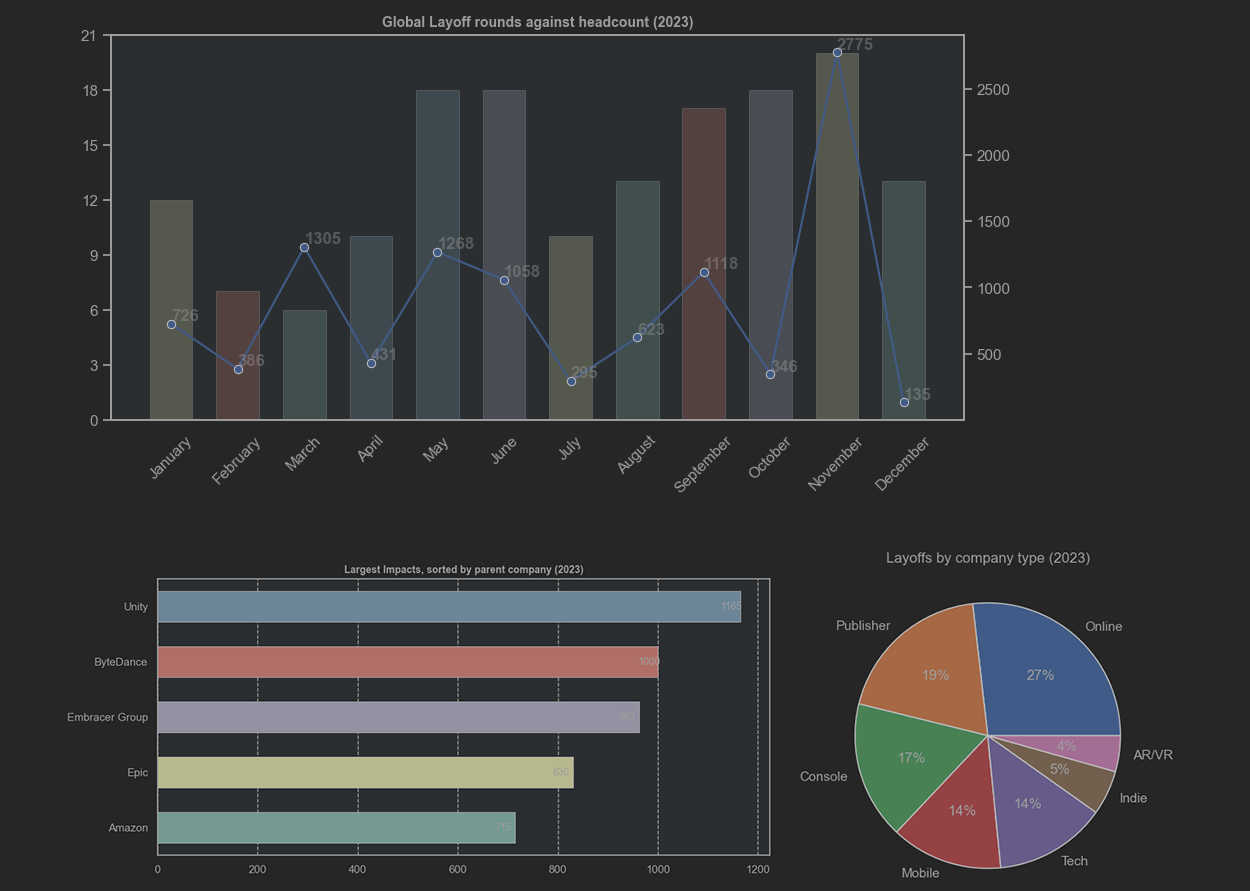
This is also clearly visible in surveys. In the 2025 GDC survey, 11% of respondents reported being laid off in the past 12 months, and 41% said they had experienced the effects of layoffs in some way – either through colleagues being laid off on their team or through purges in neighboring departments.
In a similar GDC survey for 2026, the picture became even harsher: 28% of respondents said they had been laid off in the past two years, in the US this figure rose to 33%, and half of those surveyed reported that their current or last employer had layoffs within the past 12 months. Among employees of large AAA teams, two-thirds responded that their companies had conducted layoffs.
And in an Aftermath article about developers forced to leave the industry, it is directly stated that in 2024, “the math just doesn't add up”: there are not enough jobs for everyone trying to return to the profession after layoffs. One of the publication's interlocutors admits that after being laid off, he started looking for “as boring and stable as possible” work outside of game development. Another says that his “heart breaks” at what the industry is turning into, where everything is increasingly managed by people who only see dollar signs.
It is also worth emphasizing another point that constantly comes up in conversations with those who have been laid off: not everyone succeeds in moving to another field, and not immediately.
Developers explain that many gaming specialties are too narrowly focused on specific production. It is easier for a programmer or user experience specialist to move to related industries, but a level designer, writer, or artist literally has to rebuild their career from scratch.

At the moment, no one openly states this, but working in the gaming industry is once again becoming marginalized. Previously, making games was considered something unserious in itself: society often perceived such a profession as a strange hobby, not a full-fledged career.
Now this status takes on a different form. Within large corporations, a developer increasingly appears not as a valuable specialist, but as an easily replaceable unit. And it is not necessary to replace him with another person who will be paid less – sometimes neural networks can do the job.
Overtime that already happened
The situation is particularly indicative because the industry has already gone through a similar cycle. In autumn 2018, Rockstar was embroiled in a scandal after Dan Houser's comments about “100-hour weeks” during the development of Red Dead Redemption 2.
After a wave of criticism, management softened its wording: the company claimed that it was only a small group of senior writers in the final weeks, and Rockstar North head Rob Nelson publicly promised to continue improving working conditions. Employees later claimed that overtime on Red Dead Redemption 2 was milder than during GTA V.
Against the same backdrop, a trend emerged in the industry for publicly rejecting the old culture of crunch: Supergiant reported that Hades was developed without forced crunch and with mandatory vacations, and CD Projekt RED promised back in 2019 not to introduce mandatory crunch on Cyberpunk 2077. After the scandal surrounding Red Dead Redemption 2, large and medium-sized studios tried to demonstrate that games could be made at a more sensible and humane pace.
But the current situation shows that a significant part of these promises either did not withstand the pressure of deadlines or was sacrificed to a new wave of optimization. CD Projekt RED already in 2020 abandoned its own promise and switched Cyberpunk 2077 to mandatory six-day weeks, albeit with overtime pay. In 2024, Naughty Dog executives said that the studio's goal was to eliminate crunch as a norm, but in December 2025, Bloomberg reported a new wave of mandatory overtime for the Intergalactic demo.
Surveys show that these are not isolated exceptions. According to IGDA data for 2023, 35% of full-time employees faced severe crunch, another 24% faced prolonged weeks beyond the norm, and 44% of workers generally consider such a regime a normal part of the profession.
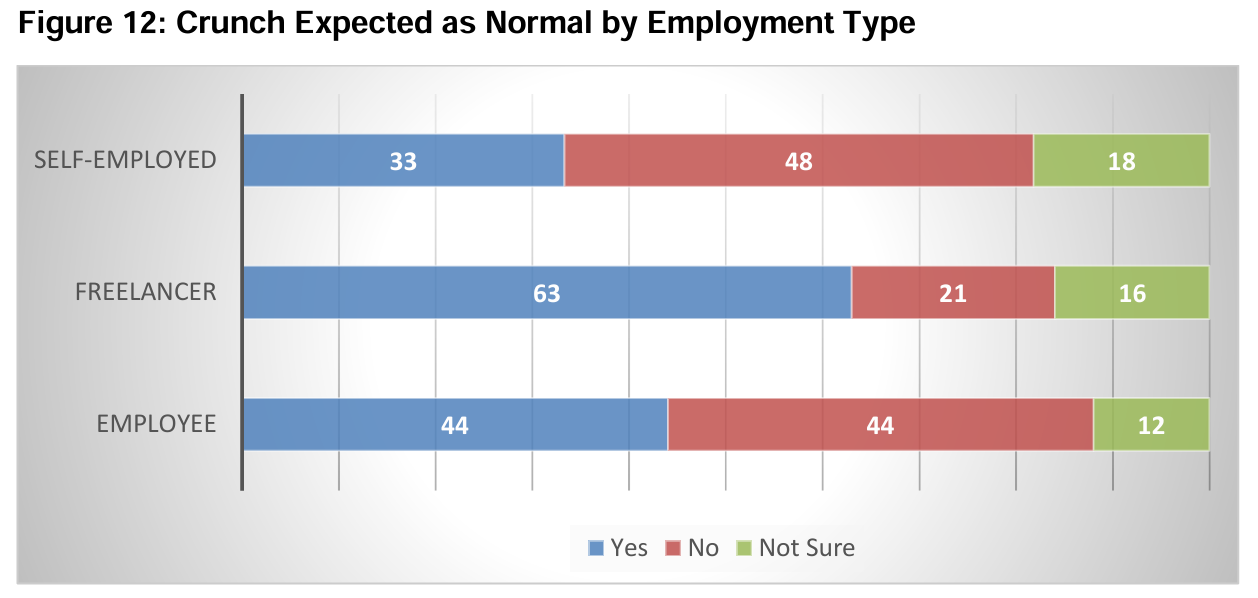
In the GDC 2025 report, the proportion of developers working 40 hours a week or less decreased from 64% to 57%, while the proportion of those working an average of 51 hours or more increased from 8% to 13%; separately, 14% of respondents linked overtime to fear of consequences, and 12% to pressure from management.
The same fear is clearly visible in journalistic materials about companies experiencing a wave of recurring layoffs. In July 2025, The Verge, citing more than a dozen Microsoft employees, wrote that morale within the company was at an all-time low, and people increasingly perceived regular layoffs as the new normal. In this atmosphere, remaining employees see their own potential replaceability.
Artificial intelligence is cheaper than a specialist
The contrast with Microsoft is particularly striking. According to the corporation's public rhetoric, the main driver of its current growth is no longer games or even classic software, but cloud services and artificial intelligence. In its annual report for fiscal year 2025, Microsoft specifically writes about two key pillars of its development: cloud and computing infrastructure for artificial intelligence, as well as the AI assistant Copilot and other AIs.
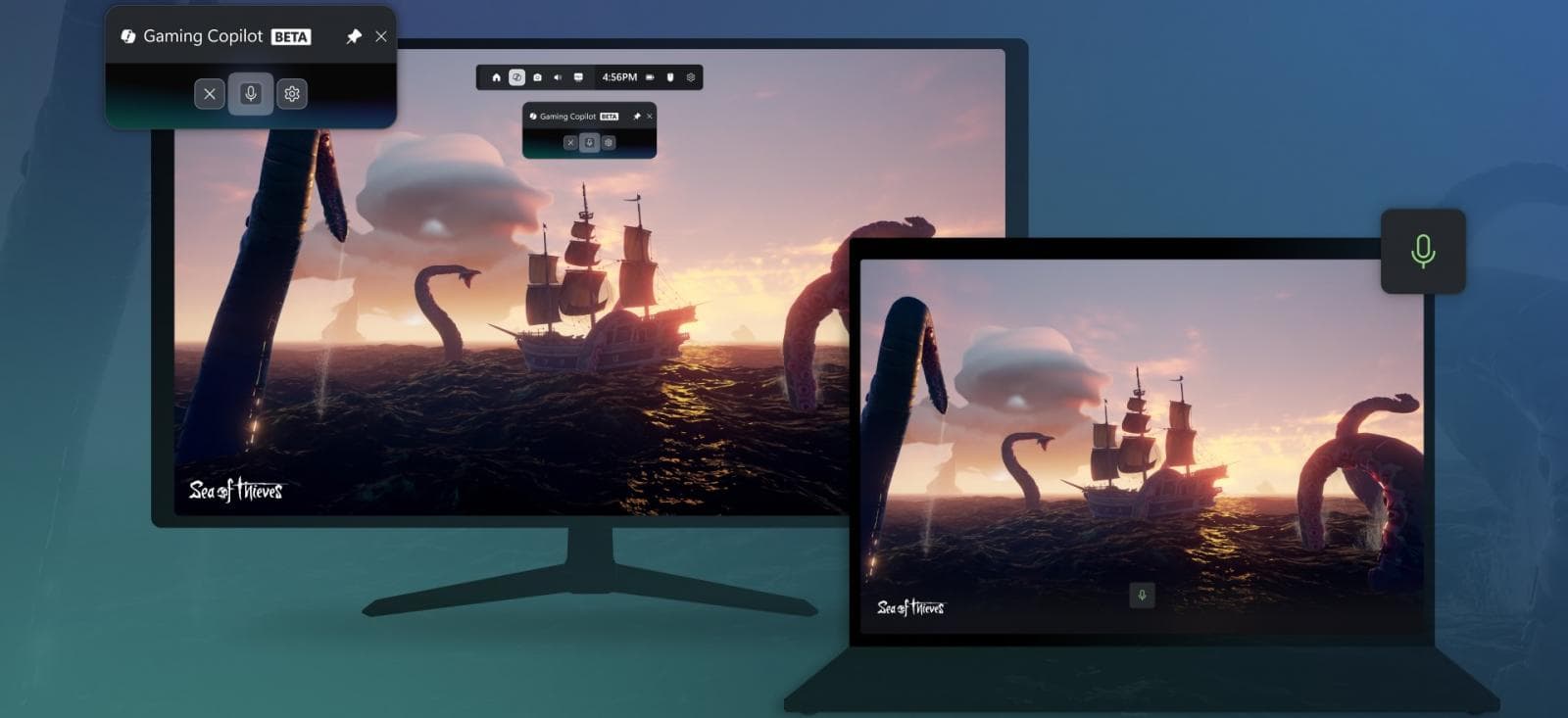
The latest quarterly report shows that total revenue grew by 17%, Azure and other cloud services by 39%. Management again linked the increase in expenses and investments primarily to computing power and AI specialists. Even Windows is now openly marketed by the company through the formula “empower every Windows 11 PC with artificial intelligence.”
Therefore, the gaming division in the latest report did not sound as flattering as other Microsoft divisions. Revenue from the consumer segment decreased by 3%, and revenue from Xbox content and services fell by 5%. Moreover, CFO Amy Hood specifically mentioned the impairment of assets in the gaming sector as one of the factors contributing to increased expenses. Against the backdrop of discussions about AI and cloud technologies, games in Microsoft's structure increasingly appear as a direction from which growth and development are no longer expected, and promised profits are desired.
1000 people sacrificed for Fortnite
The most striking example of the reasons for layoffs this spring is the situation at Epic Games. It clearly demonstrates the dependence of a modern game-as-a-service on continuous audience attention. Two weeks before the mass layoffs, on March 10, Epic raised prices and changed the terms for obtaining in-game currency and passes in Fortnite, explicitly explaining that support costs had significantly increased.
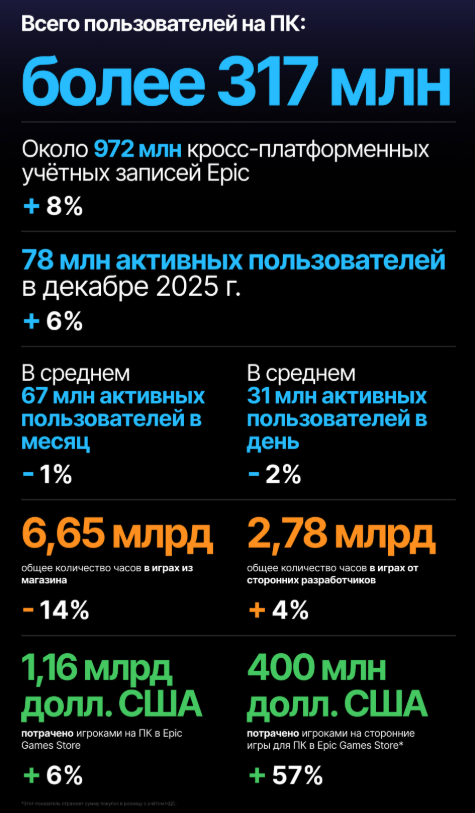
And on March 24, Tim Sweeney announced the layoff of over 1000 employees and openly linked this decision to a decline in Fortnite engagement that began in 2025: according to him, the company began spending significantly more than it earned. At the same time, Epic also announced over $500 million in additional savings on contractors, marketing, and unfilled vacancies.
The context for these layoffs was particularly unpleasant because Fortnite itself was increasingly shifting from a single “Battle Royale” to a platform with a huge layer of user-generated content. According to Epic, in 2024, the number of creators within the ecosystem almost tripled – from 24,000 to 70,000, players launched almost 60,000 user-created islands daily, and over 70% of Fortnite's entire audience visited both Epic's official modes and user-created maps.

In autumn 2025, the company further solidified this shift by allowing creators to sell items directly within their levels. And in December 2025, industry analyses already noted a symbolic turning point: one of the user modes for the first time surpassed Battle Royale in peak online players. Therefore, talks about a portion of the audience leaving the classic mode for Fortnite Creative now resemble a full-fledged forecast.
Because of this, the latest wave of layoffs at Epic was linked not just to abstract market problems, but to a very specific crisis: rising maintenance costs, declining engagement, and a drop in the quality of content in new seasons. The Verge, citing Sweeney's words, wrote that Epic faced difficulties in trying to maintain the “magic of Fortnite.”
Where this leads the industry
Hence a new set of key trends emerges.
First, games increasingly need not a large permanent team, but a small core that can be quickly strengthened and weakened by external resources. According to the XDS 2025 report, the main reasons why publishers and studios work with third-party companies are the ability to flexibly implement directions needed at the current time.
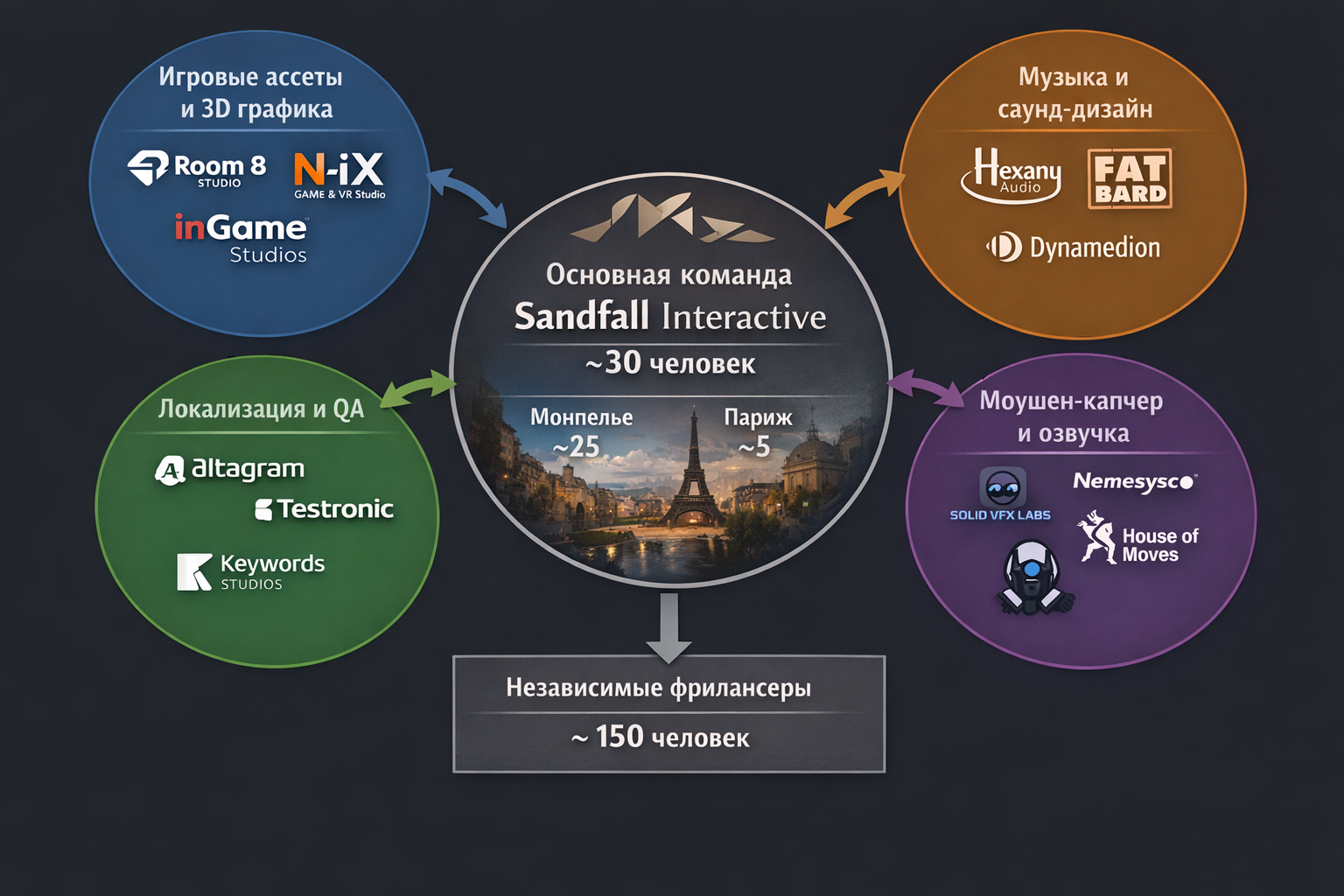
The second major trend is the growth of unstable employment within the profession itself. The IGDA report notes a high proportion of not only permanent employees but also freelancers, and emphasizes the overall fragility of such a regime. Among the self-employed surveyed, almost half worked on contracts of no more than a year, a third did not know the duration of their current contract at all, and half expected to leave the contract model within the next six years.
The tightening of entry into the profession also plays a role. At GDC 2026, it was specifically noted that 74% of surveyed students and future specialists are concerned about their chances of entering the industry. The main reasons are obvious: a shortage of entry-level vacancies, competition with laid-off professionals with extensive experience, and the risk of displacement of the profession by neural networks, which have also become one of the key trends.
The attitude towards AI in the gaming industry is ambiguous. On the one hand, GDC 2025 reported that more than half of respondents work in companies that have already implemented generative AI-based tools, and a third of respondents use them personally.
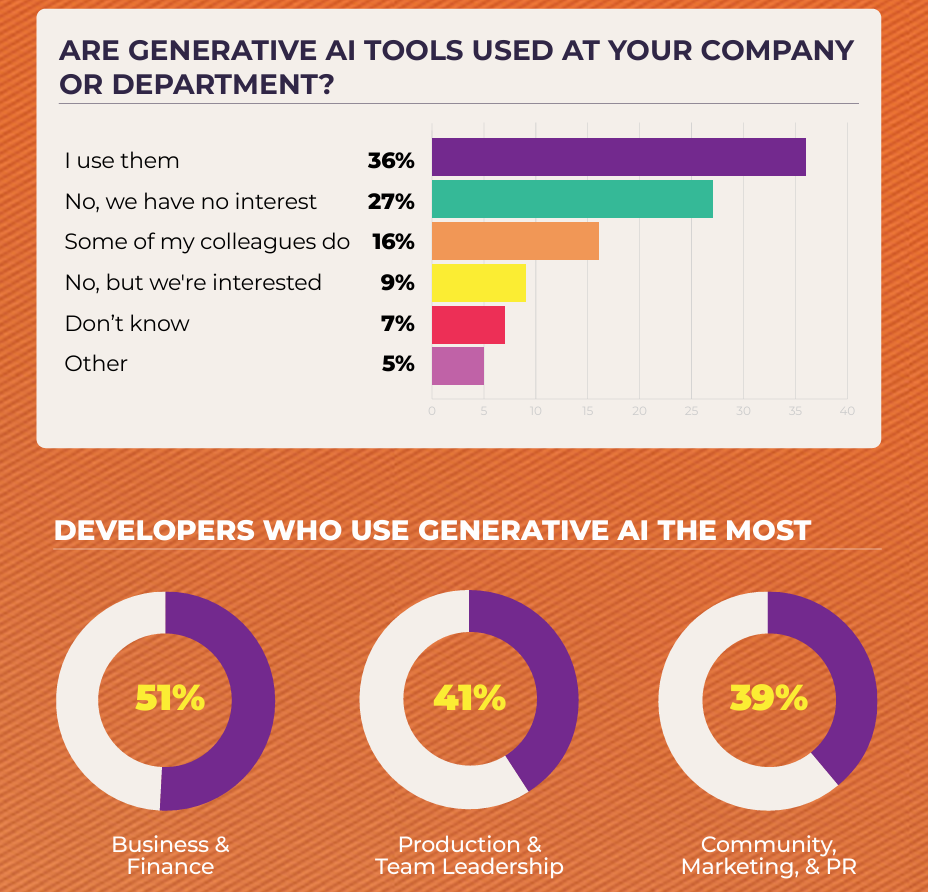
In 2026, the proportion of users among all professionals in the survey was 36%, with these tools most often used for brainstorming ideas, routine correspondence, code assistance, and prototyping. On the other hand, attitudes towards them are noticeably worsening: if in 2025, 30% of respondents believed that such technologies harm the industry, in 2026, 52% thought so.
Another trend is the growing interest in union protection. But interest in them is much lower than it seems. Formally, there are more such associations: in 2025, CWA even launched the United Videogame Workers industry union, and within Microsoft, by mid-2025, more than 2600 employees in gaming divisions had union representation.
But official status guarantees almost nothing. Beyond isolated exceptions, companies often meet unions not with a real revision of personnel policy, but with protracted negotiations, tough bargaining, and layoffs that also affect organized collectives.
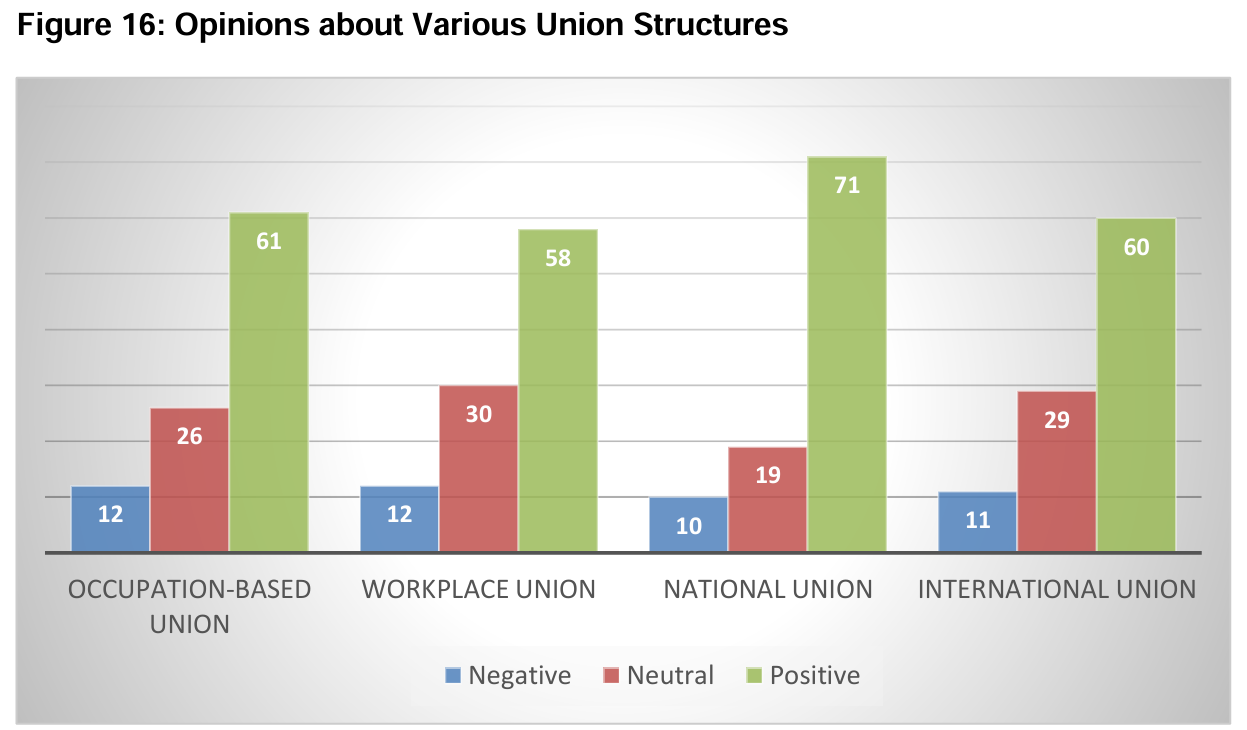
In 2023, Aftermath wrote that at EA, Sega, and Keywords, it was the unionized workers who were affected by layoffs. Therefore, the current growth of unions should be understood not as an already solved problem, but as a reaction to a market where even officially organized workers are still not protected from layoffs and very often become their direct target.
Finally, the final trend, which is not always discussed directly, but which is very important for our topic: the return of people to the office from “remote work.”
According to GDC 2024 data, 26% of developers were already working in companies with mandatory office attendance, and among AAA teams, this figure reached 40%. Bloomberg wrote separately in early 2024 that the combination of returning to the office and high market volatility leads to particularly painful situations, where people are first forced to change their lifestyle to adapt to the company's new policy, and then are still laid off.
Verdict
The policy of maximum profit in the gaming industry is not new. Big business has always viewed games primarily as an asset. The difference is that today this has become particularly clear. Now, a good release itself no longer protects either the studio or the team. If a project does not promise long-term and predictable monetization, its success quickly loses value in the eyes of management.
The gaming industry no longer looks like a place for a long and stable career. Millions of people already work in it, but for the bosses of large companies, such a staff increasingly seems inflated. Going indie also does not become a reliable way out – small teams still need money and advertising. They have to seek funding from the same publishers, investors, and platform holders. For many specialists, game development is turning into a profession with a very expensive exit: people spend years mastering skills that are then difficult to transfer to other areas.
Against this backdrop, talk of games as art sounds increasingly weak. The focus today is not on the author's idea, but on a product capable of retaining an audience for years and extracting money from them. Even single-player games exist within the same system. Creating new successful brands is becoming increasingly difficult, so large companies increasingly rely on old franchises, and small studios usually lack the resources for such insurance.
Never miss our newsAdd this site to your preferred sources to see us more oftenAdd on Google